


Archives: Events
Gas in the “European Green Deal”

- Gas in transition: the future role of gas in the EU and the European Green Deal
- Future Gas Target Model
- Article 101(3) and sustainability
- Could gas infrastructures become stranded assets?
- Sector Coupling
- The future role of Gas TSOs under sector coupling
Participation in this workshop is open subject to availability. Priority will be given to FSR Energy Union Law Donors and invited guests.
Don’t miss any update on our events
Sign up for free and access the latest events from our community.
Speakers






Market Abusive Practices

FSR Regulatory Policy Workshop Series 2019-2020
Artificial Prices, Excessive Prices and Manipulative Practices in the Internal Energy Market
The Workshop will explore and compare the different approaches to deal with “high” prices in auction-based energy markets under REMIT and competition law and it will be structured in two sessions:
- Session 1 will spell out and compare the concepts related to “high” prices under REMIT and competition law;
- Session 2 will look at how these concepts apply to auction-based energy trading and the available experience from recent cases.
This workshop is exclusively open to national regulators, representatives from public bodies and associate & major donors of the FSR Energy area.
Background
The integration of the Internal Energy Market, both in the electricity and gas sectors, heavily relies on market prices to provide the signals for the efficient use of and investment in energy infrastructure. Moreover, as electricity cannot be efficiently stored in large quantities, market prices also provide a signal for the generation of electricity. In this respect, correct price signals are essential for generation efficiency (i.e. that the least cost generation is used to serve demand, subject to network constraints).
The importance of correct (and reliable) price signals for the efficient integration of the Internal Energy Market has led to the adoption of Regulation (EU) No 1227/2011 on wholesale energy market integrity and transparency (REMIT). The aim of REMIT is to detect and deter market abuse – in the form of market manipulation, attempted market manipulation and insider trading – in EU wholesale energy markets.
Article 2(2) of REMIT defines market manipulation, inter alia, as “entering into any transaction or issuing any order to trade in wholesale energy products which […] secures or attempts to secure, by a person, or persons acting in collaboration, the price of one or several wholesale energy products at an artificial level, unless the person who entered into the transaction or issued the order to trade establishes that his reasons for doing so are legitimate and that that transaction or order to trade conforms to accepted market practices on the wholesale energy market concerned”. Recital (13) of REMIT explains that “manipulation on wholesale energy markets involves actions undertaken by persons that artificially cause prices to be at a level not justified by market forces of supply and demand, including actual availability of production, storage or transportation capacity, and demand”. Therefore, an artificial price is one which is “not justified by market forces of supply and demand”.
It is worth noting that, under REMIT, artificial prices could be higher or lower than those justified by market forces of demand and supply and that the main aim of REMIT is not as much to protect consumers from high prices, but rather more widely to:
– “ensure that consumers and other market participants can have confidence […] that prices set on wholesale energy markets reflect a fair and competitive interplay between supply and demand, and that no profits can be drawn from market abuse” (Recital (1) of REMIT);
– “foster open and fair competition in wholesale energy markets for the benefit of final consumers of energy“ (Recital (2) of REMIT).
In this last respect, although the objectives of REMIT come close to the objectives of EU competition law (i.e. to prevent exclusionary or exploitative practices by dominant undertakings), there are some important differences. Article 102 of the Treaty on the functioning of the European Union (TFEU) can and has been applied, for instance, to deal with capacity withholding by dominant firms, but under certain well-defined conditions. This is in contrast to the application of REMIT as the relevant provisions also apply to all market participants – i.e., non-dominant undertakings. Whereas REMIT’s focus is on ‘integrity and transparency’, Art 102 TFEU has a narrower economic focus on harm to the competitive process. In fact, the narrower scope of competition law and therefore the need to complement it to ensure integrity and transparency in energy trading was recognised by the EU legislator adopting REMIT: “Behaviour which undermines the integrity of the energy market is currently not clearly prohibited on some of the most important energy markets. In order to protect final consumers and guarantee affordable energy prices for European citizens, it is essential to prohibit such behaviour” (Recital (2) of REMIT).
Indeed the theory of harm that informs REMIT appears to be of a different order than that which underpins EU competition law, albeit this is not fully articulated or developed in academic literature.
Therefore, in this Workshop, we aim at comparing how REMIT and competition law looks at “high” prices, in particular in the context of auction-based energy markets (such as the electricity day-ahead market, but also capacity markets). Under the assumption of perfect competition, the optimal strategy for market participants is to offer into the market at marginal/opportunity costs. Following this strategy, fixed costs would be recovered through the so-called “infra-marginal rent”, i.e. the difference between the market equilibrium price (defined by the offered price/marginal cost of the last accepted offer) and the marginal cost as reflected in the offered price. In reality, the conditions for perfect competition are rarely met, and market participants might be tempted, in certain situations (e.g. when the margin between demand and available capacity tightens up, possibly due to network congestion), to offer above their marginal/opportunity costs to increase their revenues (towards covering fixed costs or increasing profits). The question, therefore, arises of whether the recovery of fixed costs can be considered as part of the “fair and competitive interplay between supply and demand”.
Recovery of fixed costs probably sets a more stringent threshold than the concept of excessive prices in competition law, where the threshold for intervention has been set relatively high, and it has often been typical of the cases that the costs used as a point of comparison or benchmark for the alleged pricing practices at issue have been open to interpretation. Competition authorities are generally reluctant to take on the role of price regulators, and the case law/decision-making practice on ‘excessive prices’ is not well developed.
The recent joint guidance published by the German competition authority (BKartA) and network regulator (BNetzA) in September 2019 considers that the non-use of actually available generation which could have been sold at a price above the respective short-term marginal cost could be an indication of capacity withholding. This approach is not without controversy. Furthermore the experience from the Danish Elsam cases indicates that competition and regulatory authorities have struggled to devise a satisfactory cost benchmark that will withstand judicial scrutiny.
Don’t miss any update on our events
Sign up for free and access the latest events from our community.



Protecting Foreign Investment After Brexit

This seminar, set up in collaboration with Sir Alan Dashwood and Dechert LLP, will focus on investment protections after Brexit. Bringing together leading authorities in EU law and arbitration practitioners, we will address the impact of Brexit on intra-EU disputes and the investment protection regime governing EU investments in the UK and UK investments abroad. Among the issues, we will debate:
- The major economic and political risks to investors in the UK and to UK investors abroad.
- Potential recourses for investors against the UK based on possible regulatory changes implemented as a result of Brexit.
- The UK’s relationship with the EU after Brexit
- The future of investment protection in the EU
- Organising investor protection in the UK and for UK investors abroad in the post-exit world.
Confirmed speakers include:
- Former EU Court of Justice Judge Alan Rosas
- Former EU Commission Director-General Sir Jonathan Faull
- Sir Alan Dashwood QC – former Head of the EU Council Legal Service, barrister at Henderson Chambers
- Sir David Edward KCMG PC QC – former judge, EU Court of Justice, international arbitrator and mediator at Blackstone Chambers
- Arif Ali – Head of International Arbitration, Dechert
- Leigh Hancher – Director, Energy Union Law, Florence School of Regulation, European University Institute
- Michelle Bradfield – Partner, International Arbitration, Dechert
- Dániel Dózsa – Counsel, International Arbitration, Dechert
17.00 – 17.15: Registration
17.15 – 19.30: Seminar
19.30 – 20.30: Cocktail Reception
Please note, this is an open workshop and there is no fee to participate. However, given the limited availability of places, priority will be given to the FSR Energy Union Law Donors and invited guests.
Don’t miss any update on our events
Sign up for free and access the latest events from our community.
More on the topic



LNG and the EU Green Deal: teaming up for a decarbonised 2050
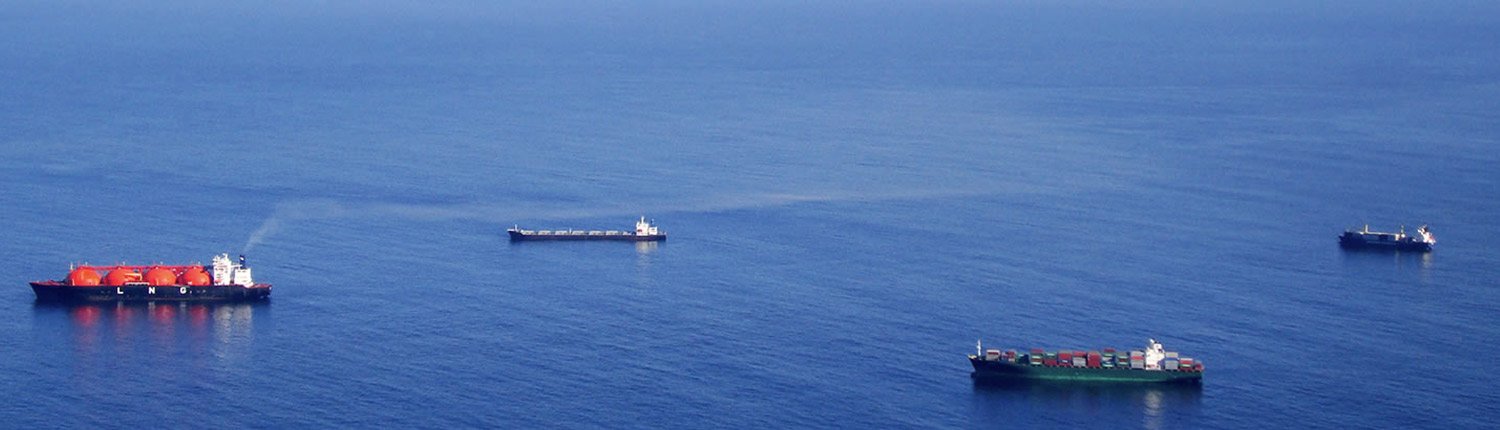
This event will answer to the question ‘Why LNG is the fuel of choice for a sustainable energy system?’. It will also mark the presentation of an inclusive and global LNG industry report. The debate will convey around the report lines and focus on the role of LNG in the energy transition, the use of LNG in shipping and heavy-duty transportation.
One of the many challenges of the 21st century is to provide access to all citizens to reliable and affordable energy and, at the same time, to reduce the impact on climate change and improve air quality. Over 900 million people currently are living today without access to secure electricity and 2.7 billion lack access to clean cooking, according to the International Energy Agency (IEA).
The industries are now looking for sustainable, cost-efficient and environmentally friendly solutions. Various international voices such as G20 and the European Commission President-elected Ursula von der Leyen endorsed the role of natural gas, in both gaseous and liquified form. The IEA expects natural gas to represent around 40% of total energy demand growth over the next two decades with a crucial role in powering electricity generation and in sectors more difficult to electrify.
Today’s global energy consumption is responsible for two thirds of greenhouse gas (GHG) emissions and significantly impacts air quality, especially in densely populated areas. Natural gas can contribute to a sustainable energy future by helping to reduce air pollution across all sectors: power generation, industry, domestic heating and use and transportation. LNG is a fundamental asset that helps meeting EU’s long-term decarbonisation targets and Paris commitment.
An LNG Protocol event supported by FSR
Don’t miss any update on our events
Sign up for free and access the latest events from our community.
More on the topic
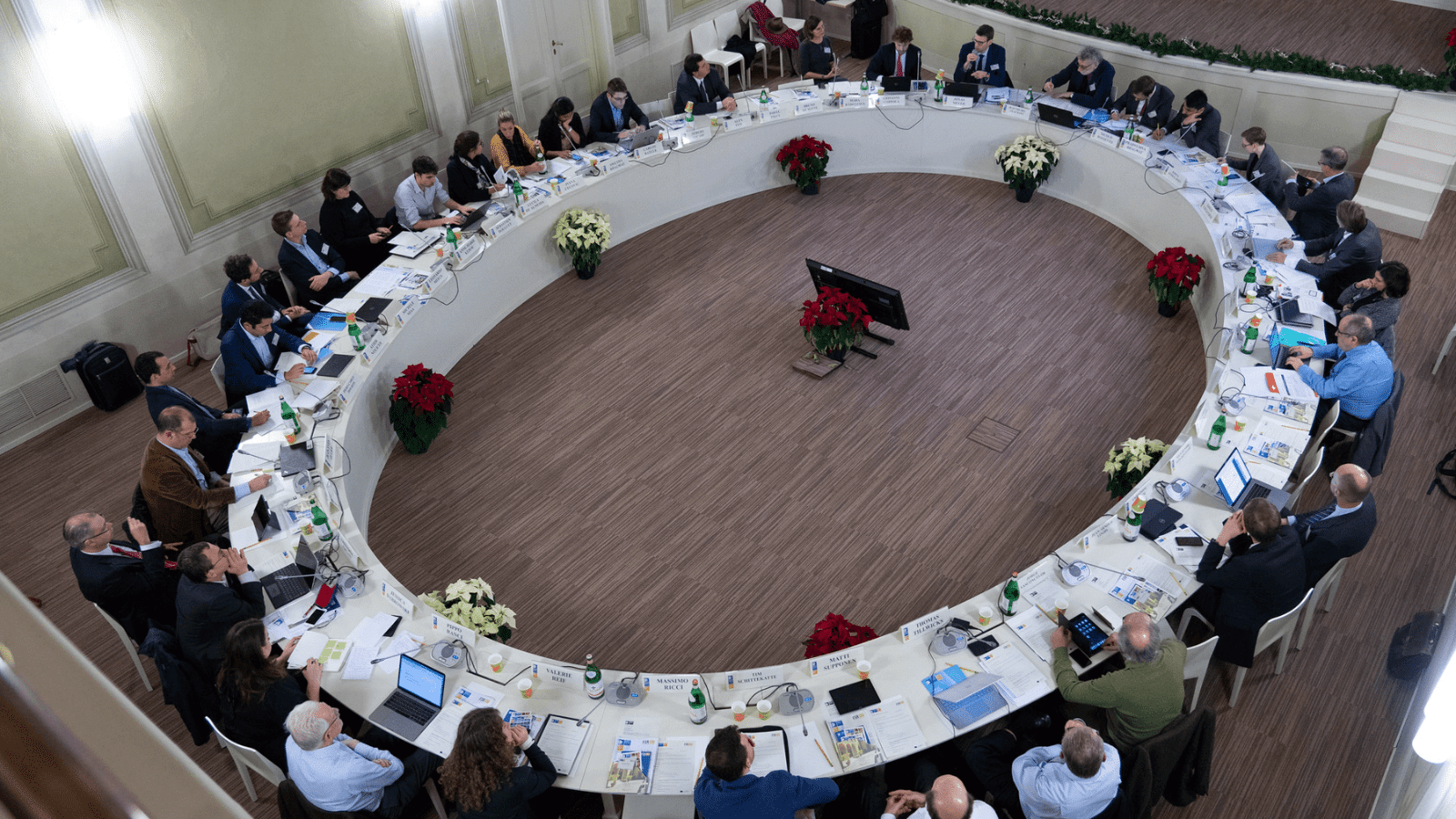
Policy Advisory Council – FSR Energy
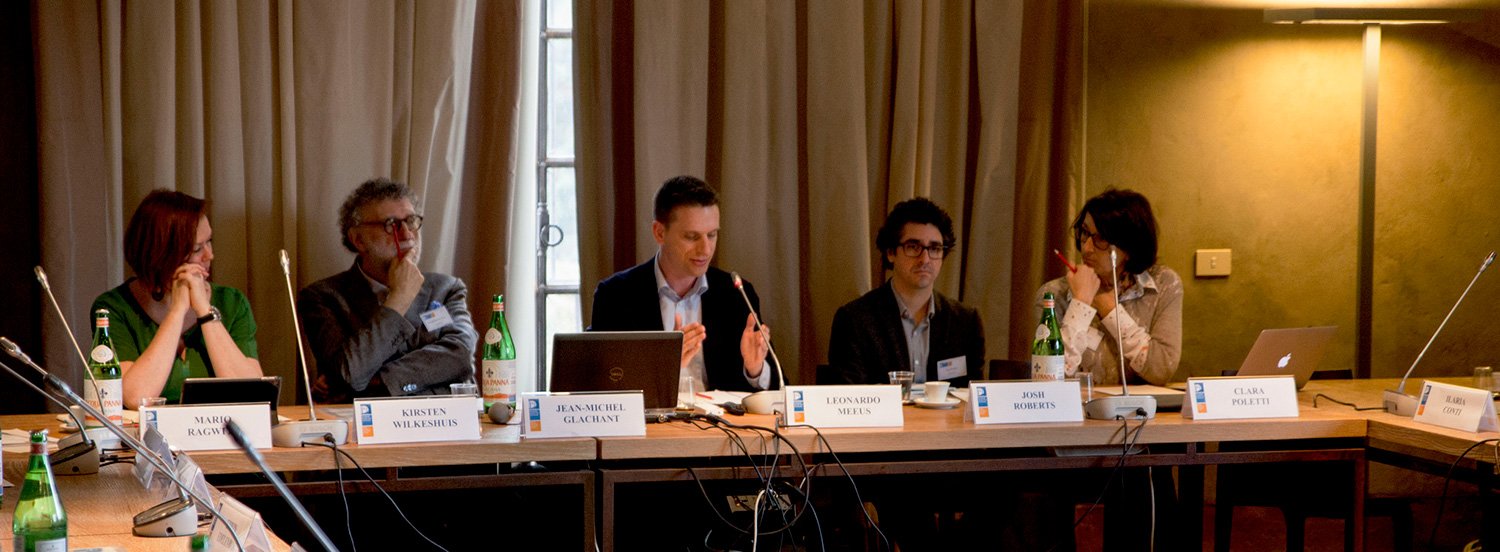
The Policy Advisory Council discusses the most topical regulatory and policy issues and debates the relevance and robustness of the latest FSR research findings.
The meeting gathers renowned academics, experts from the FSR-Energy Major Donors, the European Commission, the Agency for the Cooperation of Energy Regulators (ACER) and National Regulatory Authorities.
The event is structured as follows:
Day 1
- Session 1: EV Charging policies and business models – Lessons Learnt and vision of the future
- Session 2: Integrating EVs into the network as load and utilising V2X capabilities
Day 2
- Session 1: Gas Terminology (sector coupling project)
- Session 2: Opal Ruling: Solidarity and access to gas infrastructure
Please note this is a closed event and participation is by invitation only.
Don’t miss any update on our events
Sign up for free and access the latest events from our community.
Charging up India’s Electric Vehicles

FSR Online Talk with Pradyumna Bhagwat and Samson Hadush
Dive in deeper in our new online course: Electric Vehicles: a power sector perspective!
This specialised 5-week online course is specifically designed for professionals who wish to address the power sector challenges posed by the ever-growing number of EVs on a global scale. Learn more and save your seat!
About the Online Event:
The rapid growth in EV uptake required to reach India’s policy targets will have to address two major challenges. The first challenge is ensuring the deployment of the charging infrastructure required to serve the needs of the ever-growing number of EVs. This raises two questions:
- What policies and regulatory frameworks are required to enable the efficient deployment of charging infrastructure?
- What business models can reach sufficient coverage of charging infrastructure that meets the needs of the EV user?
The second challenge is the integration of the EVs into the power system securely and efficiently. This raises two questions:
- How can the potential impacts of the additional EV load in the power system be managed?
- How can the flexibility potential of Vehicle-to-X (V2X) be unlocked?
Join Pradyumna Bhagwat and Samson Hadush to explore the toolbox consisting of solution choices and recommendations to tackle these issues.
More from our knowledge hub:
In our February Topic of the Month series, FSR Global shared an overview of the current status Electric Vehicle’s (EV) sharing the Indian Perspective, insights from the Spanish EV observatory, a regulatory perspective on how the LAC power sector is gearing up for the EV revolution and early experiences with V2X (vehicle-to-everything) in practice.
You can also download a copy of our detailed report or policy brief “Charging up India’s electric vehicles: infrastructure deployment and power system integration” on the rapid growth in EV uptake in India and the challenges the country will have to address to meet its policy targets.
Don’t miss any update on our events
Sign up for free and access the latest events from our community.
More on the topic






Baltic gas challenges and developments

This FSR online debate will explore the Baltic gas challenges and developments. We will focus on EU policy targets implementation in the region, highlighting major issues of the energy transition and of penetration of new gases.
The Baltic region is making significant progress in developing a functioning regional natural gas market, expanding and integrating the related infrastructure, and ensuring the security of supply.
However, there are multiple factors—at the national, regional, European and even global levels—that prevent this from becoming an ideal market capable of delivering greater security at a reasonable cost. Liquidity of the market is low due to falling consumption; state aid and state participation in the energy enterprises discourage private investments and distort market conditions, while geopolitical tensions between the West and Russia add further complications.
In this online debate, Watch the recording
Moderator: Andris Piebalgs
Panel:
- Margot Loudon (Eurogas)
- Andrei V Belyi (University of Eastern Finland)
- Juris Ozoliņš (Amber Grid)
Learn more on the topic:
‘Download the report: Stepping on the Gas’
Don’t miss any update on our events
Sign up for free and access the latest events from our community.
More on the topic
How many gas markets?
“How many gas markets?” – FSR Regulatory Policy Workshop Series 2018-2019
The Workshop “How many gas markets?” will explore the future technological and market landscape for gases, used as energy media and as feedstock for industrial processes. Starting from a future-proof taxonomy, it will assess to which extent different gases will be able to share the same infrastructure, and under which conditions (e.g. retrofitting). It will then go on to identify the implications for market design.
To address these and other related issues, the Workshop will be structured in two sessions:
- Session 1 will investigate the technological and system operation dimension of the future gas sector, in its widest notion (i.e. including all types of gases and their uses as energy media and feedstock). In particular, it will explore to what extent different gases could share the same infrastructure and under which conditions, and where, instead, different networks are needed to transport different types of gases. It will also aim at recognising the technical links between these networks and the transformation processes linking them.
- Session 2 will look at the market implications of the results of Session 1, and in particular how many markets will be required to cover the whole spectrum of gases in the future and the opportunities for coupling them, and for coupling these with the electricity market in its different timeframes.
Read the workshop highlights and watch the interview on a GreenDeal for Europe with Ilaria Conti (Head of FSR Gas Area) and Klaus Dieter-Borchardt, (Deputy Director-General at European Commission’s DG Energy) here.
Background
The EU decarbonisation strategy is based, inter alia, on a massive penetration of renewable energies. In the electricity sector, this requires the system to become more flexible, to accommodate the greater variability of renewable-based generation. Technological development is enabling new sources of flexibility – such as, for example, demand response and electricity storage; additionally, it seems clear that the gas sector could also contribute to the decarbonisation process in this respect. Therefore, while natural gas, as fossil fuel and at least in its non-decarbonised form, is bound to play a shrinking role in the energy mix in the long run, in the short and medium run gas-based generation could represent an important source of the necessary flexibility for the electricity system.
Moreover, gas is easier to store and cheaper to transport over long distances. Therefore, gas and gas infrastructure can also play a role in providing an alternative to electricity storage and transmission. (Electricity and gas) Sector coupling is meant to promote the synergies between the two sectors. Such synergies might, for instance, be achieved through power-to-gas transformation and the storage of the resulting gas. Power to gas through electrolysis results in hydrogen which can be stored, used as such – in industry, transport or, in the future, in power generation – or further transformed into methane. Hydrogen can also be blended, up to a certain extent, with natural gas and thus used in the existing gas infrastructure. Technological development is likely to change the landscape here as well, with greater percentages of hydrogen blending being permissible in gas infrastructure and many gas uses, including electricity generation in existing power plants.
Renewable and decarbonised gases will also have to play a greater role in the future. Biogas, for instance, is still produced in very limited volumes in the EU (covering less than 5% of total EU demand for gas), but can easily be upgraded into “biomethane”, whose use and physics do not differ much from natural gas’. Hydrogen is also another promising resource and can be produced by curtailed renewable electricity via electrolysis (green hydrogen); it can also be produced from natural gas (grey and blue hydrogen) with release or capture/sequestration of CO2.
All these developments depict a future in which different types of gases will co-exist, to a greater extent than today. From a system operation perspective, one of the main questions is to what extent these different gases will be able to use the same (existing) infrastructure or whether they would need to be segregated in different networks. For instance, each EU country has set its own limitations and regulatory provisions for the injection of hydrogen – which can differ significantly even between neighbouring countries. From a market perspective, the main question is how many different markets will be needed in order to promote the efficient use of the different gas types and the optimal resource allocation. It is clear that trading in the same market requires a degree of homogeneity of the products, and this is likely to imply the fact that the products could use the same infrastructure.
Therefore, the operational and market dimensions are linked, and they both need to refer to a taxonomy of the different types of gases that has to recognise the different chemical compositions, but also the potential for transformation. Following the Madrid Forum in June 2019, the Florence School of Regulation has been working on developing such a taxonomy, bringing together the work and contribution of stakeholders.
Once this taxonomy is established, the future market structure for “gases” could be addressed. In this respect, it is important to note that, even if the conclusion of this assessment were, as it is likely to be the case, that different markets are needed to cover the full spectrum of gases in the future, some of these markets would be linked through the transformation potential between the corresponding gases. These transformations, and the arbitrage opportunities that they create, will determine the extent to which prices in the “linked” markets will be able to diverge and which forces will operate towards price convergence.
The ‘How many gas markets?” workshop is exclusively open to national regulators, representatives from public bodies and associate & major donors of the FSR Energy area.
Previous Sector Coupling workshops:
- Coupling the Sectors: the definition of ‘sector coupling’ and ‘sector integration’ and the key challenges to their practical implementation
- Sector Coupling 2.0: Power-to-Gas in the EU decarbonisation strategy: the technological and regulatory aspects related to Power-to-Gas (PtG).
Don’t miss any update on our events
Sign up for free and access the latest events from our community.
More on the topic
Is gas infrastructure ready for sector coupling?

The online debate “Is gas infrastructure ready for sector coupling?” will tackle regulatory and technical challenges related to the gas infrastructure, which are expected to arise with the increase in the use of renewable and decarbonised gases in Europe.
In the sector coupling vision, one of the most debated aspects is infrastructure: how to link electricity grids and existing gas pipelines, can the existing gas infrastructure be re-adapted to the flow of the new gases? If so, for which gases and at what cost? And what are the alternatives?
In particular, the debate will address the following topics:
-
- Level playing field between gases – renewable, low-carbon, natural gas. Incentives for network operators, blending, regulation of different gases.
- Gas regulation on the distribution level – injection, congestion management, flexibility
- Smooth relationship between distribution and transmission networks.
Panellists:
-
-
- Ignacio Asenjo (DG ENER)
- Anne Boorsma (ENTSOG)
- Markus Krug (E-Control)
- Doug Wood (EFET)
-
Moderator: Andris Piebalgs (FSR)
This is the second online debate organised as a part of the FSR sector coupling platform project realised in cooperation with the European Commission (DG Energy). The first online debate took place on September 11th and was devoted to “A common terminology for gases”. For more information visit the FSR Sector Couling platform.
Preparatory materials:
Don’t miss any update on our events
Sign up for free and access the latest events from our community.
More on the topic
Banking on Climate: a path to Responsible Banking and Sustainability

The seminar “Banking on Climate: a path to Responsible Banking and Sustainability” aims to highlight the points of strength and weakness of the Principles for Responsible Banking, their alignment with the Paris Climate Agreement objectives, and to discuss their potential impact on the transition to a low-carbon economy.
Climate change is likely to modify significantly patterns of capital investments and constitutes both a risk and an opportunity for investors and financial institutions. A framework aligning the decisions of financial institutions with long-term climate goals is taking shape, and carbon-intensive investments will likely face an increased risk of being stranded.
Within this framework, banks must be transparent and clear about how their products and services create value for their customers, clients, investors, as well as the environment. The Principles for Responsible Banking help any bank to align its business strategy with society’s goals through ESG investments. The Principles provide the framework for a sustainable banking system and help the industry to demonstrate how it makes a positive contribution to society. They are accelerating the banking industry’s contribution to achieving society’s goals as expressed in the Sustainable Development Goals and the Paris Climate Agreement. The Principles for Responsible Banking will be publicly launched by the thirty Founding Banks on September 23 in the framework of the New York Climate Week during the United Nations General Assembly.
Scientific organisers:
Isabella Alloisio | FSR Climate, EUI
Simone Siliani | Fondazione Finanza Etica
Pierre Schlosser | Florence School of Banking and Finance, EUI
This event was organised in collaboration with Fondazione Finanza Etica.
Don’t miss any update on our events
Sign up for free and access the latest events from our community.
More on the topic






Energy Innovation Bootcamp

The Energy Innovation Area of the Florence School of Regulation (FSR), in association with the Young Scholars Initiative (YSI), would like to invite young scholars to submit their work to the 2nd Energy Innovation Bootcamp. The event will be held in the Florence School of Regulation (Florence, Italy) on 26-28 November 2019.
Download the Call for Papers
We welcome candidates with interest in innovation aspects within energy industries. Instances of those interests include, but are not restricted to:
- Studies on co-evolution between institutional and technological development
- Financial aspects of policies oriented to promote energy transitions
- Studies on social impacts of energy transitions
- Structural change as a driver for energy policy
- Complexity approaches to understanding energy transitions
- Models of complex economic systems: ABM, networks, statistical learning
- Local, national or supranational case studies (special interest in developing countries)
- Technology policies as an alternative to energy policies in energy transitions
How to apply
Please send proposals to the FSR event coordinator: chiara.canestrini@eui.eu. Please specify Institution and Base Country.
Deadline: September 28st, 2019
Eligibility: young scholars (Graduate students, Ph.D. candidates, Postdocs) and early career researchers working/interested in the topics of the event.
Requirement: an abstract or a complete paper in English. There are no format or length requirements.
Submissions are free of charge. Financial support is available for selected students. Please indicate the need for funding in the application email.
About the event
Energy transitions imply disruptive innovation. The 2nd Energy Innovation Bootcamp aims to bring together young scholars to discuss industry adaptation to technological and institutional change. The perspective of industries as complex and evolving systems opens the discussion to topics on industrial dynamics, networks, interactions, and heterogeneity. In the context of energy transitions, we ask how the industry evolves and how it induces innovation. That is an opportunity to bring together a broad view on technological and institutional aspects, and cross-fertilize those streams in a co-evolutionary perspective.
The Bootcamp activities pay constant attention to operationalization. The young scholars will find an open environment to bring their contributions from theoretical developments and empirical analyses and to target results into operational proposals for researchers and public and private decision-makers. To that end, we aim at combining views from fields such as economics, engineering, political sciences, law, social sciences as well as business and management.
The Format
The event consists of three full days of intense activity.
- Each day, we start with presentations aimed at giving a broad view on a relevant topic. After that, knowledge stations aim at providing horizontal discussions on specific research questions or methodologies.
- During the afternoons, academy seminars take place. Participants have the opportunity to present and discuss their own research with experienced mentors and other participants of the academy.
Acceptance
The major requisites to be accepted are completeness, clarity, and relevance of the work. We take into consideration regional diversity and gender equality criteria.
The list of selected participants will be published on October 21st, 2019.
Contact
For more information, do not hesitate to contact the FSR Event Coordinator, Chiara Canestrini.

Don’t miss any update on our events
Sign up for free and access the latest events from our community.

Regulating the Renewable Power Sector

This workshop will bring together policy-makers and experts in the field to address recent developments in regulating the renewable power sector with a particular emphasis on the Norwegian versus EU approach to the issue.
The topics we will discuss will include the new renewable energy directive, the implementation of the recent EU governance regulation on climate and energy action, the services directive and the sustainable financing of renewables. The workshop will primarily focus on these measures from a legal and economic perspective.
The audience for the workshop will mostly be composed of representatives from EU institutions, regulatory and competition authorities, academics, members of industry, economic consultants and lawyers.
If you would also like to attend the workshop of the 10th, please see details here. The registration forms for both are linked.
Don’t miss any update on our events
Sign up for free and access the latest events from our community.
More on the topic