Research

The School carries out applied research with the purpose of developing economically, legally, and socially-sound regulation and policy, using a multidisciplinary approach.

Independent aggregation in the nordic day-ahead market : what is the welfare impact of socializing supplier compensation payments?

This paper addresses the participation of independent aggregators (IAs) for demand response (DR) in European electricity markets. An IA is an aggregator trading the...

Authors
Tim Schittekatte KB ZB
Article
Environmental insurance and resilience in the age of natural disasters
Discover more
Policy Paper
Evaluating models of CO2 transport governance : from state-led to market-based approaches
Discover more

Executive Education

We offer different types of training: Online, Residential, Blended and Tailor-made courses in all levels of knowledge.
Policy Events

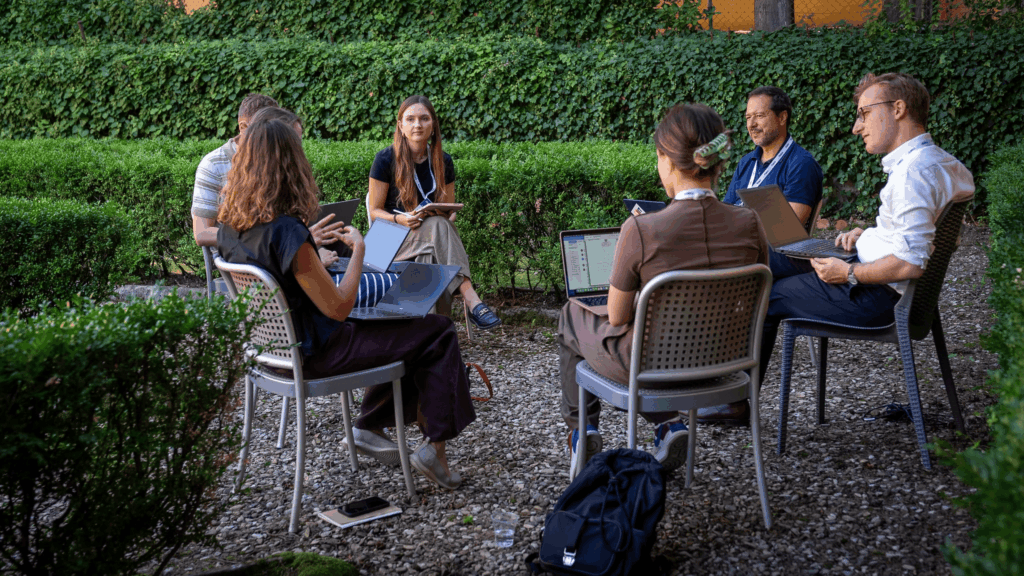
A wide range of events for open discussion and knowledge exchange. In Florence, Brussels, worldwide and online.
More

Discover more initiatives, broader research, and featured reports.

Lights on Women

The Lights on Women initiative promotes, trains and advocates for women in energy, climate and sustainability, boosting their visibility, representation and careers.

Discover more

About FSR

At the Florence School of Regulation (FSR), we explore the crossroads of research, policy, and education, translating insights into real-world impact.
At the heart of the energy transition, we are sharing ideas to support regulators, policymakers, and industries in addressing climate change and shaping a sustainable future for all. The FSR is a unique combination of a university research group, a think tank and an executive education institute, working to improve policy and regulation in Europe and worldwide. Our work spans the critical sectors of energy, transport, water, and waste, with a strong emphasis on climate across all domains.
280+
Training courses
700+
Policy Events
900+
Publications
20.000+
FSR community

Sectors

Energy Sector

Energy

Transport Sector

Transport

Water Sector

Water & Waste

Research Teams

Climate Pillar

Climate

Climate Pillar

Electricity

Climate Pillar

Molecules and Materials

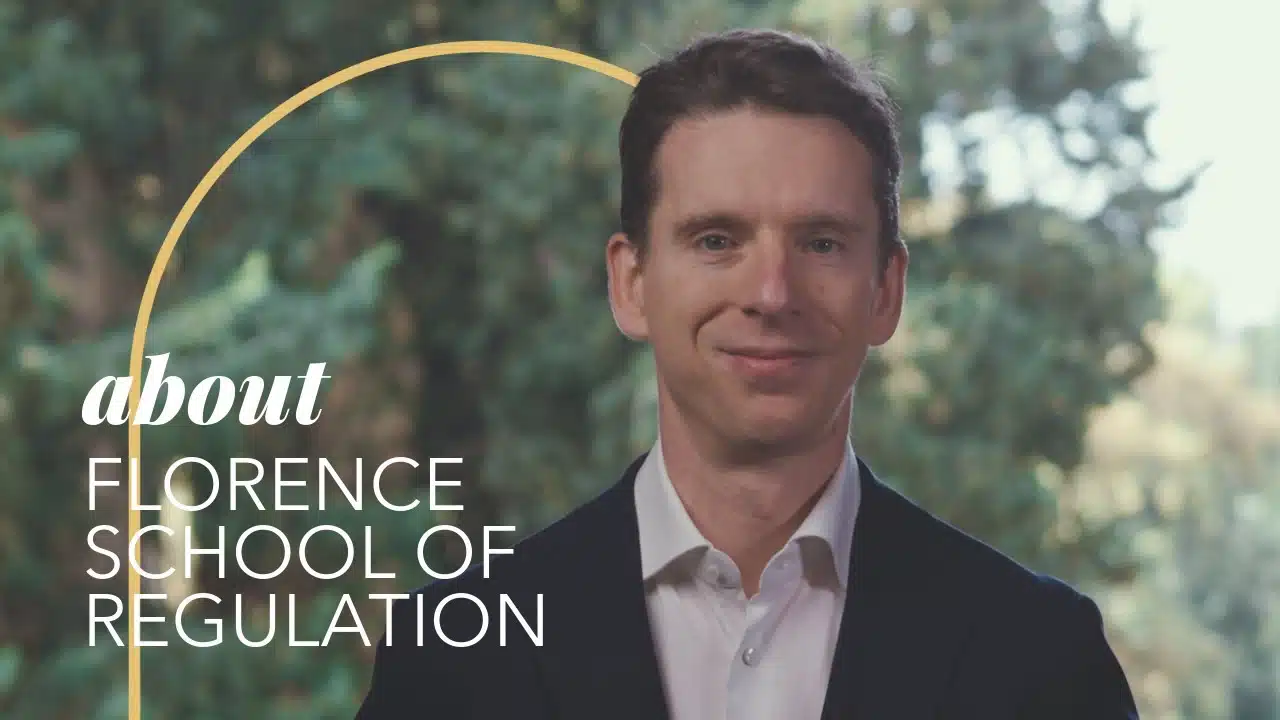
Three ways to define our school: The FSR Director, Leonardo Meeus introduces the Florence School of Regulation

About Video

Our story

The FSR was established in 2003 at the European University Institute’s Schuman Centre, as a cooperation between the EUI, the Council of European Energy Regulators and the European Commission with the objective of promoting good regulation in Europe via training, research, and policy dialogue.

What began in 2004 as a small but ambitious training initiative in Florence has, over two decades, grown into a vibrant centre of regulatory innovation with global reach. In its first year, the FSR opened its doors with the Annual Training on the Regulation of Energy Utilities, bringing together professionals driven by a shared purpose to shape the future of energy regulation in Europe.

From that moment, momentum built rapidly: by 2008, leadership under Jean‑Michel Glachant and the establishment of the Loyola de Palacio Chair set a tone of academic excellence and policy relevance. As the world’s regulatory challenges expanded, so did the FSR’s horizons.

The 2010s saw the launch of new areas — from Transport & Communications to Climate and Water & Waste — each reflecting emerging priorities in sustainable infrastructure and environmental stewardship.

In 2014, the School pioneered its first online courses, extending its reach beyond Florence and training thousands of professionals worldwide.

Embracing digital innovation in 2015, FSR transformed its activities to thrive online, a strategic shift that proved prescient during the global disruptions of 2020, when it launched #DigitalSolidarity scholarships and virtual learning that kept its community connected.

Initiatives like Lights on Women, launched in 2017, underscored the School’s commitment to inclusivity, while the Global area expanded FSR’s impact across continents — even contributing to the birth of an independent regulatory school in India.

More recent years have deepened these global ties, from founding the African School of Regulation in 2022 to celebrating alumni and community milestones in 2023.

Each of these milestones is more than a date on a timeline — they are stories of people, partnerships, and a shared belief in regulation’s power to advance sustainable and equitable futures

Meet the FSR founders


Governance

The European University Institute (EUI), founded in 1972 by the six original members of the then European Communities, is the leading institute in Europe dedicated to social sciences and humanities.

At the heart of EUI, the Robert Schuman Centre is an inter-disciplinary research centre established in 1993 with the goal of developing cutting-edge, academic research to engage with a wide variety of stakeholders in the public and private sector.

The Florence School of Regulation is one of the larger and most successful programmes of the Schuman Centre and is currently directed by Prof. Leonardo Meeus, who is also the holder of the Loyola de Palacio Chair.

Loyola de Palacio Chair

Located in the heart of Tuscany, in Florence, the Loyola de Palacio Chair hosts a busy and lively academic community of economists, engineers, lawyers and physicists.

We are committed to promoting a welcoming and stimulating envi­ronment in which everyone is encouraged to make the most of their academic potential. We assess policy options and nurture debates and innovative thinking.

Thanks to the hard work of our team and the support of our donors, the Loyola de Palacio Chair is able to produce research at the forefront of the energy policy domain.

Leonardo Meeus
Holder of the Loyola de Palacio Chair


About the Loyola de Palacio Chair on Energy

The Loyola de Palacio (LdP) Chair on Energy is the academic counterpart of the Florence School of Regulation (FSR) – Energy.

Founded in 2008, the Chair honours Loyola de Palacio, the former Vice-President of the European Commission and Commissioner for Energy and Transport (1999-2004).

The Loyola de Palacio Chair focuses on the interconnected fields of energy economics, law and regulation as well as geo-politics. Our goal is to produce in-depth research of the highest quality relating to EU energy policy.

The Chair’s fields of expertise and close connections to both European and national energy policy communities allow us to contribute to current debates and to be a bridge between academia and practice in contemporary Europe.


Loyola de Palacio (1950 – 2006)

Loyola de Palacio was a Spanish politician, lawyer and stateswoman as well as a pioneer in the development of a European Energy Policy.

Born in 1950, she was a minister in the Spanish government before becoming Vice-President of the European Commission and Commissioner for Energy and Transport (1999- 2004). She was an independent spirit with a passion for Europe.

Loyola left be­hind a lasting legacy as well as a sibling, her sister Ana Palacio, who is an equally passionate and influential stateswoman, lawyer and politician and who took a personal interest in the Loyola de Palacio Chair.


Loyola de Palacio Donors

Elia group   enel   Netz

Call to action

FSR Annual Report 2024

The mission of the Florence School of Regulation is to combine academic excellence with a positive impact on policy and regulation. We started in Europe and are increasingly active at the world level with a focus on energy, climate, transport, water and waste.

Back to top