


Archives: Events
Hydrogen: the Fuel of Energy Transition?

Electricity and synthetic fuels: partners in the energy transition
Don’t miss any update on our events
Sign up for free and access the latest events from our community.
Speakers
More on the topic


State Aid and Energy: A New Horizon?

Please note: This workshop has been cancelled.
Due to the COVID-19 crisis, unfortunately, this workshop will no longer take place as planned. More details on an alternative arrangement will be posted shortly.
Thank you for your understanding.
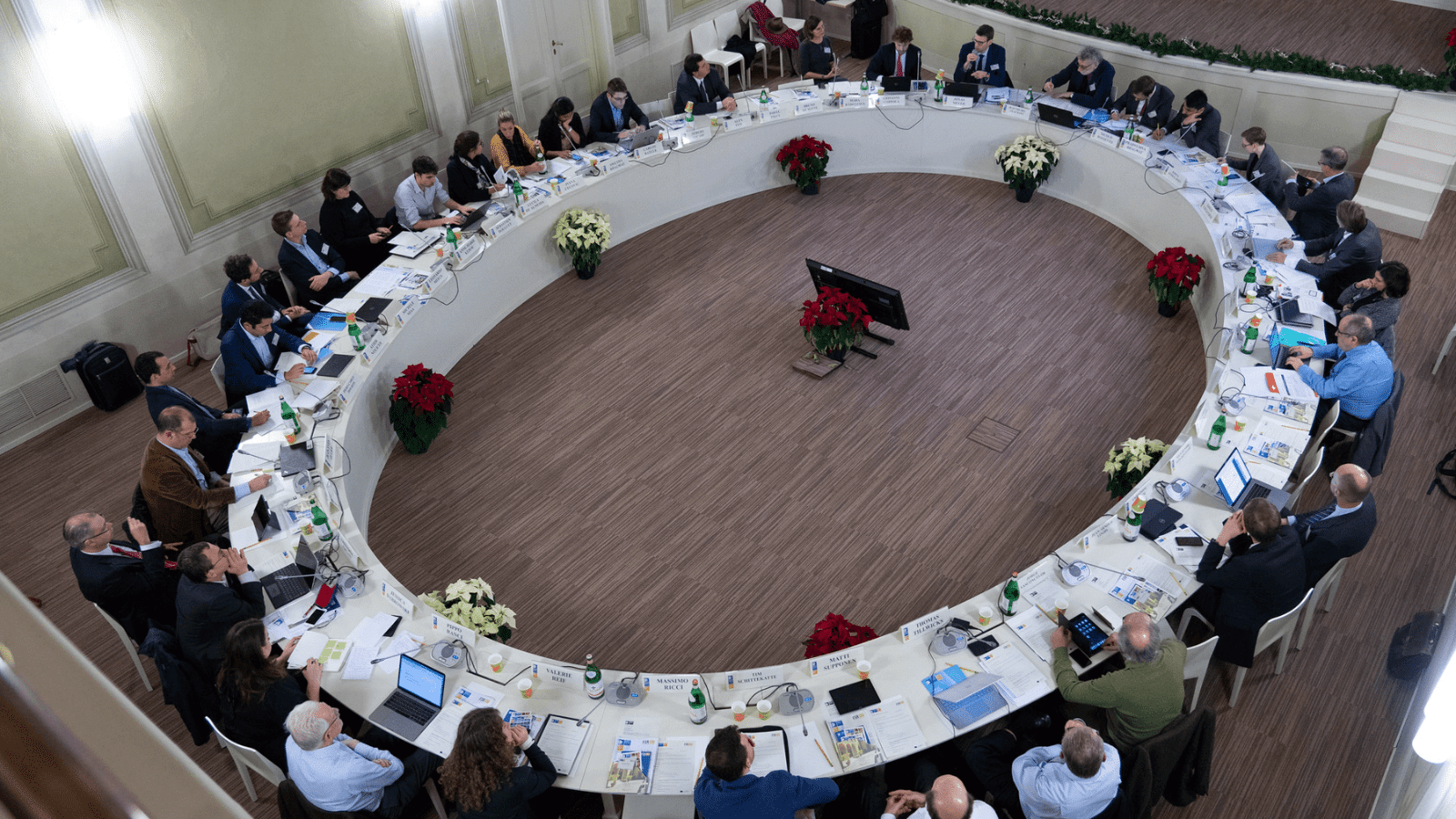
In this workshop, we will bring together experts from EU institutions, academia and practice to critically evaluate the role of state aid in the rapidly changing EU energy environment, from a legal, economic and industry perspective.
In particular, we will focus on:
- The role of electricity versus decarbonised conventional fuels
- The definition of state aid after the EEG 2012 case with Germany
- The revision of the state aid guidelines
- State aid in arbitration awards
- The enforcement of arbitration awards
The audience in attendance will be composed of academics, representatives from EU institutions, governing bodies, NRAs and competition authorities, industry and practice, and NGOs. Built into the programme will be ample time for open discussion among panellists and with those in attendance.
The workshop will follow Chatham House rules to allow for free discussion.
Participation in this workshop is open and without a fee. However, due to limited places, priority will be given to FSR Energy Union Law Donors and invited guests.
Don’t miss any update on our events
Sign up for free and access the latest events from our community.
Speakers

Electricity pricing and trading in the decarbonised energy sector

FSR Regulatory Policy Workshop Series 2020
The Workshop will consider these and other related issues in assessing the way in which the new structure of costs of electricity generation (from renewable energy) might require an upgrading of the current electricity market design, taking into account the need to provide correct investment signals and correct short-term market signals that preserve efficient market outcome in the long and short term.
The Workshop will be structured in two sessions:
- Session 1 will explore the likely trends in electricity market prices in the future. It will also explore which instruments might be introduced or further developed to deal with the new market price dynamics;
- Session 2 will focus on which enhancements of the current design will be required to accommodate the new instruments and any regulatory implications.
Participation in this workshop is open to representatives of National Regulatory Authorities, ACER, the European Institutions, FSR Energy Donor companies, European, national, regional and local public administrations as well as publicly-owned research centres. Priority in the allocation of seats is given to National Regulatory Authorities, ACER, the European Institutions and FSR Energy Donor companies.
Background
The electricity market in the EU, at least in the day-ahead timeframe, has been designed on the basis of single/marginal-price auctions, where, in each market time unit (typically one hour) electricity is bought and sold (in each price area) at the equilibrium market clearing price, which reflects the prices indicated in the marginal bid and offer (the “last” bid and offer accepted in the merit orders of bids ranked in descending price order and offers ranked in ascending price order).
The transition towards a decarbonised energy sector is partly based on a significant increase in the penetration of generation from renewable energy sources. Much of this generation – e.g. wind and solar – has zero or very low marginal costs, but significant fixed (capital) costs. Therefore, when this type of generation is sufficient to cover demand, the resulting equilibrium market prices are likely to be zero or very low. With an increasing penetration of generation from renewable resources, low/zero prices will become more frequent, which will raise the issue of the recovery of fixed costs for these technologies, as well as for other technologies which may still be needed to cover demand as back-up capacity or at times when renewable energy generation is not sufficient.
The resulting profile of market prices may, therefore, be characterised by many periods of low/zero prices and some periods when prices might be very high to allow the recovery of the fixed costs of the generation capacity mix.
This greater variability of market prices represents a risk for generators and may discourage investment in generation capacity. This is the issue that capacity remuneration mechanisms aim to address, by providing a more stable stream of revenues for generators and other resources needed to balance electricity demand and supply. High variability of electricity prices might also represent a risk for consumers, who may prefer more predictable and stable price levels.
Therefore, beyond the introduction of capacity remuneration mechanisms, which should be the very last resort (as also indicated in the Clean Energy Package legislation), the issue arises of whether additional trading instruments should be developed which might be used to hedge the somewhat symmetric risks faced by generators and consumers.
Deadline for registration: 1 November 2020
Don’t miss any update on our events
Sign up for free and access the latest events from our community.
Speakers
How important should methane emissions be in the Green Deal Strategy?

On December 11 2019, Ursula von der Leyen unveiled the European Green Deal – a proposal designed to put the European Union on track to become the world first climate-neutral economy by 2050.
Achieving the climate neutrality objective requires substantial reduction of all greenhouse gases (GHGs), beyond mere carbon dioxide (CO2) emissions mitigation.
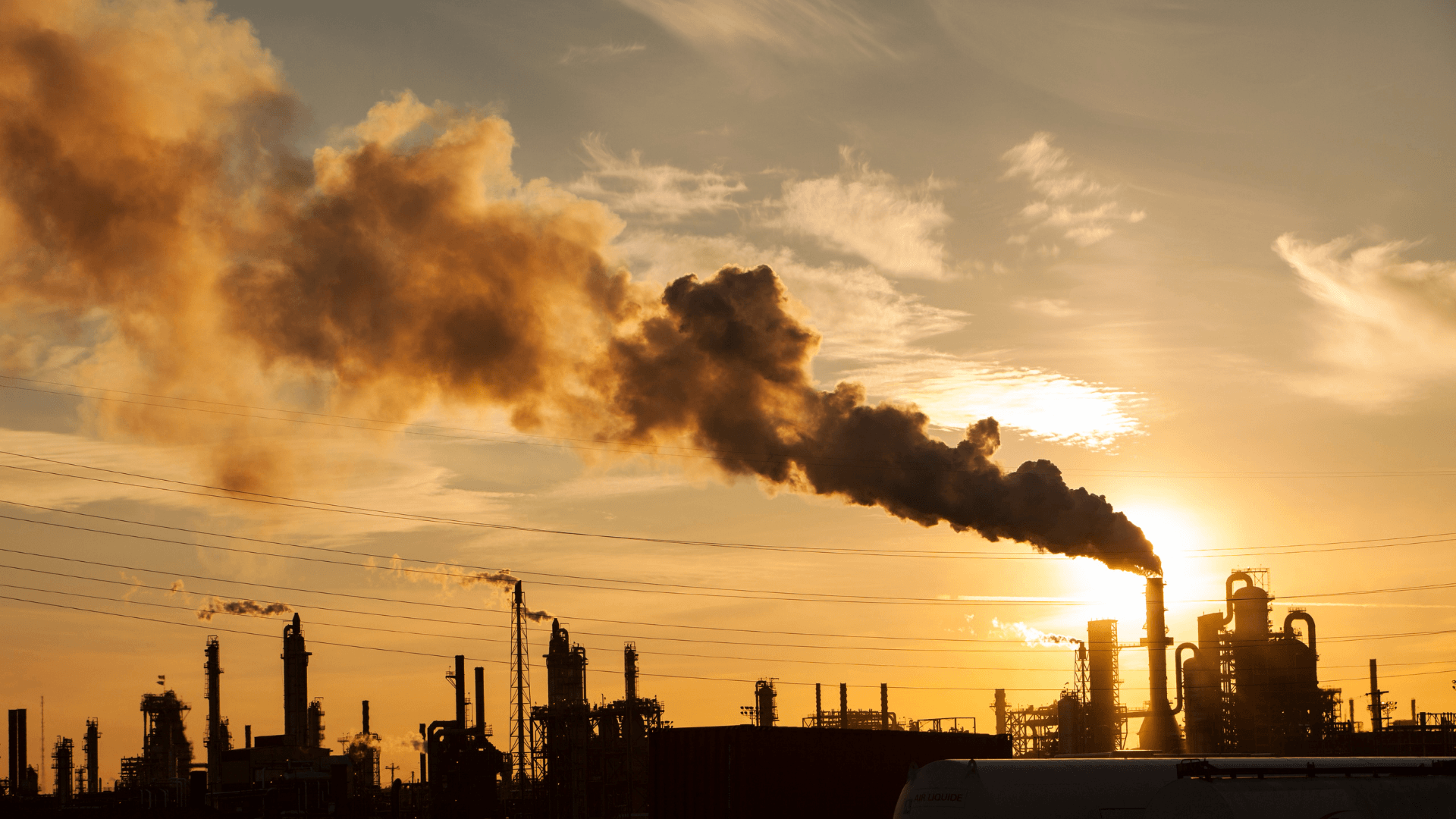
Methane, the second most important GHG, contributes to 25% of the anthropogenic warming that the planet is experiencing today, which makes it a natural candidate to focus on when it comes to emissions reduction. This highly potent (but short-lived) greenhouse gas accounts for roughly 10% of total EU GHGs mainly originating from agriculture, the waste sector, and the energy sector.
However, methane is at the same time the major component of natural gas, which constitutes around one-quarter of the EU energy mix and is expected to retain its crucial role even in future, decarbonised scenarios. The unabated methane emissions occurring along the entire gas supply chain, also outside the borders of the EU Member States, could compromise the environmental case for gas.
As the EU plans to reduce methane footprint intensify, von der Leyen administration is faced with a bigger-than-ever challenge to cut both domestic emissions and the substantial embedded emissions associated with the EU natural gas imports.
This online debate aims at addressing pressing questions relating to EU strategies to deal with methane emissions expected in the early 2020s:
- Should methane emissions reduction in the energy sector be a top priority for the Green Deal?
- What could be the best instruments that the EU should employ to deliver sustainable results globally?
- How to monitor the results achieved, and how to convince the public, regulators and investors about the efficiency and effectiveness of the approaches taken?
Moderator:
Andris Piebalgs, FSR
Panelists:
- Poppy Kalesi , EDF
- Monika Zsigri, European Commission, DG ENER
- Maria Olczak, FSR
- Tania Meixus Fernandez, Enagas
Don’t miss any update on our events
Sign up for free and access the latest events from our community.
Speakers
More on the topic





FSR Research Seminar

The research team of the FSR Energy & Climate is pleased to invite you to a seminar day in Villa Schifanoia, Florence. On this day, we will host two different presentations followed by Q&A sessions.
Seminar Agenda:
2-2.30pm:
Which way is the transition in the Brazilian electricity sector going? Does it matter?
Speaker:
Alex Feil
Abstract: The Brazilian electricity sector has very interesting characteristics, including a predominantly clean and renewablegeneration matrix, a centrally operated transmission system of continental dimensions, active participation of numerous international investors and well-structured institutional actors. This environment is not immune to the disruptive processes underway globally but may react unexpectedly depending on the action of local drivers. This might complicate the design of reliable future scenarios, but the effort to do it may offer interesting results. The presentation aims to share some of the experience about the Brazilian Electricity Sector and discuss the ongoing research that seeks to identify, in the context of the current energy transition, the main drivers that will shape its future in the long term.
20′ Q&A session
* * * Break * * *
3-3.30pm
Peer to Peer Energy Trading, Community self Consumption & Transactive Energy – Blocks and Missing blocks in legal research
Speakers:
Nikolas Klausmann & Lucila de Almeida
Abstract: Peer-to-peer trade (P2P), community self-consumption (CSC), and transactive energy (TE) are notions that have been recently introduced into the debate over energy regulation and rapidly become fashionable among scholars and policy markets. This development goes hand in hand with the new pro(con)sumer centric energy policy by the push towards digitalization.P2P and CSC are notions that often refer to new models of doing business, exchange energy, or a collective sharing of self-production. TE, instead, is a more generic expression that encompasses both P2P and CSC as a means to a more decentral and reactive approach to managing power exchanging.
There is growing research regarding P2P energy trading, CSC, and TE within fields of economics, engineering, management, and law. Within the first part of the fifth sub-task of the International Energy Agency Global Observatory, the presentation will introduce the preliminary findings of the literature review on the subjects mentioned above in the fields of law and regulation. Literature review, in this context, means the task of systematizing what the scholars and organizations (e.g., policymakers, think tanks, and international organizations) have focused most while making descriptive or normative propositions regarding P2P, CSC, and TE. This is the part of the literature we refer to as blocks. But even though there is quite an amount of research done already, we identify that almost nothing has been said about the intersection of P2P, CSC, and TE and general fields of law. Except for consumer law and data protection, this topic seems untouched so far by the literature. The literature review therefore will outline these missing blocks, namely the expected legal issues that might arise with the implementation of P2P, CSC, and TE but are not represented in legal research so far sufficiently.
20′ Q&A session
Don’t miss any update on our events
Sign up for free and access the latest events from our community.
Speakers


13th Florence Air Forum | Review of Regulation (EC) No 1008/2008 on the Operation of Air Services in the EU

Introduction
Regulation 1008/2008 (the “Air Services Regulation”) is the basic legal act organising the EU internal market for air services. It was adopted in 2008 as the legal successor of the three “aviation packages”, which have progressively established the EU internal aviation market. It also codifies the rules of three Regulations from 1992 (on licensing of carriers, on access to the EU market and on air fares and rates).
The Regulation contains provisions on the following main topics: Operating Licences, including on 1) EU carriers’ Principal Place of Business and temporary licence and 2) Ownership and control (O&C) of EU air carriers; 3) Leasing; 4) Freedom to provide intra-EU air services; 5) Public Service Obligations (PSOs); 6) Traffic distribution rules (TDR); and 7) Price transparency.
The evaluation of the Air Services Regulation
As announced in its 2015 Aviation Strategy, the Commission carried out an evaluation of the Regulation and published in July 2019 a Commission report.
The objective of this evaluation was to provide insight into the actual performance of the Air Services Regulation and its overall intended and unintended impacts. While the Regulation does not include any specific social provisions, the indirect impacts associated with its application and the liberalisation of the air services market on employment and working conditions of air crews formed part of the analysis. The impacts on the environment and the ongoing initiatives to address concerns about CO2 emissions and noise were also analysed. The Evaluation report concluded that the Regulation and its predecessors have brought sizeable EU added value in creating the EU internal aviation market by removing barriers to competition, such as restrictions on the routes, increasing the number of flights, allowing entry of new market operators, in particular in the low cost segment, and increasing the range of advertised fares. The Air Services Regulation has been very effective in achieving its objectives (market efficiency, safety and consumer protection). At the same time, it has revealed that there are still areas where some improvement would be beneficial.
Impact assessment study
As a follow up to this evaluation, the Commission (Directorate-General for Mobility and Transport) launched a study to help it assess whether further measures could further contribute to a well-functioning internal aviation market and its global competitiveness, while also contributing to the protection of consumer interest and to safeguarding high EU safety, social and environmental standards.
In the course of this work, the Commission developed a number of preliminary policy options for the various areas identified in the evaluation and asked its external consultant to assess the possible impacts of these options. Interviews of a representative sample of stakeholders and a targeted consultation among all relevant stakeholder categories were conducted in the third quarter of 2019 to gather stakeholders’ views, among other things, on the proposed options for the various topics identified. Taking into account the input gathered, the Commission has been able to further refine its initially identified options.
The Workshop
In this context, the Commission together with the Florence School of Regulation’s Transport Area is co-organising a workshop on the Air Services Regulation to exchange views on the refined policy options. The discussions will take place in the following thematic sessions : i) ownership and control, ii) operating license and principal place of business and temporary licence, iii) applicable labour law and competent jurisdiction, iv) leasing, v) price transparency, vi) traffic distribution rules and vii) public service obligations. At the same time, the workshop will provide an opportunity for a discussion on the Air Services Regulation in the context of the Commission’s Green deal.
The workshop will gather policy makers and representatives from all interested stakeholder groups namely airlines, airports, air crew and consumer organisations, travel industry, and investors for a well-timed discussion.
For more information contact FSR.Transport@EUI.eu
Don’t miss any update on our events
Sign up for free and access the latest events from our community.

Global Observatory on Peer-to-Peer, Community Self-Consumption and Transactive Energy Models

Within the framework of the International Energy Agency, FSR is hosting the second meeting of the Global Observatory on Peer-to-Peer (P2P), Community Self-Consumption (CSC) and Transactive Energy (TE) Models.
Decarbonisation, decentralisation and digitalisation are reshaping the way electricity is produced, traded and consumed.
New energy models, not even thinkable a decade ago, are emerging around the world. Electricity consumers, for example, may now benefit from the possibility to produce, individually or collectively, the energy they consume and to trade any surplus with their peers. Opportunities like this represent a major change from the old world where consumers were, to a large extent, passive users of the electricity system, either from a physical and a commercial point of view.
Launched in September 2019, the Global Observatory is a three-year collaborative research project under the IEA Users-Centred Energy Systems Technical Collaboration Programme (UsersTCP). It represents a forum for international collaboration to understand the policy, regulatory, social and technological conditions necessary to support the wider deployment of peer-to-peer, community self-consumption and transactive energy models.
The conference will last two days:
On the first day, open to the public, academics, industry practitioners and representatives of the institutions will meet and discuss the definitions of these new energy models and the opportunities and difficulties that they raise. A few concrete cases of P2P, CSC and TE energy models will be presented and will be used to ignite the debate.
During the second day, researchers involved in the Global Observatory will meet again, present the work conducted so far in the various Observatory subtasks and discuss the steps to take in the following six months.
Participation to the first day is open to everybody but subject to registration and seats availability. Participation to the second day is limited to researchers who are part of the Global Observatory.
 Join the discussion online using the hashtag #P2PEnergy
The conference is financially supported by the Foreign & Commonwealth Office of the United Kingdom.

Don’t miss any update on our events
Sign up for free and access the latest events from our community.

FSR-PGN Workshop

This workshop aims to present the main mutual activities of Florence School of Regulation (FSR) and Perusahaan Gas Negara (PGN), and explore areas of further cooperation. In particular, PGN will give an overview of the current developments in the Indonesian gas market, while FSR will present the main activities carried on by FSR Gas and other areas of potential interest.
PGN will be provided with an overview of the recent initiatives in terms of research, training and policy debates, in order to explore and discuss potential cooperation and future partnerships. The findings of the very recent FSR Research Project “Definition of a Roadmap for the Establishment of a Gas Transportation National Dispatching Centre in Indonesia” will be presented. The workshop will conclude with an open discussion on how to consolidate the cooperation between FSR and PGN to address future challenges and to successfully solve them.
The FSR and PGN have been cooperating since 2015, by engaging in research on topics of common interest and exchanging views on how to address specific regulatory and policy issues relating to gas markets.
Participation is by invitation only.
Don’t miss any update on our events
Sign up for free and access the latest events from our community.
More on the topic
Variable generation, flexible demand
The workshop on variable generation, flexible demand is organised by the Florence School of Regulation in partnership with Menlo Energy Economics.
For decades, utilities have been predicting electricity demand and dispatching generation units to meet it.
The current energy transition and the growing role of intermittent renewable energy sources make such a traditional way of operating the electricity system no more the most efficient nor reliable.
In the future, we will increasingly be predicting variable renewable generation and schedule demand to match it. A more sophisticated involvement of the demand side in system operation will be required.
In liberalised electricity systems, it is the task of firms and markets to identify new ways to elicit the provision of flexibility by network users and end consumers.
Building on the success of its previous edition in February 2019, this workshop will investigate new business models that are emerging in the electricity sector.
Participants from the industry, academics and representatives of public institutions will be able to brainstorm freely and share ideas on where, and how, value can be created in the electricity sector of the 21st century.
Scientific organisers:
- Jean-Michel Glachant (FSR)
- Nicolò Rossetto (FSR)
- Fereidoon Sioshansi (Menlo Energy Economics)
Join the discussion online using the hashtag #FlexDemand
Don’t miss any update on our events
Sign up for free and access the latest events from our community.
More on the topic

Water Regulation: Paving the Road for 2020

FSR workshop on Water Regulation: Paving the Road for 2020
In this seminar hosted in Florence, we will work on water investment needs in Europe as well as on water tariff regulation, discussing the 2019 European Water Regulators’ report (WAREG).
We will discuss in-depth the variety of water tariff regulations in Europe and the way to foster water investments where it is needed. We will also address the question of regulation, investments, and social objectives.
The seminar will bring together academics, representatives from EU institutions, representatives from regulatory authorities, lawyers and economic consultants, and members of the industry for the debate.
Welcome address and road map by Stéphane Saussier, FSR and Sorbonne Business School.
Invited speakers include:
- Andrea Guerrini, ARERA & WAREG
- Antonella Bancalari, London School of Economics
- Ivaylo Kastchiev, Energy and Water Regulatory Commission (EWRC)
- Stéphane Straub, Toulouse School of Economics
- Paola Valbonesi, University of Padova
- Kathleen Dominique, Organisation for Economic Co-operation and Development (OECD)
- Laura Brien, Commission for Regulation of Utilities in Ireland (CRU)
- Giordano Coralullo, Utilitalia
Participation in this workshop is open subject to availability. Priority will be given to FSR Donors and invited guests.
Join the discussion online using the hashtag #FSRWater.
in cooperation with WAREG 
Don’t miss any update on our events
Sign up for free and access the latest events from our community.
Speakers
Linking Emissions Trading Systems in the Paris Agreement era

First online debate of the LIFE DICET project
Organised by FSR Climate
Linking Emissions Trading Systems in the Paris Agreement era: prospects, opportunities, challenges
- Speakers: Jos Delbeke (EUI) and Robert Stavins (Harvard)
- Moderator: Simone Borghesi (EUI)
Over the past few years, the number of operating or planned Emissions Trading Systems (ETSs) around the world has been increasing and relevant experience with some already well-established ETSs has been accumulated. This fact and the context laid out by Article 6 of the Paris Agreement suggests that in the near future the international carbon market might be reinvigorated by new linkages between existing ETSs.
In this online debate, Jos Delbeke and Robert Stavins will discuss the current prospects for ETS linking as well as the opportunities and the challenges for the jurisdictions that do consider linking their ETSs.
Watch the recording
Join the discussion online!
Don’t miss any update on our events
Sign up for free and access the latest events from our community.
More on the topic







Online talk: Economics of Electricity
Economics of Electricity: Markets, Competition and Rules
FSR Online talk
- Speakers: Anna Creti (Paris Dauphine) and Fulvio Fontini (University of Padova)
- Moderated by Leonardo Meeus (Florence School of Regulation)
In this online talk, we will discuss with Anna Creti and Fulvio Fontini their new book titled “Economics of Electricity: Markets, Competition and Rules”.
The 45′ event moderated by Leonardo Meeus (FSR) will focus on electricity markets, outlining the economic principles behind the exchange and supply of power to consumers and firms, how markets should be optimally designed to produce and deliver electricity effectively and efficiently and other key issues like decarbonization of the electricity sector.
Join the discussion online!
Watch the recording
Don’t miss any update on our events
Sign up for free and access the latest events from our community.
Speakers
More on the topic