




Archives: Events
A common terminology for gases
This FSR online debate will provide participants with insights on the FSR’s proposal for a common terminology for gases.
Sector coupling is meant to accelerate the decarbonisation of the EU energy sector and gas sector will be playing a key role in the process. However, recent discussions, studies and existing pilot projects led us from a rather uniform world of one commodity (natural gas) to the uncharted territory of the heterogenous low-carbon and decarbonised gases. Biogas, biomethane, green, blue and grey hydrogen, synthetic methane could be produced through different processes and from different substrates, which rises the questions on their environmental and climate impact.
Panellists: Chelsea Baldino (ICCT), Eva Hennig (Eurogas), Augustijn Van Haasteren (DG ENER), Malcolm McDowell (DG ENER)
Moderator: Ilaria Conti (FSR)
That’s why one of the key debates at the latest Madrid Forum on 5-6th June 2019 was devoted to the identification of a common terminology for gases.
The recently adopted recast Renewable Energy Directive (RED II) takes up the matter, e.g. by extending the Guarantees of Origins to renewable gases and by introducing the provisions enabling the integration of gas from renewable sources in the existing gas network infrastructure. Yet, it does not introduce clear definitions or criteria (taxonomy) to classify the various types of gases that are currently being used in the system.
This is the first online debate organised as a part of the FSR sector coupling platform project realised in cooperation with the European Commission (DG Energy). For more information visit the FSR Sector Couling platform.
Preparatory materials:
ICCT presentation on Common terminology for gases from the research perspective
CEDEC presentation on Gas industry proposal to align gas terminology
Don’t miss any update on our events
Sign up for free and access the latest events from our community.
More on the topic



Carbon Pricing in Europe

This FSR Webinar will explore the economic framework for compensation for Carbon Pricing in Europe.
Speaker: Fabien Roques (FSR; Compass Lexecon; Université Paris Dauphine)
Under the 2030 Climate and Energy Framework, the European Union has committed to EU-wide targets for the period 2021-2030 in the context of a long-term strategy to achieve a climate-neutral economy by 2050. Among these targets is a 40% cut in greenhouse gas emissions. The EU emissions trading system (EU ETS) is the cornerstone of the EU’s policy to combat climate change. It is the world’s first major carbon market and remains it’s largest. To safeguard the competitiveness of industries covered by the EU ETS, the European Commission has developed a framework to provide compensation for the sectors and sub-sectors deemed to be exposed to a risk of carbon leakage.
In this webinar, Fabien Roques will review the status of carbon pricing at global level and weigh the effectiveness of the EU ETS and its impact on competition across various industries before examining the theoretical framework established to deal with the risk of carbon leakage for the direct and indirect carbon costs that they face as a result of the EU ETS.
This webinar is part of the Energy Union Law Webinar Series. Find more from this series
Don’t miss any update on our events
Sign up for free and access the latest events from our community.
More on the topic





Imperfect Markets and Imperfect Regulation

FSR Online Talks
The power industry is essential in the fight against climate change. In this online talk, we will look at the microeconomics underlying power markets and the tensions between microeconomics and political economy, together with Thomas-Olivier Léautier (Toulouse School of Economics).
Thomas-Olivier is the author of Imperfect Markets and Imperfect Regulation, the first textbook to present a comprehensive and detailed economic analysis of electricity markets, analyzing the tensions between microeconomics and political economy.
The 45′ event moderated by Tim Schittekatte (Florence School of Regulation – Energy & Climate) will touch upon the key challenges in:
- wholesale market structure;
- retail market organisation;
- transmission pricing (zonal vs nodal);
- policy issues: the impact of renewables and generation adequacy
Join the discussion online!
Imperfect Markets and Imperfect Regulation.
An Introduction to the Microeconomics and Political Economy of Power Markets
To learn more about it, watch the book trailer
Don’t miss any update on our events
Sign up for free and access the latest events from our community.
Speakers



2nd Florence Maritime Forum: Port call optimisation, for a smart and sustainable maritime eco-system
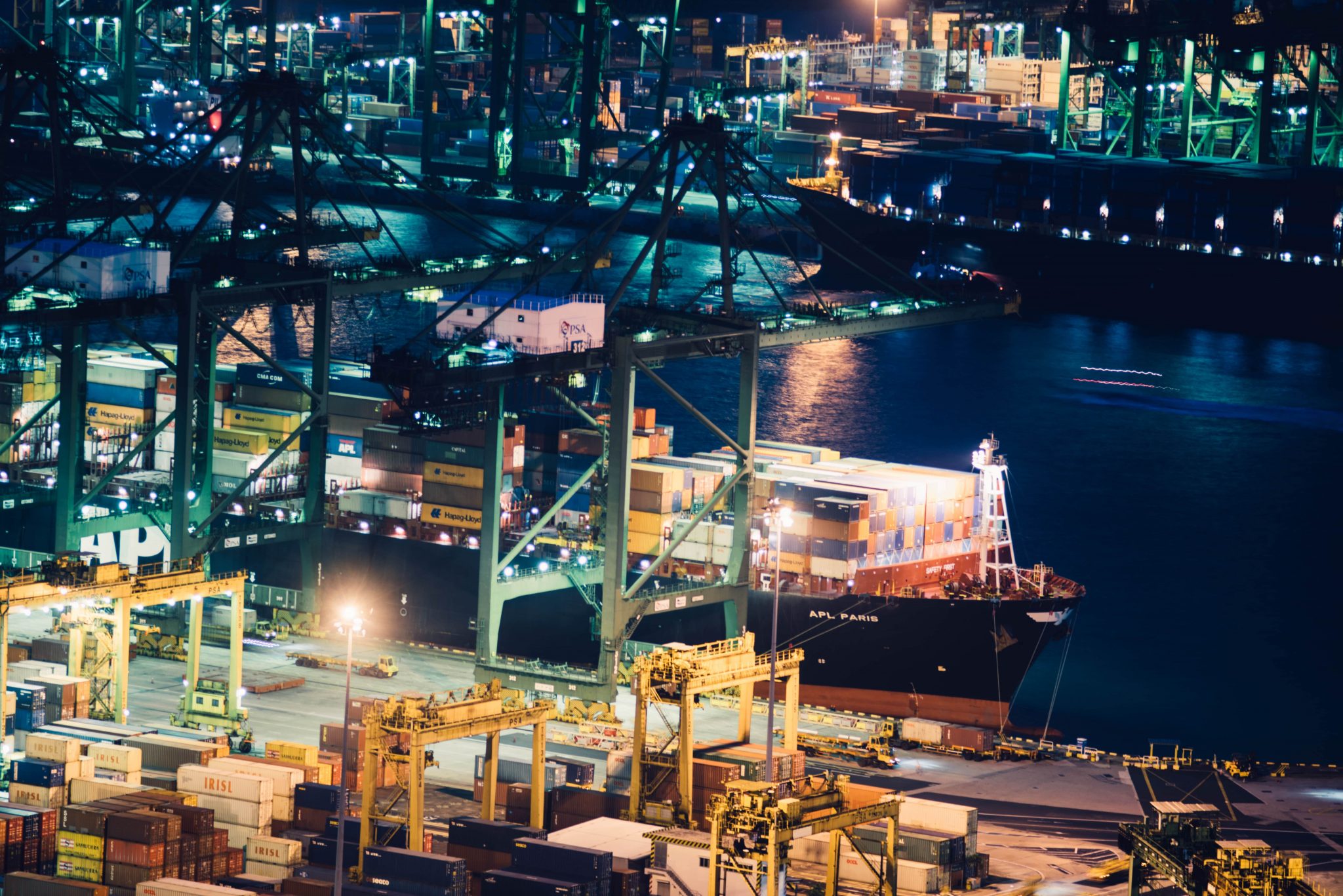
Port-call optimisation. The first step towards a smart and sustainable digital eco-system for maritime transport?
BACKGROUND
The 2nd Florence Maritime Forum, jointly hosted by the Florence School of Regulation’s Transport Area and the European Commission’s DG MOVE, will take the form of a roundtable discussion on 10 October 2019, organised back to back with the Digital Transport Days, taking place in Helsinki.
The maritime transport industry faces strong competitive pressure from other modes of transport, but can and should – ‘tap’ on the potential of digitalisation. In order to remain an attractive and competitive transport mode in an increasingly digital economy, the maritime eco-system has to accelerate efforts in integrating a new digital approach, with a view to facilitating the efficiency, reliability and predictability of operations. Addressing this challenge requires as a basis data exchanges and sharing between all parties making up the maritime eco-system, including hinterland and maritime operators.
Digitalisation is not a goal per se but rather a means to improve operations (including safety of operations), to increase capacity of the maritime industry and to improve links to the hinterland. With 75% of the EU trade being transported on the seas, attractive and competitive maritime services are critical. But it equally concerns the well-functioning of our ports as major gateways connecting the EU market to its international partners. Maritime transport is in essence only one element of a much diverse multimodal transport chain. Its single performance is critical but it cannot suffice if its integration in the overall transport network is not well achieved.
The round-table discussions will hence assess the opportunities and challenges that digitalisation brings to the maritime sector, with focus on, possibly, the most crucial aspect in the logistic chain: the port call.
Optimising port calls means better information to operators on when berth would be available, in order to allow them to adjust their routing, their speed to ensure the most efficient operations and just-in-time arrival. This, in turn, will also have positive effects on the vessels’ fuel consumption, and the related emissions. On the other side, optimising port calls should also allow sufficient information flowing to the port authorities and operators, so that they can best adjust to the expected levels of traffic and cargo.
The issue: port-call optimisation
The concept of port-call optimisation is based on the idea that the efficiency of logistics could significantly increase if the time-schedule of the various activities required for port calls and cargo handling and distribution were set in advance, predictable and fully relied upon, available to all parties involved, and dynamically adjusted in case of unforeseen circumstances.
Whereas elements of this concept are already present here and there, there are no examples of fully-fledged implementation. This might be surprising, considering that the main actors of the logistic chain – shippers, maritime operators and port service providers – share an interest in reducing idle times, maximising turn-around and increasing reliability of schedules. In addition, greater logistic efficiency and voyage optimisation would translate in a reduced carbon footprint: a common challenge to all parties involved.
Therefore, the question is why the full potential of port-call optimisation remains unexploited, considering that the technological means for tracking and tracing vessels and cargo are already available.
Most of the ports in the EU and worldwide operate on a “first come, first served” principle, meaning that ships incur significant additional expense in fuel costs, because the ships might have sailed faster than necessary, or lost cargo carrying time due to the delays in unloading. Some of the world’s major ports have therefore adopted more sophisticated variants of slot management requiring advanced data exchange. In the inland waterways sector, too, there are examples of cooperation of several ports in certain geographical regions, in order to coordinate ports call planning hence improved planning of port operations, including customs activities*.
Using smart information sharing in a maritime eco-system may achieve efficiency gains for vessels, ports, terminals and other actors in the logistic chains; improve turnaround time for vessels, and for authorities needing to ensure safety, security or environmental standards both reducing costs without reducing targets. Data could also be used to improve efficiency in the rest of the transport and logistic chain through better planning of operations, avoiding congestions, etc. However, a smart maritime eco-system can only be achieved through the coordinated efforts of all involved players in deploying innovative technologies, disruptive business models and strategic partnerships.
Participants in this round-table discussion are invited to address some of the basic issues in relation to port-call optimisation and provide their views on the following questions:
(1) Is the concept of port-call optimisation appealing from the point of view of your business? Which aspects are more attractive and which are less desirable and possibly worrying? How can automation or autonomous vessels play a role?
(2) Are there any obstacles to the implementation of the concept? Are these obstacles of a practical, commercial, technological, legal, administrative or other nature?
(3) Are there any actions that could be put in place to facilitate the implementation of the concept, in turn creating trust in any such an eco-system approach? In particular, is standardisation prerequisite problem or a solution? How would a uniform method of measurement to verify and compare reductions of environmental impact work?
*For instance, the The RheinPorts Information System (RPIS) has been developed in the context of the EU (CEF) funded project “Upper Rhine Traffic Management System” conducted by RheinPorts Basel-Mulhouse-Weil together with Port Autonome de Strasbourg, Rheinhäfen Karlsruhe and the other Upper Rhine Ports.
Participation in the event is upon invitation only.
Don’t miss any update on our events
Sign up for free and access the latest events from our community.


FSR Climate Annual Conference 2019

#FSRClimate19
FSR Climate is pleased to announce its 5th Annual Conference on the Economic Assessment of European Climate Policies to take place at the European University institute in Florence on 28-29 November 2019.
The conference will cover the main climate-related existing policies, at EU, national and subnational levels and will include plenary sessions on Energy efficiency, Renewable policies, Environmental taxation, and Emissions trading.
Chaired by: Simone Borghesi, Director FSR Climate
Keynote speaker: Jeroen van den Bergh (Universitat Autònoma de Barcelona and VU University Amsterdam): “A transition to global carbon pricing”
Plenary Speakers:
- Energy efficiency –Matthieu Glachant (MINES Paristech): Selling energy and saving energy: The industrial organisation of energy savings obligations
- Renewable policies – Natalia Fabra (Universidad Carlos III, Madrid): Competition among renewables
- Environmental taxation – Stephen Smith (University College London): The more the merrier? Potential and pitfalls of instrument combinations in climate policy
- Emissions trading – Luca Taschini (Grantham Research Institute LSE and University of Verona): Emissions trading systems, cap adjustments and the Market Stability Reserve
List of videos from the plenary presentations
Emissions trading
Luca Taschini | London School of Economics
Environmental Taxation
Stephen Smith | University College London
A Transition to Global Carbon Pricing
Jeroen Van den Bergh | Universitat Autònoma de Barcelona and VU University Amsterdam
Renewables
Natalia Fabra | Universidad Carlos III, Madrid
Presentations and papers – FSR Climate annual conference
Plenary presentation: Environmental Taxation
The More the Merrier? Potential and Pitfalls of Instrument Combinations in Climate Policy [Slides] [Video]
Stephen Smith | University College London
Session 1: Environmental Taxation
Yellow Vests, Endogenous Beliefs, and Carbon Tax Aversion [Paper]
Thomas Douenne | Paris School of Economics, University Paris 1 Panthéon-Sorbonne;
Adrien Fabre
Session 2: Renewables
Procurement Auctions for an Electricity System with Increased Wind Technology [Slides]
Aimilia Pattakou | ETH Zurich
Do Sustainable Energy Policies Matter for Reducing Greenhouse Gas Emissions? [Paper]
Donatella Baiardi | University of Parma
Keynote lecture
A Transition to Global Carbon Pricing [Slides]
Jeroen van den Bergh | Universitat Autònoma de Barcelona and VU University Amsterdam
Plenary presentation: Emissions trading
Emissions Trading Systems, Cap Adjustments and the Market Stability Reserve [Slides] [Video]
Luca Taschini | London School of Economics
Session 3: Issues in Climate Policy (1)
Living in an Uncertain World: Environment Substitution, Local and Global Indeterminacy [Slides]
Mauro Sodini | University of Pisa; Angelo Antoci and Simone Borghesi
Modelling Maladaptation In the Inequality-Environment Nexus [Slides]
Elisa Ticci | University of Siena; Angelo Antoci and Paolo Russu
Five Shades of Green: Heterogeneous Environmental Attitudes in an Evolutionary Game Model [Slides]
Giulio Galdi | University of Siena; Angelo Antoci and Simone Borghesi
Session 4: Emissions Trading (1)
Allowance Prices in the EU ETS – Fundamental Price Drivers and the Recent Upward Trend [Slides]
Marina Friedrich | Potsdam Institute for Climate Impact Research; Michael Pahle
Impact of Political Announcements on the EU ETS [Slides]
Juan Fernando López Hernández| European Lime industry Association- EuLA and Industrial Minerals Association-IMA -Europe A.I.S.B.L.
Plenary presentation: Energy Efficiency
Selling Energy And Saving Energy: The Industrial Organisation Of Energy Savings Obligations [Slides] [Video]
Matthieu Glachant | Mines ParisTech
Session 5: Energy Efficiency
Electricity Intensity in the Developed Countries: Global Divergence, Club Convergence and the Role of the Structure of the Economy [Paper]
Lior Gallo | Bank of Israel
The Effects of Energy Literacy and Household Income on Consumer Choice of EnergyEfficient Appliances – Insights from o Multi-Country Discrete Choice Experiment and Welfare Analysis [Slides]
Joachim Schleich | Grenoble School of Management; Marie-Charlotte Guetlein, Corinne
Faure and Gengyang Tu
Is there Climate Policy Integration in EU Energy Efficiency and Renewable Energy Policies? Yes, No, Maybe [Slides]
Daniela Kletzan-Slamanig | Austrian Institute of Economic Research; Claudia Kettner-Marx
Session 6: Issues in Climate Policy (2)
Transboundary Water Governance and Institutional Effectiveness In the Lower Mekong Delta: An Analysis of the Mekong River Commission [Slides]
Julie Pellizzari | Foundation Euro – Mediterranean Center of Climate Change
Energy and Productivity in the UK: Demand and Supply Perspective [Slides]
Shimaa Elkomi | University of Surrey; Simon Mair, Tim Jackson
29 November
Plenary presentation: Renewables
Competition among Renewables [Slides] [Video]
Natalia Fabra | Universidad Carlos III, Madrid
Session 7: Emissions trading (2)
Hedging and the Temporal Permit Issuance in Cap- and –Trade Programs: the Market Stability Reserve Under Risk Aversion [Slides] [Paper]
Oliver Tietjen | Potsdam Institute for Climate Impact Research; Kai Lessmann and Michael Pahle
Session 8: Environmental taxation (2)
Energy Prices and Firm’s Economic Performances in Emerging Countries [Slides]
Francesco Nicolli |University of Ferrara
Gasoline Price Uncertainty and New Vehicle Fuel Economy [Slides]
Stefano F. Verde | European University Institute, FSR Climate; Valeria Di Cosmo
Session 9: Emissions trading (2)
Energy Taxes and Manufacturing Firm Performance: Evidence from Finland’s Green Tax Reform [Slides]
Marita Laukkanen | VATT Institute for Economic Research; Kimmo Ollika and Saara Tamminen
Is a Double Dividend Possible For The Irish Carbon Tax? [Slides]
Aykut Mert Yakut | Economic and Social Research Institute; Kelly de Bruin
Session 10: Issues in Climate Policy (3)
A Semiparametric Analysis of Green Inventions and Environmental Policies [Slides]
Massimiliano Mazzanti | University of Ferrara; Antonio Musolesi
Effects of Environmental Innovations on CO2 Emissions in Europe: An Empirical Analysis of Panel Data From an ARDL Model [Slides]
Michelle Mongo | Saint-Étienne School of Mines
Climate-Change Adaptation: The Role of Fiscal Policy [Slides] [Paper]
Emilia Pezzolla | Prometeia Associazione; Michele Catalano and Lorenzo Forni
Speakers bios
 Natalia Fabra is Professor of Economics at Universidad Carlos III de Madrid. She is Research Fellow at the Centre for Economic Policy Research, and Associate Member of the Toulouse School of Economics. She obtained her PhD in 2001 at the EUI (Florence). She works in the field of Industrial Organization, with emphasis on Energy and Environmental Economics and Regulation and Competition Policy. Her research papers are published in leading journals such as the American Economic Review, the Rand Journal of Economics, The Economic Journal, Energy Economics, The Journal of Industrial Economics, and the International Journal of Industrial Organization, among others. Natalia is Associate Editor at the Economic Journal and the Journal of Industrial Economics. She has received two distinguished awards as Spanish Best Young Economist (one awarded by the Banco Sabadell Foundation, and the other by the Madrid regional government). In 2017 she was awarded with an ERC Consolidator grant “Current Tools and Policy Challenges in Electricity Markets” for the period 2018-2023.
 Matthieu Glachant is head of CERNA – Centre for industrial economics and a professor of economics at MINES ParisTech – PSL. His research is in the fields of environmental economics and energy economics. Specific areas of expertise include the economics of green innovation, renewable energy, energy efficiency, waste policies, and adaptation to climate change. He also works with governments, businesses and NGOs on topics of shared interest. He is a Visiting Professor at the Grantham Research Institute on Climate Change and the Environment at the London School of Economics since 2012 and an associate editor of the journal Resource and Energy Economics.

Stephen Smith is Professor of Economics at University College London. He began his career as a member of the UK Government Economic Service, before moving to a leading independent think-tank, the Institute for Fiscal Studies, in 1985. He was Head of the Department of Economics at UCL from 1997 to 2002. He has written extensively on the economics of tax policy, and environmental economics, and has acted as consultant to the UK government and international organisations, including the European Commission, the OECD and the IMF. He contributed papers on VAT and on Environmental Taxation to the Mirrlees Review of the UK Tax System, coordinated by IFS, which reported during 2011.
 Luca Taschini is an Associate Professorial Research Fellow at the Grantham Research Institute at the London School of Economics. He is also an Assistant Professor at the Department of Economics at the University of Verona. His research is in the field of environmental economics, industrial organisation and finance, with a focus on the theory and practice of market based instruments. Luca is member of the CESifo Energy and Climate Economics Research Group in Munich, Germany. He was previously Senior Dahrendorf Fellow at the LSE and Visiting Scholar at the MIT Joint Program on the Science and Policy of Global Change, U.S.A.
Past editions of the FSR Climate Annual Conference on the Economic Assessment of European Climate Policies
FSR Climate Annual Conference 2018
FSR Climate Annual Conference 2017
FSR Climate Annual Conference 2016
FSR Climate Annual Conference 2015
Don’t miss any update on our events
Sign up for free and access the latest events from our community.
More on the topic





Legal Issues of Energy Regulation
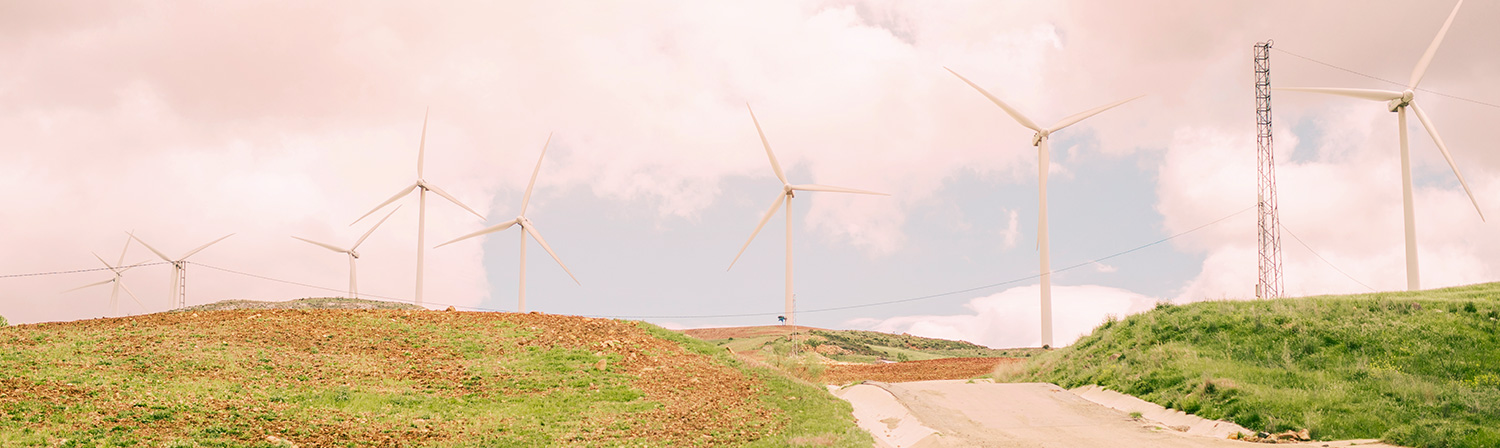
For the 11th edition of this collaboration, we will dive into the key topics of Legal Issues of Energy Regulation.
The FSR-BNetzA Forum is a long-standing collaboration between the Energy Union Law Area of the FSR and Bundesnetzagentur, the German regulatory authority, which aims to critically assess the central issues facing national regulatory authorities in the field of energy from both a legal and economic perspective.
We will look beyond the Clean Energy Package to the next priorities in energy regulation and consider how the incoming Commission may shape the energy landscape. We will examine the role of digitalisation in empowering the consumer, the system integration of renewables, and regulatory design. Further details of the programme will be released shortly.
The forum on “Legal Issues of Energy Regulation” will bring together an audience of academics, institutional and NRA representatives, policy-makers and market players. The forum is open to participation and free of charge. There are, however, limited places available and priority will be given to invited guests.
For further details on the content, please contact the scientific organiser: Anne-Marie Kehoe.
For logistical and other practical information on the programme and registration, please contact RSCAS.Conferences@EUI.eu.
Don’t miss any update on our events
Sign up for free and access the latest events from our community.

9th Conference on the Regulation of Infrastructures: Sector Coupling. How to regulate convergence?

The Conference on the Regulation of Infrastructures is the annual event that brings together all the Areas of the Florence School of Regulation. The 9th edition of the Conference on the Regulation of Infrastructures will focus on regulation of convergence and will take place online on 24-26th June 2020 .
- On June 24 (12.00-18.00) and June 25 (10.00-16.30) paper presentations will take place online.
- On June 26 from 11.00 to 13.00 there will be a round table discussion with FSR Areas directors and a keynote speaker Alberto Pototschnig, FSR Energy, Part-time professor/ Former Director of the European Union Agency for the Cooperation of Energy Regulators (ACER) (2010-2019).
How to participate:
Please register for the round table discussion using the link on the right. One week prior to the round table discussion we will forward a full list of the scheduled paper presentations.
About the conference:
Most infrastructures have developed independently from one another and constitute self-contained socio-technical systems. This is, for example, the case of electricity, of gas, of telecommunications, of air transport, but also of railways. Consequently, also regulation was set up in a self-contained sector-specific manner.
However, this way of doing things cannot continue into the future, as the different infrastructure sectors are converging. This is, first, because of the technological and economic dynamics that has been triggered by liberalisation, and which has led to new technologies, often at the interface of the different sectors (e.g., power-to-gas), along with corresponding cross-sectoral business strategies.
Convergence also results from recent developments of digital networks (and in particular of the fifth generation of wireless technologies, the 5G) which increasingly act as driver of convergence between sectors, leading to cross-sectoral and much more integrated infrastructures services (e.g., “Mobility-as-a-Service” or MaaS). The take-off of the Internet of Things (IoT) based on 5G networks, which is addressed as the next Industrial Revolution, is expected to accelerate this trend. Finally, climate and other ecological challenges force a direct comparison among different sectors, such as in the case of externalities caused by energy generation (by renewables or by fossil fuels) or by the different transport models.
For all three reasons, a more convergent view of the different network industries is rapidly emerging … but will it translate into converging regulation or even into the regulation of convergence? Such is the topic of the 9th Florence Conference on the Regulation of Infrastructures.
More precisely, we look for contributions that link different infrastructure sectors, especially in terms of regulating interfaces between the different sectors, as well as regulating more integrated and converging sectors. Contributions utilising multidisciplinary as well as interdisciplinary approaches to regulation are welcome. Papers linking academia and practice, as well as policy research papers are particularly encouraged.
The conference is intended for academics such as PhD students, PostDocs and Assistant/associate/full Professors as well as academically minded practitioners.
List of selected authors and titles of their papers (* presenting author)
- Balogh, V. “Consumer protection – the case for converging regulation”
- Bischi, A.*, Thie, N., Schwaeppe, H., Schumann, K., Ferrari, L., Gordini, A., Paronuzzi, P., Punzo, A., Cakirer, K. B., Acan, B., Crisostomi, E., Desideri, U., Pozzi, M.*“Integrated planning of multi-energy systems: a comprehensive modelling framework”
- Brauer, J.*, Villavicencio M. “The value of avoided curtailments – Increasing welfare through the involvement of TSOs in the operation of power-to-hydrogen units”
- Bruni, A. “5G deployment: The role and challenges of regulatory bodies in ensuring convergence within the EU”
- Ducuing, C. “The Broadband Cost Reduction Directive: a legal primer in cross-sector regulation of infrastructures”
- Gonçalves, E.*, Dutra, J., Resende, B.”Coupling Power & Natural Gas sectors in Brazil – is convergence possible in times of market reforms? The case of Reservoir-to-Wire Power Plants”
- Hoffmann, L.J. “Three entitlement problems in the digital economy and how antitrust (re-)allocates property rights“
- Knieps, G. “Sector coupling through the lens of 5 G networks”
- Mayol, A., Staropoli, C. “Giving consumers too many choices: a false good idea? A lab experiment applied to water and electricity tariffs”
- Nolden, C. “Locating value in sector coupling: powering railways with renewable energy”
- Paniccia, I. “Substitution or Integration between Traditional Public transport and New Forms of Mobility. Implications for Economic Regulation”
- Parcu, P.L., Innocenti, N., Carrozza, C. “The increasing complexity of 5G technology: is this an issue for competition?”
- Phang, S.Y. “The convergence of water, electricity and gas industries: Implications for PPP design and regulation”
- Van Soest, H. “Reconceptualising the Electricity System and the Internet as Two Interdependent Super-Critical Infrastructure Systems”
- Vanrykel, F. “Electrification of road transport and the future of infrastructure financing: a look at energy taxes”
Conference structure
The format of the Florence Conference on the Regulation of Infrastructures is unique, in that we favor quality over quantity:
- Each presenter has 45’, which includes 20’ of presentation, 10’ of qualified feedback and 15’ of discussion with the audience;
- Feedback will be given by senior professors associated with the Florence School of Regulation who are specifically knowledgeable about the topic at hand;
- Papers retained for publication will receive additional feedback beyond the Conference.
Timeline
- Submission of the abstract by 14 February (download the guidelines) using the online form. For any issues regarding the submission, please contact Ms Irina Lapenkova at FSR.Transport@eui.eu;
- Notification of acceptance by 2 March 2020;
- Submission of the full paper by 24 May 2020; participants who fail to submit a full paper by this deadline will be automatically removed from the programme;
- Conference on 24-26 June 2020 online.
Guidelines for the abstract
- 600-1000 words
- Title of the paper & keywords
- Name of the author(s) and full address of the corresponding author
- The aim and methodology of the paper
- Results obtained or expected
Publication opportunities
- Papers will qualify for the Journal Competition and Regulation in Network Industries (SAGE)
- A summary of the 4-5 best papers will have the chance to be published in the dedicated issue of the Network Industries Quarterly (Issue 22, Vol 3, September 2020), which distributes to approximately 4000 people worldwide.
Learn more about the 8th edition of the conference, which took place in Florence on June 20 and 21 2019 here.
Organising Committee
- Prof Simone Borghesi (EUI, Part-time professor and Director of the Climate Area of the FSR. Siena University, Professor)
- Prof Matthias Finger (EUI, Part-time professor and Director of the Transport Area of the FSR. EPFL, Professor and Director of the Chair of Management of Network Industries)
- Prof Jean-Michel Glachant (EUI, Robert Schuman Chair, Director of the FSR, Director of the Energy & Climate Area of the FSR, Holder of the Loyola de Palacio Chair)
- Prof Juan Montero (EUI, Part-time professor of the Transport Area of the FSR, Professor of Administrative Law and Regulation in UNED University (Madrid)
- Prof Pier Luigi Parcu (EUI, Part-time professor and Area Director of the FSR Communications & Media, CMPF)
- Prof Stéphane Saussier (EUI, Part-time professor and Director of the Water Area of the FSR. IAE de Paris, Professor and Director of the EPPP Research Group)
Don’t miss any update on our events
Sign up for free and access the latest events from our community.
Speakers
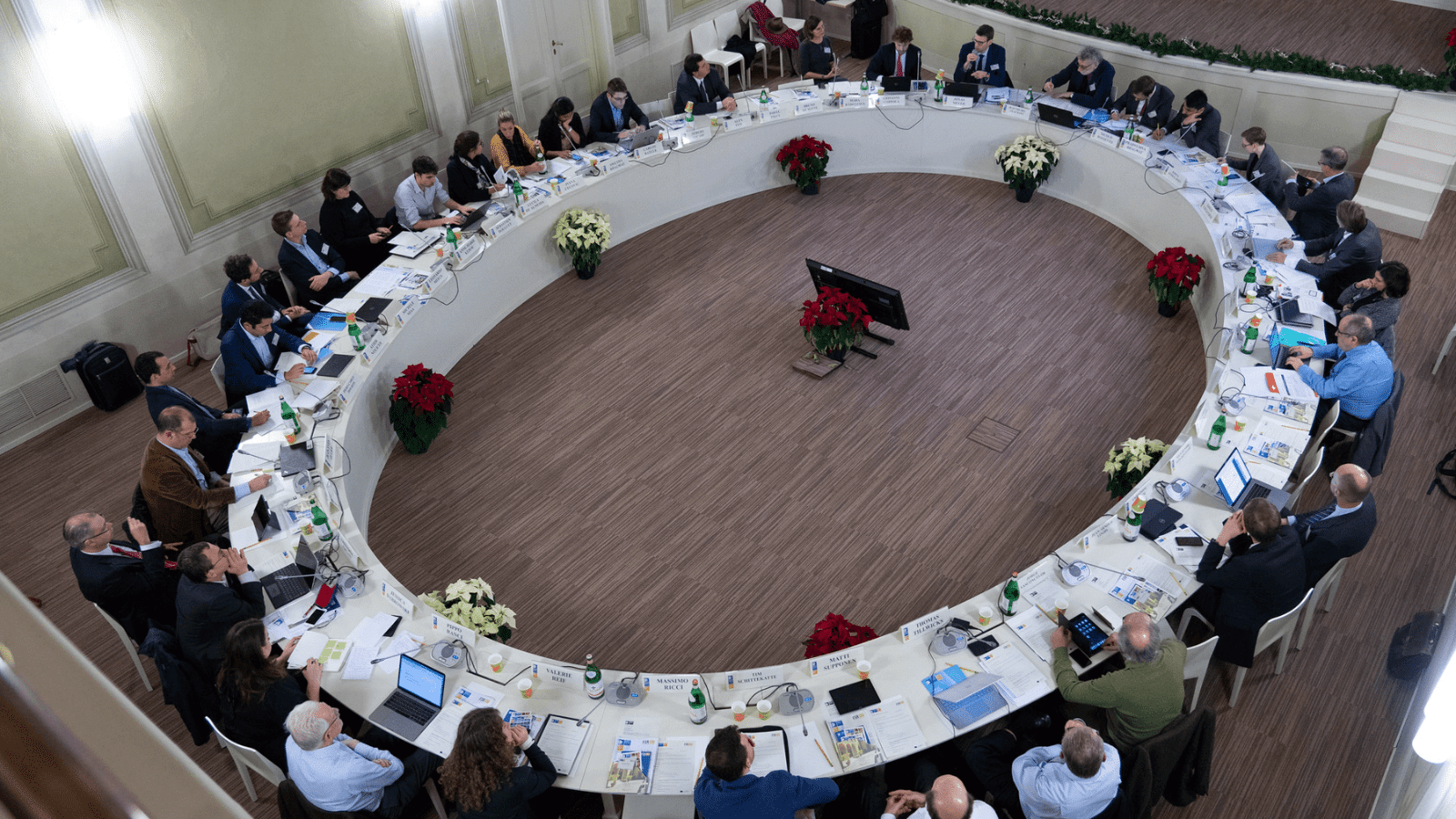
FSR European Energy Policy and Law Conference
The next Commission will play a decisive role with respect to the future of European energy policy.
the FSR European Energy Policy and Law Conference is aimed to discuss these issues and to draw some first conclusions on what should be the next Commission’s energy priorities.
- Session 1 will look at the challenges in delivering a cost-effective and competitive EU electricity system, and achieving the EU and Member States’ renewables targets whilst meeting the goals of competitiveness and energy security.
- Session 2 will look at the role of gas – natural, biomethane, green and low-carbon – in the EU’s long-term energy system:
- Session 3 will look at what will be the key infrastructure challenges moving forward, and what the next Commission will need to do to deal with them.
- Session 4 will look at the challenges facing the EU’s competition policy to evolve and to meet the rapid changes taking place on EU energy markets.
Keynote address:
Miguel Arias Cañete | European Commissioner, Climate Action & Energy
Péter Kaderják | Minister of State for Energy Affairs and Climate Policy of Hungary
Among the confirmed speakers:
Jean-Michel Glachant | Florence School of Regulation
Christopher Jones | Florence School of Regulation
Andris Piebalgs | Florence School of Regulation
Paula Abreu Marques | European Commission, DG Energy
Florian Ermacora | European Commission, DG Energy
Jane Amilhat | European Commission, DG Energy
Thierry Bros | Oxford Institute for Energy Studies
Giles Dickson | Wind Europe
Don’t miss any update on our events
Sign up for free and access the latest events from our community.


Digital Energy Marketplaces

FSR Workshop organised by the FSR Energy Innovation Area, in cooperation with the European Commission and The Alliance for Internet of Things Innovation (AIOTI)
Digital Energy Marketplacesmig
The role of smart contracts in the definition and coordination of investments, architectures and governance
#DigitalEnergyMarket
Technological innovation may just increase the efficiency of an industry, significantly transform it, or even disrupt entirely it. To transform or to disrupt, innovation needs to change the industry players and the way they interact. For example, industry change may be driven by consumers pushing the path from smart technologies – which any utility may implement itself to manage its own assets – to smart transactions, where smart technologies create new coordination tools within the industry.
By gathering practitioners from the industry, academics and representatives of the institutions, this workshop develops further the debate started at the Open Marketplaces & Enabling Technologies workshop that took place last March in Brussels. The various sessions of the workshop will explore how distributed ledger technologies like the blockchain can effectively transform the energy industry and enable new forms of interaction among the actors of the supply chain. The possible emergence and the organisation of new platforms and contractual arrangements will be investigated. Finally, the workshop will address the governance and regulatory issues that the adoption of these new technologies raises.
Participation in the event is upon invitation only.
Don’t miss any update on our events
Sign up for free and access the latest events from our community.
12th Florence Air Forum: Improving Air Traffic Management

Towards an economic regulator of Air Traffic Management (ATM) – 12th Florence Air Forum in Budapest
Improving the Air Traffic Management (ATM) performance is the main goal of the Single European Sky (SES) initiative. The EU’s SES legislation has introduced a performance scheme which defines performance targets in the key performance areas of safety, environment, airspace capacity and cost-efficiency through the adoption of Union-wide performance targets and approval of binding consistent National or Functional Airspace Blocks (FAB) performance targets. It is through this scheme that monopoly air navigation service providers are regulated in Europe.
The performance scheme was first established in 2009 as part of the second SES package. The first reference period ran from 2012 to 2014. The second reference period runs from 2015 to 2019 and is governed by Commission Implementing Regulations (EU) 390/2013 and 391/2013. Rules were revised in 2019 with the adoption of Commission Implementing Regulation (EU) 2019/317, which sets out the provisions applying to the third reference period (RP3) from 2020 to 2024.
To assist the Commission and national supervisory authorities in the implementation of the performance scheme for air navigation services, the Commission first designated in 2010 the Performance Review Commission of Eurocontrol as the Performance Review Body (PRB) of the single European sky. This set up was then changed in 2016/2017. Since then, the PRB acts an independent group of experts. It is composed of 9 members assisted by a support team.
Recent main tasks of the PRB have been to monitor the performance of air navigation service providers and to provide recommendations to the Commission on the performance targets for RP3. In February 2019 the PRB published its final recommendations for the Union-wide performance targets in air navigation services for 2020-2024. These targets relate to the improvement of flight punctuality, encouragement of more efficient flight paths to reduce the environmental impact of air traffic, and the cost reduction of service provision to the benefit of airlines and passengers, while ensuring the highest safety standards. Following this recommendation, Commission Implementing Decision (EU) 2019/903 setting the Union-wide performance targets for the air traffic management network for the third reference period was adopted on 29 May 2019.
During the consultations and preparations organized ahead of RP3, it became apparent that the revision of the rules for RP3 could be only limited in scope, focusing in particular on simplifying and clarifying the legal provisions. A wider reflection on the future of economic regulation in ATM is necessary in order to tackle key issues faced in the sector.
While RP3 preparations are underway and performance targets have already been defined for that period, this Forum therefore aims at planning the time after RP3 by exploring the possibility to improve the economic regulation and to move towards an economic regulator of ATM.
More specifically, the forum seeks to answer the following three critical questions:
- Balance sheet of performance and charging scheme so far. What are the main weaknesses and why do we need to move to an economic regulator for ATM?
- Economic regulation of monopolies. What can we learn from others?
- How to set up an economic regulator organisationally?
SPEAKER PRESENTATIONS:
Introduction to the forum:
Balance sheet of performance and charging scheme so far: What are the main weaknesses and why do we need to move to an economic regulator for ATM?
Kalman Seregelyes HungaroControl
Economic regulation of monopolies: What can we learn from others?
How to get to an economic regulator organisationally?
Don’t miss any update on our events
Sign up for free and access the latest events from our community.
18th Florence Rail Forum: Revitalising Rail Freight with Digitalisation

Digitalisation in rail freight transport: challenges and opportunities
BACKGROUND
In its 2011 White Paper the Commission fixed the objective that 30% of road freight over 300 km should shift to other modes such as rail or waterborne transport by 2030. Nevertheless, EU and Member State efforts in this area have not yet delivered satisfactory results – rail freight’s modal share stubbornly stagnates around 17%.
At the same time shifting medium-long trips from road freight to rail is an important part of the solution to achieve the Commission long-term vision. In addition to supporting decarbonisation objectives, a shift to rail would also ease congestion on roads, lower the pressure on road infrastructure by taking over the heaviest loads and reduce the risks linked to transporting dangerous goods.
To ensure that rail freight takes off, its performance needs to improve drastically in terms of quality and efficiency. The sector and legislators need to think fresh and bold, and consider holistically what can be done to break the stagnation.
To this end, DG MOVE is considering setting up a comprehensive EU strategy for rail freight as part of a modern multimodal transport system, supported by all stakeholders, with clear actions, targets and implementation schedule. Embracing new innovative business models and digital tools is a key part of the solution by enabling:
- increased efficiency: optimise the use of resources by sharing operational data and using digital solutions;
- resolved capacity shortages, by using modern network-level traffic planning and management tools and enhancing the performance of logistic chains
- improved offer, i.e. to provide flexible, end-to-end services integrated to logistical chain, tracked, traced and delivered on time.
The development of Rail Freight Corridors (RFC) remains the key element of the Commission’s policy to boost rail freight. The future rail strategy would therefore relay also on the results of the on-going evaluation of the RFC Regulation EU 913/2010. The regulation aims at improving the quality of international rail freight services by setting up a framework for international cooperation to provide high-quality capacity for international freight services. It entered into force in 2010 but the results are so far modest.
The 18th Florence Rail Forum, jointly hosted by the Florence School of Regulation and the European Commission’s DG MOVE, will discuss the opportunities and challenges to wider digitalisation of the rail sector, including how digital solutions can be used to better govern and operate the Rail Freight Corridors.
Digitalisation can and will affect the development of the Single European Railway Area as foreseen by the European Commission since 2012 (Directive 2012/34/EU). In support of the Commission’s focus on digitalisation, in 2016 the European trade associations CER, CIT, EIM and UIC presented the joint Roadmap for digital railways highlighting the opportunities and challenges of rail digitalisation.
In 2017 an even broader set of stakeholders, including CER, EIM, ERFA, UIP, UITP and UNIFE signed the Joint Rail Sector Declaration which reaffirmed their commitment to the continued provision of products and services using digital technologies to the benefit of consumers and with a view to contributing to the Digital Single Market.
Unlocking the full potential of new technologies and big data will necessitate a change in the way the entire logistics chain is organised and managed. In recognition of this, the European Commission initiated the creation of the Digital Transport and Logistics Forum (DTLF) in 2017. The DTLF is an open and collaborative platform that brings together Member States, public entities and other relevant organisations to exchange knowledge and develop policy and technical recommendations for the European Commission in the fields of transport and logistics digitalisation across all modes of transport.
Digitalisation is not a goal per se but rather a means to improve customer experience, operations and to increase capacity offer of RFCs. Though positive changes are already happening in the area, the consolidation of digital technologies and business processes in the sector remains an outstanding challenge. The 18th Florence Rail Forum will therefore seek to answer the following four critical questions:
• How can sharing of operational data improve the efficiency of operations? What are the barriers to sharing such data? Experience and lessons learnt from other sectors.
• Is digitalisation contributing to the modernisation and simplification of the RFCs? What is the potential of digitalisation for better international rail freight capacity?
• What is the impact of deployment of digitalisation in rail freight? In particular regarding client interface and integration in the logistical chain?
• What can we realistically achieve in the coming years?
PRESENTATIONS
- How to Revitalise Rail Freight with Digitalisation?, Matthias Finger, Florence School of Regulation/EUI; Ecole Polytechnique Fédérale de Lausanne
- Rail Freight: the Sick Man of Europe?, Maurizio Castelletti, European Commission, DG MOVE
- Rail Freight Corridors: Can digitalisation bridge the gap between potential and reality?, Reinhard Haller, European Commission, DG MOVE
- How can sharing of operational data improve the efficiency of operations? What are the barriers for sharing such data?, Paul Hegge, LINEAS
- How can sharing of operational data improve the efficiency of operations? What are the barriers for sharing such data?, Kirsti Laurila, Traficom
- Is digitalisation contributing to the modernisation and simplification of the RFCs?, Harald Reisinger, RNE
- Digitalisation between customer needs, regulatory demands and operational requirements, Martin Schmidt, SBB Cargo International
- Digitalisation of the (international freight) capacity planning/production process: challenges and solutions, Eric Cosandey, SMA and Partner AG
- Cefic Position on Rail Freight and Rail Freight Corridors, Frank Andreesen, Covestro
- More Efficiency Through Digitalisation in Combined Transport, Ralf-Charley Schultze, International union for Road-Rail Combined Transport (UIRR)
- How to Revitalise Rail Freight with Digitalisation?, Alfred Pitnik, Rail Cargo Group
- The Intermodal Business of Metrans. The Global Intermodal Solution, Robert Groiss, Metrans
- Ensuring an inclusive sectoral transition to a digitalised rail sector, Alberto Mazzola, European Economic and Social Committee
- The Use of Translation Tools on Locomotives, Annette Kraus, Deutsche Bahn
Don’t miss any update on our events
Sign up for free and access the latest events from our community.
6th Florence Intermodal Forum: Multimodal Ticketing and Payment Systems in EU

Towards a EU-wide Multimodal Ticketing and Payment Systems
BACKGROUND
The attainment of seamless multimodal door-to-door mobility has emerged as a clear priority on the EU policy agenda. Having declared 2018 as the ‘Year of Multimodality’, the European Commission has over the past year put together a number of legislative and policy initiatives relating to better infrastructure, connections, incentives and digital solutions, with a view to promoting the shift towards a fully integrated, multimodal and sustainable transport sector.
Achieving this goal will largely depend on creating favourable conditions for transport users, which among other things includes the creation of ‘multimodal ticketing and payment systems’. In practical terms, this means that the purchase of tickets in one go would enable passengers to travel using different transport modes provided by numerous operators. As implied by this definition, an integrated ticketing system relies on the close collaboration of multiple players on the execution of a number of steps throughout the whole lifecycle of the value chain.
An overarching EU framework may be needed for multimodal transport especially in cross-border contexts. Indeed, different approaches to ticketing and payment systems have been observed to date across the different EU Member States, and in some instances even across different regions of the same country.
Access to fare data, in particular, is one important pre-condition to enabling multimodal EU-wide ticketing and payment systems. At present, however, there is no common EU rules on access to fare data (beyond the Delegated Regulation 1926/2017 on EU multimodal travel information services), which increases the complexity and poses a hurdle for the development of multimodal EU ticketing and payment systems. In addition, the absence of common rules and standard, data are collected and made available in different formats only based on common standards developed by the parties of the commercial agreement.
The development of a common EU-wide definition for multimodal ticketing and payment systems will be an important, yet challenging, task ahead of EU policy makers in ensuring streamlined national approaches and safeguarding the possibility for Europeans across the continent to enjoy EU-wide door-to-door mobility.
This forum gathers European- and national-regulators, public transport operators, industry representatives, and academics for a discussion on the challenges and enablers to delivering an EU wide multimodal ticketing and payment system. The event will take stock of existing EU-legislation and will go on to examine possible EU actions and initiatives that could be undertaken in view of achieving it. More specifically, forum participants will consider the following critical questions:
1) How can access to fare data be enabled?
2) What lessons can be drawn from the air ticket distribution market?
3) What are the possible EU actions and initiatives, both legislative and non-legislative, which could be undertaken in view of achieving an EU-wide multimodal ticketing and payment system?
PRESENTATIONS:
Towards EU-wide Multimodal Ticketing and Payment Systems, MATTHIAS FINGER, Florence School of Regulation/EUI; Ecole Polytechnique Fédérale de Lausanne
Integrated ticketing, Matthew Baldwin, DG MOVE, European Commission
Remaining Challenges for EU-Wide Integrated Ticketing and Payment Systems, Isabelle Vandoorne, DG MOVE, European Commission
Finnish solutions for opening up fare data, Jussi Aholainen, Finnish Transport and Communications Agency (Traficom)
How can access to fare data be enabled?, Eric Mink, Ministry for Infrastructure and the Water Management (Netherlands)
How can access to fare data be enabled? Giovanni Martino, SHARE NOW
How can access to fare data be enabled?, Vittorio Carta, Deutsche Bahn
Lessons learned from CRS Code of Conduct , Juan Jesús Garcia Sanchez, Amadeus
What lessons can be drawn from the air ticket distribution market?, Mariana Papusoi, Air France
Airline Distribution, Johannes Walter, Lufthansa Group
MaaS in facilitating seamless EU wide multimodal ticketing and payment, Piia Karjalainen, MaaS Alliance
Possible EU actions and initiatives (legislative and non- legislative) to achieve EU-wide multimodal ticketing and payment systems, Caroline Berthomieu, Jaap de Bie, VDV eTicket-Service GmbH & Co. KG
Don’t miss any update on our events
Sign up for free and access the latest events from our community.