




Type of event: Online Event
An Overview of Recent Energy Case Law from the CJEU, December 2023

The FSR is pleased to announce the next edition of its biannual update on recent and pending energy case law at the Court of Justice of the European Union (CJEU).
In this briefing, Dr Adrien de Hauteclocque, Head of Cabinet of the President of the General Court and Professor Leigh Hancher, FSR, will discuss highlights from the most significant cases since the last case law update, which took place in June 2023.
Competition
T-136/19 – Bulgarian Energy Holding and Others v Commission
C-331/21 – EDP – Energias de Portugal and Others
State Aid
T-322/22 – UNSA Énergie v Commission
C-790/21 P – Covestro Deutschland v Commission – Opinion of Advocate General Medina
C-794/21 P – Germany v Infineon Technologies Dresden and Others – Opinion of Advocate General Medina
Other
Presentations
-
An Overview of Recent Energy Case Law from the CJEU
Professor Leigh Hancher and Dr Adrien de Hauteclocque
Don’t miss any update on our events
Sign up for free and access the latest events from our community.
More on the topic







Towards a Climate-Neutral Economy: The Role of Carbon Pricing in Moving the Industry Closer to Net-Zero by 2050

From 30 November to 12 December 2023 the Parties to the UN Framework Convention on Climate Change come together for this year’s COP28 in Dubai. On this occasion, FSR Climate, together with the International Carbon Action Partnership (ICAP) and the Centre for Climate and Energy Analyses (CAKE) in the Polish National Centre for Emission Management (KOBiZE) will host a panel discussion to focus on carbon markets as a global climate policy tool.
The event taking place on Saturday 9 December from 17:00 – 18:00 GST (local time) offers an opportunity to discuss the role of Emission Trading Schemes (ETSs) in the green transition. Through expert insights, discussions, and analysis, this event aims to provide a comprehensive view of how ETSs and associated mechanisms may contribute to achieving the net-zero goal by 2050 in the industrial sector. It also seeks to inform future climate policies with recent and cutting-edge scientific results.
Programme
Chair:
- Zhibin Chen, International Carbon Action Partnership (ICAP)
Speakers:
-
- Simone Borghesi, European University Institute
- James Corbett, World Shipping Council
- Qian Guoqiang, SinoCarbon Innovation & Investment
- Robert Jeszke, CAKE/KOBiZE
- Eve Tamme, Climate Principles
- Beatriz Yordi, DG Climate Action, European Commission
- Gerassimos Thomas, DG TAXUD, European Commission
Participation
Registered COP28 participants can join the discussion live in Dubai. The event will also be streamed online via the European Union side events platform.
Don’t miss any update on our events
Sign up for free and access the latest events from our community.
More on the topic








Incentive regulation to promote efficiency and innovation: a consultation

The Florence School of Regulation (FSR) is conducting a public consultation on behalf of ACER, on a possible scheme for incentive-based regulation of networks to promote efficiency and innovation in addressing electricity system needs.
Background
The energy transition challenges existing electricity networks. Operators need to expand rapidly the capacity of their networks to integrate increasing amounts of renewable energy sources and new uses on the demand side, while preserving cost-effectiveness and avoiding an escalation in revenue requirements that would penalize network users. Innovation is essential in ensuring that these two goals are achieved together. However, given the regulated nature of the business of network operators, an evolution of the regulatory framework may be needed. In particular, regulation should provide network operators with adequate incentives to respond to the challenges posed by the energy transition.
A scheme for incentive-based regulation to promote energy efficiency and innovation
This scheme, which was presented first at the June 2023 Copenhagen Forum and later detailed in a report produced for ACER, will be illustrated during this consultation webinar open to all stakeholders. After the presentation of the scheme by the FSR team, stakeholders will have the opportunity to raise questions and express their views with regard to the proposed scheme.
More details about the consultation, including the reference to the presentation in Copenhagen and a summary of the report prepared for ACER, can be found here.
Send your input!
Those interested in answering the consultation are invited to fill out the form. The consultation closes at 11:59 p.m. CET on 1 December 2023.
If you have any further comments or questions regarding this consultation, please contact Nicolo Rossetto.
Don’t miss any update on our events
Sign up for free and access the latest events from our community.
More on the topic



Technical workshop on ETS impact indicators

What are the environmental and economic impacts of emissions trading systems? How have these indicators evolved over time? Tracking the evolution of a key set of indicators is essential to provide knowledge on the impacts of the system on firms and emissions. To date, there is a great need for defining indicators best fit to monitor the development of the European Union Emissions Trading System (EU ETS) and its impacts in response to regulatory changes and market trends. This need has been felt particularly strongly in the past years, as potentially important effects of rising carbon prices – notably, the impacts on firms’ environmental and economic performances – have been insufficiently studied. This year’s workshop will select and discuss a set of impact indicators best suited for providing information on the effects of the EU ETS on regulated firms’ environmental and economic outcomes. The indicators will be based on relevant variables of environmental and economic performance (e.g., CO2 emissions, profits). The selected indicators will be estimated using data from the EUTL and the Bureau van Dijk – Orbis database.
The workshop is organised under the framework of the project LIFE COASE – Collaborative Observatory for ASsessment of the EU ETS. It aims at supporting policymakers in the implementation and development of the EU ETS, including its integration with other carbon markets. The project will establish the first observatory for assessment of the EU ETS, in order to offer a reference source of knowledge for policymakers and researchers and pave the way for future research and policies on emissions trading.
The aim of the workshop is to bring together experts to take stock of existing indicators, discuss their limitations and to agree upon 3 to 5 key indicators to improve the toolbox for assessing the EU ETS.
This is an online event. Participation is by-invitation only. More info about the project can be found here.
Don’t miss any update on our events
Sign up for free and access the latest events from our community.
More on the topic

Locational marginal prices for electricity in Europe? The Untold Story

In this event, we discuss key unanswered questions about nodal pricing before looking at alternative actions to improve locational signals in the electricity system in Europe, including via the smarter use of LMPs.
Watch the recording:
Locational marginal prices (LMPs) are an important design feature of several well-developed electricity markets, particularly in the US. They involve the calculation of energy prices which reflect congestion and losses at particular nodes in the electricity network. They have been hotly debated in Australia and Great Britain, but not implemented so far.
In this event, we explore whether and how European countries should adopt LMPs.
The author of the paper Locational marginal prices for electricity in Europe? The Untold Story, Michael Pollitt (University of Cambridge) will be joined by Tim Schittekatte (MIT) and Ellen Beckstedde (Vlerick Business School) in the role of discussants.
FSR Insights is an online series hosted by Leonardo Meeus and Lucila de Almeida (FSR).
Learn more
Evolution of Electricity markets in Europe online course
What English gardens, monkeys and the Titanic have to do with bidding zones event highlights
Zonal versus Nodal Electricity Pricing: the PJM experience podcast
Don’t miss any update on our events
Sign up for free and access the latest events from our community.
More on the topic





Update on energy case law from the Court of Justice of the European Union

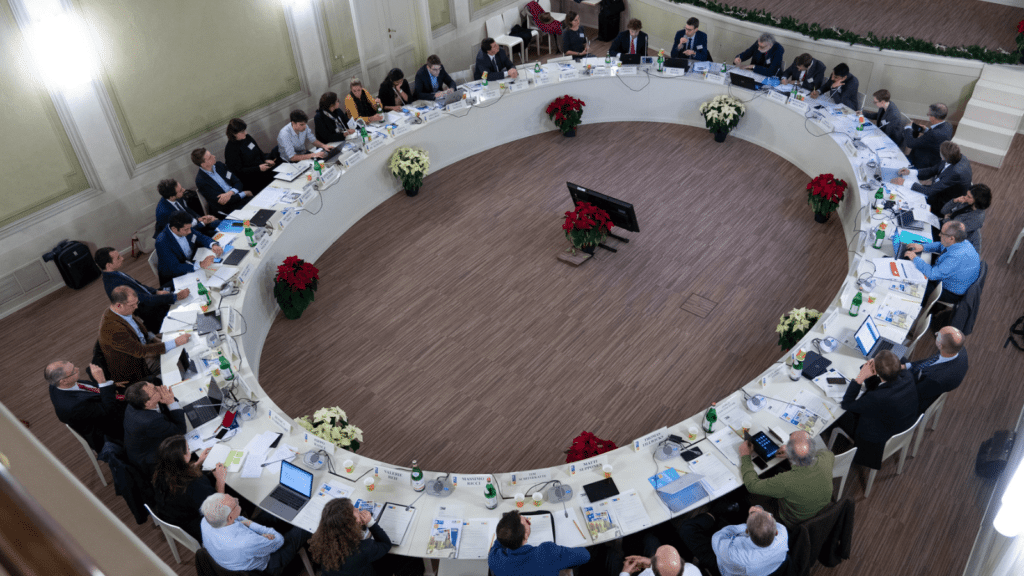
The FSR is pleased to announce the next edition of its biennial update on recent and pending energy case law at the Court of Justice of the European Union (CJEU). This event will offer a comprehensive overview of the most significant energy cases since the last case law update, which took place in December 2021.
The FSR Energy Union Law Area is pleased to announce the next edition of its biannual update on recent and pending energy case law at the Court of Justice of the European Union (CJEU). This event will offer a comprehensive overview of the most significant energy cases since the last case law update, which took place in December 2022.
In this briefing, Dr Adrien de Hauteclocque, Head of Cabinet of the President of the General Court and Professor Leigh Hancher, Director of the FSR Energy Union Law Area, will discuss highlights from the latest case law.
The cases that will be discussed include:
State Aid
T-626/20 – Landwärme v Commission
C-702/20 and C-17/21 – DOBELES HES
Merger Control
T-318/20 – eins energie in sachsen v Commission
T‑585/20 – Polwax v Commission
ACER
T-607/20 – Austrian Power Grid and Others v ACER
T-295/20 – Aquind and Others v Commission
Regulatory
C-580/21 – EEW Energy from Waste
C-394/21 – Bursa Română de Mărfuri
Advocate General Opinions
C-331/21 – Autoridade da Concorrência and EDP
An overview of cases currently pending before the Court will also be provided.
More on ECJ Case Law
If you want to catch up on earlier CJEU developments, you can watch the recordings of our sessions from December 2021 here, June 2022 here, and December 2022 here.
Presentations
-
An Update on Recent Energy Case Law from the CJEU
Dr Adrien de Hauteclocque
Don’t miss any update on our events
Sign up for free and access the latest events from our community.
More on the topic

Breaking the Barrier: Exploring Obstacles to Customer Engagement in Flexibility Markets

The customer’s role within the power sector is changing. Renewable integration requires a higher degree of real-time management of the power system, which has been made possible by digital technologies. New consumption patterns and an adaptation of customers’ behaviour is equally necessary to guarantee efficiency and security of supply. According to many experts, customers will play in the future a more active role in reacting to grid and market contingencies. However, this prediction does not seem to be materializing. Nowadays, only a limited number of customers has the possibility or show the willingness to play a more active role in the power system.
Do behavioural characteristics of customers hinder their engagement with electricity markets? Do customers have the necessary economic incentives to engage? Do current technologies or the existing legal and regulatory framework represent barriers to customer engagement?
In this online event, organized in the context of the OneNet project, we aim to answer these questions and explore the main barriers related to customer engagement in TSO-DSO flexibility markets. Key results of the ongoing analysis will be presented together with our early thinking on potential recommendations to overcome these barriers.
We will discuss all that together with three experts, who will represent different point of view and experiences.
Agenda
Introduction | Nicolò Rossetto, EUI
- Welcome and agenda
- Short overview of the OneNet project
Barriers to customer engagement | Daniele Stampatori, EUI
- Presentation of the barriers to customer engagement (technical, economic, legal, behavioural)
- Presentation of recommendations to address some of those barriers (early results)
Expert interventions and debate
- Sonja Klingert, Senior Researcher at Universität Stuttgart (RENergetic, DECIDE)
- Jörg Mühlenhoff, Senior Energy Policy Officer at BEUC
- David Batič, Head of Development & Market Monitoring Department at Slovenian Energy Agency
Q&A
OneNet Project
The H2020 project OneNet (One Network for Europe) aims to develop a new generation of products and grid services to facilitate the participation of demand response, storage and distributed energy resources in the European electricity system and markets. OneNet builds on the results of the two preceding projects in the call, INTERRFACE and CoordiNet, and further develops the existing TSO-DSO-consumer coordination mechanisms. The OneNet system uses an IT architecture based on innovative platform federation mechanisms. Four demo clusters, consisting of a total of 13 European countries, demonstrate the OneNet concept through multiple use cases ranging from long-term to short-term operational planning, balancing, congestion management and voltage control. OneNet has also set up a mechanism for continuous interaction with all relevant stakeholders at EU and national level through its large-scale discussion forum GRIFOn.

OneNet project has received funding from the European Union’s Horizon 2020 research and innovation programme under grant agreement No 957739. Find more
Don’t miss any update on our events
Sign up for free and access the latest events from our community.
More on the topic


International Conference on Ex-Post Evaluation of Emission Trading

FSR Climate is delighted to announce its first international conference on Ex-Post Evaluation of Emission Trading to be held online on Tuesday 20 June 2023. The conference is organised under the framework of the project LIFE COASE – Collaborative Observatory for ASsessment of the EU ETS.
With the global race to net zero greenhouse gas emissions, the EU is committed to sharing its experience with the EU Emissions Trading System (ETS) and learning from other jurisdictions. LIFE COASE was created in response to the growing need for assessing the performance of ETSs and strengthening international cooperation on emissions trading. The project aims to support EU and national policymakers in the implementation and development of the EU ETS, including its integration with other carbon markets. It will establish the first observatory for the EU ETS assessment by providing new data and tools for ETS monitoring.
In this context, the EUI will host its first academic conference in the series on 20 June 2023. The conference aims to identify the latest policy-relevant studies on ex-post assessments of emissions trading. Among the main topics, carbon leakage, competitiveness, and distributional effects of the EU and other major ETSs are of particular interest for this edition. The conference will provide an opportunity for researchers to present and discuss their research with fellow academics, stakeholders, experts, and policymakers. In addition to the academic sessions, the Conference will also comprise a Keynote Lecture and a Policy Roundtable.
Registration for the online event is possible here.
Draft Programme:
09:30-09:35 Welcome
09:35-10:25 Keynote Lecture “The distributional impacts of market-based climate policy: State of knowledge and future directions for research”
- Jan Steckel, MCC Berlin [Presentation]
Coffee break
10:35-12:55 Session “Competitiveness and Carbon Leakage”
- Huajin Wang (Renmin University of China) – Heterogeneous Responses to Carbon Pricing: Firm-level Evidence from Beijing Emissions Trading Scheme [Abstract] [Presentation]
- Leon Bremer (Vrije Universiteit Amsterdam) – Competitiveness and investments under emissions trading [Abstract] [Presentation]
- Aliénor Cameron (Université Paris-Nanterre & EconomiX-CNRS) – Is industrial decarbonization at odds with competitiveness? An assessment of competition dynamics in two EU heavy industries [Abstract] [Presentation]
- Johanna Arlinghaus (MCC Berlin) – Carbon pricing and credit reallocation [Abstract] [Presentation]
Lunch break
13:45-15:00 Policy Roundtable “Carbon leakage: (how) can we effectively prevent that risk?”
- Arjan Trinks, CPB Netherlands Bureau for Economic Policy Analysis [Presentation]
- Theresa Wildgrube, Adelphi [Presentation]
- Aude Pommeret, Université Savoie Mont Blanc [Presentation]
- Wilfred Feng, Dentons [Presentation]
Coffee break
15:10-17:30 Session “Social impacts and acceptability of emission trading”
- Adrien Fabre(CIRED) – International Attitudes Toward Global Policies [Abstract] [Presentation]
- Franziska Funke (PIK Climate/TU Berlin) – Prices vs. Quantities from a Citizen’s Perspective: Does the European Public Perceive Carbon Taxes and ETS differently? [Abstract] [Presentation]
- Marianna Sobkiewicz & Krzysztof Kobyłka (WiseEuropa) – Evaluation of the impact of the EU ETS revenues and derogation under Article 10c on investment and infrastructure in Poland [Abstract] [Presentation]
- Ghassane Benmir (London School of Economics) – Weitzman Meets Taylor: ETS Futures Drivers and Carbon Cap Rules [Abstract] [Presentation]
17:30-17:35 Conclusions
Call for papers (closed):
The committee welcomes economic and interdisciplinary research from various perspectives and topics on Ex-Post Evaluations of Emissions Trading. This year, we warmly invite the submission of papers focusing on:
- The distributional impacts of carbon pricing;
- Social acceptability of ETSs;
- Carbon leakage and international competitiveness;
- Carbon border adjustment mechanisms.
Submission Guidelines:
Papers should be submitted by 23 April 2023 to LIFECOASE@eui.eu.
For any questions related to the International Conference on Ex-Post Evaluation of Emission Trading, please contact LIFECOASE@eui.eu.
Important Dates:
- Submission Deadline: 23 April 2023
- Notification of Acceptance: 15 May 2023
- Conference Date: 20 June 2023 (online)
 The conference is organised with the support of EAERE.
 LIFE COASE is a project of the European University Institute co-financed by the EU LIFE Programme of the European Commission.
Don’t miss any update on our events
Sign up for free and access the latest events from our community.
More on the topic
Are contracts-for-differences here to stay?
The European energy crisis is dragging on, and voices to reform electricity markets are getting louder. Market reforms are going to be discussed (and potentially already implemented) within the first months of 2023. Reforms may involve changes in pricing rules to eliminate so-called windfall profits and give consumers access to cheap renewables. Leading academics are advocating for hybrid markets that encompass spot markets with marginal pricing as well as mandated long-term fixed-price contracts. The systematic integration of mandated long-term contracts into electricity markets would be the largest change in electricity markets since they were established some twenty years ago. Such long-term contracts can take the form of Contracts-for-Difference, allocated via competitive procurement.
Contracts-for-Differences have been used by governments in the procurement of renewable energy for many years now. But, what are these Contracts-for-Differences precisely? In which form and function do they come on different European markets?
In this FSR Insights event, Lena Kitzing will give an overview of Contracts-for-Differences used for renewable energy procurement, and their role as risk management tool to facilitate financing. Lena will also reflect on how Contracts-for-Difference have never seemed to be intended to stay here for good – the ultimate goal of supporting renewable energies was getting them ‘market-ready’ after all. This raises the question of how the design of Contracts-for-Difference must be rethought so that they can become a permanent part of electricity market design?
Hosts
- Leonardo Meeus | Florence School of Regulation (FSR)
- Lucila de Almeida | FSR & Nova School of Law
Keynote Speaker
- Lena Kitzing | DTU Department of Wind and Energy Systems
Discussants
- Pablo Rodillas | Comillas Pontifical University
- Anne Held | Fraunhofer Institute for Systems and Innovation Research ISI
Want to know more about the topic? Check out our course on Regulation and Integration of Renewable Energy, directed by Lena Kitzing and Mario Ragwitz.
Lena Kitzing is Associate Professor in Energy Economics and Policy, and Head of Section ‘Society, Market and Policy’ at the Technical University of Denmark, DTU Wind and Energy Systems. Her research spans across the energy-economy-society nexus and especially concerns the effective governance of energy systems through policy instruments, with particular focus on deployment and financing of renewables and their integration into the energy system. Lena is a leading expert in the economics and policy for offshore wind energy with a number of highly published articles in the area. She has participated in and coordinated many international research projects, often gives scientific advice to public and private organisations, is regularly invited to key note speeches and conference panels, and appears in the Danish national media on energy related issues. Lena is a registered expert for the European Commission, has been board member of the Joint Programme for wind energy of the European Energy Research Alliance, and serves on the board on several energy initiatives in Denmark. Lena is member of the European Scientific Advisory Board on Climate Change, which advises policymakers and stakeholders on climate and energy related decisions.
Don’t miss any update on our events
Sign up for free and access the latest events from our community.
More on the topic


FSR Policy Advisory Council 2022

The Policy Advisory Council discusses the most topical regulatory and policy issues and debates the relevance and robustness of the latest FSR research findings.
The meeting gathers renowned academics, experts from the FSR Energy Major Donors, the European Commission, the Agency for the Cooperation of Energy Regulators (ACER), and National Regulatory Authorities.
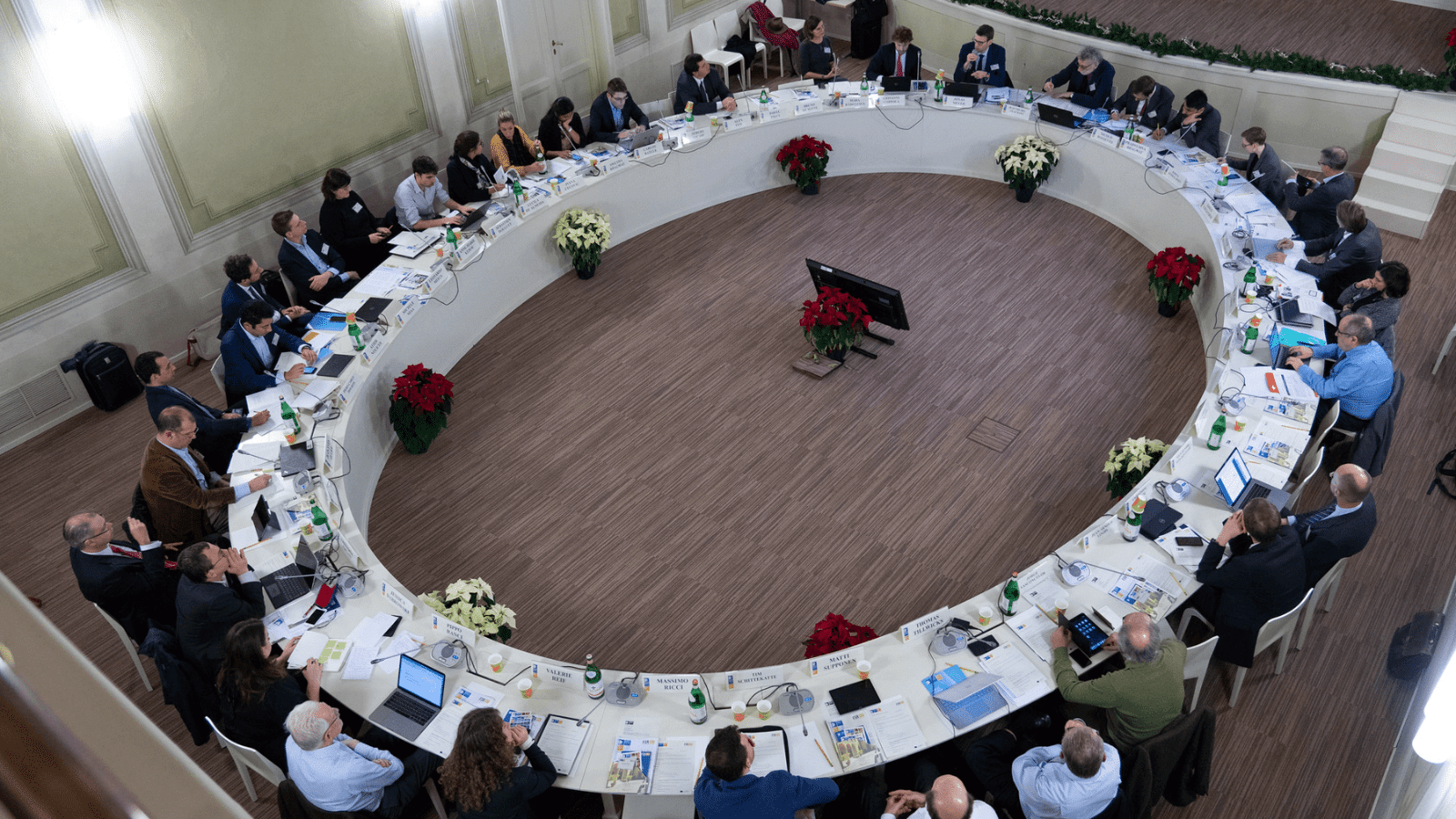
The event will take place in hybrid form.
Please note this is a closed event and participation is by invitation only.
Don’t miss any update on our events
Sign up for free and access the latest events from our community.
More on the topic
Outcomes of COP 27: takeaways and way forward

Following Glasgow COP26’s ambitious net-zero corporate claims (the Glasgow Climate Pact), its enhanced call for action over non-CO2 greenhouse gases (such as methane), and the significant advances on Article 6 market and non-market mitigation scenarios, COP27 has a vivid legacy for which to be accountable. This year’s COP is moreover embedded into a sense of global distress led by the War in Ukraine and other relevant geopolitical scenarios (e.g., tensions over China-US relations, Brazilian elections), which could shape the future of multilateralism in climate negotiations.
In parallel, environmental reports continue calling for urgent action to redirect the stability of our Planet below levels of dangerous interference for future generations. UNEP’s “Emissions Gap Report”, WMO’s “Provisional State of the Global Climate 2022” and WWF’s “Living Planet Report” bring evidence of the Planet’s poor performance and raise awareness on the need for higher ambition in Nationally Determined Contributions (NDCs) and countries’ action both on mitigation and natural capital conservation (e.g. enhanced pressure on Loss and Damage funding).
In the 2022 edition of the FSR Climate Conference, this policy roundtable will reflect on the achievements, shortcomings and take-home messages from COP27 in Sharm El Sheikh, Egypt. The discussion will touch upon challenges and opportunities of decarbonisation pathways within the current context of geopolitical tensions over resources, trade, and socially just transitions.
Watch the recording:
Host:
- Simone BORGHESI (EUI & University of Siena)
Chair:
- Jos DELBEKE (EUI & KU Leuven)
Speakers
- Karen PITTEL (ifo Institute & University of Munich)
- Jacob WERKSMAN (DG Climate Action)
- Angela CHURIE KALLHAUGE (Environmental Defense Fund)
Check out the programme of the conference
Register here
Don’t miss any update on our events
Sign up for free and access the latest events from our community.
More on the topic
A new future for voluntary carbon markets through improved integrity and transparency?

Many countries look at carbon pricing as part of their climate policy mix. A key development is the emergence of the voluntary carbon market (VCM); a debate is raging about how to improve its environmental credibility. The VCM should facilitate credible investments in carbon removals and the transfer of clean technologies across the globe. Will this lead to a significant increase in market volume? Could voluntary and regulated carbon markets converge? Is a future global carbon price possible?

Date: Tuesday 15 November
Time: 9:30 – 10:30 EET
Location: EU Pavilion
Speakers are:
- Jos Delbeke, EUI
- Jan Cornillie, EUI
- Mashael AlShalan, AEON
- David Rademacher, E.ON
- Andrea Abrahams, IETA
- Richard Newell, Resources for the Future
Register here to attend the event.
The event presented here is organised by members of the Delegation of the European University Institute to COP27, not FSR directly.
Don’t miss any update on our events
Sign up for free and access the latest events from our community.
More on the topic