



Type of event: Online Event
Net Zero Carbon Market Policy Dialogue 2025

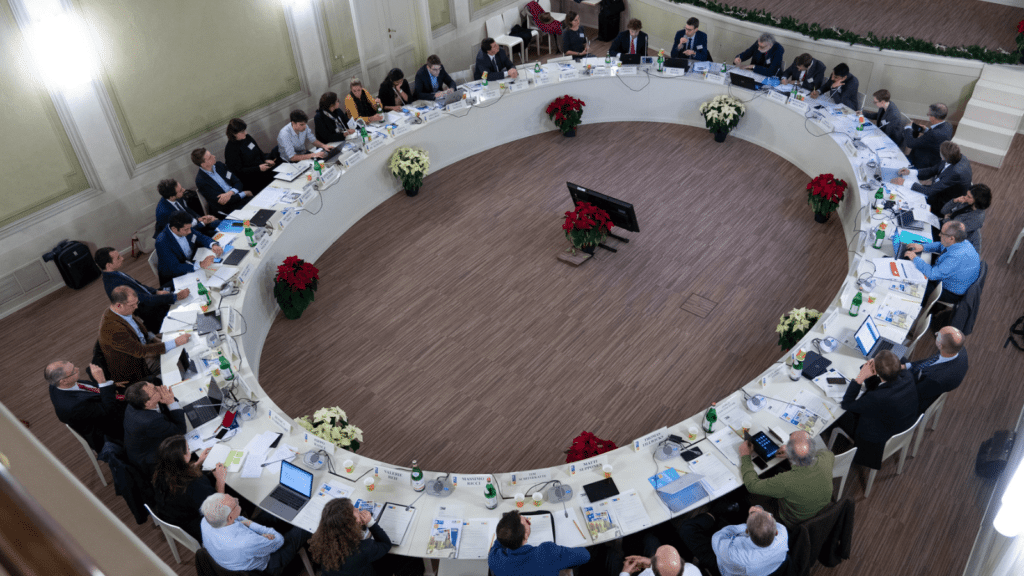
The aim of the policy dialogue is to facilitate international carbon market cooperation between the EU and partner jurisdictions on key topics around net-zero regulation and integration of carbon markets. This dialogue will focus on the topic of carbon market integration, including direct linkages between compliance markets and indirect linkages via the Voluntary Carbon Market and the Paris Agreement Crediting Mechanisms. The discussion will consider recent insights from ex-ante and ex-post assessments of the EU ETS and other ETSs worldwide.
Participation is by invitation only.
14:00-14:05 | Welcome
14:05-14:30 | Takeaways from 2025 Ex-Ante Workshop and Ex-Post Conference
- Paul Ekins (UCL)
- Simone Borghesi (EUI, University of Siena, EAERE)
14:30-15:30 | A global carbon market: theoretical potential and practical barriers
- Rohini Pande (Yale University)
- Axel Michaelowa (Perspectives Climate Group)
- Federica Dossi (Carbon Market Watch)
15:30-15:40 | Coffee Break
15:40-16:40 | Implications of (re)linking the EU and UK ETS
- Charlie Lewis (UK DESNZ)
- Josh Burke (Grantham Research Institute on Climate Change and the Environment)
- Juan Fernando López (Climate Action Research and Tracking Service (CART), European Parliament)
Don’t miss any update on our events
Sign up for free and access the latest events from our community.
More on the topic







Improving Climate Policies through Better Assessment and Public Acceptance Inclusion
Achieving climate neutrality in the EU and globally requires ambitious and effective climate targets and the ability to implement widely accepted policies. The road to net-zero is hindered by fragmented policymaking, uneven public support, and limited tools to assess climate action’s broader social and political implications. Many existing assessments focus narrowly on effectiveness, overlooking critical dimensions like feasibility and public perception.
In this context, the Horizon Europe project CAPABLE aims to provide recommendations for designing socially and economically acceptable climate policy measures for 2030 and beyond. CAPABLE draws on economics, sociology, political science and psychology to capture climate policy’s multidimensional outcomes and implications.
This CAPABLE capacity-building workshop will share project findings for effective and acceptable climate policies at the European level. Organised online by the European University Institute (EUI) with contributions from leading experts in the CAPABLE consortium, it will focus on climate policies, their effectiveness and their acceptability. The lectures will be complemented with extensive question-and-answer sessions and some testimonials from practitioners.
Target audience:
Policymakers from EU institutions, national ministries, environmental agencies, industry executives, consultants, researchers and NGOs.
Learning outcomes:
- Assess the effectiveness of the current and future EU climate policies
- Grasp the potential and limits of different policy assessment methods
- Understand determinants and factors that influence the acceptability of climate policies, and propose policy design features to make policies acceptable
- Have an overview of the acceptability of newly implemented and potential climate policies, including the Fit for 55
Draft programme:
09:00 – 09:10 | Welcome & Introduction
09:10 – 10:40 | Module 1: EU Climate Policies and Their Effectiveness
- Introduction to EU Climate Policies (Simone Borghesi, EUI)
- Policy Assessment: What Works? (Kai Lessmann and Jan Minx, PIK and Marie Raude, EUI)
10:40 – 10:55 | Coffee Break
10:55 – 12:20 | Module 2: Acceptability of Climate Policies
- Determinants of Public Acceptance of Climate Policies: A Multi-disciplinary Overview (Mary Sanford, CMCC/EIEE)
- Social Acceptability and Feasibility of Fit-For-55 Policies (Keith Smith, ETH)
12:20 – 12:45 | Testimonial on science for European climate policies
- Vicky Pollard, DG Climate Action, European Commission
12:45 – 12:50 | Conclusions
A second capacity-building workshop is scheduled on Thursday 27 November afternoon with a focus on climate policies at the local level. Click here to learn more about it.
This project has received funding from the European Union’s Horizon Europe research and innovation programme under grant agreement No 101056891.
Don’t miss any update on our events
Sign up for free and access the latest events from our community.
More on the topic
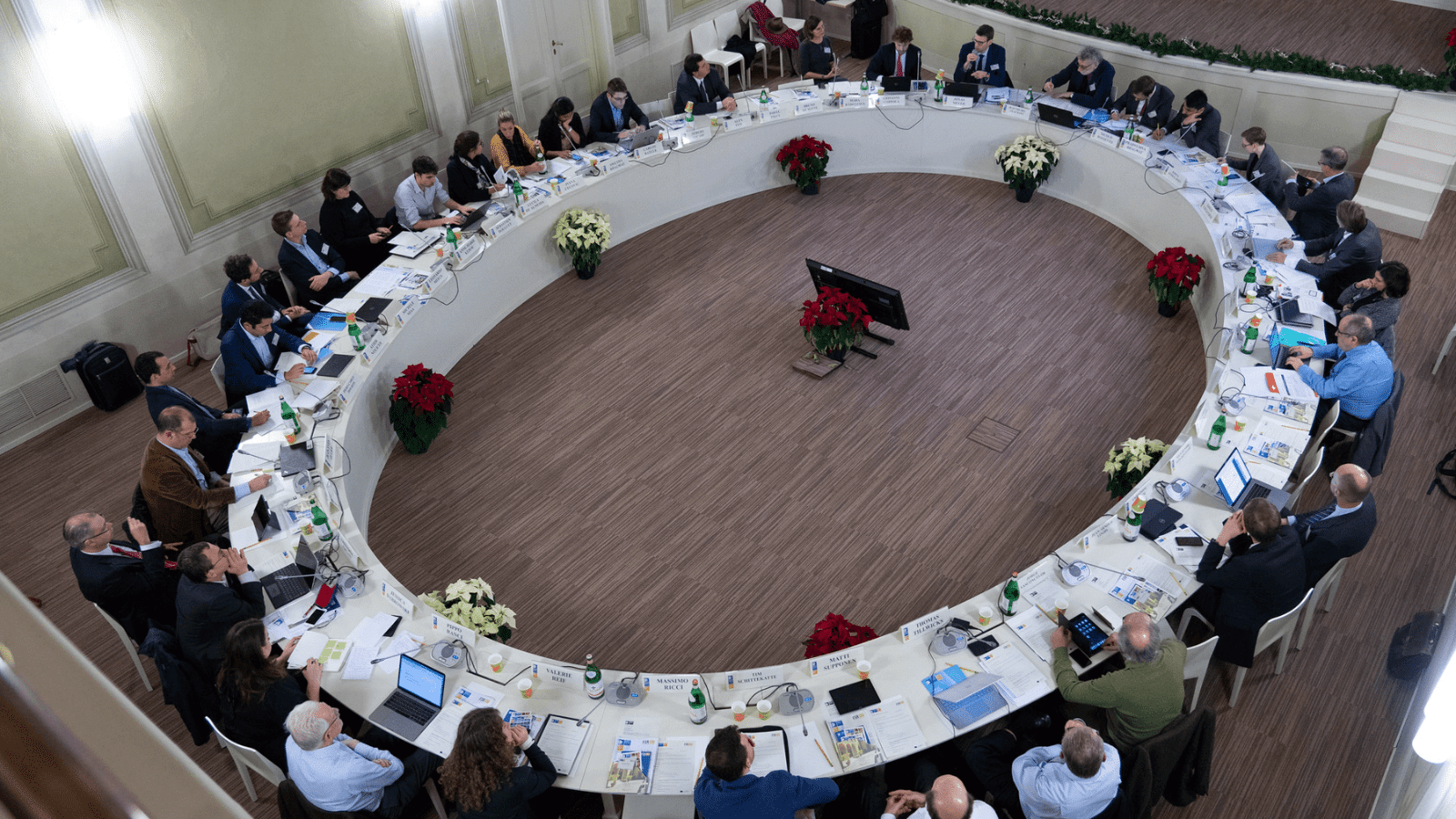
International Conference on the Ex-Post Evaluation of Emissions Trading

FSR Climate is delighted to announce the third International Conference on Ex-Post Evaluation of Emissions Trading on scheduled on Monday, 7 July 2025, online. The event is organised under the framework of the LIFE COASE project, which aims to support policymakers in the implementation and development of the EU ETS, including its integration with other carbon markets.
The conference will identify the latest policy-relevant studies on ex-post assessments of emissions trading. This year’s edition will particularly focus on international aspects of carbon pricing, such as the international transfer of emission reduction units, the integration of compliance and voluntary carbon markets, as well as the linking of emissions trading schemes.
The event will be held on Zoom and will allow researchers to present and discuss their research with fellow academics, stakeholders, experts, and policymakers. In addition to the academic sessions, the online Conference will also comprise a Keynote Lecture and a Policy Roundtable.
Draft Programme
8:50 – 9:00 | Welcome
- Simone Borghesi (EUI, University of Siena)
9:00 – 10:20 | Session 1: The EU ETS
- From Free to Fee: How Allowance Allocation Affects ETS Performance, Marie Alder, Eva Franzmeyer, Benjamin Hattemer (European University Institute); [Slides]
- The Effect of the EU Emissions Trading System on Climate Investments, Felix Rochlitz (University of Basel); [Slides]
- Pollution for Sale: Lobbying, allowance allocation and firm outcomes in the EU ETS, David Winkler (London School of Economics, UC Berkeley)
- Beyond Reported Emissions: Carbon Pricing, Disclosure Quality, and Financial Stability in the European Union Emissions Trading Scheme, Wilson Tsz Shing Wan (Hong Kong University of Science and Technology), Keith Jin Deng Chan (Hong Kong University of Science and Technology); [Slides]
10:20 – 10:30 | Coffee break
10:30 – 11:50 | Session 2: Carbon pricing at the international level
- Assessing the Impact of the United Kingdom’s Withdrawal from the European Union Emissions Trading System on Firms’ Carbon Intensity, Mattia Chiappari (Politechnico di Milano), Andrea Flori (Politechnico di Milano), Simone Giansante (Università degli Studi di Palermo), Ania Zalewska (University of Leicester School of Business)
- The EU’s Emissions Trading System and 3rd Countries – Calibrating a Structural Equation Model with Enterprise Survey Data for Türkiye, Camilla Jensen (Roskilde University); [Slides]
- Carbon pricing effects on renewables: evidence from California’s electricity market, Gökhan Dilek (University of Barcelona), Jordi J. Teixidó (University of Barcelona), Mònica Serrano (University of Barcelona); [Slides]
- Toward a Living Ecosystem of Reviews for Evaluating the Impacts of Carbon Pricing, Thi-Kieu-Trang Dong (Hasselt University), Mi Lim Kim (ANU), Klass Miersch (PIK), Banna Banik (ANU), Tim Repke (PIK), Bianka Mey (Chemnitz University of Technology), Sebastian Gechert (Chemnitz University of Technology), David Stern (ANU), Khanna Tarun (SPPGA), Stephan Bruns (Hasselt University, METRCIS, INCHER), and Jan Minx (PIK); [Slides]
11:50 – 12:00 | Coffee break
12:00 – 13:00 | Policy Roundtable: “What future for international climate cooperation?”
Moderated by Paul Ekins (UCL)
- Chantal Line Carpentier (UNCTAD)
- Catherine Leining (Motu Economic and Public Policy Research)
- Jos Delbeke (EUI)
13:00 – 14:00 | Lunch break
14:00 – 14:40 | Keynote lecture: “A New Hope? Carbon Market Integration in an Evolving Global Context”
- Michael Mehling (Massachusetts Institute of Technology)
14:40 – 14:45 | Closing remarks
- Simone Borghesi (EUI, University of Siena)
Call for papers
We welcome economic and interdisciplinary studies on the ex-post evaluation of carbon pricing policies. This year, we warmly invite the submission of papers focusing on:
- Developments, trends and limits of carbon pricing and carbon border adjustments,
- International cooperative approaches under Article 6 of the Paris Agreement,
- Convergence of compliance and voluntary carbon markets and linking of emissions trading schemes,
- Implications and challenges of integrating nature-based or technological removal credits in compliance markets.
Other topics related to carbon pricing instruments and their domestic implications will also be considered.
Submission Guidelines:
Papers should be submitted by 18 May 2025 to LIFECOASE@eui.eu.
Important Dates:
- Submission Deadline: extended to 27 May 2025, EOB
- Notification of Acceptance: 7 June 2025
- Conference Date: 7 July 2025 (online)
The conference is organised with the support of EAERE.
Don’t miss any update on our events
Sign up for free and access the latest events from our community.
More on the topic




Workshop on EU ETS Carbon Market Indicators

This workshop is organised in the context of the LIFE COASE project which aims to provide knowledge for improved emissions trading. The workshop will take stock of existing indicators to monitor the EU carbon market, relying on regulatory financial data and EU ETS transaction data. It will also offer a space for discussing the limitations and suggesting improvements to the existing indicators used to track market activity.
Participation in the event is by invitation only.
Programme
10:00-10:05 Welcome and introduction
10:05-12:15 Presentations
- Julien Mazzacurati (ESMA)
- Simon Quemin (EDF, PIK, CEC)
- Estelle Cantillon (Université Libre de Bruxelles)
11:35-11:45 Break
11:45-12:15 Presentation
- Marie Raude (FSR/EUI, CEC, Université Paris Nanterre)
12:15-12:55 Open discussion
12:55-13:00 Conclusions and wrap up
Don’t miss any update on our events
Sign up for free and access the latest events from our community.
More on the topic
Critical dependency and strategic autonomy in the EU fertiliser market

The EU stands at a significant crossroad, marked by a new legislative cycle and the challenge of harmonising environmental goals with industrial needs. The Strategic Dialogue on the Future of EU Agriculture has emphasised the importance of enhancing sustainable farming practices. Decarbonising agriculture and food production are essential steps in this transition, requiring the advancement and scaling of innovative solutions and sustainable practices.
Join this webinar to discuss the challenges in the global fertiliser market, engage with industry experts through a Q&A, and gain insights on navigating the evolving fertiliser landscape to promote sustainable practices within the industry.
Learn more with our online course on the EU vision for agriculture and food.
This online event aims to provide an in-depth exploration of the current state and future trends in the fertiliser industry within the European Union. Beginning with a retrospective analysis, the session will review historical developments, regulatory changes, and market dynamics that have shaped the fertiliser sector in recent years. Expert speakers will address critical issues such as supply chain disruptions, sustainability challenges, and the impact of environmental regulations on production practices. Topics will include advancements in sustainable fertilisers, the role of technology in improving efficiency, and the implications of global trade patterns on the EU fertiliser landscape. A comparative analysis of the EU regulatory framework and pathways to a decarbonised future will also be presented. Lastly, this event intends to underscore the importance of collaboration among farmers, traders, policymakers, and consumers in driving change towards sustainable agriculture.
Speakers
Fabien Santini | DG AGRI
Jeremy Jelliffe | USDA
David Laborde | Director, Agrifood Economics Division, FAO
Antoine Hoxha | Director General, Fertilizers Europe
Charlotte Hebebrand | CGIAR
Moderator
Ilaria Dibattista | FSR Climate
Chair
Fabio G. Santeramo | EUI & University of Foggia
Presentations
Don’t miss any update on our events
Sign up for free and access the latest events from our community.
Speakers
More on the topic
EU climate policies and justice: socio-economic impacts and pathways to equity
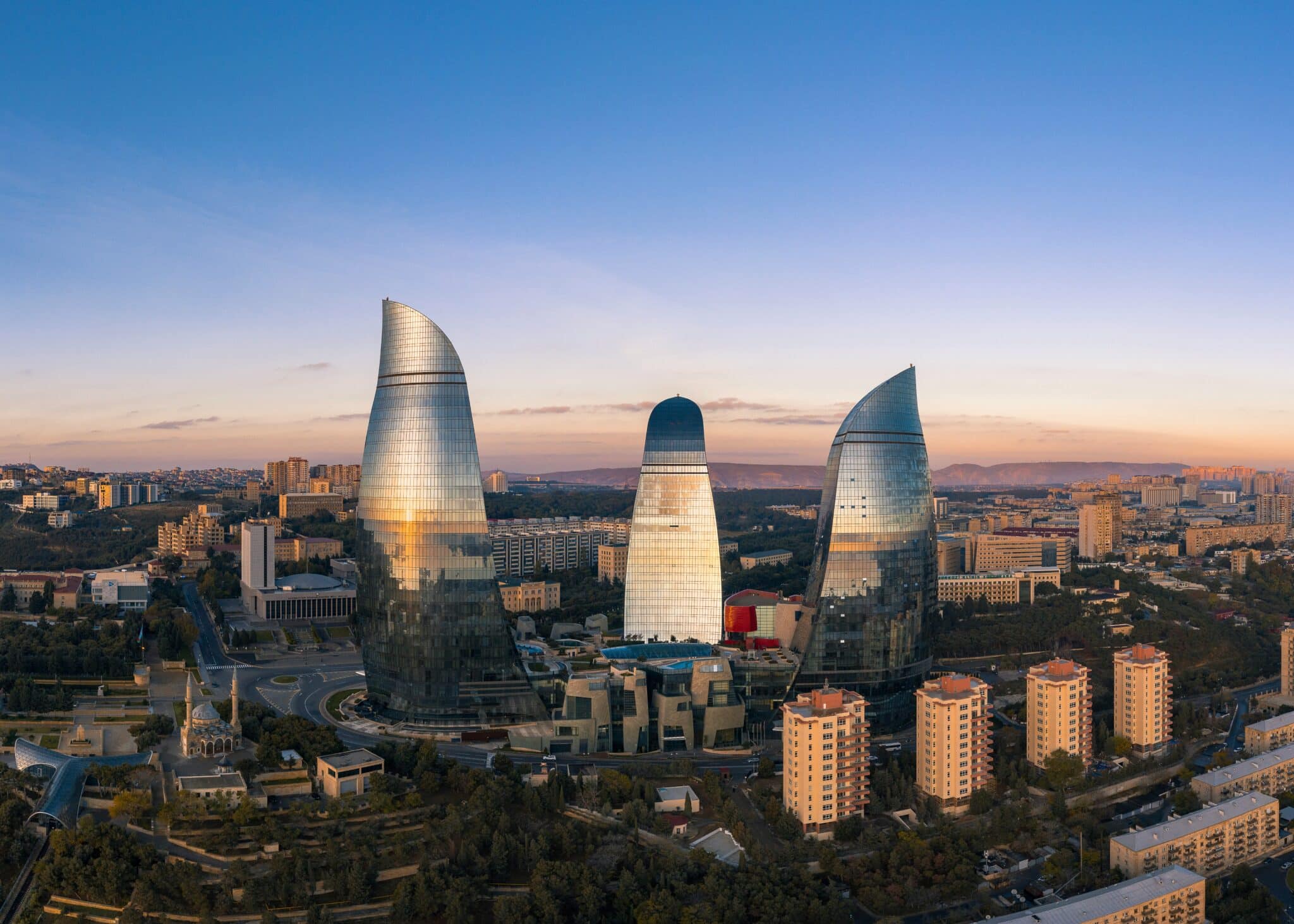
The COP29 panel “EU climate policies and justice: socio-economic impacts and pathways to equity”, scheduled on Friday 15 November 2024 from 10:00 to 11:00 AZT, will investigate some potential socio-economic effects of a set of European climate policies in the EU and in the rest of the world.
The EU’s European Green Deal (EGD) includes ambitious climate policies like the Emissions Trading Systems (ETS, ETS 2) and the Carbon Border Adjustment Mechanism (CBAM) to reduce emissions and prevent carbon leakage. However, these policies risk creating socio-economic inequalities, particularly affecting low-income households and workers in high-carbon industries. Without fair redistribution mechanisms, these communities face higher energy and transport costs, job losses, and social exclusion.
Key discussions are needed around social safeguards, including funding for the Social Climate Fund, strengthening the Just Transition Mechanism, and ensuring CBAM’s fairness for Global South countries. Addressing these issues is essential to achieving a just transition that supports vulnerable populations and fosters equitable global climate action.
The Official Side-Event will be hosted by the ILO in its Pavilion during the 29th Conference of Parties in Baku, Azerbaijan. You may follow the live stream here.
Chair and Introduction:
- Simone Borghesi, FSR Climate, EAERE & University of Siena
Panel Discussion:
- Frank Siebern-Thomas, DG EMPL
- Bas van Ruijven, IIASA
- Moustapha Kamal Gueye, ILO
- Asia Guerreschi, University of Ferrara
The event is organised by EUI-FSR in coordination with the consortium of the Horizon Europe project SPES and in collaboration with DG EMPL.
Dive deeper into the topic:
- Read the FSR-EUI deliverable 7.1 from the SPES project on EU ETS and EU ETS2.
- SPES project publications here.
SPES is funded by the Horizon Europe Programme of the European Union, Grant Agreement No. 101094551.
Don’t miss any update on our events
Sign up for free and access the latest events from our community.
More on the topic
How to ensure a sustainable agricultural trade regime
Join this online event to learn more about agriculture-related issues at the intersection of the FSR agenda on energy, climate, and sustainability, and explore the policies and regulatory regimes that can support sustainable agricultural trade.
The Strategic Dialogue on the Future of EU Agriculture has emphasised the importance of promoting sustainability and competitiveness in trade policy.
This webinar aims to highlight the critical importance of sustainable agricultural trade and its benefits for the environment, society, and the economy.
The panel includes representatives from EU institutions, academia, and international organisations who will address the coherence between trade and sustainability policies while reviewing approaches to trade negotiations that recognize the strategic importance of agriculture in international trade. A comparative analysis of the EU regulatory regime will also be featured. Furthermore, participants will discuss effective strategies and interventions to promote sustainable practices, including the adoption of trade measures, standards, certifications and labels. Lastly, this webinar will emphasise the role of collaboration among farmers, traders, policymakers, and consumers in driving change. By the end, participants will be equipped with actionable knowledge to support sustainable agricultural trade and contribute to a more resilient and equitable food system.
This online event is designed for businesses, trade associations, farmers’ organisations, scientists, and policy analysts. Through expert discussions and case studies, attendees will gain insights into best practices and innovative solutions for fostering sustainability in agriculture as part of the broader climate agenda.
Speakers
Flavio Coturni | DG TRADE
Rob Vos | IFPRI
Susan Stone | University of South Australia
Jukka Likitalo | EUCOLAIT
Ignacio Sanchez Recarte | CEEV
Moderator
Alessia Casamassima | FSR Climate – EUI
Chair
Fabio Santeramo | EUI & University of Foggia
Don’t miss any update on our events
Sign up for free and access the latest events from our community.
Speakers
More on the topic

Net Zero Carbon Market Policy Dialogue 2024 (online)

The Net Zero Carbon Market Policy Dialogue (NZCMPD) brings together regulators, policymakers, academics, and stakeholders from different carbon markets worldwide on a yearly basis. It is organised under the framework of the project, LIFE COASE – Collaborative Observatory for ASsessment of the EU ETS, which is co-funded by the EU Life Programme.
The event offers a unique opportunity for fruitful exchange on carbon market development and integration related to net zero targets, regulation, development, and integration of carbon markets. A background report from the LIFE COASE team will feed into the discussion at the policy dialogue and provide a basis for the discussion.
The first session of the NZCMPD was held on 21 May 2024 in the context of the EUI Climate Week and discussed the 2024 State of Play in Carbon Markets. The upcoming sessions of the policy dialogue will focus on the opportunities, and challenges of extending carbon pricing to new sectors, the methodological issues relating to modelling the development of emissions trading systems, and considerations regarding the inclusion of domestic carbon removal in emissions trading systems.
Participation is by-invitation only.
11:30-11:35 Welcome by Simone Borghesi (EUI and University of Siena)
11:35-12:35 Opportunities and challenges of ETS sector expansion
14:00-15:00 Modelling for emissions trading: new frontiers
15:00-16:00 Integrating carbon removals in ETSs
Don’t miss any update on our events
Sign up for free and access the latest events from our community.
More on the topic
The European electricity market reform: is a new target model emerging?
The European electricity market reform represents a significant turning point as it aims to adapt power markets for decarbonisation. Together with Thomas-Olivier Leautier and Fabien Roques, course directors of the Executive Course to Master Electricity Markets, we will analyse some of the key issues that will shape wholesale electricity market evolution in the years to come. In particular, this event will delve into the following topics:
• The role of planning processes and new methodologies to analyse the needs for flexibility, adequacy, and network development
• Best practices for the design of Contracts for Difference (CfDs)
• State aid and competition issues associated with long-term contracts
This online event is a spin-off of the topics that will be further analysed in the Executive Course to Master Electricity Markets that will take place in Florence on 14-15 October 2024, providing a deeper understanding of the upcoming changes in the European electricity market.
Presentations
Don’t miss any update on our events
Sign up for free and access the latest events from our community.
Speakers











Loss and Damage Fund and UNEP’s Adaptation Gap Report

The theme of the session will be to understand UNEP’s work on the Loss and Damage Fund and the historic decision at the most recent COP, as well as the publication by UNEP on the Adaptation Gap Report, 2023 – Watch the recorded session
The FSR Talks series monthly invites policy-makers and academics to talk about relevant topics related to energy and climate regulation addressed to a global audience. It is co-hosted by Part-time Professor Lucila de Almeida representing the European University Institute/Robert Schuman Center for Advanced Studies/Florence School of Regulation ((EUI/RSCAS/FSR), Carol Awuor from the African School of Regulation (ASR), and Swetha Ravi Kumar from FSR Global based in India.
Speaker
Dr. Alvin CHANDRA, Global Coordinator for Adaption Policy and Partnerships, oversees the Global Adaptation Network, United Nations Environmental Programme (UNEP).
Invited discussant
Prof. Ginevra Le Moli, Part-time Professor EUI/RSCAS/FSR
Host
Carol Awuor, Research Associate, ASR
Prof. Lucila de Almeida, Part-time Professor EUI/RSCAS/FSR
Don’t miss any update on our events
Sign up for free and access the latest events from our community.
More on the topic

Interview with Christian Zinglersen, Director of ACER

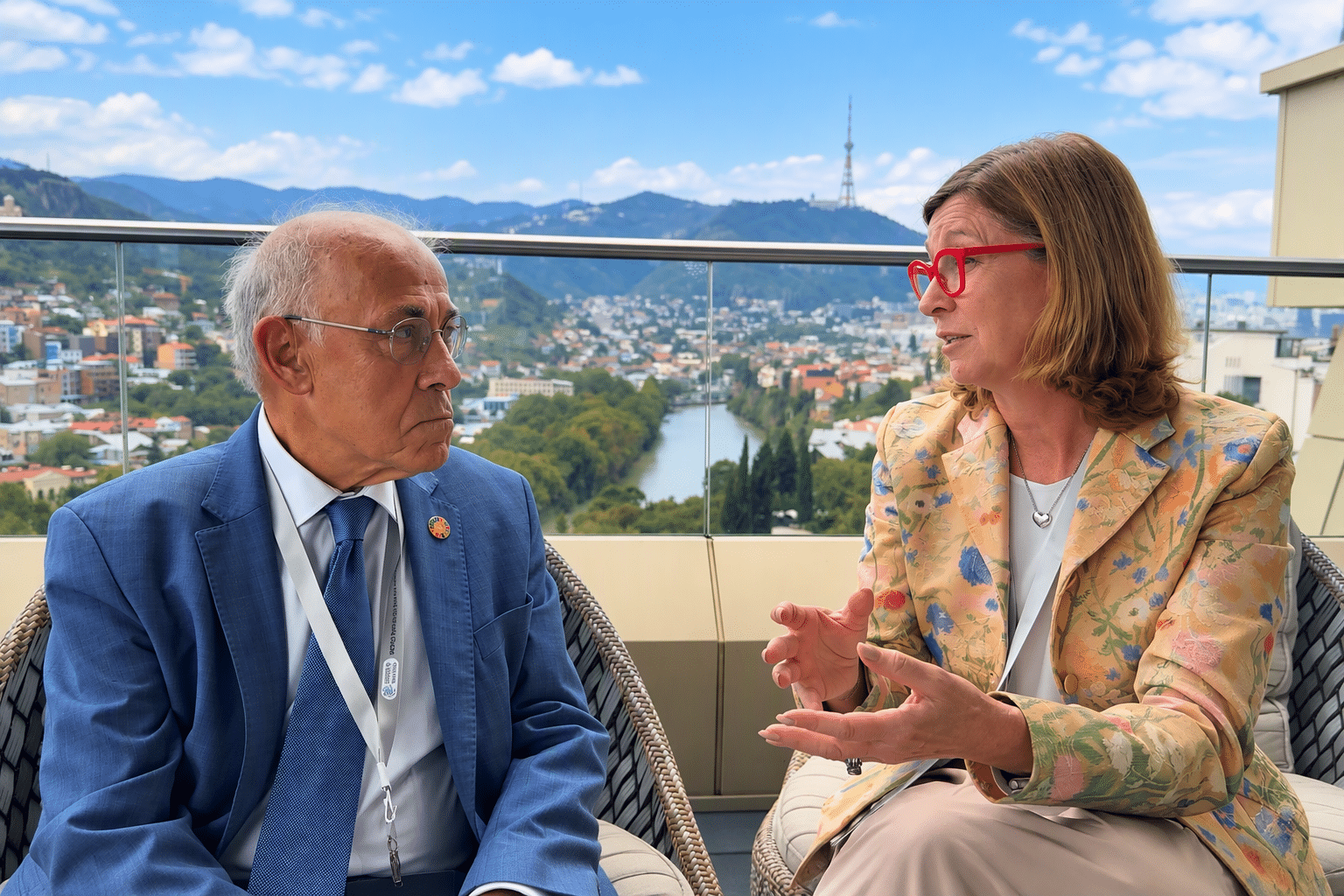
This special edition of FSR Debates will welcome Christian Zinglersen, Director of ACER, for an interview that will explore the new roles and responsibilities of ACER coming from the reform of the electricity market design, of REMIT and of the Gas/Hydrogen Package.
Christian Zinglersen is the second Director of the European Union Agency for the Cooperation of Energy Regulators (ACER). He was appointed in September 2019 and took office on 1 January 2020.
Before joining ACER, Mr Zinglersen was the first Head of the global Clean Energy Ministerial Secretariat hosted at the International Energy Agency in Paris (IEA). He previously served as Deputy Permanent Secretary at the Danish Ministry of Energy, Utilities, and Climate, where he was a member of the Ministry’s Executive Board responsible inter alia for the energy policy portfolio. He served as the Danish government’s representative and Vice-Chair of the IEA’s Governing Board and was the Danish participant in the Director-General meetings on energy policy within the European Union. Prior to that, he served as the Danish government’s head of the global climate negotiations, culminating in Denmark’s Presidency of the Council of the EU in 20121.
Don’t miss any update on our events
Sign up for free and access the latest events from our community.
More on the topic

Details matter: a consultation on implementation aspects of a regulatory scheme for efficiency and innovation

The Florence School of Regulation (FSR) launches a public consultation, on behalf of ACER, on the main implementation aspects of a possible scheme for incentive-based regulation of networks to promote efficiency and innovation in addressing electricity system needs.
Background
In Spring 2023, FSR was tasked by ACER with the development of a regulatory scheme for the promotion of efficiency and innovation in addressing electricity system needs. FSR presented a proposal at June 2023 Copenhagen Forum , which was later detailed in a report for ACER.
In Fall 2023, FSR continued its work on the topic and consulted national regulatory authorities (NRAs), transmission system operators (TSOs) and the wider community of stakeholders on the general aspects of the proposed regulatory scheme.
Details matter
Encouraged by the generally positive reactions to the first consultation, FSR is exploring the implementation aspects of the proposed regulatory scheme and is consulting again NRAs, TSOs and the wider community of stakeholders to get feedback on the various implementation aspects, the possible options available and how to deal with the trade-offs that emerge when any regulatory scheme is detailed.
During this consultation webinar, the FSR team will illustrate the proposed scheme with reference to a concrete implantation case. After this presentation, stakeholders will have the opportunity to raise questions, addressing any possible doubts regarding the consultation.
More details about the consultation can be found here.
Send your input!
Those interested in answering the consultation are invited to fill out the form available here.
The consultation closes at 11.59 a.m. CET on 8 March 2024.
In case you have any further comments or questions regarding this consultation, please, contact Nicolò Rossetto.
Don’t miss any update on our events
Sign up for free and access the latest events from our community.
More on the topic