


The Industrial Accelerator Act, industrial policy and EU security of supply
This is the third installment of the Topic of the Month: Rethinking energy security of supply in Europe

Introduction
The European Commission tabled the Industrial Accelerator Act on March 4th, 2026. Its key political focus is industrial and climate policy, rather than security driven. However, given that its central aim is to ensure that certain key – strategic – manufacturing industries remain and further develop in the EU, it equally has important and potentially positive security of supply consequences.
A summary of the proposed measures
The Industrial Accelerator Act (‘IAA’) is possibly one of the most complex pieces of legislation put forward by the Commission in recent years. In addition to stand-alone provisions, it would amend a number of other legal acts, most importantly the Net-Zero Industry Act and the Foreign Direct Investment Regulation.
Whilst a full picture of the IAA is beyond the scope of this contribution, it may be summarised as follows:
Low-carbon lead markets for strategic key industrial materials.
Whilst the EU’s decarbonisation policies have led to placing a carbon price on industry, and especially the energy intensive sector, it has not succeeded in developing a sizeable low-carbon manufacturing sector in this area because, notably, there is very little demand for (relatively expensive) low-carbon industrial inputs.
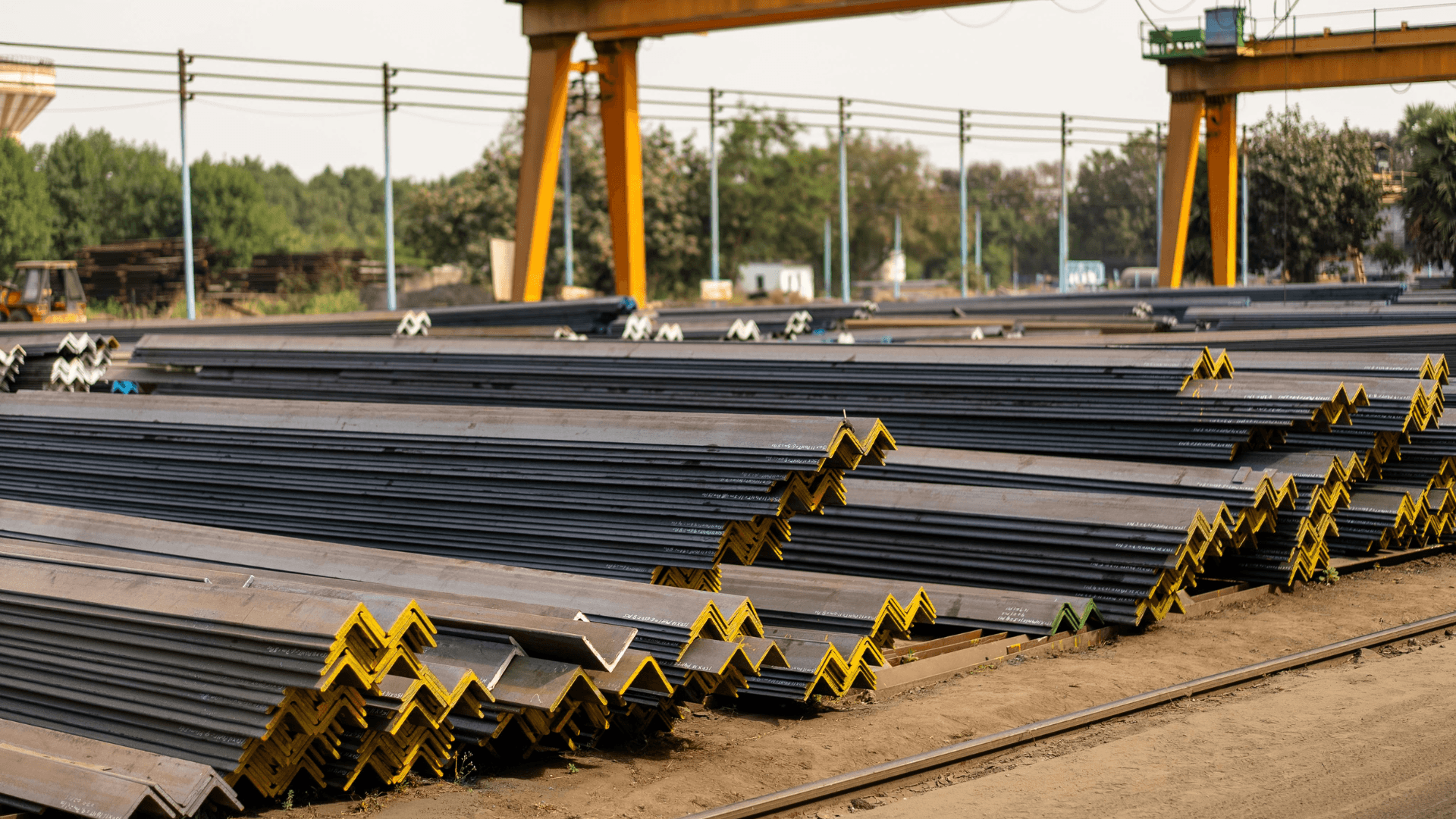
The first element of the IAA is, therefore, to create ‘lead markets’ for some key industrial inputs – notably steel, cement and aluminium. The Commission proposes that, where Member States undertake a public procurement procedure or public support scheme (e.g. for the construction/renovation of buildings) for any product whose performance depends mainly on these products a certain percentage of steel (25%), cement (5%), and aluminium (25%) must be low carbon (as defined under existing and forthcoming delegated acts). Derogations may be applied where this would result in increased costs (25-30%).
EU origin requirements for strategic key industrial materials
EU energy intensive industry has been under considerable competitive pressure for some time – steel production has declined by almost 20% over the last decade, aluminium by around 40%, and chemicals by around 15%. A significant element of this is due to the relatively high energy costs in the EU, although the decarbonisation-related costs, notwithstanding the CBAM, surely play a part.
At the same time, it is increasingly recognised that the EU needs to retain capacity in these industries, for a variety of industrial, social and strategic reasons.
The obvious solution to this would be to set tighter import quotas or tariffs, like the US. But such measures would be clearly WTO incompatible, and the EU has always striven to respect its requirements.
The IAA seeks to square this circle by requiring that at least 5% of all cement and 25% of all aluminium that is the subject of a procurement procedure or support scheme where the “any product whose performance depends mainly on the material concerned” test is met, is of ‘Union Origin’.
The term ‘Union Origin’ flows through the IAA and varies slightly depending on the subject matter (procurement procedure, subsidy scheme etc…) and product in question. However, generally speaking Union Origin encompasses (i) products made in the EU and (ii) products made in countries that either have a Free Trade Agreement (‘FTA’) with the EU or have ratified the UN Agreement on Public Procurement (‘APP’) and providing that for such countries the Commission has not, by delegated act, placed them on a ‘black’ list of parties that fail, in reality, to give the EU reciprocal access to procurement procedures/public subsidy schemes.
The list of countries that have signed an FTA or have ratified the APP is in fact very wide, and in reality includes practically all the EU’s major trading partners with the notable exception of China.
Extending the Net-Zero Industry Act to give greater protection to EU origin ‘Net-Zero’ technologies
When the EU launched its initial push to renewable energy more than 20 years ago, it was based on sustainability and industrial grounds – aimed at creating jobs in the EU in emerging green technology sectors. This has remained an argument for continuing the Net-Zero push, notably in the Green Deal.
Whilst this has to a certain extent been realised, notably in the wind industry, generally speaking, it has created jobs in China and not in the EU. Today, we see this trend accelerating as China takes increasing shares in wind, electrolysers, and dominates the batteries sector.
The IAA takes the starting point that the EU needs to retain these industries.
The NZIA, adopted in 2024, provides a first response to this challenge. In the event that one single country has more than a specified high percentage (generally ~50% plus) of the market for a wide list of key strategic technologies and their key components, Member States must give a disadvantage to products from these countries in public procurement and support schemes.
The IAA proposes to expand this and either exclude (procurement, support to manufacturing) or require a disadvantage to (support schemes concerning batteries, PV, H2, wind), products coming from non-EU Origin countries. The proposal covers the following sectors – batteries, PV, heat pumps, wind, and nuclear.
Again, there is the possibility for Member States not to apply these requirements when it would result in disproportionate additional costs (+20-25%).
Given that basically only China is in principle not covered by the definition of ‘EU Origin’, if adopted, the IAA would exclude, to a greater or lesser extent, Chinese manufactured products in these key technological sectors from publicly supported markets.
However, a key question to be raised here is what will be the real effect of the provision? If Chinese goods are nonetheless 20-25% cheaper than EU origin ones, they will still gain market share in the EU – the only change will be more expensive products in the EU.
The Foreign Direct Investments Regulation
The Foreign Direct Investments Regulation (‘FDI’) was adopted in 2019 in response to rising foreign acquisitions in critical infrastructure and technologies. It essentially (I) creates an EU cooperation and information‑sharing mechanism on FDI , (II) sets minimum standards for national FDI screening systems, and (III) enables the European Commission and other Member States to comment on transactions screened nationally.
The IAA proposes to amend this, notably to prevent Chinese firms from getting around the proposed NZIA-related proposals referred to above for imports, by setting up subsidiaries in the EU. Furthermore, it seeks to ‘turn the tables’ on China, which in the past required EU companies investing in China in high-tech sectors to do so via JVs and to commit to technology transfer.
Where a non-EU company with more than 40% of global manufacturing capacity in defined sectors – batteries, EVs, PV and critical raw materials (the list may be extended by delegated act) – wishes to invest in the EU (via acquisition or greenfield investment), with a value above €100 million, Member States must (I) require that the investor commit to employing at least 50% of EU workers across all categories, and (II) impose at least 3 of the following 5 conditions for the investment:
- Control limitation: not exceeding 49% of share capital, voting rights or equivalent ownership interests in Union targets or assets.
- Investment via a joint venture with EU entities – holding no more than 49% shares and ensuring effective EU participation in management, technology transfer and capacity‑building.
- IP and know‑how licensing to EU target; pre‑existing EU IP remains exclusively EU‑owned; newly developed IP is jointly owned.
- ≥1% of EU revenues annually reinvested in R&D in the Union, applied pro rata to control.
- Published strategy prioritising EU sourcing, with a 30% minimum EU input target for products sold in the Union.
Specific provisions apply to vehicles – where Member State provide public support to vehicles, notably for corporate cars and vans, ‘made in the European Union’ requirements are proposed.
Comments and observations
Getting the balance right between a huge range of conflicting objectives when proposing such a change in direction for the EU is really difficult. Balancing the need to protect EU industry, keeping the costs of decarbonising our economy as low as possible, developing new high-tech EU industry and preventing it being destroyed in infancy by imports, complying with the WTO whilst being ambitious in a world where others simply ignore it, is an impossible circle to square easily and simply.
This explains quite how complex and difficult to unravel this proposal is. Nonetheless given the reaction of China to the proposal, there are strong grounds to believe that it will have an effect.
As much as anything, the proposal would create an EU framework for the future regulation of trade and competition in strategic sectors – it is proposed that the sectors and requirements set out in the proposal would be developed over time by delegated act.
As such, the proposal has much to recommend it, whilst one must inevitably regret that it is necessary.
Ultimately, whether the version that is eventually adopted succeeds in catalysing a renaissance in EU manufacturing industry remains to be seen (the IAA proposes a headline target that manufacturing should represent a 20%+ share of EU GDP by 2035 (correcting a downwards trend and compared to around 14% today)). It is plausible that Chinese companies accept the +/-25% competitive disadvantage in tenders and support policies as the ‘cost of doing business’ in the EU and nonetheless continue to dominate these growth sectors, undermining EU industrial policy. At this point, anti-dumping law would need to be a clear focus for the EU.
But irrespective of these concerns, one thing is clear; doing nothing is not a reasonable option for the EU, in terms of societal development, industry and security, and the approach proposed by the Commission may well be the least-worst option available to the EU at this moment in time.
Specifically in terms of security, if the Act succeeds in its underlying objectives – growing EU industry in key strategic sectors – it will certainly have a positive impact in this respect. Again, whilst many uncertainties remain quite how effective this will be, the proposal certainly represents a balanced and reasonable attempt to positively address this challenge.
Don’t miss any update on this topic
Sign up for free and access the latest publications and insights
More on the topic