
Archives: Events
Linking Emissions Trading Systems

The Linking Emissions Trading Systems webinar aims at summarising the Carbon Market Policy Dialogue about the relevance and challenges of linking emissions trading systems (ETSs). Following the Online Training, the objective of this webinar is to translate the research of the project LIFE DICET into learning and to bring it to a much wider audience. Special attention is devoted to the six ETSs represented in the Carbon Market Policy Dialogue (those of California, Quebec, EU, Switzerland, China and New Zealand) and to the research reports “Emissions Trading Schemes with different levels of environmental ambition: implications for linking” and “Emissions Trading Schemes with different price-control mechanisms: implications for linking”.
The reports offer conceptual frameworks to characterise environmental ambition and price control mechanisms. They also summarize the relevant scientific literature; they describe the current status of the six ETSs represented in the CMPD and, finally, they offer up a few ideas for discussion.
Watch the recording:
12.00-12.05: Welcome by Simone BORGHESI
12.05-12:25: Presentation of the report “Emissions trading systems with different levels of environmental ambition : implications for linking” by Stefano F. VERDE
12.25-12-45: Presentation of the report “Emissions trading systems with different price control mechanisms : implications for linking” by Giulio GALDI
12.45-13:00: Q&A
Reports:
VERDE, Stefano F., GALDI, Giulio, BORGHESI, Simone, FÜSSLER, Jürg, JAMIESON, Ted, WIMBERGER, Emily, ZHOU, Li, Emissions trading systems with different levels of environmental ambition : implications for linking – Report for the Carbon Market Policy Dialogue, Florence School of Regulation, Climate, LIFE DICET Project, 2020
GALDI, Giulio, VERDE, Stefano F., BORGHESI, Simone, FÜSSLER, Jürg, JAMIESON, Ted, WIMBERGER, Emily, ZHOU, Li, Emissions trading systems with different price control mechanisms : implications for linking – Report for the Carbon Market Policy Dialogue, Florence School of Regulation, Climate, LIFE DICET, Project, 2020
LIFE DICET is a project co-financed by the EU LIFE Programme of the European Commission.
Don’t miss any update on our events
Sign up for free and access the latest events from our community.
More on the topic











The Private Sector to the Rescue of the Energy Transition: ESG and the Role of Banks

The Vienna Forum on European Energy Law
The Vienna Forum on European Energy Law is an annual joint initiative of the FSR Energy Union Law Area and the Energy Community Secretariat which aims to bridge the gap in energy debate between the EU and Energy Community. This year, for the 8th edition of the forum, we will be moving online with four webinars across four weeks, focused on the solidarity principle, the European climate law, carbon pricing, and the role of the private sector in the energy transition. To discuss these topics, we will bring together a panel of experts for a roundtable debate and a live Q&A session with our audience.
Webinar 4
The Private Sector to the Rescue of the Energy Transition: ESG and the Role of Banks
Introduction: Tibor Schaffhauser | Energy Community Secretariat
Roundtable Discussion
Moderator:
Leigh Hancher | FSR (RSCAS, EUI); Tilburg University; Baker Boots Botts LLP
Panellists:
Andrew McDowell | PricewaterhouseCoopers; formerly EIB
Kim Talus | Tulane University; University of Eastern Finland
Christine Würfel | Raiffeisen Bank International; Vienna Initiative
Eddie O’Connor | Mainstream Renewable Power
Lena Sandberg | Gibson Dunn LLP
Q & A with the live audience
Background to the Discussion
In November 2020, a budget of €1 trillion was approved by Member State governments for the European Investment Bank’s green roadmap to 2030. This will be directed toward investment in climate action, biodiversity, and sustainability-focused projects while future financing will be focused on accelerating clean energy innovation, energy efficiency and renewables. As part of its Climate Bank Roadmap, the bank has pledged that all financing activities will be aligned with the Paris Agreement by the end of the year, and funding will no longer be provided to fossil
fuel projects or airport expansions by 2021. What will be the scope of this new policy in practice? What will be financed and what will not be financed?
In parallel, the Sustainability-Related Disclosure Regulation (2019/2088) will become applicable in mid-2021 and will require certain financial market participants and advisers to provide investors with environmental, social, and corporate governance (ESG)- related information in making investment decisions. The aim is to provide a greater level of transparency and sustainability within the financial markets in a standardised manner, thus preventing greenwashing and facilitating comparability. What are the standards for these sustainability disclosures? And what will be the wider implications of this regulation when it enters into force?
What will be the impact of these new developments on renewable and sustainable investments in Europe? Are the new rules clear enough to make a difference in practice? How will the sustainability-focused public sector financing impact upon renewable or sustainable energy investments in the coming years? Are there new opportunities? Is access to financing simple enough? What is the impact of national rules on investments in sustainability?
Don’t miss any update on our events
Sign up for free and access the latest events from our community.

How can we contribute to build resilient, sustainable and green water and wastewater services?

Two-hour webinar organised by the FSR Water and Waste area
How can Regulators and Utilities contribute to building resilient, sustainable, and green water and wastewater services?
The EU Commission has set out a bold and comprehensive plan for European recovery which will require massive public and private investment. This plan, based on solidarity and fairness, seeks to boost the green and digital transitions, and make the European economy fairer, more resilient and more sustainable for future generations. Forceful action is required to close the overall public and private investment gap of at least EUR 1.5 trillion, to repair the immediate economic and social damage caused by the pandemic, and set the Union firmly on the path to a sustainable and resilient recovery.
Water, as a vital good for society and the environment, and a critical input for the economy, represents a key aspect of the recovery potential of EU Members States, especially through the large externalities it generates. The aftermath of the pandemic crisis offers a unique opportunity to boost the resilience and sustainability of greener Water Supply and Sanitation (WSS) services across Europe by supporting investments targeted towards ending addressing water emerging pollutants, strengthening the polluter-pays and cost-recovery principles in the future reforms of EU water legislation, incentivizing innovation and digitalization of WSS services, or addressing climate change and the pandemic impacts on WSS services through water risk-based approaches that sustain water security.
The FSR is holding a webinar to discuss these topics and explore how the EU Commission, Regulators, and Utilities can contribute to build resilient, sustainable and green water and wastewater services.
Programme
Introduction by Andrea Guerrini, ARERA
Session 1 moderated by Maria Salvetti, Florence School of Regulation
Reforming EU water legislation in the light of the emerging challenges
Neil Dhot, Executive Director of AquaFed
Milo Fiasconaro, Acqua Publica Europa
Luigi del Giacco, Utilitalia
Session 2 moderated by Stéphane Saussier, Florence School of Regulation
The role of regulators to incentivize innovation and digitalization of WSS services
Alan Sutherland, Water Industry Commission for Scotland
Itai Sag, Israel Water Authority
Oliver Loebel, EurEau
Session 3 moderated by Maria Salvetti, Florence School of Regulation
Addressing climate change and pandemic impacts on WSS services
Ivaylo Kolev, World Bank
Heather Smith, Cranfield Univesity
Robert Brears, Our Future Water
Concluding remarks
Presentations
Don’t miss any update on our events
Sign up for free and access the latest events from our community.
More on the topic




Hydrogen technologies and costs: findings from the FSR study

Findings from the FSR study on Hydrogen
The Florence School of Regulation has just released a major study examining the main drivers required to ensure a cost-effective decarbonisation energy policy for the EU, as well as a ‘Policy Brief’ on the future Guarantees of Origin system to regulate the EU’s future Energy Sector Integration based market.
In this online event, we will present the study and the policy brief, as well as discuss the main conclusions with the audience online.
Watch the recording:
Background
The study has as its primary focus the policies needed to guarantee the achievement of the Green Deal objectives. In addition, and within this framework, it aims at examining how this can be achieved as a cost-effective transition, maximising benefits for citizens in terms of affordable energy prices, jobs, technological leadership for the EU as well as energy security.
The point of departure for the study has been to endeavour establish the most objective and reliable figures possible for future energy costs, based on a wide range of sources such as the IEA, IRENA and Bloomberg New Energy Finance, as well as academic literature.
By benchmarking and peer-reviewing a wide range of studies, FSR researchers have drawn up ‘con-sensus’ figures for the expected future costs of renewable electricity (onshore wind, offshore wind, PV…) as well as green, blue and turquoise hydrogen. On this basis the researchers calculate expected ETS prices needed to catalyse the replacement of grey hydrogen currently used by industry as a feed-stock, as well as the substitution of natural gas by low and zero-carbon hydrogen by energy intensive industry. Finally, they calculate the expected subsidies needed to kick-start the EU’s future low and zero-carbon hydrogen market at scale.
On the basis of these findings, the authors, Jean-Michel Glachant, Andris Piebalgs and Christopher Jones, draw a number of conclusions and recommendations with respect to the EU’s energy priorities, and in particular they put forward eight key recommendations regarding the manner in which the Commission’s Hydrogen Strategy should be implemented in practice.
Agenda
FSR joins the European Clean Hydrogen Alliance
The Florence School of Regulation has joined the European Commission-led initiative, European Clean Hydrogen Alliance, to accelerate the decarbonisation of the EU industry and to set the bloc on the right path to a clean energy transition. Read more
Read more
- STUDY | Cost-Effective Decarbonisation
- POLICY BRIEF | A proposal for a regulatory framework for hydrogen guarantees of origin by Andris Piebalgs,Christopher Jones | 02 November 2020
- TECHNICAL REPORT | Green hydrogen : bridging the energy transition in Africa and Europe by Swetha RaviKumar Bhagwat, Maria Olczak | 20 October 2020
- TECHNICAL REPORT | Hydrogen technology : workshop summary by Cekovic Ivana,Ilaria Conti, Christopher Jones, Andris Piebalgs | 10 July 2020
Don’t miss any update on our events
Sign up for free and access the latest events from our community.
More on the topic

Carbon Pricing: The Silver Bullet for the Energy Transition?
The Vienna Forum on European Energy Law
The Vienna Forum on European Energy Law is an annual joint initiative of the FSR Energy Union Law Area and the Energy Community Secretariat which aims to bridge the gap in energy debate between the EU and Energy Community. This year, for the 8th edition of the forum, we will be moving online with four webinars across four weeks, focused on the solidarity principle, the European climate law, carbon pricing, and the role of the private sector in the energy transition. To discuss these topics, we will bring together a panel of experts for a roundtable debate and a live Q&A session with our audience.
Webinar 3
Carbon Pricing: The Silver Bullet for the Energy Transition?
In this webinar, we will take a close look at the role of carbon pricing in the EU transition to carbon neutrality. Could it be the silver bullet?
We will look at the new proposals in the EU, including the prospect of a carbon border adjustment mechanism, which if brought into effect, would radically alter the internal market. But is it feasible? And could such a mechanism be WTO compliant? We will also beyond Europe to critically assess the best paths forward.
Introduction
Leigh Hancher | FSR (RSCAS, EUI); Tilburg University; Baker Botts LLP
Roundtable Christoph Gatzen | Frontier Economics
Jos Delbeke │ School of Transnational Governance (EUI) (tbc)
Michael Mehling │ MIT
Jason MacLean │ UNB Law School
Jennifer Winter | University of Calgary
Q & A with the live audience
Moderation
Dirk Buschle │ Energy Community Secretariat; College of Europe
Upcoming webinar from the Vienna Forum:
Webinar 4: The Private Sector to the Rescue of the Energy Transition
Monday, 7 December 2020, 14.30 – 16.00 CET
Don’t miss any update on our events
Sign up for free and access the latest events from our community.
More on the topic

Carbon Pricing: The Silver Bullet for the Energy Transition?
The Vienna Forum on European Energy Law
The Vienna Forum on European Energy Law is an annual joint initiative of the FSR Energy Union Law Area and the Energy Community Secretariat which aims to bridge the gap in energy debate between the EU and Energy Community. This year, for the 8th edition of the forum, we will be moving online with four webinars across four weeks, focused on the solidarity principle, the European climate law, carbon pricing, and the role of the private sector in the energy transition. To discuss these topics, we will bring together a panel of experts for a roundtable debate and a live Q&A session with our audience.
Webinar 3
Carbon Pricing: The Silver Bullet for the Energy Transition?
Introduction
Leigh Hancher | FSR (RSCAS, EUI); Tilburg University; Baker Botts LLP
Roundtable
Christoph Gatzen | Frontier Economics
Jos Delbeke │ School of Transnational Governance (EUI) (tbc)
Michael Mehling │ MIT Jason MacLean │ UNB Law School
Jennifer Winter | University of Calgary
Q & A with the live audience
Moderation
Dirk Buschle │ Energy Community Secretariat; College of Europe
Upcoming webinars from the Vienna Forum:
Webinar 4: The Private Sector to the Rescue of the Energy Transition
Monday, 7 December 2020, 14.30 – 16.00 CET
Don’t miss any update on our events
Sign up for free and access the latest events from our community.
Carbon Leakage and Deep Decarbonisation

FSR Talk with Christopher Kardish and FSR Climate
This FSR Talk aims to present the International Carbon Action Partnership’s report “Carbon Leakage and Deep Decarbonization: Future-proofing Carbon Leakage Protection” through a conversation with one of the authors, Christopher Kardish.
The report published in June 2020 provides a review of current efforts to assess the risk of carbon leakage and address it with relevant policies to strengthen decarbonization efforts in light of net-zero emissions targets. While more and more countries pledge to decarbonize by mid-century (EU, USA, Japan, and South Korea) or by 2060 (China), the implications of future climate regulation on industry competitiveness should be evaluated, and the tools to combat carbon leakage could be assessed and eventually aligned across jurisdictions.
Christopher Kardish is a Carbon Markets Advisor at International Carbon Action Partnership and adelphi, specialised in emissions trading, market mechanisms, and climate finance. He analyses emissions trading systems (ETSs) for the Secretariat of the International Carbon Action Partnership (ICAP), as well as contributing to its research papers, technical dialogue, and knowledge sharing activities.
In this event hosted by Jean-Michel Glachant, Simone Borghesi and the FSR Climate team will discuss with Christopher Kardish the main findings of the above-mentioned report.
Read the report:
Carbon Leakage and Deep Decarbonization: Future-proofing Carbon Leakage Protection, ICAP, 2020
Learn more:
Achieving zero emissions under a cap-and-trade system, FSR Climate & ICAP, 2020
The impact of the EU emissions trading system on competitiveness and carbon leakage, S. Verde
#FSRTalks
FSR talks is a series of live interviews with experts from the wider network of the school to showcase and discuss a recent work (a book just published, interesting study, innovative project) in a light and interactive way.
Hosted by: Prof. Jean-Michel Glachant, Ilaria Conti, Swetha Baghwat
Don’t miss any update on our events
Sign up for free and access the latest events from our community.
Speakers
More on the topic
Joint UIC – FSR Transport Webinar on the Handbook on Railway Regulation

>> Watch the Webinar Recording here <<
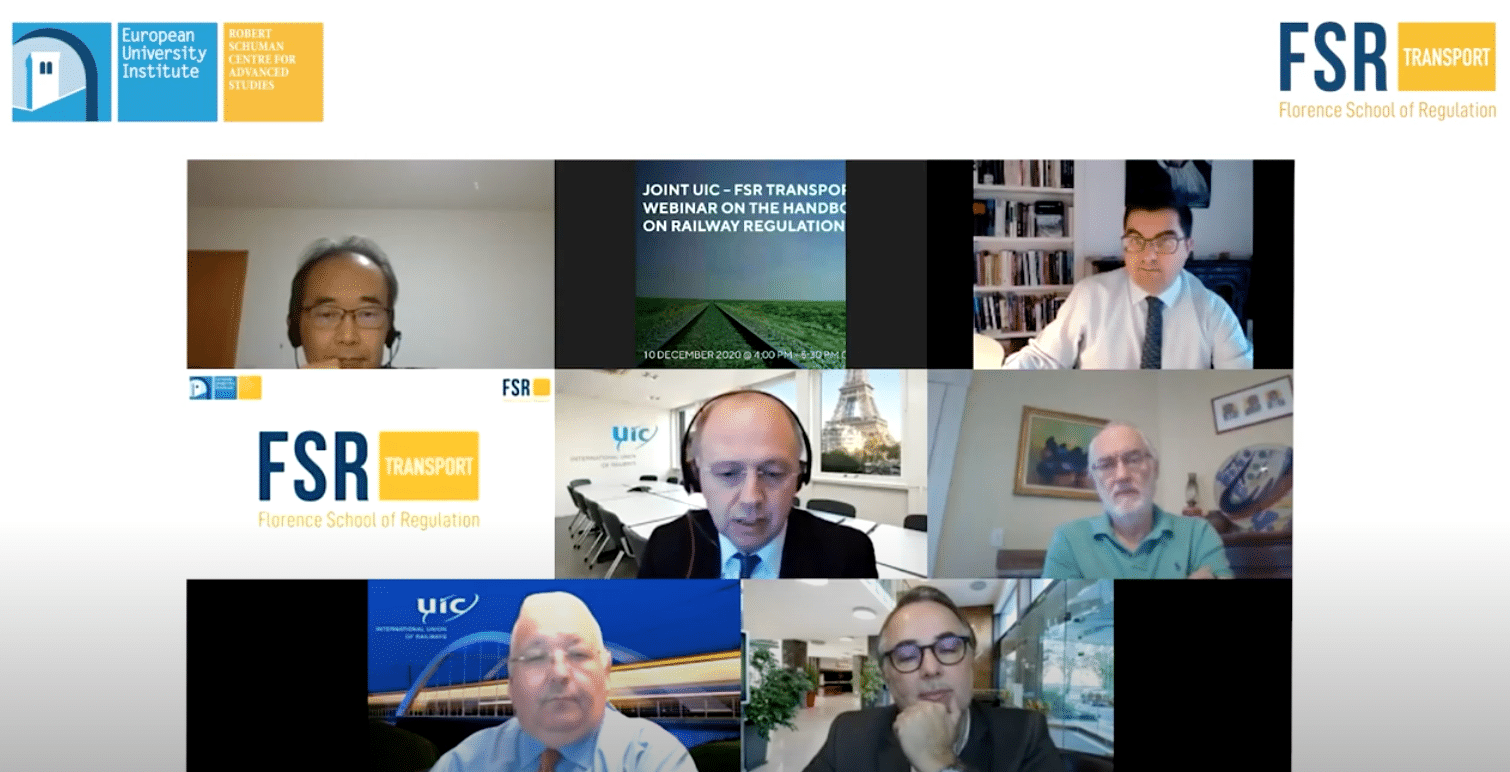
Inspired by the recently published “Handbook on Railway Regulation. Concepts and Practice” by Edward Elgar, this webinar, jointly organised by the International Union of Railways (UIC) and FSR-Transport, will provide a comprehensive overview of the state-of-the-art in railway regulation in Europe, the US and Japan. Speakers will examine the most pressing issues for their respective railway markets, and outline future trends in the development of rail globally.
Despite numerous liberalisation attempts in recent years, the railway sector is still excessively complex, with regulations varying throughout the world. The Handbook on Railway Regulation gathers, for the first time, these various approaches and practices, using a historical and systematic approach to identify the main lessons for all countries. Specific topics covered include the digitalisation dilemma in the industry, rail sector reforms and regulation, and competition in the market for rail freight and passenger services.
This Handbook provides an invaluable contribution to the discussion of railway regulation worldwide, and will be a crucial compendium for students and scholars of transportation, regulation and competition looking to explore different approaches to the topic. This will also be an invaluable read for railway policymakers and regulators looking to deepen their understanding of contemporary regulations around the world.
Among others, speakers will focus on the regulatory aspects pertaining to railway market opening, they will draw on lessons learnt from the Covid-19 pandemic on rail operations, and not the least they will shed light on the challenges that they face in meeting the sector’s needs of today and tomorrow.
AGENDA
16:00 – 16:20 | Introduction of the Handbook on Railway Regulation
- Matthias Finger, Director of FSR-Transport, EUI; Co-editor of the Handbook on Railway Regulation
16:20 – 17:20 | Four presentations
- Fumio Kurosaki, Professor at Faculty of International Tourism Management, Toyo University; and Contributing Author, ‘Railways in Japan’
- Russell Pittman, US Department of Justice; Kyiv School of Economics; and Contributing Author, ‘Railways and Railways Regulation in the United States: Surely You Don’t Want Jones Back?’
- Juan Montero, Professor at EUI/ UNED, Co-editor of the Handbook on Railway Regulation
- Christian Chavanel, Director of Rail System Department, UIC, and Contributing Author, ‘Towards a new Architecture for technical Regulation of Europe’s Railways’
- François Davenne, Director General of UIC
17:20 – 17:30 | Q&A Session moderated by Simon Fletcher, Director Europe, UIC
Don’t miss any update on our events
Sign up for free and access the latest events from our community.


Policy Advisory Council – FSR Energy
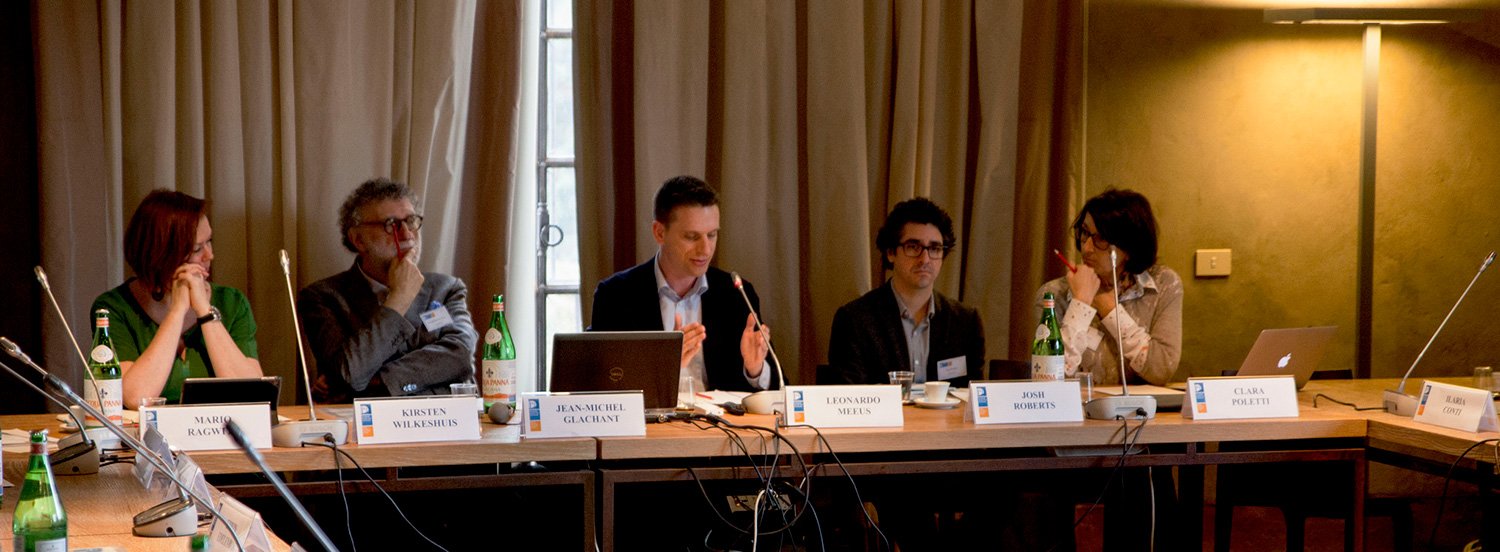
The Policy Advisory Council discusses the most topical regulatory and policy issues and debates the relevance and robustness of the latest FSR research findings.
The meeting gathers renowned academics, experts from the FSR Energy Major Donors, the European Commission, the Agency for the Cooperation of Energy Regulators (ACER) and National Regulatory Authorities.
The event will take place online and is structured as follows:
Day 1 – New Policy Areas
- Session 1 – Sector Integration for the decarbonisation of the energy sector
- Session 2 – The role of Hydrogen in enabling the energy transition.
Day 2 – Implementation of Existing Policies
- Session 3 – The reform of the ETS system
- Session 4 – Resilience of the electricity system: which are the main challenges?
Please note this is a closed event and participation is by invitation only.
Don’t miss any update on our events
Sign up for free and access the latest events from our community.

Juridification in the EU Energy Sector – online seminar

This online seminar will delve into the role of lawyers and the legal system in the relationship between transmission system operators and regulatory authorities in the EU. We will explore how recourse to the wider European legal framework – the juridification of the process – plays into the interactions and cases between TSOs and ACER/ NRAs. In light of the rising number of appeals in relation to ACER decisions, how should any potential conflict-solving be navigated and with what tools?
Does the role of law in the governance of these relations risk overstepping the mark or does it provide a useful structure through which to manage these relations? How can the right balance be struck? And how can consensus be reached in such a scenario and meaningful cooperation between the regulators and the technical expertise on the part of the TSOs be established, maintained or, where necessary restored?
Together with a panel of experts, we will examine the development around several recent cases – the legal context, the roles and responsibilities of the parties – and consider how to facilitate a greater level of efficiency, trust, and cooperation between the parties in the face of legal challenges.
Note this workshop is a closed workshop, which is exclusively open to FSR donors, members of regulatory authorities, ACER or ENTSO-E, or upon invitation only. If you would like to attend but do not meet this criteria, or if you have not received an invitation, please get in touch with us.
Don’t miss any update on our events
Sign up for free and access the latest events from our community.
The impact of the EU methane strategy on the natural gas market

‘The impact of the EU methane strategy on the natural gas market’ is the second joint webinar organised by the Florence School of Regulation and the Environmental Defense Fund.
The question leading the second online event is how to incentivise the methane emissions reductions from the whole natural gas value chain.
Watch the recording:
Introduction
The international action on methane emissions features prominently in the EU strategy to reduce methane emissions published on October 14, 2020. Despite the fact that the EU accounts for a small share of global methane emissions, it has a significant leverage as the largest importer of oil and gas to advocate for robust monitoring and mitigation of methane emissions.
In the Strategy EU Commission has prioritised monitoring, reporting and verification of methane emissions, keeping the door open for a possibility to adopt targets or standards, in the absence of significant commitments for the other jurisdictions. A part of the industry already calls for methane-intensity based production and procurement standards[1].
The strategy sets as a priority “ensuring that companies apply considerably more accurate measurement and reporting methodologies for methane emissions”, both within and outside the EU. To this objective, the EU Commission is promoting the creation of an international methane emissions observatory with a task to compile and publish a methane-supply index (MSI) demonstrating the emissions arising before natural gas or oil reach the final customer.
Independently from the developments in Europe, this year the Singapore’s biggest buyer of LNG, Pavilion Energy, has asked all LNG sellers to quantify the GHG emissions associated with each LNG cargo produced, transported and imported into Singapore. The environmental considerations led Engie to step back from signing a contract with the US LNG supplier. Energir, the main importer of Quebec also developed its own, corporate performance standard and procurement standard in collaboration with Equitable Origin.
These developments raise many questions, which will be tackled during the joint FSR-EDF webinar:
- Considering that less that 25% of methane emissions in the EU’s gas supply chain occur domestically and 80% of volumes consumed in the EU are sold through long-term contracts with 3rd country suppliers, is a Methane Supply Index fit for purpose? What should be the starting point and key assumptions around addressing emissions associated with imports?
- Could we expect that in the coming years the natural gas price will reflect environmental footprint?
- How to verify the credibility of GHG intensity declarations submitted by the natural gas importers and how to address likely discrepancies with what is reported in the inventories according to the UNFCCC template?
What level of governance can be most effective in determining the equivalency of regulations adopted in different jurisdictions?
Programme:
Introduction
Poppy Kalesi | EDF
Christopher Jones | FSR
Keynote presentation on methane emissions from natural gas value chain imports in Europe and lessons learned from the Arctic Council’s ACAP Working Group
Stephanie Saunier | Carbon Limits
Keynote presentation on establishing an International Methane Emissions Observatory
Manfredi Caltagirone | UNEP
Panel discussion
Stefano Grassi | European Commission
Jutta Paulus | European Parliament
Nicolás González Casares | European Parliament
Stefan Rolle | Federal Ministry for Economic Affairs and Energy, Germany
Jonathan Stern | Oxford Institute for Energy Studies
Samuel Kotis | Environmental Defense Fund
Toshiyuki Sakamoto |The Institute of Energy Economics, Japan
Georges Tijbosch | MiQ
Conclusions
Poppy Kalesi | EDF
Christopher Jones | FSR
Related sources
Jonathan Stern, 2020 Oxford Institute for Energy Studies
Have you missed the first webinar?

Presentations
Don’t miss any update on our events
Sign up for free and access the latest events from our community.
More on the topic




The Vienna Forum on European Energy Law – Webinar 2
The Vienna Forum on European Energy Law
The Vienna Forum on European Energy Law is an annual joint initiative of the FSR Energy Union Law Area and the Energy Community Secretariat which aims to bridge the gap in energy debate between the EU and Energy Community. This year, for the 8th edition of the forum, we will be moving online with four webinars across four weeks, focused on the solidarity principle, the European climate law, carbon pricing, and the role of the private sector in the energy transition. To discuss these topics, we will bring together a panel of experts for a roundtable debate and a live Q&A session with our audience.
Webinar 2
The European Climate Law: Fit for Purpose?
Watch the recording:
On 4 March 2020, as part of the European Green Deal, the Commission adopted a proposal for a European Climate Law as part of the European Green Deal strategy in an effort to strengthen measures toward reaching climate neutrality in the EU by 2050. An amended version of the proposal was issued on 17 September 2020, in line with the new 2030 Climate Target Plan, with a new EU-wide net greenhouse gas emissions reduction target of 55% by 2030 compared to 1990 levels. These new measures would have significant repercussions for EU targets and policies across the field as well as ramp up political pressure on Member States to develop more ambitious national targets.
What does this newly adopted proposal involve? What are the main controversies surrounding it? Are the proposed legal tools appropriate? Is the proposed law fit for purpose? With non-binding national targets for 2030 and in a deeply unstable economic climate, is such an escalation of efforts feasible?
In this webinar, together with a panel of experts, we will discuss the ins and outs of the proposal and its implications, as it enters into the EU legislative process.
Speakers
Introduction Dirk Buschle │ Energy Community Secretariat
Luca de Carli │ DG CLIMA, European Commission
Jürgen Schneider | Ministry of Climate Action, Environment, Energy, Mobility, Innovation and Technology, Austria
Erica Hope | European Climate Foundation
Simone Borghesi | FSR (RSCAS, EUI)
Q & A
Moderation Leigh Hancher | FSR (RSCAS; EUI); Tilburg University; Baker Botts LL
Background to the Discussion
The proposed European Climate Law intends to enshrine the pledge to climate neutrality in EU law, in the form of an EU regulation.
Importantly, while a review of the Governance Regulation will take place to assess whether it is still deemed fit for purpose, the draft climate law is intended to fit within the framework established by the Governance Regulation and surrounding legislation and should be aligned with its reporting and monitoring mechanisms. The Climate Law proposals do not introduce binding national obligations on the 2030 targets, and the 2050 objective of climate neutrality remains binding at Union-level only.
In the Commission’s Impact Assessment,1 which accompanied the proposal for the European Climate Law it noted that, “climate change is a trans-boundary problem. For trans-boundary problems, individual action is unlikely to lead to optimal outcomes. Instead, coordinated EU action can effectively supplement and reinforce national and local action. Coordination at the European level enhances climate action, and EU action is thus justified on grounds of subsidiarity in line with Article 191 of the Treaty on the Functioning of the European Union.”
The legal basis for the proposals are Articles 191 to 193 of the TFEU, which confirm EU competence in the area of climate change; “the European Union shall contribute to the pursuit, inter alia, of the following objectives: preserving, protecting and improving the quality of the environment, promoting measures at international level to deal with regional or worldwide environmental problems, and in particular combating climate change.” Note that energy legislation, including the Clean Energy Package, takes a different legal basis – Art. 194 TFEU. Unlike this latter article, Articles 191-3 do not defer to a Member States’ right to determine its own energy mix.
The most controversial element of the proposals surrounds the use of delegated acts.
What are Delegated Acts?
Delegated acts are legally binding acts adopted by the Commission on the basis of a delegation granted in the text of an EU law to supplement or amend non-essential parts of EU legislative acts in order, for example, to define detailed measures. The Commission’s power to adopt delegated acts is subject to strict limits. The delegated act cannot change the essential elements of the law; the legislative act must define the objectives, content, scope and duration of the delegation of power; and the EU Parliament and Council may revoke the delegation or express objections to the delegated act.
According to Art. 290(1) TFEU “a legislative act may delegate to the Commission the power to adopt non-legislative acts of general application to supplement or amend certain non-essential elements of the legislative act.” Essential elements are considered as the rules which are essential to the subject matter envisaged.
Delegated acts are adopted following a consultation with expert groups composed of representatives from each EU country. It is important to note that while the Commission will actively seek out the
advice of experts from Member States, these experts have a consultative rather than a formal role in the decision-making process. Ordinarily, over the course of four weeks, citizens and stakeholders can provide feedback on the draft text of a delegated act. Once the Commission has adopted the act, the EU Parliament and Council generally have two months to formulate any objections. If they do not, the delegated act enters into force. Adopted acts contain an ‘explanatory memorandum’ summarising the feedback received and how it was used.
So, how has the proposal been received?
The initial proposals were met with mixed opinions, and Member States have been split on the proposals. According to the opinion of the European Parliament’s Legal Service from 31 March 2020 on the legality of the use of the delegated acts by the European Commission, issued as a non-paper, the proposal of the Commission goes beyond its competences. The opinion stated that “the Union’s emission reduction targets are indisputably elements which are “essential” to the Union policy on fighting climate change and therefore cannot be a subject to delegated acts”. Further, it states “It is submitted that the trajectory for achieving climate-neutrality by 2050 is an essential element of the proposal for a Regulation on the European Climate Law and delegating the power to the Commission to set out that trajectory is not in line with Article 290 TFEU.” Given that the Commission’s recourse to delegated acts will substantially limit the powers of the European Parliament, as well as the Member States, will this opinion be a factor in maintaining a certain status quo in the process of “creating” further EU energy and climate policy?
Is the use of delegated acts reasonable? Is the Commission overstepping its mark or is it a necessary way forward?
The merits of using delegated acts in the context of such a time-sensitive issue are that they are more efficient and avoid the risk of time-consuming institutional bargaining or one Member State holding another hostage in the process. There is also still democratic oversight – the European Parliament is not entirely side-lined – the European Parliament or Council can object to the delegated act or revoke the delegation of power entirely. There is also the stated consultation process with national experts.
Aside from this issue, some criticisms have also been levelled at the addition of ‘removals’ to the amended proposal with fears that it could be a potential get-out clause. The amended proposal states that “by 2030 greenhouse gas emissions should be reduced and removals enhanced, so that net greenhouse gas emissions, that is emissions after deduction of removals are reduced economy-wide and domestically, by at least 55% by 2030 compared to 1990 levels.” In the first draft proposal, no mention of removals in this context were made. In place of that line, the Commission had promised to “explore options for a new 2030 target of 50 to 55%.” The suggestion is that the 2050 net-zero target would be met via carbon sinks. However, the current 2030 target of 40% emissions reduction compared to 1990 levels does not include offsets. Is the new target thus less ambitious than it appears and more a case of creative accounting? The Commission has responded to the criticisms to state that the baseline for 1990 is also being adjusted retrospectively, meaning there would be no “free” emissions reductions.
There have also been calls by NGOs for an access to justice provision to be added to the draft amendments to the Governance Regulation, in order to allow for challenges to the EU and Member
States should the NECPs and LTSs be deemed inadequate. Articles 5 and 6 of the draft legislation state that the Commission shall adopt relevant measures if the level of ambition is insufficient to reach the targets. However, the assessments of the Commission would not be legally binding, which means they cannot be challenged. What happens if the Commission fails to adopt the “necessary measures in accordance with the Treaties” to rectify these failings? According to Art. 263 TFEU, individuals and NGOs do not have standing to directly challenge acts or omissions before the Court of Justice unless they are the addressees of the measure in question. NGOs must therefore rely on the Aarhus Regulation, which allows them to request a review of the act or omission by an EU institution to adopt an administrative act of individual scope. In the case of a climate law, it would be difficult to demonstrate that the act to be adopted would be of individual scope. There have thus been calls for this barrier to be removed by adding an access to justice provision and for amendments to be made to the Aarhus Regulation.
It remains to be seen how the draft proposals will develop through the legislative process. On 7 October, the European Parliament backed a 60% EU-wide net GHG reduction target by 2030 compared to 1990 levels.
Upcoming webinars
Webinar 3: Carbon Pricing: The Silver Bullet for the Energy Transition?
Monday 30 November 2020: 14.30 – 16.00 CET
Webinar 4: The Private Sector to the Rescue of the Energy Transition
Monday, 7 December 2020, 14.30 – 16.00 CET
Don’t miss any update on our events
Sign up for free and access the latest events from our community.