



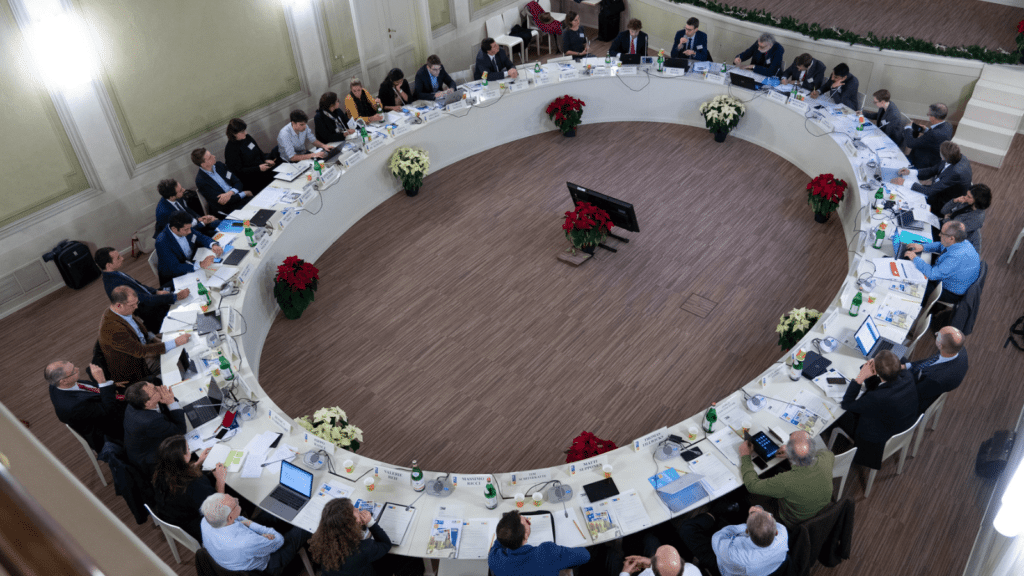

Type of event: Workshop
Methane Emissions in the Gas Sector
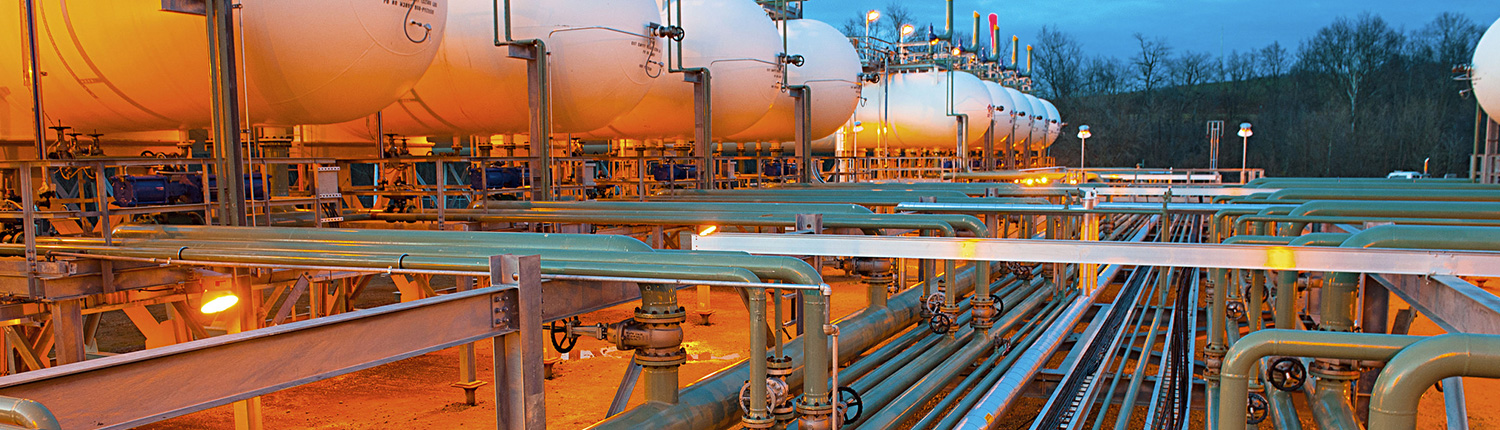
Examine the challenges and opportunities of moving down the road towards net zero methane emissions in the gas sector during the FSR Policy workshop, organised in cooperation with Gas Infrastructure Europe (GIE).
For a long period of time, the problem of methane emissions in the oil and gas sector was mainly a non-European issue. However, recent studies revealing that the level of methane emissions could be higher than previously assumed triggered a series of discussions. As a result, the challenge has been officially recognised and the European Commission is working on the EU methane emission strategy, which is expected to be published this fall.
During the workshop, we will look into the dynamics of the emissions reduction and will examine what type of regulatory measures complementing the voluntary industry initiatives are needed in the EU to tackle the problem.
The workshop is divided into two sessions:
- Session 1: Is the reduction of emissions in gas sector the low hanging fruit of climate change mitigation?
- Session 2: Is there a need for more regulation?
Don’t miss any update on our events
Sign up for free and access the latest events from our community.
More on the topic




Energy Poverty in Europe
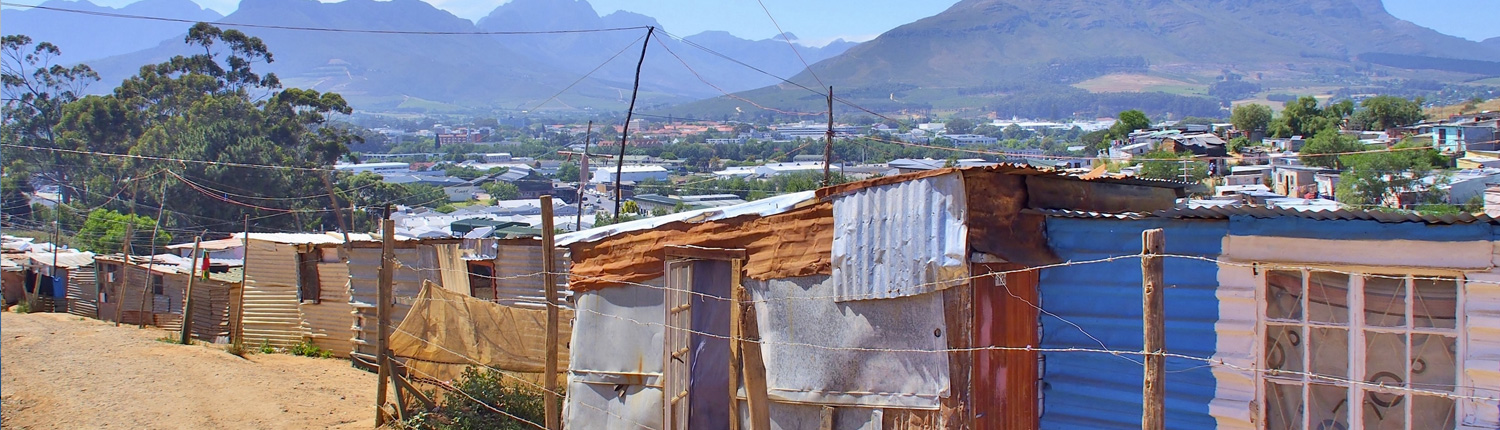
In this workshop, co-hosted by the CEER and FSR, we aim to highlight the role of the regulators in addressing energy poverty in Europe.
Through three panel sessions we will explore:
- the drivers of energy poverty in Europe and what is government’s role in addressing it,
- the Clean Energy Package and the solutions it offers to end energy poverty in Europe,
- what energy poverty has in common with energy poverty in other parts of the world and examining how to share best practice.
Background information
Energy poverty is a widespread and even growing reality across Europe. The EU Survey on Income and Living Conditions (EU SILC) measured in 2013 shows that 10.7% of the population (approximately 54 million people) are unable to afford basic levels of energy for essential needs.
Energy poverty falls between several major policy fields (social, health, education, environment, financial, productivity) and involves many stakeholders from all of these fields. Energy Poverty should, therefore, be addressed in an integrated manner to optimise multiple benefits, including less money spent by governments on health, reduced air pollution, better comfort and wellbeing, improved household budgets, and increased economic activity.
Member States have so far been responsible for addressing energy poverty and have done so by boosting household income through social tariffs, social welfare subsidies and regulated energy prices. This has been an effective short-term solution but is increasingly criticised for not addressing the root of the cause, and for distorting the increasingly liberalised market.
Until now, energy poverty has barely featured in EU policy or linked debates. At the forefront has been the continued deepening of the internal market, through liberalisation and privatisation, and the clean energy transition. Will the Clean Energy Package together with the mandate provided to the newly launched EU Energy Poverty Observatory be able to change this situation and address energy poverty in a coordinated manner in Europe?
Don’t miss any update on our events
Sign up for free and access the latest events from our community.




Coupling the Sectors
The workshop “Coupling the Sectors” explore the extent and in which form(s) the electricity and gas markets and systems could be usefully coupled to meet the challenges facing the energy sector in the future. It will also consider which other sectors and activities could be “coupled”, although in a different form.
The European Commission has recently proposed the “sector coupling” concept, reflecting the requirement for greater integration between electricity and gas, and possibly other sectors and activities as well (i.e. electro-mobility, heating and cooling).
The Workshop will explore the extent and in which form(s) the electricity and gas markets and systems could be usefully coupled to meet the challenges facing the energy sector in the future. It will also consider which other sectors and activities could be “coupled”, although in a different form.
- Session 1 will focus on how the electricity and gas markets and systems could be coupled beyond the level of modelling integration currently envisaged;
- Session 2 will consider which other sectors/activities could be usefully coupled to the electricity and gas sectors, and, if so, with which solutions.
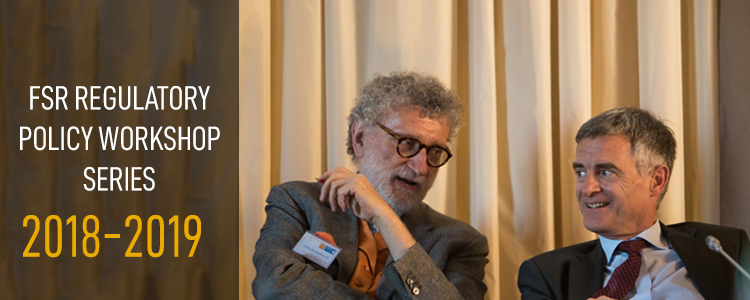
This workshop is a part of the FSR Regulatory Policy Workshop Series 2018-2019 and is exclusively open to national regulators, representatives from public bodies and associate & major donors of the FSR Energy area.
Background information
Current legislation already envisages cross-sectoral market and system modelling, through the development by the European Networks of Transmission System Operators (ENTSOs) of a “consistent and interlinked electricity and gas market and network model including both electricity and gas transmission infrastructure as well as storage and LNG facilities”. However, more integrated modelling could also assist other areas in the future.
The opportunity and the benefits of ensuring greater coordination between different markets were at the basis of the development of cross-border market coupling in the energy sector. With electricity market coupling, market participants do not have to trade energy and cross-border capacity separately, avoiding the risk of inefficient outcomes. It is now widely accepted that a similar form of cross-border coupling is not required in the gas sector.
However, a different form of coupling between the short-term gas and electricity markets may well assist in increasing the efficiency of the overall energy sector. Such “sector coupling” may also take advantage of the fact that, alongside the traditional gas-to-power transformation available through gas-fired generation, power-to-gas technologies are developing. The gas-to-power and power-to-gas capabilities, combined with conditional bids, would allow some form of “arbitrage” between the electricity and gas markets, making sure that prices on these market develop in a consistent way and, potentially, allowing the smoothing of price volatility.
Cross-sector market coupling will also call on greater integration not only of network development (which is already envisaged), but also of system operation, as the constraints in the two markets might require coordinated management.
Other sectors or activities – such as electro-mobility or heating and cooling – might also benefit from closer integration with the electricity (and possibly gas) sector(s), even though such integration will likely take a looser, or at least different, form.
Don’t miss any update on our events
Sign up for free and access the latest events from our community.
More on the topic










Energy Sector Competition Law

This annual workshop, organised by the FSR Energy Union Law Area in collaboration with the Brussels offices of Cleary Gottlieb Steen & Hamilton LLP, will look at the latest developments in the energy sector in terms of competition law.
This year, we will focus on three core issues. Firstly, we will look at the digitalisation of the energy sector and examine the use of data in energy markets with a particular focus on the abuse of dominance and the essential facilities doctrine. Secondly, we will consider recent developments in antitrust. Finally, we will turn to state aid and the energy sector with a particular focus on the notion of selectivity in state aid control.
Please note that there are limited places available. There is no charge for participation in the workshop.
Don’t miss any update on our events
Sign up for free and access the latest events from our community.
More on the topic





Clean Energy Package’s Consumer-Centric Provisions

Clean Energy for all? The Legal Challenges of Implementing the Clean Energy Package’s Consumer-Centric Energy Provisions
The Clean Energy Package (CEP) proposals launched in November 2016 has been branded as a consumer-centric package that promises a “new deal” for consumers and clean energy for all Europeans. However, to be effective, several of the consumer-centric provisions require cooperation between market actors, regulators and possibly new entities. Thus, the challenge of the CEP consumer-centric provisions lay in the implementation phase, which will likely require new legal structures as well as new business models. Among the issues to be explored, in this respect, are the new supply relationships in the clean energy transition; how to be a successful aggregator and comply with competition law; and to consider the protections available, exploring the future for energy-intensive and residential customers.
Download the presentations here
Download the programme
Please note that there are limited places available. There is no charge for participation in the workshop.
New supply relationships in the clean energy transition
Several rules encourage the evolution towards prosumer status. This evolution needs a contractual framework that, for example, enables customers to purchase electricity from RES producers, while being protected from the risks inherent with this source. What will be the key clauses in the clean energy contracts? Will trading platforms play a role in facilitating these new relationships? Will new energy products emerge to hedge the risks of volatile RES supply?
How to be a successful aggregator and comply with competition law
Incumbents have a head start in becoming aggregators as they already have the critical mass to successfully perform this role. Yet, dynamic new entrants are also emerging in this space. What are the dos and don’ts for aggregators from a competition law perspective? Are there competition law risks from cooperation between potential competitors in this field? Are local communities an alternative to aggregators?
“Who is going to protect me?” The future for energy-intensive and residential customers
The CEP puts an end to regulated tariffs. This affects energy-intensive as well as residential customers. Moreover, with the review of the State aid Guidelines for the energy sector already in sight, it is not clear that energy-intensive customers can continue to rely on discounts from the levies to support RES. Is the market mature enough to take care of the needs of energy-intensive and residential customers? What can national regulators still do? Is State aid the answer?
If you are interested in this topic, you may also be interested in taking a look at this recent paper from BestRE
Don’t miss any update on our events
Sign up for free and access the latest events from our community.
More on the topic

SmartNet Project Workshop Series

We invite you to Florence to learn about and discuss the results of the SmartNet project research on the TSO-DSO coordination theme. Each day, different perspectives and interests of the stakeholders will be taken into account by the project team. Join the discussion on Twitter using the hashtag #SmartNetProject.
This 3-day workshop series organised by the Horizon2020 SmartNet project.
Download the programme
The workshop is free of charge, but registration is required.
Day 1 for TSOs/DSOs
On Wednesday, 24 October 2018 we will present and discuss:
- A critical analysis of the possible modalities of mutual interaction between TSO and DSO for the acquisition of ancillary services from distribution (coordination schemes)
- A cost-benefit analysis of these coordination schemes, allowing to compare ICT deployment costs with benefits in terms of reduction of total system costs for the acquisition of the resources for secondary and tertiary regulation
- An in-depth structure analysis of ancillary services markets highlighting what could be suitable in order to facilitate the participation of resources in distribution allowing them to compete on a level playing field basis with traditional resources located in the transmission system
- Results of scenario analyses at the 2030 time horizon referred to Italy, Denmark and Spain, allowing to get a view on prices trends and networks flows.
- A screening of real-time market-solving algorithms with a view on possible innovative solutions allowing a more efficient clearing procedure and reduced calculation time yet considering nodal detail for T&D networks.
- A thorough analysis of ICT requirements for implementing the studied coordination schemes
- Three pilots studying in detail technological solutions on three “real” cases implemented on the territory.
Day 2 for Regulators
On Thursday, 25 October 2018
- A thorough analysis of TSO-DSO coordination schemes for the acquisition of the ancillary services from distributed energy sources connected to distribution grids
- A cost-benefit analysis of these coordination schemes, allowing to compare ICT deployment costs with benefits in terms of reduction of total system costs for the acquisition of the resources for secondary and tertiary regulation
- An in-depth analysis on how the structure of real-time markets should evolve in order to make it possible for distributed energy sources connected to distribution grids to compete on a level playing field basis with traditional resources located in the transmission system
- An attentive analysis of the regulatory implications to implement the studied TSO-DSO coordination schemes with respect to the evolution of the regulation in Europe and in the three focus countries (Italy, Denmark and Spain)
Day 3 for Utilities and Traders
On Friday, 26 October 2018
- A comprehensive analysis of possible ways to coordinate TSO and DSO between themselves and with the ancillary services markets to allow participation of resources in distribution grids to ancillary services markets
- Scenario analyses at the 2030 time horizon referred to Italy, Denmark and Spain, allowing to get a glance to market prices and dispatching of the single resources.
- Cost-benefit analysis of the studied TSO-DSO coordination schemes, allowing to compare ICT deployment costs with benefits in terms of reduction of total system costs for the acquisition of the resources for secondary and tertiary regulation
- Micro-analysis based on simulation results to assess profitability for the different figures participating in ancillary services markets.
Don’t miss any update on our events
Sign up for free and access the latest events from our community.
More on the topic
Energy Innovation Academy

The FSR Energy Innovation Area and the Young Scholars Initiative (YSI) of the Institute for New Economic Thinking (INET) have the pleasure to invite you to participate in the 1st Energy Innovation Academy.
Call for papers
Energy transitions imply disruptive innovations. That drives the Academy’s topics. We aim at discussing industries as complex and evolving systems. We are interested in their dynamics, networks, interactions, and heterogeneity. Our strategy is to bring together scholars from within and outside energy industries to cross-fertilize discussions on energy transition and complex adaptive systems.
We seek contributions from young scholars in all areas of Complexity, Innovation and Institutional Economics. Our aim is to bring together a broad view of technological and institutional aspects in order to apply it to industry transitions.
Scholars may submit an abstract or a complete paper. There are no format or length requirements. If the work is selected, they will be invited to participate and present in the Academy. We will base our selection on all available information – no single factor will be determinant. We seek candidates in terms of their contribution to a diverse research community.
The Format
- During mornings, the event will provide presentations on the state of the art of the discipline on a specific topic. At the end of each morning, the workshops will elaborate on specific research questions or methodologies, in the format of a roundtable followed by open Q&A.
- In the afternoons, the academy seminars will take place. They are designed to give attendants the opportunity to present and discuss their own research with experienced mentors and the rest of the participants of the academy.
Practicalities
The list of selected participants will be published on 18 October 2018 and we aim to welcome up to 20 young scholars. YSI will cover accommodation in shared apartments or shared hotel rooms to all selected participants. We expect to support some of the travel costs depending on funds availability.
Webinar Series
In the context of the Energy Innovation Academy, the FSR Energy Innovation Area will organize three webinars during September and October to set the scene and discuss the main topics of the Academy with a wider audience online.
Invited speakers:
- Jose Maria Silveira (Unicamp): Knowledge networks and technological frontiers: where are we, and where do we go to, in bioenergy? Register here
- Javier Prieto (EC) – Smart Specialization
- Daniele Rusolillo (Planet Idea) – Smart Cities
Follow FSR on twitter and join the discussion on #FSREnergyInnovation
For more information, contact the event coordinator: Chiara Canestrini


Don’t miss any update on our events
Sign up for free and access the latest events from our community.
More on the topic
The Value of Energy Storage

Energy Storage and Storage facilities play a crucial role in the EU energy system contributing to the seasonal flexibility of the EU energy market and acting as a collateral against potential disruptions in the supply of energy. However, the value of storage has been challenged in recent years. According to the European Commission “Follow-up study to the LNG and storage strategy” this trend is a result of, inter alia, gas consumption’s weakening, narrowing summer/winter spread, converging energy prices across Europe, greater pipeline flexibility and hub liquidity. At the same time, many people agree that storage is becoming more and more important with the increase of intermittent energy from renewable sources in the EU energy mix.
The workshop is divided into two sessions.
The first session deals with the consequences of changing market conditions on the storage market and the adequate market design to flexible resources in order to fully capitalise on their potential.
The second session is devoted to the regulatory options that could be designed to provide the cleanest back-up to cope with the increasing variation of gas flows that the rising share of RES in the energy mix will trigger in the future low carbon energy system. The event will conclude by issuing policy recommendations.
Chairs:
- Andris Piebalgs | Florence School of Regulation / RSCAS / EUI Lubor Veleba | Gas Infrastructure Europe
- Cécile Prévieu | Gas Infrastructure Europe
- Lubor Veleba | Gas Infrastructure Europe
Don’t miss any update on our events
Sign up for free and access the latest events from our community.
More on the topic


Carbon Market Workshop

This workshop brought together academia, other stakeholders and senior policy makers from different carbon markets worldwide (California, Canada, China, EU and New Zealand), in a unique process for a fruitful exchange.
A growing number of countries and of sub-national jurisdictions are using carbon markets to implement their Nationally Determined Contributions (NDCs) under the Paris Agreement. Recognising the emerging need to share the experiences on implementation of emissions trading systems to date, and to further promote emissions trading as a cost-effective climate policy tool policymakers, academics and other stakeholders will reflect upon recent developments in carbon markets around the globe and discuss future perspectives of carbon market cooperation. As one specific topic, they will discuss respective experiences with and future perspectives of offsets in carbon markets.
The event was jointly organised with by DG Climate Action of the European Commission and is part of the so called ‘Florence process’ aimed to stimulate the on-going debate on carbon markets amongst international policymakers and experts.
Workshop by invitation only and held under the Chatham House Rule.
Programme
09:45 – 10:15 Welcome and coffee
10:15 – 10:30 Opening remarks
Brigid Laffan, European University Institute
Jos Delbeke, Senior Adviser for Relations with the Florence European University Institute, European Commission
10:30 – 13:00 Session 1: Current developments in carbon markets and future perspectives in carbon market cooperation
Discussion with the following experts moderated by Dirk Forrister, IETA:
• Robert Stavins, Harvard University
• Dan Dudek, Environmental Defensive Fund
• Lars Zetterberg, IVL Swedish Environmental Research Institute
• Glen Murray, Pembina Institute
13:00 – 14:30 Networking lunch
14:30 – 15:30 Session 2: Offsets in carbon markets – taking stock of experience
15:30 – 16:00 Coffee break
16:00 – 17:30 Session 3: Offsets in carbon markets – outlook
Overview by Juerg Fuessler (INFRAS) followed by a discussion with following experts moderated by Franzjosef Schafhausen, General Manager, Energy-Environment-Climate Consulting:
• Jonathan Shopley, Natural Capital Partners
• Stephanie La Hoz Theuer, Independent Consultant
• Pedro Martins Barata, Get2C
17:30 – 17:45 Closing remarks
19:30 Networking dinner
Dinner speech by Robert Stavins, A.J. Meyer Professor of Energy & Economic Development, John F. Kennedy School of Government, Harvard University.
Other workshops of the Florence Process:
Third Carbon Market Workshop, 21 March 2019
First Carbon Market Workshop, 25 September 2017
Don’t miss any update on our events
Sign up for free and access the latest events from our community.
More on the topic




SmartNet project

The SmartNet project is going to complete its activities within the current year. We have always paid a great attention to collect feedbacks and suggestions from the stakeholders’ world and now, six months ahead to the end of the project, on July 20th we are going to organise a full day workshop in Brussels.
The aim of this Workshop is to provide a detailed dissemination of the results obtained and lessons learned, both from the simulation and cost-benefit analysis on the different coordination schemes, and from the three technological pilots on the three countries (Italy, Denmark and Spain). However, this will also constitute the last opportunity to collect a comprehensive feedback from the stakeholders, which will help us to elaborate the final recommendations and regulatory guidelines.
The location in Brussels should be the most favourable one to collect the most important European stakeholders, representing the manifold viewpoints of the electricity world. A world which is in quick evolution and thus is very interested in a prospect view showing how the system should evolve in the mid-term as far as TSO-DSO interaction is concerned.
Date: 20 June 2018
Time: 9:00 am – 16.30 pm CEST
Location: VLEVA office: Kortenberglaan 71, 1000 Brussels
Programme:
- Introduction to the SmartNet project (G. Migliavacca – RSE) – 15 minutes
- Five TSO-DSO coordination schemes (H. Gerard – VITO) – 20 minutes
- Real-time market architecture issues (G. Leclerq – N-SIDE) – 20 minutes
- Aggregation models (M. Dzamarija – DTU) – 20 minutes
- The three national simulation scenarios (H. Svendsen – SINTEF) – 20 minutes
- Simulation platform and simulation results (M. Rossi – RSE) – 40 minutes
- Cost-benefit analysis methodology (C. Madina – TECNALIA) – 40 minutes
- Regulatory analysis (I. Kockar – Strathclyde University) – 20 minutes
- Introduction to the three technological project pilots (C. Madina – TECNALIA) – 15 minutes
- Demo Italian Pilot (L. Ortolano – TERNA) – 30 minutes
- Demo Danish Pilot (H. Madsen – DTU) – 30 minutes
- Demo Spanish Pilot (M. Pardo – ENDESA) – 30 minutes
- Debate with the European stakeholders: ideas suggestions in sight of project finalisation – 1 hour
Don’t miss any update on our events
Sign up for free and access the latest events from our community.
More on the topic
Renewable Gas and the EU Path to Decarbonisation
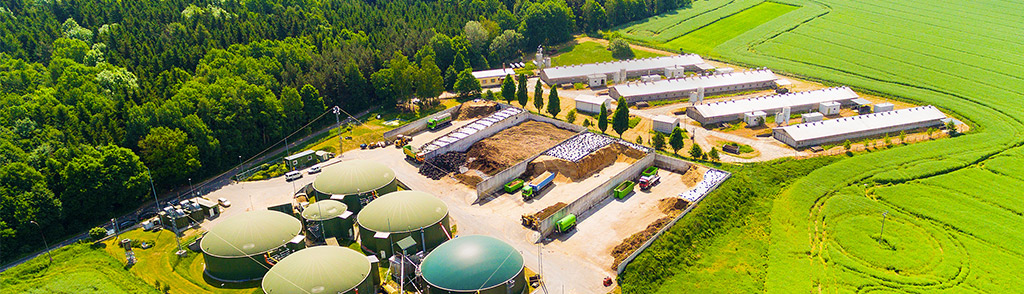
The workshop will assess the renewable gas complex and the path to energy sector decarbonisation, analysing the production value-chains, and discussing the scope of policy and regulatory interventions in support of the widespread use of renewable gas.
The EU’s energy sector is profoundly changing. The forthcoming agreement on the “Clean Energy for all Europeans package” will cement the EU’s commitments under the Paris Agreement and substantially decrease the energy sector’s greenhouse gas emissions, bolstering the sector’s potential to become nearly emission-free by 2050.
The proposal is also leading to serious considerations about the future energy system and challenging the current and future role of gas in the energy system.
Is gas a transitional fuel or it should be a destination fuel?
The answer depends on the wide use of the renewable gas and in particular on the broad development of “green power-to-gas”.
The workshop also aims to develop a policy conclusion for achieving energy sector decarbonisation quickly and efficiently.
Chairs:
- Andris Piebalgs | Florence School of Regulation / RSCAS / EUI
- Albert Bressand | University College London
Don’t miss any update on our events
Sign up for free and access the latest events from our community.
More on the topic
The Economics of Cybersecurity in the Energy Sector

The Workshop aims at reviewing the current state of thinking on the economics of cybersecurity in the energy sector; trying to identify how cybersecurity investments should be evaluated from an economic perspective and how their effectiveness measured.
It also assesses whether the current approach to the economic regulation of the energy sector is suitable for addressing cybersecurity and its costs, or whether a new regulatory paradigm is necessary to tackle the upcoming challenges.
With this Workshop, the Florence School of Regulation intends to promote the development of a shared view on possible regulatory paths which can help the energy sector to enter smoothly in the Industry 4.0 age; and contributes to the implementation of the energy sector’s Digital Agenda.
Download the programme
Background information
The move towards “Industry 4.0” – comprising cyber-physical systems, Internet of Things, cloud computing and cognitive computing – is providing the opportunity to integrate unrelated systems across industry sectors, as well as merging data flows together with new industry operations. The higher level of efficiency and production’s optimisation also results in lower costs for end-consumers.
Digitalisation also created new challenges: moving all systems to cyberspace generated the need to manage risks related to cyber threats and vulnerabilities, which, in highly integrated and digitalised systems, could potentially widespread consequences and affect the entire energy sector, including consumers, if not the economy as a whole. Cybersecurity will, therefore, be implemented both on the Operational Technology and on the Information Technology sides – as they are increasingly interacting and include processes (such as smart metering), that involve millions of remote terminals, all potentially vulnerable to cyber-attacks.
Cybersecurity thus becomes a relevant aspect that should be factored into the economics and regulation of the energy sector. Cybersecurity also represents a cost, spanning across generation, transportation and distribution, which not all market participants are already familiar with. As this cost pertains to most infrastructures, it is necessary to address the way in which cybersecurity and digitalisation may change the economics of the energy sector and markets; also considering that cybersecurity measures might have to be adapted and updated more frequently than infrastructures where they are implemented.
Cybersecurity also introduces new notions divergent from familiar regulatory logic, that might be difficult to incorporate in current regulatory approaches. The novelty of these notions implies that regulators and regulated companies might find it difficult to agree on a common paradigm when considering cybersecurity standards and investments. Cybersecurity expenses might be very significant as they can have both an effect in terms of improving actual security, but also, a deterrence effect.
Lack of established standards may make it difficult for regulators to recognise the importance of cybersecurity factors and the “prudently incurred” costs to address them. Regulators need to develop cybersecurity metrics, establish standards based on these metrics and identify the most appropriate regulatory approach.
This workshop is exclusively open to national regulators, representatives from public bodies and associate & major donors of the FSR Energy area.
Don’t miss any update on our events
Sign up for free and access the latest events from our community.
More on the topic