




Type of event: Workshop
2018 Policy Advisory Council

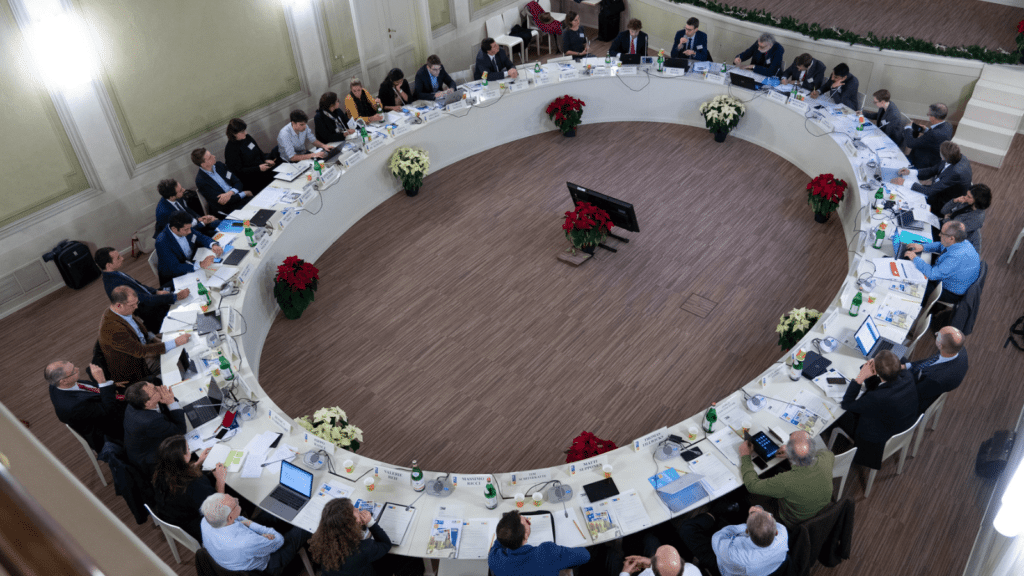
The 2018 Policy Advisory Council discusses the most topical regulatory and policy issues, as well as debating the robustness of the latest FSR research.
The Policy Advisory Council discusses the most topical regulatory and policy issues, as well as debating the robustness of the latest FSR research. It gathers renowned academics, experts from leading energy companies (being also FSR-Energy Major Donors), representatives from the European Commission, the Agency for the Cooperation of Energy Regulators (ACER) and National Regulatory Authorities.
The 2018 Policy Advisory Council is divided into three sessions, as follows:
- Session I: TSOs -DSOs Cooperation for Distribution Grid Congestion Management
- Session II: Grid Connection Network Codes for Electricity
- Session III: Renewable Gas
Please note that this is a closed event and participation is by invitation only.
Don’t miss any update on our events
Sign up for free and access the latest events from our community.
More on the topic







Regulation of Artificial Intelligence in Transport, Supply Chain Management and Logistics

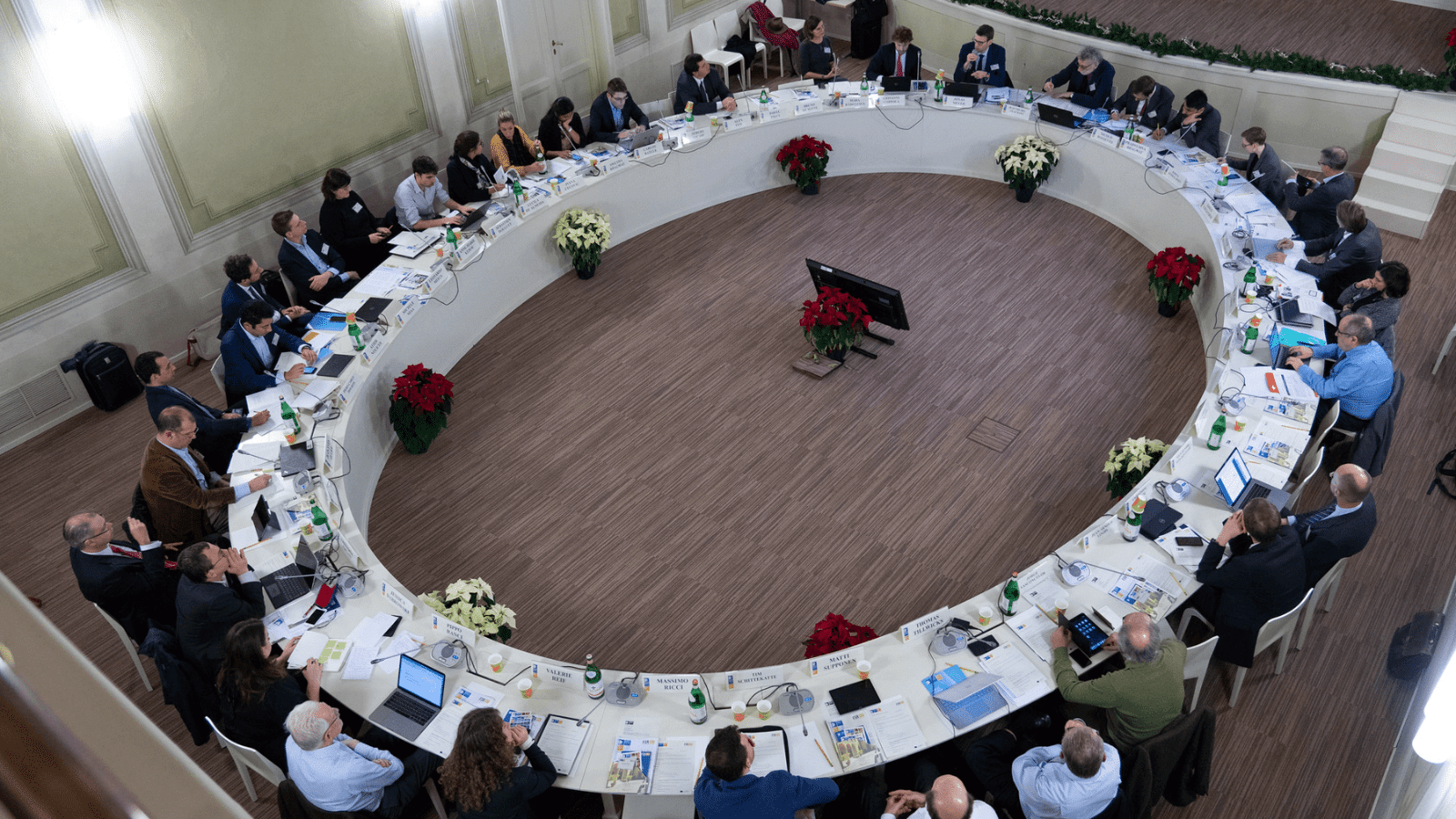
Regulation for technology developments in robotics and artificial intelligence is commonly seen as one of the important yet structurally neglected fields in research and political debate. This was highlighted in 2017 by the European Parliament report and a public consultation, indicating that a vast majority of citizens in Europe is regarding those developments as positive innovation fields but where further safeguards and regulations are needed (EP Resolution on Civil Law Rules on Robotics, 2015/2103(INL): Rapporteur Mady Delvaux). The workshop is directed at discussing the state of the art within the field of transportation, supply chain management and logistics as well as evaluating possible actions like regulation, agency- or industry-based approaches for establishing safeguards towards effective but risk-mitigating settings for this sector. This workshop will bring together academics and sector experts to discuss in a roundtable format. Three moderated sessions will address the crucial aspects of
- the state of the art of AI in transportation, SCM and logistics,
- the human factor, and
- future options.
Besides the open discussion regarding this new topic in research and practice, exchange among participants is also aimed at cooperation perspectives like
- possible joint research grant proposals (e.g. HORIZON 2020 or other international calls),
- a topical special issue of Network Industries Quarterly (6/2018, LINK) as contribution option,
- a possible SI for an academic journal as a long-term publication option (e.g. JCRNI, IJL).
Participants from different disciplines in academia, politics, advisory as well as practice are welcome.
Discussions will be moderated by EUI Visiting Fellow Prof Matthias Klumpp and Prof Juan Montero.
For information on registration and participation please contact FSR.Transport@eui.eu
Organiser: David Kupfer
RELATED PRESENTATIONS
Welcome & Introduction -MATTHIAS KLUMPP, FOM Essen, Fraunhofer IML, European University Institute; DAVID KUPFER, European University Institute
How AI and robotics help production and SCM today – ALBERTO REGATTIERI, FRANCESCO PILATI, University of Bologna
Requirements of logistics service providers towards IoT and AI – JULIAN SANDERS, Bohnen Logistik
Urban mobility – current and future challenges – ROBERTO MONTEMANNI, IDSIA
Truck driver training in Europe – An Introduction to FutureDRV – JAMES TILLYER, Transformotion UK & FutureDRV Project
Human motivation and AI collaboration – CAROLINE RUINER, Ruhr University Bochum
How to prepare workers for logistics innovations today & tomorrow -DOMINIC LOSKE, Rewe Group
Future options – How might we design cooperation between AI and humans? – MARIE BITTNER, Ruhr University Bochum
Conclusion and Outlook – MATTHIAS KLUMPP, FOM Essen, Fraunhofer IML, European University Institute; CAROLINE RUINER, Ruhr University Bochum
Don’t miss any update on our events
Sign up for free and access the latest events from our community.




EU ETS Reform and Implications

This workshop will examine the reform of the EU ETS and its implications for the energy markets.
The increasing penetration of renewable-based generation in the electricity sector poses challenges to the operation of energy systems. This is happening not only because of the greater variability of some technologies’ generation levels, but also because such generation is promoted through support mechanisms which prevent it from being exposed to market/price signals. While improvements in the design of support mechanisms have been introduced, a shrinking share of generation is fully exposed to market signals/prices.
At the same time, support for renewable-based generation is advocated on the basis that market prices do not currently internalise some of the negative externalities associated with ‘conventional’ electricity generation. One of these externalities is clearly the impact of greenhouse gas (GHG) emissions produced from fossil fuel-based electricity generation.
The EU Emission Trading Scheme (ETS) was introduced in 2005 with the aim to address this market failure, by creating a market for GHG emission allowances (EUAs), hence setting a price for carbon emission reflecting their negative externalities. While the fundamental design of the EU ETS seems appropriate, its implementation has been hindered by the last decade’s economic crises, as well as by the overlapping targets for the different EU environmental policy objectives (energy efficiency, renewables penetration and GHG emission reductions). As a result, EUAs have been traded at lower levels, below those believed to be necessary to promote any fuel/technology switching.
The European Commission is currently revising the EU ETS for the period beyond 2020. This new system includes a new emissions reduction target of 43% by 2030 (compared to 2005 levels) and a cap which will be reduced by a linear reduction factor of 2.2% from 2021 onwards (compared to the current 1.74%). The proposal also includes a set of rules to avoid carbon leakage for sectors facing the highest risk of relocation of production outside the EU, with a gradual phase-out of free allocation for the less exposed sectors after 2026. The Market Stability Reserve (MSR) mechanism will also be revised.
The Workshop, jointly organized by the Energy and Climate Areas of the FSR, will consider how the EU ETS might be revised to be able to address the inadequacies in its implementation, and to what extent this revision might result in higher EUA prices. A fundamental step in this process relates to the need of calibrating the EU ETS considering also the interaction with other climate and energy policies. The Workshop will also aim to assess what the implications of such higher EUA prices could be for the electricity market’s prices, as well as investigating to what extent the renewable-based generation would be able to participate in the electricity market without requiring further support.
This workshop is exclusively open to national regulators, representatives from public bodies and associate & major donors of the FSR Energy area.
Don’t miss any update on our events
Sign up for free and access the latest events from our community.
More on the topic



Market Abuse and Abuse of Market Power in Wholesale Energy Markets
FSR Regulatory Policy Workshop Series 2017 – 2018: Market Abuse and Abuse of Market Power in Wholesale Energy Markets
The EU Regulation No 1227/2011 on wholesale energy market integrity and transparency (REMIT) has introduced specific obligations and prohibitions to promote the integrity and transparency of trading in wholesale energy products. Specifically, it prohibits market abuse in the forms of market manipulation, attempted market manipulation and insider trading. It also envisages a sector-specific monitoring framework to detect and deter these types of abusive behaviour.
Article 2(2) of REMIT distinguishes four different categories of market manipulation: (i) false/misleading transactions, (ii) price positioning, (iii) transactions involving fictitious devices/deception and (iv) dissemination of false and misleading information.
The Workshop will aim at comparing and contrasting the notion of market manipulation, particularly in the form of price positioning; as well as the notion of abuse of dominant position, mainly in the form of artificial limitations in the production of an energy product. The event will try to identify and assess any overlaps between the two concepts and conclude on how to approach those specific cases in the best way.
Download the programme
This workshop is exclusively open to national regulators, representatives from public bodies and associate & major donors of the FSR Energy area.
Further background information:
Price positioning is defined as securing – or attempting to secure – by a person, or persons acting in collaboration, the price of one or several wholesale energy products at an artificial level – unless the person who entered into the transaction or issued the order to trade establishes that their reasons for doing so are legitimate and that the transaction (or order) to trade conforms to accepted market practices on the wholesale energy market concerned. Transactions involving fictitious devices or deception are those aimed to give false or misleading signals regarding the supply of, demand for, or price of wholesale energy products.
Examples of price positioning practices include those amounting to “abusive squeeze” (also known as “market cornering”), where a party (or parties) with a significant influence over the supply of, or demand for, or delivery mechanisms for a wholesale energy product and/or the underlying product of a derivative contract, exploit a decisive position in order to materially distort the price at which others have to deliver, take delivery or defer delivery of the instrument/product to satisfy their obligations. The European Agency for the Cooperation of Energy Regulators (ACER) notices that the proper interaction of supply and demand can – and often does – lead to market tightness, but that this is not market manipulation in itself. Similarly, having a significant influence does not constitute market manipulation by itself.
Another example of market manipulation in the form of “price positioning” are the “actions undertaken by persons that artificially cause prices to be at a level not justified by market forces of supply and demand, including actual availability of production, storage or transportation capacity, and demand (‘physical withholding’)”. For the actions of a person to have an influence on the market price, such a person should have a “significant influence/decisive position”.
The “significant influence” over the supply of wholesale energy products and the “decisive position” in their markets resemble the notion of “dominant position” referred to in Article 102 of the Treaty on the Functioning of the European Union, prohibiting the abuse of market power.
The notion of abuse of a dominant position in these forms is therefore closely related to the notion of market abuse in the form of market manipulation through price positioning practices. These two notions do not necessarily overlap, and it is clear that market manipulation (under REMIT) takes also forms that do not necessarily involve an abuse of dominant position. Another interesting question is whether all forms of abuse of a dominant position involving an artificial limitation of energy production (e.g. through capacity withholding) also represent market abusive behaviour under REMIT.
Don’t miss any update on our events
Sign up for free and access the latest events from our community.
More on the topic


Florence Rail Workshop
The need for regulation of transport industries has far from disappeared. New private and public actors have emerged. Regulatory issues have grown more numerous and more complex. New regulatory frameworks agreed upon by the main stakeholders are required to ensure a sustainable development of the European transport sector.
Don’t miss any update on our events
Sign up for free and access the latest events from our community.