


Economic Foundations of EU ETS and International Carbon Markets

This two-day residential training course on the Economic foundations of EU Emissions Trading System (EU ETS) and International Carbon Markets is designed for professionals who want to deepen their understanding of carbon markets and update their expertise in light of the 2026 review of the EU ETS and ongoing international developments.
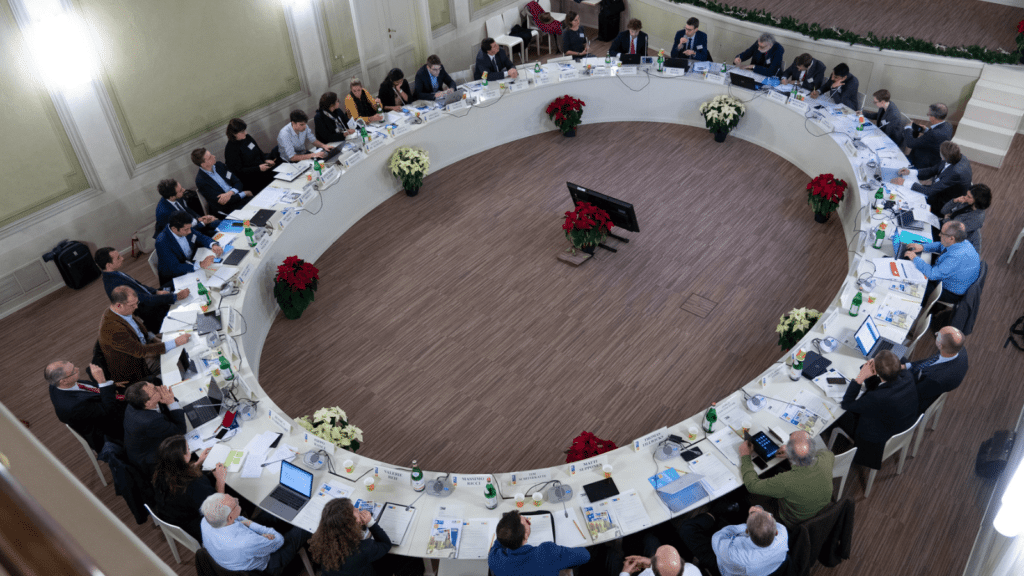
Held at the European University Institute’s Florence School of Regulation in Florence, the course brings together leading academics, EU policymakers, industry practitioners, and carbon market experts to provide participants with a comprehensive and practice-oriented understanding of carbon pricing mechanisms and their role in the global climate policy landscape.
Combining academic insights with practical applications, the course equips you with the knowledge and tools needed to navigate the rapidly evolving carbon market ecosystem. It also fosters cross-sector dialogue and collaboration, helping to build the community of practice essential for the effective design, implementation, and governance of carbon markets.
 Co-funded by the LIFE Programme of the European Union. Views and opinions expressed are, however, those of the organisers only and do not necessarily reflect those of the European Union or CINEA. Neither the European Union nor the granting authority can be held responsible for them.
Please note that this is a residential training. Thus, only a selected number of participants will be admitted. Participants will receive a response regarding their admission soon after the registration deadline.
10% discount available to all registrations completed by 4 October 2026!
As of May 2026, 41 emissions trading systems are now in force worldwide, covering approximately 26% of global greenhouse gas emissions. Within this expanding landscape, the EU Emissions Trading System (ETS) is itself at a turning point: free allowances for industrial sectors are being phased out in parallel with CBAM entering its definitive stage, the Market Stability Reserve is being reformed to reduce price volatility, and a comprehensive review of the system is expected by July 2026. At the international level, the Article 6.4 mechanism has issued its first credits and the EU and UK have announced plans to link their ETSs. For professionals across industry, regulation, and finance, keeping pace with these rapidly evolving developments is no longer optional.
The course opens with a pre-course video lecture introducing the rationale for carbon pricing as a response to climate change market failure. Over two days, sessions progress from the EU ETS’s current design, functioning, and reform to international dimensions, including the Carbon Border Adjustment Mechanism (CBAM), Article 6 of the Paris Agreement, voluntary carbon markets (VCMs), carbon removals, and distributional impacts of carbon pricing. Each topic is explored through a mix of expert lectures, bilateral interviews with EU policymakers, industry case studies, and group work exercises.
The course targets early to mid-career professionals from energy-intensive industries, regulatory bodies, NGOs, European and national associations, consultancies, and research institutions. It will be conducted in English and accommodate 20 to 30 participants in a residential format to foster peer learning and networking.
The training is delivered as part of the LIFE NETS project, which supports capacity-building on EU carbon markets across Europe and beyond.
Through this course we provide answers to the following questions:
- What are the main outcomes of the 2026 EU ETS review?
- How do the proposed reforms, including changes to the cap, allocation rules, and the Market Stability Reserve, alter the functioning and trajectory of the system?
- How will ETS 2 be implemented?
- What are the key tensions between carbon pricing, industrial competitiveness, and social equity?
- What progress has been made under Article 6 of the Paris Agreement?
- How are international carbon credits being used as flexibility mechanisms within and alongside the EU ETS?
- What is the current state of voluntary carbon markets?
- How are standards and integrity frameworks evolving?
After completing this course, you’ll be able to:
- Explain how the European compliance markets work
- Assess the current international context of carbon pricing
- Navigate international carbon markets and credits
- Evaluate solutions to address negative impacts on competitiveness and consumers
You’ll get a hands-on learning experience with:
- EU policymakers
- Industry representatives
- Leading academic experts
- Carbon markets specialists
The course is given in English and developed for:
- Carbon markets operators
- Professionals engaged in carbon markets
- Government agencies
- Regulatory bodies
- Companies covered by the ETS/ETS2
- Academics and researchers
- NGOs
- European Associations
- National Associations
Please note that this is a residential training. Thus, only a selected number of participants will be admitted. Participants will receive a response regarding their admission soon after the registration deadline.
Participants attending the training course will be awarded a Certificate of Participation.
Fees
- 500 EUR for professionals working in Academia
- 1,000 EUR for professionals working for Civil society/ NGOs/ Think Tanks, NRAs, EU Institutions, International organisations, National public administration
- 2,000 EUR for professionals working in the private sector and other sectors
Cancellation Policy
Paid registration fee is non-refundable. However, registrant substitution may be made up to 20 days before the course’s start date.
For more information, please read the full FSR cancellation policy.
The fee covers participation in the training, coffee breaks, lunches, and any meals or social activities outlined in the event programme. Travel and accommodation costs are not included.
This is a fully residential training course, and classes will be held in Florence on 8-9 February 2027.
By submitting your application, you are committing to pay the corresponding fee.
Event venue
Sala Europa
Villa Schifanoia
Via Giovanni Boccaccio, 121
50133 Firenze (FI)
How to reach the venue
Information to reach the venue available at this link.
For further information, please contact fsr.conferences@eui.eu