


Type of event: Conference
LIFE SIDE project Final Conference

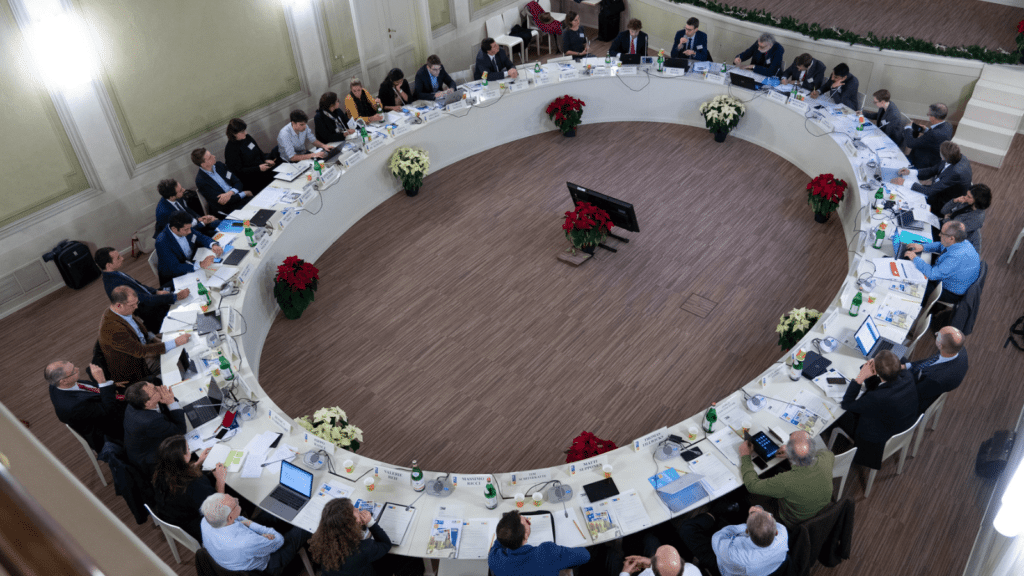
This is the final conference of the LIFE SIDE project. The event will provide the opportunity to present the conclusions of a literature-based report assessing the performance of the EU ETS and to discuss some of the most important issues of the EU ETS post-2020. The conference will gather an audience of high-level policymakers and stakeholders, including representatives from European institutions, the industrial sector, NGOs and academia. After the presentation of the report’s conclusions, three sessions will be dedicated to the following topic areas in relation to the EU ETS post-2020: low-carbon innovation, interactions with other policies, and the international dimension. A short session will also be dedicated to the replicability of the LIFE SIDE project in other world regions with nascent cap-and-trade systems similar to the EU ETS.

The LIFE SIDE project is co-funded by the LIFE Programme of the European Commission
Don’t miss any update on our events
Sign up for free and access the latest events from our community.
More on the topic







Policy Advisory Council
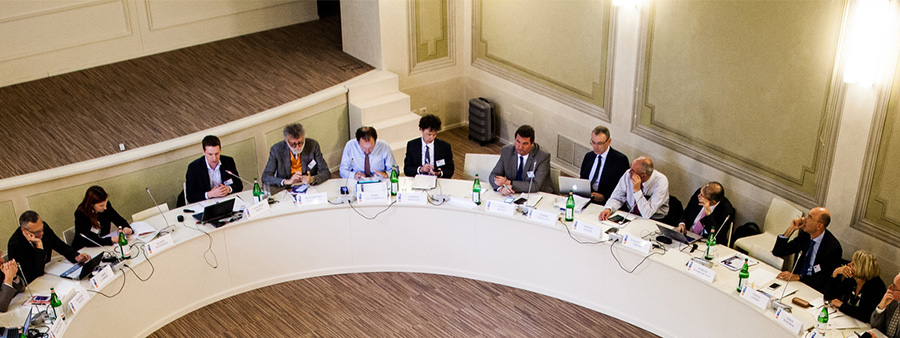
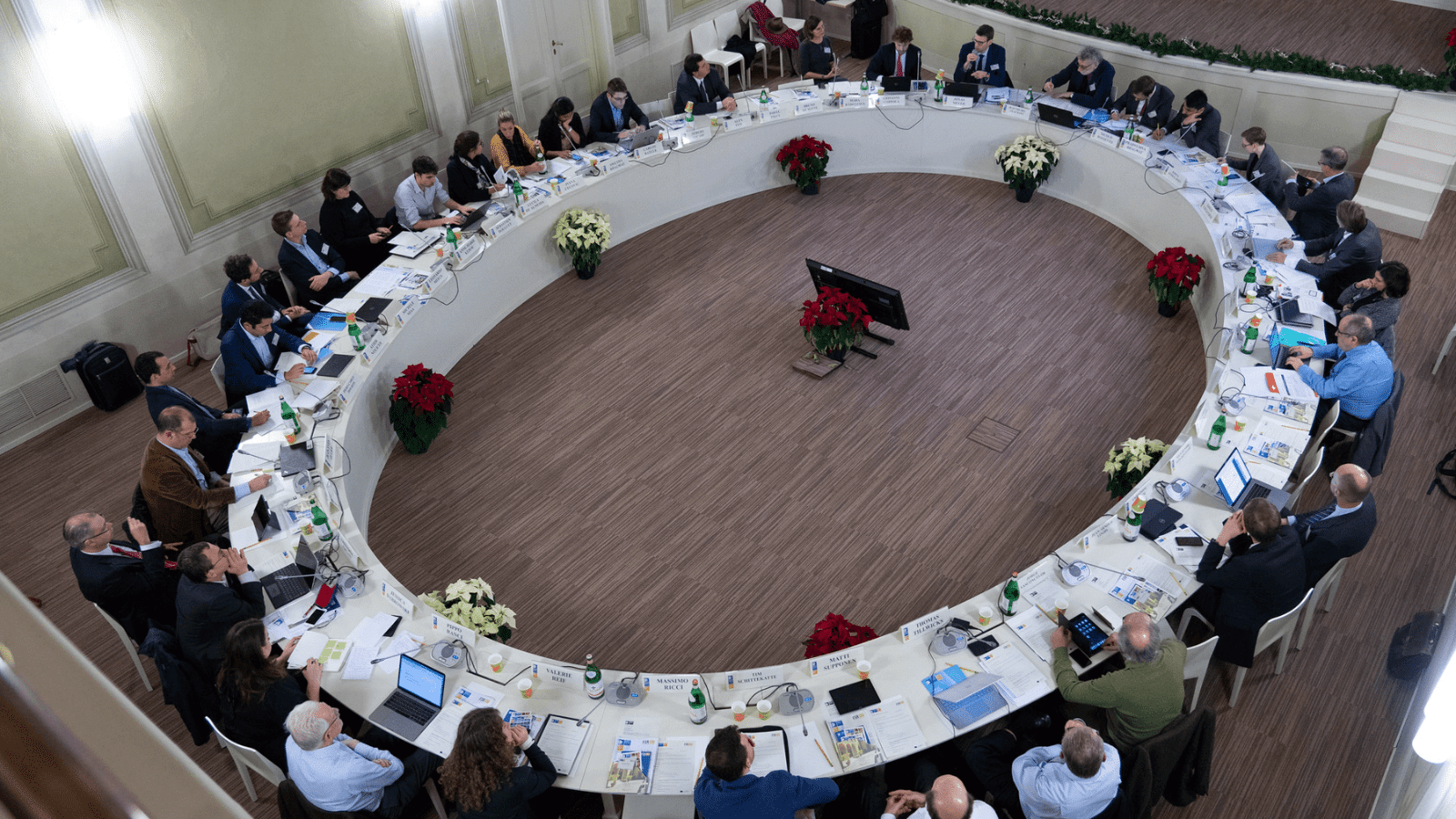
The Policy Advisory Council discusses the most topical regulatory and policy issues, as well as debating the relevance and robustness of the latest FSR research findings.
The meeting gathers renowned academics, experts from the FSR-Energy Major Donors, the European Commission, the Agency for the Cooperation of Energy Regulators (ACER) and National Regulatory Authorities.
The event will address the following topics:
Day 1: Electricity
- Session 1: Capacity mechanisms
- Session 2: Distribution grid tariffs and levies
Day 2: Gas
- Session 1: Gas transmission tariffs
- Session 2: Sector Coupling
Please note this is a closed event and participation is by invitation only.
Don’t miss any update on our events
Sign up for free and access the latest events from our community.
More on the topic




#PowerCoordinationEurope in Brussels
The #PowerCoordinationEurope is a regional electricity summit organised by ENTSOE and Coreso, in partnership with FSR.
Think globally, coordinate regionally, act locally
To streamline their coordination, European transmission system operators (TSOs) started in the early 2000s to establish regional security coordinators (RSCs). These provide TSOs with coordinated services in operations, market and planning. The European Network Codes registered RSCs in European law. Coordination of TSOs notably through RSCs is part of the ongoing discussions on a new set of European directives & regulations – The Clean Energy For All Europeans’ Package. It will most probably continue to be a focus for European institutions even after 2019.
Every year, one of the five regional security coordinators (RSCs) and ENTSO-E are organising a regional electricity summit in Europe. The #PowerCoordinationEurope (formerly called ElSec) conference series was successfully launched in Munich with TSCNET. This year’s event is set up with Coreso in Brussels. The focus areas include:
- advancement of regional power coordination,
- network code implementation, interoperability of RSCs and solutions for tomorrow;
- state of play of the Clean Energy Package and the changes it will bring across; electricity security and contemporary challenges, like cybersecurity.
ELSEC2018 gathers high-level policy makers, experts, academia, thought leaders and the TSO community on a European, regional and national level, keen to learn and to deliver best services to European citizens. Plenary and breakout sessions will explore the concept of regional coordination and discuss the way-ahead towards the next decade.
The partners for the event include The Florence School of Regulation and The Energy Post.
Detailed information here
Don’t miss any update on our events
Sign up for free and access the latest events from our community.
More on the topic



Economic Assessment of European Climate Policies

The FSR Climate Annual Conference on the Economic Assessment of European Climate Policies took place at the European University institute in Florence on 26-27 November 2018.
The conference covered the main climate-related existing policies, at EU, national and subnational levels and included plenary sessions on Energy efficiency, Renewable policies, Environmental taxation, and Emissions Trading.
Conference chaired by: Simone Borghesi, Director, FSR Climate
- Energy efficiency: Corrado Di Maria (University of East Anglia)
- Renewable policies: Charles Mason (University of Wyoming)
- EU ETS: Ulrich Wagner (University of Mannheim)
- Environmental taxation: Anastasios Xepapadeas (Athens University of Economics and University of Bologna)
Organised with the support of EAERE

Speakers highlights video
The spatial dimension in the economics of climate change, Anastasios Xepapadeas
Carbon-reducing innovation as the essential policy frontier – towards finding the ways that work for Europe, Frank Convery (Keynote speech)
The transition to sustainable energy, Charles Mason
Climate policy, innovation and energy efficiency, Corrado Di Maria
Papers/Presentations
Monday, 26 November
Plenary presentation: Environmental taxation
The spatial dimension in the economics of climate change
Anastasios Xepapadeas (Athens University of Economics and Business and University of Bologna)
Session 1: Environmental taxation
How climate-related policy affects the economics of generation-capacity investment (Slides)
Yixian Liua, Ramteen Sioshansi (The Ohio State University), Antonio J. Conejo
Short-term health benefits from carbon taxation: can climate policy support preventive health care ambitions? (SLIDES)
Johan Albrecht (Ghent university), Désirée Vandenberghe
Session 2: Renewables
Clean energy investment and credit rationing (Paper)
Christian Haas, Karol Kempa (Frankfurt School of Finance and Management)
Emissions impacts of overlapping regulation: interactions of renewable energy promotion and carbon pricing (PAPER)
Jan Abrell, Mirjam Kosch (Zurich University of Applied Sciences)
Evolution of EROIs until 2050: estimation using the input-output model THEMIS (Paper)
Adrien Fabre (Paris School of Economics, Université Paris 1)
Keynote speech
Carbon-reducing innovation as the essential policy frontier – towards finding the ways that work for Europe
Frank Convery University College Dublin and EnvEcon
Plenary presentation: Renewables
The transition to sustainable energy
Charles Mason University of Wyoming
Session 3: Renewables
On international renewable cooperation mechanisms: the impact of national RES-E support schemes
Jelle Meus (KU Leuven), Kenneth Van den Bergh, Erik Delarue, Stef Proost
Energy transition with variable and intermittent renewable electricity generation (Slides)
Aude Pommeret, Katheline Schubert (Paris School of Economics, University Paris 1)
Resource management, present bias and regime shifts
Maria Arvaniti (ETH Zürich and Umeå University), Chandra K. Krishnamurthy, Anne-Sophie Crépin
Session 4: Emissions trading
Competitive permit banking and market design: an application to the EU-ETS reform (Slides)
Simon Quemin London School of Economics, Raphaël Trotignon
Genealogy of the corporate internal carbon pricing performations network: framework and case studies (SLIDES)
Raphael Olivier (Climate Economics Chair,Paris-Dauphine University)
Benchmarks for emissions trading – general principles for emissions scope (Slides)
Vera Zipperer (DIW Berlin), Misato Sato, Karsten Neuhoff
Plenary presentation: Energy efficiency
Induced innovation and energy efficiency
Corrado Di Maria (University of East Anglia)
Session 5 Energy efficiency
Energy efficiency networks – do they work? Evidence from German firm-level data (Slides)
Jan Stede (DIW Berlin)
Green, yellow or red lemons? Artefactual field experiment on houses energy labels perception (Slides)
Edouard Civel, Nathaly Cruz (Paris-Nanterre University)
Long-term efficiency and distributional impacts of energy saving policies in the French residential sector (Paper)
Louis-Gaëtan Giraudet | CIRED and École des Ponts ParisTech, Cyril Bourgeois, Philippe Quirion
Conveyance, envy, and home-owners adoption of energy-efficient appliances (Slides)
Joachim Schleich (Grenoble École de Management), Corinne Faure, Marie-Charlotte Guetlein, Gengyang Tu
Session 6: Issues in climate policy 1
Dynamic heterogeneity: rational habits and the heterogeneity of household responses to gasoline prices (Slides)
Aurélien Saussay (OFCE, Sciences Po)
True or not true: carbon-free electricity generation is possible (Paper)
Simen Gaure, Rolf Golombek (Frisch Centre)
Fossil commodity futures and the Trump election (Slides)
Samson Mukanjari (University of Gothenburg)
Tuesday, 27 November
Plenary presentation: Emissions trading
Emissions trading and firm behaviour: evidence from European firms
Ulrich Wagner (University of Mannheim)
Session 7: Emissions trading
A first analysis of the Market Stability Reserve in the European emission trading system (Slides)
See also: The Long-Term Impact of the Market Stability Reserve on the EU Emission Trading System
Kenneth Bruninx (KU Leuven), Marten Ovaere, Erik Delarue
Barriers to trading in the EU-ETS: a theoretical and empirical appraisal (Slides)
Marc Baudry, Anouk Faure (Climate Economics Chair and Paris-Nanterre University), Simon Quemin
Using emissions trading schemes to reduce heterogeneous distortionary taxes: the case of recycling carbon auction revenues to support renewable energy (Slides)
Claire Gavard (Centre for European Economic Research), Sebastian Voigt, Aurélien Genty
Session 8: Environmental taxation
The Environmental effectiveness of carbon taxes: a comparative case study of the Nordic experience (Slides)
Sachintha Fernando (Verité Research and Uppsala University)
Are emission performance standards effective in pollution control? Evidence from the EU’s large combustion plant directive (Slides)
Puja Singhal (DIW Berlin)
Is pricing municipal waste effective? Evidence for heterogeneous effects in Italy (Slides)
Marica Valente (Humboldt University of Berlin and DIW Berlin)
Session 9: Issues in climate policy 2
Innovation in climate change mitigation technologies and environmental regulation (Slides)
Igor Bagayev, Dieter Kogler, Julie Lochard (University Paris East Créteil)
Trust and CO2 emissions: cooperation on a global scale (Paper)
Ara Jo (ETH Zürich), Stefano Carattini
The circular economy, international trade, and the sectoral composition of economies (Slides)
Juan F. García-Barragán (KU Leuven), Balazs Zelity
The low-carbon transition: first evidence from US counties (Paper)
Jeremy Proville, Thomas Stoerk (DG for Climate Action, European Commission)
Session 10: Environmental taxation
Social welfare, public policy and clean technology: is it worth incentivising firms’ adoption of green technology? (Slides)
Ana Espinola-Arredondo, Kinga Barbara Tchorzewska (University of Barcelona)
Deep reforms in electricity pricing: evidence from a quasi-experiment (Slides)
Xavier Labandeira, Jose M. Labeaga, Jordi J. Teixidó (University of Barcelona)
Redistribution through income taxation and public utility pricing in the presence of energy efficiency considerations (Slides)
Fabian Feger, Doina Radulescu (University of Bern)
How effective was the UK carbon tax? Using machine learning and economic theory for policy evaluation (Slides)
Jan Abrell (ETH Zürich), Mirjam Kosch, Sebastian Rausch
*******
Speakers bios
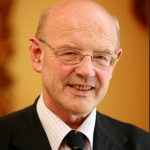
Frank Convery is Adjunct Professor for Environmental Policy, University College, Dublin; He has recently stepped down as Chief Economist, Environmental Defense Fund (New York)
He is a member of Ireland’s Climate Change Advisory Council. His career is devoted to finding ways that work to correct for the failure of markets untrammelled to protect the environment. He led the research network that informed the shaping of what became the European Union Emissions Trading Scheme (EU ETS), which put a price on emissions emerging from the power sector and heavy industry in Europe. He served as a member of the Irish Commission on Taxation which in 2009 recommended the introduction of a carbon tax. The government acted on this recommendation and introduced the tax in 2010.
 Corrado Di Maria is a Reader in Economics at the University of East Anglia in Norwich (UK). He has broad research interests spanning the economics of growth, environmental and natural resource, energy economics and the economics of innovation. The key feature of his work is an emphasis on both theoretical and empirical aspects, as well as its policy relevance. He earned his PhD degree from Tilburg University in the Netherlands, having previously studied in Rome, Milan and Vienna. His recent research focuses on the interaction between environmental policy and natural resource use, the taxation of exhaustible resources, emissions trading schemes and energy efficiency, and environmental policy under directed technological change.
 Charles Mason is the H. A. “Dave” True, Jr. Chair in Petroleum and Natural Gas Economics in the Department of Economics and Associate Dean for Research in the College of Business at the University of Wyoming. He is an internationally known scholar with over 80 publications in peer-reviewed journals and book chapters. He served as the managing editor of the Journal of Environmental Economics and Management (the top international journal in the field of Environmental and Resource Economics), from 2006 to 2011. He earned a double B.A. in Economics and Mathematics in 1977 and a Ph.D. in Economics in 1983, all at the University of California at Berkeley.

Anastasios Xepapadeas is currently Professor of Economics at the Department of International and European Economic Studies of Athens University of Economics and Business, and the Department of Economics of the University of Bologna. In May 2018 he was elected a foreign associate of the US National Academy of Sciences. He is past president of the European Association of Environmental and Resource Economics and past Chair of the Board of Directors of the Beijer Institute of the Royal Swedish Academy of Sciences. He has published over 130 papers in leading journals and collective volumes. Current research interests include the Economics of Climate Change; Spatiotemporal Analysis in Economics; Uncertainty, and Robust Control.
 Ulrich Wagner is a Professor of Economics at the University of Mannheim and a research associate at ZEW. His research interests are in environmental economics, industrial organization and public economics. Ulrich Wagner is a co-editor of the Journal of the Association of Environmental and Resource Economists and an editorial board member of the Journal of Environmental Economics and Management. In 2015 he was awarded the Erik Kempe Award in Environmental and Resource Economics.
Before joining the University of Mannheim, Ulrich held appointments at Universidad Carlos IIIin Madrid and at the Earth Institute at Columbia University. He obtained his Ph.D. in Economics from Yale University.
Past editions of the FSR Climate Annual Conference
FSR Climate Annual Conference 2017
Don’t miss any update on our events
Sign up for free and access the latest events from our community.
More on the topic
The Achmea case and the EU Law of Unintended Consequences

This EU Energy Law and Investment Arbitration Conference will dive in deeper into the Achmea case to explore the judgment’s impact on investment and dispute settlement in the EU energy sector.
Achmea made Impossible All Forms of Intra-EU Arbitration with Member State Involvement?
In collaboration with the Dechert LLP and the HEC, the Energy Union Law Area of the FSR is organising a conference which will consider the major issues surrounding the recent ruling by the Court of Justice of the EU (CJEU) in the Achmea case. The ruling of Case C-284/16, Slovak republic v. Achmea BV, delivered on 6 March, determined that investor-state arbitration clauses in Bilateral Investment Treaties (BITs) concluded between EU Member States are incompatible with EU law, creating far-reaching consequences.
In the conference, we will explore the impact of the case across three issues:
- The implications of Achmea for investor-state dispute settlements under BITs concluded by EU Member States.
- The implications of Achmea for investor-state dispute settlements under other types of international agreements, such as the Energy Charter Treaty and intergovernmental and host government agreements often entered into by EU Member States with respect to large energy infrastructure projects (gas pipelines, LNG terminals, etc.)
- The forms of legal recourse available to EU investors in the future, in light of the Achmea ruling and the CJEU’s future CETA Opinion.
Who will attend?
The audience will be composed of senior officials of the European Commission, the Council Legal Service and the CJEU, current and acceding EU Member State representatives, General Counsel of energy and other companies engaged in foreign direct investment, international investment arbitration practitioners, Academics.
Please note that there are limited places available. There is no charge for participation in the workshop.
Don’t miss any update on our events
Sign up for free and access the latest events from our community.
More on the topic


3rd Athens Conference on European Energy Law

This year, the conference Athens Conference on European Energy Law will largely focus on the myriad issues surrounding the financing of the clean energy transition. This will include objectively assessing the allocation of financing and the role of the European financial and investment institutions, the privatisation of energy infrastructures and networks, and the funding of gas and electricity interconnections, among other topics.
The Athens Conference on European Energy Law is a joint initiative of the Energy Union Law Area of the Florence School of Regulation and the Hellenic Energy Regulation Institute, which is designed to address the latest topics in energy regulation that are significant for Greece and the surrounding region, from both a legal and economic perspective. The conference, which will be the third year of the initiative, will bring together academics, institutional and NRA representatives and key market players.
In media partnership with:
Don’t miss any update on our events
Sign up for free and access the latest events from our community.
More on the topic



FSR Climate EU ETS Assessment Report
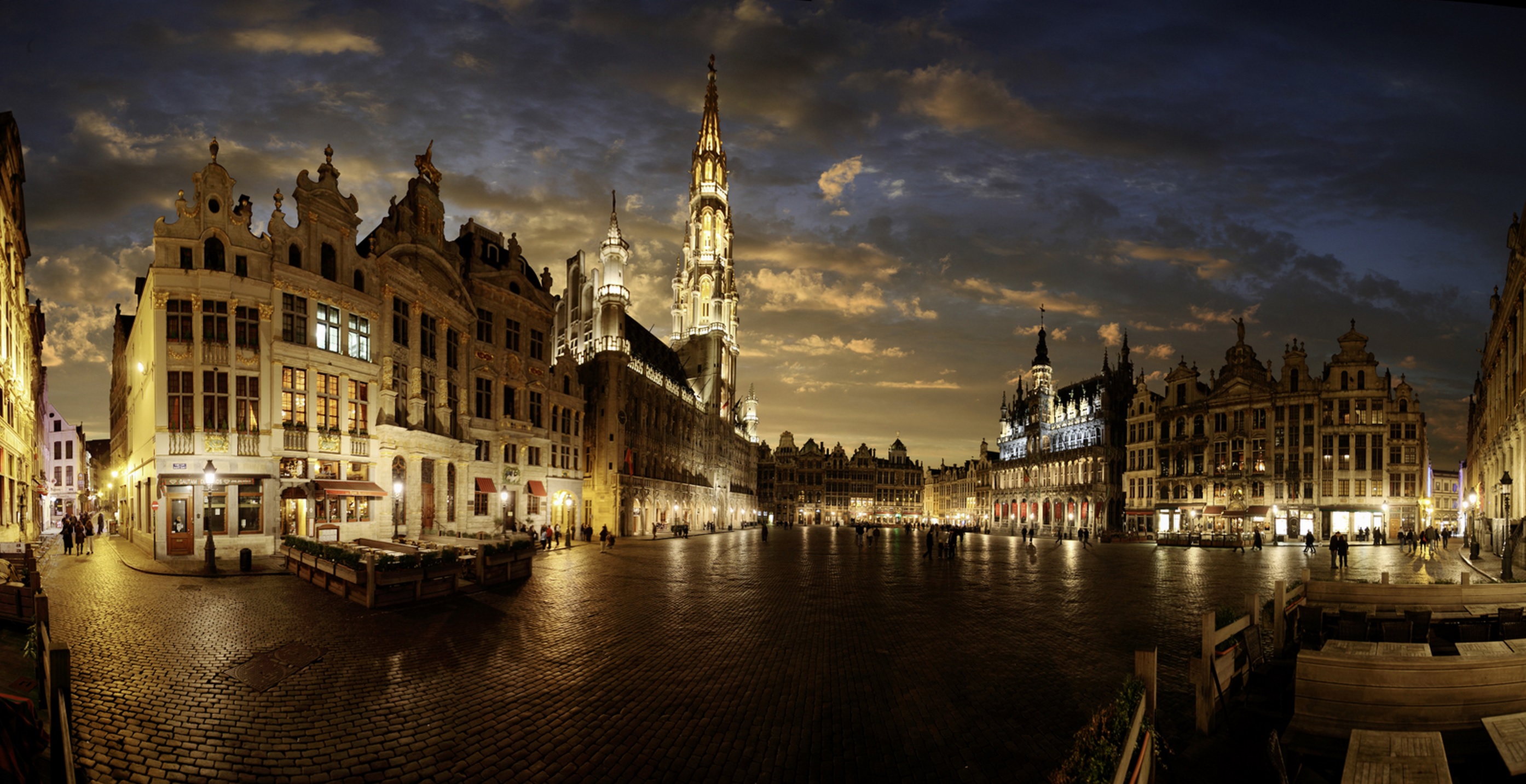
This Public Debate aims to gather policymakers from the European Parliament, Member States and the Commission to discuss latest and future developments of the EU ETS.
The event is organised by FSR Climate (European University Institute) in collaboration with DG Climate Action of the European Commission, as part of the LIFE SIDE project (co-funded by the LIFE Programme of the European Union). The project informs European policy makers regarding the design and implementation of the EU ETS legislation. The event will provide the opportunity to present the results of a literature-based report assessing the economic performance of the EU ETS, produced by FSR climate within the framework of the project.
Download the Summary and Conclusions of this Public Debate
This event is organised within the framework of the LIFE SIDE project. The project, started on 1 September 2016, aims to support policymakers with the implementation of the EU ETS.
The LIFE SIDE project is co-funded by the LIFE Programme of the European Commission
Don’t miss any update on our events
Sign up for free and access the latest events from our community.
More on the topic
Florence Conference on the Regulation of Railways

The conference on the Regulation of Railways will take place on November 16th and 17th, 2018 in Florence (Italy).
Continue reading “Florence Conference on the Regulation of Railways”
Don’t miss any update on our events
Sign up for free and access the latest events from our community.