


Just Energy Transition: Women, Leadership, Change
Highlights from the LUCE Awards
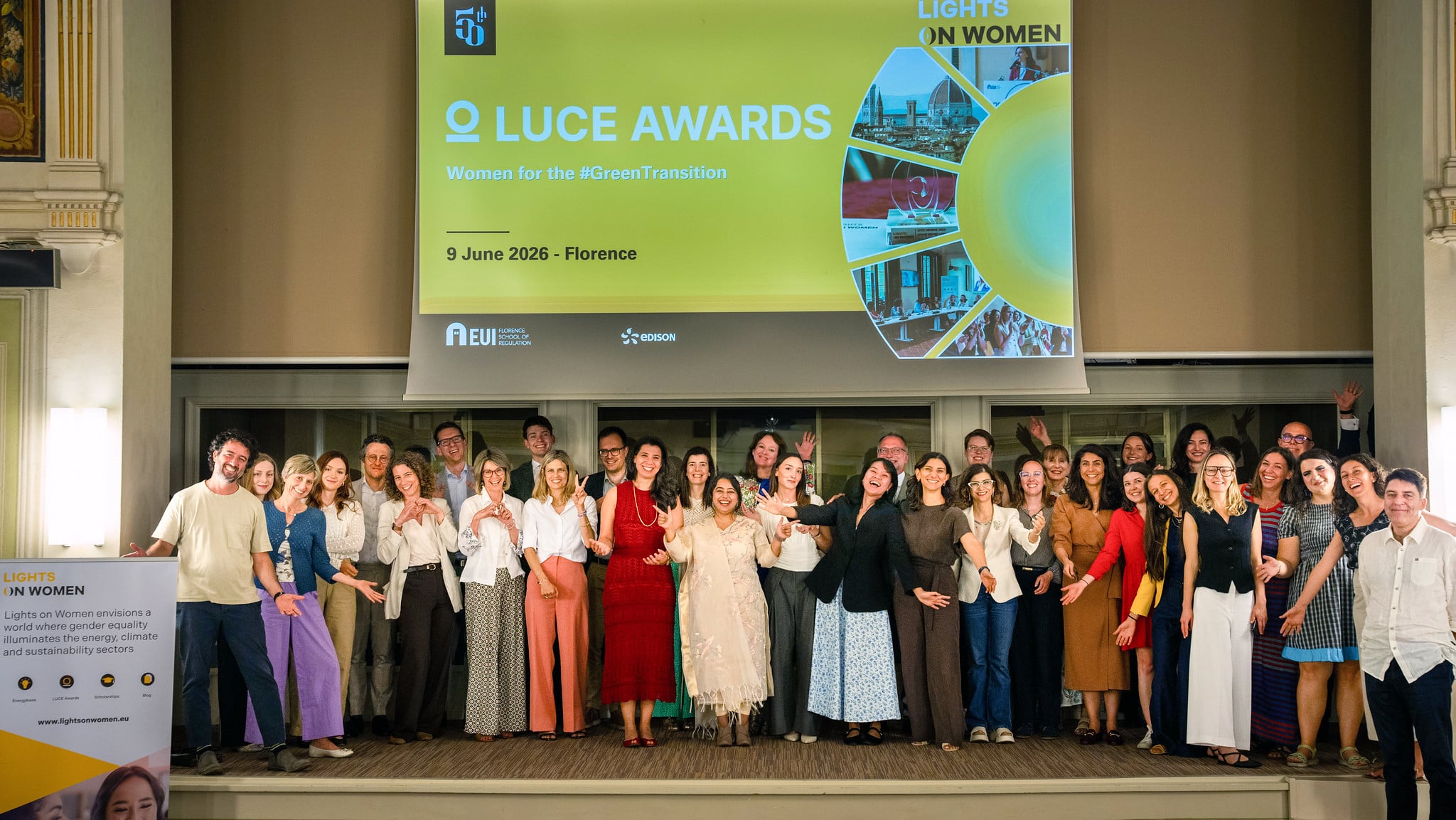
Four editions in, the LUCE Awards continue to demonstrate that celebrating excellence and challenging the status quo can go hand in hand.
Each edition reflects both progress in the energy, climate and sustainability sectors and the distance still to travel. As the flagship event of Lights on Women initiative, the Awards recognise outstanding achievements while also creating space for reflection on the barriers that persist.
Held as part of the Florence School of Regulation’s Spring Policy Dialogues and among the flagship events celebrating the European University Institute’s 50th anniversary, this year’s ceremony once again brought together researchers, policymakers, industry leaders and changemakers from around the world.
Investing in People for a Just Energy Transition
Following the opening remarks by Ilaria Conti (FSR), Rosalinde van der Vlies, Director for Just Transition, Consumers, Energy Efficiency and Innovation at the European Commission’s Directorate-General for Energy, welcomed participants with a keynote address on the human dimension of the clean energy transition.
Reflecting on Europe’s path towards climate neutrality, she stressed that investment in grids, renewables, energy efficiency and digitalisation must go hand in hand with investment in people and equal opportunities:
The transition requires investment not only in grids, renewables, energy efficiency and digitalisation, but also in people and equal opportunities.
She also highlighted the European Commission’s efforts to make the transition fair and people-centred through policies and financial instruments such as the Just Transition Mechanism, the Social Climate Fund and the recently adopted Citizens Energy Package, aimed at supporting vulnerable groups and enabling citizens to take an active role in the energy transition. Emphasising that ambitious legislation must be matched by effective implementation, she noted that “without a people focus of our policies, our policies will fail.”
Closing the gap between legislation and implementation, she underlined, also requires better disaggregated data to capture the differentiated impact of energy policies across groups, including women and other vulnerable citizens. Strengthening the evidence base was presented as key to ensuring that support measures effectively reach those most in need.
She also pointed to awareness-raising as a critical component of implementation, noting that many vulnerable citizens, including women, remain unaware of the rights and protections already available to them. Bridging this information gap was framed as essential to closing both the implementation gap and the underlying equality gap.
Her intervention set the tone for the afternoon, framing diversity not only as a matter of fairness, but increasingly as a driver of competitiveness, resilience, and Europe’s capacity to deliver on its energy and climate objectives.
The ceremony also featured the new Lights on Women video, reflecting on the initiative’s journey since its launch in 2017. What began as an effort to bridge the gap between women’s expertise and visibility has grown into a global community that connects professionals, creates opportunities, and celebrates leadership across the energy sector. The message remains forward-looking: the focus is not only visibility, but the conditions that enable women to contribute, lead, and inspire future generations.
The 2026 Winners
Against this backdrop, the 2026 LUCE Awards celebrated two outstanding women whose work is helping shape a more inclusive and sustainable energy future. This year’s winners, Neha Sakka, energy-transition strategist and founder of the Trust EV Awareness Oath Program, and Agnes Maria de Aragão Costa, Director of Brazil’s Electricity Regulatory Agency (ANEEL), represent different stages of professional achievement, yet share a common commitment to using their expertise and leadership to create opportunities for others and drive meaningful change. Through the Trust EV Awareness Oath Program, Neha has worked to broaden access to the skills and knowledge needed for the green transition, supporting young people and underrepresented communities in actively participating in it. Agnes, through her long-standing career in energy policy and regulatory leadership in Brazil, has demonstrated how public service and institutional reform can contribute to a more resilient and equitable energy system.
From India to Brazil, this year’s winners remind us that while contexts may differ, the meaning of progress is shared: expanding opportunities, challenging assumptions and ensuring that talent is never limited by unequal starting lines.
The Price of Inequality
As every year, the LUCE Awards offered a moment to reflect on one of the most persistent challenges in the energy transition: the cost of inequality.
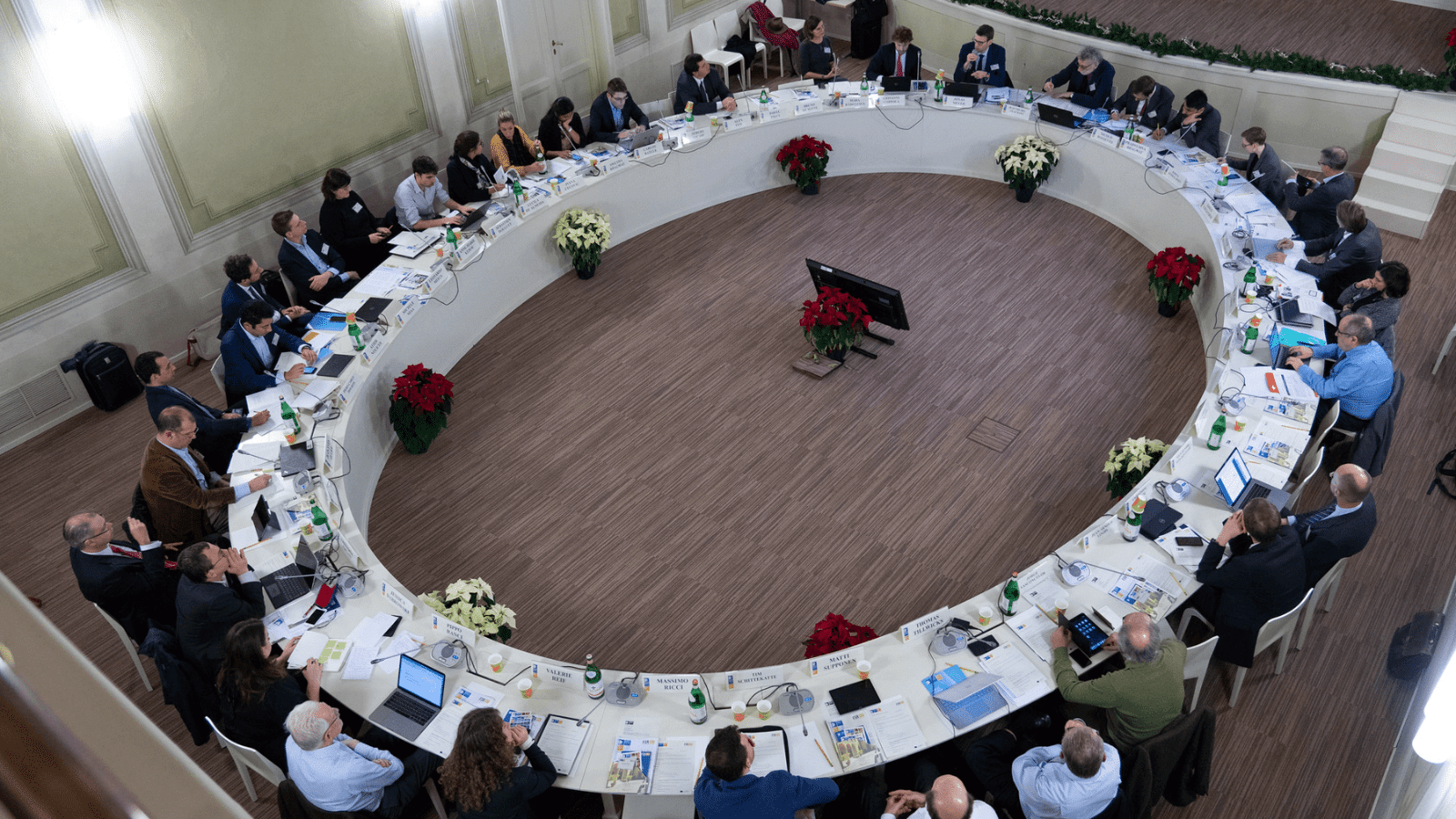
Moderated by Ilaria Conti (Florence School of Regulation), this year’s panel, The Price of Inequality: Economic Cost of the Gender Employment Gap, brought together Massimiliano Mascherini (Eurofound), Letizia Mencarini (Bocconi University), Lucio Pisacane (Italian National Research Council), Barbara Terenghi (Edison), and the two LUCE 2026 winners, combining perspectives from academia, research, industry and lived professional experience.
The discussion opened with Mascherini presenting Eurofound’s latest findings on the gender employment gap and its economic implications, setting the analytical framework for the debate. His presentation highlighted the scale of the challenge in stark economic terms: in 2023 alone, the gender employment gap is estimated to have cost Europe more than €390 billion, illustrating that failing to invest in women’s participation in the labour market carries substantial costs not only for individuals but for society as a whole.
Then, the first part of the panel examined when the gender gap begins to take shape and which barriers prove most persistent. Panellists pointed to structural drivers that emerge well before labour market entry, including education pathways, social norms, stereotypes, and the unequal distribution of care responsibilities, all of which shape opportunities over time. The gap often starts long before employment itself, reinforced by expectations around gender roles, unequal access to opportunities and the absence of visible role models. Parenthood was identified as a critical turning point, as care responsibilities continue to disproportionately affect women’s career trajectories. Early socialisation and STEM education choices were also identified as key points where inequalities begin to accumulate. Women’s constraints lie less in ability than in opportunity and exposure, as shown when access to technical environments quickly reveals strong competence.
Attention then turned to policy responses and practical solutions. The discussion highlighted the need for coordinated action across institutions, companies and society through regulatory measures, organisational change and targeted support. Rather than advocating a single solution, the panellists called for a comprehensive approach combining investment in childcare, shared parental responsibilities, inclusive education, mentorship programmes, unbiased recruitment and promotion processes, and workplace cultures that actively support diversity and inclusion. A recurring theme throughout the panel was that equality is not only about removing barriers, but about creating the conditions for everyone to fully realise their potential.
Offering the donor perspective, Barbara Terenghi reflected on the need to strengthen women’s representation in decision-making processes and argued that “building a gender-balanced leadership for a just energy transition is a challenge that requires a combination of public and private levers.” Drawing on Edison’s experience, she emphasised the importance of long-term action plans, mentorship, parental support systems and partnerships capable of translating commitments into measurable change. She also noted that women occupy only around 20% of senior leadership positions in the energy sector globally despite gradual progress in recent years, reinforcing a central takeaway of the panel: unlocking the full potential of the energy transition requires creating environments in which women can not only participate, but also lead.
Celebrating the 10th Ana Aguado Scholarship
This year’s ceremony also featured another important milestone: the presentation of the 10th Ana Aguado Scholarship, an initiative established in memory of Ana Aguado, former Secretary General of E.DSO and a highly respected figure in the European energy community. The scholarship supports young talent to participate in the Florence School of Regulation’s Summer School on the Regulation of Utilities, continuing her commitment to education, collaboration and the next generation of energy professionals.
Presented by Leonardo Meeus (Florence School of Regulation) and Veronica Cardoni (E.DSO), this year’s scholarship was awarded to Iman Dolić, Master’s student in Management of Electrical Engineering and Energetics at the Czech Technical University in Prague and currently working at PREdistribuce, and Hasti Wiandita, Southeast Asia Analyst and Coordinator at the International Energy Agency (IEA) in Paris. Their selection not only celebrates academic excellence and promise, but also reflects the initiative’s broader mission: investing in future leaders who will help shape a more sustainable and inclusive energy sector.
As the scholarship reaches its tenth edition, it stands as a lasting tribute to Ana Aguado’s legacy and to the belief that supporting talent and creating opportunities are essential ingredients of a successful energy transition.
The day concluded overlooking Florence as the sun dipped behind the Tuscan hills. The stories shared throughout the afternoon lingered a little longer, carrying a simple conviction: meaningful change is built patiently, collectively, and over time. The road ahead is long and uphill, yet it is made shorter by those willing to keep walking it.
Don’t miss any update on this topic
Sign up for free and access the latest publications and insights
More on the topic