



Archives: Events
A Revision of Hydropower Concessions

Balancing Environmental, Energy Security and Climate Objectives in the Norwegian Electricity System
Professor Henrik Bjornebye, University of Oslo and visiting fellow of the Energy Union Law Area, Florence School of Regulation, will provide a brief overview of the Norwegian licensing system before considering the legal requirements for the revision of hydropower concessions: Which concession requirements are subject to revision, and to what extent? How does the legal framework balance the concessionaire and the public’s interest in ensuring a high level of electricity production on the one hand with the interest of protecting the local environment on the other hand? And to what extent is the Norwegian scheme affected by EU and EEA law?
Norway’s electricity production is based almost entirely on hydropower, accounting for 94.3 per cent of the domestic production capacity. Reservoir power plays a particularly important role in the electricity system given its ability to provide balancing services. At the same time, these facilities also raise local environmental challenges and are subject to a number of licensing requirements. Concessions for Norwegian reservoir hydropower are usually awarded on a time-unlimited basis and the license requirements are subject to revision every 30 years. The main purpose of these revisions is to update the environmental requirements to reflect today´s needs. The license requirements in more than 400 hydropower concessions may be subject to revision by 2022, making this an important topic in the Norwegian electricity sector over the coming years.
Don’t miss any update on our events
Sign up for free and access the latest events from our community.
More on the topic




The Transformation of Economic Law
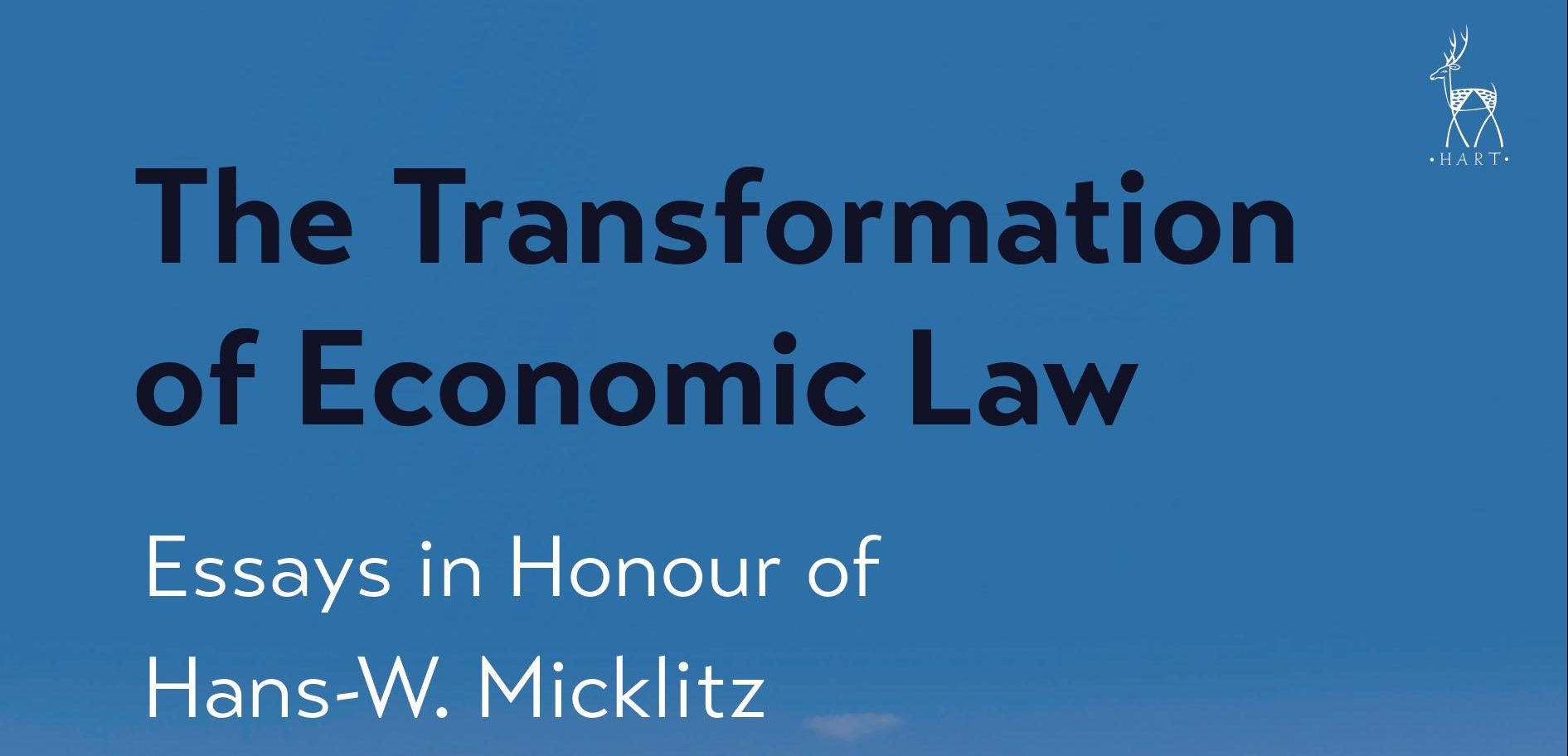
“The Transformation of Economic Law” is dedicated to Hans-W. Micklitz who, throughout his fruitful career as a legal scholar, has gained international recognition for his studies in the diverse areas of law – in particular, Consumer Law in Europe in the energy, telecommunication and financial service sectors.
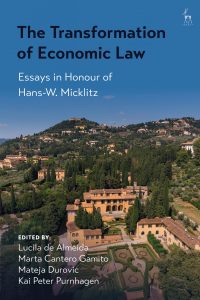
Dr Lucila de Almeida, Research Associate and Scientific Coordinator of the Online Executive Training on “Regulatory Delivery” at FSR, will be launching her new book on 7 June 2019, together with her co-authors, during a special event held in honour of Hans-W. Micklitz’s academic career.
As Hans-W. Micklitz’s term as a holder of the Chair for Economic Law at the Law Department of the European University Institute approaches its end, Dr Lucila de Almeida and FSR congratulate him for the outstanding contribution and pioneering advocacy aimed at putting consumers at the centre of the EU law and policies.
More information about the book “The Transformation of Economic Law – Essays in Honour of
Hans-W. Micklitz” can be found here.
Further detail about the event and registration form can be found here.
Don’t miss any update on our events
Sign up for free and access the latest events from our community.
More on the topic
11th Florence Air Forum: Towards a More Efficient Airport Slots System in Europe

The aviation sector has experienced continued growth over the past years, which has significantly enhanced connectivity within Europe, and translated into important socio-economic benefits. To put things into perspective, European airports alone employ roughly 12.3 million people and generate €675 billion each year (4.1% of GDP) in Europe. As air transport becomes increasingly prominent for both citizens and businesses, traffic flows will continue on a firm upwards trajectory and are, in fact expected to double in Europe by 2035. This surge in air transport demand is placing increasing pressure on scarce airport infrastructure and capacity, which in turn can lead to delays, weakened connectivity and lowered quality of services provided.
Following the creation of a single market for aviation in the 1990s, and in light of continuous growth in air transport, the need for a regulation on airport slots was acknowledged in order to ensure an efficient use of capacity at congested airports. Back in 1993 the EU adopted its first common rules for the allocation of slots at EU airports in line with the IATA’s Worldwide Scheduling Guidelines. Slots, granting the right to take-off or land at an airport at a specific time period, are allocated by independent coordinators on the basis of historic rights (or ‘grandfather rights’) at the given airport. What is more, slots ownership is reassessed on an annual basis, whereby failure by an airline to use 80% of its allocated slots could result in their loss and reallocation to other airlines in the subsequent year (i.e. the so-called ‘use it or lose it’ rule).
In 2007 and 2008 the Commission adopted communications on the application of the Slot Regulation. Besides seeking to ensure better enforcement of the rules, the Commission issued guidelines on the possibility of exchanging slots for money, also referred to as ‘secondary trading’. The communication furthermore addressed critical aspects relating to safeguarding coordinators’ independence and facilitating the access to slots to new entrants.
While the EU slots regime has managed to contain flight delays to a reasonable level, the economic efficiency of the slot system has been put into question, in terms of capacity utilisation and allocation of slots to airlines. What is more, the regime has been criticised for inhibiting competition between airlines, by freezing slot allocation and by giving an advantage to incumbent airlines as a result of the ‘grandfathering’ rules. Not least, the “use it or lose it” rule has led to behaviours by airlines holding on to slots even if they are unable to use them profitably, as opposed to making them available to competitors or new entrants. This has manifested itself in the form of empty ‘ghost flights’, wasted jet fuel, excess climate-warming CO2 emissions and lost airport capacity.
An analysis carried out in 2010-11 on the functioning of the Slot Regulation showed that the slot allocation system required improvements, however, the resulting recast process launched by the Commission failed to reach consensus on the way forward. As a result, 9 years later, the slot allocation regime remains unchanged, whereas air transport is continuously evolving. In 2019, the European Commission’s DG MOVE has commissioned a study to assess the current slot allocation regime and to explore future options for evolving the regime.
It is widely recognised that the efficiency of the slot allocation regime needs to be improved. To this end, should there be a shift away from the current grandfathering system? Should there be a move towards market based approaches such as primary slot auctioning, secondary slot trading and ‘congestion pricing models’? Should there be more consistency between airport charges and slot allocation? Should airlines willing to land or take-off during peak hours accept to pay higher prices for more attractive slots? Should rules be revisited to guarantee that new entrants have better access to attractive slots? Should collected revenues flow into a ‘central infrastructure pot’ for investments aimed at alleviating airport capacity issues and supporting the uptake of clean and innovative aviation technologies?
This forum gathers policy makers, industry representatives, and academics for a discussion on the design flaws of the current EU slot allocation regime. Subsequently, the event will examine the needs and reform options for a future slot allocation framework, drawing on national and local best practices and lessons learnt. More specifically, forum participants will consider the following critical questions:
- How effective has the existing slots regime been in ensuring optimal connectivity, airport capacity utilisation and allocation of slots to airlines? Are there misuses of the rules that could be avoided?
- What are the various administrative- and market-based measures (e.g. auctioning, congestion pricing models) that could be considered in improving the regime’s efficiency?
- What are the possible ways forward for reforming the EU’s airport slots regime? (E.g. synergies with Airport Charges, Public Service Obligations, Traffic Distribution Rules, others?)
Read our European Transport Regulation Observer policy brief for the main takeaways from the discussions.
SPEAKER PRESENTATIONS:
Introductory remarks & presentation of report findings:
How effective has the existing slots regime been in ensuring optimal airport capacity utilisation and allocation of slots to airlines?
Matthis Birenheide EUROCONTROL
What are the various administrative- and market-based measures (e.g. auctioning, congestion pricing models) that could be considered in improving the regime’s efficiency?
What are the possible ways forward for reforming the airport slots system?
Don’t miss any update on our events
Sign up for free and access the latest events from our community.


The new role(s) of consumers
The Workshop “The new role(s) of consumers” will explore how the latest policy and regulatory developments promoting “consumers’ empowerment”, as defined by the “New Deal” and the Clean Energy Package, will assign new roles to consumers and provide new opportunities to consumers. The Workshop will also assess any risk of exclusions for vulnerable consumers and the impact of empowered consumers on the market and the implications for market and system operations.
The “Clean Energy for All Europeans” Package places consumers at the centre of the energy transition, providing them with a higher degree of protection, empowerment and enhanced market choices. Thanks to price comparison tools, dynamic price contracts, smart metres and the formation of citizens’ energy communities, customers will be able effectively to play a more active role in the market. Furthermore, switching supplier will not imply any fees and, by 2026, such transition will have to take place within 24 hours.
However, consumers have shown a degree of inertia. Until now, consumers’ empowerment was mostly provided by their ability to switch supplier, but annual switching rates have remained low in most countries (the European average is 6-8% for both electricity and gas). While switching rates are not necessarily the ultimate indicator of the benefits of liberalisation for consumers, a more detailed analysis performed by the Agency for the Cooperation of Energy Regulators shows that switching rates are low even in some Member States where the potential gains from switching are substantial.
The Workshop will be structured in two sessions:
- Session 1 will investigate how consumers can effectively be empowered and engaged, ensuring that “no one is left behind” and delivering a just and inclusive transition. Practical applications of the new role of consumers will also be presented.
- Session 2 will look at the regulatory and market design implications of consumers’ active role, focusing on the key requirements needed to deliver and enable effective wholesale and retail markets for the benefits of consumers.
This workshop is exclusively open to national regulators, representatives from public bodies and associate & major donors of the FSR Energy area.
Don’t miss any update on our events
Sign up for free and access the latest events from our community.
More on the topic
Energy storage for a flexible multi-energy system

This FSR Policy Workshop on energy storage for a flexible multi-energy system
Storing energy is becoming key to create a more flexible and reliable energy system. Cost-effective and efficient storage is the next obstacle that needs to be overcome in the move to a higher and rapid deployment of renewable energy sources within the EU energy mix.
More complementary storage technologies are needed to support EU’s transition to a low-carbon economy and to meet different flexibility needs of a multi-energy system. Where RES penetration will displace an increasing share of dispatchable energy sources from the system, the need for seasonal storage becomes obvious to overcome risk of curtailment in the event of surplus and risk of disruption in the event of deficit. Already existing gas storage infrastructure close to demand centers can offer short, mid and long-term / seasonal flexibility and storage solutions at terawatt-hour scale. In addition, storage also enables a closer integration of the gas and electricity sectors through “sector coupling”.
What is the appropriate regulatory and market design to support the integration of higher shares of renewable energy with minimum curtailment and at optimised system cost? How to assess externalities related to the system and insurance values in a cross-sectoral flexibility market to unlock the full potential of large-scale storage?
To address these and other related issues, the Workshop organised jointly with Gas Infrastructure Europe (GIE) will be structured in three sessions:
- Session 1 will review innovative services developed by gas storage operators to facilitate the future role of gas system to meet climate change targets. These innovative solutions include, amongst others, power-to-gas, hydrogen storage and decentralised storage.
- Session 2 will expand the discussion to tackle a broader issue of what is needed to cope with both decarbonisation and competition goals.
- Session 3 will be devoted to the regulatory framework for a sustainable storage market. An adequate market design that could enable sector coupling and deliver benefits, thus making the best use of a greater penetration of renewables to meet the EU decarbonisation objectives.
The event will conclude by issuing policy recommendations.
Among the confirmed speakers:
- Cécile Prévieu | Storengy
- Axel Wietfeld | Uniper Energy Storage
- Stefan Moser | European Commission
- Gergely Molnar | International Energy Agency
- Frits van der Velde | EnergyStock
- Michael Schmöltzer | Gas Infrastructure Europe

Don’t miss any update on our events
Sign up for free and access the latest events from our community.
More on the topic



EU Climate Action Priorities in the Coming Five Years

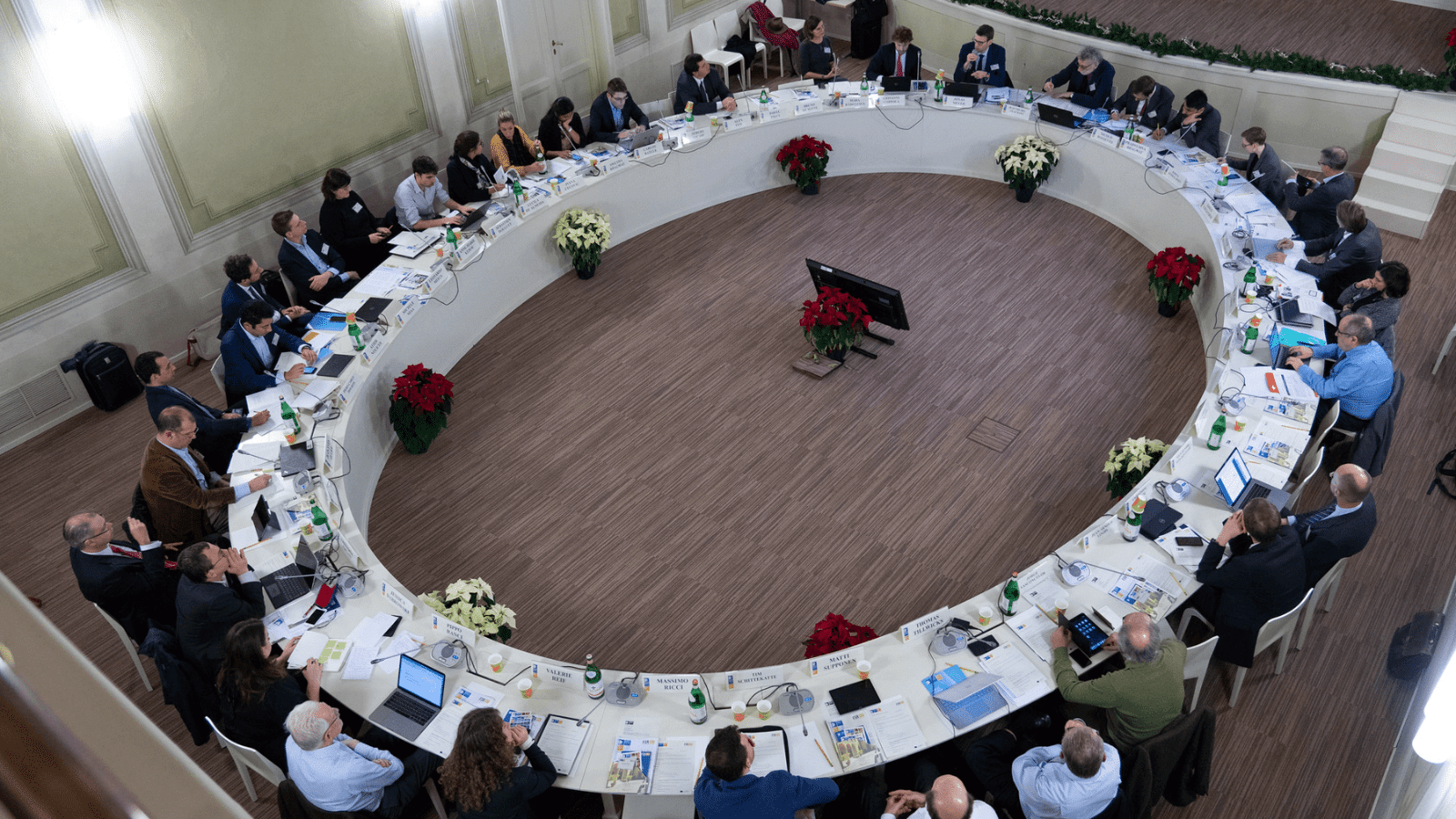
In this online debate, we discuss EU Climate Action Priorities in the Coming Five Years.
Online debate with:
Baroness Bryony Worthington
(former Labour Party spokesperson on Energy and Climate Change; Visiting Research Fellow at University of Cambridge)
Jos Delbeke
(former Director-General for Climate Action at the European Commission, Professor EUI)
Moderated by:
Simone Borghesi
(Director, Florence School of Regulation-Climate, EUI)
What should the top priorities for EU Climate Action be within the changing political landscape (European Parliament elections, renewal of both the European Commission’s President and the European Council’s full-time President, Brexit…)? What are the issues to be tackled next by the incoming EU leaders, and how might the UK retain its leadership role for climate action from outside the European Union?
In this online debate Baroness Worthington and Professor Delbeke, two senior policy-makers and academics with many years of experience in designing climate policies will share their “wish list” of the three top priorities for EU Climate action for the next 5 years.
How this online discussion works:
Connect from your office or home with any device (smartphone, tablet, computer) and watch the live discussion. You will have the possibility to submit written questions to our speakers that will be addressed during the discussion. You can also share comments and links in the discussion forum. Participation is free of charge, but registration is required.

Don’t miss any update on our events
Sign up for free and access the latest events from our community.
More on the topic










2019 InnoGrid2020 + Conference
Join 400+ innovators at THE European event on innovation in power networks: 2019 InnoGrid2020 + Conference
The 2019 InnoGrid2020 + Conference, co-organised by the European Network of Transmission System Operators for Electricity (ENTSO-E) and the European Distribution System Operators’ Association (E.DSO), will take place in Brussels on 13-14 May 2019.
This year’s conference will focus on ‘Connecting Physics and Digits: Power Platforms on the Rise.’ You will hear from the industry’s CEOs on innovation strategies dos and don’ts, discover today’s rising power platforms, and debate needed support from regulation, policy and financing. The interactive breakout sessions and networking exhibition will get you acquainted with pilots and projects on key matters such as active system management, sector coupling and storage, advanced grid resilience and innovations for the physical grid.
Don’t miss the annual event on innovation in the European electricity networks & register now
As for previous editions, we are expecting no less than 400 participants from the industry, associations, EU institutions, regulators, academic world and EU Member States to debate developments for our electricity grids of the future.
Read more information
2019 InnoGrid2020+ is sponsored by Epri and Smart Wires and by Cyient, n-Side and Supergrid Institute. The event is organised in the partnership with the Florence School of Regulation, ISGAN and LFEnergy.
Don’t miss any update on our events
Sign up for free and access the latest events from our community.

Executive Seminar on Code of Conduct for Computerised Reservation Systems

Air Ticket Distribution and Regulation 80/2009 on a Code of Conduct for Computerised Reservation Systems (CRS)
The European Commission’s DG MOVE together with the Florence School of Regulation’s Transport Area are co-organising an executive seminar to exchange views on the evaluation of Regulation 80/2009 on a Code of Conduct for Computerised Reservation Systems (CRS) around five key issues including relevance, effectiveness, efficiency, coherence and EU added value. At the same time the seminar shall provide an opportunity for a first discussion on possible ways forward taking into account the broader context of the air ticket distribution market. The seminar will gather representatives from all interested stakeholder groups, such as airlines, technology companies and travel agencies.
Continue reading “Executive Seminar on Code of Conduct for Computerised Reservation Systems”
Don’t miss any update on our events
Sign up for free and access the latest events from our community.
Convergence between digitalisation and decentralisation

The modernization of the electricity grid may change deeply the economic properties of electricity systems. Part of these changes have been discussed in recent years within the context of Smart Grids: a potential end-state of the evolution of the system is a platform where all resources (distributed or not) could be connected and be part of a multi-layered optimization. An additional step in the evolution of electric networks is to consider the convergence with ICT networks, which also involves creating a unique network (sharing resources and a common architecture), with the aim of making possible new transactions. For instance, the TLC industry has experienced this kind of process: the convergence of voice, data and video has created value and facilitated innovation.
From that point of view, three possible stages in the evolution of electric networks can be considered:
- the ‘current-path’ system, where unidirectional use of the distribution system is assumed and advanced technologies are used to improve reliability, resiliency, safety and efficiency;
- an intermediary-based system where a platform enables exchange (e.g. Amazon);
- a network where profit is based on the collective value of an ecosystem (e.g. Cisco’s Internet of Everything).
Benefitting from IRENA’s new report on innovation: “Innovation Landscape for a Renewable-Powered Future: Solutions to integrate variable renewables”, we will engage in a collaborative conversation, where the focus will be put on the role of distributed ledger technologies in achieving network convergence. Each speaker will have 5-10 min to present her/his view, followed by an open Q&A.
Speakers
Elena Ocenic (IRENA)
Enrique Merono (Iberdrola)
Rolf Riemenschneider (DG CONNECT)
Moderator
Miguel Vazquez (FSR Energy Innovation)
Don’t miss any update on our events
Sign up for free and access the latest events from our community.
More on the topic
Competition Policy for the Energy Transition
An annual FSR Energy Union Law workshop on Competition Policy for the Energy Transition, in collaboration with Cleary Gottlieb Steen & Hamilton, will bring together key players in the field to analyse and debate the role of competition law according to the newest developments across the EU energy sector.
In this edition, we will open by considering a wish list for the new Commission before turning to three key themes surrounding competition law policy and the energy transition;
Competition and the Energy Transition I: New Wine in Old Bottles or Old Wine in New Bottles?
In this session, among other topics, we will look at the new market design challenges, market abuse issues especially focusing on the inquiry into the German electricity wholesale market, and marginal cost-pricing particularly comparing the German and Spanish approach.
Competition Policy for the Energy Transition II: A New Era of Hypercompetitiveness
For this session, we will explore the notion of hypercompetitiveness in the EU energy transition stemming from a recent report, taking in perspectives from industry, the legal and economic field, as well as an EU institutional approach. We will then take a look at this from a global angle, examining the LNG inquiry.
Competition Policy for the Energy Transition III: Are the State Aid Rules Fit for Purpose?
In this final session, we will turn to State Aid and consider its role in the energy transition. We will particularly focus on the ECJ ruling in Germany v Commission of March 2019
Download the programme
Don’t miss any update on our events
Sign up for free and access the latest events from our community.
Carbon Market Integration

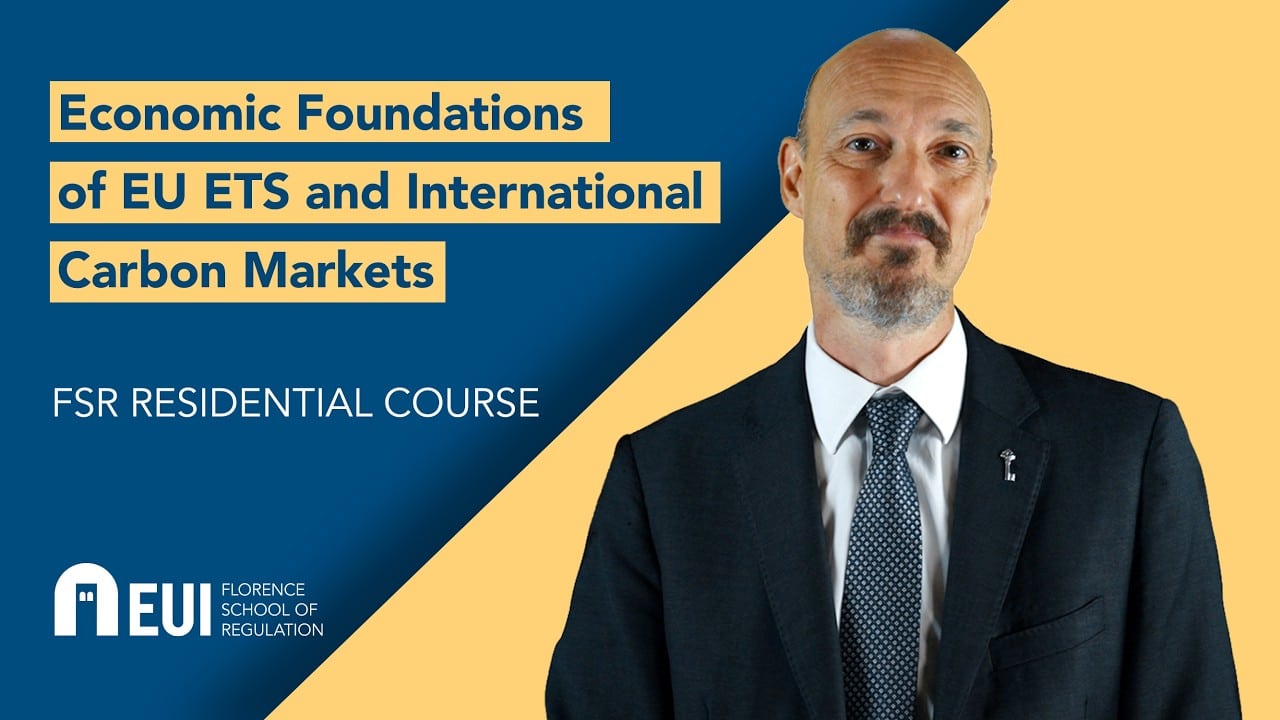
This workshop brought together academia, stakeholders and senior policy makers from different carbon markets worldwide, in a unique process for a fruitful exchange on carbon market integration. The workshop, jointly organised with DG Climate Action of the European Commission, is part of the so called ‘Florence process’ aimed to stimulate the on-going debate on carbon markets amongst international policymakers and experts. The event was a follow-up of the LIFE SIDE project. Co-funded under the LIFE Programme, the project which was completed in December 2018, has been supporting policymakers with the implementation of the EU ETS.
Workshop by invitation only and held under the Chatham House Rule.
Previous workshops of the Florence Process:
First Carbon Market Workshop, 25 September 2017
Second Carbon Market Workshop, 14 May 2018
Don’t miss any update on our events
Sign up for free and access the latest events from our community.
More on the topic
Flexibility in the electricity sector

This online debate “Flexibility in the electricity sector” will address the issue of how flexibility can be promoted and rewarded efficiently and effectively in an electricity system that features a growing share of renewables. Insights from two European-funded projects, SmartNet and OSMOSE, will feed the debate.
Market design for a decarbonised and decentralised electricity sector
The growing penetration of renewable energy sources in the European generation mix is changing the context upon which power markets and system operation were established in the 1990s. At that time, large and dispatchable thermal power plants dominated the supply side and had to modulate their production to follow the load and keep the system in balance. Today, smaller and intermittent plants with negligible variable costs are getting the centre-stage. Wind farms are a classic example. This transformation requires that new sources of flexibility are incentivised and optimised. The market architecture that emerged in Europe in the past 30 years may not be the most suitable to do that job.
Moderated by:
- Nicolo Rossetto (FSR)
Speakers:
- Guillaume Lehec (ENGIE)
- Gianluigi Migliavacca (SmartNet project, RSE)
- Christoph Weber (OSMOSE project, Duisburg-Essen University)
- Tim Schittekatte (FSR)
An open Q&A will follow.
FSR online debate in collaboration with the Horizon2020 projects SmartNet and Osmose
Don’t miss any update on our events
Sign up for free and access the latest events from our community.