









Participation to the event is by invitation only.
Archives: Events
Workshop
Sector Coupling 2.0
17 May 2019
The “Sector Coupling 2.0” workshop of the 2018-2019 FSR Regulatory Policy Workshop Series will address Power to Gas in the EU Decarbonisation Strategy.
In October 2018, the Florence School of Regulation organised its first Workshop on “Coupling the Sectors”, as part of this Regulatory Policy Workshop Series. The discussion not only covered the coupling of the electricity and gas sectors and markets but also highlighted that power-to-gas could be a game changer in allowing sector coupling. However, the regulatory and market design implications of power-to-gas technologies at network scale were not explored.
This Workshop will continue the debate focusing on the implications of the deployment of power-to-gas technologies for sector coupling and the appropriate regulatory and market design responses.
The event will reflect on whether power-to-gas facilities should be considered as part of the gas or electricity networks (and therefore their ownership and operation reserved to transmission owners or transmission system operators), or if instead they can be considered as performing an activity open to competition or, thirdly, a combination of the two regimes.
It will consider to what extent the development of power-to-gas facilities might be promoted by the coordination of spot and forward markets in electricity and gas, so that such facilities (together with the gas networks and the gas-fired power stations) could be used for swaps (virtual electricity storage) and arbitrage (spark spread and “reversed” spark spread).
Power-to-gas technologies could also produce hydrogen and synthetic methane that can be used as energy for those processes which are not suitable for electrification or as chemical feedstock. If the electricity fed into the power-to-gas transformation is renewable-based, this process will also contribute to the decarbonisation of the gas sector.
The Workshop will be structured in two sessions:
- Session 1 will review the power-to-gas technological landscape, identifying the potentials for the different technologies and their future economic viability.
- Session 2 will discuss how power-to-gas could enable sector coupling, and deliver benefits in terms of greater temporal and geographical flexibility of the energy system. The regulatory and market design implications of such developments will also be explored.
This workshop is exclusively open to national regulators, representatives from public bodies and associate & major donors of the FSR Energy area.
Don’t miss any update on our events
Sign up for free and access the latest events from our community.
Forum
7th Vienna Forum on European Energy Law
From 19 September 2019 to 20 September 2019

During the 7th Vienna Forum we will bring together representatives from EU institutions, academics, and representatives from regulatory authorities alongside members of industry, energy-focused law firms and consultancies to exchange knowledge and share practices on how to tackle the latest EU energy issues and explore the opportunities for integrated energy policies from both a legal and economic perspective.
Among the topics we will explore this year:
- The global energy transition
- The current state of the Energy Union and the legacy of the Juncker Commission
- The Legal Issues of Renewable Energy:
- Auctioning systems
- Contractual frameworks
- Potential business models
- The private enforcement of environmental and climate law
- The legal aspects of the new energy world:
- Self-consumption
- Aggregation
- Storage
- Citizen energy communities
- Decarbonisation and energy security
- Security of Supply
- Nord Stream and South Stream after the amendments to the Gas Directive
- Ukraine’s future in the gas route
- Cyber security
- Critical infrastructure and foreign investors
The Vienna Forum on European Energy Law is a long-standing collaboration between the FSR Energy Union Law Area and the Energy Community Secretariat with the mission to bridge the gap in energy debate between the EU and Energy Community.
Each year, the initiative has continued to grow and build upon the successes of previous editions. This year will mark the 7th year of the project.
For further information on the content of the forum, please contact the scientific organiser Anne-Marie Kehoe
To register for the forum, please contact Inga Prokofieva
Don’t miss any update on our events
Sign up for free and access the latest events from our community.
Online Event
Decrypting Sustainable Finance
02 April 2019
Finance is widely seen as an obstacle to a better world. In this online seminar, Prof. Dirk Schoenmaker (Erasmus University Rotterdam) will explain how the financial sector can be mobilised to counter this inevitability. As is documented in Prof. Schoenmaker’s recent book (D. Schoenmaker and W. Schramade, Principles of Sustainable Finance, Oxford University Press, 2019), using finance as a means to achieve social goals one can divert the planet and its economy from its current path to a world that is sustainable for all.
After describing the sustainability challenges, the seminar will show how investors and bankers can steer funding to sustainable companies and projects without sacrificing return and thus speed up the transition to a sustainable economy. Further, the seminar will analyse the Sustainable Development Goals as a strategy for a better world and will provide evidence that environmental, social, and governance factors matter, describing in detail how to incorporate these factors in the corporate and financial sectors.
Speakers:
Dirk Schoenmaker | Professor of Banking and Finance at the Rotterdam School of Management, Erasmus University
Kinanya Pijl | Researcher, European University Institute
Moderator:
Jean-Michel Glachant | Director, Florence School of Regulation
An open discussion will follow.
Don’t miss any update on our events
Sign up for free and access the latest events from our community.
Workshop
2019 Policy Advisory Council – FSR Energy
From 09 May 2019 to 10 May 2019

The Policy Advisory Council discusses the most topical regulatory and policy issues, as well as debating the relevance and robustness of the latest FSR research findings.
The meeting gathers renowned academics, experts from the FSR-Energy Major Donors, the European Commission, the Agency for the Cooperation of Energy Regulators (ACER) and National Regulatory Authorities.
The Policy Advisory Council is structured as follows:
Day 1
- Session 1: New business models in the electricity sector
- Session 2: Flexibility procurement for distribution grids
- Session 3: The future of RES communities
Day 2
- Session 1: Gas methane emissions
- Session 2: The FSR Gas Area contribution to sector coupling
- Session 3: FSR is Global: the journey so far and the road ahead
Please note the Policy Advisory Council is a closed event and participation is by invitation only.
Don’t miss any update on our events
Sign up for free and access the latest events from our community.
Management of Hydropower in the Energy Union
10 October 2019
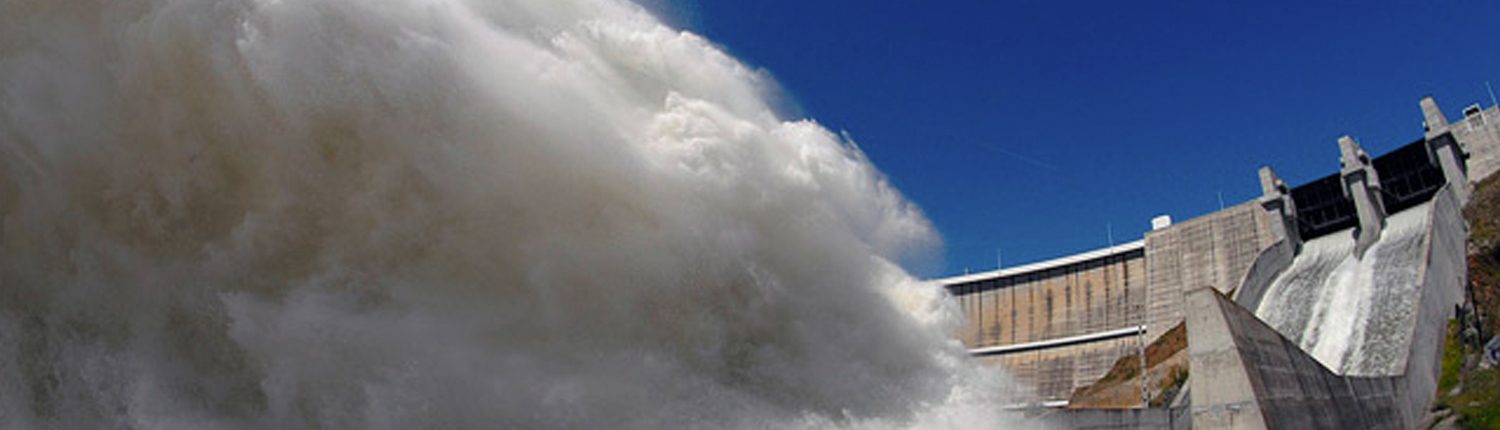
The objective of this workshop “Management of Hydropower in the Energy Union” is to analyse and discuss the current state of hydropower regulation from the perspectives of national resource management, EU market design, and investor protection. It will consider recent domestic reforms in so far as these have been prompted by EU legal requirements.
National Resource Management, Market Regulation and Investor Protection
Hydropower will remain one of the most significant sources of electricity production from renewables in EU energy for the foreseeable future. But, do we have an adequate legal framework to realise its full potential to contribute to the EU’s ambitious climate change objectives?
Hydropower is a valuable natural resource with significant economic and strategic implications. Unsurprisingly, management of hydropower resources is subject to elaborate domestic licensing rules or concession regimes as compared to other renewable electricity generation technologies.
A 2015 report Regimes for granting the right to use hydropower in Europe by the Florence School of Regulation confirmed that licensing and concession systems, including aspects such as award procedures, license conditions and duration, vary widely across EU jurisdiction. In the meantime, several EU member states have taken some steps to reform their domestic regimes.
And, even if hydropower as a renewable and efficient energy source is in many respects well suited to achieve climate objectives, larger-scale projects are controversial. From a resource management perspective, major hydropower producing countries may be reluctant to expand existing dams and prefer to control power exports.
Among the confirmed speakers:
- Alberto Pototschnig, ACER
- Auke Lont, Statnett SF
- Angus Johnston, University of Oxford
- Per Håkon Høisveen, Norwegian Ministry of Petroleum and Energy
- Ivar Alvik, University of Oslo
- Marinella De Focatiis, Edison; AIDEN
- Henrik Bjørnebye, University of Oslo
- Guillaume Dezobry, FIDAL; Paris Dauphine University
- Jean-Michel Glachant, FSR (EUI)
- Christoffer Eriksen, University of Oslo
- Krístin Haraldsdottir, University of Reykjavik
- Leigh Hancher, FSR (EUI); Tilburg University
Don’t miss any update on our events
Sign up for free and access the latest events from our community.
The Geopolitics of Energy Transformation
16 April 2019

The Geopolitics of Energy Transformation workshop will be structured in three sessions:
- Session 1 will focus on a presentation on the geopolitical implications of the global energy transformation driven by renewables.
- Session 2 will reflect on the issues and the structures of the global energy governance.
- Session 3 will discuss the impact of the changing geopolitics of energry in the EU, and discuss what should be the energy priorities of the next Commission to ensure that the EU harnesses benefits from its energy revolution, not the offshoring of energy intensive industry and a loss of competitiveness and jobs.
Among the confirmed speakers:
- Michael Bradshaw | Warwick Business School
- Stefan Moser | European Commission (DG Energy)
- Simone Mori | ENEL
- Nicolò Sartori | Istituto Affari Internazionali
- Daniel J. Scholten | Delft University of Technology
Download the programme
Background
The energy world is changing fast. New technological developments, rising energy demand and reducing greenhouse gas (GHG) emissions to achieve the climate goals outlined in the Paris Agreement are the main trends in this change.
For a very long period energy geopolitics have been dominated by fossil fuel production and consumption, in particular oil. A good illustration of this is OPEC, the organisation of oil producers influencing the supply of oil to the global markets. For mostly consumer countries, it was oil stocks policy designed by the International Energy Agency (IEA).
In recent times we have seen huge change in this traditional pattern, with fracking technologies in the US undermining the power of OPEC and developments in LNG technologies combined with the growth of gas production across the globe, from Africa to Australia.
New technologies and consumer behaviour are revolutionising the way in which the energy is produced, transported and consumed. Renewable energy brings disruptive influence to the old global energy order. Traditional energy consuming countries now have the option, and the Paris imperative, to be producers, as wind and solar energy becomes competitive with fossil fuel technologies on its own merits.
With the growth of electric transport, and electrification to reduce carbon emissions, the market share of electricity in the final energy consumption is on the rise. Self-driving cars and cheaper electric vehicles will accelerate this, and the hydrogen economy is becoming a realistic option. The transition to the low carbon economy in digital era is opening up a wide range of new business possibilities.
The transition is happening in the backdrop of the expectation of strong and sustained growth in global prosperity; global GDP is expected to double by 2040, driven by fast growing developing economies. Even with strong energy efficiency policies in place this would require increased demand for energy supply.
Different studies indicate substantial impact of these changes in the energy sector to the growth and employment in different countries.
The Global Commission on the Geopolitics of Energy Transformation initiated by International Renewable Energy Agency’s (IRENA’s) Director-General Adnan Z. Amin has produced a Report analysing the geopolitical implications the global energy transformation. The Report highlights the vital need to prepare proactively for the new energy age and its geopolitical consequences.
Responding to this call the workshop will focus on the opportunities, risks and initiatives to be taken for the EU in the era of the energy transformation.
Interested in this topics? Read more on IRENA’s New Report: A New World: The Geopolitics of the Energy Transformation
Don’t miss any update on our events
Sign up for free and access the latest events from our community.
More on the topic
Policy Dialogue

Nov 17, 2026
Nov 02, 2026
Policy Dialogue

Sep 28, 2026
Conference
Oct 07, 2026
Forum
FSR Global Forum
From 25 March 2019 to 28 March 2019

Don’t miss any update on our events
Sign up for free and access the latest events from our community.
Online Event
Sustainable Consumption in the World Energy Transition
18 March 2019
Join us on the third online event leading up to the FSR Global Forum discussing Sustainable Consumption in the World Energy Transition.
The accomplishment of the world energy transition for a low-carbon economy imposes challenges on public authorities, but also civil society and consumers. Besides the universal access to clean and affordable energy, consumers and industrial customers are means to the energy transition when they respond and engage in consumption patterns to consume less and better energy, self-generate, or become prosumers. These goals are at the core of the United Nation SDG #12, which trickle the issue of Sustainable Consumption.
A wide range of techniques have been developed to bring consumption to more sustainable levels: information disclosure policy though smart-meters, energy label and eco-design; energy efficiency of residential and non-residential buildings; tax and regulatory incentives for the use of electric vehicles among others. Until now, these techniques remained scattered across different areas of law, with the resulting challenge for anyone interested in their forms and operation. The online debate aims to touch open the issue of sustainable consumption.
This online debate will discuss the following issues:
- What does the UN Sustainable Development Goal #12 on Sustainable Consumption mean and how does it interact with SDG #7 on affordable and clean energy?
- What are the main legal barriers that preclude consumers to engage in more sustainable patterns such as demand-response?
- What are the legal techniques that have been developed to bring consumption to more sustainable levels in energy markets and other sectors?
An open discussion will follow.
Speakers:
Alberto do Amaral Júnior | Professor at the University of São Paulo (Brazil).
Tiago de Barros Correia | Former-Director of ANEEL (Brazilian Electricity Regulatory Authority)
Miguel Vazquez | Part-time Professor and Head of Florence School of Regulation Energy Innovation
Moderator:
Lucila de Almeida | Florence School of Regulation
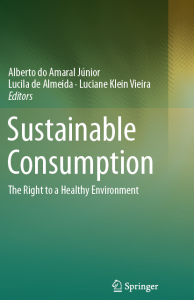
The online debate aims to pre-launch the Springer book entitled ‘Sustainable Consumption: the right to a healthy environment’ of our Research Associate, Lucila de Almeida, together with Alberto do Amaral Junior (University of São Paulo) and Luciane Klein Vieira (University of Buenos Aires and UNISINOS). Tiago de Barros Correia is one among the more than 30 contributors and writes on the auction design to procure energy efficiency measures.
About the FSR Global Forum
The FSR Global Forum is a 4-day event fostering practice-oriented solutions on key aspects of the world energy transition. It provides a platform for multi-stakeholder engagement to facilitate transnational knowledge exchange.
It brings together 100 representatives (by invitation only) from government agencies, regulatory bodies, energy companies, energy utilities, development organisations and academics from across the world.
The Forum develops around 12 knowledge spaces to facilitate interactive discussions and digitally maps the key insights of each session. The topical issues addressed have a special focus on Latin America, Africa and Asia.
Don’t miss any update on our events
Sign up for free and access the latest events from our community.
Online Event
Energy Access and the Road Ahead
11 March 2019
Universal access to clean and modern energy is one of the top energy challenges of our time.
Significant progress to provide such energy access has been achieved in the past years. However, based on the current trajectory, the IEA estimates that around 674 million inhabitants will continue to lack access to electricity in 2030. It is therefore imperative to ‘think big’, involve all the relevant stakeholders and remove barriers to massive electrification business models.
The 2nd online debate leading up to the FSR Global Forum discusses the following issues
- What are the main barriers to massive electrification business models? How to remove them to increase energy access?
- Is a “utility-like” business model the most adequate long-term approach for electricity supply to the population that lacks acceptable electricity access?
Speakers:
Laura Cozzi |Deputy Head – Office of the Chief Economist of the IEA
Salvatore Vinci | Deputy Director, Country Support and Partnerships Division – IRENA
Praveer Sinha | CEO & Managing Director – Tata Power
Moderator:
Ignacio Perez Arriaga | Professor – FSR, MIT and UPComillas
An open discussion will follow.
Watch the debate recording:
About the FSR Global Forum
The FSR Global Forum is a 4-day event fostering practice-oriented solutions on key aspects of the world energy transition. It provides a platform for multi-stakeholder engagement to facilitate transnational knowledge exchange.
Don’t miss any update on our events
Sign up for free and access the latest events from our community.
Seminar
Trust in the Single Market?
02 May 2019

“Trust in the Single Market?” is a Side Event at the 2019 State of the Union – 21st Century Democracy in Europe, European University Institute, Florence, discussing the case of the EU Emissions Trading System
Jointly organised by FSR Climate (European University Institute) and the European Association of Environmental and Resource Economists (EAERE)
Chairing: Simone Borghesi, Director, FSR Climate, EUI; Jos Delbeke, former Director-General for Climate Action,, European Commission, Professor, School of Transnational Governance, EUI
Watch the recording of this side event:
Presentations
Trust in the Single Market? The case of the EU Emissions Trading System – Introduction to the event, Simone Borghesi
Unilateral action, expectations and credible commitment, Ottmar Edenhofer
Do we trust carbon pricing?, Herman Vollebergh
Download the programme

Carbon pricing is widely regarded as a key instrument to achieve the emission reduction targets set by the Paris Agreement. Since the introduction of the European Emission Trading System (EU ETS) in 2005, carbon pricing has grown extensively around the world. The EU ETS is the result of a complex legislative process involving the governments of 31 participating countries, thus providing one of the most interesting examples of democratic participation of EU countries in the design of a EU crucial policy and in the creation of a single market in the EU.
Since its adoption, the EU ETS has faced a number of challenges, including a substantial price fall with allowance prices getting below 5€/ton of CO2 during the economic recession. This has urged European institutions to implement a series of revisions of the system. As a result, after years of low carbon prices, in which trust in the EU ETS was low, the price of the European allowances has risen remarkably following the announcement of the reform of the EU ETS for Phase IV (2021-2030), which was passed in 2018. This confirms the crucial role that expectations can play in anticipating the policy when this is perceived as sufficient stringent, credible and long-run.
The following questions will be addressed by the event:
- What is the current level of trust by participants and the public opinion in the EU ETS?
- What can be done to further support the credibility of the system and enhance trust in the single market in the context of climate policy?
- How can transparency and MRV (Measurement, reporting and verification) contribute to build trust in climate policy measures in general, and in the EU ETS in particular?
- How can we trigger mutual trust across countries and facilitate the ongoing negotiations on CORSIA and on Article 6 in the Paris Agreement?
- How can scholars and research better bridge with Policy Makers to enhance trust in Climate Policy measures?
FSR Climate, together with the Policy Outreach Committee of EAERE and in collaboration with the School of Transnational Governance of the European University Institute, organises this session to promote a more integrated dialogue between academia and the policy world, providing advice and support to EU policy makers and institutions in designing policy interventions. The event intends to continue the policy dialogue carried out by FSR Climate under the LIFE SIDE project (co-funded by the LIFE Programme of the European Union) concluded at the end of 2018, which supported European policy makers with the design and implementation of the new EU ETS legislation.
Invited speakers
Carlo Carraro, Professor (University of Venice), President European Association of Environmental and Resource Economists and Vice-Chair of IPCC Working Group III
Ottmar Edenhofer, Director and Chief Economist, Potsdam Institute for Climate Impact Research, Director, Mercator Research Institute on Global Commons and Climate Change, Professor, Technische Universität Berlin
Hermann Vollebergh, Professor of Economics and Environmental Policy, Tilburg University, and Senior Research Fellow, PBL Netherlands Environmental Assessment Agency
Martin Weitzman, Professor of Economics, Harvard University Center for the Environment
Roundtable panelists
Dominique Bureau, General Delegate of the Economic council for sustainable development, Ministry of Ecology, Sustainable Development and Energy, France
Ben Groom, Grantham Research Institute on Climate Change and the Environment, London School of Economics, London, UK
Xavier Labandeira, Director of Economics for Energy, Spain, and Department of Applied Economics, University of Vigo, Spain
Aldo Ravazzi , Chair OECD-WPEP (Working Party on Environmental Performance Country Reviews), President Green Budget Europe, and Chief Economist, DG Sustainable Development, EU&Global Affairs – TA Sogesid, Italian Ministry of Environment
Speakers & panelists bios
 Dominique Bureau is General Delegate of the Economic Council of the French Ministry of Ecology and he chairs its Green Tax Commission. He is also Chairman of the Public Statistics Authority and lecturer at École Polytechnique. He started his career with the Finance Ministry. Then he has been in charge of the Economic and International Affairs department for the Ministry of Transportation, after creating the Economic department at the Environment Ministry. He is member of the scientific committees of La Fabrique de la Cité, Grand Paris Express and National Institute for agronomic research. He is also member of the Board of the French Association for Resources and Environmental Economics.
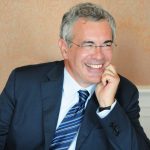 Carlo Carraro is President Emeritus and Professor of Economics at Ca’ Foscari University of Venice. He holds a Ph.D. from Princeton University. He was President of the University of Venice from 2009 to 2014. He is President of the European Association of Environmental and Resource Economists (EAERE) and member of the Bureau of the Intergovernmental Panel on Climate Change (IPCC). He is also Strategic Advisor of the Euro Mediterranean Centre for Climate Change (CMCC), a Fellow of the Association of Environmental and Resource Economists (AERE) and Co-Chair of the Green Growth Knowledge Platform Advisory Committee. He is President of H-Farm Education and the HforHuman Foundation. He is also Scientific Director of the Fondazione Nord Est and a Research Fellow of CEPR, London, CESifo, Munich and CEPS, Brussels. His blog is www.carlocarraro.org.
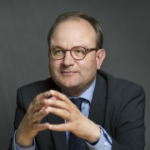
Ottmar Edenhofer is Director of the Potsdam Institute for Climate Impact Research, Professor for the Economics of Climate Change at the Technical University Berlin as well as founding director of the Mercator Research Institute on Global Commons and Climate Change. He is a member of the German National Academy of Sciences Leopoldina and the National Academy of Science and Engineering acatech. Edenhofer has published numerous articles in leading journals and authored various books. From 2008 to 2015 he served as Co-Chair of Working Group III of the IPCC, shaping the Fifth Assessment Report on Climate Change Mitigation substantially, which has been considered a landmark report and provided the scientific basis for the Paris Agreement.
 Ben Groom is Professor of Environment and Development Economics at the Department of Geography and Environment, London School of Economics and Political Science. He is also an associate of the Grantham Research Institute on Environment and Climate Change. His research has focused on the welfare analysis of public policies that have long-term welfare effects. In particular he has worked on the determinants of the social discount rate (SDR) and empirical measures of intergenerational and intra-generational fairness. At present he is working on several projects, looking at: the impact of different positions on intergenerational fairness on climate change policy; devising a new measure of economic performance that internalises inequality aversion; empirical measures of inequality aversion over environmental quality. Pr Groom’s work has fed into advice for international organisation such as the World Bank, the OECD, the Asian Development Bank and the WWF. He has also advised government in the UK, USA, Norway France, China and Pakistan on various aspects of environmental policy.
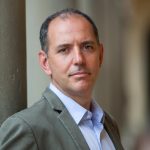 Xavier Labandeira is Professor of Public and Environmental Economics at the University of Vigo, Spain. In 2014-2017 he was the Director of the Florence School of Regulation Climate at the European University Institute, Italy, and in 2007-2009 he was in charge of the FEDEA Chair on Climate Change Economics. He is currently the director of Economics for Energy, a private research centre specialising in the analysis of energy issues. He is a member of the UN Intergovernmental Panel on Climate Change (IPCC) for the elaboration of its Fifth and Sixth Assessment Reports. Since 2018 he has been a member of the EAERE’s Policy Outreach Committee.
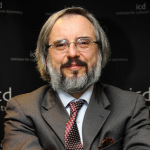
Aldo Ravazzi Douvan is Chief Economist, at DG Sustainable Development, EU & International Relations, Italian Ministry of Environment – Sogesid TA, President of the OECD Committee on Environmental Performance Country Reviews and Professor, Environment Global Governance, U. Tor Vergata Roma. He is also Technical Secretary for the Italian Observatory for Sustainable Finance, the Italian Natural Capital Committee and the Italian Catalogue of Environmentally Harmful and Friendly Subsidies. Ravazzi is President of Green Budget Europe (network of experts on Ecological Tax Reform and Greening Budgets) and Vice-President of Plan Bleu, one the Regional Activity Centres of the Mediterranean Action Plan of United Nations Environment Programme (UNEP), put in place by France in 1977. He was coordinator for the G20 Peer Review of Fossil Fuel Subsidies for Italy 2018 and was President of the OECD Committees on Environmental taxation and Biodiversity, Water & Ecosystems.

Herman Vollebergh is professor of Economics and Environmental Policy at Tilburg University (Department of Economics, Tilburg Sustainability Centre and CentER) and Senior Research Fellow at the PBL Netherlands Environmental Assessment Agency. His current research covers a broad range of topics including the design and effects of market based incentive mechanisms, like taxation, subsidies and tradeable permits in the energy or waste market, (environmental) cost-benefit analysis, long run relationship between emissions and income, and the effect of environmental policy on technological change. Finally, he is strongly involved in applying his academic work to the policy community including the OECD, European Union and the Dutch government.
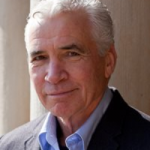 Martin L. Weitzman is Professor of Economics at Harvard University. Previously he was on the faculties of MIT and Yale. He has been elected as a fellow of the Econometric Society and the American Academy of Arts and Sciences. He has published widely in many leading economic journals and written three books. Weitzman’s interests in economics are broad and he has served as consultant for several well-known organizations. His current research is focused on environmental economics, including climate change, the economics of catastrophes, cost-benefit analysis, long-run discounting, green accounting, biodiversity, and comparison of alternative instruments for controlling pollution.
Don’t miss any update on our events
Sign up for free and access the latest events from our community.
More on the topic
Conference

Nov 30, 2026


Policy Dialogue

Oct 07, 2026



Online Event
The GB Capacity Market Standstill
17 April 2019

In the “The GB Capacity Market Standstill” webinar, we will debate the reasoning of the GC, assess the repercussions of the judgment and current state of the market, and consider the next steps for the EC and the GB power market.
60 minutes of free-flowing debate among panellists and 30 minutes of Q&A between panellists and live online audience. Opening 5’ will give a brief summary of the situation
Investigating the Impact of the Tempus State Aid Judgment
Speakers:
- Leigh Hancher | Florence School of Regulation (RSCAS; EUI); Tilburg University – Moderator
- Jacques Derenne | Sheppard Mullin, Professor of State aid law at the Liège University and the Brussels School of Competition – The specific State aid issues (Jacques Derenne is acting on behalf of Tempus before the EU courts) (confirmed)
- Dan Roberts | Frontier Economics – An economist’s perspective and an overview of the impact on the UK market (confirmed)
Abstract
On 15 November 2018, the General Court of the European Union issued a judgment on Case 793/14 Tempus Energy Ltd and Tempus Energy Technology V Commission, annulling the Commission’s original State aid decision to approve a capacity mechanisms scheme for Great Britain. The General Court ruled that the Commission should have initiated the formal investigation procedure before adopting a decision. This judgment renders aid granted through the scheme unlawful (i.e. granted without the approval of the Commission, which should be regarded as never been decided since its annulment). As a result, the UK Government decided to suspend the capacity market, meaning that it will not grant new associated subsidies until it is newly decided if they are compliant with EU law. However, in December 2018, the UK Government confirmed that it will operate the capacity market as normal, but without payments being made to agreement holders. The UK Government also confirmed that it intended to hold a replacement T-1 auction for the delivery year 2019/2020, which would be held by rearranging the postponed T-1 auction that had been scheduled for January 2019.
In the meantime, the Commission lodged an appeal against the General Court’s judgment before the Court of Justice on 25 January 2019. It also initiated the formal investigation on 21 February 2019 in order to adopt a new decision.
Why did the General Court annul the decision? What has been the effect on the industry and how will the market operate in this limbo period? What impact might it have on the UK energy policy? How will past unlawful payments be treated? Will they be recovered? Will a deal or no-deal scenario for Brexit play a role in the next steps?
Background
The capacity market in Great Britain[1] was established following the European Commission’s decision of 23 July 2014 to approve the aid scheme for the market, with the Commission having concluded that it was compliant with EU State aid rules. The purpose of capacity market is to ensure electricity supply in periods of peak demand by offering subsidies to capacity providers that successfully bid for capacity agreements in auctions. In December 2014, Tempus Energy, a UK-based demand side response (DSR) operator, contested the Commission’s decision.
The Tempus Argument & the GC’s Judgment
Tempus contended that the GB capacity market scheme privileges generation (largely fossil fuel operators) over demand-side response (DSR) in a discriminatory and disproportionate manner that goes beyond what is necessary to achieve its objectives and fulfil State aid requirements.
Tempus’s main argument was that the Commission approved the capacity market following the preliminary examination of its notification but without initiating the formal investigation, which is required when there are doubts about the compatibility of an aid. Tempus submitted that the Commission heavily relied on the UK government’s submissions on the market. The GC agreed that the Commission had not followed the necessary procedure and should have addressed doubts about the scheme. In order to show the existence of objective doubts, Tempus successfully argued that the scheme unfairly discriminates between capacity providers in the length of contracts awarded through the auction system, with DSR limited to one-year contracts as opposed to the fifteen-year contracts available to generators. Despite DSR offering an equivalent solution and having similar circumstances with respect to upfront investment and benefitting from long-term support, it is not offered the same opportunities as generators.
The Next Steps
Following the judgment, the UK government department for business, energy and industrial strategy (BEIS) did not re-notify the scheme. The effect of the GC’s judgment was to put the Commission in the situation it was when the UK notification was submitted in 2014. Until newly approved, the capacity market remains suspended. In the meantime, BEIS and National Grid, as the EMR delivery body, have issued guidelines for existing capacity providers during the standstill. On 25 January, the Commission lodged an appeal against the Court’s ruling. On 21 February, the Commission announced it had launched an in-depth investigation on the compatibility of the scheme with the EU State aid rules, inviting all interested parties to submit comments. On 5 March, Tempus initiated judicial review against the UK Government before the English High Court. Tempus is asking orders (i) preventing the replacement T-1 auction, (ii) preventing the administration and enforcement of existing capacity agreements, (iii) preventing collection of the supplier charge financing the capacity market and (iv) requiring to recover any unlawful aid.
In the meantime, what does this uncertainty mean for the market? Is the security of supply at risk? What opportunities does the judgment present? How might the capacity market rules be reformed? Will it force the adoption of more innovative technologies? Will flexibility play a greater role in a future mechanism?
[1] The capacity market does not include Northern Ireland.
Don’t miss any update on our events
Sign up for free and access the latest events from our community.





Online Event
Energy Regulation in Times of Disruptive Innovation
04 March 2019
The first online debate leading up to the FSR Global Forum discusses the topic of energy regulation in times of disruptive innovation.
Innovation is not only affecting the choice of technology but also the economics of the electricity industry, the business models and potentially the whole organization of the sector.
Higher (pro-active) participation of consumers and decreasing scale economies (in generation or/and storage) will change the role of network and traditional organization of the sector (centralized with flows from generation to consumers). To benefit from the opportunities of the transformation it is imperative to adapt regulations and policy accordingly.
Speakers:
Laurent Schmitt | ENTSO-E
Michelle Hallack | FSR
Massimo Ricci | ARERA
Moderator:
Jean- Michel Glachant | Florence School of Regulation
An open discussion will follow.
Watch the debate recording:
About the FSR Global Forum
The FSR Global Forum is a 4-day event fostering practice-oriented solutions on key aspects of the world energy transition. It provides a platform for multi-stakeholder engagement to facilitate transnational knowledge exchange.
Don’t miss any update on our events
Sign up for free and access the latest events from our community.