




Type of event: Workshop
FSR Alumni Day – 2nd edition
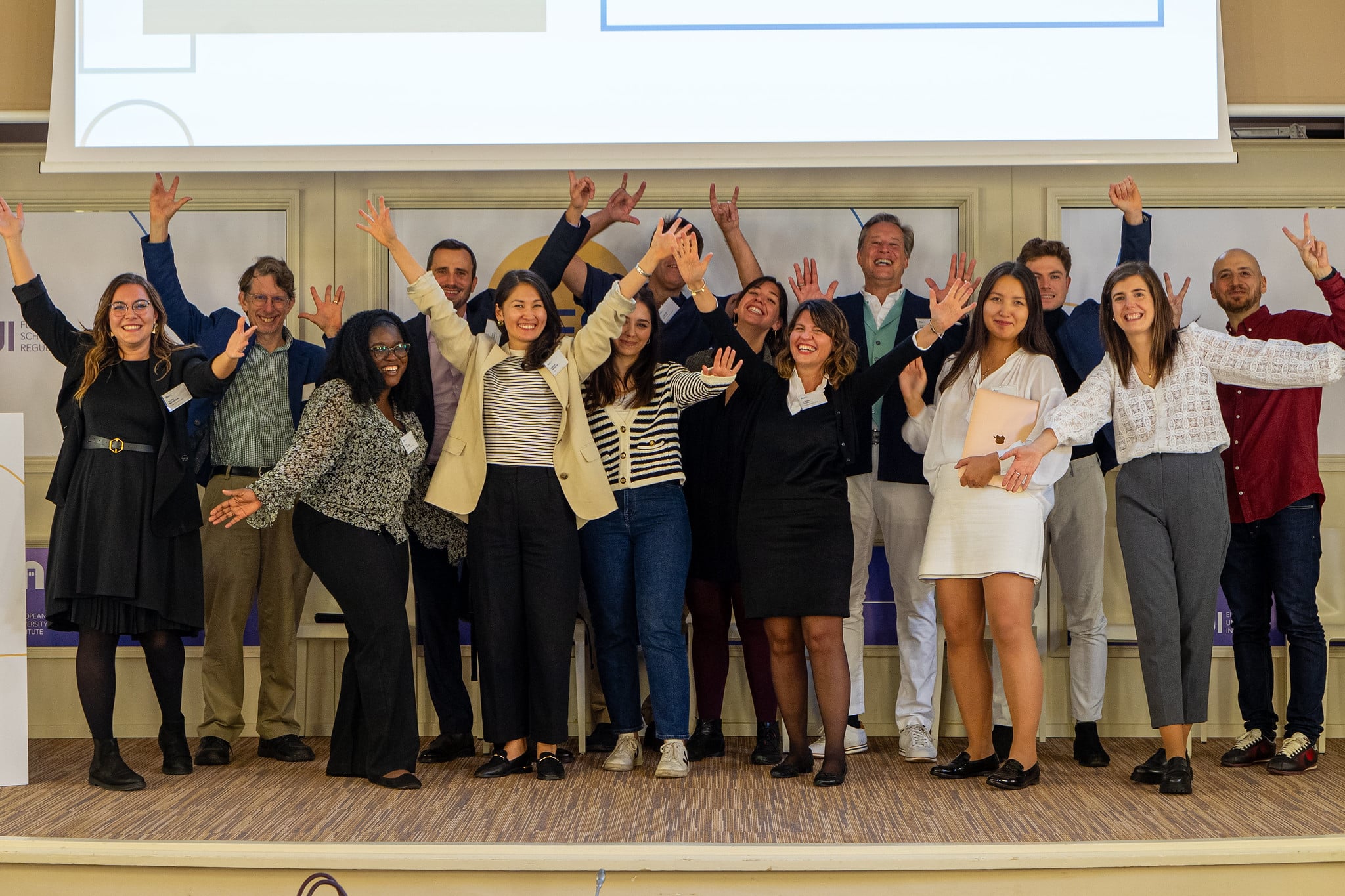
Following the success of the first edition, we are delighted to announce the 2nd FSR Alumni Day. This event will offer former alumni a unique opportunity to reconnect and stay updated on the latest policy developments in fields they previously studied.
An annual event in Florence to welcome the Alumni community
Since its establishment in 2004, the FSR has been training more than 10.000 participants. In 2014, the FSR launched its first online course and since then, more than 60 online courses have been welcoming energy professionals and academics from worldwide.
To hear back from our community of Alumni and celebrate their successful paths, we designed a special event gathering participants from all our courses, course directors, instructors, and coordinators in a friendly atmosphere to offer an additional learning experience.
Another step in your professional path
You will have the chance to network while you get up to speed on the latest developments in your area of expertise. The format will include a keynote address from the European Commission, insights from your peers, working groups (details below), networking activities and a cocktail reception.
Workshop: Gas and Hydrogen
“An Incentive Scheme for Developing a European Hydrogen Industry”
Course Directors: Ilaria Conti and James Kneebone
The integration of renewable and low-carbon gases into Europe’s energy mix has become a priority for the European Union and national governments. However, there are differing views about how to fairly and efficiently achieve this.
For example, fostering the development of the hydrogen industry may require significant subsidies, and/or its cross-subsidisation by current gas market players and consumers, with a long-term impact. However, this approach would not only involve a burden for consumers or taxpayers but may lead to stranded assets. Furthermore, there are ongoing technology races between clean hydrogen and other decarbonisation options in many of the most likely use cases, for example in high-temperature heat or transportation. Given the limited public resources of the EU and Member States, investing in one technology will come at the cost of supporting other solutions.
Given all of these variables and more, how should the EU go about supporting the ramp-up of clean hydrogen? On what grounds should it be justified? And what are the most efficient and lowest-risk options available?
Workshop: Regulation and Integration of Renewable Energy
Should renewable energy characteristics drive electricity market re-design?
Course Directors: Lena Kitzing, Mario Ragwitz
Renewable energy will become the backbone of the European energy system. There is presently an intense debate, whether or not current electricity market design accommodates the characteristics of renewable energy technologies properly, for example regarding generation patterns, supply-demand dependencies, flexibility and financing needs for investment. This session will discuss the question how a better match between renewable energy characteristics and electricity market design can be achieved. Should it be by re-designing electricity markets to accommodate these new characteristics, should it be by adapting renewable energy projects so they can better integrate into existing markets, should it be a combination of both, or something completely different? We will go into depth with the topic of market integration, and discuss how to increasingly facilitate efficient layouting and operational decisions by renewable energy projects, increasing flexibility provision. We will explore smart design of long-term contracts and support schemes including sector coupling options to increase the market value of variable renewable technologies. We will also explore how multi-criteria selection of projects that consider system and market integration. Finally, we will explore if smart electricity market re-designs can alleviate some of the existing market integration issues that renewable energy technologies currently face. We will emphasise the interplay between policy design for renewable energy and electricity market design, and also explore the coupling to other energy markets.
Workshop: Electricity Markets
Offshore systems: current challenges and comparison with onshore systems
Course Directors: Tim Schittekatte, Ellen Beckstedde
The EU Wind Power Action Plan acknowledges the importance of offshore systems to reach the European Union’s ambitions to become the first climate-neutral continent by 2050. The rapid growth and specific nature of offshore systems bring new challenges compared to how we traditionally design electricity markets. While the Electricity Market Design proposal includes some fundamental principles on the market design of offshore systems, open issues remain about the implementation of offshore bidding zones and the allocation of congestion rents between stakeholders. Also the interaction of these mechanisms with long-term instruments, such as power purchase agreements (PPAs) and contracts for difference (CfDs), remains unclear. In this session, participants will learn about the ongoing challenges in offshore systems and the proposed solutions. Using interactive poll discussions, participants will be engaged to think and share about some of these open issues. Furthermore, a comparison will be made with the onshore market design. As a result, participants will learn why some of the proposed solutions in offshore market design might be seen as experiments to the way we traditionally design electricity markets in onshore systems.
Workshop: EU Green Deal
What comes after the European Green Deal? Europe’s New Competitiveness Deal and its effects on EU climate and energy policy
Course Directors: Nicolò Rossetto, Torbjørg Jevnaker
Competitiveness of Europe’s economy is set to take centre stage among the EU’s priorities for the next five years. Following calls from several stakeholders, including energy intensive industries and business associations, the European Council in April 2024 announced a new European Competitiveness Deal, suggesting that this will be put at the core of the European Strategic Agenda for 2024-2029. The European Council called for work to be taken forward decisively and swiftly on the key competitiveness drivers. The latter included an industrial policy that decarbonises Europe’s industry in a competitive manner; achieving a genuine energy union by securing the supply of abundant, affordable and clean energy to pursue European energy sovereignty and climate neutrality; and efforts at increasing circularity and resource efficiency.
The next European Commission is expected to develop an overarching initiative in the months after the June 2024 European Parliament elections. While details will emerge only in the coming months, there is already growing interest on the relation between such a new initiative and the European Green Deal (EGD). The latter was one of the main priorities of the 2019-2024 European Commission, aiming at putting the EU on a robust path towards climate neutrality by 2050. By consistently developing a broad number of legislative proposals that covered multiple policy areas, the Commission claimed in the EGD the possibility to achieve a transition towards an environmentally sustainable energy system that is compatible with a secure and competitive energy supply and that does not leave anyone behind. Although it is difficult and probably too early to assess whether the EGD has delivered on its promises, it is apparent that more attention is needed to the link between the energy transition and competitiveness, also considering that energy prices in Europe are high according to international standards. Similarly, the EU’s increasing emphasis on strategic autonomy points towards the need to avoid external dependencies for strategic resources, such as energy and critical materials, which can undermine Union’s security in a more turbulent world.
In this session, participants will learn about the role of the EU’s overarching strategic priorities for the development of energy and climate policy initiatives in the next political cycle. Participants will have the opportunity to discuss how the energy transition in Europe will be affected by a more competitiveness-oriented agenda, and how this builds on or departs from the EU Green Deal. Polls will be used to engage participants and facilitate an exchange of views and national experiences. As a result, participants will not only become more aware of the multiple objectives and tensions associated with the different goals of energy and climate policies, but also learn how, in some circumstances, it is possible to deal with those tensions successfully.
Event Details:
- Event Fee: 250€
- Registration Deadline: 6 October 2024
Additional Information:
The event will be held exclusively in a residential format, allowing for a limited number of participants. Admission will be granted on a first-come, first-served basis.
Directions to reach the venue
The EUI Badia is easily reachable by taxi from Florence centre or from Fiesole (about 20€) and from Florence Airport (about 35€).
If you prefer public transport (ticket 1,50€ to be bought in official ticket offices, machines and authorised retailers that display the Autolinee Toscane sticker): take bus line number 7 from the center, the main railway station or from Fiesole, and get off at the stop ‘San Domenico 01’ (map) From there walk to our main building, Badia Fiesolana (map).
Logistic info
Please arrange your travel and accommodation as soon as possible as Florence is very popular. Paid registration fee is non-refundable. Please note that the course fee does not cover travel and accommodation costs.
Don’t miss any update on our events
Sign up for free and access the latest events from our community.
Speakers
More on the topic









European electricity market regulation: implementing past, present and future reforms

“Implementing Network Codes” (INC) is a collaborative and interdisciplinary research project focusing on the implementation of EU electricity market laws.
About the INC project
INC examines the rulemaking process of market and system operation guidelines and their underlying terms and conditions or methodologies (TCMs) to analyse the impact on the integration of the European electricity market.
The 4-year project runs until 2024, and is funded by the Research Council of Norway, with co-funding from Norwegian stakeholders. It is led by the Fridtjof Nansen Institute, and an international team of scholars from political science, law and economics work in close collaboration with industry experts, user partners and other relevant stakeholders.
Purpose:
Showcase results from the research project Implementing Network Codes 1 and get feedback to ongoing research; link up to discussions of ongoing/prospective discussions on the internal electricity market from perspectives of law, politics, and markets.
Session 1: Applying and enforcing the TCMs
The session will focus on what happens after TCM adoption by ACER, or agreement among NRAs in a region, including TCM adoption via individual decisions by each NRA, and the process for adopting TCMs within the EEA EFTA countries. The session will also showcase examples from regional cooperation in the Nordic and Core regions, as well as from the European level.
Session 2: After EMD: what next for network codes and TCMs?
A major development that emerged from the previous legislative reform (Clean Energy Package) was the code on demand response and a new European DSO entity. The ongoing electricity market reform (EMD) could also have implications for prospective work on network codes and guidelines (re-starting CACM revision), and the terms, conditions and methodologies (TCMs). What can we expect from these processes in the aftermath of EMD adoption? Given the EU’s 2050 climate ambitions, the electricity sector would need to decarbonise by 2040. How might this affect the processes for developing new, and revising existing, network codes, guidelines and TCMs?
Session 3: An offshore market design: How seaworthy are network codes and TCMs?
In principle, the EU electricity market regulation, including subsidiary rules like network codes, guidelines and TCMs would apply also to an offshore electricity market. However, this could create new problems, as seen with the discussion on offshore bidding zones in the ongoing EMD negotiations. The regulation of an offshore electricity network could potentially form part of a structural reform of the electricity market design in the next EU electoral cycle. This session will focus on the regulation of an offshore electricity market, and the application of NC/GL/TCMs offshore. The discussion could zoom in on the North Sea basin, where there is also collaboration with the UK and Norway, for illustration.
Session 4: Evolving role of ACER through crises and transition
What changes have materialised over time as regards to the role of ACER – formally and informally – within and beyond the regulation of the EU electricity market? What impact has the energy crisis had on the role and work of ACER? What are the prospects moving forward in a world of heightened geopolitics and energy transition? This session would discuss how ACER is getting a larger role as regards the energy transition agenda (cf. EP proposal to have ACER assess national flexibility plans) and the subsidiarity issues a greater role of ACER might entail. This session could link up to the discussion of a potential structural reform of the electricity market design in the next electoral cycle in the EU (2024-2029). While several tasks have been placed at regional and European levels, enforcement remains very much in national hands. The session could discuss whether more cooperation at regional and European level might be needed, e.g., moving beyond monitoring, capacity-building, and identification of best practices. Enhancing regulatory cooperation at EU level, including via ACER, also raises the issue of participation of non-EU NRAs as well as issues of accountability.
Don’t miss any update on our events
Sign up for free and access the latest events from our community.
More on the topic


FSR 20th Anniversary

Celebrating two decades of impact in policy and regulation
This year, the Florence School of Regulation celebrates its 20th Anniversary.
#FSR20more
Twenty years of advancing knowledge have paved the way for what lies ahead. As we reflect on our milestones, we renew our commitment to enhancing research, training and policy dialogue to support regulators, policymakers, and industries in addressing climate change and shaping a sustainable future for all.
Exciting research topics, events, courses and many more novelties await us in the coming years.
Cheers!
A special event will take place in Florence on 3 July 2024, to celebrate these 20 years and to look forward.
Programme
Welcome address
Patrizia Nanz | President, European University Institute
A journey through the FSR: history, prospects, and shaping tomorrow
Leonardo Meeus | Director, Florence School of Regulation
Roundtable on “Europe at a cross-road: affordability, sustainability, autonomy”
Moderator: Erik Jones | Director, Robert Schuman Centre for Advanced Studies
Panellists:
Catharina Sikow-Magny | Director Green Transition and Energy System Integration, DG for Energy, European Commission
Nathalie Berger | Director, Support to Member State Reforms, DG Reform, European Commission
Clara Poletti | Board of Regulators Chair, ACER, and Commissioner, ARERA
Don’t miss any update on our events
Sign up for free and access the latest events from our community.
More on the topic
The Green Deal: five years on

FSR Regulatory Policy Workshop Series 2023-2024
This workshop is by invitation only. Please note that the day before, the FSR is organising an Open Evening for prospective donors, and those participating will be exceptionally invited to join this workshop. For more information on the FSR Open Evening, please visit this page.
Sustainability assessment
The FSR assesses the sustainability and carbon footprint of all its Workshops of the Regulatory Policy Workshop Series. This Workshop is run mainly ‘in presence’, with some exceptions for participation through internet-based remote connection. It is expected that most participants will join the Workshop in Florence to take advantage of the opportunity for more effective interaction and discussion. Those participants joining the event in Florence will be encouraged to offset any carbon emissions related to their air travel. It is considered that, in this way, a suitable balance is achieved between the effectiveness of the policy dialogue and the net carbon footprint of the event.
Don’t miss any update on our events
Sign up for free and access the latest events from our community.
More on the topic
FSR Policy Advisory Council 2024

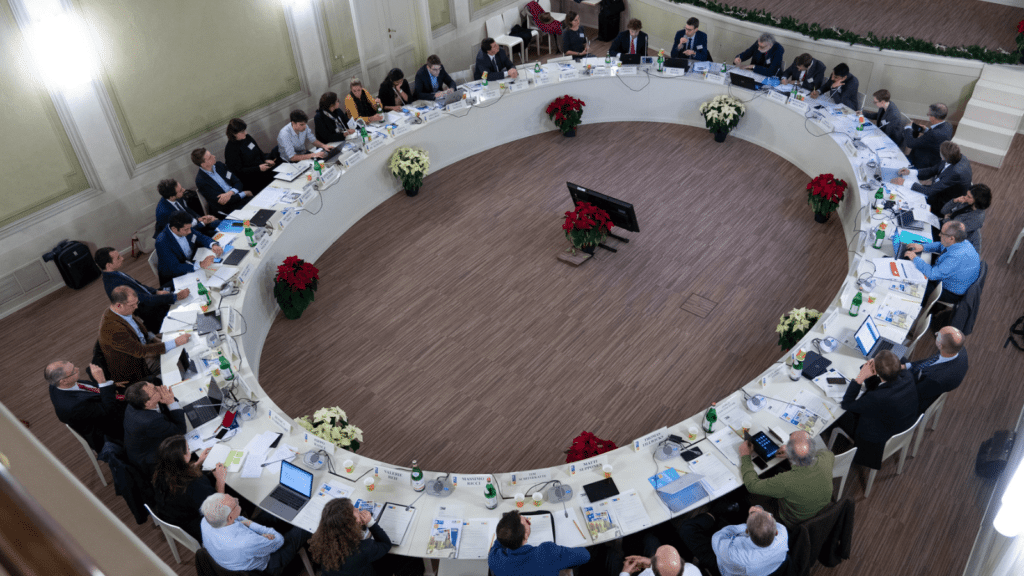
The Policy Advisory Council discusses the most topical regulatory and policy issues and debates and the relevance and robustness of the latest FSR research findings. The meeting gathers experts from the European Commission, the EU Agency for the Cooperation of Energy Regulators (ACER), the FSR Energy Star and Major Donors and invited renowned academics.
Don’t miss any update on our events
Sign up for free and access the latest events from our community.
More on the topic

Cross-border Cost Allocation and Cost-sharing for Investment supporting the Energy Transition

FSR Regulatory Policy Workshop Series 2023-2024
This Workshop aims at reviewing the experience gained over the last ten years with CBCA for PCIs, which lessons could be gained from that experience, as well as considering the specificities of cost sharing for offshore renewable (wind) projects.
For this purpose, the Workshop will be structured in two sessions:
- Session I will focus on the experience gained in the application of CBCA to PCIs and which lessons could be learned, including those which could be useful in shaping the cost-sharing approach for offshore infrastructure for renewable energy.
- Session II will provide an opportunity to discuss different approaches to cost-sharing for offshore infrastructure for renewable energy.
This workshop is by invitation only
Sustainability assessment
The FSR assesses the sustainability and carbon footprint of all its Workshops of the Regulatory Policy Workshop Series. This Workshop is run mainly ‘in presence’, with some exceptions for participation through internet-based remote connection. It is expected that most participants will join the Workshop in Florence to take advantage of the opportunity for more effective interaction and discussion. Those participants joining the event in Florence will be encouraged to offset any carbon emissions related to their air travel. It is considered that, in this way, a suitable balance is achieved between the effectiveness of the policy dialogue and the net carbon footprint of the event.
Don’t miss any update on our events
Sign up for free and access the latest events from our community.
More on the topic

A future-proof Governance of the Internal Energy Market

FSR Regulatory Policy Workshop Series 2023-2024
The Workshop will aim at discussing which improvements in the governance of the energy sector are necessary effectively to support the energy transition towards the ambitious energy and climate goals set by the EU for 2030 and beyond.
For this purpose, the Workshop will be structured in three sessions:
- Session I will focus on energy infrastructure planning and development and the most appropriate governance to support energy system integration and the implementation and more efficient solutions to system needs;
- Session II will consider to what extent the electricity market design emerging from the EMD reform will still be based on markets and market mechanisms and what role administrative intervention will or should play;
- Session III will take a broader perspective, assessing which aspects of the Governance Regulation might be worth enhancing in the context of its forthcoming review.
This workshop is by invitation only
Sustainability assessment
The FSR assesses the sustainability and carbon footprint of all its Workshops of the Regulatory Policy Workshop Series. This Workshop is run mainly ‘in presence’, with some exceptions for participation through internet-based remote connection. It is expected that most participants will join the Workshop in Florence to take advantage of the opportunity for more effective interaction and discussion. Those participants joining the event in Florence will be encouraged to offset any carbon emissions related to their air travel. It is considered that, in this way, a suitable balance is achieved between the effectiveness of the policy dialogue and the net carbon footprint of the event.
Don’t miss any update on our events
Sign up for free and access the latest events from our community.




FSR Open Evening

The Open Evening aims at presenting the FSR and its activities to prospective donors, i.e. companies and organisations that have expressed an interest in joining the FSR Community as Donors and would like to learn first-hand about the FSR activities.
Find out more information on how to become an FSR Donor
If you are interested in attending the Open Evening, please contact Christine Lyon, Donor relations at christine.lyon@eui.eu
Don’t miss any update on our events
Sign up for free and access the latest events from our community.
More on the topic
FSR Policy Advisory Council 2023
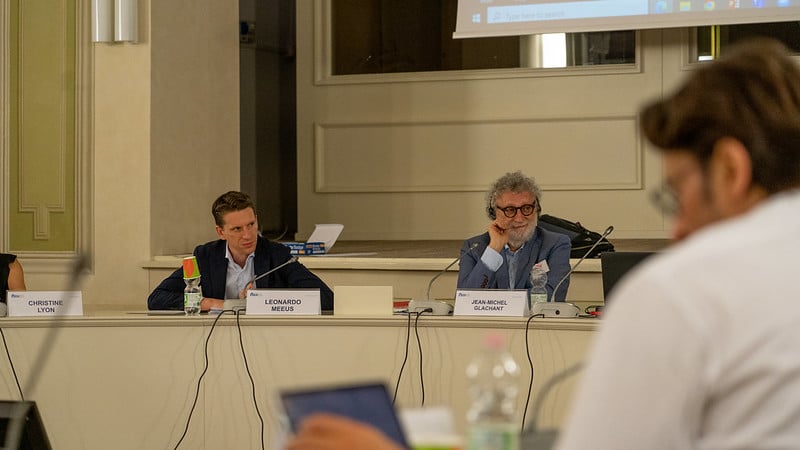
The Policy Advisory Council discusses the most topical regulatory and policy issues and debates and the relevance and robustness of the latest FSR research findings. The meeting gathers experts from the European Commission, the EU Agency for the Cooperation of Energy Regulators (ACER), the FSR Energy Star and Major Donors and invited renowned academics.
Draft Programme
4 December
Session 1 – Electricity: modernising capacity remuneration mechanisms
Session 2 – Energy Markets Integrity and Transparency: the emerging REMIT case law
5 December
Session 3 – Gas: Hydrogen pipelines vs. shipping
Session 4 – Climate: carbon markets and competitiveness
Don’t miss any update on our events
Sign up for free and access the latest events from our community.
More on the topic
The Evolving Voluntary Carbon Market: Reconciling the paradox between innovation and supervision

From 30 November to 12 December 2023 the Parties to the UN Framework Convention on Climate Change will come together for this year’s COP28 in Dubai. On this occasion, the EUI, together with the International Emissions Trading Association (IETA) and the EKI Energy Services Ltd (EKI) will host a panel discussion to focus on the Voluntary Carbon Market (VCM) – a key aspect of international cooperation on climate change.
The event taking place on Sunday 3 December from 11:30 to 13:00 GST (local time) offers an opportunity to discuss the contrasting trends of increasing transparency and innovation in the realm of carbon credits. The VCM has grown dramatically in recent years, but the quality of some carbon credits has been questioned. While harmonized standards and close supervision increase market transparency, they may restrict innovation. How can we reconcile innovation, transparency and integrity through voluntary and regulatory interventions?
Livestreaming:
Chair:
- Simone Borghesi, EUI and University of Siena
Panellists:
- Andrea Bonzanni, International Emissions Trading Association
- Pankaj Pandey, EKI Energy Services Ltd
- Amy Merrill, Integrity Council for Voluntary Carbon Markets
- Bianca Gichangi, Climate Envoy Office in Kenya
- Pedro Barata, Environmental Defense Fund
Registration:
The event will take place at the UNFCCC pavilion in SE Room 4. No prior registration is necessary. Information for online participation will be available via this page closer to the date.
Don’t miss any update on our events
Sign up for free and access the latest events from our community.
More on the topic




From energy targets to investments: ideas for the next European Commission
On 15 June 2023, the Florence School of Regulation (FSR) organised the first Policy Advisory Council (PAC) meeting of 2023. The PAC is composed of representatives of Star and Major Donors of the FSR, complemented by invited academics, regulators and policymakers. The PAC meets twice a year, typically in May-June and November-December.
The June PAC meeting this year was aimed at identifying which could be the policy priorities for the next European Commission in a number of areas in and related to the energy sector.
The meeting focused on four areas: energy markets; energy networks; energy and climate policy governance; and strategic autonomy.
As a result of the discussion in the meeting, a Policy Brief will be published in September and will be presented at the Workshop. Following the structure of the Policy Brief, the Workshop will be organised in four sessions:
- Session I: Make Member States more accountable to live up to their national investment potential for energy efficiency and renewable energy
- Session II: Promote multilateral cooperation and solidarity among Member States for network infrastructure, resource adequacy and flexibility
- Session III: Strengthen the management of our global dependencies
- Session IV: Reinforce the EU institutional setup
Each session will be opened by a presentation by a member of the FSR faculty, followed by a roundtable of representatives of FSR Donors. Each Donor will be invited to participate in up to two roundtables.
The feedback received during the Workshop will be used further to elaborate the content of the Policy Brief in the four areas listed above and, possibly, in other areas.
Please note that this event is by invitation only.
Sustainability assessment
The FSR assesses the sustainability and carbon footprint of all its Workshops of the Regulatory Policy Workshop Series. This Workshop is run according to a hybrid format, allowing participants to join it in presence in Florence or through internet-based remote connection. It is expected that most participants will participate in the Workshop through remote connection, while a few of them, who particularly value personal interaction, will join the Workshop in Florence. Therefore, there will be limited travel involved compared to a fully presential event. Those participants joining the event in Florence will be encouraged to offset any carbon emissions related to their air travel. It is considered that, in this way, a suitable balance is achieved between the effectiveness of the policy dialogue and the net carbon footprint of the event.
Don’t miss any update on our events
Sign up for free and access the latest events from our community.

Technical workshop on ETS impact indicators

What are the environmental and economic impacts of emissions trading systems? How have these indicators evolved over time? Tracking the evolution of a key set of indicators is essential to provide knowledge on the impacts of the system on firms and emissions. To date, there is a great need for defining indicators best fit to monitor the development of the European Union Emissions Trading System (EU ETS) and its impacts in response to regulatory changes and market trends. This need has been felt particularly strongly in the past years, as potentially important effects of rising carbon prices – notably, the impacts on firms’ environmental and economic performances – have been insufficiently studied. This year’s workshop will select and discuss a set of impact indicators best suited for providing information on the effects of the EU ETS on regulated firms’ environmental and economic outcomes. The indicators will be based on relevant variables of environmental and economic performance (e.g., CO2 emissions, profits). The selected indicators will be estimated using data from the EUTL and the Bureau van Dijk – Orbis database.
The workshop is organised under the framework of the project LIFE COASE – Collaborative Observatory for ASsessment of the EU ETS. It aims at supporting policymakers in the implementation and development of the EU ETS, including its integration with other carbon markets. The project will establish the first observatory for assessment of the EU ETS, in order to offer a reference source of knowledge for policymakers and researchers and pave the way for future research and policies on emissions trading.
The aim of the workshop is to bring together experts to take stock of existing indicators, discuss their limitations and to agree upon 3 to 5 key indicators to improve the toolbox for assessing the EU ETS.
This is an online event. Participation is by-invitation only. More info about the project can be found here.
Don’t miss any update on our events
Sign up for free and access the latest events from our community.
More on the topic