




Type of event: Workshop
Workshop
Water supply and sanitation regulation in the Danube Region
From 24 September 2025 to 26 September 2025

This is a specialised training on water supply and sanitation regulation in the Western Balkans.
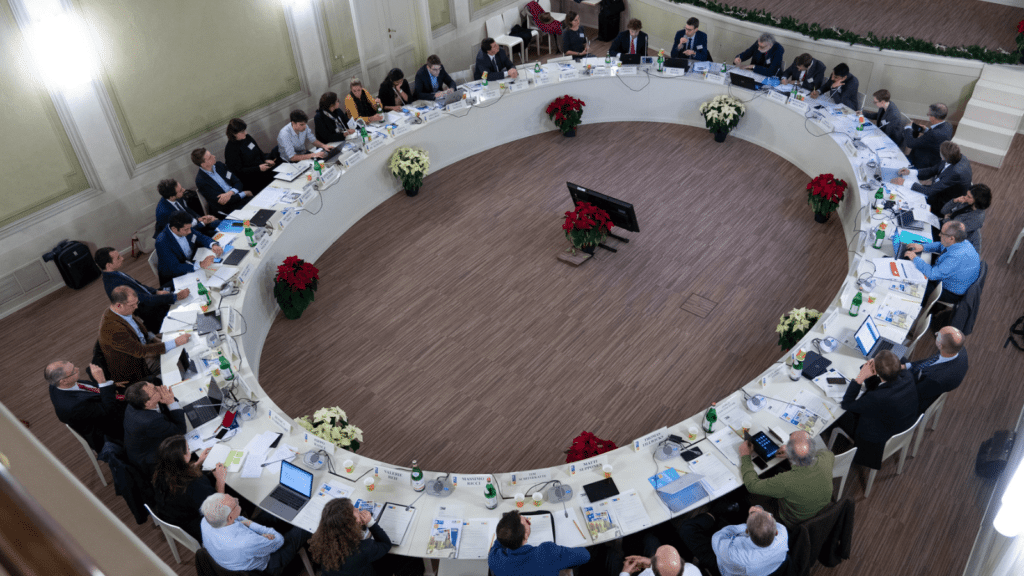
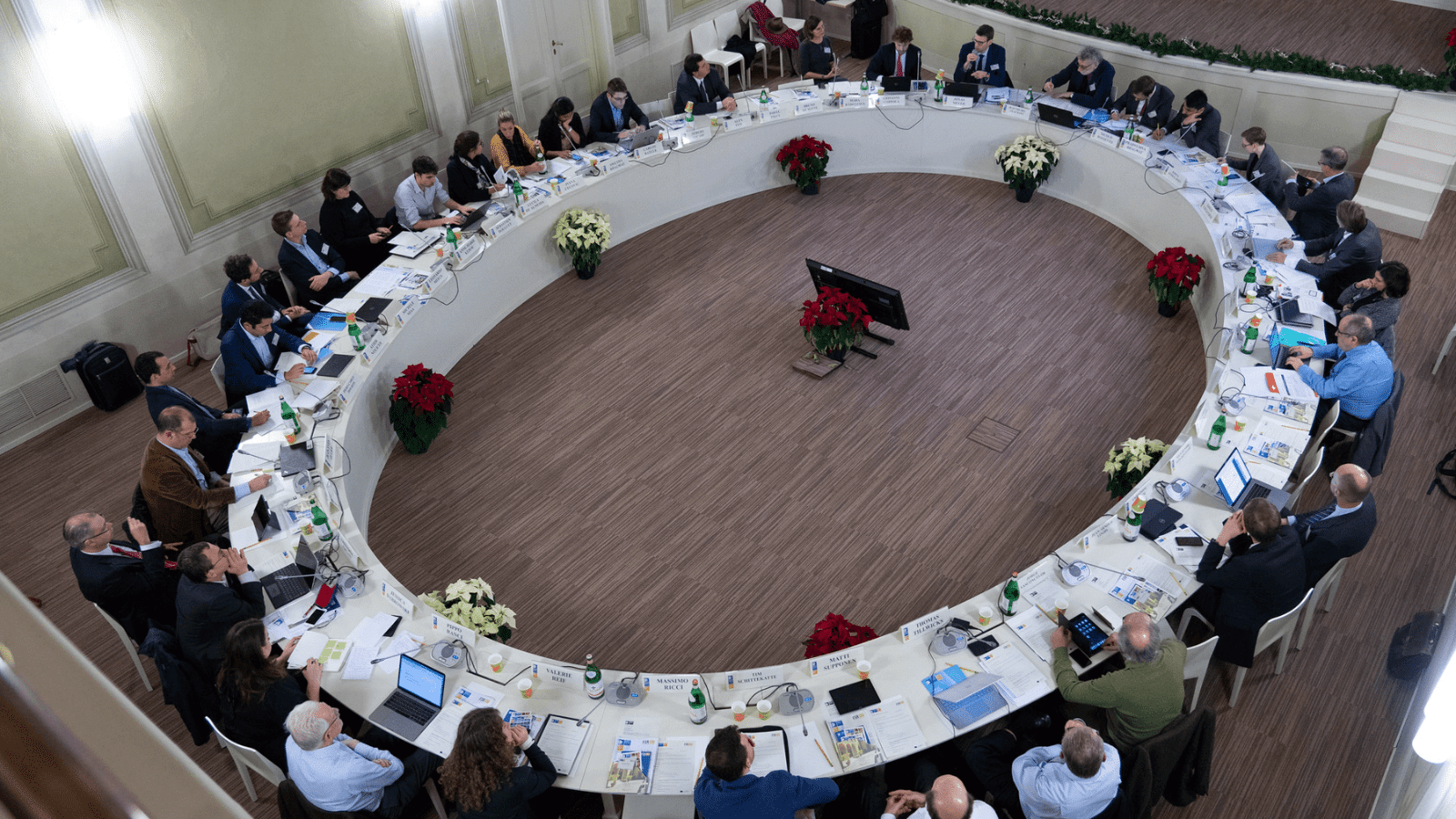
The World Bank’s Danube Water Program and WAREG, the European association of water regulators, are pleased to co-organise a regional regulation workshop on water supply and sanitation (WSS) in the Western Balkans. Taking place from 25 to 26 September 2025 at the Robert Schuman Centre in Florence, this two-day event will bring together regulators and sector experts to present and discuss the findings of a comprehensive review on WSS regulation in the Western Balkans, developed for the upcoming Danube State of the Sector Report 2025.
The workshop will address key regulatory challenges and explore practical solutions for enhancing regulatory practices and tools, with regard to tariff setting, and efficiency and service quality monitoring. It will also focus on the latest EU legislative developments and their impacts on regulatory authorities in the WSS sector. The programme includes in-depth training sessions delivered in collaboration with the Florence School of Regulation, offering valuable learning opportunities for regulatory professionals from across the region.
Don’t miss any update on our events
Sign up for free and access the latest events from our community.
More on the topic

Conference
Nov 30, 2026
LifeNets


Online Debate

Sep 28, 2026
Workshop
Energy Network for the Green Transition
03 October 2025
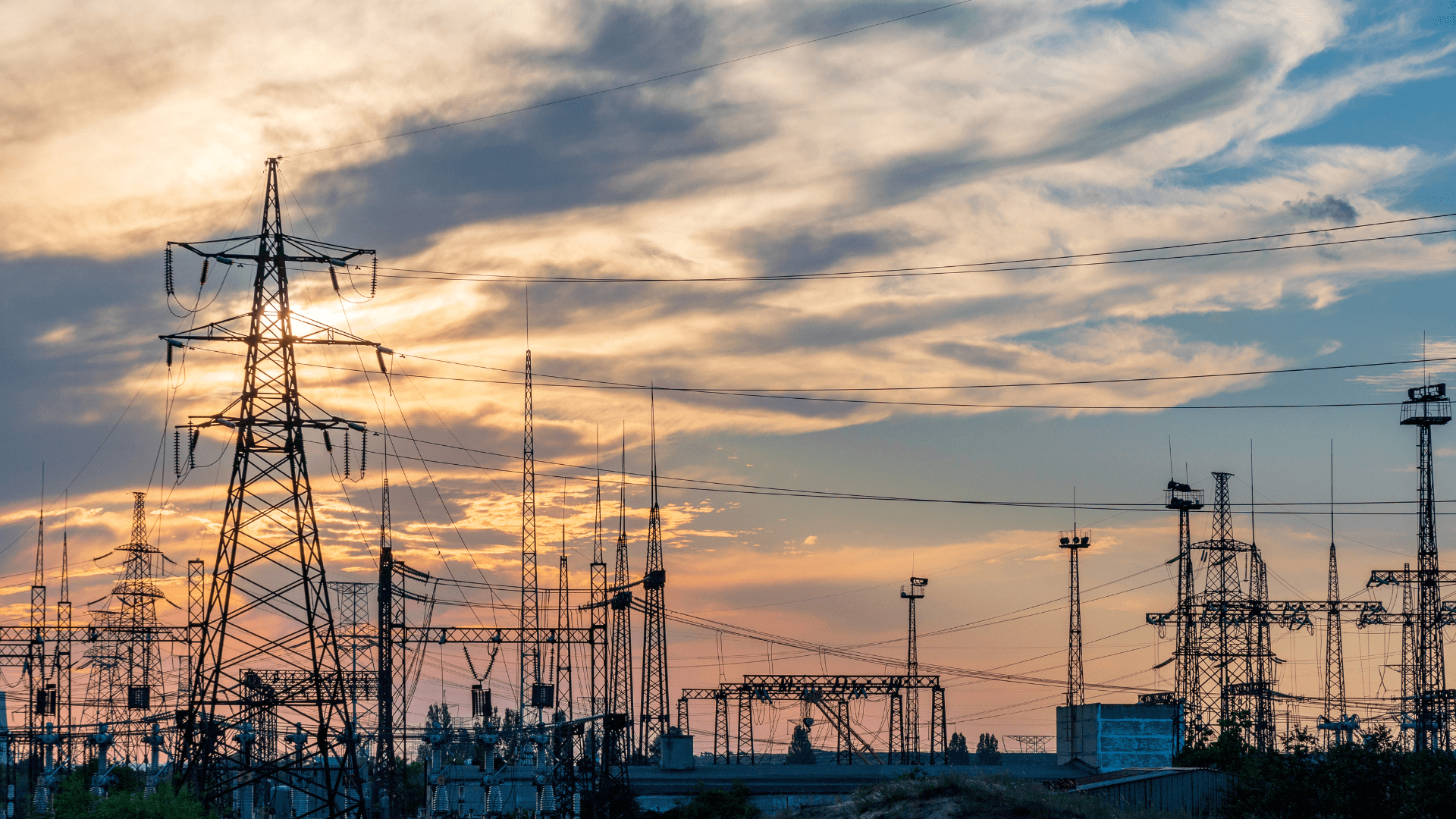
This Workshop will look at the opportunities for streamlining and simplifying the EU network regulatory framework, at the most effective approach to enable efficient anticipatory investments, and at the regualtory approaches to electricity interconnectors with third countries.
EU energy grids play an essential role in supporting market integration, promoting competition and enabling the increasing penetration of renewable energy sources (renewable-based electricity and renewable gases, including renewable hydrogen)[1]. Without investment in grid expansion, modernisation, digitalisation and flexibility, connection delays will increase, and renewables and electrification will stall. In May 2022, the Commission estimated that €584 billion in grid investments are needed before the end of this decade to meet the REPowerEU objectives.
Over the years, legislation has improved the framework for grid planning, development and operation. The 2013 Trans-European Networks for Energy (TEN-E) Regulation[2] established a new legal framework for cross-border energy infrastructure, replacing the 2006 bottom-up approach, by focussing on European planning – through the TYNDPs and the identification of Projects of Common Interest (PCIs) – and tools – such as regional cooperation, permitting streamlining and the cross-border cost allocation (CBCA) – to enable their implementation. Following a full evaluation in 2020, the TEN-E Regulation was revised in 2022[3] to be aligned with the European Green Deal’s objectives. The main changes concerned removing fossil gas from the scope, including hydrogen infrastructure in its scope, as well as a strengthened focus on offshore grids to facilitate achieving the offshore ambitions set out in the EU offshore renewable strategy[4]. The TEN-E framework now also includes Projects of Mutual Interest (PMIs) – cross-border projects with neighbouring non-EU countries – alongside the PCIs.
However, the evolving geopolitical context and risks and the increasingly ambitious energy and climate targets call for a reassessment of the regulatory framework applicable to energy grids. For this purpose, from May to August this year, the European Commission run a public consultation on the legal framework for European grids. The feedback received will feed into the Commission’s work on the European Grids Package, as part of the Competitiveness Compass[5] for the EU and the Clean Industrial Deal[6], which is foreseen for publication before the end of 2025. The key objective of the European Grids Package will be to help upgrade and expand grids to support rapid electrification and speed up permitting
Against this background, this Workshop will cover three aspects aimed at enhancing the legal framework and the role of European energy grids.
- Streamlining and simplifying the regulatory framework
Earlier in the year, the FSR published a Policy Brief on ‘Offshore wind energy in the North Seas: crafting collaboration and navigating governance’[7] and a Policy Paper on ‘Trans-European energy networks (TEN-E) – ideas for simplification in view of accelerating project implementation’[8], providing suggestions for the review of the TEN-E Regulation, by focussing on the main priorities at the top of the Commission’s agenda, namely simplification as well as competitiveness and affordability. Those suggestions were elaborated keeping in mind the urgency to invest in grids as well as the good track-record of the TEN-E policy framework.
The European Parliament recently adopted an own-initiative report on ‘Electricity Grids: the backbone of the EU energy system’[9] that highlights the critical role of modernising EU’s grid infrastructure for the EU’s energy transition and security. The report also: (a) emphases the importance of grid resilience, of enhancing the regulatory framework and financing, and the role of anticipatory investments; (b) underlines the importance of local-level distribution grids and calls for a dedicated framework for their planning and financing; and (c) recommends making grid planning more efficient, taking into account the needs of sector integration at transmission and distribution levels.
At the same time, despite several PCIs having been implemented in the past decade, ACER’s monitoring report[10] highlights delays, both in project preparation (technical studies, financing) and permitting procedures. It is therefore important and urgent to look at the planning and regulatory frameworks from the perspective of speeding up implementation. Whilst synergies can be built in certain areas – e.g. for scenarios underpinning modelling -, in other areas the differences between the well-meshed electricity grid and the green field nature of both hydrogen and CO2 networks should be acknowledged.
- Promoting efficiency in anticipatory investments
Anticipatory investments are forward-looking infrastructure investments based on identified medium- and long-term network needs. The lengthy timeframes traditionally required to develop grid projects might lead to significant delays in strengthening the energy networks and connecting new resources, which are instrumental to the energy transition, to the grid[11]. Therefore, now, more than ever, anticipatory investments are key not to delay the energy transition.
In June 2025, the Commission published a Notice on anticipatory investments for developing forward-looking electricity networks[12], to support Member States, national regulatory authorities and distribution and transmission system operators with recommendations for action in the whole process leading to a final investment decision. More specifically, the Notice covers and provides recommendations on a number of areas: (i) improvements in network planning to allow forward looking investment; (ii) the scrutiny regime for network development plans; (iii) allowing anticipatory investments while keeping electricity network tariffs and connection charges low; (iv) the regulatory scrutiny of network investments and incentives; (v) the perceived risks and risk mitigation strategies.
Previously, ACER and CEER published a Position Paper on anticipatory investment[13], highlighting, inter alia, that anticipatory approaches are already used in network planning in several Member States, that the regulatory treatment does not differentiate anticipatory investments from other investments, that planning activities help evaluating anticipatory investments and that there are limited coordination roles on anticipatory investments. The Position Paper also offered a number of recommendations.
- Enabling energy interconnectors with third countries
The growing difficulty in building the renewable-based generation, necessary to support the decarbonisation process of the industrial sector, within the European Union, highlights the need to consider the opportunity to expand the geographical scope for the location of such generation to non-European regions. These regions are typically characterised by a better endowment of space, wind and solar resources and are therefore capable of providing energy production at competitive prices in the future.
In this context, some electricity interconnection projects have already been launched – both under the regulated and unregulated regimes – between countries in the Mediterranean basin, aiming at a deeper energy sector integration. This process can generate significant benefits both for the economic development of third countries and for the achievement of the EU’s climate objectives.
The European regulatory framework, extremely mature and detailed when it comes to interconnections between Member States, is still incomplete and not always clear with regard to integration with third countries, especially when these are implemented as merchant initiatives.
Furthermore, the rules that have stratified since the start of the liberalisation process do not fully take into account the needs of possible unregulated investments made by private operators who base their financing model on the cost competitiveness of generation outside the EU. These investments require a clear and stable framework for access to the European electricity network, so as to ensure the possibility of using long-term contracts (over a decade) with potential off-takers, and avoiding the risk of not being able to honour them due to physical or regulatory limitations in accessing the EU markets.
In July 2025, the Florence School of Regulation published a Research Report[14] on this topic, proposing different regulatory schemes which might serve as a blueprint for the regulatory framework for electricity interconnectors with third countries.
To discuss these three topics, the Workshop will be structured in three sessions:
- Session I, in the morning, will look at the opportunities for streamlining and siplifying the TEN-E regulatory framework;
- Session II, also in the morning, will focus on the most effective approach to enable efficient anticipatory investments,
- Session III, in the afternoon, will discuss the regualtory approaches to electricity interconnectors with third countries outlined in the FSR Research Report.
Sustainability assessment
The FSR assesses the sustainability and carbon footprint of all its Workshops of the Regulatory Policy Workshop Series. This Workshop is run ‘in presence’ to promote more effective interaction and discussion. Participants travelling to Florence by car or by air will be encouraged to offset any carbon emissions related to their travel. It is considered that, in this way, a suitable balance is achieved between the effectiveness of the policy dialogue and the net carbon footprint of the event.
Gender equality statement of commitment
At FSR, we actively work to achieve gender-balanced representation at all of our events. As a platform that connects diverse voices and perspectives in the sector, we firmly value inclusive and gender-balanced panel debates and training courses.
Kindly note that this event is by invitation only.
- [1] Commission Staff Working Document implementing the Repower EU Action Plan: Investment Needs, Hydrogen Accelerator and Achieving the Bio-Methane Targets accompanying the document Communication from the Commission to the European Parliament, the European Council, the Council, the European Economic and Social Committee and the Committee of the Regions, REPowerEU Plan, Brussels, 18.5.2022, SWD(2022)230 final.
- [2] Regulation (EU) No 347/2013 of the European Parliament and of the Council of 17 April 2013 on guidelines for trans-European energy infrastructure and repealing Decision No 1364/2006/EC and amending Regulations (EC) No 713/2009, (EC) No 714/2009 and (EC) No 715/2009.
- [3] Regulation (EU) 2022/869 of the European Parliament and of the Council of 30 May 2022 on guidelines for trans-European energy infrastructure, amending Regulations (EC) No 715/2009, (EU) 2019/942 and (EU) 2019/943 and Directives 2009/73/EC and (EU) 2019/944, and repealing Regulation (EU) No 347/2013.
- [4] Communication from the Commission to the European Parliament, the Council, The European Economic and Social Committee and the Committee of the Regions, An EU Strategy to harness the potential of offshore renewable energy for a climate neutral future, Brussels, 19.11.2020, COM(2020) 741 final.
- [5] https://commission.europa.eu/topics/eu-competitiveness/competitiveness-compass_en.
- [6] https://commission.europa.eu/topics/eu-competitiveness/clean-industrial-deal_en.
- [7] Leonardo Meeus, Offshore wind energy in the North Seas: crafting collaboration and navigating governance, FSR Policy Brief, issue 2025/02, January 2025.
- [8] Catharina Sikow-Magny, Trans-European energy networks (TEN-E) – ideas for simplification in view of accelerating project implementation, FSR Policy Paper, RSC PP 2025/13, July 2025.
- [9] European Parliament resolution of 19 June 2025 on electricity grids: the backbone of the EU energy system (2025/2006(INI)), available at: https://www.europarl.europa.eu/doceo/document/TA-10-2025-0136_EN.html.
- [10] Consolidated report on the progress of electricity and gas Projects of Common Interest, 2022; electricity infrastructure development to support a competitive and sustainable energy system, 2024
- [11] For example, according to Wind Europe data, wind farms might have to wait as long as 9 years to get access to the network.
- [12] C(2025) 3291 final. This notice defines anticipatory investment as “as investments into grid infrastructure assets that proactively address network development needs beyond the ones corresponding to reinforcements relating to currently existing grid connection requests by generation or demand projects” (page 3).
- [13] ACER-CEER, Position on anticipatory investments, March 2024, available at: https://www.ceer.eu/wp-content/uploads/2024/04/ACER-CEER-Position-on-Anticipatory-Invesments.pdf.
- [14] Alberto Pototschnig and Leonardo Meeus, The regulatory regime applicable to electricity interconnectors with third countries, Research Project Report, Florence School of Regulation, July 2025, available at: https://cadmus.eui.eu/server/api/core/bitstreams/bd9cf077-70df-4d45-95ff-cf8cd56b8e63/content.
Don’t miss any update on our events
Sign up for free and access the latest events from our community.
More on the topic
Conference
Oct 07, 2026
Policy Dialogue

Oct 09, 2026

Online Debate

Dec 08, 2026
Online Debate
Sep 28, 2026

Policy Dialogue

Sep 28, 2026
Workshop
Introduction to REMIT – Online Workshop
11 November 2026 9:15 - 15:15 CET

In this workshop, participants will explore the main concepts of the Regulation on Wholesale Energy Market Integrity and Transparency (REMIT) and their significance in ensuring fair and transparent wholesale energy markets. The programme will cover key topics, including the purpose, scope, and actors of REMIT, the concept of inside information and the prohibition of insider trading and market manipulation, with examples of manipulative practices. The main obligations established by REMIT on market participants and persons professionally arranging and executing transactions (PPAETs) will also be discussed. Through engaging discussions and practical insights, attendees will deepen their knowledge of the basics of market integrity and transparency principles and regulatory compliance.
The workshop is organised in the context of the training course REMIT and its implementation, but it’s also open to external participants. For the course participants, attendance at the workshop is optional and is included in the course fee.
Programme
9.15 – 9.30 Introduction to the workshop
Alberto Pototschnig | FSR
9.30 – 10.30 Introduction to REMIT: purpose, scope and actors
Alberto Pototschnig | FSR
10.30 – 10.45 Coffee break
10.45 – 11.45 Insider trading
Sofia Nicolai | FSR
11.45 – 12.00 Q&A
12.00 – 13.00 Lunch break
13.00 – 14.00 Market manipulation
Alberto Pototschnig | FSR
14.00 – 14.15 Coffee break
14.15 – 15.15 Introduction to REMIT obligations
Sofia Nicolai | FSR
Register by: 1 November 2026
10% discount available to all registrations completed by 1 September 2026!
Workshop fees:
- General fee: 300 EUR
- Associate donors fee (10%): 270 EUR
- Major donors fee (20%): 240 EUR
-
Star donors fee (25%): 225 EUR
Learn more about the FSR-ACER residential course REMIT and its implementation in Florence, which covers the scope of the EU Regulation on Wholesale Energy Market Integrity and Transparency (REMIT) and the way in which it is implemented.
Don’t miss any update on our events
Sign up for free and access the latest events from our community.
More on the topic
Online Debate
Sep 28, 2026


Conference
Oct 07, 2026









Online Event, Workshop
Improving Climate Policies through Better Assessment and Public Acceptance Inclusion
30 October 2025
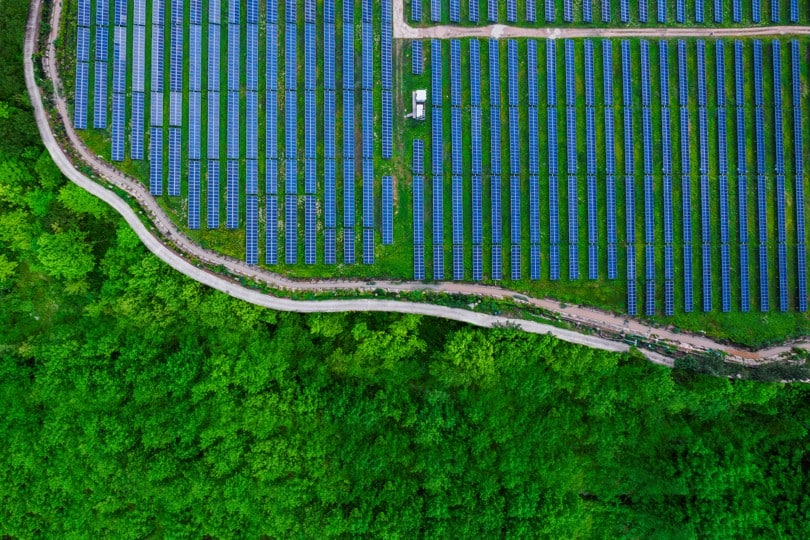
Achieving climate neutrality in the EU and globally requires ambitious and effective climate targets and the ability to implement widely accepted policies. The road to net-zero is hindered by fragmented policymaking, uneven public support, and limited tools to assess climate action’s broader social and political implications. Many existing assessments focus narrowly on effectiveness, overlooking critical dimensions like feasibility and public perception.
In this context, the Horizon Europe project CAPABLE aims to provide recommendations for designing socially and economically acceptable climate policy measures for 2030 and beyond. CAPABLE draws on economics, sociology, political science and psychology to capture climate policy’s multidimensional outcomes and implications.
This CAPABLE capacity-building workshop will share project findings for effective and acceptable climate policies at the European level. Organised online by the European University Institute (EUI) with contributions from leading experts in the CAPABLE consortium, it will focus on climate policies, their effectiveness and their acceptability. The lectures will be complemented with extensive question-and-answer sessions and some testimonials from practitioners.
Target audience:
Policymakers from EU institutions, national ministries, environmental agencies, industry executives, consultants, researchers and NGOs.
Learning outcomes:
- Assess the effectiveness of the current and future EU climate policies
- Grasp the potential and limits of different policy assessment methods
- Understand determinants and factors that influence the acceptability of climate policies, and propose policy design features to make policies acceptable
- Have an overview of the acceptability of newly implemented and potential climate policies, including the Fit for 55
Draft programme:
09:00 – 09:10 | Welcome & Introduction
09:10 – 10:40 | Module 1: EU Climate Policies and Their Effectiveness
- Introduction to EU Climate Policies (Simone Borghesi, EUI)
- Policy Assessment: What Works? (Kai Lessmann and Jan Minx, PIK and Marie Raude, EUI)
10:40 – 10:55 | Coffee Break
10:55 – 12:20 | Module 2: Acceptability of Climate Policies
- Determinants of Public Acceptance of Climate Policies: A Multi-disciplinary Overview (Mary Sanford, CMCC/EIEE)
- Social Acceptability and Feasibility of Fit-For-55 Policies (Keith Smith, ETH)
12:20 – 12:45 | Testimonial on science for European climate policies
- Vicky Pollard, DG Climate Action, European Commission
12:45 – 12:50 | Conclusions
A second capacity-building workshop is scheduled on Thursday 27 November afternoon with a focus on climate policies at the local level. Click here to learn more about it.
This project has received funding from the European Union’s Horizon Europe research and innovation programme under grant agreement No 101056891.
Don’t miss any update on our events
Sign up for free and access the latest events from our community.
More on the topic



Conference
Nov 30, 2026
LifeNets


Policy Dialogue

Oct 07, 2026
Conference
Oct 07, 2026
Workshop
Smartening the Energy Grids and Cybersecurity
16 May 2025
This workshop will explore grid-enhancing technologies and smart network solutions for EU transmission and distribution networks, and discuss how their adoption can be effectively and efficiently enabled. It will also examine the evolving cybersecurity framework resulting from the implementation of the NCCS.
Interconnected and stable energy networks are the backbone of the EU’s internal energy market and key enablers of the green transition. To help deliver the European Green Deal, the European Commission proposed a Grid Action Plan in November 2023 to ensure that EU electricity grids operate more efficiently and are deployed faster and more widely. The Commission estimates that €584 billion in investment will be needed in electricity grids this decade—representing a substantial share of the total investment required for a clean energy transition in the electricity sector.
The Action Plan highlights two areas for future focus: cross-border interconnections and national transmission and distribution grids. In particular, distribution networks will need to grow and evolve to accommodate increasing decentralised renewable generation and new flexible demand (e.g. heat pumps and electric vehicle charging). These grids are assuming new roles, becoming facilitators of a more complex system—and must evolve into smart grids: digital, real-time monitored, remotely controllable, and cybersecure. Research and innovation will be crucial in supporting this transformation, especially as around 40% of Europe’s distribution networks are over 40 years old and in need of modernisation. Industry estimates suggest that €375–425 billion in distribution grid investment will be needed by 2030.
Smart grids offer at least two major benefits. First, they make the system more flexible, supporting the energy transition at lower cost. In many cases, smarter solutions can even substitute for traditional capital investments in grid infrastructure. Second, smart grids enable better connection and management of flexible resources—critical for integrating increasing shares of intermittent renewables.
Smart solutions should become an integral part of network development planning at all levels. Network operators should be encouraged—and possibly incentivised—to adopt such solutions when they offer more cost-effective alternatives to conventional grid investments. Regulators should ensure that the regulatory framework does not inadvertently favour physical infrastructure over smart solutions, and may even promote the adoption of grid-enhancing technologies through targeted incentives.
However, smarter networks are more exposed to cybersecurity threats. A Network Code on Cybersecurity for the EU electricity network (NCCS), adopted in 2023, sets a European standard for the protection of cross-border electricity flows. It includes rules on risk assessment, minimum requirements, certification of cybersecurity products and services, as well as crisis management procedures.
Workshop Structure:
This Policy Workshop will explore grid-enhancing technologies and smart network solutions available for EU transmission and distribution systems, along with the regulatory and cybersecurity frameworks needed to enable their effective implementation. The programme will include:
-
Session I (morning): Focus on available technologies to enhance the performance of EU transmission and distribution networks, and how they can support integration of decentralised and flexible resources.
-
Session II (morning): Exploration of regulatory tools that could incentivise the adoption of smarter network solutions.
-
Session III (afternoon): Discussion on the main cybersecurity threats facing EU energy networks, and how the NCCS seeks to address them.
Sustainability Assessment:
The FSR evaluates the sustainability and carbon footprint of all events in its Regulatory Policy Workshop Series. This Workshop will be held in person to foster more effective dialogue. Participants travelling to Florence by car or air will be encouraged to offset the carbon emissions linked to their travel. This approach aims to strike a balance between the value of face-to-face engagement and the environmental impact of the event.
Please note that this event is by invitation only.
Don’t miss any update on our events
Sign up for free and access the latest events from our community.
More on the topic
Conference
Oct 07, 2026
Policy Dialogue
Oct 09, 2026
Online Debate
Dec 08, 2026

Online Debate
Sep 28, 2026
Workshop
A Clean Industrial Deal for Europe
05 March 2025

In her Political Guidelines in July 2024 [1], Ursula von der Leyen committed to a Clean Industrial Deal to ensure a competitive EU industry and quality jobs as one of the new Commission’s objectives within its first 100 days. The Deal will focus “on supporting and creating the right conditions for companies to reach our common goals. This means simplifying, investing and ensuring access to cheap, sustainable and secure energy supplies and raw materials”.
The Clean Industrial Deal is expected to be tabled on 26 February 2025. Key areas anticipated in the Deal include a new industrial policy, simplification of administrative procedures, a revision of State aid rules, and measures to lower energy costs and improve the functioning of energy markets.
This workshop, taking place shortly after the Deal is introduced, will examine its proposed measures and assess how they address the challenges faced by EU industry, ensuring competitiveness and decarbonisation. Discussions will also consider the broader geopolitical landscape, particularly the potential withdrawal of the US from the Paris Agreement and China’s strategic investments in Green Deal markets.
The event is by invitation only.
A plan for EU competitiveness and decarbonisation
Learn more about the Clean Industrial Deal
[1] Available at: https://commission.europa.eu/document/download/e6cd4328-673c-4e7a-8683-f63ffb2cf648_en?filename=Political%20Guidelines%202024-2029_EN.pdf
Don’t miss any update on our events
Sign up for free and access the latest events from our community.
More on the topic
Policy Dialogue
Oct 09, 2026
Online Debate
Sep 28, 2026
Conference
Oct 07, 2026
Workshop
A target model for hydrogen
24 January 2025

FSR Regulatory Policy Workshop Series 2024-2025
The Workshop will consider whether a target model for hydrogen could be defined, which could serve as a reference for the development of the hydrogen market and the related infrastructure requirements.
For this purpose, the Workshop will be structured in three sessions:
- Session I, in the morning, will focus on the prospects for hydrogen demand and supply, the cost competitiveness of renewable and low-carbon hydrogen and the role that it can play in decarbonising energy demand;
- Session II, also in the morning, will explore which market design and trading arrangements are best suited to support the development of the hydrogen sector, as resulting from the previous session;
- Session III, in the afternoon, will look at the implications of the development of demand and supply and the market design and trading arrangements outlined in the previous sessions, for the development of the hydrogen network.
This workshop is by invitation only.
Sustainability assessment
The FSR assesses the sustainability and carbon footprint of all its Workshops of the Regulatory Policy Workshop Series. This Workshop is run mainly ‘in presence’, with some exceptions for participation through internet-based remote connection. It is expected that most participants will join the Workshop in Florence to take advantage of the opportunity for more effective interaction and discussion. Those participants joining the event in Florence will be encouraged to offset any carbon emissions related to their air travel. It is considered that, in this way, a suitable balance is achieved between the effectiveness of the policy dialogue and the net carbon footprint of the event.
Don’t miss any update on our events
Sign up for free and access the latest events from our community.
More on the topic
Online Debate
Sep 28, 2026
Conference
Oct 07, 2026
Workshop
Spring Policy Dialogues
From 14 May 2025 to 16 May 2025

Join us in Florence for 3 days of in-person events where we will convene our donors and renowned experts from across the sector.
A detailed agenda with discussion topics and speakers will follow. In the meantime, here is a list of events that will take place during 14-16 May 2025:
Wednesday, 14 May
Policy Advisory Council – Part 1
The Policy Advisory Council discusses the most topical regulatory and policy issues and debates and the relevance and robustness of the latest FSR research findings. The meeting gathers experts from the European Commission, the EU Agency for the Cooperation of Energy Regulators (ACER), the FSR Energy Star and Major Donors and invited renowned academics.
Thursday, 15 May
Policy Advisory Council – Part 2
7th meeting of the Equality Platform for the Energy Sector
The Platform is a European Commission-led initiative that currently includes 38 members from the energy sector, including the Florence School of Regulation.
Established in October 2021, the platform serves as a dedicated forum for addressing equality-related matters, fostering the exchange of experiences, and championing best practices concerning diversity and inclusion in the energy sector workplace.
The meeting is open for Platform members only. For further information and details on becoming a member, please visit the Platform’s webpage.
LUCE Awards 2025
The LUCE Awards, organised by the Lights on Women initiative with the support of Landwärme, Edison, and Eurogas, aims to recognise the significant contributions of women in driving the Green Transition.
Now in its third edition, LUCE Awards will celebrate the accomplishments of two women professionals, presenting a prize in each of the following categories:
- Emerging Talent. The Emerging Talent category aims to recognise contributions of up-and-coming female leaders.
- Legacy Women. The Legacy Women category will honour senior female professionals working to further the Green Transition worldwide.
Watch the highlights from the first and second editions.
Friday, 16 May
Regulatory Policy Workshop
A full-day policy workshop directed by Alberto Pototschnig, FSR Executive Deputy Director, titled “Smartening the Energy Grids and Cybersecurity”. The workshop will consist of a series of seminars led by topic experts with opportunities for intervention from participants.
Don’t miss any update on our events
Sign up for free and access the latest events from our community.
More on the topic
Policy Dialogue
Oct 07, 2026
Conference
Oct 07, 2026
Online Debate
Sep 28, 2026
Conference, Workshop
Can emissions trading promote carbon removals?
12 November 2024

Removing greenhouse gas emissions from the atmosphere is essential to maintaining the temperature increase below 2 degrees above the pre-industrial levels. However, a policy gap exists in incentivising investment in carbon removal technologies. Since emissions trading systems are considered a cost-effective solution to drive technological change, can emissions trading promote carbon removals?? How can carbon removals fit into a climate policy mix that targets net zero emissions?
These and other questions will be addressed during the panel discussion “Can emission trading systems be employed to promote carbon removals?” on Tuesday 12 November from 09:30 to 11:00 AZT at the Italian Pavilion of the 29th Conference of the Parties (COP29) in Baku, Azerbaijan.
Chair and Introduction:
- Simone Borghesi, FSR Climate, EAERE & University of Siena
Panel Discussion:
- Robert Jeszke, KOBIZE
- Luca Taschini, University of Edinburgh
- Stephanie La Hoz Theuer, ICAP
- Lorna Ritchie, ICVCM
Concluding Remarks:
- Ottmar Edenhofer, PIK & MCC
The event is organised by the EUI with the support of ICAP and is held in the framework of the project LIFE COASE.
Dive deeper into the topic:
- Read the event highlights from the latest LIFE COASE policy dialogue.
- ICAP report “Emissions Trading Systems and Net Zero: Trading Removals“, May 2021
Don’t miss any update on our events
Sign up for free and access the latest events from our community.
More on the topic
Policy Dialogue
Oct 07, 2026
Conference
Nov 30, 2026
LifeNets
Online Debate
Sep 28, 2026
Workshop
Renewables Penetration and System Flexibility
29 November 2024

FSR Regulatory Policy Workshop Series 2024-2025
This workshop is by invitation only
Sustainability assessment
The FSR assesses the sustainability and carbon footprint of all its Workshops of the Regulatory Policy Workshop Series. This Workshop is run mainly ‘in presence’, with some exceptions for participation through internet-based remote connection. It is expected that most participants will join the Workshop in Florence to take advantage of the opportunity for more effective interaction and discussion. Those participants joining the event in Florence will be encouraged to offset any carbon emissions related to their air travel. It is considered that, in this way, a suitable balance is achieved between the effectiveness of the policy dialogue and the net carbon footprint of the event.
Don’t miss any update on our events
Sign up for free and access the latest events from our community.
More on the topic
Online Debate
Sep 28, 2026
Conference
Oct 07, 2026
Workshop
Policy Advisory Council 2024
28 November 2024

The Policy Advisory Council discusses the most topical regulatory and policy issues and debates and the relevance and robustness of the latest FSR research findings. The meeting gathers experts from the European Commission, the EU Agency for the Cooperation of Energy Regulators (ACER), the FSR Energy Star and Major Donors and invited renowned academics
Don’t miss any update on our events
Sign up for free and access the latest events from our community.
More on the topic
Conference
Oct 07, 2026
Policy Dialogue
Oct 07, 2026
Online Debate
Sep 28, 2026
Conference, Seminar, Workshop
Workshop on the role of carbon markets in reaching carbon neutrality
From 17 June 2024 to 21 June 2024

As the number of carbon markets grows, the long-term contribution of market-based instruments to reach carbon neutrality by 2050 should be further assessed. In general, the size, scope, parameters, and prices of Emissions Trading Systems (ETSs) vary and evolve depending on the social, economic, political, and legal context of each jurisdiction. All these aspects of regulated carbon markets are to be considered by policymakers. To tackle challenges, regulators may find insights from new scientific evidence.
This workshop aims to collect insights from policy-relevant research on recent trends in carbon markets, with a particular focus on the EU ETS. It will address topics such as future allowance prices, scope expansion of ETSs and market oversight, among others. Furthermore, it will focus on the methodologies used to assess ETSs (i.e., ex-post and ex-ante model-based assessments) and their results.
The 3-day event will comprise a keynote lecture, paper presentations, a policy roundtable and a guest lecture.
It is organised by FSR Climate under the framework of the LIFE COASE project, which is co-funded by the European Union’s Life Programme. The workshop combines the ex-post and the ex-ante model based assessment of ETSs and will take place during the Joint Session of Workshops of the Robert Schuman Centre in the context of the 30 anniversary of the Centre.
Participation in the event is via invitation only. Find out more about the programme of the Joint Session of Workshops here.
Programme
18 June
10:00-10:45 Introduction, Tour de Table, Ice Breaker
11:15-12:05 Keynote speech: The merits and shortcomings of the EU carbon markets
- Sonja Peterson | Kiel Institute for the World Economy
12:15-13:00 Session 1: Chinese National ETS Model
China’s national ETS price outlook: long-term forecast and policy scenarios [Introduction]
- Boyang Jin | London Stock Exchange Group
14:00-15:30 Session 2: EU ETS Models
Economic interaction between climate policy instruments [Abstract]
- Jakub Boratyński | KOBiZE
Sequencing CDR into the EU ETS [Abstract]
- Sebastian Osorio | Potsdam-Institute for Climate Impact Research
16:00-17:10 ETS Model Comparison
- Sebastian Osorio
19 June
10:00-11:30 Session 3: Carbon leakage
Carbon border adjustments: an examination of the direct and indirect effects of the European Carbon Border Adjustment Mechanism (CBAM)
- Antton Haramboure |Organization for Economic Cooperation and Development
Carbon prices, emissions and international trade in sectors at risk of carbon leakage: evidence from 140 countries [Abstract]
- Jonas Teusch | OECD
12:00-13:30 Session 4: Carbon pricing and firm behaviour
The effects of carbon pricing along the production network [Abstract]
- Thomas Stoerk | National Bank of Belgium & LSE
Realist analysis of UK ETS trading and abatement behaviour [Introduction]
- Mary Anderson | CAG Consultants
14:30-15:30 Policy panel: ETS Endgame – Including new sectors and removals ETSs
- Edoardo Croci | Bocconi University
- Sebastian Osorio | Potsdam-Institute for Climate Impact Research
- Elena Marro | European University Institute
16:00-17:30 Session 5: Beyond the EU ETS: Offsets & China ETS Policy Overlap
Willingness-to-claim voluntary carbon offsets: market evidence of revealed-preferences [Abstract]
- Tara L’Horty | Université de Lorraine
Interactions between emissions trading systems and other policies: insights from theory and an application to China [Abstract]
- Carolyn Fischer | World Bank
20 June
09:15-11:30 Session 6: Decarbonising industry and agriculture
Steel in the EU CBAM: will scrap-resource shuffling delay the sector’s global decarbonization? [Abstract]
- Maxime Gérardin | France Stratégie
Market design options for integrating negative emissions into the ETS [Introduction]
- Carlotta Von Bebenburg | Oxera
Options to expand emissions trading to emissions from agriculture in Europe [Abstract]
- Benjamin Görlach | Ecologic Institute
12:00-13:30 Session 7: Legislation for carbon pricing
The integration of negative emissions in the EU legislation [Introduction]
- Elena Bonfiglio | European Roundtable on Climate Change and Sustainable Transition
Enhancing climate policies through the implementation of regulated carbon markets in Brazil: reflecting on strategies for closing the policy-science loop [Introduction]
- Adriana I. B. S. L. Di Pasquale | University of Pisa
14:30-15:30 Guest lecture: Stopping climate change
Paul Ekins | UCL
16:00-17:30 General discussion & conclusions
17.30 Close
Don’t miss any update on our events
Sign up for free and access the latest events from our community.
More on the topic
Conference
Nov 30, 2026
LifeNets
Policy Dialogue
Oct 07, 2026