





Type of event: Forum
The EU Emissions Trading System and Aviation Support
FSR 23rd Aviation Forum

During this Forum, experts will focus on ETS support and how to make sure it is best fit for kickstarting the SAF industry and enable the long-term sector’s decarbonisation.
The EU’s aviation climate action framework is entering a new phase in which delivery and implementation matter as much as policy design.
Under the European Green Deal and the ‘Fit for 55’ package, the EU combines a tightening carbon constraint with a fuel-switching strategy. The EU Emissions Trading System (ETS) provides the price signal, while ReFuelEU Aviation creates a long-term market for sustainable aviation fuels (SAF) through blending mandates.
Two milestones make the 23rd Florence Air Forum particularly timely.
First, aviation in the ETS is transitioning to full auctioning of allowances, phasing out free allocation, while introducing an ETS-financed SAF support mechanism to help close the price gap with conventional fuels. This raises key challenges around ensuring that support is targeted, administratively feasible, and resistant to gaming, while maximising emissions reductions.
Second, the upcoming ETS review will revisit aspects of aviation ETS design, including its interaction with ICAO’s CORSIA and its scope. While these issues frame the broader context, the Forum focuses on practical implementation—particularly how ETS-linked support can work in practice and how policy interactions can be simplified.
Against this backdrop, the Forum will discuss three key areas:
-ETS-financed SAF support: How to design effective, cost-efficient support mechanisms that encourage long-term SAF uptake, ensure additionality, maintain traceability, and deliver sustainable outcomes.
-Integrity and alignment across EU instruments: How to ensure robust monitoring, reporting and verification (MRV), avoid fraud and double-counting, and align ETS support with ReFuelEU and other instruments without unnecessary complexity.
-Beyond SAF: What ETS-linked mechanisms could further reduce aviation’s climate impact, including support for electric and hydrogen-powered aircraft technologies.
Kindly note that this event is by invitation only.
At the EUI and the Robert Schuman Centre, we are dedicated to removing barriers and providing equal opportunities for everyone. Please indicate in the registration form your accessibility needs, if any. Alternatively, you can contact the logistics organiser of the event.
At FSR, we actively work to achieve gender-balanced representation at all our events. As a platform that connects diverse voices and perspectives in the sector, we strongly value inclusive and gender-balanced panel debates and training courses.
Don’t miss any update on our events
Sign up for free and access the latest events from our community.



Towards highly developed and truly European ATM

The 22nd Florence Air Forum, ‘Towards highly developed and truly European ATM – bringing Europeans together by enabling all journeys’, will explore the future of Air Traffic Management in Europe, assessing SESAR’s achievements, remaining challenges, and the reforms needed to deliver a safer, more efficient, and sustainable Single European Sky.
The aviation industry is leading the technological revolution in transport, focusing on improved safety, efficiency, and sustainability. SESAR is the European Union’s flagship project for modernising Air Traffic Management (ATM), and since 2007, it has developed into a major innovation framework. It supports the Single European Sky strategy by uniting EU institutions, industry, and academia, aligning investment and priorities with nearly €4.8 billion in research funding and an additional €3 billion for deployment through the Connecting Europe Facility. Out of 137 SESAR solutions delivered, 70 have been implemented, improving arrival and departure procedures at busy airports, enhancing airport integration, and enabling more efficient upper airspace routing. SESAR has also tackled structural challenges by reducing technological fragmentation, promoting shared standards, and aligning national and industry priorities through the European ATM Master Plan.
Although SESAR’s evolution, the implementation of new ATM solutions faces delays, often because of structural weaknesses in the innovation process at key transition points. Air traffic in Europe is projected to increase 44% by 2050 from 2019 levels, reaching over 15.4 million IFR flights annually. This growth will introduce new airspace users like drones and electric vertical take-off aircraft, which in turn will necessitate changes in airspace design and coordination. At the same time, it is vital to ensure the EU’s technological sovereignty and safe airspace operations amid the current geopolitical instability and disruptions.
ATM modernisation relies on the goals established in the European ATM Master Plan to ensure Europe remains the most efficient and environmentally friendly airspace. SESAR has proven effective in facilitating coordinated innovation in air traffic management, overcoming barriers, and delivering performance and sustainability gains while reinforcing Europe’s autonomy and industrial leadership. Although reforms are needed, particularly for smoother development to deployment transitions and stronger industrialisation, these can be achieved with targeted enhancements. Alternative governance models may offer benefits but also pose high transition risks that could delay the rollout of the ATM Master Plan.
The 22nd Florence Air Forum aims to delve into the critical issues shaping the future of ATM, with the goal of bringing Europeans together by enabling all journeys. The Forum, co-organised by the Transport Area of the Florence School of Regulation together with the EC’s DG MOVE, will tackle the following questions:
- The Evaluation of the SES2+ Package: In which manner has the recent adoption of the SES2+ package NOT taken care of all the challenges facing European ATM? Which elements in the SES2+ package create the most severe implementation challenges? How can we use soft law in the implementation phase?
- The Future of European ATM: the New Service Delivery Model: How will the vision of the new service delivery model become a reality? What is the stakeholders’ desire to invest in this initiative?
- Organising SESAR: Stakeholder Engagement and Next Steps: Does the ATM community actually care how we organise the SESAR in the next planning period? How to best organise it?
Kindly note that this event is by invitation only.
Don’t miss any update on our events
Sign up for free and access the latest events from our community.

Carbon Leakage and Mitigating Measures

The 21st Florence Air Forum will explore the carbon leakage risks facing the aviation sector and assess the relevance of extending the Carbon Border Adjustment Mechanism (CBAM) and introducing an EU climate levy.
On 14 July 2021, the European Commission adopted a series of legislative proposals outlining its plan to achieve climate neutrality in the EU by 2050. It includes the intermediate target of at least a 55% net reduction in greenhouse gas emissions by 2030. The proposal outlines changes to various EU climate laws, including the EU Emissions Trading System (ETS), with measures to decarbonise energy- intensive industries, and regulations related to transport and land use. It details how the European Commission plans to achieve the EU climate targets set under the European Green Deal. Industrial installations at significant risk of carbon leakage receive special treatment under the EU ETS to enhance their competitiveness. In the latter, the European Commission has also launched the Competitiveness Compass, an essential initiative that provides a strategic and clear framework for three core areas of action: innovation, decarbonisation, and security. It also presented the Clean Industrial Deal in March to boost competitiveness and decarbonisation.
Within the ‘Fit for 55’ package, the ReFuelEU Aviation Regulation was adopted. The Regulation sets obligations for the supply of sustainable aviation fuels (SAF) at Union airports. The Regulation creates a market for SAF with a long-term perspective by setting targets up to 2050, starting at 2% in 2025 and up to 70% in 2050. Besides, airlines must refuel at least 90% of the required fuel volume for outgoing flights at EU airports on an annual average to avoid circumvention through strategic refuelling outside the EU. If an aviation fuel supplier does not meet the minimum shares for SAF supply, penalties will be due, and the missing volume must be additionally placed on the market in the following year(s).
The EU’s Carbon Border Adjustment Mechanism (CBAM) is the EU’s tool to put a fair price on the carbon emitted during the production of carbon-intensive goods entering the EU and encourage cleaner industrial production in non-EU countries. Thus, CBAM is effectively a tool designed to reduce the risks of carbon leakage associated with the EU ETS. ETS currently has an intra-EU scope and is undergoing a “stop-the-clock” mechanism on its potential extension. The Commission is preparing a review of the EU ETS, which will be presented in 2026. Extension of the EU ETS to flights departing from the EEAS territory is one option considered by the Commission.
A potential application of CBAM in the aviation sector requires adjustments from the current set-up for stationary installations. For aviation, CBAM could be applied to routes currently not covered by the aviation EU ETS. This would mean that a carbon price, equal to the ETS allowance price in the EU, would be applied to the complete journey of the passenger or transported goods (from departure to final destination). Potential costs of CORSIA or costs from other carbon pricing schemes in third countries would be considered on such routes.
Based on the initial identification of the potential risk for carbon leakage, other mitigating measures can also be potentially considered. In particular, the creation of an EU climate levy linked to an EU fund could be created. The levy would apply to all departing flights from the EEA, based on the final destination (similar to the ticket tax for passengers in Germany). The levy could further be differentiated by economy and business class. The revenues generated would be earmarked into an EU fund (to decarbonise aviation or to compensate for SAF prices). Alternatively, a levy on SAF could be introduced to departing flights, with the funds used to compensate for the price gap between fossil kerosene and SAF in the face of the ReFuelEU Aviation Regulation obligations for departing flights.
The 21st Florence Air Forum will continue discussions on carbon leakage risks and evaluate the relevance and potential effectiveness of CBAM in addressing these risks within the air services sector. Competitiveness will not be considered concerning CBAM. The forum will explore the suitability of extending CBAM to air transport services to address carbon leakage, considering the assessment carried out as part of DG MOVE’s study on the topic. In addition, it will discuss the feasibility of the creation of an EU climate levy as one of the mitigating measures to reduce carbon leakage.
The Forum, co-organised by the Transport Area of the Florence School of Regulation together with the EC’s DG MOVE, will tackle the following questions:
- The Impact of EU Climate Policy on Aviation Networks: To what extent does the EU aviation sector face a real risk of carbon leakage due to the European Commission’s decarbonisation policies, such as the EU ETS and SAF mandate?
- The Strategic Response of Airlines to the risk of carbon leakage: How do carbon leakage risks and impacts differ across various EU aviation market segments (e.g. short-haul vs. long-haul flights, net carriers low-cost airlines, passenger vs. cargo operations)? What lessons can be drawn from these comparisons to inform targeted policy responses?
-
CBAM extension: How feasible and effective would extending an adapted CBAM mechanism be for air transport services, considering the unique challenges of applying it to a service-based industry? What are the main challenges in extending CBAM to air transport services? How does the assessment of CBAM relevance and effectiveness change or not depending on the EU ETS scope?
- EU climate levy: What would be the potential structure and impact of an EU climate levy on aviation, and how could it be designed to minimise competitive distortion while effectively reducing emissions? How might an EU climate levy impact the competitiveness of EU airlines compared to non-EU airlines?
- SAF Levy: How could a SAF levy be implemented to support the transition to cleaner fuels without exacerbating the risk of carbon leakage, and what would be its effects on different stakeholders in the aviation industry? What are the potential economic impacts of a SAF levy on the aviation industry?
- Other mitigating measures: What other potential mitigating measures could effectively address carbon leakage in the aviation sector? How do these alternatives compare in terms of feasibility, effectiveness, and potential unintended consequences?
Please note that this event is by invitation only.
Don’t miss any update on our events
Sign up for free and access the latest events from our community.
Single Digital Booking and Ticketing

The 15th Florence Intermodal Forum will explore key regulatory and industry challenges in achieving a Single Digital Booking and Ticketing system across Europe.
Over the last few years, Europe has witnessed a rapid advancement of technology in every sector. Transport has been revolutionised as efficiency and reliability have increased. The emergence of Multimodal Digital Mobility Services (MDMS) has transformed the concept of mobility.
The European Commission (EC) committed to fostering multimodality in 2020 as part of its Sustainable and Smart Mobility Strategy (SSMS). President Ursula von der Leyen has highlighted in her Political Guidelines for the Next Commission and in her Mission Letter to the Commissioner-designate for Sustainable Transport and Tourism, the need for a Single Digital Booking and Ticketing Regulation to ensure that European citizens can buy one single ticket on one single platform and get passengers’ rights for their whole trip.
The 15th Florence Intermodal Forum aims to delve into the critical issues shaping the future of single ticketing and its impact on both consumers and industry stakeholders. The Forum, co-organised by the Transport Area of the Florence School of Regulation together with the EC’s DG MOVE, will tackle the following questions:
- Content Obligation on Land Transport Service Providers: Should transport service providers be subject to content-sharing obligations beyond those deriving from antitrust? What thresholds in terms of operators to be obliged? Which obligations?
- Obligations on the platforms & Vertical integration: Discussion Questions: How should platforms in transport be regulated? What should be the thresholds for regulation? How could FRAND principles apply? How can self-preferencing be regulated?
- Code of Conduct for Global Distribution Systems: Discussion Questions: Is the Code of Conduct for GDS still relevant? What are the obligations in the Code of Conduct that should remain?
Please kindly note that participation at this Forum is by invitation only.
Find here the full programme.
Don’t miss any update on our events
Sign up for free and access the latest events from our community.
The 14th Florence Intermodal Forum: Road Safety

Road Safety – Making Use of Data Generated from Connected Vehicles for Public Interest
Background
Cooperative, Connected and Automated Mobility (CCAM) offers a unique opportunity to make the EU’s transport systems safer, cleaner, more efficient and more user-friendly. In its most advanced form, CCAM services use automated and connected vehicles, also known as self-driving cars and trucks, that can operate without human intervention. It prepares for the arrival of an entirely new generation of vehicles, unlocking opportunities and tools thanks to the data generated by these vehicles. The EU member states, industry, and the European Commission (EC) are collaborating to realize the EU’s ambitious vision for connected and automated mobility across the EU, considering the interests of public authorities, citizens, cities, and industry. The Sustainable and Smart Mobility Strategy (SSMS) stresses the importance of connected and automated systems for improving transport while contributing to enhanced sustainability and safety. The way vehicles operate is swiftly being integrated into the transport system, accompanied by policies and legislation pertaining to cybersecurity, liability, data use, privacy, and connectivity. However, vehicles can remain connected when crossing borders only if coordination exists at the European level. For example, Regulation (EU) 2019/2144 aims to reduce the number of deaths and severe injuries by introducing safety technologies as compulsory safety features that all new vehicles must be equipped with. Regulation (EU) 2022/1426 lays down rules for the application of Regulation (EU) 2019/2144 regarding uniform procedures and technical specifications for the type-approval of the automated driving system of fully automated vehicles.
Another relevant piece of legislation is the Data Act (DA). It is a horizontal Regulation that applies to business-to-business contracts. It is, therefore, also applicable to transport as data is becoming an integral part of efficient and safe transport systems. The DA increases legal certainty for transport companies, and consumers engaged in data generation by establishing clear rules on the permissible use of data and the associated conditions. At the same time, it mitigates the abuse of contractual imbalances. Finally, it enables public sector bodies to access and use data held by the private sector for specific public interest purposes. These interests go from refined urban planning to road and infrastructure management.
This 14th Intermodal Florence Forum will discuss road safety and how to use data generated from connected vehicles to enhance it. The Forum, co-organised by the Transport Area of the Florence School of Regulation together with the EC’s DG MOVE, will tackle the following questions:
- Why is vehicle data needed to make roads safer? Why should public authorities be involved?
- What are the potential benefits and constraints when it comes to connecting vehicle data?
- What are the key use cases? Examples of Urban Planning and Road Asset Management.
Don’t miss any update on our events
Sign up for free and access the latest events from our community.
25th Florence Rail Forum: Evaluating the Recast Directive

The 25th Florence Rail forum aims at discussing the current situation of competition across the Single European Railway Area
Introduction
The Recast Directive opens the Single European Railway Area to competition.Competition is gradually emerging across the EU, but there are obvious asymmetries across Member States in particular in the passenger commercial segment, which includes high-speed services (see RMMS 2023, Figure 79). While some markets have vibrant competition in high-speed services, others have competition for the market in public service obligation services, and yet in some markets no significant evolution has taken place.
Barriers to entry to railway markets are particularly relevant. Rail infrastructure is a natural monopoly. Traditionally, infrastructure managers were vertically integrated and enjoyed exclusive right for the provision of downstream rail services (freight, passenger, etc.). The elimination of such exclusive rights enables competition in (commercial services) or for the market (PSO services). But barriers to entry can deter newcomers. Access to infrastructure is the key factor, as in the rest of network industries, as well as access to service facilities.
The Recast Directive aims at reducing the barriers to entry related to access to infrastructure: rules on capacity allocation, traffic management, temporary capacity restrictions, etc. Furthermore, it defines the basic principle of non-discrimination by infrastructure managers in favour of the vertically integrated railway undertaking, when vertical integration exists, as well as specific rules for the governance of vertically integrated undertakings.
Article 63 of the Recast Directive requires the Commission to evaluate the impact of the Directive by the end of 2024, and in particular to draft a report assessing whether discriminatory practices or other types of distortion of competition persist in relation to infrastructure managers which are part of a vertically integrated undertaking, and in particular evaluate the development of high-speed rail services and assess the existence of discriminatory practices regarding access to high-speed lines.
The 25th Florence Rail forum aims at discussing the current situation of competition across the Single European Railway Area:
- Are there discriminatory practices or other types of distortions of competition in relation to vertically integrated infrastructure managers?
- What is the impact on the market?
- How is competition evolving in high-speed?
- Has vertical integration impacted the evolution of competition?
- How are the rules to govern vertically integrated infrastructure managers implemented? Are they effective?
- What new rules could be introduced?
Access to the FSR Policy Brief ‘
Presentations
Don’t miss any update on our events
Sign up for free and access the latest events from our community.
20th Florence Air Forum: Assessing the airport ecosystem: which way forward?
Co-organised by the Transport Area of the Florence School of Regulation together with the European Commission’s DG MOVE, aims at discussing and evaluating holistically the current airport regulations and the interplay with other legislation as far as it affects the efficient function of the airport ecosystem.
Aviation is crucial for Europe’s mobility, connectivity, and competitiveness. With over 900 million air passengers travelling to, from, and within the European Union each year, Europe makes up a third of the global aviation market.
The liberalisation of the internal aviation market has been a major EU success in terms of enabling significant growth for the sector and delivering benefits to consumers. It has also supported the EU’s competitiveness globally. At the same time, there have also been unintended environmental impacts in terms of CO2 emissions, pollution and noise.
The Commission’s Smart and Sustainable Mobility Strategy sets the goal of developing a resilient, competitive and sustainable transport sector that can deliver affordable connectivity to all EU regions. These goals are set against the background of an aviation market that has been substantially changing in recent years with more pressing and new challenges, such as increasing capacity constraints, evolving market power, consolidation in the air services sector and the strategic goals of enhancing sustainability, digitalisation and resilience.
Efficient airport capacity management is a key component of a well-functioning aviation market. Being able to access competitively priced, sustainable and quality capacity is a necessary ingredient of a well-functioning aviation market that can deliver affordable connectivity to consumers. The access, pricing and quality of airport capacity have been traditionally governed by EU legislative pieces on the allocation of slots at airports, on ground handling services and airport charges facing airlines.
Given the Union’s strategic goals of decarbonisation, digitalisation, competition and affordable connectivity, it is only logical to take a step back and assess the current regulations affecting airports from a holistic and systemic perspective – are they functioning well? can anything be done to make airport capacity management more efficient? are the rules sufficient to enable investment and effective deployment of green and digital solutions at airports? is there any scope
for a more holistic and systemic approach to airport capacity management? can greater reliance on communication, digital solutions or AI make airport capacity management more efficient?
Don’t miss any update on our events
Sign up for free and access the latest events from our community.
24th Florence Rail Forum: Revision of the Railway State Aid Guidelines

Organised by Transport Area of the Florence School of Regulation (FSR-Transport), RSCAS, European University Institute in collaboration with European Commission – Directorate-General for Competition
Background
Rail transport and Inland Waterway are crucial for achieving the objectives outlined in the Green Deal agenda. These goals include a 55% reduction in greenhouse gases by 2030 and attaining climate neutrality by 2050. The Railway Guidelines have been playing a fundamental role within this context, enabling support for the transition to more sustainable transport modes. They aimed at endorsing Member States investments necessary for the completion of the single transport area, the green and the digital transitions (together with other State aid Guidelines).
Since their adoption in 2008, around 75 measures were found compatible with the Treaty based on the Railway Guidelines, particularly concerning State aid for the coordination of transport, with a total budget of over EUR 9 billion aimed at encouraging a modal shift from road to rail freight transport. The main objective of the Railway Guidelines upon their adoption was to accompany the sectorial policy towards full liberalisation of the rail sector and the completion of a Single European rail market in which full interoperability is ensured. Further, the Railway Guidelines were established with the aim of facilitating the restructuring of a sector marked by significant indebtedness.
In 2020, however, the fitness check of these guidelines showed that they are outdated. EU policy priorities in the context of the Green Deal put more emphasis on a modal shift to modes of transport which are less polluting than roads, such as rail and inland waterways. This modal shift should contribute towards meeting the emissions reduction target set for 2050. Parallel to this, rail markets have now been fully liberalised following the adoption and implementation of the 4th Railway Package (which was not the case when the 2008 Railway Guidelines were adopted). Hence, the Commission launched the revision of the State aid rules applicable to rail transport to bring them into complete alignment with the Union’s key priorities. It aims to support the shift towards more sustainable transportation modes and implement additional procedural facilitations for aid measures in the field of greener land and intermodal transport via block exemptions. The Commission also aims to protect the level playing field within the railway market. In pursuit of these goals, the European Commission is also considering adopting block exemption regulations in the field of Land transport, in line with Article 93 of the Treaty.
The Forum, co-organised by the Transport Area of the Florence School of Regulation together with the European Commission’s DG COMP, will tackle the following questions:
(1) Operating aid: How do we support modal shifts, both in passenger and freight, new services, new connections, and innovation in transport organisations?
(2) Investment aid for infrastructure: How to promote new infrastructure, in particular supporting service facilities (multimodal terminals, terminals in ports, maintenance facilities and beyond), addressing both the funding gap and maximising available resources while ensuring proportionality?
(3) Investment aid for mobile equipment: How do we support access to mobile equipment, the modernisation and greening of such equipment, and interoperability while ensuring a level playing field?
Please kindly note that participation at this Forum is by invitation only.
Presentations
- Boglarka Mondvay Nemeth- OBB -Session A
- Conor Feighan- ERFA RAIL - Session A
- Theresia Hacksteiner I EBU - Session A
- Johan Gemels I TCA Rail - Session A
- Terence Watson I EUCO Rail- Session B
- Silvia De Rocchi - CapTrain - Session C
- Carole Coune - AERRL - Session C
- Germano Guglielmi - Ferrovie dello Stato - Session C
- Arno Treur - NPRC- Session C
Don’t miss any update on our events
Sign up for free and access the latest events from our community.
13th Florence Intermodal Forum: urban nodes along the trans-european transport network

Urban nodes along the trans-european transport network: how can stakeholders work together?
The 13th Florence Intermodal Forum, organised by the Transport Area of the Florence School of Regulation in collaboration with the European Commission – DG MOVE, will gather European and national- regulators, public transport operators, industry representatives and academics for a discussion on the challenges and enablers when discussing urban nodes.
Background
As stated in the 2021 EU urban mobility framework, Europe is one of the most urbanised regions in the world, with a huge variety of cities that are important hubs of economic and social activity. As main connection points, urban nodes (cities and their surroundings) are key components of the trans-European transport network (TEN-T), the backbone of the Single European Transport Area, and essential for a well-functioning single market.
Congested rail and road networks, trains, trams, buses and metros can face constraints that hinder not only the flow of traffic within the urban node but also along the entire TEN-T network.
More suitable infrastructures are needed to facilitate traffic flows within, around and through urban nodes. Urban nodes should make the first and last miles of journeys or transit travel smoother for both passengers (and freight). Multimodal passenger hubs should serve as a main gateway between the urban nodes and the TEN-T network. These should be complemented by an increased sustainable urban mobility offer, building upon a strong public transport system. This means, for example, multimodal hubs with stations/stops that are effectively interconnected with urban rail, metro, tram, bus, coaches, shared mobility services and better and bigger park and ride facilities, and that are better equipped with appropriate bike parks and publicly accessible recharging and refuelling points for low- and zero-emission vehicles.
The TEN-T Regulation has been revised in that regard. It includes an extended list of urban nodes (431) and for the first time sets out new functional requirements for them.
What are the specific issues to be addressed?
Many stakeholders in these urban nodes are newcomers in the TEN-T world. This means that they will have to be integrated to work on a functioning network. Therefore, urban nodes are also a means to establish and reinforce the links between key stakeholders and the specific transport policy roles: national ministries in charge of long-distance transport, cities, local and regional authorities in charge of urban mobility and of transport, public transport operators, rail operators, logistics companies, urban planners, and others more.
The challenge is that work at the level of urban nodes is just about to start. There are no common coordination principles to implement the objectives of the TEN-T policy for urban nodes so far, not to mention the fact that there is often a misunderstanding of what urban nodes are: are they entities within cities, cities themselves, so-called “functional cities”, metropolitan areas or something else? Facilitating the establishment of a local set-up that allows for coordination/interaction between these stakeholders is therefore vital, not to mention the fact that the definition of an urban node and its governance are of course closely linked.
This 13th Intermodal Forum will discuss the question of the coordination of urban nodes: What would be appropriate, basic and commonly agreed mechanisms? Who could/should be in charge of coordinating and representing the stakeholders of an urban node? Is there a one-size-fits-all structure or at least some common principles? What options could be envisaged?
Presentations
- Alessandro Delpiano
- Adrian Mazur
- Peter Staelens
- Faustino Gomes
- Wolfgang Backhaus
- Françoise Guaspare
- Isabelle Vandoorne
- Alan O’Brien/Neri Di Volo
Don’t miss any update on our events
Sign up for free and access the latest events from our community.
23rd Florence Rail Forum | New Rules for Better Rail Capacity Management

Rail has a key role to play in making EU transport more efficient and sustainable, in line with the goals of the EU’s sustainable and smart mobility strategy. Increasing passenger and cargo volumes requires investment in infrastructure but also a more efficient track capacity management, particularly for cross-border services.
Regulation (EU) 913/2010 introduced cooperation mechanisms to ensure sufficient, flexible and high quality infrastructure capacity along EU rail corridors for rail freight operators. However, the evaluation of the Regulation showed that the existing measures have not been sufficient to increase cross-border rail freight. In this light, the Regulation has not been sufficient to support the EU’s ambitious policies in the fields of transport, climate change, energy and the environment. Cross-border rail passenger traffic is on the rise, but it is still only around 10% of total traffic. In line with the European Green Deal objectives, more competitive cross-border rail services would help fight climate change, reduce local air pollution and congestion, increase safety and the energy efficiency of transport. The sustainable and smart mobility strategy envisages measures for better management and coordination of cross-border rail traffic.
On 11th July 2023 the Commission proposed a Regulation on the use of railway infrastructure capacity in the single European railway area. The Regulation includes major novelties: (1) a more active role of Infrastructure Managers in the planning of capacity; (2) new mechanisms for coordination among stakeholders for capacity planning; (3) new rules for capacity allocation, particularly in case of scarce infrastructure capacity, including socio-economic and environmental criteria; (4) more flexible timing for capacity allocation; (5) more coordination for cross-border services; (6) a Performance Review mechanism; and (7) new entities: ENIM, ENRRB, PRB, Network Coordinator.
The 23rd Florence Rail Forum will gather European – and national- regulators, industry representatives (Infrastructure Managers and Railway Undertakings) and academics for a discussion on how to better manage rail capacity in the EU. More specifically, forum participants will tackle the following issues:
(1) Capacity planning: Formalising dialogue for capacity planning and allocation. What would be the best instruments to ensure the fruitful dialogue between IMs and RUs, but also Regulatory Bodies and other stakeholders for capacity planning and allocation?
(2) Capacity allocation: Defining harmonised prioritisation criteria. How to define prioritisation criteria in case of scarce infrastructure capacity? Definition socio-economic and environmental.
(3) Track Access Charges: More harmonisation, new principles? How to harmonise TAC in the EU? What principles? What are the right incentives?
Please kindly note that participation at this Forum is by invitation only.
Presentations
Don’t miss any update on our events
Sign up for free and access the latest events from our community.
Vienna Forum on European Energy Law
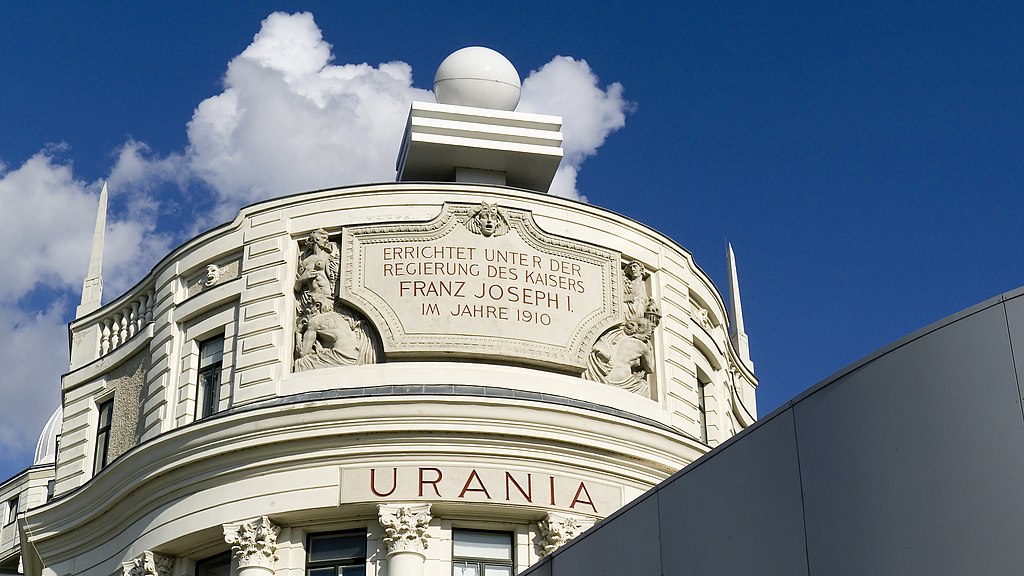
The FSR Energy Union Law Area and the Energy Community Secretariat are pleased to announce the ninth edition of the Vienna Forum on European Energy Law. This conference has established itself as one of the leading platforms for the exchange of ideas between thought leaders and decision-makers from government, industry, EU Institutions, academia, international and non-governmental organisations, law firms, and consultancies.
The Forum will take place on Thursday, 20 April 2023 at the Wiener Urania, the oldest public observatory in Austria.
Over the course of this full-day conference, a distinguished line-up of keynote speakers and panellists will discuss the policy, legal, and regulatory issues that are most salient at this watershed moment for Europe’s energy future. These include the ongoing war in Ukraine and the European Union’s policy and legal response to this crisis. Speakers will consider the plans and prospects for the reconstruction of Ukraine and contemplate the role of energy solidarity, both within and outside the European Union’s borders. At the same time, it remains crucial to consider how the objectives of the EU’s energy supply crisis response can be achieved in synergy with those of the Union’s flagship European Green Deal policy. Issues such as State Aid and market design reforms will thus also be discussed. Delegates will leave this event with a comprehensive understanding of Europe’s most pressing energy challenges and a nuanced grasp of the measures currently being developed to address them.
A detailed programme of the Forum will be published in due course.
Don’t miss any update on our events
Sign up for free and access the latest events from our community.
More on the topic










19th Florence Air Forum | Financing Air Traffic Management: Is there a need for a new approach?
Air Traffic Management (ATM) is a set of services which every State must provide for the safe and efficient operation of air traffic. Today, it is almost entirely financed by user fees according to the “user pays” principle. Until today, the “user” has always been assumed to be the airspace user, normally an airline. This system comes under pressure today: current Single European Sky (SES) regulation is built on the assumption that air traffic in Europe continuously increases. Thus, the financing of ATM would be secured by increasing revenue due to higher traffic volumes.
Technological progress and efficiency gains should lead to reduced cost and lower environmental footprint of aviation while increasing safety and capacity. Two crises – the financial and banking crisis of 2008 and more recently the COVID-19 pandemic – show that the assumptions of this regulatory framework are wrong. Additionally, there is the question of who the actual “users” are. Does ATM only serve paying airlines, or are there some services which are provided in the public interest?
Turning the wheel back and promoting a full cost recovery financing model would be contrary to the logic of regulating monopolistic infrastructure providers. But it is a fact that recent events raise the question as to whether the current financing model, which is ultimately market based, is still adequate.
With the pressure to increase the efficiency of the SES for environmental reasons, one may wonder whether some baseline public financing for the critical infrastructure portion of the ATM – which could be different from country to country – could not mean a step towards a better charging scheme and therefore a step towards the leading ideas behind the SES and the European Green Deal.
In light of the above, the 19th Florence Air Forum will be answering the following questions:
- What have we learnt from COVID-19 about ATM financing? Is there a threshold below which ANSPs can be financially supported?
- How are ATM services to actors delivering services in the general interest being financed? How are these financed in other network industries?
- Could part of ATM be financed publicly and if so under what conditions?
- Is there a need for a change in approach?
This would lead to four sessions spread over two days (27th and 28th March 2023), which should be preceded by an introduction about the shortcomings of current financing. In a concluding session we could design the way forward.
Please kindly note that participation at this Forum is by invitation only.
PRESENTATION SLIDES
Matthias Finger – FSR Transport
Alexander Holzrichter – Lufthansa Group
Denis Bouvier – SES Performance Review Body
Patricia Nieto Valiente – ESA, Spain
Kalliopi Lykou – Hellenic Civil Aviation Authority
Arndt Schoenemann – DFS Deutsche Flugsicherung
Achim Baumann – Airlines for Europe – A4E
Eric De Vries – Dutch Ministry of Infrastructure and Water Management
Don’t miss any update on our events
Sign up for free and access the latest events from our community.