




Archives: Events
EU getting rid of Russian energy addiction? When? How?

A Bruegel – Florence School of Regulation common initiative
The terrifying invasion of Ukraine will destroy existing relations between the EU and Russia for decades. Since Russia is the EU main supplier of oil, natural gas and coal, the EU has to redefine its energy future, starting from today.
However, we still need to discover how the EU will enter this new world. And the best way to do that is presumably to meet and to discuss it altogether.
It is what Bruegel, a leading Think-Tank in Brussels, and Florence School of Regulation, a Higher Education Centre, will do on Wednesday 24 March at 1:00 pm – 2.45 pm CET.
The first session of the event will explore European life without Russian energy. How will it come? What are the likely main consequences of getting rid of Russian energy?
We will do that with Georg Zachmann (Bruegel), answering to the question “Can the EU make it without Russian oil, gas and coal?”; and with Jean Pisani-Ferry (both Bruegel & EUI), answering the question “Can the EU manage first an ‘oil shock’ by stopping using of Russian energy, and then go straight to an accelerated “Macro Green Shock” to get rid of fossil energy?”
The second session will look at the reactions of European people and countries: will they be bolder, even hardliners?
We will do that with Alex Stubb, former Finnish PM (STG at EUI), answering to the question “Can Finland and other Nordics push a “hard-line” policy of European Security: a kind of Russian oil & gas ban or phasing out, plus acceleration of energy transition, plus acceleration of European defence build-up?”; and with Andris Piebalgs, former Latvian minister & EU Commissioner (FSR at EUI), answering the question “Can the Baltic & Eastern EU countries push a “hard-line” policy of European Security: a kind of Russian oil & gas ban or phasing out, plus acceleration of energy transition, plus acceleration of European defence build-up?”
Agenda of the event
First session: Without Russian gas?
Moderator: Ilaria Conti (FSR, EUI)
- Can the EU make it without Russian gas oil and coal? Georg Zachmann (Brueghel)
- Can the EU manage first an “oil shock” with Russian gas, and then go straight to an accelerated “Macro Green Shock” to get rid of this gas? Jean Pisani-Ferry (Brueghel; RSCAS, EUI)
- Q&A
Second session: Against Russian gas?
Moderator: Jean-Michel Glachant (FSR, EUI)
- Can Finland and other Nordics push a “hard-line” policy of European Security: Kind of Russian oil, gas and coal ban or phasing out, plus acceleration of energy transition, plus the acceleration of European defence? Alex Stubb (STG, EUI) TBC
- Can the Baltic & Eastern EU countries push a “hard-line” policy of European Security: Kind of Russian oil, gas and coal ban or phasing out, plus the acceleration of energy transition, plus the acceleration of European defence? Andris Piebalgs (FSR, EUI)
- Q&A
Read more
Preparing for the first winter without Russian gas | Bruegel
Don’t miss any update on our events
Sign up for free and access the latest events from our community.
Speakers
More on the topic




Linking Emissions Trading Systems: research insights from LIFE DICET

In the context of the Paris Climate Agreement, there is today a strong need for enhanced international cooperation fostering emissions trading around the world. Based on the research of the project called LIFE DICET – Deepening International Cooperation for Emissions Trading, this webinar will provide a better understanding of the regulation of carbon markets and the implications for their possible integration. It will take place on 7 April from 12.00 to 13.00 CEST.
WATCH THE RECORDING:
The webinar “Linking Emissions Trading Systems: research insights from LIFE DICET” aims at summarising the Carbon Market Policy Dialogue about the relevance and challenges of linking emissions trading systems (ETSs). Building upon the Online Training, the objective of this webinar is to translate the research of the project LIFE DICET – Deepening international cooperation on emissions trading – into learning and to bring it to a much wider audience.
Special attention is devoted to the six ETSs represented in the Carbon Market Policy Dialogue (those of California, Quebec, EU, Switzerland, China and New Zealand) and to the topics of research “Emissions trading systems with different measures for carbon leakage prevention: implications for linking” (topic 3) and “ETS Alignment: possible reforms for carbon market integration” (topic 5).
A brief summary of the past and current research will be presented by the lead researchers, then, the floor will be open for questions.
12.00-12.05: Welcome by Simone BORGHESI, Director of FSR Climate and LIFE DICET.
12.05-12.40: Presentations
- “ETSs with different measures for carbon leakage prevention: implications for linking” by Stefano F. VERDE, Assistant Professor at the University of Siena
- “ETS Alignment: possible reforms for carbon market integration” by Baran DODA, Head of Programme Carbon Markets and Pricing at adelphi, Senior Project Manager at the International Carbon Action Partnership and External Collaborator of LIFE DICET
12.40-13.00: Questions and answers
Check out the resources and publications of LIFE DICET here.
LIFE DICET is a project co-financed by the EU LIFE Programme of the European Commission.
Don’t miss any update on our events
Sign up for free and access the latest events from our community.





Decentralised resources and flexibility – Policy Workshop

FSR Regulatory Policy Workshop Series 2022
The European Union has committed to double the share of renewables in final electricity consumption over the next ten years, from 34% in 2020 to 65-70% in 2030. In this way, the electricity sector will continue to contribute more than proportionally to the overall renewables penetration target of 40% of final energy consumption in 2030 and the decarbonisation goal of reducing greenhouse gas emissions by 55% by the same date.
A large part of the new renewable-based generation – including solar PV and wind – will be characterised by a higher variability (and somewhat lower predictability) of its output compared to conventional generation. Therefore, in order to accommodate the increased penetration of renewables, the electricity system would need to increase its flexibility, i.e. its ability to withstand and respond to sudden and unexpected changes in residual demand (the difference between total demand and the part of it served by renewables-based generation).
Fortunately, technological development – e.g. in batteries, electric vehicles and smarter appliances – provides new resources which can offer flexibility to the system. The increase digitalisation of the energy sector and of contiguous sectors provides the opportunity to harness this flexibility to the benefit of the electricity system. The new resources – generally referred to as Distributed Energy Resources (DERs) – are typically smaller and more decentralised than those, mainly generating plants, which have so far provided most of the flexibility in the electricity system. This poses challenges, but also provides opportunities, e.g. to develop local flexibility markets helping distribution grids to manage local congestion.
Beyond technological advances, a conducive regulatory system and market design is necessary to allow DERs to enter the market to offer their flexibility. In fact, many of the current rules relevant for the connection and participation of these smaller, more decentralised DERs were developed with larger generating units as a reference and might need to be adapted to the characteristics of DERs.
Currently, the participation of DERs in electricity balancing markets, whether individually or aggregated, is still rather limited[1]. It is however now widely accepted that new approaches to system operation and the sourcing of ancillary services[2] from DERs[3] are now needed. As DERs are in general relatively flexible, i.e. being able to adjust the volumes of electricity withdraw from or injected into the grid at short notice, they are considered very suitable to provide all types of system services.
in developing an enabling regulatory environment for the participation of DERs in balancing and ancillary services markets, a number of aspects should be considered, including:
- the definition of market requirements – e.g. minimum bid size and formats, DER observability – which recognise the characteristics of DERs
- whether the current organisation of the balancing mechanism is suitable for accommodating the participation of DERs or whether the effective interaction of DERs requires a re-organisation of the balancing system;
- the identification of the most effective flexibility aggregation model;
- issues related to data interface and portability.
Against this background, this Workshop on decentralised resources and flexibility will aim at identifying which aspects of the current organisational, regulatory and market design frameworks will need to be adapted to enable the increasing penetration of DERs.
For this purpose, the Workshop will be structured in two sessions:
- Session I will aim at identifying which aspects in the current regulatory and market design (especially in relation to balancing and reserve markets) would need to be adapted to enable the participation of DERs;
- Session II will consider which new market structures would be required fully to exploit and support the participation of DERs in the most efficient manner and which organisational model might best serve these developments.
A recent report produced by the Florence School of Regulation on “Distributed Energy Resources and electricity balancing: visions for a future organisation” will be presented at the Workshop and its conclusions discussed.
Sustainability assessment
The FSR assesses the sustainability and carbon footprint of all its Workshops of the Regulatory Policy Series. This Workshop is run online due to the COVID-19-related restrictions. Therefore, there is no travel involved and the Workshop’s carbon footprint is limited to the impact of using ICT. It is considered that there are no viable ways further to reduce the carbon footprint of the Workshop.
Please note that this event ‘Decentralised resources and flexibility – Policy Workshop’ is exclusively open to National Regulatory Authorities, delegates from public institutions and FSR Energy Donor companies. For further information, please contact Elena Iorio.
Read more
Read more about the previous Policy Workshop of this series ‘Electricity prices and market design‘.
Technical report: Distributed energy resources and electricity balancing
[1] Recent overviews per Member State of the European Union (EU) can be found in The smartEn Map 2020 – PROSUMERS – smartEn.
[2] Article 2(48) of Directive (EU) 2019/944 defines ‘ancillary services’ as a range of functions which system operators contract to guarantee system security. Ancillary services include balancing, but also various other services, such as reactive power provision and black-start capability, but not redispatch.
[3] See, for example, CEDEC, E.DSO, ENTSO-E, Eurelectric, GEODE, 2021. Roadmap on the Evolution of the Regulatory Framework for Distributed Flexibility. A joint report by ENTSO-E and the European Associations representing DSOs (CEDEC, E.DSO, Eurelectric, GEODE), June 2021.
Don’t miss any update on our events
Sign up for free and access the latest events from our community.

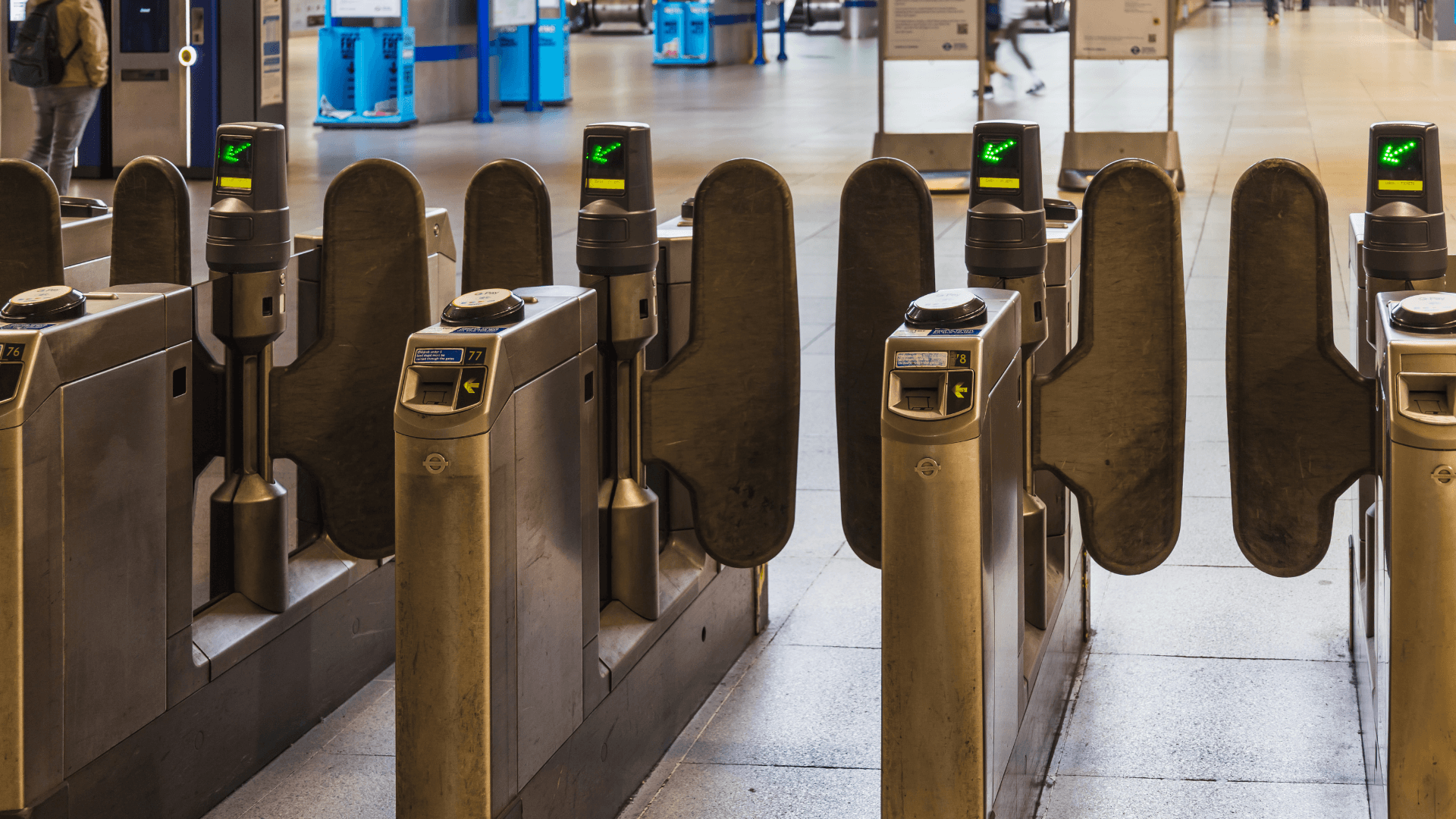
9th Florence Intermodal Forum | Towards EU-wide Intermodal Ticketing

Starting from 2018 ‘Year of Multimodality’, the European Commission has put together a number of legislative and policy initiatives relating to better infrastructure, connections, incentives and digital solutions, with a view to promoting the shift towards a fully integrated, multimodal and sustainable transport sector.
However, at the moment there is only regulation, Delegated Regulation (EU) 2017/1926 on EU-wide multimodal travel information services, which establishes the necessary specifications to ensure that multimodal travel information services are accurate and available across borders to users. It supports the development of multimodal travel information services by mandating the accessibility and the possibility to exchange and reuse static travel and traffic information data, if they exist in digital machine-readable format, on National Access Points. Services facilitating payment and booking of mobility products are not part of this regulation. To help both passengers and/or other intermediaries compare different travel options, choices and prices, and to facilitate the sale and re-sale of mobility products from different operators, whether they are private or public, within one mode or across modes, the European Commission is preparing a new initiative on Multimodal digital mobility services (MDMS), which is to be presented by the end of 2022.
At the moment, MDMS are deployed in a fragmented manner, lacking proper legal and market frameworks to develop more successfully and to provide a full range of offers across the EU.
Many issues remain, such as difficult co-operation between mobility operators and multimodal digital mobility services; complex and lengthy negotiations to obtain licences and distribution agreements; the lack of common standards and interfaces; and the lack of solutions concerning revenue sharing. In some cases, those distribution agreements between operators (both public and private) and digital service providers are unbalanced, due to inequality of bargaining power in favour of incumbent operators. The recently introduced obligation for rail carriers[1] to provide to ticket vendors real-time travel information and access to the operation of reservation systems is only a first step in the right direction which needs to be further developed in the multimodal area.
In the rail sector, with its specific network structure which sometimes makes the use of multiple operators necessary, the limited uptake of fair and transparent underlying private agreements between operators on journey continuation is a barrier for ensuring a smooth passengers’ experience when combined journeys are sold, because passengers may not be offered any appropriate solution on how to reach their final destination in case of travel disruptions. Such agreements enable companies to ensure that passengers who miss a connection due to the late arrival of a previous train can be carried on a later train, reducing the risk to be stranded and making rail more attractive for a wider range of travellers. On the other hand, through-tickets, which ensure comprehensive passengers’ protection (including the journey continuation), are not often offered on the market. It remains to be seen to which extent the offer of through-tickets would increase based on the new obligation[2] that all international, long-distance domestic and regional services of rail carriers, which qualify as “sole undertakings”, shall be offered as through-tickets.
As a result, the full societal, economic and environmental benefits from enhanced multimodality and the use of the most sustainable transport modes are not achieved. Some current practices also risk limiting competition among transport service providers by restricting access to customers and the development of a healthy market for transport services[3].
The forum gathers European – and national- regulators, public transport operators, industry representatives and academics for a discussion on the challenges and enablers to delivering an EU wide multimodal ticketing, and particularly the Multimodal digital mobility services. More specifically, forum participants will tackle the following issues: interoperability, access to data, through-ticketing/journey continuation, and passenger rights.
Please note that participation in this forum is by invitation only.
__________________________________________________________________________________________
[1] Article 10 of the new Rail Passenger Rights Regulation 2021/782
[2] Article 12 of the new Rail Passenger Rights Regulation (EU) 2021/782
[3] https://ec.europa.eu/info/law/better-regulation/have-your-say/initiatives/13133-Multimodal-Digital-Mobility-Services_en
SPEAKERS’ PRESENTATION SLIDES:
Juan Montero – Florence School of Regulation Transport Area
Christopher Queree – Querée Consulting
Ghislain Delabie – La Fabrique des Mobilités
Juan Jesús García – Amadeus IT
Francis Sykes – RATP Smart Systems
Pauline Aymonier -TIER Mobility
Vittorio Carta – Deutsche Bahn
Norman Schadler – Agency for Passenger Rights, Austria
Don’t miss any update on our events
Sign up for free and access the latest events from our community.


Electricity sector reforms in China

The new episode of the FSR Insights series will focus on electricity sector reforms in China.
The electricity sector in China has passed through several reforms in the last half-century. In the mid-1980s, the first major reform introduced new ways of purchasing electricity as means of lowering entry barriers and expanding the industry. The second major reform in the late 1990s aimed at the corporatization of state-owned companies to act as market players and respond to market signals. The third major reform in 2003 imposed the unbundling of a single giant vertically-integrated company into pieces composed of independent generators, transmission, distribution, and retail companies.
Nowadays, the electricity sector in China is facing the need for a fourth major reform, which should conciliate the continued need for expansion of generation to respond to the still-growing demand with the pressure to accomplish the policy targets of carbon neutrality in 2060.
The FSR Insight will host Professor Furong Li, University of Bath, and Professor Xu Yi-chong, University of Griffith, to revisit the past reforms in the Chinese electricity sector and unwrapped the key challenges for the future. What are the main policy drivers for the electricity sector reforms in China? What has already been achieved, and what are the latest policy developments? What are the main technologies that are being deployed in this growing electricity system? Who are the main actors in the value chain? What are the ambitions to cooperate with other countries? What can we learn from this experience?
Hosts:
Leonardo Meeus, FSR
Lucila de Almeida, FSR
Speakers:
Furong Li, University of Bath
Xu Yi-chong , University of Griffith
Discussants:
Daniele Stampatori, FSR
Sofia Nicolai, FSR
Before joining the events, watch our pills!
Prof. Xu Yi-Chong on Electricity in China:
Prof. Furong Li on China’s power sector reforms:
#FSRInsights
The new season of the FSR Insights will feature world-class academics from the energy field, as well as the FSR research team members in the role of discussants, to investigate timely energy topics and future scenarios.
Don’t miss any update on our events
Sign up for free and access the latest events from our community.
Speakers









18th Florence Air Forum | Towards Resilient and Sustainable Aviation: Implications for Competition and Competitiveness

The COVID-19 pandemic has almost forced the aviation industry to a halt in 2020, at least when it comes to the provision of passenger services: the number of active routes, as well as frequencies were substantially reduced while passenger volumes drastically declined. The impact of COVID-19 on aviation continues to be felt today, as the industry faces an uncertain recovery outlook. While EUROCONTROL forecasts 2022 traffic to recover to 70-90% of 2019 levels, the evolving pandemic has seen traffic fall away from its optimistic forecast to converge increasingly on the baseline forecast.
The Commission adopted several emergency measures to support the aviation sector during the pandemic. First, as confirmed by the discussions of the 17th Florence Air Forum, since the beginning of the COVID-19 pandemic, the Commission has enabled Member States to use the full flexibility provided under State aid rules to support the aviation industry. In particular, the Commission adopted a temporary framework for State aid rules in 2020, in force until 2022. Thanks to the massive State support approved by the Commission, the aviation ecosystem was thus able to stay afloat. However, this massive State support has also been asymmetric, as certain Member States have granted much higher amounts of aid than others.
This impact of COVID-19 on the competitive landscape in which aviation actors are operating must also be placed against the background of the decarbonisation imperative, as well as in the context of pervasive digitalisation. The combination of all these forces will inevitably result in a post-COVID-19 aviation industry that is significantly different from the one we know today. Consequently, competition law rules and the regulatory environment may have to be adapted to the new circumstances in the industry, and the different instruments (i.e., State aid, mergers, antitrust and the general EU regulatory framework for aviation) will have to be applied in accordance with the new reality. Building upon the discussions of the 17th Florence Air Forum, which centred on the short- and mid-term implications of the pandemic, the 18th Florence Air Forum will take a longer-term perspective in discussing the industry’s resilience and sustainability from both a regulatory and competition law perspective.
The Forum will be kick-started by a presentation of the main findings of the study commissioned by the Commission to assess the structural changes in the aviation market, including those pertaining to connectivity, pricing, competitiveness, as well as the changes to business models and travel demand, among others. Stakeholders will have the opportunity to react to the freshly presented findings while debating the questions: What are the structural changes in the market? What has been the impact of the COVID-19 outbreak on operators’ financial status and resilience? How long would it take them to recover? The Forum will also investigate how the pandemic has affected the provision of connectivity (e.g., more destinations but less frequency), ticket prices, travel habits and inter-modality, but also the implications on the competitive structure of different airlines, as well as on the relationships between airlines and airports. The findings of this analytical session will then inform the discussions in the subsequent sessions.
The second session will aim to draw lessons from the crisis. It will be dedicated to the various emergency measures adopted by the Commission including legislative (e.g., Airport Slots, Air Services Regulation, Ground Handling Directive) but also other non-legislative measures (e.g., Guidelines on State aid and emergency Public Service Obligations, Temporary Framework for State aid rules). In the context of State aid support, the Forum will discuss the effectiveness of the flexible rules introduced by the Commission, the limitations of existing State aid instruments, and not least, the issue of aid disparities (i.e., airlines vs. airports, and legacy carriers vs. low cost carriers). Participants will discuss the main challenges identified, including possible ways to address them in any next crisis, be it within the competition law or regulatory framework.
In a third session, the Forum will discuss possible ways of improving the resilience of the aviation sector, so as to reduce the amount of State support needed for airlines and airports during the next crisis, whatever shape it may take. For example, what could be the prudential and capital requirements for both airlines and airports to this end? How can the rules on slots, airport charges or ground-handling be improved to ensure that they are crisis-proof?
Last but not least, this Forum will tackle the timely topic of the aviation sector’s decarbonisation against the backdrop of the Fit for 55 Package. How to strike the right balance between advancing EU greening objectives and securing the competitiveness of EU airlines and airports? What is the role of regulation and/or State aid? How can we render airport acquis greener? Where can the financing come from? What role is there for multimodality (e.g., short haul bans, shift to rail, combination of air and rail)?
Please note that participation in this forum is by invitation only.
SPEAKERS’ SLIDES
Juan Montero – Florence School of Regulation Transport Area
Ernst-Jan Heuten – Netherlands Authority for Consumers and Markets
Don’t miss any update on our events
Sign up for free and access the latest events from our community.
Are decarbonisation and the energy crisis challenging the electricity markets design?

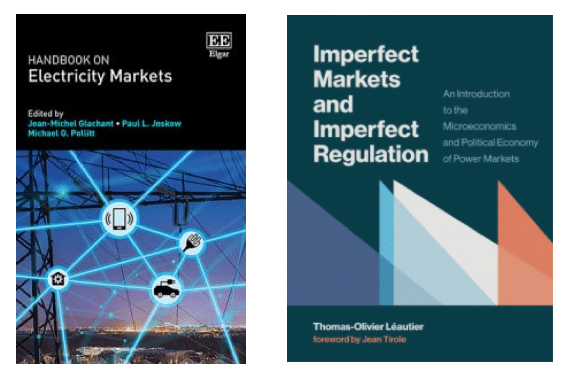
Energy economists have supported the establishment of open markets for electricity for more than 30 years. They are aware that electricity is a commodity with very specific features and do not deny that concrete examples of electricity markets in Europe, North America and elsewhere are hardly perfect. Yet, they have investigated their imperfections and proposed solutions to deal with them over the years. Books like “Imperfect Markets and Imperfect Regulation” by Thomas-Olivier Léautier provide a comprehensive treatment of this vision, according to which electricity can be supplied reliably and efficiently by competing energy firms.
Today, the rapid penetration of variable and distributed renewable energy sources in the generation mix, the policy goal of reaching net-zero greenhouse gas emissions by 2050, and the recent explosion of energy prices at the wholesale and retail level challenge the validity of this vision and some people call for a profound rethinking of how electricity is provided.
In this episode of FSR Talk, professor Jean-Michel Glachant will host Thomas-Olivier Léautier and discuss the fundamentals of open markets for electricity and whether significant changes are needed to cope with the profound transformations that the sector is experiencing. Swetha RaviKumar Bhagwat and Nicolò Rossetto, both researchers at FSR, will join the discussion and pose questions to the guest speaker before the floor is open for a Q&A session with the audience.
Watch the recording:
Dr Léautier has a long and remarkable career in the energy sector, both within the industry and academia. After an experience as a professor at the Toulouse School of Economics, Thomas-Olivier was chief economist and director of the corporate university for management at EDF, the leading French electric utility. More recently, he joined TotalEnergies as chief economist. TotalEnergies is one of the largest European energy companies with a long tradition in the oil and gas sector, now willing to turn into a major renewable energy producer.
On the Talk topic, Thomas-Olivier has written several articles in scientific journals, a textbook published by MIT Press in 2019, and co-authored one of the chapters of the Handbook on Electricity Markets published by Edward Elgar in fall 2021.
Agenda:
- Introduction and initial speech by the guest speaker: Jean-Michel Glachant (5’) and Thomas-Olivier Lèautier (15’)
- Discussion with Swetha RaviKumar Bhagwat and Nicolò Rossetto (15’)
- Q&A with the audience (25’)
Host: Jean-Michel Glachant
Invited guest: Thomas-Olivier Léautier
Discussants: Swetha RaviKumar Bhagwat, Nicolò Rossetto
Learn more:
Executive Course to master Electricity Markets – FSR online training
Imperfect Markets and Imperfect Regulation by Thomas-Olivier Léautier
Handbook on Electricity Markets ed. by J.M. Glachant, P. Joskow, M. G. Pollitt
Don’t miss any update on our events
Sign up for free and access the latest events from our community.
Transport recovery: which role for railways?

Thanks to the European Union’s stimulus package and the Recovery and Resilience Facility, overall recovery from the COVID-19 pandemic is well under way. As the transport sector was particularly suffering, it subsequently needs comparatively more support than other sectors. Such support constitutes a unique opportunity to accelerate its much-needed transition to decarbonisation, a process that will rely on increasing the transport sector’s level of digitalisation. Among all modes of transport, it appears to be best positioned to deliver on the EU’s decarbonisation objectives, especially because it can facilitate the modal shift from road and short-haul air transport.
The objective of this panel titled “Transport Recovery: Which Role for Railways?“, hosted by FSR Transport in the framework of the European University Institute’s annual flagship conference The State of the Union (SOU), is to discuss how the stimulus package can accelerate the decarbonisation of transport with railways playing a central role in the process.
The 12th edition of The State of the Union will be held from 5 to 7 May 2022 and will focus on the future of the European Union.
Titled “A Europe Fit for the Next Generation?“, the conference will take place in a hybrid format. Attendees from around the world will connect through an online platform, with a select group participating live in Florence.
Two years from the start of the COVID-19 pandemic, the EU’s importance in shaping a better future has never been clearer. The State of the Union is a platform for experts and civil society members from all over the world to debate urgent crises. This year’s edition of the EU’s annual policy conference will focus on the European Union’s role in a constantly evolving global landscape. Leaders and Experts from all over the world will deal with issues ranging from multilateral governance to sustainability and resilience, democracy and the rule of law, to the developments in attitudes to migration, the future of digitalisation, and how crisis can fuel change. Prominent speakers will discuss how the Next Generation EU recovery plan can address the damage inflicted by the pandemic. Looking beyond Europe, the conference will feature panels on the future of transatlantic relations and Africa’s emerging role on the global stage.
Organised by the European University Institute, #SOU2022 will once again represent a unique opportunity for the worlds of academia, policymaking, business, media, and civil society to come together and come up with constructive proposals for a more effective EU action.
Don’t miss any update on our events
Sign up for free and access the latest events from our community.
Speakers
The revision of the Energy Taxation Directive

What will be the impact on GHG reduction and on industry and consumers?
Discussion with the Director-General of DG Taxud Gerassimos Thomas
Watch the recording:
The Commission has proposed a complete and highly ambitious overhaul of the Energy Taxation Directive.
The proposal, if accepted, would extend the scope of the Directive, requiring, for example, taxation of fuel for maritime and aviation would increase minimum tax levels, and would introduce a taxation system based on fuel categories focused on GHG levels.
Director-General Thomas will provide an overview of the proposal, how he sees the procedure progressing (it requires unanimous Council agreement), and what will be the consequences for business and citizens.
Programme
Introduction by the hosts
Intervention by Gerassimos Thomas, Director-General DG TAXUD
Discussion with Christopher Jones, Ilaria Conti, Andris Piebalgs, Florence School of Regulation
Q&A
Conclusions
#FSRDebates
Don’t miss any update on our events
Sign up for free and access the latest events from our community.
More on the topic
Electricity prices and market design – Policy Workshop

FSR Regulatory Policy Workshop Series 2022
The surge in electricity prices over the last few months have led to calls by different stakeholders, including some national governments, to introduce changes in the electricity market design. For example, on 5 October 2021, the governments of Spain, France, the Czech Republic, Romania and Greece issued a common statement calling for a reform of the day-ahead electricity market, which would need to be improved “to better establish a link between the price paid by the consumers, and the average production cost of electricity in national production mixes. This is all the more important as decarbonisation will increase the use of electricity in our economy”.
Following this call, a number of ‘non-papers’ were released in November 2021 proposing a variety of measures. For example:
- In a ‘Non-paper on energy and electricity & gas markets’[1], it is argued that urgent action is needed to ensure that “final consumers pay electricity prices that reflect the costs of the generation mix used to serve their consumption” and that this could be achieved through “mechanisms based on financial transfers between producers and consumers, [which] would have no effect on the functioning of the wholesale market, nor affect the merit order of the different generation plants mobilised in the energy market on an hourly basis”.
- In a ‘Non-paper on electricity, gas and ETS markets’, after indicating that “a common European approach is our preference for the whole European energy internal market”, it is suggested that “in exceptional situations, Member States have to be allowed to adapt the electricity price formation to their specific situations (mix, resources, level of interconnections)” and therefore it is proposed that consideration be given to reforming the electricity market design so that “the electricity price would be obtained as an average price with reference as well to the cost of ‘inframarginal’ clean technologies (particularly renewables)”.
These are just examples of the kind of (often contradictory) proposals that have been floating around in recent months. In the first non-paper quoted above, financial transfers are advocated which “would have no effect on the functioning of the wholesale market, nor affect the merit order of the different generation plants mobilised in the energy market on an hourly basis”. In the second non-paper, it is proposed that Member States “be allowed to adapt the electricity price formation to their specific situations” so that “the electricity price would be obtained as an average price with reference as well to the cost of ‘inframarginal’ clean technologies (particularly renewables)”.
To tackle rising energy prices, while preventing damage to the internal energy market from uncoordinated national actions, in October 2021 the European Commission proposed a ‘toolbox for action and support’[2], which outlined a set of measures which the Commission itself and the Member States could adopt to deal with the current high-price situation. Many of these measures are aimed at mitigating the impact of higher energy prices on industry, businesses and households, especially vulnerable ones. However, and interestingly, the Commission also expressed its intention of “task[ing] ACER to study the benefits and drawbacks of the existing electricity market design and propose recommendations for assessment by the Commission by April 2022”[3].
In fact, some of the proposals floated in the debate in recent months, including one of those above, could be interpreted as calling for the ‘pay-as-cleared’ pricing approach in the DAM to be abandoned in favour of some version of the ‘pay-as-bid’ method[4].
This is also the interpretation followed by ACER, which, intervening in this debate with a note in October 2021, indicated that: “any future market design needs to be able to (a) remunerate technologies above their marginal costs, sometimes quite significantly so, and (b) incentivise the alleviation or smoothing of volatility in the market. The ‘pay-as-clear’ model allows for both of these elements”[5].
However, there is a sense that there might be more in the proposals recently voiced than a switch from the ‘pay-as-cleared’ to the ‘pay-as-bid’ remuneration method, which is not a new issue and has been already resolved, in favour of “pay-as-cleared” pricing approach, many times in the past[6].
Against this background, and without trying to pre-empt the assessment being conducted by ACER, but rather possibly contributing to it, the Workshop will aim at digging deeper in the proposals recently floated and discussed by many stakeholders to assess whether and which other measures related to the electricity market design, beyond the pricing mechanism, could and should be considered to deal with the much higher electricity prices now and, most likely, in the forthcoming energy transition.
For this purpose, the Workshop will be structured in two sessions:
- Session I will aim at identifying the scope and details of the proposals on market design enhancements which have been put on the table over the last few months;
- Session II will consider these proposals and assess the extent to which (some features of) the current electricity market design could be enhanced or complemented to support the future energy transition.
Sustainability assessment
The FSR assesses the sustainability and carbon footprint of all its Workshops of the Regulatory Policy Series. This Workshop is run online due to the COVID-19-related restrictions. Therefore, there is no travel involved and the Workshop’s carbon footprint is limited to the impact of using ICT. It is considered that there are no viable ways further to reduce the carbon footprint of the Workshop.
Please note that this event is by invitation only. For further information, please contact Elena Iorio.
[1] Non-paper by the Spanish, French, Italian, Romanian and Greek governments.
[2] Communication from the Commission to the European Parliament, the European Council, the Council, the European Economic and Social Committee and the Committee of the Regions, Tackling rising energy prices: a toolbox for action and support, Brussels 13.10.2021, COM(2021) 660 final.
[3] Ibid, Section 3.2.1, page 15.
[4] It seems that this is the way in which ACER also interpreted at least some of the proposals voiced in the last few months. It addresses the ‘pay-as-bid’ vs. ‘pay-as-cleared’ debate in its Preliminary Assessment of Europe’s high energy prices and the current wholesale electricity market design, Part 1, November 2021, Section 4.3.
[5] ACER, High Energy Prices, October 2021, page 12.
[6] Cfr., among many, Susan Tierney, Todd Schatzki and Rana Mukerji, “Pay-as-Bid vs. Uniform Pricing: Discriminatory Auctions Promote Strategic Bidding and Market Manipulation,” Public Utility Fortnightly, March 2008.
Don’t miss any update on our events
Sign up for free and access the latest events from our community.

Lessons from Energy Policy Failures: ensuring energy justice and the good governance by indicators
In the FSR Insights of 16 of February, the editors Raphael J. Heffron and Maciej M. Sokołowski will join Lucila de Almeida, one of our hosts and contributor of the special issue, to discuss some of the papers that will be published in the Energy Policy. Especially, they will discuss academic articles covering two aspects: the failure of policymakers to ensure energy justice, and the pitfalls of indicators based on the case study of the EU’s Retail Electricity Market Barrier Index.
Watch:
#FSRInsights pills:
M. Sokolowski on Energy Policy Failures
Lucila de Almeida on Governance by Indicators
Raphael Heffron on Energy Justice
Energy policies always have an impact on society, the climate, the economy, and international relations. Nevertheless, they are not immune to failures and, when they do, policymakers and regulators can learn from these experiences. How will we identify failure in energy policy? What makes their failure? Could they be saved? What did not work? How to correct them? Above all, what are the lessons we can take from them?
These are just some of the matters which Guest Editors – Raphael J. Heffron and Maciej M. Sokołowski – raise in the Special Issue of the Energy Policy: “When Energy Policy Fails: Impacts, Recovery & Managing Risk”. The Special Issue offers insightful analyses on collapsed incentives, lost projects, mistakes, wrong paths, bad decisions, and lessons from the past based on policy failures in energy policymaking. In this context, it offers a global view of energy policy failure with contributions from across the world.
Speakers
Raphael J. Heffron (Faculty of Law, University of the West Indies, St. Augustine, Trinidad and Tobago)
Maciej M. Sokołowski (Faculty of Law and Administration, University of Warsaw, Poland Institute of Comparative Law, Meiji University, Tokyo, Japan)
Lucila de Almeida (FSR, Wageningen University & Research, Netherlands)
Hosts
Leonardo Meeus (FSR and Vlerick Business School, Belgium)
Lucila de Almeida (FSR & Wageningen University and Research, Netherlands)
Discussant
Maria Dolores Sanchez Galera (Universidad Carlos III de Madrid)
Links
Energy Policy Special issue: When Energy Policy Fails: Impacts, Recovery & Managing Risk
Maciej M. Sokołowski & Raphael J. Heffron, Defining and conceptualising energy policy failure: The when, where, why, and how
Lucila de Almeida, Fabrizio Esposito, and Josephine van Zeben, When Indicators Fail Energy Policies: Pitfalls of the EU’s Retail Electricity Market Barrier Index (to be added soon in the link above)
Raphael J. Heffron (2022). Applying Energy Justice into the Energy Transition. Renewable and Sustainable Energy Reviews.
Don’t miss any update on our events
Sign up for free and access the latest events from our community.
How to maximise cost-effectiveness in the energy transition?

A presentation and discussion on the latest FSR study on the cost-effectiveness of decarbonisation efforts.
Christopher Jones and James Kneebone of the Florence School of Regulation (FSR) will be joined by Ilaria Conti, Head of FSR Gas for a discussion on cost-effective decarbonisation of the energy sector, with a focus on the recently published ‘Florence School of Regulation: Cost-effective decarbonisation study 2022’.
This study, which represents a short follow-up to the original and more comprehensive cost effectiveness study, aims to take stock and frame developments in the past months in the context of EU energy policy, and to reassert some of the key messages from the 2020 publication that remain relevant. The key areas of focus for the study are on renewable energy metrics (capacity and cost), hydrogen costs (green, turquoise, blue), as well as the influence of market factors on cost-effectiveness of gas switching, namely the European carbon price (ETS).
The event will also elaborate on some of the policy-related conclusions that can be drawn from the findings, in the context of recent legislative developments in this area. A Q&A with the audience will follow.
Read more
Policy implications of 2022 Cost-effective Decarbonisation Study
Don’t miss any update on our events
Sign up for free and access the latest events from our community.
Speakers
More on the topic