




Archives: Events
Electricity retail market liberalisation: 15 years on

This Debate takes stock of the current situation of the electricity retail market in Europe and discusses the future role of electricity retailers, as digitalisation and decarbonisation of the industry advance.
Watch the recording:
Liberalisation of the EU electricity retail market was completed in July 2007. However, the experience so far shows that many of the small (residential) consumers are unwilling to take advantage of the potentials provided to them by retail competition, with switching rates remaining low (at 5-6%) for many years. The reluctance by a large share of consumers to switch supplier (stickiness) gives suppliers market power; moreover, instances of unfair commercial practices undermine trust in the liberalisation process.
The recent increases in wholesale energy prices found several suppliers – including providers of regulated services – inadequately hedged and led them to, or near to, bankruptcy. Only in the UK and only in the period September – November 2021, the period with the sharpest increase in wholesale electricity prices, 24 energy suppliers, serving some 4 million customers, went out of business. Supplier insolvency could cause widespread financial instability across the entire electricity sector, and significant costs to the system.
At the same time, the Italian regulator is organizing auctions to allocate (blocks of) small consumers who have been unwilling to leave the franchise market and choose a different supplier on the free market.
Draft Programme
INTRODUCTION TO THE DEBATE AND OPENING PRESENTATIONS
14.00 – 14.05 Introduction to the Debate
Alberto Pototschnig | Florence School of Regulation
14.05 – 14.25 Recent issues with electricity retail markets
Guido Cervigni | DFC Economics
Martin Crouch| 4D Economics
PANEL DISCUSSION: INTRODUCTORY REMARKS, POLLS, AND COMMENTS
Moderated by FSR
14.25 – 14.50 Introductory remarks from the panellists
Tiziana Lo Nardo | ARERA
Natalie McCoy | ERSE
Anna Martin | BEUC
14.50 – 14.55 Polls
14.55 – 15.25 Comments on the outcome of the polls and Q&A from the audience
15.20 – 15.30 Concluding remarks
Alberto Pototschnig | Florence School of Regulation
Don’t miss any update on our events
Sign up for free and access the latest events from our community.
Speakers











Workshop on Law in the EU’s Circular Energy System: Biowaste, Biofuel and Biogas

The European Union’s Energy Strategy, part of the European Green Deal, is central to the aim of achieving a zero net emissions economy by 2050. Central to this strategy is creating a more integrated energy system, with circular energy system, energy efficiency, electrification, and decarbonization at its core. While the transition to direct heating or electrification is neither feasible nor efficient in all end-use applications, many renewable and low-carbon fuels must be used to reduce the consumption of natural gas and fossil fuels. Biofuels and biogases produced from biological waste from agriculture, food and forestry are then a short-term sustainable solution. The scenario, therefore, urges a legal framework that enables a more circular energy system.
The development of the EU’s circular energy system occurs in a complex legal landscape, covering a multi-level jurisdictional system and crossing many economic sectors. Specifically, the key sectors to this transition – agriculture, food, forestry – deal with waste in different ways. Moreover, the current environmental and sectoral regulations of these industries do not envisage and actively discourage circularity within the production process. In order to live up to the promise of a circular energy system – make use of resources that are currently discarded with a view of addressing the urgent climate and energy crises that the EU faces; improve human, animal and plant life; and allow for a more sustainable society without the need to dramatically change our lifestyle – these legal complexities need to be mapped and addressed holistically. This edited volume brings together legal and non-legal academics to develop a roadmap to the transition towards a more EU’s circular energy system.
The workshop will provide authors with the chance of presenting the first draft of their book chapters and receiving feedback from book editors and other authors. The book project is a collaboration of the Florence School of Regulation with Wageningen University and Research (Netherlands).
Organisers:
Lucila de Almeida and Josephine van Zeben
Participation:
Closed to contributors
Don’t miss any update on our events
Sign up for free and access the latest events from our community.
High energy prices and market design

EU gas and electricity prices have increased rapidly over the last few months and reached unprecedented levels. While the recent energy price dynamics reflect current market conditions and have little to do with the future energy transition, they provide an opportunity to reflect on the most appropriate market design to support this transition.
In this FSR Talk, we will discuss with the authors of the recent FSR publications on the topic:
- Recent energy price dynamics and market enhancements for the future energy transition
- High gas prices in Europe: a matter for policy intervention?
Watch:
Speakers:
Alberto Pototschnig, Deputy Director for Policy Affairs
Ilaria Conti, Head of FSR Gas
Enrico Tesio, DFC Economics
Agenda:
- Welcome and Intro to the papers: Alberto Pototschnig (10’) and Ilaria Conti (10’)
- Polls with the audience and comments by the speakers (20’)
- Q&As (15’)
#FSRTalks
Live interviews with experts from the wider network of the school to showcase and discuss a recent work (a book just published, interesting study, innovative project) in a light and interactive way.
Learn more
Don’t miss any update on our events
Sign up for free and access the latest events from our community.
Speakers
More on the topic


The Commission’s new Gas and Hydrogen Package
The Commission has tabled a comprehensive set of proposals to regulate the emerging low and zero-carbon hydrogen market, covering GOOs and certification, tariff rules, unbundling and TPA, blending, grid financing, consumer rights as well as new measures regarding gas security of supply.
The debate seeks to consider what will be the effect of the new rules in practice, how the gas and hydrogen grids will interact, and to discuss what will be the most contentious parts of the package.
Watch
Introduction Christopher Jones, FSR
Panel debate Dennis Hesseling, ACER
James Watson, Eurogas
Kees van der Leun, Common Futures
Ilaria Conti, FSR
Piotr Kuś, ENTSOG
Conclusion Augustijn Van Haasteren, European Commission
#FSRDebates
Don’t miss any update on our events
Sign up for free and access the latest events from our community.
More on the topic


Network tariffs for decarbonised and low-carbon gases
This Debate will provide an early opportunity to discuss the Commission’s proposals on tariffication for hydrogen and decarbonised and low-carbon gases, as outlined below.
Watch the recording:
In the current EU regulatory framework, electricity and gas networks are subject to regulated third-party access rules. The users of these networks have been paying for the development, maintenance and operation of their respective grids, with those withdrawing from the network typically paying a larger share of the total costs[1]. In the electricity sector, the so-called “single system paradigm” has been in place for almost twenty years. Under this approach, cross-border exchanges of electricity do not pay tariffs at the EU internal borders. The costs of the EU transmission system are therefore recovered only at the entry into and exit from this system and TSOs hosting transits are compensated through an inter-TSO compensation (ITC) mechanism. In gas, the 2009 Third Energy Package introduced the “entry-exit” system, in which gas transmission network users pay every time the gas enters or exits an entry-exit area, often corresponding to a national jurisdiction.
In its Hydrogen and Decarbonised Gas Market Package of December 2021, the European Commission proposed a specific transmission tariff framework for hydrogen and, more generally, for decarbonised and low carbon gases.
In particular, according to the ommission’s proposal, hydrogen network would have to be subject to regulated third-party access rules as from 2031, with negotiated third party access allowed until then.
Moreover:
- injections into the network from renewable and low carbon gases production facilities would benefit from a discount of up to 75% on the respective capacity-based tariffs;
- renewable and low carbon gases would benefit from a discount of up to 75% on the capacity-based transmission tariffs at entry points from and exit points to storage facilities in the Member States of first injection, unless the storage facility is connected to more than one transmission or distribution network and is used to compete with an interconnection point.
Regulatory authorities may set discount rates lower than 75%, provided that the discount is in line with the general tariff principles and in particular the principle of cost-reflectiveness, taking into account a need for stable financial frameworks for existing investments where appropriate, and the advancement of the roll-out of renewable and low-carbon gases in the concerned Member State
The Commission’s proposal also envisages that renewable and low-carbon gases would benefit from a 100% discount on the entry and exit tariffs at all interconnection points, including entry points from and exit points to third countries, as well as entry points from LNG terminals
These discounts should not affect the general tariff setting methodology, but should be provided ex-post on the relevant tariff. The revenue shortfall emerging from the granting of discounts to renewable and low-carbon gases, if above 10% of allowed revenues, shall be addressed through an inter transmission system operator compensation mechanism.
Finally, the Commission proposal envisages the possibility of cross-subsidisation of the hydrogen transmission network by gas transmission network users, by providing that Member States may allow financial transfers between separate regulated services, subject to some conditions. Such a possibility does not seem to be subject to any harmonisation requirement across the EU.
Draft Programme
Introduction to the Debate and Opening Presentations
14.00 – 14.05 Introduction to the Debate
Alberto Pototschnig | Florence School of Regulation
14.05 – 14.15 The Commission’s proposal
Feodora Petit and Benedikt Klauser | Directorate-General for Energy, European Commission
14.15 – 14.25 FSR initial considerations
Ilaria Conti | Head of Gas, FSR
Panel Discussion: Introductory Remarks, Polls and Comments
Moderator: Leigh Hancher| Florence School of Regulation
14.25 – 14.50 Introductory remarks from the panellists
Csilla Bartok | Team Leader for Gas Markets and Energy Retail, ACER
Annie Krist | Vice President, Eurogas
Claude Mangin | Market Development Manager, ENTSOG
Peter Claes | President, IFIEC Europe
14.50 – 14.55 Polls
14.55 – 15.15 Comments on the outcome of the polls and Q&A from the audience
Panellists
15.20 – 15.30 Concluding remarks
Tom Maes | CREG
Leigh Hancher | Florence School of Regulation and Tilburg University
Alberto Pototschnig | Florence School of Regulation
[1] With load paying a predominant share of electricity transmission costs (with many jurisdictions charging all transmission costs to load and the lowest share being in Sweden at 63%), while in gas the picture across the EU is more varied. [HERE RESULTS OF ACER MONITORING OF E-E%]
Don’t miss any update on our events
Sign up for free and access the latest events from our community.
Speakers



Carbon Capture, Utilisation and Storage (CCUS): still waiting for Godot?
Do we need a European Strategy for Carbon Capture, Utilisation and Storage (CCUS) and a legislative package with a form and level of ambition similar to the Hydrogen Strategy?
This FSR debate will consider the main issues related to CCUS in the light of recent policy communications, legislative initiatives, and Commission guidelines.
The permanent storage of CO2 in geological formations is an important option to mitigate industrial emissions. To reach the climate neutrality objective of the EU Climate Law, carbon removals will have to be fully integrated into the EU climate policy. To be climate neutral, in 2050 each single tonne of CO2eq allowed under the policy framework to be emitted to the atmosphere will have to be neutralized by a certified tonne of CO2 removed from the atmosphere.
The Commission recognizes that the establishment of the legal framework will be an essential stepping stone towards the recognition of carbon removals in the EU climate policy. Its recent Communication on Sustainable Carbon Cycles aims at establishing sustainable carbon cycles for bio- emissions in European economy and ecosystems. It recognizes that even if this is a long-term endeavour it nevertheless requires coordinated action now.
But are these plans sufficient and timely? Is not the more immediate challenge to establish the role of CCUS for European industry in the energy transition?
Should the Commission already step up its game and take the same level of leadership, vision and determination regarding CCS as it has regarding hydrogen, announce clear targets and deadlines, commit to developing a CCUS Alliance (similar to the hydrogen, battery alliances), and commit to new legislative proposals on CCUS to deliver a cost-effective CCS network? Will the final version of the Climate Energy and Environmental Guidelines for state aid – to be published at the end of 2021 provide clear criteria for assessing the compatibility of financial support for CCUS?
Programme
14.00 – 14.05 Introduction to the Debate
Leigh Hancher | Florence School of Regulation
14.05 – 14.15 The Commission’s approach
Chris Bolesta, Decarbonisation and Sustainability of Energy Sources, Directorate-General for Energy, European Commission
14.15 – 14.25 FSR initial considerations
Prof Christopher Jones and Prof Andris Piebalgs | FSR
PANEL DISCUSSION: INTRODUCTORY REMARKS, POLLS AND COMMENTS
Moderator: Nicolò Rossetto| Florence School of Regulation
14.25 – 14.50 Introductory remarks from the panellists:
Torbjorg Klara Fossum, VP Global CCS Solutions, Equinor ASA; Malcolm Keay, OIES, Oxford; Jonas Helseth, Director Bellona Europa, Brussels.
14.50 – 14.55 Polls
14.55 – 15.15 Comments on the poll’s outcome and Q&A from the audience and panellists
15.20 – 15.30 Concluding remarks
Leigh Hancher | Florence School of Regulation and Tilburg University
Nicolò Rossetto | Florence School of Regulation
#FSRDebates
Don’t miss any update on our events
Sign up for free and access the latest events from our community.
More on the topic


What prospects for the global carbon market after COP26?
Taking place only a few weeks after the UN Climate Conference in Glasgow (COP26), this FSR Debate will review the outcome of the conference and discuss the implications of the progress made, or lack thereof, for the development of the global carbon market.
Background
Parties to the Paris Agreement can use different instruments for trading emissions reductions at the international level through several mechanisms established by Article 6 of the Paris Agreement. Article 6.2 allows countries to develop decentralised cooperative approaches under which they could trade mitigation units, so-called Internationally Transferable Mitigation Outcomes (ITMOs), to reach their own Nationally Determined Contributions (NDCs). Article 6.4 opens the possibility to set up a new UN centralised mechanism to trade emissions reduction credits related to specific sustainable development projects. Article 6 also provides the opportunity further to account for international cooperation and integration of non-market approaches.
The development of Article 6-compatible carbon markets could allow countries to achieve net-zero targets with greater economic efficiency, increased economies of scale, and further financial cooperation. According to a recent study from the International Emissions Trading Association and the University of Maryland, the market value of financial flows between countries could potentially exceed $1 trillion per year in 2050.
The part of the Paris Agreement Rulebook meant to implement these Article 6 provisions has just been agreed at the COP26 in Glasgow. However, many questions, to be discussed in the FSR Debate, remain. What are the prospects for international carbon markets? Will this new Rulebook stimulate the possibility of moving toward a global carbon market? Or does it contain loopholes that could harm the environmental integrity of the mechanisms? What could governments do to ignite the global carbon market?
Programme
The event will be moderated by:
Simone Borghesi | Florence School of Regulation, EUI
Alberto Pototschnig | Florence School of Regulation, EUI
Introduction to the Debate and Opening Presentations
14.00 – 14.05 Introduction to the Debate
Ilaria Conti | Florence School of Regulation, EUI
14.05 – 14.15 Opening address
Martin Hession | DG Climate Action, European Commission
14.15 – 14.25 ETS Alignment: possible reforms for integration
Stefano Verde | Florence School of Regulation, EUI
Panel Discussion: Introductory Remarks, Polls and Comments
14.25 – 14.50 Introductory remarks from the panellists
Kelley Kizzier | Environmental Defense Fund
Luca Lo Re | International Energy Agency
Billy Pizer | Resources For Future
14.50 – 14.55 Polls
14.55 – 15.20 Comments on the outcome of the poll and Q&A from the audience
Panellists
15.20 – 15.30 Concluding remarks
Jos Delbeke | School of Transnational Governance, EUI
#FSRDebates
Hosts: Leigh Hancher and Alberto Pototschnig (FSR)
The focus of this series is on recent court cases, regulatory decisions, EU legislation, or public consultations to be discussed by a panel of experts.
This event will be live-streamed and recorded. Highlights and presentations will be made available online.
This event is organised under the framework of the LIFE DICET project co-financed by the EU LIFE Programme of the European Commission.
Don’t miss any update on our events
Sign up for free and access the latest events from our community.
More on the topic





How to establish a right baseline for rigid methane mitigation policies
The next episode of FSR debates in collaboration with Environment Defense Fund Europe will look at methodological issues on baseline methane emissions in the EU and globally. There is a high level of uncertainty today for tracking progress in the mitigation of methane emissions, which means that emissions are still underestimated. It could also hamper further efforts to reduce methane emissions.
The debate will start with the discussion on the current state of methane science with the presentation on methane in the recently published findings of the Working Group I (WGI) contribution to the IPCC Sixth Assessment Report (AR6). Subsequently, the webinar will use two case studies from Romania and Australia to give insight into the issues experienced by the researchers who worked on these projects. In both countries, potential inconsistencies in existing inventories were encountered, and the scientists will discuss their experiences on how measurements can help to improve emission baselines.
In the second session, the discussion will focus on possible solutions. In particular, the key areas for further efforts needed to help underpin this important building block of an effective Measurement, Reporting, and Verification (MRV) regime will be discussed.
Guiding questions:
- What is the current state of methane science?
- What can we learn from the measurement campaigns undertaken in Romania and Australia?
- What are the key areas for further research?
- How to ensure that the improved company reporting translates into more robust national GHG inventories?
Host: Andris Piebalgs, Florence School of Regulation
14.00 – 14.05 Welcome
Andris Piebalgs
14.05 – 15.00 Session 1 The current state of methane science
Keynote address: Vaishali Naik | National Oceanic and Atmospheric Administration
Thomas Röckmann | Utrecht University
Bryce Kelly | University of New South Wales (UNSW Sydney) (pre-recorded video)
15.00 – 15.55 Session 2 Key areas for further research
Steven Hamburg | Environment Defense Fund Europe/IMEO Scientific Committee
Manon Simon | Carbon Limits
Ricardo Bolado-Lavin | Joint Research Center
Keynote remarks: K.C. Michaels | International Energy Agency
15.55 – 16.00 | Conclusion
Dagmar Droogsma | Environment Defense Fund Europe
Read more on measurement campaigns in Australia
Coal seam gas industry methane emissions in theSurat Basin, Australia
#FSRDebates
The focus of the debate series hosted by Andris Piebalgs and Christopher Jones is on policy issues to be discussed by a panel of experts. Learn more about the FSR series.
Presentations
Don’t miss any update on our events
Sign up for free and access the latest events from our community.
More on the topic
Focus on energy consumers: How to make them part of the transition
In this episode of FSR Talks, we will be discussing consumer empowerment in the energy transition with the Council of European Energy Regulators (CEER) and the European Commission.
Specifically, our discussants will cover the activities of the ‘Working Group on Consumer Engagement’ of the 13th Citizens Energy Forum, with a focus on the availability and quality of sustainable ‘green offerings’ in gas markets.
Background
The second half of 2021 has seen record energy prices across the EU and beyond. This has contributed to a reconfiguration of energy markets, with fewer energy suppliers and a higher level of consumer interest to tackle rising energy costs through their choice of suppliers and tariffs. Although this period has placed considerable stress on consumers, suppliers, and governments alike, it has also created the conditions for engagement on the issue – contributing to an inflection point for evolution.
Guarantees of Origin (GO) for electricity have become quite well established in the electricity sector following the Clean Energy Package (CEP), allowing consumers to opt for renewable-only electricity through their choice of tariff or supplier. These offering are often price competitive with other non-renewable tariffs, and have proven increasingly popular in recent years, demonstrating to energy suppliers the appetite for such services. Similar offerings are emerging in the gas sector, but at a slower rate and with unique challenges. If consumers are to be empowered to leverage their agency in the energy transition, they need credible, transparent, and accessible means to do so.
In light of the upcoming 13th Citizens Energy Forum taking place in December, imminent EU legislation on gas market decarbonisation, as well the prevailing energy market conditions – the current circumstances are arguably an opportune moment to capitalise on momentum towards consumer engagement. The Working Group on Consumer Engagement looks to bring together key stakeholders on these issues, and this FSR Talks session will be an opportunity to examine the activities of the group in more detail, as well as discuss the subject in its broader context.
Hosted by Ilaria Conti, Head of FSR Gas
Panelists:
Natalie McCoy, CEER
Achille Hannoset, European Commission
A Q&A with the audience will follow.
#FSRTalks
Live interviews with experts from the wider network of the school to showcase and discuss a recent work in a light and interactive way.
Hosts: Prof. Jean-Michel Glachant, Ilaria Conti, Swetha Baghwat
Don’t miss any update on our events
Sign up for free and access the latest events from our community.
More on the topic
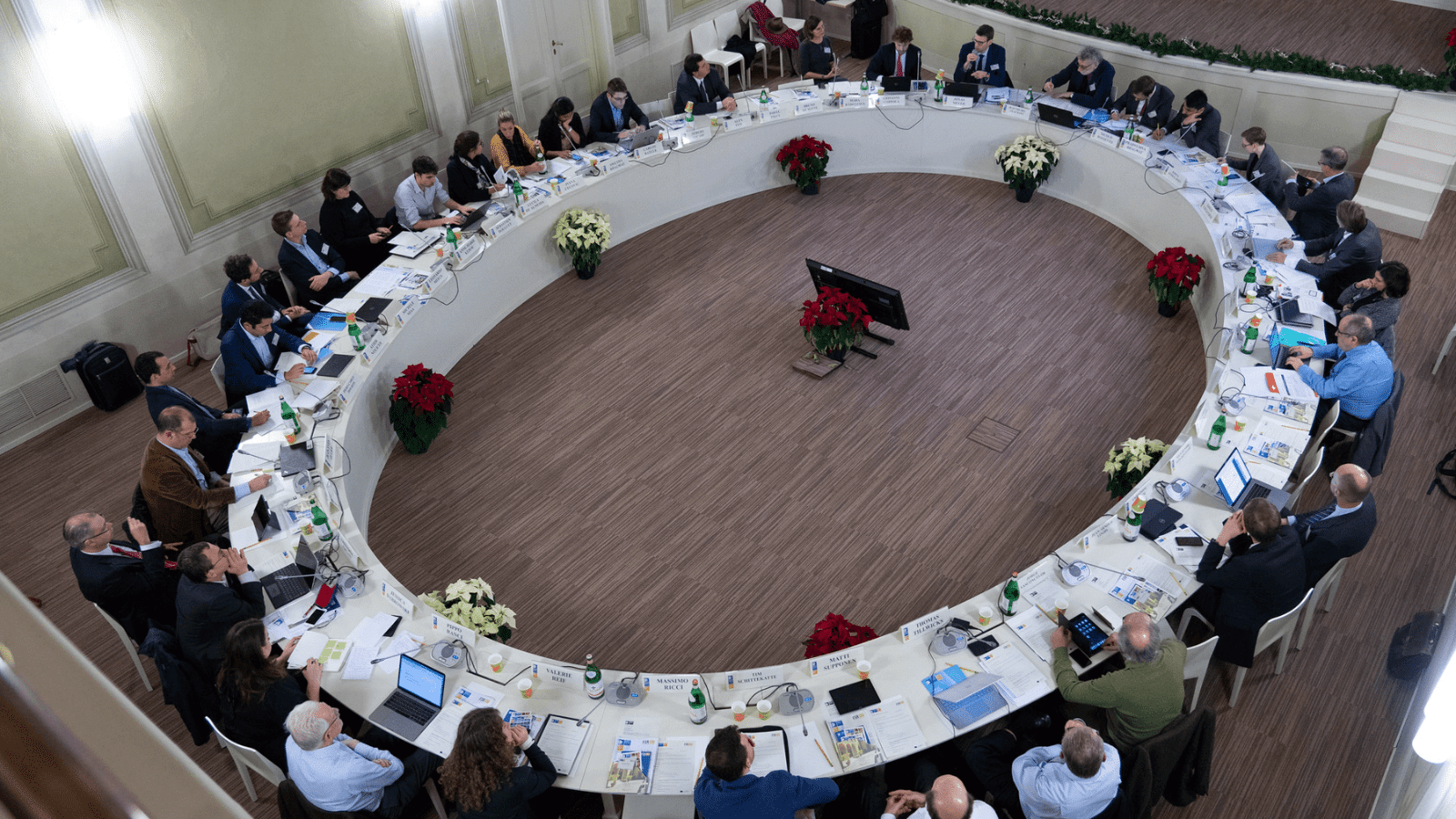
1st Meeting of the EU Platform on Municipal Solid Waste Regulation & Governance

Governance Arrangements and Market Structure
In 2020, the Florence School of Regulation produced a paper highlighting municipal solid waste (MSW) key data and challenges in Europe in terms of institutional setting, market characteristics, funding arrangements and current situation against MSW EU targets, underlining recent waste generation and treatment trends, and looking at future capital and operational expenditure required to reach MSW EU targets and the associated financing options.
The same year, two online events were held, gathering regulators, operators, professional associations, researchers, policy-decision makers, and financing institutions who shared their views on the current and forthcoming challenges of the sector.
It is time to consolidate this dialogue and work stream into a “European Platform on MSW Regulation and Governance” that will address key regulatory and governance issues, and thus contribute to pave the road for the necessary reforms and changes to successfully implement the EU Circular Economy Package.
To contribute and ensure a high-level and independent debate and research on economically and socially sound regulation and governance, the EU Platform on MSW Regulation and Governance will continue to gather a variety of stakeholders including regulators, operators, local authorities, the European Commission, academics and researchers, EU financial Institutions, etc.
The first meeting of the EU Platform on MSW Regulation and Governance will be held virtually on 16th November from 10am to 12:30pm and will focus on governance arrangements, cost analysis and market structure of the MSW sector in Europe with contributions from researchers, NGOs, regulators, and operators.
Presentations
-
EU Platform on Municipal Waste Regulation & Governance
Salvetti
-
Urban regions shifting to Circular Economy
Obersteg
-
Waste governance as environmental stewardship
Lee-Geiller
-
Is the waste sector rigged to meet today’s megatrends
Bugge
-
Generalised EPR
Puig Ventosa
-
Introducing and enhancing competition
Sebo
-
Cost Efficiency and market structure in the European Municipal Solid Waste Sector
Pfeffer
Don’t miss any update on our events
Sign up for free and access the latest events from our community.
Planning and regulating energy infrastructure: a fit-for-purpose framework for the transition to 2050

The Workshop will aim at:
- Identifying the challenges, but also the benefits of holistic planning of the needs for electricity, gas, and hydrogen transport services, based on the forecasting of the level and geographical pattern of demand for the different energy vectors and hydrogen in particular (being the newest among them), and taking into account the interlinkages with other contiguous sectors;
- Assessing how the hydrogen network could be best planned, taking into account the existing gas infrastructure available for repurposing, but also the opportunity and cost of developing new dedicated assets;
- Considering how the cost of the hydrogen network should be recovered through the charging for their usage.
Background
The European Union is committed to decarbonise its energy system at a large scale. The targets are set, the path – energy efficiency first, electrification as far as possible, usage of hydrogen and other types of “low-carbon gas” in the hard-to-electrify sectors – is agreed as well. The EU decarbonisation challenge is characterised by the need for speed, cost-efficiency, and the subsidiarity principle on the one side and the existing infrastructures, market and regulatory frameworks for electricity and gas on the other hand. The mantras of legal and regulatory certainty, transparency and predictability are still very valid, maybe even more so in times of such a fundamental transformation of the whole EU economy and energy system.
The European Commission has proposed the first set of rules in its Fit for 55-package1 in July 2021, focusing on the (renewable) energy source and sink aspect at large. Further proposals focusing on the infrastructure and market aspects, also for decarbonised gases, are expected by the end of 2021.
In fact, an effective, efficient, and affordable energy transition will require:
- a more holistic approach to network planning, including the electricity, gas and hydrogen grids in a consistent framework, taking the interlinkages with other contiguous sectors – e.g. transport and heating and cooling – and the opportunities provided by digitalisation into account. In the future, hydrogen may support the electricity sector by providing additional and more effective opportunities for storing energy and thus to help manage the likely mismatch between the variable electricity generation from renewables and the demand profile of consumers, as well as congestion in the electricity grid. Hydrogen is currently produced and consumed in localised clusters, which are expected to develop into “hydrogen valleys”. It is however still uncertain if and when a hydrogen “backbone” network will be needed, which will depend on the demand for hydrogen by the different consuming sectors, the geographical pattern of demand and supply, and on the extent to which hydrogen imports will be needed to meet demand;
- an efficient and no-regret path to the development of hydrogen transport capability. The expected decrease in gas demand in Europe and the resulting reduction in gas volumes in the existing network will make some gas infrastructure available for possible repurposing to transport hydrogen. However, the availability of such infrastructure should not be the main driver in planning a future hydrogen backbone. A cost-benefit analysis should be carried out, comparing different ways of transporting hydrogen: in new pipelines, in repurposed pipelines or using non-pipeline facilities;
- a charging structure for the use of the hydrogen transmission infrastructure which is conducive to the development of competition and the creation of an internal market for hydrogen. The current tarification of the gas network has served well the transition of the gas sector from its previous vertically integrated structure and contracts with delivery at flanges and destination clauses. However, it has also shown its limits, with tariff pancaking distorting competition in the internal gas market. Therefore, the opportunity for a different approach for the hydrogen network needs to be considered.
Correspondingly, the Workshop will be structured in three sessions:
- Session I will focus on the challenges and benefits of a holistic planning of the demand for energy network services in Europe;
- Session II will zoom into the planning of the hydrogen network;
- Session III will aim at identifying the main principles for a hydrogen tariff structure which is conducive to undistorted competition and a well-functioning internal market for hydrogen.
Please note that this event is by invitation only.
Don’t miss any update on our events
Sign up for free and access the latest events from our community.
More on the topic
Incentive regulation in network Industries

The Workshop will aim at reviewing and comparing the experience with the implementation of incentive-based regulation in the energy, transport, and water sectors.
Background
Incentive-based regulation has been used to regulate private monopolies across Europe since the mid-1980’s. It may take a number of different forms, and has been the subject of attention both by academics and practitioners.
When compared to cost-of-service/rate-of-return regulation, incentive-based regulation has been credited with providing greater incentives for efficiency and some degree of flexibility to regulated companies on how to pursue it, while reducing the cost of regulation.
Incentive-based regulation has been the default regulatory approach for network activities in the energy sector for more than three decades. However, it has been increasingly perceived to increase risk and uncertainty in regulated companies’ earnings and has shown its limitation when applied to highly capital-intensive industries.
More recently, with the greater importance of new technologies and therefore innovation, and the massive investments required to decarbonise the energy sector activities, a different approach has been experimented, which put emphasis on the need for innovation and investment, while protecting consumers by ensuring fair prices.
In the transport sector, despite the introduction of competition in many transport modes, infrastructure keeps being operated under monopoly rights or at least under very limited competition in most modes. Incentive-based regulation is increasingly used to foster efficiency in the operation of infrastructure.
In the water sector, cost plus and rate of return are more commonly used by regulators across EU Member States than price and revenue cap tariff setting methods. Nevertheless, great emphasis is being put on performance and quality of service through alternative regulatory tools such as key performance indicators targeting drinking water quality, water losses, pipes breakdown, internal sewer flooding among others. More recently, regulators have started introducing economic incentives to promote the ecologic transition of water and sanitation operators.
Structure
Against this background, the Workshop will be structured in three sessions:
- Session I will focus on the taxonomy for incentive-based regulation, as used in the different sectors covered by the Workshop;
- Session II will review and compare the experience with the implementation of incentive-based regulation in the sectors covered by the Workshop;
- Session III will aim at drawing conclusions, based on the available experience, and at formulating recommendations on best practices for the implementation of incentive-based regulation in the network industries. It will also consider how incentive-based regulation compare with the newer forms of regulation for network industries which have emerged as a result of the increasing need for innovation and investment.
This event is by invitation only.
The event is under Chatham House rules. Please do not tweet speakers’ names, but use our event hashtags: #FSRPolicyWorkshop #BrexitElectricity
Don’t miss any update on our events
Sign up for free and access the latest events from our community.