



Archives: Events
Carbon Market Policy Dialogue

Session “Alignment: possible reforms for carbon market integration” (Topic 5)
The third meeting of the Carbon Market Policy Dialogue (CMPD) of the LIFE DICET project brings together academia, stakeholders and senior policymakers from different carbon markets worldwide in a unique process for a fruitful exchange on carbon market integration. The CMPD meeting will be held on Thursday 7 July from 16.00-19.00 (CEST) on Zoom. Participation is by invitation only and the discussion will be held under Chatham House Rules.
This session of the CMPD meeting discusses “Alignment: possible reforms for carbon market integration“. Before the session, a background report will be shared with the participants to help stir the discussions. At the CMPD, the participants will discuss how, in concrete terms, the integration of the emissions trading systems (ETSs) may be realised. Specifically, the policy dialogue will address the following questions:
- What rules should ETS Regulators change in the respective ETSs, and how should they change them for integration?
- How should ETS regulators coordinate among themselves?
- What are the next steps to consider for carrying out these reforms?
The event will be chaired by Simone Borghesi, Director of FSR Climate. External speakers include:
- Hannah Lewis, Department for BEIS
- Jean-Yves Benoit, Québec Ministry of Environment
- Julia Ziemann, DG Climate Action
- Luca Taschini, University of Edinburgh
- Billy Pizer, Resources for the Future
The project LIFE DICET supports the European Union and Member States policymakers in deepening international cooperation for the development and possible integration of carbon markets. At its core, the CMPD aims to facilitate enhanced cooperation between Emissions Trading Systems regulators (ETS regulators), namely the European Commission (DG Climate Action), California-Quebec, China, Switzerland and New Zealand within the framework of the LIFE DICET project.
The conclusions reached concerning the four previous CMPD topics will be very useful for addressing these questions. The feedback received during the event will help us craft the report’s final version.
 The project LIFE DICET is co-financed by the EU LIFE Programme of the European Commission.
Don’t miss any update on our events
Sign up for free and access the latest events from our community.
More on the topic









An Overview of Recent Energy Case Law from the CJEU, June 2023

The FSR Energy Union Law Area is pleased to announce the next edition of its biennial update on recent and pending energy case law at the Court of Justice of the European Union (CJEU). This event will offer a comprehensive overview of the most significant energy cases since the last case law update, which took place in December 2021.
In this briefing, Dr Adrien de Hauteclocque, Head of Cabinet of the President of the General Court and Professor Leigh Hancher, Director of the FSR Energy Union Law Area, will discuss highlights from the latest case law.
The cases that will be discussed include:
ACER
Internal Market
C-179/20 – Fondul Proprietatea
Energy/Environment
C-177/19P – Allemagne – Ville de Paris and Others v Commission
State Aid
T-623/20 – Sun West and Others v Commission
C-429/20P – Solar Ileias Bompaina v Commission
T-565/19 – Oltchim v Commission
Competition
T-399/19, T-616/18 – Polskie Górnictwo Naftowe i Gazownictwo v Commission
C-377/20 – Servizio Elettrico Nazionale and Others (Opinion of Advocate General Rantos)
C-721/20 – DB Station & Service
More on ECJ Case Law
If you want to catch up on earlier CJEU developments, you can watch the recordings of our sessions from November 2020 here, June 2021 here, and December 2021 here.
Energy Union Law & Policy
FSR Energy Union Law area provides a forum for critical discussion and independent analysis of the developments in EU energy law and policy. Our activities are aimed at professionals from national energy regulatory authorities, European and international institutions, energy-focused law firms, consultancies and energy utility companies.
Don’t miss any update on our events
Sign up for free and access the latest events from our community.


What is missing for Ukraine to join the Internal Energy Market?

This Debate will aim at identifying which steps are still required for Ukraine to join the Internal Energy Market.
Following the invasion of Ukraine by the Russian Federation’s army, repeated statements have been made, at the highest European political level, about the prospect of Ukraine joining the European Union. While Ukraine’s accession will not happen immediately, there may be an opportunity for Ukraine to participate in part or even in full in the Internal Energy Market even before it becomes a member of the European Union.
Ukraine is already a contracting party of the Energy Community and has been making steady progress in implementing the energy acquis communautaire.
During the event we will discuss the current state of play in that process and aim at identifying which steps are possible – especially at regulatory and market design level – in order for Ukraine to participate actively in the Internal electricity and gas Markets in the short term.
The event will be available with live translation in English and Ukrainian.
Draft Programme
Introduction to the Debate and Opening Presentations
14.00 – 14.05 Introduction to the Debate
Alberto Pototschnig | Florence School of Regulation
14.05 – 14.15 An introduction to the issue
Olena Pavlenko| President, DiXi Group
14.15 – 14.25 The perspective of the Ukrainian regulator
Kostiantyn Ushchapovskyi | Chairman, National Commission for State Regulation of Energy and Utilities of Ukraine
14.25 – 14.35 The perspective of the Energy Community Secretariat
Dirk Buschle| Deputy Director, Energy Community Secretariat (TBC)
Panel Discussion: Introductory Remarks, Polls and Comments
Moderator: Leigh Hancher | Florence School of Regulation and Tilburg University
Panellists: Sonya Twohig| Secretary General, ENTSO-E
Claude Mangin | Market Development Manager, ENTSOG
Jan Haizmann | Member of the Board, EFET
14.35 – 15.00 Introductory remarks from the panellists
15.00 – 15.05 Polls
15.05 – 15.25 Comments on the polls outcome and Q&A from the audience
Panellists
15.25 – 15.30 Concluding remarks
Leigh Hancher | Florence School of Regulation and Tilburg University
Alberto Pototschnig | Florence School of Regulation
#FSRDebates
Hosts: Leigh Hancher and Alberto Pototschnig (FSR)
The focus of this series is on recent court cases, regulatory decisions, EU legislation, or public consultations to be discussed by a panel of experts.
Don’t miss any update on our events
Sign up for free and access the latest events from our community.

Unpacking India’s Climate Modelling Tools

A recent study undertaken by the Indian Institute of Technology Delhi (IIT Delhi) and the Centre for Policy Research (CPR) examines the various climate modelling tools used in the context of India.
As modelling studies are increasingly used to inform energy and climate policy design, it is imperative that the construct and results of these various studies be adequately understood and contextualised. At the Unpacking Models (UM) initiative the authors develop and employ a common reporting framework to assess, compare, and interpret the results of various modelling studies.
Watch the recording
The UM assessment framework unpacks the modelling study in a two-step process. In the first step, it helps policymakers understand the robustness of the modelling study, by assessing five dimensions of its structure:
- The validity of its input assumptions;
- The appropriateness of the model for the purpose to which it is applied;
- The construction of the scenarios;
- The overall treatment of inherent uncertainties;
- The validity of its outputs.
In its second step, the framework interprets what modelling results imply for six policy priorities relevant to a low-carbon transition:
- Energy transition pathway;
- Emissions;
- Development pathway;
- Investments;
- Equity;
- Energy security.
The authors hope that this initiative will contribute to more informed and measured use of these various modelling studies in the design of energy and climate policies, by policymakers, academics, and civil society.
Host: Jean-Michel Glachant (Florence School of Regulation – Energy)
Invited guest: Kaveri Iychettira (Indian Institute of Technology, Delhi)
Discussants: Franziska Holz (DIW Berlin) and Albert Ferrari (Florence School of Regulation – Climate)
Presentations
-
Unpacking India’s Climate Policy Modelling Tools: A Framework
Dr. Kaveri Iychettira, School of Public Policy, IIT Delhi
Don’t miss any update on our events
Sign up for free and access the latest events from our community.
ACER’s assessment of the electricity market design: what options for the future? – Policy Workshop

In its Communication “Tackling rising energy prices: a toolbox for action and support” of 13 October 2021, the European Commission indicated, inter alia, that it would have tasked ACER “to study the benefits and drawbacks of the existing electricity market design and propose recommendations for assessment by the Commission by April 2022”. ACER is on track to publish the results of its analysis by the end of April 2022.
This policy workshop will consider the results of ACER’s analysis and discuss what the implications of these results are for any future enhancement of the wholesale and retail electricity markets in the EU.
For this purpose, after an opening session, the workshop will be structured in two further sessions:
– Session I – from 10:30am to 1pm, CET – will focus on the wholesale electricity market and, possibly, the wholesale gas market, to the extent that the ACER’s analysis covers the latter as well;
– Session II – from 1:30pm to 3pm, CET – will focus on the retail energy market.
Don’t miss any update on our events
Sign up for free and access the latest events from our community.




Regulating lock-in effects
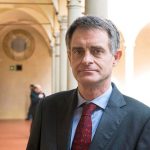
“Carbon lock-in refers to the self-perpetuating inertia created by large fossil fuel-based energy systems that inhibits public and private efforts to introduce alternative energy technologies.”
“Carbon lock-in” has been characterized as an equilibrium in which certain carbon-intensive technological systems or practices persist over time, either “locking out” the potential for change or braking further movement towards low or zero carbon . This equilibrium directly or indirectly hinders the deployment of low-carbon technologies, which either cost more upfront or cannot compete with the lower prices of high-carbon technologies. The literature refers to various categories of lock-in effect.
Infrastructures and energy technologies often lock societies into carbon-intensive emission pathways because of the length of time before investments pay off . Oil and gas extraction projects are usually not only capital intensive but also require many years of planning, exploration, and development, and only once the projects have been explored, appraised, and developed, revenues can be earned.
Institutional carbon lock-in can shape choices and limit the actions of state institutions, and institutional choices sustain the competitive advantage of fossil-fuel technologies, inhibiting public and private investment in clean energy
Since a sustainable energy transition is complex and uncertain, it is also claimed that behavioural carbon lock-in must be absent in order for individual and collective decision-making to be made in accordance with principles of sustainability.
Carbon Lock-in and State Aid
The EC’s new Guidelines on climate energy and environmental state aid (the CEEAG) adopted in 2022, provide the framework for public authorities to support the European Green Deal objectives efficiently and with minimum distortions of competition. These Guidelines provide that when approving state aid for. ‘transiton fuels’ such as natural gas, the Commission may require commitments to ensure the ‘lock in’ of fossil fuels is avoided and fossil fuel installations are compatible with the 2030 and 2050 targets. This may include for example commitments related to the future deployment of Carbon Capture and Storage (CCS).
Carbon Lock-in and the Taxonomy
The concept of ‘carbon lock-in’ is also topical in relation to the proposed Taxonomy Regulation (TR). Article 10(2)c of the present draft states that an economic activity should not lead to the lock-in of carbon-intensive assets.
The definition of ‘transitional activities in’ Art. 10(2) TR explicitly states the need to avoid environmentally harmful carbon lock in-effects. However, the measure allows for the greenfield construction of fossil-based energy infrastructure with ambitious targets for low-carbon/renewable phase-in only at a later stage.
It has been observed that as these forward-looking assumptions cannot be validated as of 2022, the risk of creating stranded fossil-based energy assets in Europe should be highlighted- going against the TR principle of avoiding stranded assets in Art.19 1(i) TR. Asset stranding or extended operation at high emissions levels may result if insufficient quantities of low-carbon gaseous fuels are available. Negative consequences for financial market stability and concerns about greenwashing arise . Next to financial market impacts arising from stranded assets, there could be a risk of crowding out necessary investments in renewable energy generation capacities and development of alternative low-carbon technologies , given the ability to shift sustainable finance towards financing fossil gaseous fuels, particularly until 2030.
This Debate will discuss how the risks associated with carbon-lockin can be avoided. How should regulators identify these risks and what tools are available to assess the nature and extent of the risks? How can forward-looking assumptions be validated in an effective way?
Programme
#FSRDebates
Host: Leigh Hancher | Florence School of Regulation and Tilburg University
Don’t miss any update on our events
Sign up for free and access the latest events from our community.
Speakers
More on the topic


Climate Neutrality and Social Sustainability

Achieving net-zero emissions in the next decades implies a rapid reduction in emissions, significant increases in carbon prices, and deep structural economic changes. These changes are generating concerns about their social impact. Possible job losses in specific sectors and increases in carbon prices may be perceived as socially unacceptable for their potentially regressive effects, especially at a time in which energy prices are increasing in most countries.
This raises the questions addressed in this session taking place on on May 5 from 17:15 to 18:15 CEST:
- Can climate neutrality be socially sustainable?
- Will it pass the social acceptability test?
- How can it be reconciled with the need to minimize/eliminate social impacts?
- How do different jurisdictions (EU, US, India, China) address this problem?
The panel session is featured in the programme of the 12th edition of The State of the Union organised by the European University Institute and held from 5 to 7 May 2022.
Simone Borghesi, Director of FSR Climate and Secretary General of the Policy Outreach Committee of EAERE, will chair the discussion with the following speakers:
- Beatriz Yordi, Director, Carbon Markets and Clean Mobility, DG Climate Action, European Commission
- E. Somanathan, Professor, Economics and Planning Unit, Indian Statistical Institute and Head of the Centre for research on the Economics of Climate, Food, Energy and Environment (CECFEE), Indian Statistical Institute/CECFEE
- Michael Spence, Philip H. Knight Professor of Management, Emeritus, and Dean, Emeritus, Stanford Graduate School of Business and 2001 Nobel Prize in Economics, Stanford Graduate School of Business
Don’t miss any update on our events
Sign up for free and access the latest events from our community.
More on the topic
The EU’s Hydrogen Accelerator – what steps should be taken?
The EU’s energy relations with Russia have become a headline issue in shaping the bloc’s response to Russian aggression in Ukraine. In the REPowerEU Communication of March 8, 2022, the European Commission laid out plans to end dependence on Russian fossil imports whilst combating record-high energy prices and accelerating decarbonisation of the sector in the process. Renewable hydrogen is a key component in these plans as it is a possible substitute for natural gas that can be produced by a range of international partners or indeed within the EU itself.
The REPowerEU Communication established new aims for renewable hydrogen far in excess of the already ambitious targets outlined in the original 2020 EU Hydrogen Strategy and subsequent Fit for 55 package of summer 2021. Under REPower EU, the new target for clean hydrogen consumption by 2030 increases from 5 million tonnes to 20 million tonnes. According to the Communication, the development of hydrogen infrastructure and funding streams should also expand correspondingly, including storage facilities and port infrastructure, streamlined state aid processes, adjustments of regulatory frameworks, and the creation of a Global European Hydrogen Facility.
These goals are laudable and if realised could go a long way to reducing the EU’s dependence on Russian fossil fuels, particularly fossil gas. Nevertheless, there is still no internal market for hydrogen. Moreover, numerous other foreseen and unforeseen bottlenecks must be overcome to make these hydrogen ambitions a reality, such as massive renewable electricity capacity, preparedness of hydrogen import infrastructure, and so on.
Within this context, a panel of experts will meet in an installment of the FSR Policy Webinar series on April 27, 2022, from 15h00 – 16h30 to explore some key questions. Including, how best to trigger investment and developments? What needs to be done on national and European levels?
Agenda
Opening: Kitti Nyitrai, European Commission
Keynote: Alejandro Nuñez-Jimenez, Harvard Kennedy School (Presenting report “The Future of Renewable Hydrogen in the European Union”)
Panel discussion: Jorgo Chatzimarkakis, Hydrogen Europe
Timo Bollerhey, H2Global
Dr Roland Roesch, IRENA
Ilaria Conti, FSR
Conclusions: Christopher Jones, FSR
Don’t miss any update on our events
Sign up for free and access the latest events from our community.
Speakers
More on the topic



EU getting rid of Russian energy addiction? Second episode: the practicalities

A Bruegel – Florence School of Regulation common initiative
The terrifying invasion of Ukraine is destroying former relations between the European Union and the Russian Federation. Since Russia is the EU’s main supplier of oil, natural gas and coal, the EU must redefine its energy future, and started doing it on 8 March, with the publication of the communication “REPowerEU: Joint European Action for more affordable, secure and sustainable energy”.
However, we still have to discover how the EU will enter this new world. And the best way to do that is presumably to meet and discuss it altogether.
It is what Bruegel, a leading Think-Tank in Brussels, and the Florence School of Regulation, a Higher Education Centre, decided to do, organizing a mini-series of two online events.
The first event on 24 March explored how the life of European countries could look like without Russian energy.
On Tuesday 12 April, there will be a second online event, where we will enter more into the practicalities of how Europe can get rid of Russian energy addiction in the coming months and years.
We will do that with the help of a lawyer knowing well EU energy law and regulation (Klaus-Dieter Borchardt), a former national energy regulator (Walter Boltz), an expert of energy trading (Egbert Laege), and an expert of gas storage (Carole Le Henaff).
Agenda:
First session: Can the current EU legal and regulatory framework support the phase-out of Russian energy?
Moderator: Georg Zachmann (Breugel)
- Klaus-Dieter Borchardt (former director for the internal market at the European Commission – DG Energy)
- Walter Boltz (former director at E-Control)
- Q&A
Second session: Can the European energy system deal with the phase-out of Russian energy?
Moderator: Ilaria Conti (FSR)
- Egbert Laege (Boston Consulting Group and INSEAD)
- Carole Le Henaff (Storengy – Engie)
- Q&A
Read more:
Can Europe manage if Russian oil and coal are cut off?
High gas prices in Europe: A matter for policy intervention?
Don’t miss any update on our events
Sign up for free and access the latest events from our community.
Speakers
More on the topic


A regulatory framework for gas storage
This Debate will discuss how the envisaged gas storage obligation could be framed and how its costs could be allocated to the different Member States to reflect the benefits that better utilisation of storage capacity in Europe can bring. It will also aim to identify other aspects that an EU storage policy should cover.
Watch the recording:
Energy sector developments over the last six months dramatically impacted energy prices. A tight international gas market in the second half of 2021 led to a sharp rise in gas prices, which, in many countries where gas is heavily used to generate electricity, or at least is the marginal fuel, led to comparably sharp increases in wholesale electricity prices.
Since the end of February 2022, as a result of the invasion of Ukraine by the Russian Federation army, the situation has further exacerbated, especially in those regions heavily depending on gas imports from Russia.
Sanctions imposed on the Russian Federation by many countries following the invasion of Ukraine have included or might include, a ban on fuel import from Russia. And, in any case, it is unlikely that the Russian Federation will return to be considered a reliable trading partner anytime soon.
These developments have prompted policy action by the European Union, which, as a whole, depends on the Russian Federation for more than 40% of its gas consumption[1].
In its REPowerEU Communication of 8 March 2022[2], the European Commission stated that “following the invasion of Ukraine by Russia, the case for a rapid clean energy transition has never been stronger and clearer” and that “the EU needs to be ready for any scenario. It can reach independence from Russian gas well before the end of the decade”. The Communication proposes a number of measures to pursue this goal, with gas storage playing an important role as it can both reduce the need to import additional volumes of gas during the heatings eason and contribute to absorb supply shocks. This requires additional measures to be introduced to ensure that storage can contribute to security of supply to its full potential. In particular, the Commission proposes to introduce a filling obligation for gas storages and has announced that it will make a legislative proposal by April for this purpose. “This proposal will require that existing storage infrastructures in the EU territory are filled up to at least 90% of their capacity by 1 October each year. In order to make storage more attractive to market participants, the Commission will propose to increase the rebate level to 100% as an incentive to refill storage”[3].
This would be part of an EU gas storage policy that “will ensure fairness and allow making smart use of existing infrastructure, limiting the need for new infrastructure as not all Member States have underground storage facilities in their territories. The legal proposal will set out a mechanism to ensure a fair allocation of security of supply costs”.
Draft Programme
Introduction to the Debate and Opening Presentations
14.00 – 14.05 Introduction to the Debate
Alberto Pototschnig | Florence School of Regulation
14.05 – 14.15 A gas storage policy for the EU
Ilaria Conti | Florence School of Regulation
14.15 – 14.25 The experience with national gas storage obligations
Aad Correljé | TU Delft
Panel Discussion: Introductory Remarks, Polls and Comments
Moderator: Leigh Hancher | Florence School of Regulation and Tilburg University
14.25 – 14.50 Introductory remarks from the panellists
Giuseppina Squicciarini | Shell
Benoit Esnault, CRE and CEER
Steve Rose | Eurogas
Catherine Gras | GRTGaz
14.50 – 14.55 Polls
14.55 – 15.20 Comments on the outcome of the pollS and Q&A from the audience
Panellists
15.20 – 15.30 Concluding remarks
Oliver Koch | DG Energy, European Commission
Leigh Hancher | Florence School of Regulation and Tilburg University
Alberto Pototschnig | Florence School of Regulation
[1] Russia also accounts for 27% of oil imports and 46% of coal imports.
[2] Communication from the Commission to the European Parliament, the European Council, the Council, the European Economic and Social Committee and the Committee of the Regions, REPowerEU: Joint European Action for more affordable, secure and sustainable energy, Strasbourg, 8.3.2022, COM(2022) 108 final.
[3] Thirteen Member States – Belgium, Bulgaria, Denmark Finland, France, Hungary, Italy, Latvia, Lithuania, Poland, Portugal, Spain and Sweden – have storage obligations in place. Others, like Germany, announced plans to introduce them.
#FSRDebates
Hosts: Prof. Leigh Hancher and Prof. Alberto Pototschnig
The focus of this series is on recent court cases, regulatory decisions, EU legislation, or public consultations to be discussed by a panel of experts.
Don’t miss any update on our events
Sign up for free and access the latest events from our community.
Speakers
More on the topic

Building net-zero by 2050 with three building blocks: which ones and how?
From a recent study co-authored by two German researchers, Claudia Kemfert and Franziska Holz, we know that the optimal energy mix for Europe in 2050 is still largely undetermined. However, we also know that it is likely to combine three building blocks: direct electrification with renewables, hydrogen, and synthetic hydrocarbons.
During this FSR Talk, Claudia and Franziska will explain why these three building blocks, how they could combine, and what policy measures might be preferable for the EU to implement in the coming years.
Speakers:
Prof Dr Claudia Kemfert, Head of the department Energy, Transportation, Environment at the German Institute of Economic Research (DIW Berlin)
Prof Dr Franziska Holz, Deputy Head of the Department Energy, Transportation, and Environment at the German Institute of Economic Research (DIW Berlin)
Agenda:
- Introduction and initial speech by the guest speakers: Jean-Michel Glachant, Claudia Kemfert and Franziska Holz (20’)
- Discussion with Nicolò Rossetto and James Kneebone (15’)
- Q&A with the audience (25’)
Host:
Jean-Michel Glachant, Director of the Florence School of Regulation
Learn more:
The FSR Summer School on Energy Systems
The FSR Clean Molecule for the Energy Transition course
Florence School of Regulation: Cost-Effective Decarbonisation Study 2022
#FSRTalks
Live interviews with experts from the wider network of the school to showcase and discuss a timely topic in a light and interactive way.
Don’t miss any update on our events
Sign up for free and access the latest events from our community.
Speakers
More on the topic
Rethinking the EU’s electricity market- what are the options?
This event is an FSR-E3G joint initiative.
The Versailles European Council has agreed to phase-out EU dependency on gas supplies from Russia, mandate minimum gas stocks, and make an unprecedented push to rapidly increase sustainable EU-produced energy, notably renewable electricity, biogas, hydrogen, and a more flexible and efficient energy system overall.
The Commission has published its RePowerEU Communication, giving guidance to the Member States on the measures that can be taken to deal with very high energy prices, and outlining targets for new RES capacity.
The Commission has indicated that it will consider putting forward measures to reform the current ‘marginalist’ electricity market design during an emergency period and to share proposals for energy market design in the context of changing energy realities and EU climate targets by mid-May.
Seen collectively, this change represents the greatest and most difficult change in EU energy policy that we have ever seen.
The debate will focus on electricity market design. What should be done in a short term and medium and long-term in adapting the electricity market to provide energy security, affordable prices for consumers and achieving climate neutrality by 2050?
Agenda of the event
Introduction
Andris Piebalgs, FSR
Keynotes
Christopher Jones, FSR
Vilislava Ivanova, E3G
Panel discussion moderated by Lisa Fischer, E3G
Nicola Rega, Cefic
Kavita Ahluwalia, Uniper
Michael Villa, SmartEN
Vera Brenzel, Tennet
Oscar Arnedillo, NERA Economic Consulting
#FSRDebates
Hosts: Prof. Andris Piebalgs and Prof. Christopher Jones
The focus of this series is on recent policy issues discussed by a panel of experts.
Don’t miss any update on our events
Sign up for free and access the latest events from our community.
More on the topic