




Archives: Events
Net Zero Carbon Market Policy Dialogue 2023

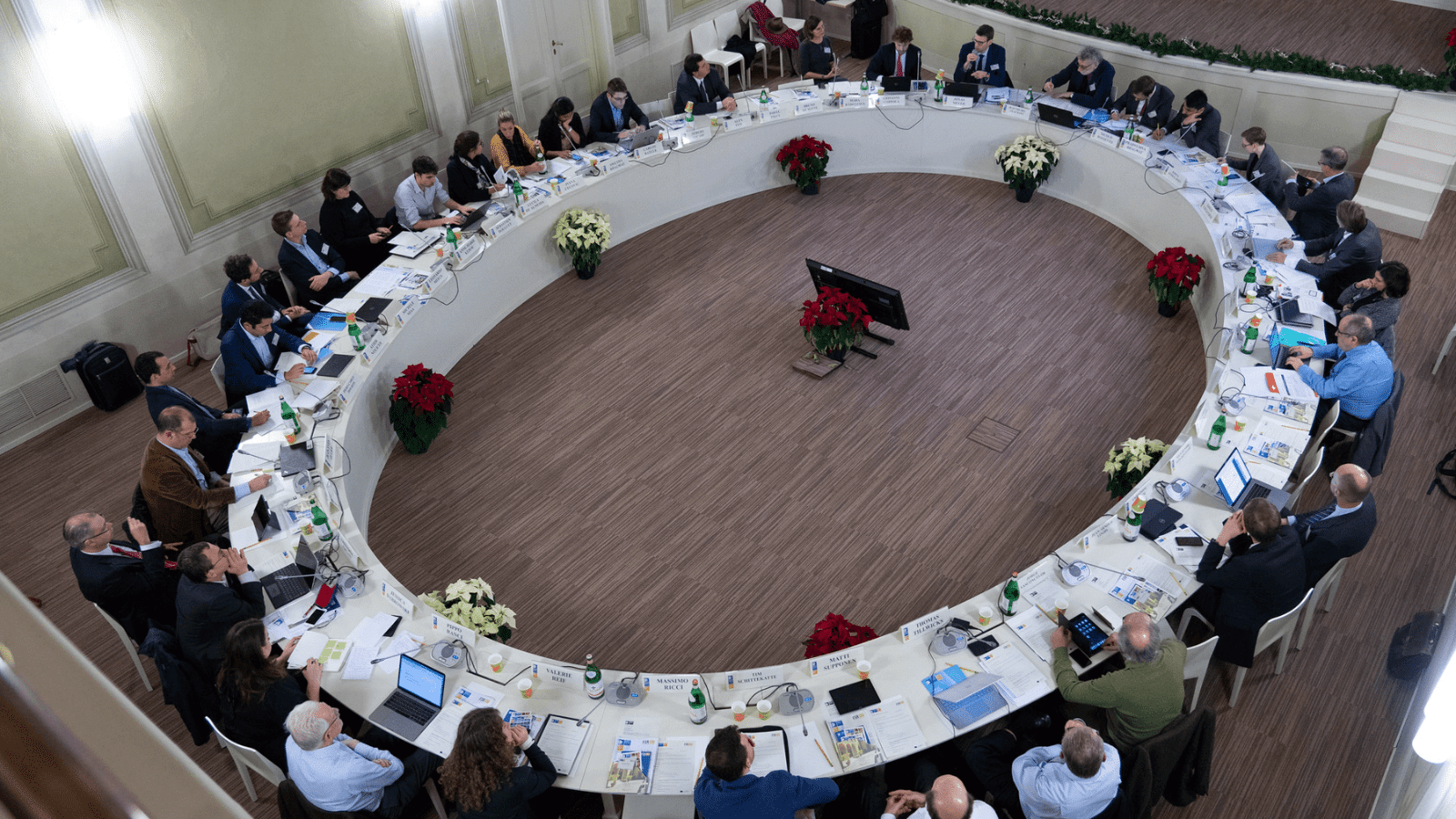
The Net Zero Carbon Market Policy Dialogue (NZCMPD) brings together regulators, policymakers, academics, and stakeholders from different carbon markets worldwide on a yearly basis. The NZCMPD stands as a unique process for a fruitful exchange on carbon market development and integration related to net zero targets, regulation, development, and integration of carbon markets. A background report from LIFE COASE team will feed into the discussion at the policy dialogue and provide a basis for a fruitful discussion.
This years’ policy dialogue will focus on the social dimensions of emissions trading systems (ETS), competitiveness and carbon leakage and current trends on ETS in the world. The NZCMPD is organised under the framework of the project, LIFE COASE – Collaborative Observatory for ASsessment of the EU ETS and it will build on the previous Carbon Market Policy Dialogue established under the predecessor project LIFE DICET. It informs the Florence Process organised by the European Commission as an exchange platform among ETS regulators.
The event is the first of three policy dialogues organised over the course of the LIFE COASE project which aims at supporting policymakers in the implementation and development of the EU ETS, including its integration with other carbon markets. The project will establish the first observatory for assessment of the EU ETS, to offer a reference source of knowledge for policymakers and researchers and pave the way for future research and policies on emissions trading. A key element of the project is to support international cooperation on carbon markets between the EU and partner countries, building on the recent agreement reached at COP26 in Glasgow on the Article 6 framework.
Participation is by-invitation only.
Don’t miss any update on our events
Sign up for free and access the latest events from our community.
More on the topic









Technical workshop on ETS impact indicators

What are the environmental and economic impacts of emissions trading systems? How have these indicators evolved over time? Tracking the evolution of a key set of indicators is essential to provide knowledge on the impacts of the system on firms and emissions. To date, there is a great need for defining indicators best fit to monitor the development of the European Union Emissions Trading System (EU ETS) and its impacts in response to regulatory changes and market trends. This need has been felt particularly strongly in the past years, as potentially important effects of rising carbon prices – notably, the impacts on firms’ environmental and economic performances – have been insufficiently studied. This year’s workshop will select and discuss a set of impact indicators best suited for providing information on the effects of the EU ETS on regulated firms’ environmental and economic outcomes. The indicators will be based on relevant variables of environmental and economic performance (e.g., CO2 emissions, profits). The selected indicators will be estimated using data from the EUTL and the Bureau van Dijk – Orbis database.
The workshop is organised under the framework of the project LIFE COASE – Collaborative Observatory for ASsessment of the EU ETS. It aims at supporting policymakers in the implementation and development of the EU ETS, including its integration with other carbon markets. The project will establish the first observatory for assessment of the EU ETS, in order to offer a reference source of knowledge for policymakers and researchers and pave the way for future research and policies on emissions trading.
The aim of the workshop is to bring together experts to take stock of existing indicators, discuss their limitations and to agree upon 3 to 5 key indicators to improve the toolbox for assessing the EU ETS.
This is an online event. Participation is by-invitation only. More info about the project can be found here.
Don’t miss any update on our events
Sign up for free and access the latest events from our community.
More on the topic
Locational marginal prices for electricity in Europe? The Untold Story

In this event, we discuss key unanswered questions about nodal pricing before looking at alternative actions to improve locational signals in the electricity system in Europe, including via the smarter use of LMPs.
Watch the recording:
Locational marginal prices (LMPs) are an important design feature of several well-developed electricity markets, particularly in the US. They involve the calculation of energy prices which reflect congestion and losses at particular nodes in the electricity network. They have been hotly debated in Australia and Great Britain, but not implemented so far.
In this event, we explore whether and how European countries should adopt LMPs.
The author of the paper Locational marginal prices for electricity in Europe? The Untold Story, Michael Pollitt (University of Cambridge) will be joined by Tim Schittekatte (MIT) and Ellen Beckstedde (Vlerick Business School) in the role of discussants.
FSR Insights is an online series hosted by Leonardo Meeus and Lucila de Almeida (FSR).
Learn more
Evolution of Electricity markets in Europe online course
What English gardens, monkeys and the Titanic have to do with bidding zones event highlights
Zonal versus Nodal Electricity Pricing: the PJM experience podcast
Don’t miss any update on our events
Sign up for free and access the latest events from our community.






23rd Florence Rail Forum | New Rules for Better Rail Capacity Management

Rail has a key role to play in making EU transport more efficient and sustainable, in line with the goals of the EU’s sustainable and smart mobility strategy. Increasing passenger and cargo volumes requires investment in infrastructure but also a more efficient track capacity management, particularly for cross-border services.
Regulation (EU) 913/2010 introduced cooperation mechanisms to ensure sufficient, flexible and high quality infrastructure capacity along EU rail corridors for rail freight operators. However, the evaluation of the Regulation showed that the existing measures have not been sufficient to increase cross-border rail freight. In this light, the Regulation has not been sufficient to support the EU’s ambitious policies in the fields of transport, climate change, energy and the environment. Cross-border rail passenger traffic is on the rise, but it is still only around 10% of total traffic. In line with the European Green Deal objectives, more competitive cross-border rail services would help fight climate change, reduce local air pollution and congestion, increase safety and the energy efficiency of transport. The sustainable and smart mobility strategy envisages measures for better management and coordination of cross-border rail traffic.
On 11th July 2023 the Commission proposed a Regulation on the use of railway infrastructure capacity in the single European railway area. The Regulation includes major novelties: (1) a more active role of Infrastructure Managers in the planning of capacity; (2) new mechanisms for coordination among stakeholders for capacity planning; (3) new rules for capacity allocation, particularly in case of scarce infrastructure capacity, including socio-economic and environmental criteria; (4) more flexible timing for capacity allocation; (5) more coordination for cross-border services; (6) a Performance Review mechanism; and (7) new entities: ENIM, ENRRB, PRB, Network Coordinator.
The 23rd Florence Rail Forum will gather European – and national- regulators, industry representatives (Infrastructure Managers and Railway Undertakings) and academics for a discussion on how to better manage rail capacity in the EU. More specifically, forum participants will tackle the following issues:
(1) Capacity planning: Formalising dialogue for capacity planning and allocation. What would be the best instruments to ensure the fruitful dialogue between IMs and RUs, but also Regulatory Bodies and other stakeholders for capacity planning and allocation?
(2) Capacity allocation: Defining harmonised prioritisation criteria. How to define prioritisation criteria in case of scarce infrastructure capacity? Definition socio-economic and environmental.
(3) Track Access Charges: More harmonisation, new principles? How to harmonise TAC in the EU? What principles? What are the right incentives?
Please kindly note that participation at this Forum is by invitation only.
Presentations
Don’t miss any update on our events
Sign up for free and access the latest events from our community.


National policies coping with energy crisis and climate targets: the case of Italy

This episode of #FSRDebates is jointly organised by the Florence School of Regulation (FSR) and the International Energy Agency (IEA).
This debate will offer the occasion to present and discuss the recently published IEA Italy Energy Policies Review Report, which analyses the Italian energy and climate policies in response to the energy crisis and the wider climate goals.
Background
Italy has raised its climate ambitions by aiming for carbon neutrality by 2050, and the country is on track to reach its 2030 targets for emissions reductions and energy efficiency. The government has taken encouraging initial steps to overcome the long permitting procedures, administrative burdens and increasing local opposition that have delayed new renewable installations.
In 2022, Italy successfully reduced its reliance on Russian natural gas imports, by signing new contracts with alternative suppliers, making use of the pipeline and LNG infrastructure that it has built up over the last decade. Reducing overall demand for natural gas through an accelerated shift to alternative energy sources and a stronger focus on energy efficiency, especially in the building sector, will not only further strengthen energy security, but also help the country meet its climate targets.
Draft Programme
14.00 – 14.05 Introduction to the Debate
Ilaria Conti | Florence School of Regulation
1405 – 14.20 The IEA Italy Energy Policies Review 2023: main findings
Alessio Scanziani | IEA
14.20 – 14.30 The regulator’s perspective
Clara Poletti | ARERA
Discussion: Introductory Remarks and Comments
Moderator: Alberto Pototschnig | Florence School of Regulation
14.30 – 15.00 FSR Donors’ roundtable
Panellists
Giulia Branzi | SNAM
Fabio Bulgarelli | Terna
Claudia Squeglia | ENI
15.00 – 15.20 Q&A from the audience
15.20 – 15.30 Concluding remarks
Ilaria Conti | Florence School of Regulation
Alberto Pototschnig | Florence School of Regulation
Don’t miss any update on our events
Sign up for free and access the latest events from our community.
More on the topic


The role of climate change perceptions in climate adaptation
In this episode of FSR Insights, our hosts Leonardo Meeus and Lucila de Almeida will be joined by Anne Van Valkengoed from the University of Groningen to discuss her research on climate policy and the psychology of climate change adaptation.
Assessing human behavioural change is crucial for shaping the right policy framework for climate adaptation. In light of this, policies and regulations should also consider psychological sciences to better address possible obstacles to act against climate change. This event presents a valuable opportunity to delve into the subject.
As part of the Horizon-funded project, CAPABLE, the Climate research team at the FSR is currently contributing to capture climate policy’s multidimensional outcomes and implications based on the most up-to-date knowledge and methods on economics, sociology, political sciences, and psychology.
Hosts:
Leonardo Meeus and Lucila de Almeida, Florence School of Regulation
Speaker:
Anne Van Valkengoed, University of Groningen
Discussants:
Alessia Casamassima, Florence School of Regulation
Keith Smith, ETH Zürich
More on the CAPABLE project
CAPABLE is a Horizon Europe project led by CMCC that will provide recommendations for designing socially and economically acceptable climate policy measures for 2030 and beyond. CAPABLE will draw on economics, sociology, political sciences, and psychology to capture climate policy’s multidimensional outcomes and implications. It started in January 2023 and will run until December 2025.
#FSRInsights
The FSR Insights series features world-class academics from the energy field, as well as the FSR research team members in the role of discussants, to investigate timely energy topics and future scenarios.
Presentations
-
The psychology of climate change adaptation
Anne Van Valkengoed
Don’t miss any update on our events
Sign up for free and access the latest events from our community.
Speakers
More on the topic
Carbon Capture and Storage – capturing the momentum
The momentum behind CCS is growing rapidly. Following the Commission’s Sustainable Carbon Cycles Communication in December 2021, which underlined the need for large scale CCS to deliver the negative emissions that the EU will increasing need to meet its GHG ambitions, Commissioner Simson noted that ‘no CCUS no net-zero’ during the last CCUS Forum in October 2022. The Commission has now committed to issuing a CCUS Strategy later this year. The CCUS Forum Vision Working Group has tabled a detailed paper with concrete suggestions for the Strategy, and the Infrastructure Group is currently finalising its report. Now the Commission’s Net-Zero Industry Act proposal has proposed an EU-binding target for ensuring the availability of 50 MT of CO2 storage in the EU by 2030, and suggested binding investment obligations on EU oil and gas producers to achieve this. This target may well increase once it applies to Norway, as the NZIA would have EEA relevance.
The debate will address this momentum, look at what should be in the Commission CCUS Strategy, unpick the Commission’s NZIA storage proposal, consider the investment, regulatory, and infrastructure challenges, and ask ‘what needs to be done, when, and by who?
Watch the recording:
Programme
Opening: Ilaria Conti
Don’t miss any update on our events
Sign up for free and access the latest events from our community.
More on the topic



FSR Alumni Day

The FSR welcomes the Alumni community in Florence
As our 20th Anniversary approaches, the Florence School of Regulation would like to celebrate its Alumni and offer them additional networking and learning opportunities.
The first FSR Alumni Day will take place in Florence and gather participants from all our courses, course directors, instructors, and coordinators.
A special event to meet, interact and learn something new
Since its establishment in 2004, the School has been training more than 10.000 participants. In 2014, the FSR launched its first online course and since then, more than 60 online courses have been welcoming energy professionals and academics from worldwide.
To hear back from our community of Alumni and to celebrate their successful learning paths, we designed a special event in Florence.
Programme
- 9:00 – 9:15 Reception and welcome
- 9:15 – 9:45: Welcome by the FSR team and testimonials from the FSR Alumni
- 9:45 – 10:30 Open discussion with Jean-Michel Glachant, Pippo Ranci, Ignacio Perez-Arriaga, and Jorge Vasconcelos
- 10:30 – 11:00: Coffee break
- 11:00 – 12:30: Working groups
- Regulatory Delivery with Alberto Pototschnig and Jorge Vasconcelos
- EU Green Deal with Nicolo Rossetto, Simone Borghesi, Leigh Hancher
- 12:30 – 13:30: Lunch
- 13:30 – 15:00: Networking activity
- 15:00 – 16:30 Working groups
- Gas and Clean Molecules with Ilaria Conti, Andris Piebalgs, Marzia Sesini, Sergio Ascari
- Electricity Markets with Leonardo Meeus, Ignacio Perez-Arriaga, Carlos Batlle, Ellen Beckstedde
- 16:30 – 17:00: Final remarks and conclusion
- 17:00 – 18:30 Cocktail
Event Fee: 250€
Deadline to register: 18 October 2023
The event will be held exclusively in a residential format in Florence, allowing for a limited number of participants. Admission will be granted on a first-come, first-served basis.
Directions to reach the venue
The EUI Badia is easily reachable by taxi from Florence centre or from Fiesole (about 20€) and from Florence Airport (about 35€).
If you prefer public transport (ticket 1,50€ to be bought in official ticket offices, machines and authorised retailers that display the Autolinee Toscane sticker): take bus line number 7 from the center, the main railway station or from Fiesole, and get off at the stop ‘San Domenico 01’ (map) From there walk to our main building, Badia Fiesolana (map).
Logistic info
Please arrange your travel and accommodation as soon as possible as Florence is very popular.
Paid registration fee is non-refundable. Please note that the course fee does not cover travel and accommodation costs.
Don’t miss any update on our events
Sign up for free and access the latest events from our community.
Speakers

Europe doubles down on energy and climate

The next episode of the FSR Talks series hosted by Jean-Michel Glachant will welcome Nathalie Tocci, Director of Instituto Affari Internazionali to present her book ‘A Green and Global Europe’ (Polity Press, 2022).
Together with her, we will address the following questions:
- Can the EU accelerate its energy transition and secure its energy supplies, while increasing the cohesion of its Member States instead of fueling their disunion and rivalry?
- Can the EU pursue its global trajectory without worrying its neighbors or losing the benevolence of the B(R)ICs?
Ms. Tocci will be joined by two discussants, bringing European and non-European perspectives:
Anne Houtman, member of the Royal Academy of Belgium; former Dep. Head of Cabinet of EU Commission Presidency, former EU Ambassador in France.
Surya Sethi, advisor at FSR Global; former Principal Adviser & Core Climate Negotiator of the Government of India, former Chief Investment Officer at International Finance Corporation at World Bank.
A double win or a double pain for Europe? Time to double-check!
This event will be live-streamed.
Don’t miss any update on our events
Sign up for free and access the latest events from our community.

The EU energy platform: an insurance against energy market challenges?
In the next episode of the #FSRDebates series, we will focus on the EU energy platform.
Established in reaction to the Russia-Ukraine war as an instrument to stabilise prices by providing alternatives to Russian gas supplies, the EU Energy platform in 2022 facilitated the signature of Memoranda of Understanding with several key gas exporting partner countries and enhanced international outreach to support the REPowerEU Plan.
The first round of joint gas purchases on 16th May this year successfully managed to attract bids from 25 companies, totaling more than 13.4 billion cubic meters of gas (bcm) – even more than the 11.6 bcm of joint demand that EU companies submitted through the recently established AggregateEU mechanism.
The whole operation has been brought to completion via AggregateEU, a mechanism by the service provider PRISMA, and concerns an overall volume of 10.9 bcm. This covers 8.7 bcm of gas via pipeline and 2.2 bcm of LNG.
In 2023 plans, the Platform is due to focus on organising demand aggregation and joint purchasing of gas for coming winter’s (2023-2024) gas storage filling season.
Moreover, EU Commission Vice President Maroš Šefčovič said the gas scheme would act as a “blueprint” for a “new market” for critical materials as well as hydrogen, that will help decarbonise energy-intensive industries.
The European Commission is leading the management of the platform, and acts to provide guidance between EU countries and the industry to ensure that the joint purchasing mechanism is well implemented and that it complies with EU competition rules.
Did the Platform meet the expectations so far? Is its success an evidence that solidarity can work in Europe? Are other commodities as suitable as gas for joint purchasing?
Programme
Introduction to the Debate
Ilaria Conti | Florence School of Regulation
The EU Energy platform
Cristina Lobillo | DG ENER
Setting up the platform: the challenges
Falk Porzig, PRISMA
Panel Discussion
Moderator: Alberto Pototschnig | Florence School of Regulation
Introductory remarks from the panellists
Carola Millgramm, E-Control
Peter Claes, IFIEC
Doug Wood, EFET
James Watson, Eurogas
Polls and Q&A
Concluding remarks
Ilaria Conti | Florence School of Regulation
Alberto Pototschnig | Florence School of Regulation
Presentations
-
AggregateEU – setting up the platform: The challenges
Falk Porzig, PRISMA
Don’t miss any update on our events
Sign up for free and access the latest events from our community.
More on the topic
The revision of REMIT: making it future-proof
While the Commission’s proposal is going through the legislative process, the Debate will provide an opportunity to discuss the role of ACER in the future REMIT framework, in particular with respect to investigations and enforcement.
Outline
The 2011 EU Regulation on wholesale energy market integrity and transparency (REMIT) aims at detecting and deterring market abuse in the energy sector, in the forms of market manipulation and insider trading, thus promoting integrity and transparency of trading in wholesale energy products.
The monitoring framework introduced by REMIT was unprecedented worldwide in terms of its geographical and product scope, and its implementation has posed a formidable challenge for the European Union Agency for the Cooperation of Energy Regulators (ACER), National Regulatory Authorities for energy (NRAs), energy market participants – which have to report trade data – and other stakeholders – responsible for reporting fundamental data. The central role given to ACER in the implementation of REMIT contributed to cost-savings at the Member State level as concerns data collection, monitoring and surveillance of suspicious transactions.
Over the years, some limitations of the provisions of REMIT has emerged, in particular with respect to their application to new ways of trading – for example, algorithmic trading – as well as to the effectivenss of the investigation and enforcement process. Moreover, the sharp increase in energy prices since the summer of 2021, exacerbated by the unlawful aggression of Ukraine by the Russian Federation, has renewed concernes about the integrity of energy trading.
As a result, on 14 March 2023, the Commission proposed some amendments to REMIT. Broadly speaking, the Commission’s proposal aims at improving REMIT in four areas:
- a closer alignment of the REMIT legal framework with the EU financial market legal framework;
- the adaptation of the scope of REMIT to current and evolving market circumstance;
- improvements to REMIT data quality, reporting, transparency and monitoring;
- a stronger energy consumer protection against market abuse, by strengthening the enforcement regime of cases with EU dimension.
With respect to the last dimension, the Commission’s proposal, inter alia, strengthens the ACER’s investigatory powers for a specific set of cases of potential market abuse that involve a complex cross-border dimension in Europe or instances where they involve a non EU based supplier. However, the Commission’s proposal could have been more ambitious and seems not fully to take into account the need to ensure an effective surveillance of energy trading and enforcement of the prohibitions and obligations in REMIT in a market which is increasingly cross-border, if not pan-European.
The Commission’s proposal also aims at harmonising the powers of NRAs to adopt administrative sanctions and other administrative measures in relation to the breaches of REMIT, including by setting minimum threshoods for the maximum levels of fines established at national level for breaches of the different types of REMIT provisions. Again, the Commission’s proposal falls short of detting a EU framework for enforcement and sanctioning.
Programme
Introduction to the Debate and Opening Presentations
14.00 – 14.05 Introduction to the Debate
Alberto Pototschnig | Florence School of Regulation
14.05 – 14.15 The Commission’s proposal
Lukasz Lisicki | Policy Officer, Directorate-General for Energy, European Commission
14.15 – 14.25 The ACER experience
Martin Godfried | Head of the Surveillance and Conduct Department, ACER
Panel Discussion: Introductory Remarks, Polls and Comments
Moderator: Ilaria Conti | Florence School of Regulation
14.25 – 14.55 Introductory remarks from the panellists
Peter Claes | Vice-President, IFIEC
Marilo Garcia Rodriguez | Eurelectric
Tine Bax | Senior Manager EU Affairs, Eurogas
Mike Bostan | Manager, Market Supervision Committee, EFET
Esther Espeja | Market Integrity and Transparency WG Co-Chair, CEER
14.55 – 15.00 Polls
15.00 – 15.15 Comments on the polls outcome and Q&A from the audience
Panellists
15.15 – 15.30 Concluding remarks
Maria da Graça Carvalho | Member of the European Parliament
Ilaria Conti | Florence School of Regulation
Alberto Pototschnig | Florence School of Regulation
Don’t miss any update on our events
Sign up for free and access the latest events from our community.
More on the topic
Open Day

The Open Day aims at presenting the FSR and its activities to prospective donors, i.e. companies and organisations which have expressed an interest in joining the FSR Community as Donors and which would like to learn first-hand about the FSR activities.
The representatives of Star and Major Donors participating in the Policy Advisory Council meeting in Florence are invited to join the Open Day to share their experience with the FSR with prospective donors.
Drinks and dinner will follow.
Don’t miss any update on our events
Sign up for free and access the latest events from our community.