



Archives: Events
Pipelines or ships, that is the EU hydrogen question

Are pipelines and ships an ‘either or’ decision for Europe’s hydrogen economy?
The European Union is targeting 10 million tonnes of hydrogen imports per year by 2030, up from zero today. If even 50% of this target is to be reached it will require huge investment in entirely new value chains to facilitate these imports, with ships and pipelines being the obvious infrastructural options. But are they an ‘either-or’ choice? Can we consider this choice to be two sides of the same coin, much like we do with natural gas? Are there opportunity costs in scaling parallel infrastructure? What are the cost and scalability implications of these options? What vector would we ship and what is the end product we are after? Is there meaningful security of supply concern?
In this FSR Insights event, James Kneebone, FSR presents the results from a policy paper co-written with Andris Pieblags on these subjects.
The presentation explores the limitations and opportunities of different technological choices, as well as the relationships between different parallel value chains for clean hydrogen and its derivatives. The results of the paper give some pause for thought on how we frame planning for the role of clean molecule imports in our energy system and offer some optimistic reflections on the position of Europe in global hydrogen value chains moving forward.
The panel of discussants includes a great balance of engineering, political science, and economics expertise. Following the presentation, each discussant will have the opportunity to give their critique and perspective on the issue, before the audience and hosts will be invited to intervene with their questions.
Hosts
Leonardo Meeus | Florence School of Regulation (FSR)
Lucila de Almeida | FSR & Nova School of Law
Keynote Speaker
James Kneebone | Florence School of Regulation
Discussants
Alejandro Nuñez-Jiminez | ETH Zurich & Harvard Belfer Center
Sara Giarola | Polytechnic of Milan, EIEE & Imperial College London
Timo Gerres | Instituto de Investigación Tecnológica
Don’t miss any update on our events
Sign up for free and access the latest events from our community.
More on the topic



Energy infrastructure “fit for 55”

The ‘Fit for 55’ Package, adopted by the European Commission in July 2021, defined the policy framework for the European Union to implement the European Green Deal, by reducing carbon dioxide emission by 55% (with respect to 1990 levels) by 2030 and achieving ‘climate neutrality’ by 2050.
The Package comprised proposals in several areas, including an increase in the 2030 target for the share of renewables in final energy consumption from 32% to 40% and for an increase in the energy efficiency targets. The REPowerEU Plan, adopted by the European Commission in May 2022, in response to the unlawful Russian war of aggression in Ukraine, proposed further to increase these targets, to 45% of final energy consumption in the case of renewable penetration.
As it has been the case so far, the electricity sector is expected to contribute more than proportionally to the achievement of the renewable penetration target, with renewables expected to cover around 70% of final electricity consumption by 2030. An increasing role for renewable gases, including renewable hydrogen, is also envisaged. Most of the expansion of renewable-based electricity generation will occur in offshore wind and in decentralised installations onshore. According to the latest European Commission Staff Working Document, capacities of 592 GW of solar PV and 510 GW of wind are required by 2030 to reach the REPowerEU Plan’s renewable electricity objective. This would require average annual additions of 48 GW for solar PV and 36 GW for wind. In comparison, the International Energy Agency’s main case scenario foresees average annual net additions of only 39 GW for solar PV and 17 GW for wind during the 2022-2027 period.
A much more aggressive investment pace is therefore required for the EU to meet the renewable penetration target proposed in the REPowerEU Plan. Turning to hydrogen, the EU Hydrogen Strategy of July 2020 defined a set of actions in five areas – investment support, support of production and demand, creation of a hydrogen market and infrastructure, and research and cooperation – to increase the production and use of renewable and low-carbon hydrogen.
The full list of 20 key actions was implemented by the first quarter of 2022. In 2022, hydrogen still accounted for less than 2% of Europe’s energy consumption and was primarily used to produce chemical products, such as plastics and fertilisers. 96% of this hydrogen was produced with natural gas, resulting in significant amounts of CO2 emissions. The European Commission has proposed to produce 10 million tonnes of renewable hydrogen and to import 10 million tonnes by 2030. Different visions have been proposed regarding the way in which hydrogen will be transported into Europe and across Europe, including through repurposing some of the existing gas network components which will be no longer needed to transport a decreasing volume of fossil gas.
The increasing role of renewable electricity and of renewable and low-carbon gases, including hydrogen in meeting energy demand would have a profound impact on the energy networks. On the electricity side, the main challenges relate to the variability of generation from solar PV and wind installations, as well as to the decentralised location of new renewable generation – offshore or connected to distribution grids. Some saturation in these grids due to the massive increase of the number and capacity of renewable-based installations connected to them is already emerging, for example, in the Netherlands. The most effective connection model for offshore wind parks, including the option of transforming electricity into renewable hydrogen offshore and using the latter to transport energy to land and over long distances, is still under discussion.
Finally, regulators are looking at how best to regulate energy infrastructure, recognising that non-grid solutions might increasingly compete with grid solutions in addressing system needs: in this context, the regulatory framework should promote the most efficient mix of these two types of solutions. In November 2021, ACER published a Position Paper on incentivising smart investments to improve the efficient use of electricity transmission asset, in which it advocated the development of a regulatory framework which promotes the efficient use of existing (and new) infrastructure.
This Workshop will focus on three specific aspects related to the role of energy infrastructure in the clean energy transition:
- How to ensure an efficient development of the electricity grid, in both connecting offshore wind generation and at distribution level, in order efficiently to support the increased penetration of renewable electricity generation;
- How to ensure efficiency in the development of hydrogen transport infrastructure;
- How to regulate energy network infrastructure to promote its efficient use.
For this purpose, the Workshop, after an opening part, will be divided into three Sessions:
- Session I, in the morning, will focus on the challenges facing the electricity networks while accommodating increasing shares of renewable-based generation;
- Session II, still in the morning, will focus on the challenges facing the development of an efficient hydrogen network;
- Session III, in the afternoon, will assess possible regulatory approaches to promote the efficient use of existing and new energy network infrastructure.
This event is by invitation only.
Don’t miss any update on our events
Sign up for free and access the latest events from our community.

Energy Policy priorities for the next Commission and the implications for the FSR activities

The Policy Advisory Council (PAC) meetings provide a bi-annual opportunity for the Florence School of Regulation (FSR) to present its work to its Star and Major Donors and to receive their feedback.
The PAC meetings are open to representatives of Star and Major Donors of the FSR, as well as invited academics, regulators, and policy-makers. They are run under Chatham House rules.
The next PAC meeting will be held at the premises of the FSR in Florence (Villa Schifanoia) on 15 June 2023 and it will have a special focus. It will aim at identifying the priorities for the next Commission in terms of the policies to achieve the ambitious energy and climate targets to which the EU has committed for 2030 and beyond.
The FSR is planning to issue a Policy Statement on the identified priorities. Therefore, the specific objectives of the PAC meeting of 15 June 2023 will be twofold:
- to feed into the development of an FSR Policy Statement proposing policy priorities for the next Commission, which we aim to present to Members of the European Parliament and representatives of other EU and national institutions later in the year;
- to contribute to the development of the FSR Work Programme for the next years to align it to the Energy Policy priorities of the European Union.
This event is by invitation only
Don’t miss any update on our events
Sign up for free and access the latest events from our community.
Update on energy case law from the Court of Justice of the European Union

The FSR is pleased to announce the next edition of its biennial update on recent and pending energy case law at the Court of Justice of the European Union (CJEU). This event will offer a comprehensive overview of the most significant energy cases since the last case law update, which took place in December 2021.
The FSR Energy Union Law Area is pleased to announce the next edition of its biannual update on recent and pending energy case law at the Court of Justice of the European Union (CJEU). This event will offer a comprehensive overview of the most significant energy cases since the last case law update, which took place in December 2022.
In this briefing, Dr Adrien de Hauteclocque, Head of Cabinet of the President of the General Court and Professor Leigh Hancher, Director of the FSR Energy Union Law Area, will discuss highlights from the latest case law.
The cases that will be discussed include:
State Aid
T-626/20 – Landwärme v Commission
C-702/20 and C-17/21 – DOBELES HES
Merger Control
T-318/20 – eins energie in sachsen v Commission
T‑585/20 – Polwax v Commission
ACER
T-607/20 – Austrian Power Grid and Others v ACER
T-295/20 – Aquind and Others v Commission
Regulatory
C-580/21 – EEW Energy from Waste
C-394/21 – Bursa Română de Mărfuri
Advocate General Opinions
C-331/21 – Autoridade da Concorrência and EDP
An overview of cases currently pending before the Court will also be provided.
More on ECJ Case Law
If you want to catch up on earlier CJEU developments, you can watch the recordings of our sessions from December 2021 here, June 2022 here, and December 2022 here.
Presentations
-
An Update on Recent Energy Case Law from the CJEU
Dr Adrien de Hauteclocque
Don’t miss any update on our events
Sign up for free and access the latest events from our community.

Workshop on Ex-Ante Assessments of Emissions Trading

The annual workshop on ex-ante assessment of emissions trading on Monday 5 June is devoted to the comparison of selected macro-economic models simulating the development of the EU ETS and other major emissions trading systems. At a time when emissions trading systems increase in number and face similar problems, only a few comparisons of ex-ante models exist. The workshop will provide a networking opportunity for modellers and compare both the features and predictions of the models they are working with.
The workshop is organised under the framework of the project LIFE COASE – Collaborative Observatory for ASsessment of the EU ETS. It aims at supporting policymakers in the implementation and development of the European Union Emissions Trading System (EU ETS), including its integration with other carbon markets. The project will establish the first observatory for assessment of the EU ETS, in order to offer a reference source of knowledge for policymakers and researchers and pave the way for future research and policies on emissions trading.
The goal of the project’s workshop on the ex-ante assessment of emissions trading is to step up the benefits of knowledge sharing and mutual learning by collecting scientific evidence from different emissions trading systems worldwide. The workshop will contribute to strengthening international cooperation on the ex-ante assessment of emissions trading systems in order to better assess their performance and predict the consequences of different policy and regulatory options.
This is an online event. Participation is by-invitation only. More info about the project can be found here.
Chair: Simone Borghesi, FSR Climate and University of Siena
Moderator: Marie Raude, FSR Climate and Paris Nanterre University
Programme:
Welcome Coffee
09:20-09:30 Welcome and introduction
- Simone Borghesi, Director of FSR Climate and Professor at the University of Siena
09:30-11:00 Modelling the European Union Emission Trading System
- Robert Jeszke, Head of Strategy, Analysis and Auction Unit at the Polish National Centre for Emissions Management (KOBiZE)
- Sebastian Osorio, Postdoctoral Researcher at the Potsdam Institute for Climate Impact Research
Coffee Break
11.20 – 12.50 International perspectives on modelling of emissions trading: the cases of Quebec, China and the United Kingdom
- Pierre-Olivier Pineau, Professor at the Department of Decision Sciences at HEC Montréal
- Da Zhang, Associate professor at the Institute of Energy, Environment and Economy at Tsinghua University
- Chris Ramsay-Collins, UK Department for Energy Security and Net-Zero
12.50 – 13.10 Wrap up and conclusions
- Sebastian Osorio, Postdoctoral Researcher at the Potsdam Institute for Climate Impact Research
- Simone Borghesi, Director of FSR Climate and Professor at the University of Siena
Standing Lunch
 Co-funded by the Life Programme of the European Union
Don’t miss any update on our events
Sign up for free and access the latest events from our community.
More on the topic










The Energy Market Design Proposal: risking re-regulating the Internal Market?

Don’t miss any update on our events
Sign up for free and access the latest events from our community.

EU electricity market design reform: check-in before boarding

A proposal for electricity market design reform (COM(2023) 148 , COM(2023) 147) has been issued by European Commission on the 14th of March and the FSR summarised it on the day after.
Two months later, this online event will go deeper and review its content to understand what is actually missing and why, for the EU to secure a safe sailing to Net Zero in the present hard times of a European energy crisis and a world geo-economic shake-up. This is what we call a “Check-in before boarding”.
It is true that the current proposal is not adopted yet, as both the Council and the Parliament will add, subtract, underline, or polish. It is also true that this proposal is only a “patch”, added to the existing EU market frame, and not a complete overhaul still to come in 2035-2050. However, it is time to expand our horizons and start thinking about the decarbonisation and electrification times we will face in roughly a decade. Hence the need for a “check-in before boarding”.
Host:
Jean-Michel Glachant, Florence School of Regulation, IAEE
Speakers:
- Frédéric Gonand, Paris-Dauphine
- Michael Pollitt, Cambridge University Business School,
- Jorge Vasconcelos, Newes
- Swetha Ravi Kumar, FSR Global
Presentations
Don’t miss any update on our events
Sign up for free and access the latest events from our community.
Speakers







Breaking the Barrier: Exploring Obstacles to Customer Engagement in Flexibility Markets

The customer’s role within the power sector is changing. Renewable integration requires a higher degree of real-time management of the power system, which has been made possible by digital technologies. New consumption patterns and an adaptation of customers’ behaviour is equally necessary to guarantee efficiency and security of supply. According to many experts, customers will play in the future a more active role in reacting to grid and market contingencies. However, this prediction does not seem to be materializing. Nowadays, only a limited number of customers has the possibility or show the willingness to play a more active role in the power system.
Do behavioural characteristics of customers hinder their engagement with electricity markets? Do customers have the necessary economic incentives to engage? Do current technologies or the existing legal and regulatory framework represent barriers to customer engagement?
In this online event, organized in the context of the OneNet project, we aim to answer these questions and explore the main barriers related to customer engagement in TSO-DSO flexibility markets. Key results of the ongoing analysis will be presented together with our early thinking on potential recommendations to overcome these barriers.
We will discuss all that together with three experts, who will represent different point of view and experiences.
Agenda
Introduction | Nicolò Rossetto, EUI
- Welcome and agenda
- Short overview of the OneNet project
Barriers to customer engagement | Daniele Stampatori, EUI
- Presentation of the barriers to customer engagement (technical, economic, legal, behavioural)
- Presentation of recommendations to address some of those barriers (early results)
Expert interventions and debate
- Sonja Klingert, Senior Researcher at Universität Stuttgart (RENergetic, DECIDE)
- Jörg Mühlenhoff, Senior Energy Policy Officer at BEUC
- David Batič, Head of Development & Market Monitoring Department at Slovenian Energy Agency
Q&A
OneNet Project
The H2020 project OneNet (One Network for Europe) aims to develop a new generation of products and grid services to facilitate the participation of demand response, storage and distributed energy resources in the European electricity system and markets. OneNet builds on the results of the two preceding projects in the call, INTERRFACE and CoordiNet, and further develops the existing TSO-DSO-consumer coordination mechanisms. The OneNet system uses an IT architecture based on innovative platform federation mechanisms. Four demo clusters, consisting of a total of 13 European countries, demonstrate the OneNet concept through multiple use cases ranging from long-term to short-term operational planning, balancing, congestion management and voltage control. OneNet has also set up a mechanism for continuous interaction with all relevant stakeholders at EU and national level through its large-scale discussion forum GRIFOn.

OneNet project has received funding from the European Union’s Horizon 2020 research and innovation programme under grant agreement No 957739. Find more
Don’t miss any update on our events
Sign up for free and access the latest events from our community.
Climate, Energy, and Environmental Justices and Transitions: rethinking global environmental law
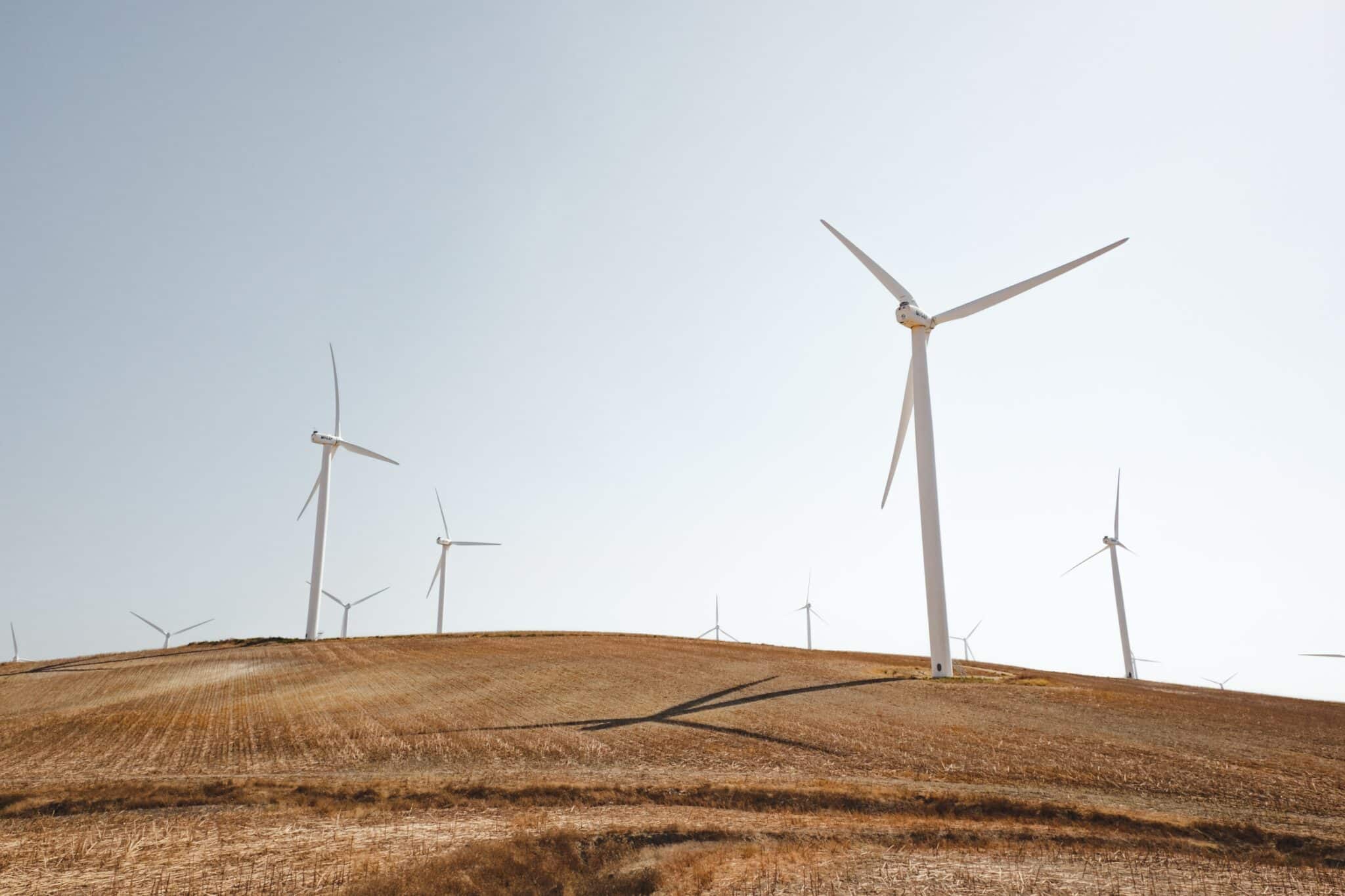
Climate change and the onset of events linked to extreme climatic weather may prompt the next global crisis. In a post-COVID context, this emphasizes the need to properly address emerging transnational environmental challenges and, at the same time, operate speedy energy transitions.
Against this backdrop, the Conference focuses on the varieties of legal responses to global environmental problems and their impact on justice. As the climate, energy, and environmental justice, we understand that it refers to the concerns regarding the redistributive, restorative, and procedural issues raised by the challenges of making a transition to a more sustainable environment and how legal systems responded to it, whether from International law, EU law, or a multi legal system perspective described as Global law.
The 7th International Conference co-organised by Florence School of Regulation and the University of Portsmouth is hosting several legal and economics scholars who submitted abstracts and got acceptance to present their papers on Climate, Energy, and Environmental Justices, as well as Wildlife Crime, Blue Governance and Biopiracy.
Organising Committee
Prof. dr. Belen Olmos Giupponi (University of Portsmouth),
Prof. dr. Lucila de Almeida (Florence School of Regulation and NOVA School of Law),
Dr Caroline Cox (University of Portsmouth) and
Dr Penny Giosa (University of Portsmouth)
Keynotes
Justice Suzanne Kingston, Court of Justice of the European Union (tbc)
Dr. Anna Sobczak, European Commission
Prof. Raphael Heffron, Universite de Pau et des Pays de l’Adour
Dr. Nick Pamment, University of Portsmouth
Online attendance is open to all upon registration.
Don’t miss any update on our events
Sign up for free and access the latest events from our community.
More on the topic
Future Electricity Tariffs

The FSR is hosting an academic workshop regarding the most recent insights and research on the design of electricity tariffs.
The main outcomes of the workshop will be summarized in a policy brief.
Background
The energy transition and the electrification of the heating and transport sectors will require the more active participation of the demand side to balance fluctuating renewable energy supply with demand and reduce the need for grid expansion. In addition, the energy crisis has revealed important shortcomings in the current design of electricity tariffs. Customers paying real-time prices have experienced excessive bill increases that led to regulatory interventions in the form of compensations. Customers on fixed-price contracts, on the other hand, had insufficient incentives to reduce their load.
Future-proof electricity tariffs should provide a solution to all these challenges. They should protect customers from excessive price peaks but still retain incentives for demand response and enable customers to specify the amount of flexibility that they are able to provide and ensure that this flexibility is used optimally. In addition, the regulation for retailers needs to be revised, to enable competition without undermining the incentives to hedge against increasingly volatile prices.
The FSR workshop on Future Electricity tariffs aims to bring together the most recent research and insights on the appropriate design of electricity tariffs. The main outcomes of the workshop will be summarised in a policy brief.
Authors participating in the workshop may also submit their article to an associated special issue in Energy Policy. However, participation in the workshop and the special issue are independent of each other.
Deadline for abstract submission: May 31, 2023
Confirmation of presentation: June 15, 2023
Don’t miss any update on our events
Sign up for free and access the latest events from our community.
How to make the best use of EU’s natural gas network in the energy transition
The EU has the most developed natural gas network in the world. It constitutes more than 200000 km of transmission pipelines, over 2 million km of distribution networks, and more than 20000 compressor and pressure reduction stations. The value of the total infrastructure investments is at least 250 billion Euro. 40% of households are connected to the gas network. In short, the EU gas network is capable of transporting and storing large quantities of energy and is well connected to the final consumers.
The EU has committed to achieving climate neutrality by 2050. To meet this objective it is intended to strongly reduce natural gas consumption, and based on Commission modeling this may already reduce gas demand by 25% by 2030, progressively shifting to use renewable and low-carbon hydrogen and biomethane.
At the same time the Commission is giving increasing importance to the rapid development of a CCS grid and storage, scheduling a CCS Strategy for later this year and proposing a EU 50 MT target for CO2 storage by 2030 as well as legal obligations on oil and gas companies to invest by this date.
Whilst the future hydrogen grids and CO2 network will be made up of a mix of new and old pipes, repurposing significant part of the existing gas grid will obviously play a major role.
The European gas networks will require major adaptations to meet this energy transition. And this adaptation should be done in full conformity with continuing safety of supply and minimal costs.
Against this background, National Regulatory Authorities will need to take decisions on the repurposing, de-commissioning, replacement, and extended use of individual existing EU’s gas systems assets. To do this in a consistent and wise way is a considerable challenge.
The FSR Policy debate will reflect on current knowledge and future challenges, asking whether the framework currently being finalized will deliver, and asking what is next and what still needs to be done.
Structure
Introduction Andris Piebalgs | FSR
Presentation of the DNV Study “Future regulatory decisions on natural gas networks: repurposing, decommissioning and reinvestments” Dr. Konstantin Petrov | DNV
Discussion
Christopher Jones | FSR
Walter Boltz |
Sara Piskor | ENTSOG
Q&A with the audience
Conclusions Andris Piebalgs | FSR
Presentations
Don’t miss any update on our events
Sign up for free and access the latest events from our community.
More on the topic


EDRs: Electricity Distribution’s Revolutions
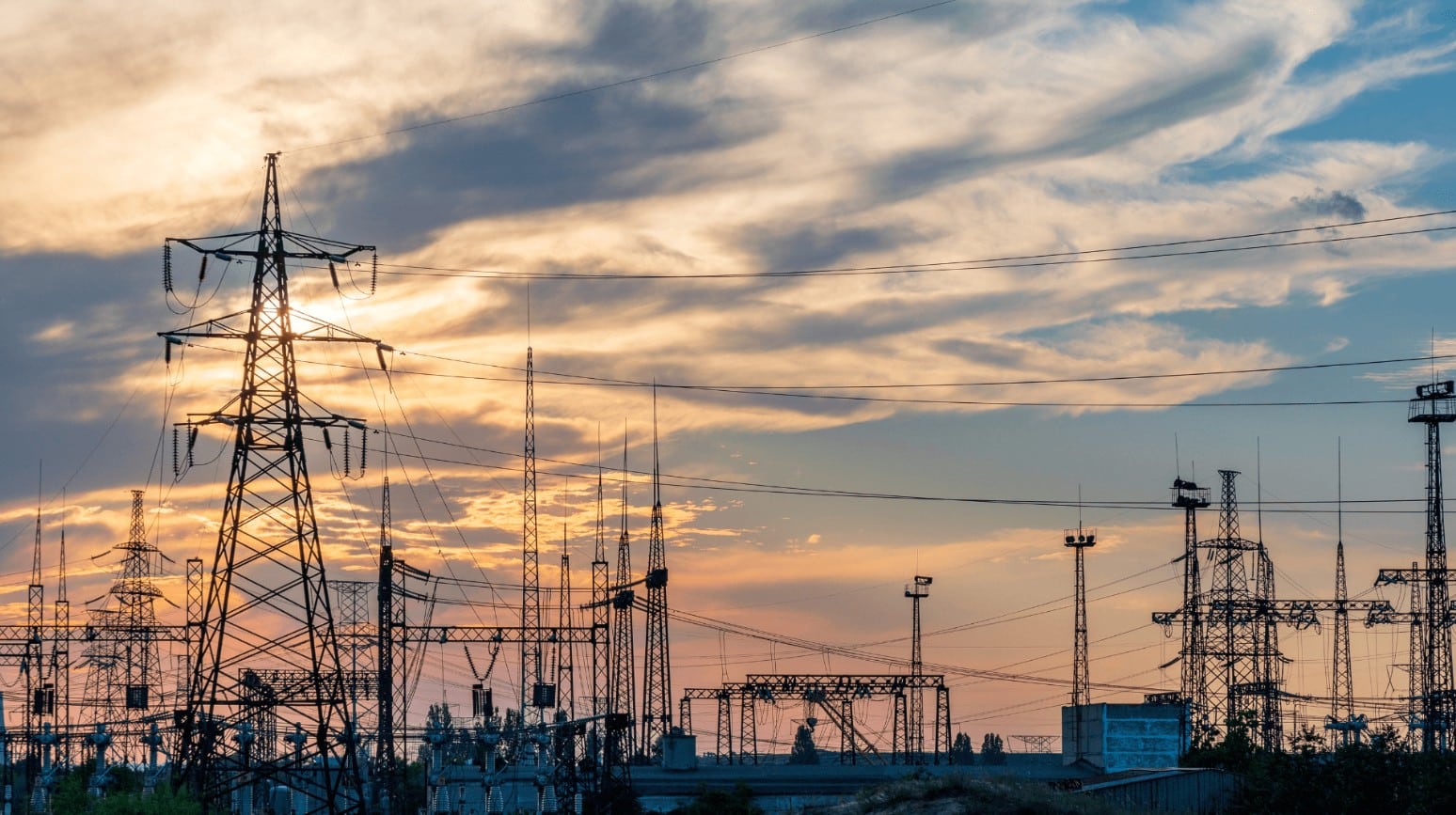
A decade ago, you knew that electricity distribution was changing because of new words popping up, such as ‘smart grids’ and ‘smart meters’. We invite you to forget what you knew, a few changes, and acknowledge what you do not know yet: several revolutions.
Do you remember the telecom industry disappearing under the push of the Internet ecosystem? You are getting closer to the coming disruption. In China, they already use the wording “Electricity Internet” meaning a digital revolution, a decentralization revolution, in a multi-layer electricity system with prosumers, peer-to-peer, flexsumers, aggregators, and local markets.
How are distribution grids really transforming, in technologies, usages, roles, tools, business models, and regulations? What has already come true? What is still only a dream? Where are the pioneers, the followers, the reactionaries?
We will discuss all that from the book “Electricity Networks in the Decentralization Era. Rethinking Economics & Regulation” (Palgrave, 2022), by R. Poudineh, C. Brandstätt, F. Billimoria.
The Host of the series, Jean-Michel Glachant loved that book and made an enthusiastic review of it for the journal “Economics of Energy & Environmental Policy”(EEEP). The authors, Christine Brandstätt and Fahrad Billimoria will join the event to share the key messages of their book.
The discussion will follow with Tim Schittekatte, an expert in distribution economics and regulation, formerly FSR and today working at MIT; and Jean-Michel Glachant, who pictures himself as “an old horse having seen the take-off of centralized wholesale electricity trade in the past century, and now amazed that electricity decentralized affairs are taking off today in front of my eyes”.
Don’t miss any update on our events
Sign up for free and access the latest events from our community.
More on the topic