
Archives: Events
The Evolving Voluntary Carbon Market: Reconciling the paradox between innovation and supervision

From 30 November to 12 December 2023 the Parties to the UN Framework Convention on Climate Change will come together for this year’s COP28 in Dubai. On this occasion, the EUI, together with the International Emissions Trading Association (IETA) and the EKI Energy Services Ltd (EKI) will host a panel discussion to focus on the Voluntary Carbon Market (VCM) – a key aspect of international cooperation on climate change.
The event taking place on Sunday 3 December from 11:30 to 13:00 GST (local time) offers an opportunity to discuss the contrasting trends of increasing transparency and innovation in the realm of carbon credits. The VCM has grown dramatically in recent years, but the quality of some carbon credits has been questioned. While harmonized standards and close supervision increase market transparency, they may restrict innovation. How can we reconcile innovation, transparency and integrity through voluntary and regulatory interventions?
Livestreaming:
Chair:
- Simone Borghesi, EUI and University of Siena
Panellists:
- Andrea Bonzanni, International Emissions Trading Association
- Pankaj Pandey, EKI Energy Services Ltd
- Amy Merrill, Integrity Council for Voluntary Carbon Markets
- Bianca Gichangi, Climate Envoy Office in Kenya
- Pedro Barata, Environmental Defense Fund
Registration:
The event will take place at the UNFCCC pavilion in SE Room 4. No prior registration is necessary. Information for online participation will be available via this page closer to the date.
Don’t miss any update on our events
Sign up for free and access the latest events from our community.
More on the topic










Incentive regulation to promote efficiency and innovation: a consultation

The Florence School of Regulation (FSR) is conducting a public consultation on behalf of ACER, on a possible scheme for incentive-based regulation of networks to promote efficiency and innovation in addressing electricity system needs.
Background
The energy transition challenges existing electricity networks. Operators need to expand rapidly the capacity of their networks to integrate increasing amounts of renewable energy sources and new uses on the demand side, while preserving cost-effectiveness and avoiding an escalation in revenue requirements that would penalize network users. Innovation is essential in ensuring that these two goals are achieved together. However, given the regulated nature of the business of network operators, an evolution of the regulatory framework may be needed. In particular, regulation should provide network operators with adequate incentives to respond to the challenges posed by the energy transition.
A scheme for incentive-based regulation to promote energy efficiency and innovation
This scheme, which was presented first at the June 2023 Copenhagen Forum and later detailed in a report produced for ACER, will be illustrated during this consultation webinar open to all stakeholders. After the presentation of the scheme by the FSR team, stakeholders will have the opportunity to raise questions and express their views with regard to the proposed scheme.
More details about the consultation, including the reference to the presentation in Copenhagen and a summary of the report prepared for ACER, can be found here.
Send your input!
Those interested in answering the consultation are invited to fill out the form. The consultation closes at 11:59 p.m. CET on 1 December 2023.
If you have any further comments or questions regarding this consultation, please contact Nicolo Rossetto.
Don’t miss any update on our events
Sign up for free and access the latest events from our community.

Implementing equality and inclusion in workplaces: benefits and limits of gender policies

In this edition of #FSRDebates, the discussion will focus on the gender dimension of workplace equality and inclusion policies. While employers acknowledge the significance of these policies and strive to incorporate them into their practices, their effectiveness isn’t always guaranteed and, at times, may even yield less favourable outcomes. For instance, despite the initial adoption of AI by companies with the anticipation of impartial decision-making, current research indicates that AI frequently displays biases learned from human data, consequently reinforcing gender inequalities.
We will be joined by ACER’s Silvia Manessi, Team Leader, Human Resources Management, who will delve into the complexities of defining and implementing effective gender balance and inclusion policies. She will explore these challenges from both theoretical and practical perspectives. Elena Pisanelli, PhD Candidate at the EUI, will present her thesis on the use of artificial intelligence (AI) technologies in hiring and their impact on gender inequality in the labour market. The presentations will be followed by a panel discussion.
Draft Programme
14.00 – 14.05 Introduction to the Debate
Ilaria Conti | Florence School of Regulation
14.05 – 14.15 PhD Thesis presentation: AI, gender and work
Elena Pisanelli | SPS, EUI
14.15 – 14.35 Gender mainstreaming in the workplace: where are we now and what’s next?
Silvia Manessi | ACER
14.35 – 15.10 Discussion: Introductory Remarks and Comments
Moderator: Ilaria Conti | Florence School of Regulation
Dr Elizabeth Pollitzer | gEneSys
Andrea Lenauer | WIE
Costanza Hermanin | RSC, EUI
Annika Beintner | Landwärme
15.10 – 15.25 Q&A from the audience
15.25 – 15.30 Concluding remarks
Ilaria Conti | Florence School of Regulation
Don’t miss any update on our events
Sign up for free and access the latest events from our community.
Speakers
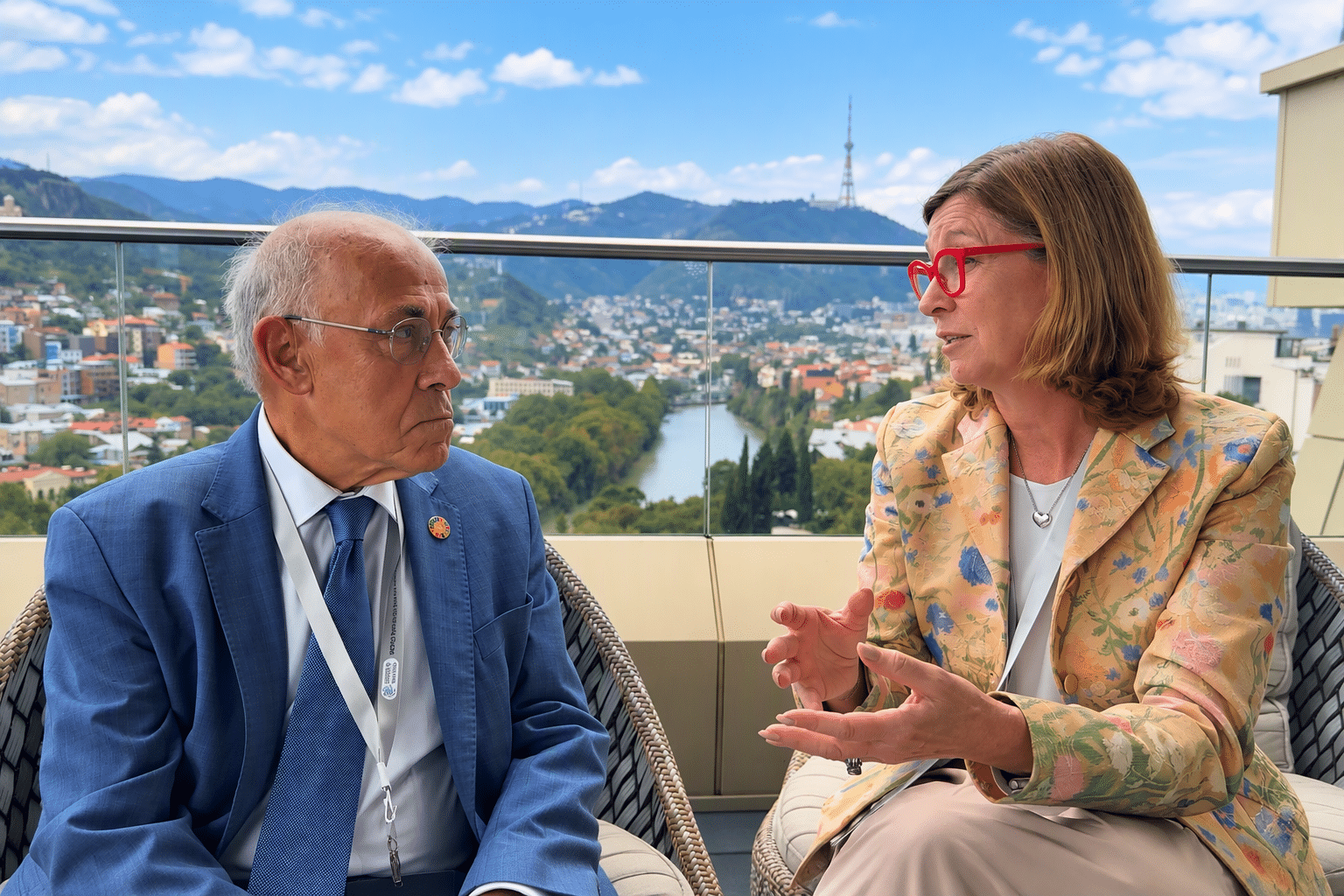

Electricity Transmission in the US energy transition: issues and lessons for Europe

Watch the recording:
Presentations
Don’t miss any update on our events
Sign up for free and access the latest events from our community.



Critical Raw Materials, Industrial Policy, and the Energy Transition

In this joint FSR-NYU episode of #FSRDebates, we delve into two significant legislative initiatives on either side of the Atlantic: the United States’ Inflation Reduction Act (IRA) and the European Union’s Net Zero Industry Act (NZIA) and Critical Raw Material Act (CRM Act). These initiatives hold considerable implications for their respective regions and are interconnected on a global scale due to their relevance to securing critical raw materials.
The US’s IRA is aimed at addressing rising inflation concerns and stimulating economic growth within the United States, in part by boosting clean energy and related industries. The EU’s NZIA plays a central role in the EU Green Deal, aiming to transition Europe’s industries to a net-zero carbon emissions model. These legislative actions are pivotal not only within their regions but also on the global stage as they intersect with critical raw materials. Sourcing these materials can create a range of economic, social, and geopolitical concerns, and all countries involved will need to craft policies that avoid unintended consequences. The Commission’s proposal for a CRM Act is a comprehensive response to these challenges.
Our discussion will carefully examine some key provisions, goals, and policy approaches embedded within these acts, shedding light on their potential to drive innovation, mitigate environmental impacts, and reshape industrial landscapes. This comprehensive analysis will also consider how these legislative measures impact critical raw materials, emphasizing their central role in achieving sustainability targets.
Not only does the discussion address the geopolitical equilibrium, exploring how these legislative initiatives may influence global geopolitics, trade dynamics, and international power balances, but also the implications for supply chains, trade relations, and the broader global community’s sustainability efforts, providing valuable insights into the global implications of these significant legislative endeavors.
Programme
Moderators:
Andris Piebalgs, FSR
Burçin Ünel, NYU
Marzia Sesini, FSR
Christopher Jones, FSR
Keynote Presentations:
Paula Pinho, Director, Directorate-General Energy, European Commission
Robbie Diamond, CEO of SAFE
Elias Zigah, African School of Regulation
Debate:
Melissa Barbanell, WRI
Kristian Ruby, Eurelectric
Jesse Scott, Hertie School
Yusuf Khan, Wall Street Journal
Don’t miss any update on our events
Sign up for free and access the latest events from our community.
More on the topic



From energy targets to investments: ideas for the next European Commission
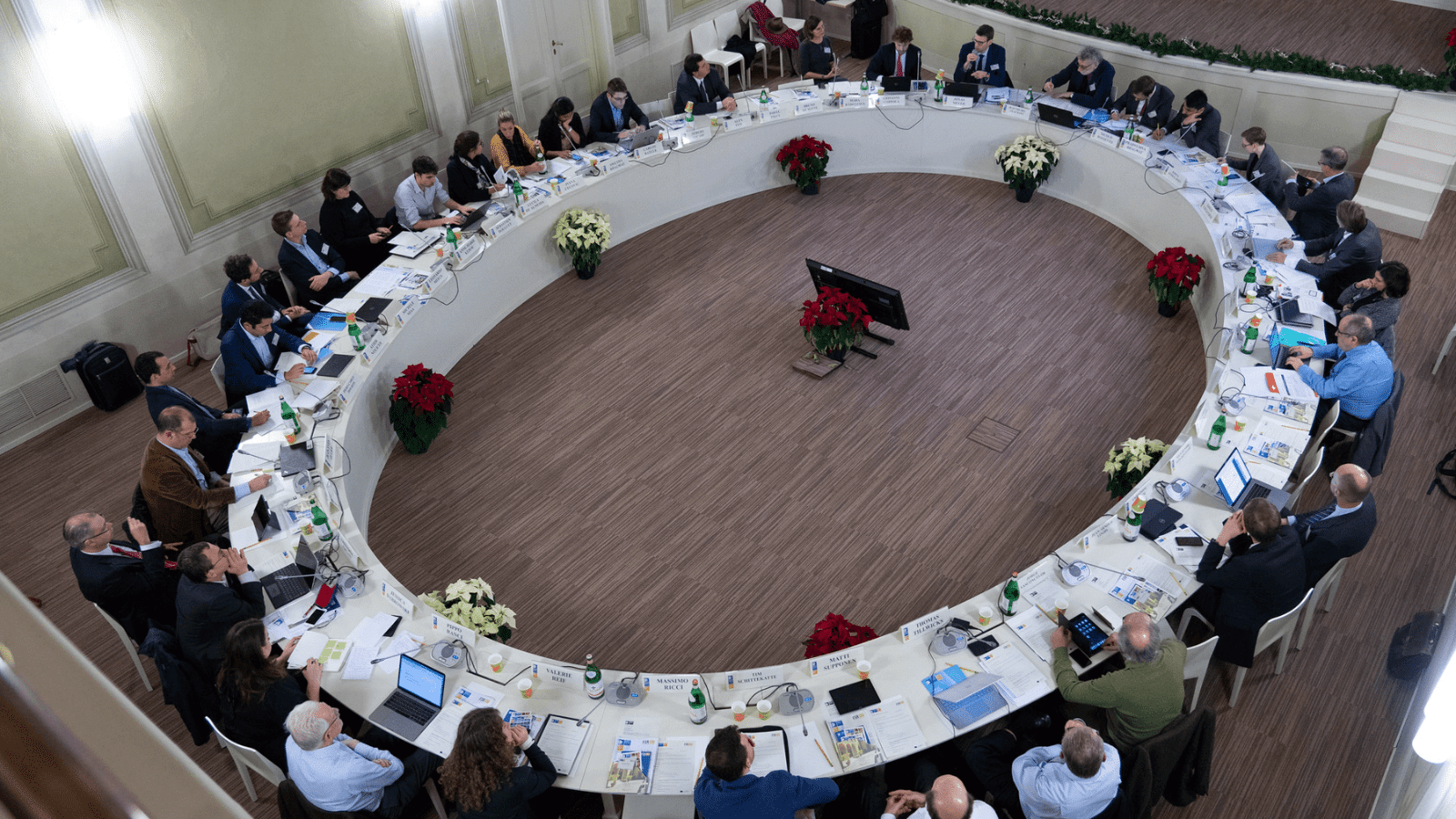
On 15 June 2023, the Florence School of Regulation (FSR) organised the first Policy Advisory Council (PAC) meeting of 2023. The PAC is composed of representatives of Star and Major Donors of the FSR, complemented by invited academics, regulators and policymakers. The PAC meets twice a year, typically in May-June and November-December.
The June PAC meeting this year was aimed at identifying which could be the policy priorities for the next European Commission in a number of areas in and related to the energy sector.
The meeting focused on four areas: energy markets; energy networks; energy and climate policy governance; and strategic autonomy.
As a result of the discussion in the meeting, a Policy Brief will be published in September and will be presented at the Workshop. Following the structure of the Policy Brief, the Workshop will be organised in four sessions:
- Session I: Make Member States more accountable to live up to their national investment potential for energy efficiency and renewable energy
- Session II: Promote multilateral cooperation and solidarity among Member States for network infrastructure, resource adequacy and flexibility
- Session III: Strengthen the management of our global dependencies
- Session IV: Reinforce the EU institutional setup
Each session will be opened by a presentation by a member of the FSR faculty, followed by a roundtable of representatives of FSR Donors. Each Donor will be invited to participate in up to two roundtables.
The feedback received during the Workshop will be used further to elaborate the content of the Policy Brief in the four areas listed above and, possibly, in other areas.
Please note that this event is by invitation only.
Sustainability assessment
The FSR assesses the sustainability and carbon footprint of all its Workshops of the Regulatory Policy Workshop Series. This Workshop is run according to a hybrid format, allowing participants to join it in presence in Florence or through internet-based remote connection. It is expected that most participants will participate in the Workshop through remote connection, while a few of them, who particularly value personal interaction, will join the Workshop in Florence. Therefore, there will be limited travel involved compared to a fully presential event. Those participants joining the event in Florence will be encouraged to offset any carbon emissions related to their air travel. It is considered that, in this way, a suitable balance is achieved between the effectiveness of the policy dialogue and the net carbon footprint of the event.
Don’t miss any update on our events
Sign up for free and access the latest events from our community.
Law in the EU’s Circular Energy System: Biowaste, Biogas and Biofuel

Our next FSR Insights will be dedicated to launch the forthcoming edited book entitled Law in the EU’s Circular Energy System: biofuel, biowaste and biogas (Edward Elgar, Dec. 2023), edited by Lucila de Almeida and Josephine van Zeben.
Watch the recording
Adopting a holistic and multidisciplinary approach, this book comprehensively maps out the complex multi-jurisdictional legal landscape pertaining to the EU’s circular energy system concerning the production and consumption of biogas and biofuel produced from biowaste.In three thematic sections, the expert contributors first examine the interactions between EU law and policy for waste, agriculture, food, and forestry. Focus is drawn to how, when, and by whom the energy sources created from biowaste can become part of the EU’s energy mix. A range of legal instruments that impact the financing of the circular energy system through taxation, EU financing, and state aid are also considered. The book concludes by reflecting on inefficiencies and ineffectiveness caused by these interactions of legal and policy areas related to the circular energy system.The FSR insights will gather editors and some contributors to share the insights of the edited volume with the audience.
Host & Speaker:
Lucila de Almeida (FSR & NOVA School of Law)
Speakers:
Josephine van Zeben (Wageningen University & Research)
Lin Batten (University of Strathclyde)
Elisa Cavallin (University of Gent & University of Hasselt)
Discussants:
Sofia Nicolai (FSR)
Ginevra Le Moli (FSR)
Presentations
-
Event Presentation
Lucila de Almeida, Elisa Cavallin and Lin Batten
Don’t miss any update on our events
Sign up for free and access the latest events from our community.
The new role of distribution system operators
Between decentralised renewables and demande response
This episode of FSR Debates will provide an opportunity to take stock of the progress achieved so far and the next steps to achieve a seamless operation of the electricity system in the Net-Zero scenario.
Watch:
The ambitious energy and climate targets to which the EU has committed require a massive deployment of renewable-based generation, much of which will be decentralised and connected to the distribution grid. Beyond being decentralised, the output profile of much of this generation will be variable, unpredictable, and unreliable, requiring a more flexible energy system to accommodate it.
Fortunately, advances in technology and digitalisation over the last ten years provide the possibility of harnessing more flexible resources, including those which will be developed for the main purpose of providing flexibility to the system (e.g. demand response and storage). Most of these resources will also be connected at distribution level.
Therefore, the traditional role of the distribution systems and their operators – to deliver to connected consumers the electricity produced by large generating units connected at transmission level – is being complemented by a new task, of managing the flexibility provided and required by resources connected at distribution level. This task is a key one for the energy transition and, in this regards, will make the functions of the distribution system operators more similar to the role of transmission system operators. For sure, the need for cooperation and coordination between transmission system operators and distribution system operators will increase.
This transformation, which already started a few years ago, led to new EU rules regarding the functions of the distribution system operators and their cooperation with the transmission system operators. But the challenge is not yet won.
Programme
14.00 – 14.05 Introduction to the Debate
Alberto Pototschnig | Florence School of Regulation
14.05 – 14.15 The new role of electricity Distribution System Operators
Ellen Beckstedde | Loyola de Palacio Chair Resercaher, EUI
14.15 – 14.25 The cooperation between Transmission and Distribution System Operators
Fabio Genoese | Co-convener, TSO-DSO development team on Demand Response, ENTSO-E
Moderator: Ilaria Conti | Florence School of Regulation
14.25 – 14.50 Introductory remarks from the panellists
Gert De Block | Secretary General, CEDEC
Carmen Gimeno | Secretary General, GEODE
Louise Rullaud | Head of Distribution & Market Facilitation, Eurelectric
Roberto Zangrandi | Secretary General, E.DSO
14.50 – 14.55 Polls
14.55 – 15.20 Comments on the polls outcome and Q&A from the audience
Panellists
15.20 – 15.30 Concluding remarks
Ilaria Conti | Florence School of Regulation
Alberto Pototschnig | Florence School of Regulation
Don’t miss any update on our events
Sign up for free and access the latest events from our community.
More on the topic


Scaling hydrogen shipping while reducing emissions: what are the solutions?

In this episode of #FSRDebates we explore how to decarbonise maritime fuels while ensuring efficient clean hydrogen transportation. The debate will focus on realising the EU’s 2030 climate targets for both the maritime sector and the import of clean molecules, reflecting the relationship between these two areas of work.
Watch the recording:
Maritime emissions
The maritime industry faces growing pressure to reduce its carbon footprint with EU ETS prices pushing up the cost of fossil fuels for shipping, as well as binding targets on clean fuel use from FuelEU looming larger on the horizon. At the same time, demand for shipped deliveries of energy products is on the rise, with a shift towards liquified deliveries of natural gas, and a growing interest in importing clean hydrogen and other clean molecules via ship. Under these conditions, operators in Europe and beyond are beginning to make technology choices on the decarbonised fuel of choice for their next generation of tankers.
Liquid Organic Hydrogen Carriers (LOHCs)
LOHCs are organic compounds that can safely and efficiently store and transport hydrogen, one of the most promising clean energy sources. Unlike pure liquid hydrogen, which requires high-pressure and cryogenic conditions, LOHCs store hydrogen in a liquid carrier at or near ambient temperatures and low pressures, reducing safety concerns and costs associated with hydrogen handling and storage. The ability to store hydrogen in a carrier, could open new horizons for clean energy logistics, especially in maritime transport due to the possibility of utilising much larger and cheaper oil infrastructure. In theory, taking advantage of existing and increasingly available oil infrastructure could be key to overcoming key scalability challenges for shipped deliveries of clean molecules.
This intensive 1-hour session will bring together a handful of key stakeholders who will share their expertise, covering both an industry and academic perspective. There will be space for questions from our expert moderators and the audience.
- Intro: James Kneebone (FSR)
- LOHC and making use of oil infrastructure: Dominik Bruckner (Hydrogenius)
- Questions: Andris Piebalgs (FSR) and Jan Cornillie (STG/3E)
- Paper presentation: Marginal abatement cost of alternative marine fuels and the role of market-based measures. Sotiria Lagouvardou (Technical University of Denmark)
- Questions: Andris Piebalgs (FSR) and Jan Cornillie (STG/3E)
- Questions: Audience
- Closing remarks: Andris Piebalgs (FSR)
Presentations
Don’t miss any update on our events
Sign up for free and access the latest events from our community.
More on the topic
FSR Climate Annual Conference 2023

FSR Climate is pleased to announce its 9th Annual Conference on the Economic Assessment of European Climate Policies to take place at the European University Institute in Florence on 27-28 November 2023.
The conference will cover some of the main climate policies at EU, national and subnational levels and will include a keynote speech as well as parallel sessions and plenary speeches focusing on the topics of emissions trading, environmental taxation, energy efficiency, and renewable energy.
The Conference will be chaired by Simone Borghesi, Director of the FSR Climate, Deputy Rector for International Relationships at the University of Siena, and President-Elect of the European Association of Environmental and Resource Economists (EAERE).
PROGRAMME
Lectures
Keynote Lecture: “Goals and Pledges”
- Andreas Lange, University of Hamburg – Watch the video
Guest Lecture: “Regional Power Markets, Subregional Carbon Trading, and Carbon- Border Adjustments: Experience in US Markets”
- Ben Hobbs, Johns Hopkins University and California IS – Watch the video
Guest Lecture: “Environmental Taxes and Pollution Abatement under Economies of Scale“
- Carmen Arguedas, Autonomous University of Madrid – Watch the video
Guest Lecture: “Carbon Taxes and Tariffs, Financial Frictions, and International Spillovers”
- Aude Pommeret, University of Savoie-Mont-Blanc – Watch the video
Guest Lecture: “The Role of Energy Efficiency on the Road to Net Zero Carbon Economies – Some Reflections”
- Theodoros Zachariadis, Cyprus Institute – Watch the video
Paper Presentations
- Sevil Acar (Bogazici University) – Transforming Turkiye’s power system: An assessment of economic, social, and external impacts of an energy transition by 2030 [slides]
- Raavi Aggarwal (Indian Statistical Institute) – Input substitution for sustainable industrialisation: Evidence from India [slides]
- Elsa Amaddeo (University of Bari Aldo Moro) – Who really pays for EU Emission Trading Systems? The risk of shifting the tax burden from the firm to the final consumer [slides]
- Patrick Bigler (University of Bern, KPM Center for Public Management and Oeschger Center for Climate Change Research) – Extent and Anatomy of the Solar Rebound: Evidence from Swiss Households [slides]
- Justus Böning (KU Leuven) – On the Effectiveness of Future Financial Benefits on PV Adoption – Evidence from Belgium [slides]
- Marta Castellini (University of Padua and FEEM-Fondazione Eni Enrico Mattei) – RICE-MED, an integrated assessment model for the Mediterranean basin: assessing the climate-economy-agriculture nexus [slides]
- Edouard Civel (Square Research Centre and Climate Economics Chair) – Green premium or manipulation? Regression discontinuity design application on French energy labels [slides]
- Natalia D’Agosti (University of Edinburgh) – The Impact of Solar Panel Installation on Electricity Consumption and Production [slides]
- Audric De Bevere (UCLouvain – Center for Applied Public Economics and Fonds de la Recherche Scientifique – FNRS) – The Distributional Impacts of EU-ETS 2 on Households: A Microsimulation Approach in Belgium [slides]
- Mahaut De Villeneuve (ESSEC Business School and CY Cergy Paris University) – Carbon Border Adjustment Mechanisms under Asymmetric Information [slides]
- Sonja Dobkowitz (DIW Berlin) – Meeting Climate Targets: The Role of Fossil Research Subsidies [slides]
- Ingrid Emilie Flessum Ringstad (Norwegian School of Economics) – Time and frequency dynamics of connectedness between green bonds, clean energy markets and carbon prices [slides]
- Dana Ghandour (Concordia University) – Environmental Cooperation and Trade – The Impact of Heterogeneity in Environmental Damages: An Endogenous Solution [slides]
- Friedemann Gruner (Mercator Institute for Global Commons and Climate Change) – Pigou’s Advice and Sisyphus’ Warning: Carbon Pricing with Non-Permanent Carbon Dioxide Removal [slides]
- Katherine Hassett (OECD) – Household behaviour and energy use: Empirical evidence and policy implications
- Ireri Hernandez Carballo (Bocconi University and RFF-CMCC European Institute on Economics and the Environment (EIEE)) – The Impact of Green Policies on Local Economic Performance: Evidence from the EU ETS [slides]
- Kaitoh Hidano (National University of Singapore) – Opportunities and Challenges of the Emission Trading System in Japan: An Empirical Study on the Case of Saitama Prefecture [slides]
- Gianluca Iannucci (University of Florence) – Emission Permits and ECSR Practice in an Evolutionary Duopoly [slides]
- Stefania Innocenti (University of Oxford) – Increasing the acceptability of carbon taxation: The roles of social norms and economic reasoning [slides]
- Stephen Jarvis (London School of Economics) – The Impact of Climate Policy on Manufacturing Employment: Firm-Level Evidence from Germany [slides]
- Eugénie Joltreau (RFF-CMCC European Institute on Economics and the Environment (EIEE) and Fondazione Centro Euromediterraneo sui Cambiamenti Climatici (CMCC)) – Recycling in a Globalised Economy
- Emilia Lamonaca (University of Foggia) – Climate and Non pricing Policies
- Marita Laukkanen (VATT Institute for Economic Research) – Vehicle replacement subsidies and the environment: evidence from administrative data
- Etienne Lorang (Tilburg University) – When Pigouvian waste taxes (cannot) implement the first-best in general equilibrium [slides]
- Maria del Mar Solà (University of the Basque Country (UPV/EHU)) – Memory effect of appliance rebate programme: evidence from a lab experiment [slides]
- Massimiliano Mazzanti (University of Ferrara) – Climate policy analysis: efficient estimation of a semiparametric panel data model with spatial and factor dependence [slides]
- Coline Metta-Versmessen (LEDa Paris Dauphine University, Climate Economics Chair & EDF) – Waste Trading System: managing waste with high population density and low sorting rate [slides]
- Christian Nolde (University of Basel) – Who Should Drive Green Technology Transitions in Developing Countries [slides]
- Sebastian Osorio (Potsdam Institute of Climate Impact Research) –Will cutting back on renovating buildings make carbon prices go through the roof? [slides]
- Monika Papież (Cracow University of Economics) – How does the Environmental Policy Stringency affect the CO2 emissions in OECD and BRICS countries?
- Marco Quatrosi (University of Palermo) – Emission Trading in a high dimensional context: to what extent carbon markets are integrated with the broader system? [slides]
- Claudia Ranocchia (Universidad Complutense de Madrid and Universidad Autónoma de Madrid) – Porter hypothesis vs pollution haven hypothesis: Can an emission tax avoid the pollution haven hypothesis? [slides]
- Elisa Rottner (Leibniz Centre for European Economic Research and University of Basel) – Is Germany becoming the European pollution haven? [slides]
- Stephan Sommer (Bochum Univeristy of Applied Sciences and RWI–Leibniz Institute for Economic Research) – How resilient is public support for carbon pricing? Longitudinal evidence from Germany [slides]
- Jordi Teixidó (University of Barcelona) – Technology Diffusion in Carbon Markets: Evidence from aviation [slides]
- Roberta Terranova (RFF-CMCC European Institute on Economics and the Environment) – Believe me when I say green! Heterogeneous expectations and climate policy uncertainty [slides]
- Elena Villar (Università Cattolica di Milano) – The Intended and Unintended Consequences of Taxing Waste [slides]
- Hermann Vollebergh (PBL Netherlands Environmental Assessment Agency and Tilburg University) – Coherence in carbon pricing: The importance of descriptive economics for policy package evaluation [slides]
You can access the abstracts of the conference papers here.
FEES
Speaker (presenting a paper): 330 euro.
Student (presenting a paper)*: 220 euro.
Participant (not presenting): 440 euro.
* Students must provide proof of their student status.
The registration will close on November 19 EOD. Please note that fee payments need to be made by November 19. If you pay by bank transfer, please send to RSCAS.Conferences@eui.eu a proof of the payment.
This event is organised with the support of EAERE.
Past Editions of the FSR Annual Climate Conference
FSR Climate Annual Conference 2022
FSR Climate Annual Conference 2021
FSR Climate Annual Conference 2020
FSR Climate Annual Conference 2019
FSR Climate Annual Conference 2018
FSR Climate Annual Conference 2017
FSR Climate Annual Conference 2016
FSR Climate Annual Conference 2015
Don’t miss any update on our events
Sign up for free and access the latest events from our community.
More on the topic
12th Florence Intermodal Forum: Investing into Transport Infrastructures

Investing into transport infrastructures.
Where to focus?
The 12th Florence Intermodal Forum organised by the Transport Area of the Florence School of Regulation in collaboration with European Commission – DG MOVE, will gather European and national- regulators, public transport operators, industry representatives and academics for a discussion on the challenges and enablers in funding TEN-T projects.
More specifically, forum participants will tackle the following issues: building the trans-European network for a Single Market, sustainable and smart transport as well as new challenges the sector is facing, especially challenges of resilience.
Background
The first ‘Community Guidelines’ for the development of the trans-European network were adopted in July 1996. These guidelines incorporated a ‘Master Plan’, detailing the connection of major national road, rail and waterway networks between Member States, with the aim of relieving major European bottlenecks by addressing issues such as capacity restrictions and cross-border incompatibility.
The guidelines were amended in 1999 to include rules for the granting of EC and EU funding of Trans-European Transport Network (TEN-T) projects. These TEN-T guidelines incorporated a series of flagship ‘Priority Projects’ and allocated priority status according to their strategic importance and/or significant scale.
In 2009, the EC took the decision to launch a TEN-T policy review, with a view to further developing TEN-T policy ahead of the (then upcoming) budgetary period, 2014 to 2020. The review assessed successes and failures of TEN-T policy between 1996 and 2009.
In 2014 a new set of TEN-T guidelines were introduced, thus setting out a clear path forward for investment and action between 2014 and 2030. This new policy is built upon the concept of an integrated, multimodal, core network of corridors, linking major nodes through key rail, road, inland waterway, maritime and air transport connections.
To support the transition to a cleaner, greener and smarter mobility in line with the European Green Deal and the Sustainable and Smart Mobility Strategy, the Commission also proposed to revise the TEN-T Regulation of 2013. Accordingly, the Commission made its initial legislative proposal for a revised regulation in December 2021. The new TEN-T regulation shall be adopted by the end of 2023 and become operational as of 2024. It aims to make the EU’s transport network safer, more sustainable, faster, and more convenient for its users. To address the missing links and modernise the entire network, quality standards should be increased. For this, major TEN-T passenger rail lines should allow trains to travel at 160 km/h or faster by 2040. Canals and rivers must ensure good navigation conditions for a minimum number of days per year. Trans-shipment terminals should be improved, and piggy-back services should become possible on the TEN-T’s rail network. All major cities should develop sustainable urban action plans to promote zero-emission mobility. In addition, the transport infrastructure needs to become fit for both civil and defence use.
The Smart and Sustainable Single European Transport Area requires not only a strong political will but even more so substantial investments. The challenges European transport has been facing as of lately are unprecedented (Covid-19 and the war in Ukraine, to name a few). This is in addition to the ongoing challenges of digitalisation and decarbonisation.
Read the policy brief:
12th Florence intermodal forum investing into transport infrastructures : where to focus?
Presentations
- Alberto Mazzola
- Carole Coune
- Giovanni Aldeghi
- Irmtraut Tonndorf
- Ismail Ertug
- Linda Thulin
- Malika Seddi
Don’t miss any update on our events
Sign up for free and access the latest events from our community.


REDIII: from ambitious targets to necessary actions
The first episode of the new season of #FSRDebates hosted by Andris Piebalgs and Christopher Jones will focus on the revised Renewable Energy Directive (REDIII).
In September, the European Parliament cast its final vote on the revised Renewable Energy Directive (REDIII), marking the conclusion of its legislative process. The importance of REDIII cannot be overstated as it stands at the forefront of the European Union’s commitment to achieving climate neutrality by 2050. This directive represents more than just an aspirational guideline; it embodies the EU’s transformative journey towards a novel economic model, one which is in harmony with the environment.
The ambitions of REDIII are indeed commendable. The directive has set forth a binding target which stipulates that by 2030, at least 42.5% of the EU’s energy consumption must be derived from renewable sources. To provide a perspective on its ambitious nature, in 2021, this figure stood at just 21.8%. Beyond this overarching goal, REDIII is comprehensive in its approach, advocating for an accelerated adoption of renewables across various sectors such as industry, transport, buildings, and heating and cooling.
However, as with any directive, its impact lies not in its drafting but in its implementation. Once REDIII is published, the onus will be on EU Member States to incorporate its provisions into their national laws. The pertinent questions arise: Will this transposition be both swift and ambitious? Can Member States promptly initiate the requisite actions to bring about this green revolution?
Unfortunately, concerns linger. A recent special report by the European Court of Auditors cast a shadow of doubt, indicating a potential gap between ambitions and actions. The report highlighted a concerning trend where the lofty goals for 2030 may not be met.
Thus, as we acknowledge the final vote on REDIII, it is crucial for stakeholders, policymakers, and citizens alike to engage in introspection. We must not only recognize the key provisions of this revised directive but also ponder upon the steps essential for mobilizing the required actions and finance. The vision for a greener Europe hinges on the breakthrough penetration of renewable energy across all sectors of the economy. While the directive lays the path, the journey to a sustainable European Union will require collective resolve, effort, and action.
The debate will reflect on key provisions of REDIII, challenges reflected in ECA’s Report and discuss how to get ambitions transformed in reality.
Draft programme
Moderator: Marzia Sesini, FSR
Keynote Presentation on REDIII
Edith Hofer, European Commission
ECA’s Report on Climate and energy targets
Lorenzo Pirelli, ECA
Debate
Christopher Jones, FSR
Jesse Scott, Hertie School
Pieter de Pous, E3G
James Watson, Eurogas
Presentations
Don’t miss any update on our events
Sign up for free and access the latest events from our community.