




Archives: Events
Allowing explicit participation in capacity markets: an improvement or a false hope?

What is the best way to prevent capacity remuneration mechanisms (CRMs) of individual EU Member States from generating negative externalities in their neighbours?
Join us for the third and final instalment of the FSR Insights series’ quarterly theme “Securing Europe’s Energy Future”
Emma Menegatti, PhD candidate with the Loyola De Palacio Chair at the FSR, will present her working paper, co-authored with the FSR Director, Leonardo Meeus.
The paper models four types of externalities that the adoption of a capacity market can generate on a neighbouring energy-only electricity market zone, and compares the impact of three different approaches to cross-border participation: no participation, implicit participation, and explicit participation.
The webinar aims to shed light on the potential of cross-border participation in solving the cross-border issues caused by national capacity markets. This is a timely discussion, as CRMs are no longer seen as just a temporary or last-resort solution for security of supply issues. Instead, the latest EU market reforms recognize CRMs as a structural element of the electricity market.
Nevertheless, Member States willing to adopt a CRM must notify the European Commission (EC) and get state aid rules cleared. Following the 2024 Electricity Market Design reform, the EC is required to publish a report in early 2025 on streamlining and simplifying the process for applying for a capacity mechanism.
Derek Bunn, professor at the London Business School, and Eline Spyrou, lecturer at the Imperial College of London, will provide commentary on Emma Menegatti’s presentation, enriching the conversation with diverse perspectives. Moderated by Nicolò Rossetto and Marzia Sesini from FSR, the session will invite audience participation, encouraging an engaging and thought-provoking dialogue.
Keynote Speaker
Emma Menegatti | FSR
Discussants
Derek Bunn | London Business School
Eline Spyrou | Imperial College London
Moderators
Marzia Sesini | FSR
Nicolò Rossetto | FSR
Don’t miss any update on our events
Sign up for free and access the latest events from our community.



Enhancing NDCs 3.0: the role of carbon markets

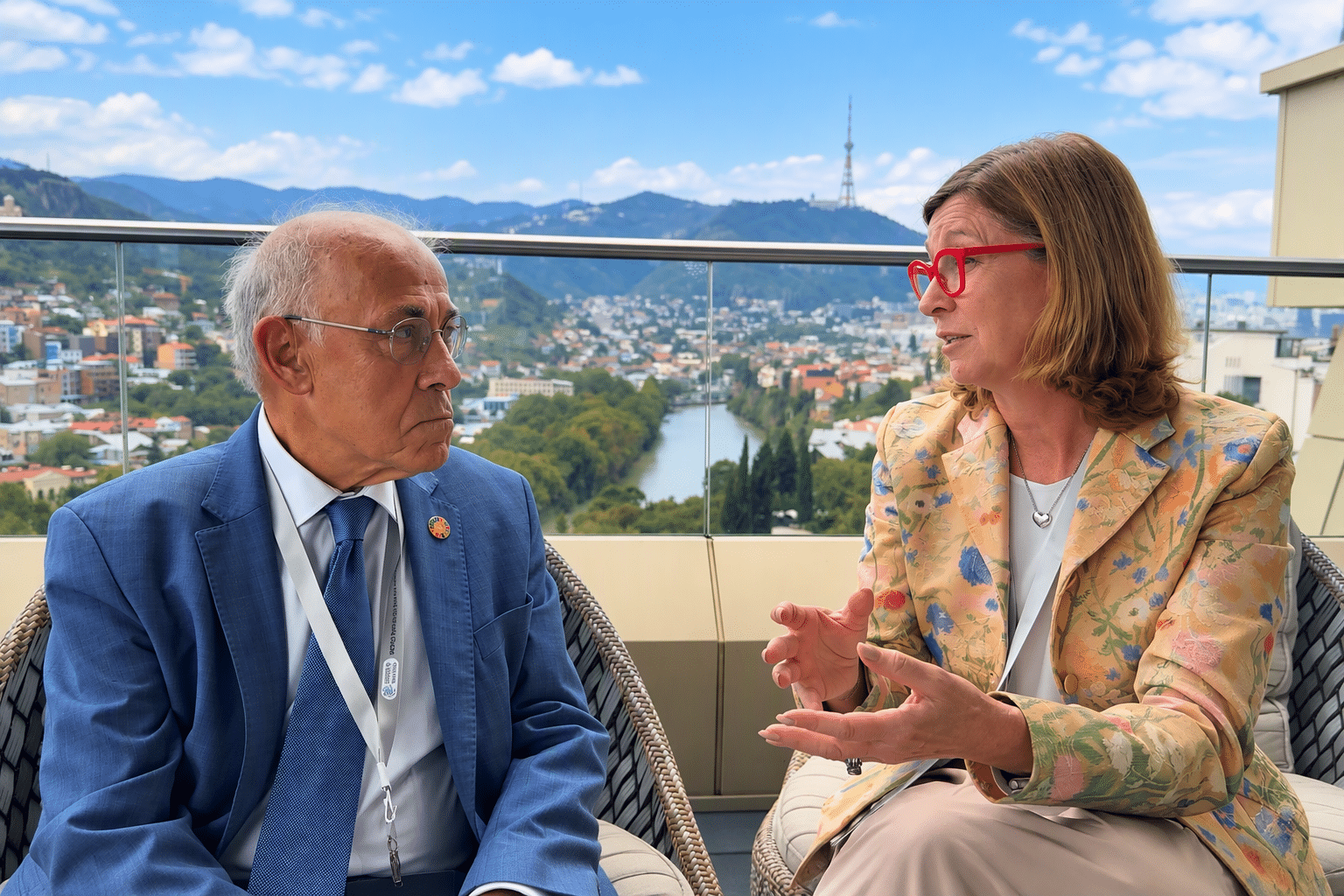
The COP29 panel “Enhancing NDCs 3.0: The Role of Carbon Markets in Emission Reductions and Removals”, scheduled on Friday 15 November 2024 from 11:30 to 13:00 AZT, will explore different pathways to enhance NDCs through carbon markets.
Nationally determined contributions (NDCs) are at the heart of the Paris Agreement as they reflect domestic efforts to reduce emissions and adapt to climate change. Progressively more ambitious NDCs are submitted every 5 years to the United Nations Framework on Climate Change Convention (UNFCCC) Secretariat with the next submission coming up in February 2025. To update their NDCs, Parties need to consider further emissions reductions and removals. Carbon markets have the potential to drive mitigation actions through domestic policies and international cooperation and could, therefore, play an increasingly important role in the NDCs.
The Official Side-Event will be hosted by the UNFCCC in Room 6 during the 29th Conference of Parties in Baku, Azerbaijan. It is organised by FSR, ICAP, Seoul International Law Academy and Tsinghua University.
Chair: Simone Borghesi, EUI, Siena University & EAERE
Introductory remarks:
- Li Gao, Environment and Resources Protection Committee of the National People’s Congress, China
Scene-setting presentations:
- Simone Borghesi, EUI, University of Siena & EAERE [slides]
- Stefano De Clara, ICAP [slides]
- Xiliang Zhang, Tsinghua University [slides]
Panel:
- Suh-Yong Chung, Korea Uni & SILA
- Teng Fei, Tsinghua University
- Xiaolu Zhao, EDF
- Leticia Guimarães, UNDP
Conclusions:
- Jan Dusik, European Commission
The event is organised by the EUI, ICAP, Tsinghua University and SILA and is held in the framework of the project LIFE COASE.
Don’t miss any update on our events
Sign up for free and access the latest events from our community.
More on the topic









Green hydrogen in India and opportunities with Europe

Don’t miss any update on our events
Sign up for free and access the latest events from our community.




Can emissions trading promote carbon removals?

Removing greenhouse gas emissions from the atmosphere is essential to maintaining the temperature increase below 2 degrees above the pre-industrial levels. However, a policy gap exists in incentivising investment in carbon removal technologies. Since emissions trading systems are considered a cost-effective solution to drive technological change, can emissions trading promote carbon removals?? How can carbon removals fit into a climate policy mix that targets net zero emissions?
These and other questions will be addressed during the panel discussion “Can emission trading systems be employed to promote carbon removals?” on Tuesday 12 November from 09:30 to 11:00 AZT at the Italian Pavilion of the 29th Conference of the Parties (COP29) in Baku, Azerbaijan.
Chair and Introduction:
- Simone Borghesi, FSR Climate, EAERE & University of Siena
Panel Discussion:
- Robert Jeszke, KOBIZE
- Luca Taschini, University of Edinburgh
- Stephanie La Hoz Theuer, ICAP
- Lorna Ritchie, ICVCM
Concluding Remarks:
- Ottmar Edenhofer, PIK & MCC
The event is organised by the EUI with the support of ICAP and is held in the framework of the project LIFE COASE.
Dive deeper into the topic:
- Read the event highlights from the latest LIFE COASE policy dialogue.
- ICAP report “Emissions Trading Systems and Net Zero: Trading Removals“, May 2021
Don’t miss any update on our events
Sign up for free and access the latest events from our community.
More on the topic

How to ensure a sustainable agricultural trade regime

Join this online event to learn more about agriculture-related issues at the intersection of the FSR agenda on energy, climate, and sustainability, and explore the policies and regulatory regimes that can support sustainable agricultural trade.
The Strategic Dialogue on the Future of EU Agriculture has emphasised the importance of promoting sustainability and competitiveness in trade policy.
This webinar aims to highlight the critical importance of sustainable agricultural trade and its benefits for the environment, society, and the economy.
The panel includes representatives from EU institutions, academia, and international organisations who will address the coherence between trade and sustainability policies while reviewing approaches to trade negotiations that recognize the strategic importance of agriculture in international trade. A comparative analysis of the EU regulatory regime will also be featured. Furthermore, participants will discuss effective strategies and interventions to promote sustainable practices, including the adoption of trade measures, standards, certifications and labels. Lastly, this webinar will emphasise the role of collaboration among farmers, traders, policymakers, and consumers in driving change. By the end, participants will be equipped with actionable knowledge to support sustainable agricultural trade and contribute to a more resilient and equitable food system.
This online event is designed for businesses, trade associations, farmers’ organisations, scientists, and policy analysts. Through expert discussions and case studies, attendees will gain insights into best practices and innovative solutions for fostering sustainability in agriculture as part of the broader climate agenda.
Speakers
Flavio Coturni | DG TRADE
Rob Vos | IFPRI
Susan Stone | University of South Australia
Jukka Likitalo | EUCOLAIT
Ignacio Sanchez Recarte | CEEV
Moderator
Alessia Casamassima | FSR Climate – EUI
Chair
Fabio Santeramo | EUI & University of Foggia
Don’t miss any update on our events
Sign up for free and access the latest events from our community.
Speakers
More on the topic
Certification of Hydrogen Imports: Which Requirements, Which Perspectives?

The REPowerEU Communication, published by the European Commission in 2022, confirmed the previously set target of 10 million tons (Mt) of renewable hydrogen to be produced in the EU by 2030 and added a target of 10 Mt of imported renewable hydrogen on top of it. Still in 2022, hydrogen accounted for less than 2% of Europe’s energy consumption and was primarily used to produce chemical products, such as plastics and fertilisers.
In order to facilitate the market uptake of hydrogen and in particular its upscale to the international dimension, the Commission envisaged the development of three major hydrogen import corridors via the Mediterranean, the North Sea area and, as soon as conditions allow, with Ukraine; at the same time, it supported the development of Green Hydrogen Partnerships, to facilitate the imports of green hydrogen while supporting the decarbonisation in the partner countries.
Alongside the natural matching of demand with supply, and the development of the necessary infrastructure, what is further needed as to set the basis for an international trading of hydrogen, seems to be a robust system of reliable and mutually recognised certification system.
Worldwide certification systems are typically based on aligned understanding of terminology and standardization, as well as on trust.
The EU and the US seem to be the first movers on getting to an agreed set of rules/definitions. Regarding terminology, the European Commission enshrined in regulation the definition of renewable hydrogen (as belonging to the category of RFNBOs, Renewable Fuels of non-biological origin) and has recently opened a consultation aiming to complete the definition of low-carbon hydrogen. In the US, the Inflation Reduction Act (IRA) includes comparable rules focusing on hydrogen’s generation emission intensity.
On EU RFNBO Certification, the EU Commission is evaluating different types of certificates. These certification schemes can be used by a production company to serve the needs of its customers and want to offer products meeting certain sustainability criteria. However, these certificates are only voluntary at present. Identifying and implementing mandatory standards should probably become the very first step to advance international certification of hydrogen traded products.
If so, are there any best practises to build on? Where are the main bottlenecks?
Programme
Introduction to the Debate and Opening Presentations
14.00 – 14.05 Introduction to the Debate
Ilaria Conti | FSR
14.05 – 14.20 Certification Requirements in the EU
Ruta Baltause | DG ENER
14.20 – 14.30 Certification Requirements in the US
Chelsea Baldino | ICCT
Panel Discussion: Introductory Remarks, Polls and Comments
Moderator: Alberto Pototschnig | FSR
14.30 – 15.00 Introductory remarks from the panellists
Maximilian Kuhn | Hydrogen Europe
Peter Biltoft-Jensen | Ørsted, Energy Traders Europe
Katrien Verwimp | AIB
Nicolai Romanowski | CEFIC
Francisca Gallegos | University of Eastern Finland
15.00 – 15.25
Discussion and Q&A with the audience
15.25 – 15.30 Concluding remarks
Ilaria Conti | Florence School of Regulation
Alberto Pototschnig | Florence School of Regulation
Presentations
Don’t miss any update on our events
Sign up for free and access the latest events from our community.
Voluntary Carbon Markets: Is Skepticism Justified?
In this joint FSR-NYU episode of #FSRDebates, we explore Voluntary Carbon Markets (VCMs) as they have emerged as a mechanism for organizations and individuals to offset their carbon emissions by purchasing carbon credits. While they hold promise to contribute to global carbon reduction efforts, they face several challenges that hinder their effectiveness and credibility.
VCMs often lack a unified global regulatory framework, leading to inconsistencies in standards and methodologies across different markets. This fragmentation can result in differences in the quality and reliability of carbon credits. Transparency issues and insufficient verification mechanisms can lead to double-counting, overestimations of carbon reductions, and fraud.
Ensuring that projects genuinely contribute to carbon reductions is a significant challenge. Moreover, concerns exist about the social impacts of certain carbon offset projects, particularly those involving land use changes.
Addressing these and other challenges requires serious efforts to create a more transparent and equitable carbon market that can effectively contribute to global climate goals. Our discussions in this episode will carefully examine all these aspects. The tri-continental perspective the debate brings aims to help understand the complexities of VCMs and enrich ongoing discussions, facilitating informed decision-making across various sectors and disciplines.
Keynote Speaker
Nat Keohane | President, Center for Climate and Energy Solutions
Damien Meadows | Legal and Policy Advisor, DG Climate Action
Debate
Peter Vis | Senior Adviser, Rud Pedersen Public Affairs, Brussels
Gregory Trencher | Kyoto University
Conclusions
Simone Borghesi | FSR
Moderators
Marzia Sesini | FSR
Christoph Graf | NYU
Don’t miss any update on our events
Sign up for free and access the latest events from our community.
Net Zero Carbon Market Policy Dialogue 2024 (online)

The Net Zero Carbon Market Policy Dialogue (NZCMPD) brings together regulators, policymakers, academics, and stakeholders from different carbon markets worldwide on a yearly basis. It is organised under the framework of the project, LIFE COASE – Collaborative Observatory for ASsessment of the EU ETS, which is co-funded by the EU Life Programme.
The event offers a unique opportunity for fruitful exchange on carbon market development and integration related to net zero targets, regulation, development, and integration of carbon markets. A background report from the LIFE COASE team will feed into the discussion at the policy dialogue and provide a basis for the discussion.
The first session of the NZCMPD was held on 21 May 2024 in the context of the EUI Climate Week and discussed the 2024 State of Play in Carbon Markets. The upcoming sessions of the policy dialogue will focus on the opportunities, and challenges of extending carbon pricing to new sectors, the methodological issues relating to modelling the development of emissions trading systems, and considerations regarding the inclusion of domestic carbon removal in emissions trading systems.
Participation is by-invitation only.
11:30-11:35 Welcome by Simone Borghesi (EUI and University of Siena)
11:35-12:35 Opportunities and challenges of ETS sector expansion
14:00-15:00 Modelling for emissions trading: new frontiers
15:00-16:00 Integrating carbon removals in ETSs
Don’t miss any update on our events
Sign up for free and access the latest events from our community.
More on the topic
Which Hydrogen Network for Europe?
This FSR Debate will discuss which hydrogen infrastructure vision is more likely to prevail in the period to 2030 and, more generally, what this implies for the development of the renewable/low carbon hydrogen sector.
Despite the fact that renewable and low-carbon hydrogen represents one of the pillars of the EU decarbonisation and system integration strategies, there is still significant uncertainty regarding how the sector will develop in the years to come and what this implies for the hydrogen transport infrastructure. In 2020 and again in 2022 the EU set goals for the production and import of renewable hydrogen. However, an agreed ‘target model’ for the nascent hydrogen sector is still to emerge. This might impact the development of the hydrogen transport infrastructure. Reference is often made to a ‘no-regrets’ network. But what would this be?
This FSR Debate will compare two visions – one mostly based on ‘hydrogen valleys’, similar to the current setting of the sector, and another one bases on the development of an EU-wide hydrogen backbone network- and discuss how they could contribute to a ‘no-regrets’ approach to the hydrogen network and what this implies for the development of the renewable/low carbon hydrogen sector.
Programme
Introduction to the Debate and Opening Presentations
14.00 – 14.05 Welcome to the Debate
Ilaria Conti | Florence School of Regulation
14.00 – 14.05 Introduction to the Debate
Alberto Pototschnig | Florence School of Regulation
14.05 – 14.20 the EU vision on hydrogen transport infrastructure
Lukas Wernert | Policy Officer, Decarbonisation and Sustainability of Energy Sources, DG Energy, European Commission
14.20 – 14.30 The regulatory perspective for the EU hydrogen transport infrastructure
Csilla Bartok | Head of Department, Gas, Hydrogen & Retail. ACER
Panel Discussion: Introductory Remarks, Polls and Comments
Moderator: Ilaria Conti | Florence School of Regulation
14.30 – 14.50 Introductory remarks from the panellists
María Sicilia | Chairwoman, European Hydrogen Backbone Initiative
Jorgo Chatzimarkakis | CEO, Hydrogen Europe (TBC)
Peter Claes | President, IFIEC Europe
Abel David Enriquez Rodriguez | Moderating Team, ENNOH Foundation Process
Ralph Bahke | CEO, ONTRAS and Board Member, GIE
14.50 – 14.55 Polls
14.55 – 15.20 Comments on the polls outcome and Q&A from the audience
Panellists
15.20 – 15.30 Concluding remarks
Ilaria Conti | Florence School of Regulation
Alberto Pototschnig | Florence School of Regulation
Background
Renewable and low carbon hydrogen is currently considered one of the pillars for the decarbonisation of energy demand. The 2020 EU System Integration Strategy1 included “the use of renewable and low-carbon fuels, including hydrogen, for end-use applications where direct heating or electrification are not feasible, not efficient or have higher costs” as one of the concepts to deliver low-carbon, reliable and resource-efficient energy services, at the least possible cost for society.
In 2022, hydrogen accounted for less than 2% of Europe’s energy consumption and was primarily used to produce chemical products, such as plastics and fertilisers. 96% of this hydrogen was produced from natural gas, resulting in significant amounts of CO2 emissions. Therefore, the 2020 EU Hydrogen Strategy2, unveiled at the same time as the System Integration Strategy, defined a roadmap for the development of renewable and low-carbon hydrogen. The Strategy set the priority for the EU to develop renewable hydrogen, while recognising that in the short and medium term other forms of low-carbon hydrogen are needed.
In terms of short-term ambition, the Hydrogen Strategy set strategic objectives:
- For the period to 2024, to install at least 6 GW of renewable hydrogen electrolysers in the EU for the production of up to 1 million tonnes of renewable hydrogen;
- For the period to 2030, to install at least 40 GW of renewable hydrogen electrolysers for the production of up to 10 million tonnes of renewable hydrogen in the EU, with an additional objective of 10 million tonnes imported from third countries later set by the REPowerEU Plan3.
Beyond 2030, “renewable hydrogen technologies should reach maturity and be deployed at large scale to reach all hard-to-decarbonise sectors where other alternatives might not be feasible or have higher costs”4.
Two visions for the development of the renewable/low-carbon hydrogen market and the supporting network are possible:
- One based on hydrogen valleys, i.e. local hydrogen clusters based on decentralised renewable hydrogen production and local demand, transported over short distances. This is the model currently prevailing.
- One based on an EU-wide hydrogen market, with “unhindered cross-border trade and efficient allocation of hydrogen supply among sectors”5.
The Hydrogen Strategy seemed to favour the second vision, at least for the 2030 horizon and beyond.
In order to support this vision, a suitable infrastructure is required:
- In the REPowerEU, the Commission indicated its intention to support the development of three major hydrogen import corridors via the Mediterranean, the North Sea area and, as soon as conditions allow, from Ukraine.
- An increasing group of energy infrastructure operators, under the European Hydrogen Backbone (EHB) initiative, have been looking at and proposing how a EU-wide hydrogen network could be developed, mostly by repurposing gas infrastructure no longer used in the future. The latest (EHB) report highlights a set of 40 projects managed by the EHB’s TSO members, representing 31.500 km of hydrogen pipelines with expected commissioning prior to 2030. By 2040, the backbone network should extend to close to 40,000 km. Two thirds of this network will consist of repurposed infrastructure.
Moreover, the 6th List of Project of Common Interest in 2023 included 65 hydrogen and electrolyser projects. Of these, 17 projects (some of which include several components) related to hydrogen transport infrastructures (although in some cases defined quite generically).
However, so far the hydrogen sector seems to be developing at the local level. All seven projects which were allocated support at the first auction of the European Hydrogen Bank earlier this year envisage the production of renewable hydrogen for local consumption (possibly for the production of ammonia), including in the same industrial complex6.
The regulators are also taking a cautious approach to the hydrogen network in Europe. Both at the 38th European Gas Regulatory Forum in Madrid in April and at the 10th Energy Infrastructure Forum in Copenhagen in June different views were expressed regarding which hydrogen network will be needed and by when. It seems that the sector is looking for a ‘no-regrets’ approach to the hydrogen network, which however risks of pushing the debate into a vicious circle. What such an approach will be depends on how much and where (renewable and low-carbon) hydrogen will be produced and consumed, or imported into the EU. This partially depend on the cost of producing such hydrogen. However, until it is clear which infrastructure will be available, it is unlikely that project beyond those with a local footprint will emerge.
What seems to be missing at the moment is a ‘hydrogen target model’, an agreed vision for the development of the hydrogen sector, in the same way as the ‘electricity target model’ and the ‘gas target model’, although very different in shape, guided the integration of the electricity and gas markets in Europe.
A separate, although related, issue is how any hydrogen network will be paid for. Regulation (EU) 1789/20247 allows, probably for the first time in modern European regulatory history, cross-subsidisation of the hydrogen infrastructure across time and from natural gas network users. The extent to which this cross-subsidisation is needed will depend on the size of the hydrogen network to be developed and the way in which it will be developed.
Presentations
Don’t miss any update on our events
Sign up for free and access the latest events from our community.
The 14th Florence Intermodal Forum: Road Safety

Road Safety – Making Use of Data Generated from Connected Vehicles for Public Interest
Background
Cooperative, Connected and Automated Mobility (CCAM) offers a unique opportunity to make the EU’s transport systems safer, cleaner, more efficient and more user-friendly. In its most advanced form, CCAM services use automated and connected vehicles, also known as self-driving cars and trucks, that can operate without human intervention. It prepares for the arrival of an entirely new generation of vehicles, unlocking opportunities and tools thanks to the data generated by these vehicles. The EU member states, industry, and the European Commission (EC) are collaborating to realize the EU’s ambitious vision for connected and automated mobility across the EU, considering the interests of public authorities, citizens, cities, and industry. The Sustainable and Smart Mobility Strategy (SSMS) stresses the importance of connected and automated systems for improving transport while contributing to enhanced sustainability and safety. The way vehicles operate is swiftly being integrated into the transport system, accompanied by policies and legislation pertaining to cybersecurity, liability, data use, privacy, and connectivity. However, vehicles can remain connected when crossing borders only if coordination exists at the European level. For example, Regulation (EU) 2019/2144 aims to reduce the number of deaths and severe injuries by introducing safety technologies as compulsory safety features that all new vehicles must be equipped with. Regulation (EU) 2022/1426 lays down rules for the application of Regulation (EU) 2019/2144 regarding uniform procedures and technical specifications for the type-approval of the automated driving system of fully automated vehicles.
Another relevant piece of legislation is the Data Act (DA). It is a horizontal Regulation that applies to business-to-business contracts. It is, therefore, also applicable to transport as data is becoming an integral part of efficient and safe transport systems. The DA increases legal certainty for transport companies, and consumers engaged in data generation by establishing clear rules on the permissible use of data and the associated conditions. At the same time, it mitigates the abuse of contractual imbalances. Finally, it enables public sector bodies to access and use data held by the private sector for specific public interest purposes. These interests go from refined urban planning to road and infrastructure management.
This 14th Intermodal Florence Forum will discuss road safety and how to use data generated from connected vehicles to enhance it. The Forum, co-organised by the Transport Area of the Florence School of Regulation together with the EC’s DG MOVE, will tackle the following questions:
- Why is vehicle data needed to make roads safer? Why should public authorities be involved?
- What are the potential benefits and constraints when it comes to connecting vehicle data?
- What are the key use cases? Examples of Urban Planning and Road Asset Management.
Don’t miss any update on our events
Sign up for free and access the latest events from our community.



FSR Climate Annual Conference 2024
FSR Climate Annual Conference – 10th edition
The Climate Area of the FSR is pleased to announce its 10th Annual Conference on the Economic Assessment of European Climate Policies to take place at the European University Institute in Florence on Thursday 28 and Friday 29 November 2024.
The programme conference accessible here covers some of the main climate policies at the EU and national and subnational levels. It includes a keynote speech, a policy session, parallel sessions, and plenary speeches focusing on carbon pricing and energy transition.
Simone Borghesi, Director of the FSR Climate, Deputy Rector for International Relationships at the University of Siena and President of the European Association of Environmental and Resource Economists (EAERE), will chair the conference.
- Keynote Lecture: Maria Loureiro (University of Santiago de Compostela, Spain)
- Guest speakers: Xavier Labandeira (University of Vigo, Spain) and Michael Pahle (PIK Potsdam, Germany)
- Policy session:
- Frank Siebern-Thomas (DG Employment, European Commission)
- Francesca Lotti (Bank of Italy)
- Aldo Ravazzi (Ministry of the Environment & LUISS, Italy)
Conference Scientific Committee
Valentina Bosetti (Bocconi University, FEEM, Italy), Marco Casari (University of Bologna, Italy), Antoine Dechezleprêtre (OECD), Massimo Filippini (Università della Svizzera Italiana and ETH Zurich, Switzerland), Matthieu Glachant (Ecole des mines de Paris, France), Ulrich Wagner (University of Mannheim, Germany).
Fees
- Student (presenting a paper): 280 euro
- Speaker (presenting a paper): 430 euro
- Participant (not presenting): 520 euro
The fee includes two lunches, a social dinner, and coffee breaks.
Presentations
Keynote: Climate Change and Extreme Events: A Tale of Social Amplification of Risks
- Maria Loureiro | University of Santiago de Compostela
Guest lecture: Towards a Just Transition: The Role of Fiscal Policies
- Xavier Labandeira | University of Vigo and ECOBAS [Presentation]
Guest lecture: Is the EU ETS cap (still) credible, and what will determine credibility going forward?
- Michael Pahle | Potsdam Institute for Climate Impact Research [Presentation]
Session 1a – Energy efficiency
- Moderation: Alessia Casamassima | EUI
- Energy Efficiency and Consumption Patterns: Insights from EPCs and Smartmeters in the French residential sector, Edouard Civel | Square Research Center and Climate Economics Chair, Paris Dauphine-PSL University
- The Effect of Energy Efficiency relabelling on Purchase Decisions: Quasi-experimental evidence from the EU, Justus Böning | KU Leuven [Presentation]
- The Effect of Energy Efficiency Obligations on Residential Energy Use: Empirical Evidence from France, Matthieu Glachant | CERNA, Mines Paris – PSL [Presentation]
Session 1b – Welfare and distributional impacts
- Moderation: Mira Manini Tiwari | University of Siena & EUI
- Lost in Aggregation: The Local Environmental and Welfare Effects of Large Industrial Shutdowns, Philipp Bothe | Paris School of Economics & World Inequality Lab [Presentation]
- Distributive justice concerns when combating air pollution: the joint modelling of attitudes and preferences, Anna Bartczak | University of Warsaw [Presentation]
- Bridging the Gap: A Novel M2/LIHC Hybrid Indicator Unveils Energy Poverty Dynamics – case study of the Czech Republic, Matej Opatrný | Charles University Environment Centre [Presentation]
Session 2a – Carbon pricing and policy interactions
- Moderation: Marie Raude | EUI, Paris Nanterre University & Climate Economics Chair
- How effective is emissions pricing? The role of firm-product-level adjustment, Karin Mayr-Dorn | Johannes Kepler University Linz [Presentation]
- Emission Trading and Overlapping Environmental Support: Installation-level Evidence from the EU ETS, Leonard Stimpfle | University of Gent [Presentation]
- Environmental Policy Stringency, Policy interaction and Greenhouse gas emissions: an approach by sector, Coline Metta-Versmessen | LEDa Paris Dauphine University, Chaire Economie du Climat & EDF [Presentation]
Session 2b –Agriculture and ecosystems
- Moderation: Lisa Frollichi | University of Urbino
- Agricultural policies to mitigate GHG emissions: a comparative study, Irene Maccarone | University of Foggia [Presentation]
- Payments for Ecosystem Services Programs and Climate Change Adaptation in Agriculture, Young Kim | University of Oxford
- Mitigating Farmland Biodiversity Loss – A Bio-Economic Model of Land Consolidation and Pesticide Use, Elia Moretti | Institut Polytechnique de Paris [Presentation]
Session 3a – Energy prices and demand
- Moderation: Albert Ferrari | EUI
- Derisking Electricity Prices For Decarbonisation: A novel perspective on market incompleteness through irreversibility, Jules Welgryn | Climate Economics Chair, Universite Paris Nanterre, ADEME
- Temperature Sensitivity of Residential Electricity Demand on the Global Scale: A Bayesian Partial Pooling Model, Peer Lasse Hinrichsen | University of Kiel
- Who saved energy why? Analyzing heterogeneous energy demand responses in the energy price crisis, Sophie M. Behr | DIW Berlin
Session 3b – Sustainable development and public perceptions
- Moderation: Alessia Casamassima | EUI
- Is tax aversion contagious? A survey experiment on combining energy taxes and subsidies, Sofie Waage Skieflo | CICERO Center for International Climate Research [Presentation]
- Net-Zero Target and Public Finances: A Projection Framework for Switzerland, Benjamin Lerch | Swiss Federal Department of Finance [Presentation]
- More Than Just Carbon: The Socioeconomic Co-Benefits of Large-Scale Tree Planting, Lorenzo Sileci | LSE [Presentation]
Session 4a – Emissions trading systems
- Moderation: Marie Raude | EUI, Paris Nanterre University & Climate Economics Chair
- Mind the emission gap for firms in the EU ETS program, Luca Taschini | University of Edinburgh Business School [Presentation]
- Emissions trading with supply adjustment mechanism and market power, Tom Brinker | University of Cologne
- Being a New Entrant or an Incumbent Matters – Emissions Abatement and the EU ETS, Antonia Pacelli | Toulouse School of Economics, INRAE [Presentation]
Session 4b – International dimensions of climate policy
- Moderation: Fabio Santeramo | EUI & University of Foggia
- Energy Intensity and Structural Changes: Does Offshoring Matter?, Francesco Jacopo Pintus | Foscari University of Venice and Interuniversity Research Centre on Public Economics (CRIEP) [Presentation]
- Trade effects of environmental technical measures: Evidence from OECD and major non-OECD economies, Emilia Lamonaca | University of Foggia [Presentation]
- Fair burden-sharing for climate change mitigation: an axiomatic approach, Emma Jagu Schippers | Université Paris-Saclay
Session 5a – Carbon pricing and climate risks
- Moderation: Ilaria Dibattista | EUI & University of Siena
- Net Zero: Distributional Effects and the Role of Fiscal Policy in the Green Transition, Alessandro Sardone | Halle Institute for Economic Research (IWH) [Presentation]
- Climate disclosure and risk premium in the European bond market, Matteo Mazzarano | Università di Siena, CMCC [Presentation]
- The performance evaluation of green budgeting in European Union member states. Public climate policy implications, Kamilla Marchewka-Bartkowiak | Poznań University of Economics and Business
Session 5b – Innovation and investment
- Moderation: Lea Heinrich | EUI
- Environmentally Responsible Demand: Irresponsible Lobbying, Sonja Dobkowitz | DIW Berlin [Presentation]
- The More the Merrier? The Role of Green Research and Development Subsidies under Different Environmental Policies, Leonie Meissner | Kiel Institute for the World Economy [Presentation]
- The Impact of Sustainable Finance Literacy on Investment Decisions, Tobias Wekhof | ETH Zürich and University of Zürich [Presentation]
The event is organised by the EUI with the support of EAERE.
Past editions of the FSR Annual Climate Conference
- FSR Climate Annual Conference 2023
- FSR Climate Annual Conference 2022
- FSR Climate Annual Conference 2021
- FSR Climate Annual Conference 2020
- FSR Climate Annual Conference 2019
- FSR Climate Annual Conference 2018
- FSR Climate Annual Conference 2017
- FSR Climate Annual Conference 2016
- FSR Climate Annual Conference 2015
Don’t miss any update on our events
Sign up for free and access the latest events from our community.
More on the topic
Advancing Climate Justice: integrating fairness into policy and practice
Join us for the second instalment of the FSR Insights series’ quarterly theme “Securing Europe’s Energy Future”
Kian Mintz-Woo from University College Cork will present insights from his co-authored paper, which explores a proposed justice framework to address the complex implications of climate change and decarbonization.
The discussion will address key aspects such as the distribution of responsibilities among nations, the role of ethical considerations in policy-making, and practical approaches to implementing fair climate actions. The study emphasizes the need for deeper integration of these principles into climate scenario research to better inform policy-making and ensure fairer outcomes in tackling global climate challenges. Dr. Mintz-Woo will provide concrete examples to illustrate how fairness can be incorporated into climate policies to ensure both effectiveness and equity.
Philippe Delacote from INRAE, Amaia Palencia Esteban from LSE, and Jacopo Cammeo from FSR will provide their insights and critiques, enriching the conversation with diverse perspectives. Moderated by Marzia Sesini and Nicolò Rossetto from FSR, the session will invite audience participation, encouraging an engaging and thought-provoking dialogue.
Keynote Speaker
Kian Mintz-Woo | University College Cork
Discussants
Philippe Delacote | INRAE
Jacopo Cammeo | FSR
Amaia Palencia-Esteban | LSE
Moderators
Marzia Sesini | FSR
Nicolò Rossetto | FSR
The participation of some researchers in this event is co-funded by the SPES project financed by the Horizon Europe Programme of the European Commission, Grant agreement ID: 101094551
Presentations
Don’t miss any update on our events
Sign up for free and access the latest events from our community.
More on the topic