



Archives: Events
Addressing methane emissions in the context of energy system integration: what climate value for gas?

Addressing methane emissions in the context of energy system integration is a joint webinar organised by the Florence School of Regulation and the Environmental Defense Fund
Watch the recording:
Background
During her first State of the Union speech, President of the European Commission – Ursula von der Leyen – proposed to raise the EU 2030 greenhouse gas (GHG) reduction target to 55% as part of a broader European Green Deal framework aimed at reaching climate neutrality by mid-century. Reaching the 55% target requires not only substantial cuts of CO2 emissions, but also a 35-37% reduction of methane emissions by 2030 compared to 2005.
The EU Commission adopted the EU Strategy to reduce methane emissions on 14 October 2020. The strategy addresses all major sources of methane emissions in the EU – agriculture, waste, and energy, including the oil and gas sector. The discussions in the strategy will evolve in parallel to the reform of the EU Gas Market Design in line with two policy documents laying down the foundations of the future EU energy system – ‘An EU Strategy for Energy System Integration’ and ‘A hydrogen strategy for a climate-neutral Europe’ published by the EU Commissions earlier this year.
With the 2050 carbon neutrality objective in mind, those documents shed more light on how the EU energy systems will change in the next few years with the aim, among others, to reduce the gap between how the EU electricity and gas systems look like now, and how they should be organized in 2050.
According to the ‘EU Strategy for Energy System Integration’, “investments in energy infrastructure typically have an economic life of 20 to 60 years. The steps taken in the next five-to-ten years will be crucial for building an energy system that drives Europe towards climate neutrality in 2050”.
It is thus worth reflecting on how the next investments in the energy sector could embrace the need to address and reduce methane emissions
System integration implies a full re-thinking of the role of gas in the EU, which currently accounts for 25% of the EU energy mix. In the path towards 2050, we can expect decreasing natural gas demand[1] and the increasing supply of low-carbon and renewable gases, such as biogas, biomethane, and hydrogen.
The production of biogas and biomethane in particular could help to decrease methane emissions from agriculture and waste, on condition that methane emissions from the production and transport of low-carbon gases are minimized.
The EU Hydrogen Strategy includes the use of fossil-based hydrogen combined with carbon capture with a caveat that “the Commission will address upstream methane emissions occurring during the production and transport of natural gas and propose mitigating measures as part of the upcoming EU Strategy on Methane”.
Taking into account the increasing demand for natural gas in some EU Member States, such as Poland, and the gradual substitution of natural gas with low-carbon alternatives, the issue of the prevention and abatement of methane emissions is likely to persist.
What climate value for gas?
The event will address the following questions:
- How could the reduction of methane emissions contribute to the achievement of the European Green Deal and Paris Agreement objectives?
- How to provide clear information to the consumers on the methane-intensity of gas they consume, including from imports?
- Should methane emissions performance standards be used to give clear signals to investors both through the sustainable finance taxonomy and through mandatory disclosure under the Non-Financial Reporting Directive?
- How to ensure that the supply of low-carbon and renewable gases do not lead to the increase in the domestic EU methane emissions?
- Whether and how to incorporate the methane emission abatement actions into the revision of the TEN-E Regulation?
- How to create the right incentives for the EU network companies to reduce methane emissions in the distribution segment?
The webinar will be moderated by prof. Andris Piebalgs, Florence School of Regulation and former EU Commissioner for Energy. A Q&A session with the audience will follow.
Speakers:
Stefano Grassi | European Commission
Jutta Paulus | European Parliament (Greens/European Free Alliance)
Nicolás González Casares | European Parliament (Socialists & Democrats)
Mark Radka | UN Environment Programme
Poppy Kalesi | Environmental Defense Fund
Francisco de la Flor | Enagás / Gas Infrastructure Europe
Antoine Rostand | Kayrros
[1] Apart from the Central and Eastern Europe (CEE) region, where natural gas is expected to substitute coal in electricity production and district heating.
Don’t miss any update on our events
Sign up for free and access the latest events from our community.
More on the topic



Mobilising private investment for green, climate-resilient energy assets: The role of innovation in finance

Session 3 of the FSR Global Energy Innovation Week
Sustainable development goals imply aligning specific infrastructure investment needs with broader long-term development strategies. This requires a combination of policies (energy, climate and industrial policies), innovative financing solutions and support to technological development. Significant efforts associated with an investment in green, climate-resilient infrastructure are planned for the near future. Actually, as a part of the economic recovery action (associated with the potential contra-cycle measures post coronavirus crises), financial institutions may play an important role to guarantee efficient investments.
In the past decade, macroeconomic policies together with sector-specific factors have facilitated investor interest in green infrastructure. In fact, we have observed new profiles on the investment side, like pension funds, sovereign wealth funds and insurance companies. These companies have been increasing the value of creating an alternative asset class based on new infrastructure characteristics.
Public sector funding has been traditionally the main tool to include this kind of uncertain investment in market dynamics. However, for various reasons, public sector funding alone will be insufficient to meet the investment needed for the global transition to low-carbon economies, making significant private-sector involvement imperative.
In Session 3, we intend to address, among other topics:
- How to standardize the definition of “green investment”?
- What kind of policy we can design to facilitate the establishment of low-carbon infrastructure as an asset class?
- How to match expected returns with acceptable levels of risk?
FSR Global Energy Innovation Week
Energy Innovation Week will be comprised of 3 sessions, which intend to contribute the identification of common elements of the population of challenges that conform the current regulatory landscape, in order to define a framework that facilitates regulatory learning to realize financing of energy transitions.
Session 1: Digitalization and long-term investment in energy assets
Session 2: Public financing of green innovation: Matching offers and demand for financing
Session 3: Mobilising private investment for green, climate-resilient energy assets: The role of innovation in finance
Learn more about FSR Global’s Energy Innovation Week.
Don’t miss any update on our events
Sign up for free and access the latest events from our community.
Speakers

Public financing of green innovation: Matching offers and demand for financing

Session 2 of the FSR Global Energy Innovation Week
Relevant recent literature states that direct and pervasive public financing has been instrumental in the development of innovative technological trajectories. The reasoning builds on: (i) the presence of finance from public sources across the entire innovation chain; (ii) the concept of ‘mission-oriented’ policies that have created new technological and industrial landscapes; and (iii) the entrepreneurial and lead investor role of public actors, willing and able to take on extreme risks, independent of the business cycle.
On the other hand, public financing depends largely on the availability of funds. The available capital (human or otherwise) for different jurisdictions is different, which may motivate a case for heterogeneity of policies regarding innovation funding.
Moreover, the question becomes more complicated when the connection between public and private is not straightforward. The gap between infrastructure needs and available finance may be relevant and public policies may help in bridging that gap.
In Session 2, we intend to address, among other topics:
- Discuss the role of public finance in the development of green infrastructure
- The role of project structuring in de-risking of green infrastructure
- What level of risk is acceptable/desirable for public institutions?
FSR Global Energy Innovation Week
Energy Innovation Week will be comprised of 3 sessions, which intend to contribute the identification of common elements of the population of challenges that conform the current regulatory landscape, in order to define a framework that facilitates regulatory learning to realize financing of energy transitions.
Session 1: Digitalization and long-term investment in energy assets
Session 2: Public financing of green innovation: Matching offers and demand for financing
Session 3: Mobilising private investment for green, climate-resilient energy assets: The role of innovation in finance
Learn more about FSR Global’s Energy Innovation Week.
Don’t miss any update on our events
Sign up for free and access the latest events from our community.
Speakers
More on the topic


Update on ECJ Case Law: Round Two

In this online debate, we will discuss the latest energy sector decisions from the European Courts of Justice and consider the wider repercussions of these developments. Several important issues have been raised via the Courts in recent months and several further important rulings are expected in the coming weeks, including on dispute settlement, the Hinkley Point nuclear power plant, and EU state aid rules. We will present the key aspects of these cases, weigh the reasoning of the courts, and reflect on the implications of these decisions.
The cases we will address are:
· Case C-238/18: GRDF SA v Eni Gas and Power France SA on dispute settlement and the extent of the powers of regulatory authorities
· Case C-594/18 P: Austria v European Commission – an update on the ECJ’s review of the Hinkley Point judgment on state aid
· Case T-479/11 – Case T-157/12 (appeal of Case C-438/16 P Commission v France and IFP Énergies Nouvelles) on state aid
‘Ones to Watch’:
· Case C-705/19: AXPO Trading v Gestore dei Servizi Energetici SpA – GSE
· Case T-300/19: Achema and Lifosa v Commission
We will be taking questions throughout the live session, but we also invite you to submit your questions in advance in the registration form.
More on ECJ Case Law
If you want to catch up on earlier CJEU developments in the year, you can watch a recording of our session from April 2020 here.
#FSRDebates
The focus of the debate series is on recent court cases, regulatory decisions, EU legislation, or public consultations to be discussed by a panel of experts. Learn more about the FSR series.
Presentations
Don’t miss any update on our events
Sign up for free and access the latest events from our community.
More on the topic

Digitalization and long-term investment in energy assets

Session 1 of the FSR Global Energy Innovation Week
Technological innovation may just increase the efficiency of industry, significantly transform it, or even disrupt entirely it. To transform or to disrupt, innovation needs to change the industry players and the way they interact. We focus on smart contracts and the link to the discussion on open energy markets. The rationale behind it is that the political discussion on digitalization and the technology discussion on Distributed Ledger Technologies and the Internet of Things comes together in the form/type of contracts in the future.
Clarifying the form/type of contracts will help to clarify what needs to be done in terms of market rules in the future. We may think the digitalization of energy industries as made up of three levels: i) challenges of data production and management; ii) the design of a digital energy marketplace; and iii) the consumer side of the new marketplaces, i.e. how these changes add value to consumers. In this debate, we deal with the changes in market design, and our proposal is to articulate the analysis on smart transactions, in the sense that they represent the bridge between the data side and the consumer side of the change associated with the digital transformation. We will discuss three aspects of regulatory learning:
- The needs of data that is not available, and also to disseminate what data is available but stakeholders do not know
- Potentially anti-competitive behaviours
- Standard clauses for automated long-term contracts, and the associated financial aspects
FSR Global Energy Innovation Week
Energy Innovation Week will be comprised of 3 sessions, which intend to contribute the identification of common elements of the population of challenges that conform the current regulatory landscape, in order to define a framework that facilitates regulatory learning to realize financing of energy transitions.
Session 1: Digitalization and long-term investment in energy assets
Session 2: Public financing of green innovation: Matching offers and demand for financing
Session 3: Mobilising private investment for green, climate-resilient energy assets: The role of innovation in finance
Learn more about FSR Global’s Energy Innovation Week.
Don’t miss any update on our events
Sign up for free and access the latest events from our community.
Speakers


Just Energy Transition: What is it and how do we go about it?

As the global share of renewable energy generation continues to increase, transition planning is required to ensure that fossil fuel dependent regions and workers are not stranded by the energy transition or by climate change policy. FSR Talks invites leading experts to discuss possible pathways towards a sustainable, low carbon and equitable energy system which is better for people and the environment. Given the high levels of poverty and growing unemployment in the developing world, energy and climate policy must contribute to a development pathway that addresses these socio-economic challenges. The discussion will highlight various elements of a just energy transition on universal access to affordable and clean energy, corporate and business reform, the shift in ownership of energy, empowerment of workers and communities and environmental restoration.
The topic of the debate is ‘Just Energy Transition: What and how to go about it?’. How different are the transition journeys in the developed and developing world?
Watch the recording:
In this FSR Talks, Swetha Bhagwat, Head of FSR Global will interview Rohit Chandra, Asst. Prof at IIT Delhi and Visiting Fellow, Centre for Policy Research, who will present based on his work over the last decade on coal sector reforms and the socio-political challenges around the just energy transition in India. Challenging him would be three experts – Jesse Burton from University of Cape Town bringing in views from the South African context, followed by Johan van den Berg, Head of the Secretariat of Africa-EU Energy Partnership from the African context and Jean-Michel Glachant, Director of the Florence School of Regulation from the European context.
A Q&A will take place with the audience after the debate, you may also submit your questions in advance in the registration form.
The event will take place on Zoom and it will be live streamed on our social media channels.
Presentations
Don’t miss any update on our events
Sign up for free and access the latest events from our community.
Speakers

What is the optimal regulatory regime to connect offshore wind infrastructure to land?
In this Debate we focus on the most appropriate regulatory regime for the infrastructure connecting offshore wind parks to land. In particular, we will assess:
- Whether this infrastructure should be considered as a connection infrastructure for the wind farm or a network element subject to third party access obligations, or a direct line?
- Whether the regulatory treatment of this infrastructure depends on the distance of the wind park from shore or on the fact that the wind park is connected to more than one country and therefore its connection infrastructure could also be used as an interconnector between different countries;
- To what extent the exemption conditions set out in Article 63(1) of the Electricity Regulation (Regulation (EU) 2019/943) could apply to this infrastructure if were not to be considered aa new ‘interconnector’? What scope is there for national policy?
Watch the recording:
Programme
Introduction to the Debate | Leigh Hancher | Florence School of Regulation and Tilburg University
The offshore strategy | Joachim Balke | DG ENER
Regulatory Principles for a Meshed Offshore Grid | Pradyumna Bhagwat | Florence School of Regulation
Panel discussion moderated by Alberto Pototschnig | Florence School of Regulation
Introductory remarks
Carsten Smidt | DUR (Danish NRA)
Dirk Van Hertem |KU Leuven
Anders Skanlund | ENTSO-E
Ursula Prall | Becker Büttner Held, Hamburg
Polls for the audience and comments on the outcome
Joachim Balke | DG ENER, European Commission
Concluding remarks
Leigh Hancher | Florence School of Regulation and Tilburg University
Alberto Pototschnig | Florence School of Regulation
#FSRDebates
The focus of the debate series is on recent court cases, regulatory decisions, EU legislation, or public consultations to be discussed by a panel of experts. Learn more about the FSR series.
Don’t miss any update on our events
Sign up for free and access the latest events from our community.
More on the topic



Peer-to-peer energy: what is it? And is it legal?

Peer-to-peer energy
Decarbonisation, decentralisation and digitalisation are reshaping the way electricity is produced, traded and consumed. New energy models are emerging, and with them, new opportunities as well as unprecedented challenges.
In this online event, we will explore the barriers to the development of peer-to-peer energy, including the legal ones.
Panel
- Leonardo Meeus (FSR/Vlerick Business School)
- Lucila de Almeida (FSR/Wageningen University)
- Nicolò Rossetto (FSR)
- Saskia Lavrijssen (Tilburg University)
- Cristoph Burger (ESMT Berlin)
This interactive session will include a Q&A and polls for the audience.
The event will be recorded and live-streamed on our social media channels.
#FSRInsights
The series focuses on the insights from the FSR research. These online events will give the FSR researchers the chance to share our research findings and to collect feedback on ongoing research by engaging with the audience and invited experts.
Learn more about the new FSR series
Sign up to our email list to get notified about our upcoming events.
More on the topic
Peer-2-peer in the electricity sector : an academic compass in the making
Between new trading platforms and energy communities
Highlights from the Global Observatory on peer-to-peer energy trading, community self-consumption and transactive energy models
Don’t miss any update on our events
Sign up for free and access the latest events from our community.
Speakers
The enhanced use of Guarantees of Origin to support decarbonised gases

In its role of EU Commission’s Knowledge Partner for the Madrid Forum, FSR organises two online Debates devoted to Guarantees of Origin.
This first Debate will look at the extent to which Guarantees of Origin could be used as the common basic instrument to support renewable gases.
Watch the recording:
The achievement of the European Union’s ambitious environmental targets requires a massive increase in the generation from renewable energy sources, both in the electricity and gas sectors. In particular, the gas sector will no longer play a role only as a back-up for renewable electricity generation, but also as a conveyor of “green” molecules.
More generally, as the renewable penetration target could be achieved with different mixes of technologies and renewable energy vectors (renewable electricity, renewable gases, biomass, etc.), an approach is needed which promotes the achievement of the target at least cost. And the need for least-cost solutions will be greater the more ambitious the renewable target becomes.
The EU Strategy for Energy System Integration, released in July this year, calls for a “more ‘circular’ energy system, with energy efficiency at its core, in which the least energy intensive choices are prioritised”. A holistic approach to deliver overall efficiency in achieving the renewables penetration target requires a “common currency” which provides a consistent (price) signal against which the cost of different technologies and renewable vectors can be assessed.
This online event is part of a study commissioned to the Florence School of Regulation (FSR) by the Directorate-General for Energy of the European Commission. The second debate of this series is taking place on November 6th.
Agenda
Introduction to the Debate
Alberto Pototschnig | Florence School of Regulation
Antonio Lopez-Nicolas | European Commission
The enhanced role of Guarantee of Origin for the support of decarbonised gases
Ilaria Conti | Florence School of Regulation
Introductory Remarks
Gerrit Volk| BNetzA
James Watson | Eurogas
Stephan Kamphues | ENTSOG
Els Brouwers | IFIEC
Doug Wood | EFET
Live polls with the audience
11.55 – 12.20 Comments on the polls outcome and Q&A from the audience
Concluding remarks
Antonio Lopez-Nicolas| European Commission
Alberto Pototschnig | Florence School of Regulation
Presentations
Don’t miss any update on our events
Sign up for free and access the latest events from our community.
Speakers
More on the topic
The regulation of hydrogen infrastructure: new wine in old bottles?
EU Hydrogen Strategy
The regulation of hydrogen infrastructure
In the first debate of the series, we will aim to tackle the fundamental question of whether the future hydrogen infrastructure will inevitably exhibit similar features to the natural gas and electricity networks and should be regulated in a similar way.
Watch the recording:
In this context, we will try to address the following questions:
- Should regulation disincentivise parallel delivery networks, reserving a preference for existing TSOs to replace/upgrade existing networks or should regulation foster competing networks?
- Will the hydrogen network necessarily exhibit the same ‘essential facility’ features – i.e. that it not easily or economically duplicated and tends to be a natural monopoly – so that access conditions and tariffs need to be regulated?
- Should the regulation follow the same approach as for gas? Ex ante regulation as opposed to ex-post tariff control?
#FSRDebates
The event will be hosted by the FSR Energy Union Law Director, Leigh Hancher.
Programme:
14.00 – 14.05 Introduction to the Debate
Alberto Pototschnig | Florence School of Regulation
14.05 – 14.15 The EU Hydrogen Strategy
Tudor Constantinescu | DG ENER, European Commission
14.15 – 14.25 The Hydrogen Sector cost structure
Piero Dos Reis | Florence School of Regulation
Panel Discussion: Introductory Remarks, Polls, and Comments
Moderator: Leigh Hancher | Florence School of Regulation and Tilburg University
14.25 – 14.45 Introductory remarks
Christopher Jones| Florence School of Regulation
Jorgo Chatzimarkakis | Hydrogen Europe
Stephan Kamphues | ENTSOG
Anneke Francois | ACM (Dutch NRA)
14.45 – 15.20 Polls and Q&A from the audience
15.20 – 15.30 Concluding remarks
Tudor Constantinescu | DG ENER, European Commission
Leigh Hancher | Florence School of Regulation and Tilburg University
Alberto Pototschnig | Florence School of Regulation
More about the FSR series
Started in September 2020, the new FSR series cover a wide range of topics and formats to meet the changing needs of the energy sector and the interests of our audience, across cutting-edge research, regulatory debate, and policy dialogue.
The focus of the debate series is on recent court cases, regulatory decisions, EU legislation, or public consultations to be discussed by a panel of experts.
Hosts: Prof. Leigh Hancher and Prof. Alberto Pototschnig
Presentations
Don’t miss any update on our events
Sign up for free and access the latest events from our community.
Speakers
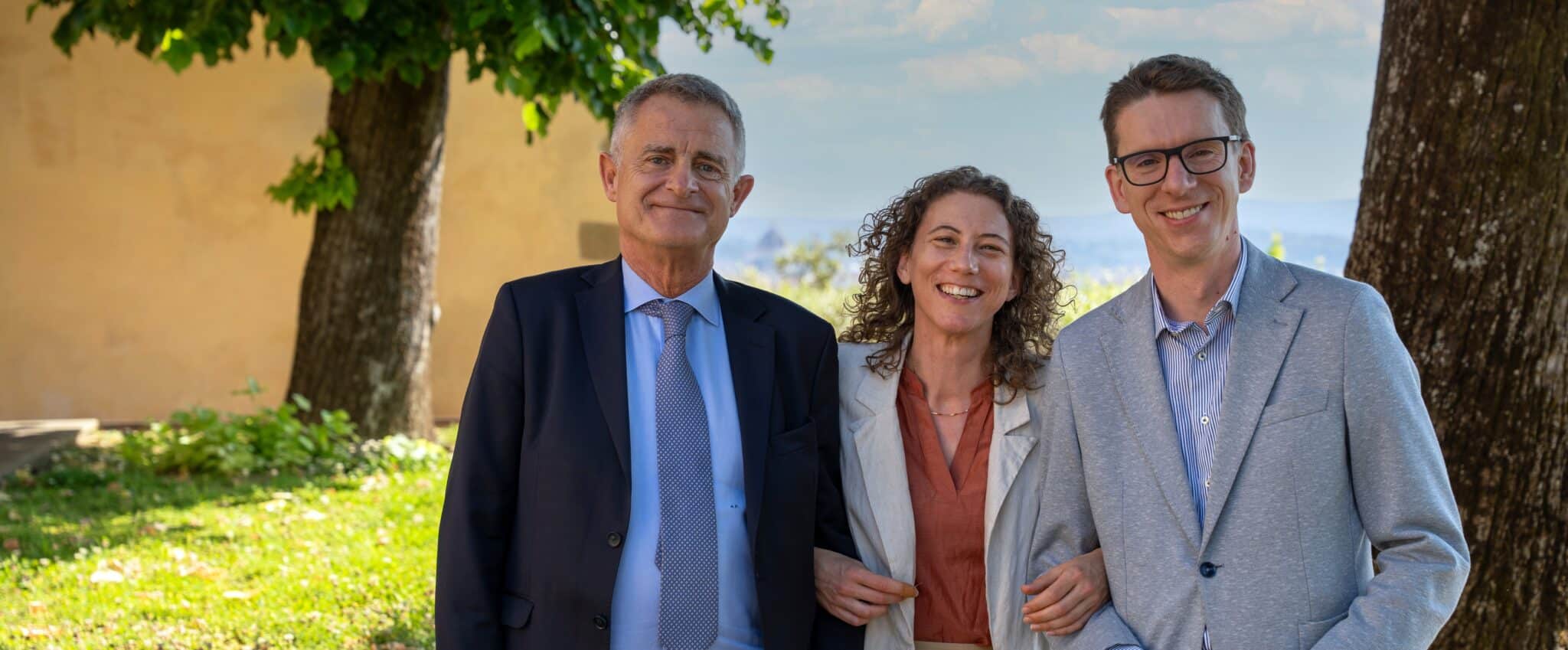
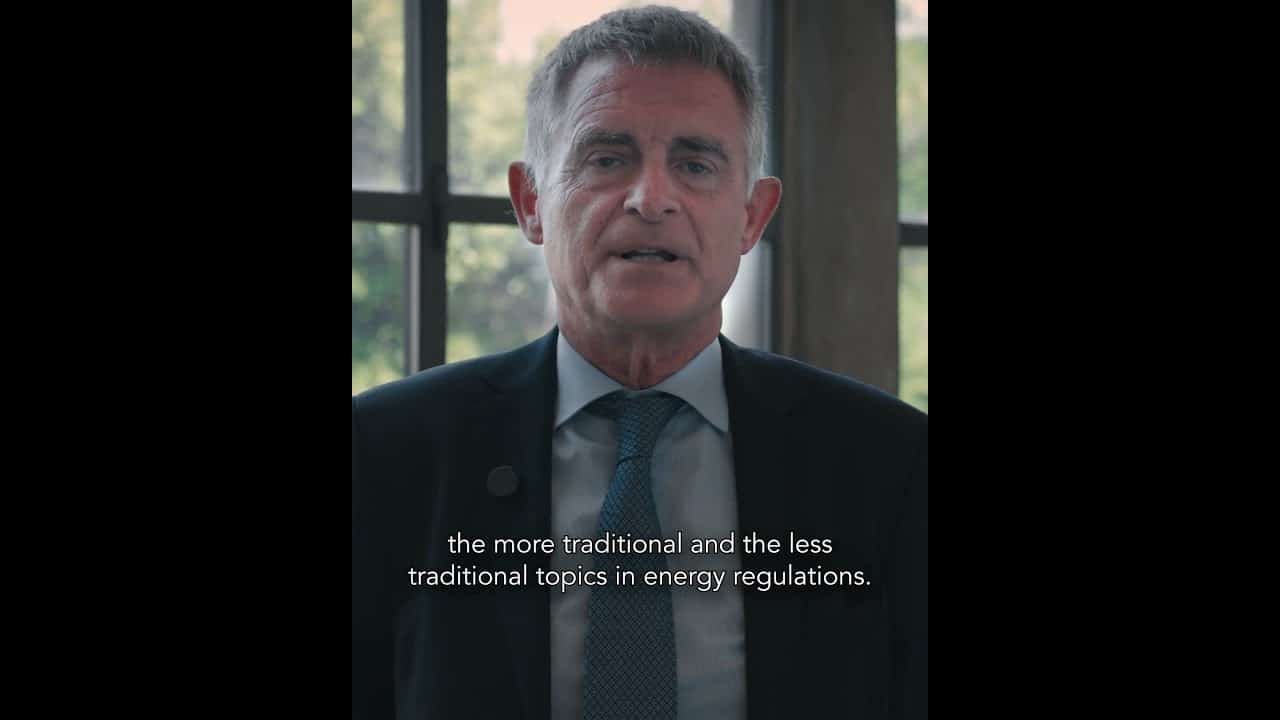
From 40 to 55%: evolution or revolution? Conversation with K.D. Borchardt

In conversation with K.D. Borchardt
The European Commission proposes to increase the EU’s 2030 emissions reduction target from 40% to at least 55%.
Read the highlights
Watch the recording:
What does it mean for the energy sector? What needs to be done additionally to the adopted Clean Energy for all European Package? How COVID-19 pandemic could influence the pathway to this target?
We will discuss it with the Deputy Director-General, DG Energy, Klaus-Dieter Borchardt.
The 45′ event will be hosted by the FSR Professors Andris Piebalgs and Christopher Jones.
#FSRConversations
Hosts: Prof. Andris Piebalgs and Prof. Christopher Jones
Each month, the series of conversations will feature leading actors and policymakers of the European and global energy landscape, interviewed by FSR with the key role of our audience that will be enabled to submit questions in advance.
Learn more about the new FSR series
From September 2020, every Wednesday. All the events will be freely accessible upon registration. The events will take place on Zoom and on our social media channels.
Stay in touch
Sign up to our email list to get notified about our upcoming events.
Please contact Chiara Canestrini if you have suggestions for a future event of the series, or would like to partner with us.
Don’t miss any update on our events
Sign up for free and access the latest events from our community.
Speakers
More on the topic


Impact of COVID on the Power Sectors in Emerging Economies and Actions for Recover
Join FSR Global and the IAEE to examine the impact of COVID on the power sectors in emerging economies and actions for recovery.
The impact of COVID-19 pandemic on the global economy as well as the society has been unprecedented. In these troubling times of ‘social distancing’ and ‘working from home’, the centrality of electricity in powering our current and future societies is more evident than ever before.
However, the power sector also is not immune to the adverse effects of the pandemic. The long-term impact of the current situation would only become apparent with time. While emerging economies continue to grapple with controlling the pandemic, policymakers have taken note of the fallout on the power sector and have started working on an action plan for a quick recovery.
This webinar brings together leading experts from different emerging economies to provide insights on the similarities and divergence in the impact of COVID-19 on their power sectors as well as debate possible learning and synergies on post-COVID-19 recovery actions.
Webinar in collaboration with FSR Global and the International Association for Energy Economics.
Seats are limited, sign up to ensure a spot! After registering, you will receive a confirmation email containing information about joining the webinar.
More on COVID:
Don’t miss any update on our events
Sign up for free and access the latest events from our community.
Speakers
More on the topic