



Type of event: Online Event
Carbon Pricing: The Silver Bullet for the Energy Transition?
The Vienna Forum on European Energy Law
The Vienna Forum on European Energy Law is an annual joint initiative of the FSR Energy Union Law Area and the Energy Community Secretariat which aims to bridge the gap in energy debate between the EU and Energy Community. This year, for the 8th edition of the forum, we will be moving online with four webinars across four weeks, focused on the solidarity principle, the European climate law, carbon pricing, and the role of the private sector in the energy transition. To discuss these topics, we will bring together a panel of experts for a roundtable debate and a live Q&A session with our audience.
Webinar 3
Carbon Pricing: The Silver Bullet for the Energy Transition?
Introduction
Leigh Hancher | FSR (RSCAS, EUI); Tilburg University; Baker Botts LLP
Roundtable
Christoph Gatzen | Frontier Economics
Jos Delbeke │ School of Transnational Governance (EUI) (tbc)
Michael Mehling │ MIT Jason MacLean │ UNB Law School
Jennifer Winter | University of Calgary
Q & A with the live audience
Moderation
Dirk Buschle │ Energy Community Secretariat; College of Europe
Upcoming webinars from the Vienna Forum:
Webinar 4: The Private Sector to the Rescue of the Energy Transition
Monday, 7 December 2020, 14.30 – 16.00 CET
Don’t miss any update on our events
Sign up for free and access the latest events from our community.
More on the topic










Joint UIC – FSR Transport Webinar on the Handbook on Railway Regulation

>> Watch the Webinar Recording here <<
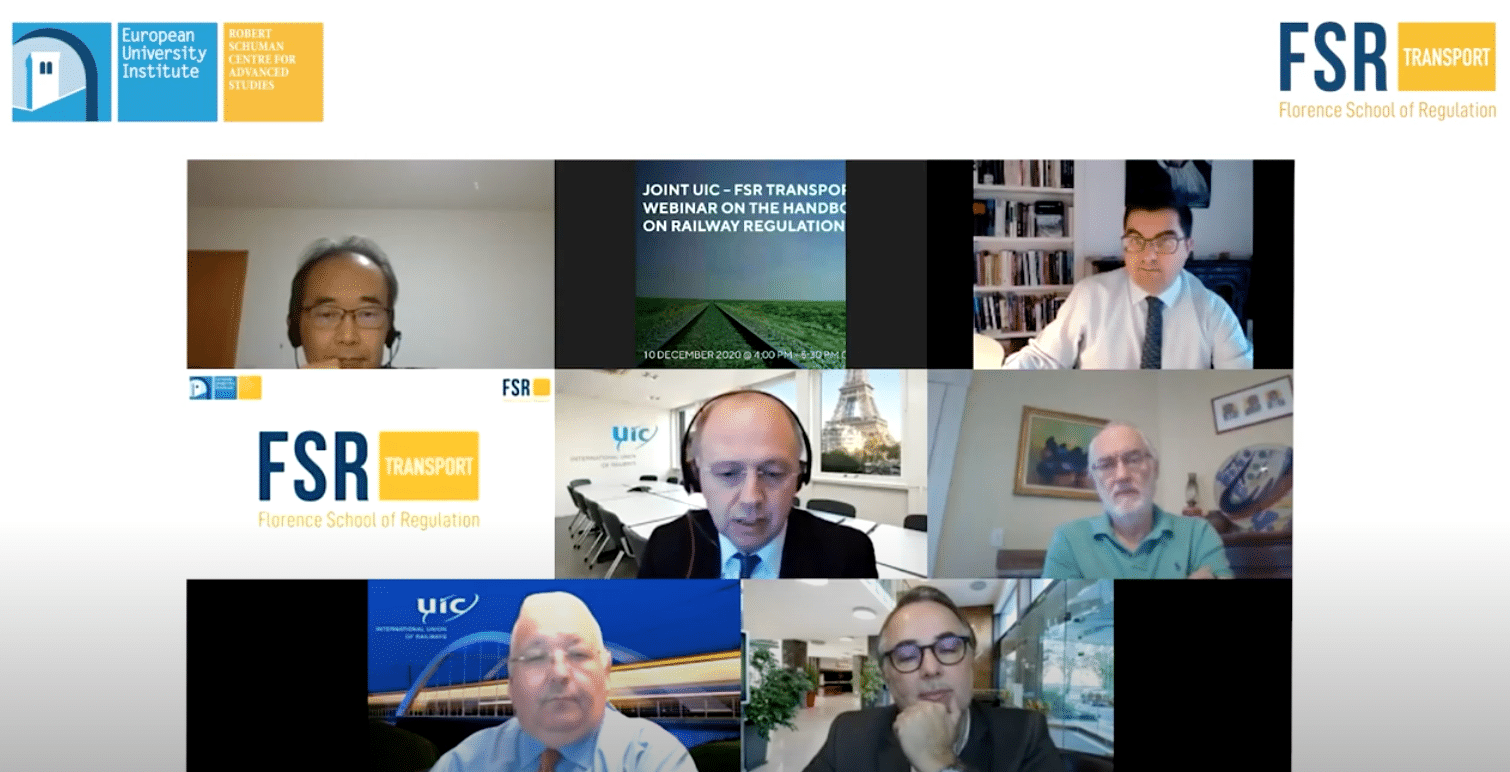
Inspired by the recently published “Handbook on Railway Regulation. Concepts and Practice” by Edward Elgar, this webinar, jointly organised by the International Union of Railways (UIC) and FSR-Transport, will provide a comprehensive overview of the state-of-the-art in railway regulation in Europe, the US and Japan. Speakers will examine the most pressing issues for their respective railway markets, and outline future trends in the development of rail globally.
Despite numerous liberalisation attempts in recent years, the railway sector is still excessively complex, with regulations varying throughout the world. The Handbook on Railway Regulation gathers, for the first time, these various approaches and practices, using a historical and systematic approach to identify the main lessons for all countries. Specific topics covered include the digitalisation dilemma in the industry, rail sector reforms and regulation, and competition in the market for rail freight and passenger services.
This Handbook provides an invaluable contribution to the discussion of railway regulation worldwide, and will be a crucial compendium for students and scholars of transportation, regulation and competition looking to explore different approaches to the topic. This will also be an invaluable read for railway policymakers and regulators looking to deepen their understanding of contemporary regulations around the world.
Among others, speakers will focus on the regulatory aspects pertaining to railway market opening, they will draw on lessons learnt from the Covid-19 pandemic on rail operations, and not the least they will shed light on the challenges that they face in meeting the sector’s needs of today and tomorrow.
AGENDA
16:00 – 16:20 | Introduction of the Handbook on Railway Regulation
- Matthias Finger, Director of FSR-Transport, EUI; Co-editor of the Handbook on Railway Regulation
16:20 – 17:20 | Four presentations
- Fumio Kurosaki, Professor at Faculty of International Tourism Management, Toyo University; and Contributing Author, ‘Railways in Japan’
- Russell Pittman, US Department of Justice; Kyiv School of Economics; and Contributing Author, ‘Railways and Railways Regulation in the United States: Surely You Don’t Want Jones Back?’
- Juan Montero, Professor at EUI/ UNED, Co-editor of the Handbook on Railway Regulation
- Christian Chavanel, Director of Rail System Department, UIC, and Contributing Author, ‘Towards a new Architecture for technical Regulation of Europe’s Railways’
- François Davenne, Director General of UIC
17:20 – 17:30 | Q&A Session moderated by Simon Fletcher, Director Europe, UIC
Don’t miss any update on our events
Sign up for free and access the latest events from our community.


Policy Advisory Council – FSR Energy
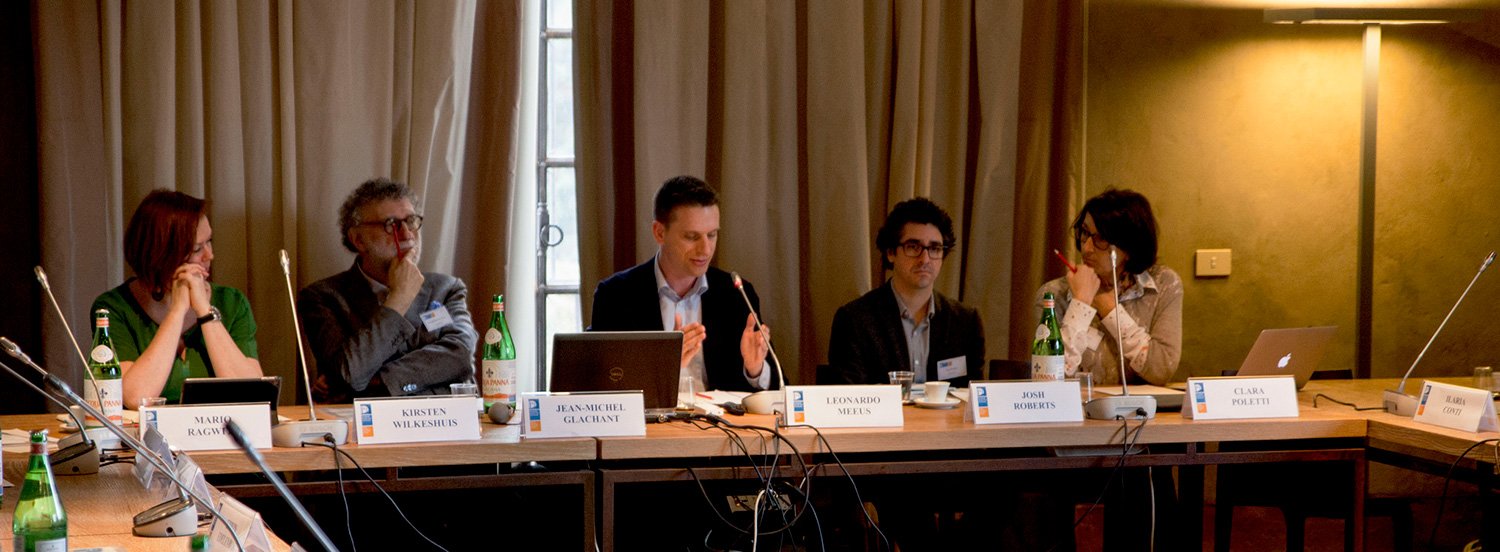
The Policy Advisory Council discusses the most topical regulatory and policy issues and debates the relevance and robustness of the latest FSR research findings.
The meeting gathers renowned academics, experts from the FSR Energy Major Donors, the European Commission, the Agency for the Cooperation of Energy Regulators (ACER) and National Regulatory Authorities.
The event will take place online and is structured as follows:
Day 1 – New Policy Areas
- Session 1 – Sector Integration for the decarbonisation of the energy sector
- Session 2 – The role of Hydrogen in enabling the energy transition.
Day 2 – Implementation of Existing Policies
- Session 3 – The reform of the ETS system
- Session 4 – Resilience of the electricity system: which are the main challenges?
Please note this is a closed event and participation is by invitation only.
Don’t miss any update on our events
Sign up for free and access the latest events from our community.
More on the topic





Juridification in the EU Energy Sector – online seminar

This online seminar will delve into the role of lawyers and the legal system in the relationship between transmission system operators and regulatory authorities in the EU. We will explore how recourse to the wider European legal framework – the juridification of the process – plays into the interactions and cases between TSOs and ACER/ NRAs. In light of the rising number of appeals in relation to ACER decisions, how should any potential conflict-solving be navigated and with what tools?
Does the role of law in the governance of these relations risk overstepping the mark or does it provide a useful structure through which to manage these relations? How can the right balance be struck? And how can consensus be reached in such a scenario and meaningful cooperation between the regulators and the technical expertise on the part of the TSOs be established, maintained or, where necessary restored?
Together with a panel of experts, we will examine the development around several recent cases – the legal context, the roles and responsibilities of the parties – and consider how to facilitate a greater level of efficiency, trust, and cooperation between the parties in the face of legal challenges.
Note this workshop is a closed workshop, which is exclusively open to FSR donors, members of regulatory authorities, ACER or ENTSO-E, or upon invitation only. If you would like to attend but do not meet this criteria, or if you have not received an invitation, please get in touch with us.
Don’t miss any update on our events
Sign up for free and access the latest events from our community.



The impact of the EU methane strategy on the natural gas market

‘The impact of the EU methane strategy on the natural gas market’ is the second joint webinar organised by the Florence School of Regulation and the Environmental Defense Fund.
The question leading the second online event is how to incentivise the methane emissions reductions from the whole natural gas value chain.
Watch the recording:
Introduction
The international action on methane emissions features prominently in the EU strategy to reduce methane emissions published on October 14, 2020. Despite the fact that the EU accounts for a small share of global methane emissions, it has a significant leverage as the largest importer of oil and gas to advocate for robust monitoring and mitigation of methane emissions.
In the Strategy EU Commission has prioritised monitoring, reporting and verification of methane emissions, keeping the door open for a possibility to adopt targets or standards, in the absence of significant commitments for the other jurisdictions. A part of the industry already calls for methane-intensity based production and procurement standards[1].
The strategy sets as a priority “ensuring that companies apply considerably more accurate measurement and reporting methodologies for methane emissions”, both within and outside the EU. To this objective, the EU Commission is promoting the creation of an international methane emissions observatory with a task to compile and publish a methane-supply index (MSI) demonstrating the emissions arising before natural gas or oil reach the final customer.
Independently from the developments in Europe, this year the Singapore’s biggest buyer of LNG, Pavilion Energy, has asked all LNG sellers to quantify the GHG emissions associated with each LNG cargo produced, transported and imported into Singapore. The environmental considerations led Engie to step back from signing a contract with the US LNG supplier. Energir, the main importer of Quebec also developed its own, corporate performance standard and procurement standard in collaboration with Equitable Origin.
These developments raise many questions, which will be tackled during the joint FSR-EDF webinar:
- Considering that less that 25% of methane emissions in the EU’s gas supply chain occur domestically and 80% of volumes consumed in the EU are sold through long-term contracts with 3rd country suppliers, is a Methane Supply Index fit for purpose? What should be the starting point and key assumptions around addressing emissions associated with imports?
- Could we expect that in the coming years the natural gas price will reflect environmental footprint?
- How to verify the credibility of GHG intensity declarations submitted by the natural gas importers and how to address likely discrepancies with what is reported in the inventories according to the UNFCCC template?
What level of governance can be most effective in determining the equivalency of regulations adopted in different jurisdictions?
Programme:
Introduction
Poppy Kalesi | EDF
Christopher Jones | FSR
Keynote presentation on methane emissions from natural gas value chain imports in Europe and lessons learned from the Arctic Council’s ACAP Working Group
Stephanie Saunier | Carbon Limits
Keynote presentation on establishing an International Methane Emissions Observatory
Manfredi Caltagirone | UNEP
Panel discussion
Stefano Grassi | European Commission
Jutta Paulus | European Parliament
Nicolás González Casares | European Parliament
Stefan Rolle | Federal Ministry for Economic Affairs and Energy, Germany
Jonathan Stern | Oxford Institute for Energy Studies
Samuel Kotis | Environmental Defense Fund
Toshiyuki Sakamoto |The Institute of Energy Economics, Japan
Georges Tijbosch | MiQ
Conclusions
Poppy Kalesi | EDF
Christopher Jones | FSR
Related sources
Jonathan Stern, 2020 Oxford Institute for Energy Studies
Have you missed the first webinar?

Presentations
Don’t miss any update on our events
Sign up for free and access the latest events from our community.
More on the topic






The Vienna Forum on European Energy Law – Webinar 2

The Vienna Forum on European Energy Law
The Vienna Forum on European Energy Law is an annual joint initiative of the FSR Energy Union Law Area and the Energy Community Secretariat which aims to bridge the gap in energy debate between the EU and Energy Community. This year, for the 8th edition of the forum, we will be moving online with four webinars across four weeks, focused on the solidarity principle, the European climate law, carbon pricing, and the role of the private sector in the energy transition. To discuss these topics, we will bring together a panel of experts for a roundtable debate and a live Q&A session with our audience.
Webinar 2
The European Climate Law: Fit for Purpose?
Watch the recording:
On 4 March 2020, as part of the European Green Deal, the Commission adopted a proposal for a European Climate Law as part of the European Green Deal strategy in an effort to strengthen measures toward reaching climate neutrality in the EU by 2050. An amended version of the proposal was issued on 17 September 2020, in line with the new 2030 Climate Target Plan, with a new EU-wide net greenhouse gas emissions reduction target of 55% by 2030 compared to 1990 levels. These new measures would have significant repercussions for EU targets and policies across the field as well as ramp up political pressure on Member States to develop more ambitious national targets.
What does this newly adopted proposal involve? What are the main controversies surrounding it? Are the proposed legal tools appropriate? Is the proposed law fit for purpose? With non-binding national targets for 2030 and in a deeply unstable economic climate, is such an escalation of efforts feasible?
In this webinar, together with a panel of experts, we will discuss the ins and outs of the proposal and its implications, as it enters into the EU legislative process.
Speakers
Introduction Dirk Buschle │ Energy Community Secretariat
Luca de Carli │ DG CLIMA, European Commission
Jürgen Schneider | Ministry of Climate Action, Environment, Energy, Mobility, Innovation and Technology, Austria
Erica Hope | European Climate Foundation
Simone Borghesi | FSR (RSCAS, EUI)
Q & A
Moderation Leigh Hancher | FSR (RSCAS; EUI); Tilburg University; Baker Botts LL
Background to the Discussion
The proposed European Climate Law intends to enshrine the pledge to climate neutrality in EU law, in the form of an EU regulation.
Importantly, while a review of the Governance Regulation will take place to assess whether it is still deemed fit for purpose, the draft climate law is intended to fit within the framework established by the Governance Regulation and surrounding legislation and should be aligned with its reporting and monitoring mechanisms. The Climate Law proposals do not introduce binding national obligations on the 2030 targets, and the 2050 objective of climate neutrality remains binding at Union-level only.
In the Commission’s Impact Assessment,1 which accompanied the proposal for the European Climate Law it noted that, “climate change is a trans-boundary problem. For trans-boundary problems, individual action is unlikely to lead to optimal outcomes. Instead, coordinated EU action can effectively supplement and reinforce national and local action. Coordination at the European level enhances climate action, and EU action is thus justified on grounds of subsidiarity in line with Article 191 of the Treaty on the Functioning of the European Union.”
The legal basis for the proposals are Articles 191 to 193 of the TFEU, which confirm EU competence in the area of climate change; “the European Union shall contribute to the pursuit, inter alia, of the following objectives: preserving, protecting and improving the quality of the environment, promoting measures at international level to deal with regional or worldwide environmental problems, and in particular combating climate change.” Note that energy legislation, including the Clean Energy Package, takes a different legal basis – Art. 194 TFEU. Unlike this latter article, Articles 191-3 do not defer to a Member States’ right to determine its own energy mix.
The most controversial element of the proposals surrounds the use of delegated acts.
What are Delegated Acts?
Delegated acts are legally binding acts adopted by the Commission on the basis of a delegation granted in the text of an EU law to supplement or amend non-essential parts of EU legislative acts in order, for example, to define detailed measures. The Commission’s power to adopt delegated acts is subject to strict limits. The delegated act cannot change the essential elements of the law; the legislative act must define the objectives, content, scope and duration of the delegation of power; and the EU Parliament and Council may revoke the delegation or express objections to the delegated act.
According to Art. 290(1) TFEU “a legislative act may delegate to the Commission the power to adopt non-legislative acts of general application to supplement or amend certain non-essential elements of the legislative act.” Essential elements are considered as the rules which are essential to the subject matter envisaged.
Delegated acts are adopted following a consultation with expert groups composed of representatives from each EU country. It is important to note that while the Commission will actively seek out the
advice of experts from Member States, these experts have a consultative rather than a formal role in the decision-making process. Ordinarily, over the course of four weeks, citizens and stakeholders can provide feedback on the draft text of a delegated act. Once the Commission has adopted the act, the EU Parliament and Council generally have two months to formulate any objections. If they do not, the delegated act enters into force. Adopted acts contain an ‘explanatory memorandum’ summarising the feedback received and how it was used.
So, how has the proposal been received?
The initial proposals were met with mixed opinions, and Member States have been split on the proposals. According to the opinion of the European Parliament’s Legal Service from 31 March 2020 on the legality of the use of the delegated acts by the European Commission, issued as a non-paper, the proposal of the Commission goes beyond its competences. The opinion stated that “the Union’s emission reduction targets are indisputably elements which are “essential” to the Union policy on fighting climate change and therefore cannot be a subject to delegated acts”. Further, it states “It is submitted that the trajectory for achieving climate-neutrality by 2050 is an essential element of the proposal for a Regulation on the European Climate Law and delegating the power to the Commission to set out that trajectory is not in line with Article 290 TFEU.” Given that the Commission’s recourse to delegated acts will substantially limit the powers of the European Parliament, as well as the Member States, will this opinion be a factor in maintaining a certain status quo in the process of “creating” further EU energy and climate policy?
Is the use of delegated acts reasonable? Is the Commission overstepping its mark or is it a necessary way forward?
The merits of using delegated acts in the context of such a time-sensitive issue are that they are more efficient and avoid the risk of time-consuming institutional bargaining or one Member State holding another hostage in the process. There is also still democratic oversight – the European Parliament is not entirely side-lined – the European Parliament or Council can object to the delegated act or revoke the delegation of power entirely. There is also the stated consultation process with national experts.
Aside from this issue, some criticisms have also been levelled at the addition of ‘removals’ to the amended proposal with fears that it could be a potential get-out clause. The amended proposal states that “by 2030 greenhouse gas emissions should be reduced and removals enhanced, so that net greenhouse gas emissions, that is emissions after deduction of removals are reduced economy-wide and domestically, by at least 55% by 2030 compared to 1990 levels.” In the first draft proposal, no mention of removals in this context were made. In place of that line, the Commission had promised to “explore options for a new 2030 target of 50 to 55%.” The suggestion is that the 2050 net-zero target would be met via carbon sinks. However, the current 2030 target of 40% emissions reduction compared to 1990 levels does not include offsets. Is the new target thus less ambitious than it appears and more a case of creative accounting? The Commission has responded to the criticisms to state that the baseline for 1990 is also being adjusted retrospectively, meaning there would be no “free” emissions reductions.
There have also been calls by NGOs for an access to justice provision to be added to the draft amendments to the Governance Regulation, in order to allow for challenges to the EU and Member
States should the NECPs and LTSs be deemed inadequate. Articles 5 and 6 of the draft legislation state that the Commission shall adopt relevant measures if the level of ambition is insufficient to reach the targets. However, the assessments of the Commission would not be legally binding, which means they cannot be challenged. What happens if the Commission fails to adopt the “necessary measures in accordance with the Treaties” to rectify these failings? According to Art. 263 TFEU, individuals and NGOs do not have standing to directly challenge acts or omissions before the Court of Justice unless they are the addressees of the measure in question. NGOs must therefore rely on the Aarhus Regulation, which allows them to request a review of the act or omission by an EU institution to adopt an administrative act of individual scope. In the case of a climate law, it would be difficult to demonstrate that the act to be adopted would be of individual scope. There have thus been calls for this barrier to be removed by adding an access to justice provision and for amendments to be made to the Aarhus Regulation.
It remains to be seen how the draft proposals will develop through the legislative process. On 7 October, the European Parliament backed a 60% EU-wide net GHG reduction target by 2030 compared to 1990 levels.
Upcoming webinars
Webinar 3: Carbon Pricing: The Silver Bullet for the Energy Transition?
Monday 30 November 2020: 14.30 – 16.00 CET
Webinar 4: The Private Sector to the Rescue of the Energy Transition
Monday, 7 December 2020, 14.30 – 16.00 CET
Don’t miss any update on our events
Sign up for free and access the latest events from our community.
Presentazione del Libro “Handbook on Railway Regulation. Concepts and Practice” (Edward Elgar)

È disponibile la registrazione dell’evento
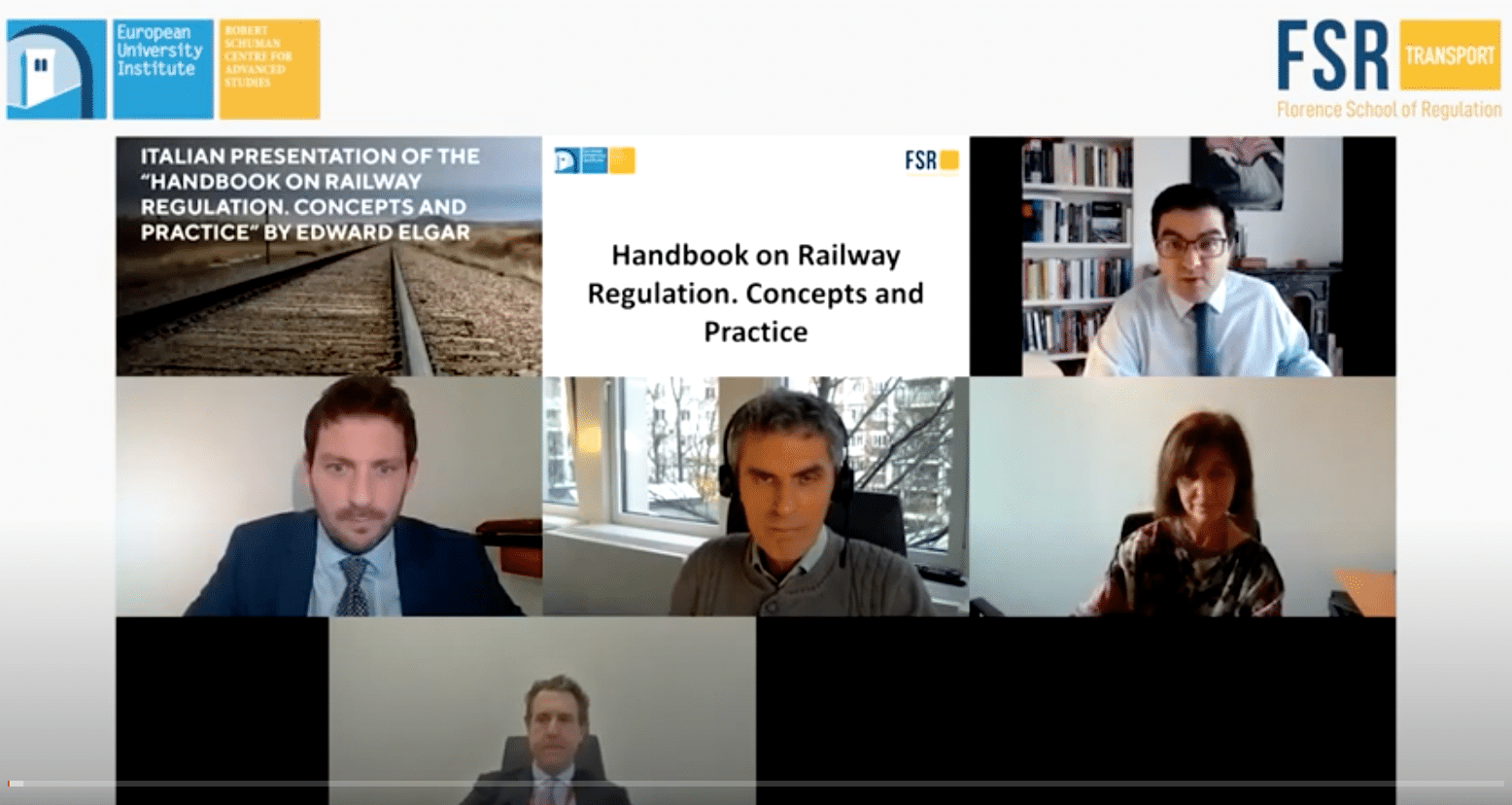
Prendendo spunto dalla recente pubblicazione dell’“Handbook on Railway Regulation. Concepts and Practice”di Edward Elgar, l’obiettivo principale del webinar è fornire una panoramica completa sulla regolamentazione ferroviaria in Europa e in Italia nello specifico. In particolare, questo webinar esplorerà le priorità e le iniziative che il settore ferroviario deve affrontare in vista del completamento dello Spazio ferroviario unico europeo. I relatori esamineranno l’attuale situazione del mercato ferroviario europeo e italiano, con particolare attenzione all’implementazione del quadro normativo comunitario in Italia.
Tra i vari argomenti che saranno affrontati nel corso del webinar, i relatori si concentreranno su quegli aspetti normativi che sono fondamentali per l’apertura del mercato ferroviario, sia nel segmento dell’alta velocità che in quello regionale, traendo insegnamenti dall’esperienza del settore del trasporto merci. Inoltre, affronteranno da diverse prospettive l’impatto del Covid-19 sulle operazioni ferroviarie. Infine, si confronteranno sulle sfide che ognuno di essi deve affrontare per soddisfare le esigenze del settore di oggi e di domani.
Relatori confermati:
- Juan José Montero Pascual, Professore, UNED Madrid e Istituto Universitario Europeo Firenze
- Germano Guglielmi, Responsabile Affari Legislativi, Fondi Pubblici e Aiuti di Stato, Ferrovie dello Stato Italiane
- Maurizio Castelletti, Capo Unità “Single European Rail Area”, DG MOVE, Commissione europea
- Ginevra Bruzzone, Senior Fellow, LUISS School of European Political Economy
- Andrea Giuricin, Economist of Transport, Università Milano Bicocca, CEO Tra Consulting, Senior Rail Consultant for the World Bank
EN
Inspired by the recently published “Handbook on Railway Regulation. Concepts and Practice” by Edward Elgar, the main goal of the webinar is to provide a comprehensive overview of the state-of-the-art in railway regulation in Europe and, specifically, in Italy. In particular, this webinar will explore the priorities and initiatives facing the rail sector in the view of the completion of the Single European Railway Area. Speakers will examine the current situation of the European and the Italian railway market, paying special attention to the implementation of the EU regulatory framework in Italy.
Among others, speakers will focus on those regulatory aspects that are key for railway market opening, both in the high-speed and in the regional segments, drawing lessons from the experience of the freight sector. In addition, they will tackle from different perspectives the impact of Covid-19 on rail operations. Finally, they will shade lights on the challenges that they face in meeting the sector’s needs of today and tomorrow.
Confirmed Speakers:
- Juan José Montero Pascual, Professor UNED Madrid and European University Institute Florence, and co-Editor of the Handbook on Railway Regulation
- Germano Guglielmi, Head of Legislative Affairs, Public Funding and State Aid, Ferrovie dello Stato Italiane
- Maurizio Castelletti, Head of Unit “Single European Rail Area”, DG MOVE, European Commission
- Ginevra Bruzzone, Senior Fellow, LUISS School of European Political Economy
- Andrea Giuricin, CEO Tra Consulting, Economist of Transport at University Milan Bicocca, and Senior Rail Consultant for the World Bank
Followed by an open discussion moderated by Prof. Juan Montero
Don’t miss any update on our events
Sign up for free and access the latest events from our community.
More on the topic





The Vienna Forum on European Energy Law – Webinar 1
The Vienna Forum on European Energy Law
The Vienna Forum on European Energy Law is an annual joint initiative of the FSR Energy Union Law Area and the Energy Community Secretariat which aims to bridge the gap in energy debate between the EU and Energy Community. This year, for the 8th edition of the forum, we will be moving online with four webinars across four weeks, focused on the solidarity principle, the European climate law, carbon pricing, and the role of the private sector in the energy transition. To discuss these topics, we will bring together a panel of experts for a roundtable debate and a live Q&A session with our audience.
Webinar 1
The Solidarity Principle and the Just Transition in Energy: Poetry or Law?
Watch the recording:
With the EU’s mounting determination to see urgent and effective energy and climate action toward carbon neutrality across the Union, what principles and legal mechanisms will underpin the transition going forward? Will they be constructive, and can they ensure compliance? How will the deepening economic instability stemming from the coronavirus pandemic paired with the self-determining rights of Member States enshrined in the treaties shape these efforts?
In this webinar, together with a panel of experts, we will discuss the notion of solidarity between EU Member States and the mechanisms intended to support an equitable transition to a carbon neutral future.
READ THE FULL PROGRAMME
Background
The principle of solidarity in energy has gained traction in recent months following a judgment of the EU General Court on 10 September 2019 in Case T-883/16 Republic of Poland v. European Commission (the ‘OPAL case’), as it formed the basis of the decision. For the first time, a principle typically used in general terms in EU legislation was interpreted as having concrete legal significance.
Briefly, the judgment (currently under appeal) annulled a previous decision of the European Commission relating to the OPAL pipeline, one of the onshore extensions of the Nord Stream pipeline, which carries Russian gas from the Baltic Sea into the German grid. The Commission decision had enabled Gazprom, the supplier, to utilise more than 50% of the pipeline’s capacity – in effect, handing Gazprom a monopoly despite the Third Energy Package regulations, which limit ownership of both infrastructure and transmission by the same entity in view of fair competition between the EU and third countries. The judgment of the CJEU held that the decision was in breach of the principle of energy solidarity. Drawing on the “spirit of solidarity” in Article 194 TFEU, the General Court held that the “principle of energy solidarity requires the European Union and the Member States to endeavour, in the exercise of their powers in the field of energy policy, to avoid adopting measures likely to affect the interests of the EU and other Member States as regards security of supply, its economic and political viability, the diversification of supply or of sources of supply, and to do so in order to take account of their interdependence and de facto solidarity” (para 73). The judgment noted that there should be a “balance” of interests in the face of such a conflict (para 77). What would be the wider repercussions of such a radical interpretation of the “spirit of solidarity”? And should such a principle have legal significance, or should it be relegated to the aspirational rhetoric it had been up to this point? Is it a case of “campaigning in poetry, ruling in prose”?
If the principle of solidarity is upheld as a legal tool, it could have far-reaching consequences for the governance of energy and climate action. Could the principle be a gateway to a more interventionist form of EU governance? Could it be drawn upon should a Member State fail to contribute toward the common goal of carbon neutrality? Could it be a game-changer in the face of the non-binding targets for 2030? How does such an interpretation of the principle lie alongside the rights of Member States to determine their own energy mix, as detailed in Art 194 TFEU? Does such an interpretation of the principle jeopardise these rights? Could the pursuit of ‘solidarity’ supersede the sovereign rights of Member States?
The EU is determined to “leave no one behind” in the transition to a carbon neutral union. One of the central mechanisms put forward to facilitate this as part of the EU Green Deal funding plan is the Just Transition Mechanism, which will provide financial support to the regions most affected by the socio-economic impact of the transition. At least €150 billion for the period 2021 – 2027 is expected to be directed toward this cause. Within this, there will be a new Just Transition Fund, which will broadly support economic diversification, clean energy, as well as environmental rehabilitation and an overhaul of carbon intensive infrastructures; a dedicated investment scheme, InvestEU, which aims to attract private investments; and a public sector loan facility supported by the EIB. However, some Member States expected to receive significant funding from the schemes, such as Poland, have signalled their plans to continue to invest in coal, for example. In effect, could these funds inadvertently ‘reward’ Member States for ‘bad behaviour’ or should this be viewed as part and parcel of the transition?
Throughout this webinar, we will explore these issues and more. We will critically assess the role of EU governance – its scope and efficacy – in ensuring energy and climate action is delivered across the Union, and the collective targets for 2030 and beyond to 2050 are met.
In the lead-up to the webinar, we invite you to begin the discussions by posting questions to the panel via the registration form.
All the webinars are open access. Please register to join the sessions.
Upcoming webinars from the Vienna Forum:
Webinar 2: The European Climate Law: Fit for Purpose?
Monday 23 November 2020: 14.30 – 16.30 CET
Webinar 3: Carbon Pricing: The Silver Bullet for the Energy Transition?
Monday 30 November 2020: 14.30 – 16.00 CET
Webinar 4: The Private Sector to the Rescue of the Energy Transition
Monday, 7 December 2020, 14.30 – 16.00 CET
Don’t miss any update on our events
Sign up for free and access the latest events from our community.
Financing models of municipal waste management and economics of bio waste stream

In July 2020, the Florence School of Regulation enlarged the scope of its activities to include Municipal Waste Management with a kick-off webinar that gathered more than 100 participants. We now propose to further explore some key economic challenges that the municipal waste sector is facing.
Opening the black box: financing models of municipal waste management and economics of bio-waste stream
In a context where the municipal waste sector faces long-lasting structural issues, such as fragmented, small-sized, and mostly local markets unlikely to generate sufficient financial resources to face massive investment needs, it seems crucial to analyse the different financing models of municipal waste and assess their level of cost recovery across EU countries. In a context where important investment will have to be made to reach increasingly challenging recycling objectives and pave the way for a circular economy, it also seems key to examine the economics of separately collected bio-waste stream.
Programme
Session 1 – Financing models and cost-recovery assessment of municipal waste management
Moderated by Maria Salvetti, Florence School of Regulation
Presentation from the following speakers:
- Antonio Massarutto, Udine University, Italy
- Paulo Ferrão, Lisbon University, Portugal
- Gianluca Tapparini, Operate Foundation, Italy
- Ignasi Puig Ventosa, Fundació ENT, Spain
- Patrick Hasenkamp, City of Munster, Germany
Round table discussion with the speakers on financing models and cost-recovery assessment of municipal waste
Discussant: Valérie Plainemaison, Secretary General of FEAD
Q&A with the audience
Session 2 – Economics of bio-waste stream
Moderated by Stéphane Saussier, FSR Water & Waste
Presentation from the following speakers:
- Ioannis Bakas, European Environment Agency
- Alessandro Marangoni, Althesys
- David Newman, World Biogas Association
- Davide Tonini, JRC – European Commission
Round table discussion with the speakers on the economics of bio-waste stream
Q&A with the audience
Concluding remarks, Stéphane Saussier, Florence School of Regulation
A new publication on the topic is coming soon!
Learn more about the FSR Water and Waste area
Presentations
- Alessandro Marangoni
- Gianluca Tapparini
- Davide Tonini
- Ignasi Puig Ventosa
- Antonio Massarutto
-
Fact and Figures
Maria Salvetti
- Maria Salvetti
Don’t miss any update on our events
Sign up for free and access the latest events from our community.
Speakers
More on the topic




FSR climate annual conference 2020

FSR Climate is pleased to announce its 6th FSR Climate Annual Conference to take place online on 26-27 November 2020. The conference will cover the main climate-related existing policies, at EU, national and sub-national levels and will include sessions on Energy efficiency, Renewable policies, Environmental taxation, and Emissions trading.
Due to the COVID-19 pandemic, this year the FSR Climate Annual Conference will be held online.
Keynote Lecture
- Paul EKINS (UCL Institute for Sustainable Resources): Innovation and the Low-Carbon Transition: Insights from INNOPATHS
Guest Speakers
- Renewable policies – Katheline SCHUBERT (Paris School of Economics): Critical raw materials for the energy transition | Watch the recording
- Energy efficiency – Anna ALBERINI (University of Maryland): Drive Less, Drive Better, or Both? Behavioral Adjustments to Fuel Price Changes in Germany | Watch the recording
- Emissions trading – Grischa PERINO (University of Hamburg): The EU ETS is not fit for purpose: Why a new design of the MSR is urgently needed | Watch the recording
- Environmental taxation – Linus MATTAUCH (University of Oxford): Building public support for environmental taxes beyond carbon | Watch the recording
Conclusion and Highlights
- Simone BORGHESI, Director of FSR Climate, Chair of the Conference
List of the presented papers
- Innovation and the Low-Carbon Transition, Paul Ekins (UCL) [slides]
Renewable energy
- Critical raw materials for the energy transition, Katheline Schubert (Paris School of Economics), Aude Pommeret and Francesco Ricci [slides]
- Local economic impacts of wind power deployment in Denmark, Claire Gavard (ZEW – Leibniz Centre for European Economic Research), Jonas Göbel [slides]
- Renewable energy policies in federal government systems, Jasper Meya (Leipzig University), Paul Neetzow [slides]
- Financing renewables in the age of falling technology costs, Karsten Neuhoff (DIW Berlin), Nils May, Jörn C. Richstein [slides]
- Fossil fuels subsidy removal and the EU Green Deal policy mix design, Valeria Costantini (Roma Tre University), Alessandro Antimiani, Elena Paglialunga [slides]
Energy Efficiency
- Drive Less, Drive Better, or Both? Behavioral Adjustments to Fuel Price Changes in Germany, Anna Alberini (University of Maryland), Marco Horvath and Colin Vance [slides]
- Discriminatory subsidies for energy-efficient technologies and the role of social preferences, Joachim Schleich (Grenoble Ecole de Management), Valeria Fanghella, Corinne Faure, Marie-Charlotte Guetlein [slides]
- The effects of energy retrofits on residential energy expenditures and carbon emissions: Empirical evidence from France, Matthieu Glachant (MINES ParisTech), Victor Kahn [slides]
- Behavioral Anomalies and Fuel Efficiency: Evidence from Motorcycles in Nepal, Suchita Srinivasan (ETH Zurich), Massimo Filippini, Nilkanth Kumar
- When Nudges Fail to Scale: Field Experimental Evidence from Goal Setting on Mobile Phones, Andreas Loeschel (University of Münster), Matthias Rodemeier, Madeline Werthschulte [slides]
Emissions Trading
- The EU ETS is not fit for purpose: Why a new design of the MSR is urgently needed, Grischa Perino (University of Hamburg), Michael Pahle, Simon Quemin, Maximilian Willner [slides]
- The effect of climate policy on productivity and cost pass-through in the German manufacturing sector, Beat Hintermann (University of Basel), Corrado Di Maria, Maja Zarkovic, Ulrich Wagner [slides]
- Catching up and falling behind: Cross-country evidence on the impact of the EU ETS on productivity growth, Nicolas Koch (Mercator Research Institute on Global Commons and Climate Change), Michael Themann [slides]
- Leave or remain? An evolutionary approach to carbon leakage in Emission Trading Systems, Angelo Antoci (University of Sassari), Simone Borghesi, Gianluca Iannucci, Mauro Sodini [slides]
- Is designing environmental markets as financial markets a good thing?, Simon Quemin (Potsdam Institute for Climate Impact Research), Michael Pahle
Environmental Taxation
- Building public support for environmental taxes beyond carbon, Linus Mattauch (University of Oxford) [slides]
- Understanding the political economy of carbon taxes, Thomas Sterner (University of Gothenburg), Jens Ewald, Erik Sterner [slides]
- The Heterogeneous Incidence of Fuel Carbon Taxes: Evidence from Station-Level Data, Marita Laukkanen (VATT Institute for Economic Research), Jarkko Harju, Tuomas Kosonen, Kimmo Palanne [slides]
- The impact of carbon prices on optimal renewable energy support, Jan Abrell, Mirjam Kosch [slides]
- International production chains and the pollution offshoring hypothesis: an empirical investigation, Aurélien Saussay (London School of Economics), Natalia Zugravu-Soilita
The FSR Climate Annual Conference 2020 is organised with the support of EAERE.
Past editions of the FSR Climate Annual Conference
FSR Climate Annual Conference 2019
FSR Climate Annual Conference 2018
FSR Climate Annual Conference 2017
Don’t miss any update on our events
Sign up for free and access the latest events from our community.
Speakers
More on the topic




20th Florence Rail Forum. The Governance of Rail Freight Corridors

The modal shift from road to rail freight transport represents an important pillar of the EU strategy to make the European transport system greener and more sustainable, effectively combatting road congestion and helping to advance the climate neutrality agenda. In its European Green Deal communication, the European Commission reaffirms its commitment to shifting a substantial part of the 75% of inland freight carried today by road onto rail and inland waterways. This, in turn, will require measures to manage better, and to increase the capacity of railways, which the Commission is set to propose by 2021.
The development of Rail Freight Corridors (RFC) remains a central pillar of the Commission’s policy to boost rail freight. In this regard, the Regulation concerning a European Rail Network for Competitive Freight (Regulation EU 913/2010), which entered into force in 2010, requests Member States to establish international market-oriented RFCs to meet three sets of challenges. These include the strengthening of cooperation between Infrastructure Managers (IMs) on key aspects, such as path allocation, deployment of interoperable systems and infrastructure development; striking the right balance between freight and passenger traffic along the RFCs, while securing adequate capacity and priority for freight in line with market needs and ensuring that common punctuality targets for freight trains are met; and lastly, promoting inter-modality by integrating terminals into corridor management and development. A decade following the Regulation’s entry into force, however, the results achieved in the Member States remain insufficient, and the share of rail freight stagnates at around 18%.
The Commission is currently in the process of finalising its evaluation on the implementation of Regulation (EU) 913/2010, and a Staff Working Document on the results is expected by December 2020. The revision of the Regulation, as an important prerequisite for competitive freight and modal shift, is an opportunity to move away from a single corridor to a European Rail Freight Corridor Network approach.
In order to facilitate this shift, the governance of the RFCs should be reconsidered. Article 8 in Regulation 913/2010 sets the rules for the governance of RFCs. These include the competences of the Executive Board (EB), the Management Board (MB), the Railway Undertaking advisory group (RAG), as well as the advisory group of Managers and Owners of the terminals (TAG). In reality, the interaction between different stakeholders within one corridor is not always coordinated, not to mention the coordination between different corridors, as many freight trains run on more than one single corridor, not to mention the fact that many operators use several corridors.
Digitalisation has the potential to overcome some of the inefficiencies derived from the fragmentation of European rail freight transport: it can facilitate the monitoring of performance in each RFC, improve the management of capacity by better coordinating the allocation of existing capacity, and also empower RFCs to manage traffic, both under regular conditions but also when disruptions emerge. However, the question as to the extent to which digitalisation of RFCs will be sufficient to solve the more pressing problems of rail freight transport remains open.
In addition to improving the regulatory and strategic framework, enhancing rail freight transport’s competitiveness requires a rail network adapted to specific rail freight needs, which entails making the most efficient use of the available funding. In many cases, investment decisions are largely taken at national level, often without proper coordination across borders.
Against this backdrop, the 20th Florence Rail Forum, co-hosted by the Transport Area of the Florence School of Regulation and the Commission’s DG MOVE, will provide a well-timed platform for discussion of the results and next steps for the evaluation of Regulation (EU) 913/2010. Stakeholders representing national transport and infrastructure policy authorities, rail infrastructure managers, railway undertakings, owners and operators of terminals, national regulatory and governmental bodies, among others, will have an opportunity to discuss issues central to the future governance and management of RFCs. In particular, participants will be invited to critically discuss the role of a supranational entity in improving the performance of RFCs, as well as the role of digitalisation in the management and operation of RFCs. Last but not least, the forum will seek to identify how the financing needs for the development of RFCs can be met, and if more public investments may be needed.
Please kindly note that this event is by invitation only.
SPEAKERS’ PRESENTATIONS:
Setting the scene: Objectives and Gaps in the Implementation of Regulation (EU) 913/2010 (‘the RFCs Regulation’)
Matthias Finger | Florence School of Regulation, Transport Area
Maurizio Castelletti | European Commission, DG MOVE
Session A. Is there a need for a supranational entity to improve the performance of RFCs (network manager)? Which functions such a network manager should assume?
Eric Lambert | CFL Multimodal, representative of the UIC ECCO group
Emanuele Mastrodonato | European Rail Freight Corridor Scandinavian Mediterranean
Session B. What role can digitalisation (network-wide information sharing and processing) play in the management and operation of RFCs?
Harald Reisinger | RailNetEurope
Pietro D’Arpa | Procter&Gamble
Katrien De Langhe | Antwerpen University
Session C. How to finance the development of RFCs, in particular infrastructure services? What investments are necessary? How much the industry is ready to support these investments? Do we need more public investments?
Anne Elisabet Jensen| The Baltic-Adriatic Corridor
Claus Eberhard | European Investment Bank
Ulla Kempf | SBB Cargo International AG, representative of the Rail Freight Forward
Don’t miss any update on our events
Sign up for free and access the latest events from our community.
More on the topic
Webinar on the Liberalisation of Railways in the EU

>> Watch the Webinar Recording here <<
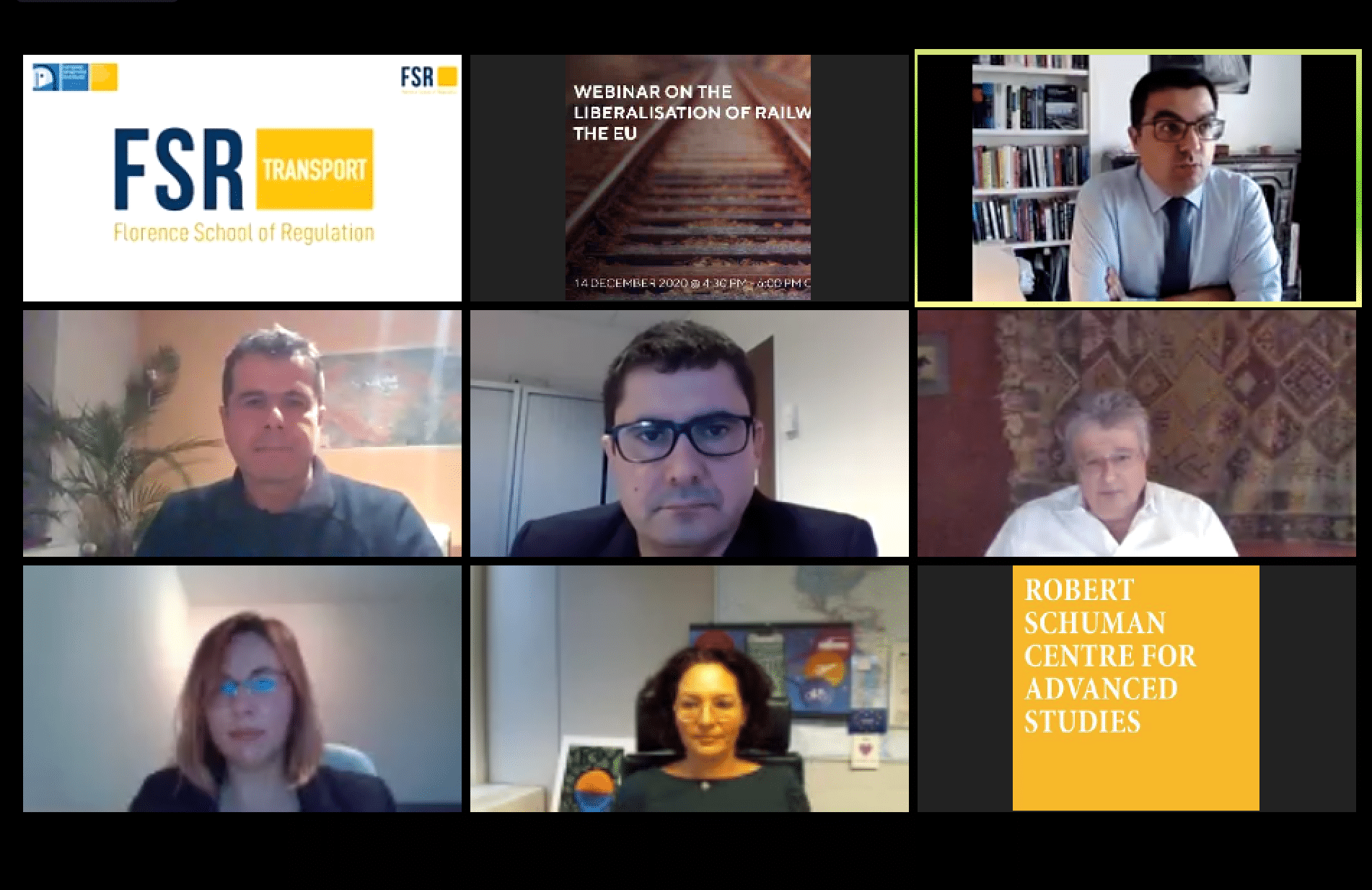
Declared as ‘European Year of Rail’, 2021 will be the first full year when the rules agreed under the Fourth Railway Package will be implemented throughout the EU Member States. These rules are designed to open up the domestic passenger services market and reduce costs and the administrative burden for railway undertakings operating across the EU.
More specifically, 14th December 2020 is the date set for the opening up of the EU passenger railway market. To mark this important step in the path towards the liberalisation of railway services, the Transport Area of the Florence School of Regulation will bring together European Commission stakeholders along with some of the leading researchers who authored the recently published Handbook on Railway Regulation for a well-timed discussion on its main findings.
Despite numerous liberalisation attempts in recent years, the railway sector is still excessively complex, with regulations varying throughout the world. The Handbook on Railway Regulation gathers, for the first time, these various approaches and practices, using a historical and systematic approach to identify the main lessons for all countries.
The Handbook provides a comprehensive overview of the state-of-the-art in railway regulation with a particular focus on countries that rely heavily on railways for transportation links. The Handbook also considers the most pressing issues for those working in and with railway systems, and outlines future trends in the development of rail globally.
Keynote Speakers:
- Matthias Finger, Director of FSR-Transport, EUI and Co-editor of the Handbook on Railway Regulation
- Elisabeth Werner, Director Land Transport, DG MOVE, European Commission
- Elzbieta Lukaniuk, Member of Commissioner Adina Vălean’s Cabinet in charge of Rail
Short Interventions followed by an open Discussion moderated by Prof. Juan Montero
- Zdeněk Tomeš, Professor, Department of Economics, Faculty of Economics and Administration, Masaryk University, Brno, Czech Republic; Contributing Author of the Handbook on Railway Regulation, “Regulatory challenges of open-access passenger competition in the Czech Republic”
- Stéphane de La Rosa, Professor of Public Law, University Paris-Est Créteil, Paris, France; Contributing Author of the Handbook on Railway Regulation, “The ongoing Process of Liberalisation of the Railway Sector in France
- Juan Montero, Part-time Professor at FSR-Transport, EUI/ UNED, and Co-editor of the Handbook on Railway Regulation
SLIDES:
Matthias Finger – Florence School of Regulation Transport Area
Don’t miss any update on our events
Sign up for free and access the latest events from our community.
More on the topic