




Archives: Events
EU Common Rules for Gas Import Pipelines
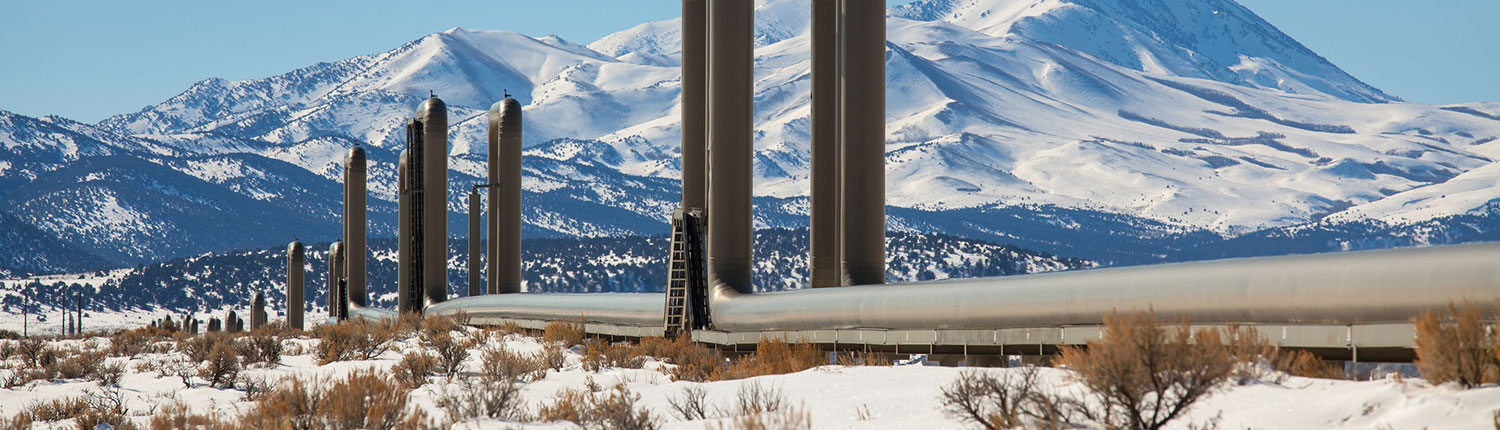
This Webinar by the FSR Energy Union Law will review the EU Common Rules for Gas Import Pipelines and the Latest Developments on the Amendment to the Gas Directive
Join Professor Kim Talus (Tulane Law School; University of Eastern Finland; and University of Helsinki) for a free webinar and open discussion on The Latest Developments on the Amendment to the EU Gas Directive, organised by the FSR Energy Union Law Area.
Topics
In this webinar, Professor Kim Talus will review the latest developments on the Commission’s proposed amendment to the 2009 Gas Directive, which extends the Third Energy Package to include gas import pipelines, following the agreement of 12 February 2019 reached at the conclusion of the trilogues.
We will address:
- The background to the Amendment: Why do we need it or do we?
- Details of the Amendment: What is changing and who is impacted?
- Details of the Amendment: How does it impact the energy competences of Member States?
- The relationship between Nord Stream 2 and the Amendment
Speaker
Professor Kim Talus is the James McCulloch Chair in Energy Law and founding Director of the Tulane Center for Energy Law (Tulane Law School). He is also a Professor of European Energy Law at UEF Law School (University of Eastern Finland) and a Professor of Energy Law at Helsinki University.
Disclaimer: While the webinar is an academic debate, please note that Professor Kim Talus has previously been attached to the Nord Stream 2 project. The Energy Union Law Area is not associated with the project. Professor Talus is an invited guest for the series.
Background
See Prof. K. Talus’ recent publication, in response to the agreement, EU Gas Market Amendment – Despite of Compromise, Problems Remain (OGEL, February 2019), available here.
And Professor Leigh Hancher’s recent paper on the proposal, A common EU framework regulating import pipelines for gas? Exploring the Commission’s proposal to amend the 2009 Gas Directive,available here.
Don’t miss any update on our events
Sign up for free and access the latest events from our community.
More on the topic




Multilateral Electricity Trade in Southeast Asia

This seminar presents the policy debates surrounding the development of multilateral electricity trade in Southeast Asia from the perspective of ASEAN policymakers, power sector stakeholders, and international consultants. It aims to explore the applicability of international experiences on this particular bloc of countries without fully built-out infrastructure and at varying stages of market liberalisation.
Four countries in Southeast Asia are currently piloting the first multilateral electricity trade initiative in the region. The Laos-Thailand-Malaysia-Singapore Power Integration Project (LTMS-PIP) has commenced phase one, with Malaysia recently signing an agreement to purchase electricity from Laos through existing transmission networks in Thailand. Singapore is expected to join at a later date.
The LMTS PIP is being put to trial in the context of a broader power integration initiative involving all ten-member countries in the Association of Southeast Asian Nations (ASEAN): the ASEAN Power Grid.[i] If successfully operationalised, the LTMS PIP would demonstrate the feasibility of trading and governing electricity trade across liberalised and regulated markets, and potentially encourage other countries in Southeast Asia to link up in the APG.
Presenter: Shelly Hsieh, Policy Leaders Fellow, School of Transnational Governance
The Seminar is organised by the Research Team of the Florence School of Regulation – Energy and open to all EUI members.
[i] The ten ASEAN member states are: Brunei Darussalam, Cambodia, Indonesia, Lao PDR, Malaysia, Myanmar, Philippines, Singapore, Thailand, and Vietnam.
Don’t miss any update on our events
Sign up for free and access the latest events from our community.







5th Florence Intermodal Forum: Internalising the External Costs of Transport

Following the usual approach of the Florence School of Regulation, stakeholders and academics will join the 5th Florence Intermodal Forum to examine the significant external costs of transport, and reflect on the necessary policy tools to internalise these. The discussion will be based on a new study “Sustainable Transport Infrastructure Charging and Internalisation of Transport Externalities”.
BACKGROUND
Personal and goods transport entail a significant societal and economic cost in the form of environmental and human health impacts, accidents, congestion, as well as infrastructure wear and tear. These costs are, however, largely unaccounted for in the price that transport users pay today.
In the absence of a dedicated policy framework, transport users do not consider external costs as part of their travel decisions. Cost reflective price signals are key to incentivising efficient transport patterns, while enabling consumers and industry actors to make informed purchase and investment decisions. The adequate internalisation of transport’s external and infrastructure costs offers important benefits in terms of promoting a more efficient use of infrastructure, reducing the transport sector’s contribution to climate warming CO2 emissions, air and noise pollution, while securing fairness for transport users.
Back in 2011 the European Commission acknowledged in its White Paper the importance of implementing ‘fair and efficient transport pricing’, and a number of ongoing legislative processes, most notably the revision of the Eurovignette Directive on road pricing, aim to enact the ‘user pays’ and ‘polluter pays’ principles. Yet while there is agreement over the general principles, the specific policy design is still to be determined. What is more, the French government’s recent backing down on a tax proposal that would have seen fuel prices increase by just under 3% shows just how difficult it is to impose any economic pain in the name of tackling climate change.
In order to summarise the existing scientific and practitioners’ knowledge the first Handbook on external costs was presented in 2008 as an output of the IMPACT study. The focus was on transport’s marginal external costs as a basis for the definition of efficient pricing schemes. The Handbook, however, did not provide information on existing taxes and charges or infrastructure costs, which was collected in 2012 in the Inventory of measures of internalisation.
The update of the Handbook followed in 2014. In comparison to the 2008 Handbook, the updated Handbook integrated infrastructure costs, which were initially addressed in a separate report, and provided more detailed country- and area-specific estimates of marginal external cost.
The European Commission recently commissioned a new study “Sustainable Transport Infrastructure Charging and Internalisation of Transport Externalities”, whose aim it is to feed into ongoing debates, both on technical and policy levels, through an update of the handbook on external costs, of the infrastructure costs and of the existing internalisation measures. The study’s scope is much broader and also more detailed than any work previously done in this area. The forum will share latest findings and discuss them. The study indeed compares infrastructure and external costs with taxes and charges paid by transport users. Based on this comparison it becomes evident that users and polluters do not fully pay the total costs (external and infrastructure) they are responsible for.
These preliminary findings lead us to the idea that, so far, in the EU the principle ‘the society pays’ is more applicable than e.g. ‘the user pays’ or ‘the polluter pays’. To put things into perspective, the study finds the overall size of transport external costs to be around 1 000 billion euro annually, the equivalent of almost 7% of EU28 GDP. Moreover, discrepancies can be observed between transport modes, with rail users paying a higher share of their external costs than road users.
This forum gathers policy makers, industry representatives from all transport modes, and academics for a well-timed discussion, based on the new study, to examine the significant external costs of transport, and reflect on the necessary policy tools to internalise these. More specifically, the forum seeks to answer the following three critical questions:
- Is the ‘user pays principle’ an appropriate tool to account for the infrastructure costs of transport? Can it be implemented in a socially just manner?
- Can carbon- and pollution-based taxation be a means to implement the ‘polluter pays principle’?
- What policy measures need to be enacted at European, national and local levels to achieve the user-pays and polluter pays principles?
DOWNLOAD:
EUROPEAN TRANSPORT REGULATION OBSERVER
RELATED PRESENTATIONS:
- Introduction to the 5th Florence Intermodal Forum, MATTHIAS FINGER, Florence School of Regulation/EUI; Ecole Polytechnique Fédérale de Lausanne
- Sustainable Transport Infrastructure. Charging and Internalisation of Transport Externalities, MARCO BRAMBILLA, TRT Trasporti e Territorio
- What is the User Pays Principle appropriate for?, CLAUS DOLL, Fraunhofer – Institute for Systems and Innovation Research
- ”User Pays Principle” – Perspectives on Social Sustainability, NIKO-MATTI RONINKONMÄKI, Ministry of Transport and Communications (Finland)
- Internalisation of external costs, LAURIANNE KRID, International Automobile Federation Region I
- European railways support ‘user pays’ and ‘polluter pays’ , LIBOR LOCHMAN, Community of European Railway and Infrastructure Companies
- The polluter-pay principle. Can carbon and pollution based taxation be a means to implement the polluter-pay principle?, ALAIN QUINET, SNCF Réseau
- Internalising the external costs of transport, SOTIRIS RAPTIS, European Sea Ports Organisation
- Internalisation of external costs, MARTIN DORSMAN, European Community Shipowners’ Associations
- The Swiss distance-related heavy vehicle fee (HVF), MICHAEL SÜNDER, SBB – Swiss Federal Railways
- The Polluter-pays Principle and Environmental Costs, ASTRID MATTHEY, German Environment Agency
- What Policy Measures Need to be Enacted at European, National and Local Levels to Achieve the User pays and Polluter pays Principles?, RAIMONDO ORSINI, Sustainable Development Foundation
- Internalising the external costs of transport, THOMAS WILLSON, EUROCITIES
- What policy measures need to be enacted at European, national and local levels to achieve the user-pays and polluter-pays principles?, VIRGINIA SILVESTRI, Italian Transport Authority
For more information, please contact FSR.Transport@eui.eu.
Don’t miss any update on our events
Sign up for free and access the latest events from our community.


Gas as an integral part of the EU decarbonisation strategy
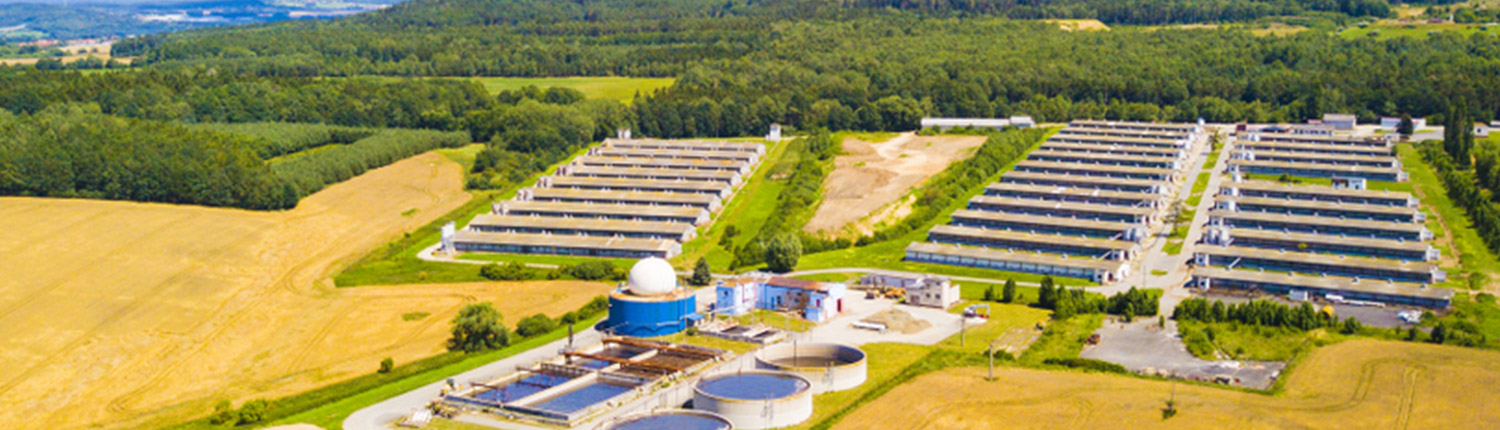
Biogas, biomethane, hydrogen and other “green gases” are increasingly being discussed as a part of the long-term EU decarbonisation strategy and as enablers energy transition.
The intermittent nature of renewable electricity production and the ambition to reach a share of 50% or above of wind and solar in the EU generation mix by 2030 invite reflection on the role of conventional natural gas in power in the short-to-medium term. Further, natural gas today plays a major role in industry and the residential heating sector.
Recent energy-related protests have underlined the importance of ensuring that the EU’s decarbonisation strategy is accompanied by public acceptance, and a great deal of public acceptance will be determined by the affordability of energy for citizens.
Despite the adoption of Paris Agreement and very recently the Katowice Rulebook, the IEA expects that oil, gas, shale gas and coal will continue to provide a great share of the global energy supply. Moreover, in several non-EU countries the consumption of conventional fuels, including natural gas, is foreseen to increase in the next years. IEA scenarios for Europe also see some continuing role for fossil fuels (see IEA World Energy Outlook 2018).
To what extent can we discuss the role and long-term prospects for conventional gas in this context? What should the next Commission do in order to ensure the EU decarbonisation strategy is carried out in a cost-effective way? Which problems should the Gas Market Design address and how should it address them?
Download the presentations
- Christopher Jones | FSR
- Ilaria Conti | FSR
- Eva Hennig | Eurogas
- Anne Sophie Courbeau | BP
- Lisa Fischer | E3G
- Torben Brabo | GIE
Programme Sessions:
- Setting the scene: How can gas ensure that the EU meets its goals and keeps energy costs low for citizens and industry?
- 1st Session: The role of gas in an increasingly electrified world
- 2nd Session: What support is needed for the decarbonisation of energy-intensive industries?
- 3rd Session: Fuelling transport – CNG, LNG, hydrogen?
- 4th Session: The evolving building heating sector: electrification, hybrid heating, or hydrogen?
This workshop was organized in partnership with FSR, GIE and Eurogas
Don’t miss any update on our events
Sign up for free and access the latest events from our community.
More on the topic
Local Governance for the Energy Transition

Decarbonisation, decentralisation, and digitalisation are major drivers of an ongoing transformation in the energy markets leading to a new energy governance framework. The so-called ‘energy transition’ challenges the way markets have been regulated, but not only. It also challenges the existing EU energy governance system. Besides the current multi-level governance between the EU, national authorities and undertakings, decentralised energy markets add to the puzzle the growing role of local authorities.
The role of local authorities for the energy transition needs to be suitably incorporated in the governance model of the emerging EU multi-layer and multi-sector energy market architecture. A coherent governance model must conciliate five different dimensions: technical system management, market organisation, institutional structures, consumer and market agent’s interaction (business) models and policy.
New energy governance requires the creation of new functions and structures, as well as the adaptation of existing ones. This increasing complexity must be urgently translated at regulatory and governance levels. It includes the vertical dialogue between regional, national and local authorities, as well as diagonal coordination between these multi-level authorities and the new business model or market roles, e.g. decentralised renewable generation, news role of DSOs, mini-grids, cooperative and digital platforms trading power, prosumers, targets on heating and cooling, electric vehicle charging industry, biogas plant for organic waste management, etc.
The objective of the workshop is twofold:
-
- to discuss the theory and practice of new energy local governance models;
- to launch a proposal for translating into an appropriate legal language all relevant technical, economic and institutional aspects at the core of new energy governance in the EU and for providing the necessary training structure to all involved decision-makers and stakeholders.
Implementation of this proposal should be achieved through a project supported by interested cities and the European University Institute (Florence School of Regulation and School of Transnational Governance). Active support from European institutions and the European Federation of Energy Law Associations is also expected.
Watch the live-stream here:
The workshop is a joint collaboration between the Florence School of Regulation and the School of Transnational Governance.
Don’t miss any update on our events
Sign up for free and access the latest events from our community.

Business models for renewable energy aggregation
In cooperation with the European Union- funded BestRES project, this seminar will focus on the business models for renewable energy aggregation, providing an overview of the business models and legal framework available to aggregators acting in future markets.
Aggregators should be intermediaries to put “Consumers at the heart of the Energy Union”. Currently, aggregators are mostly acting for large scale and industrial consumers. Consumers, and prosumers, do not have means to trade directly in the energy markets and require the services of an aggregator. Aggregation service providers are therefore central players for the active participation in the energy markets.
In the short and medium term, aggregation appears to be more attractive in the field of large applications. The regulations in the “Clean Energy for all Europeans” Package envisage a situation in long term prospective where the consumers and prosumers are more integrated in the energy market.
This workshop will provide the participants with an overview on the real-life implementation of business models for aggregators acting in the future markets to support prosumers engagement and their clients of decentralised RES production units.
The workshop will also provide a set of national and European enabling conditions identified during the BestRES project for the uptake of business models for RES aggregation to support policy-makers in elaborating strategies and ease the transition towards cleaner sources of energy.
For further details on the content of the workshop, you can contact Anne-Marie Kehoe or read more information on the BesRES website.
Don’t miss any update on our events
Sign up for free and access the latest events from our community.



Eurelectric Power Summit
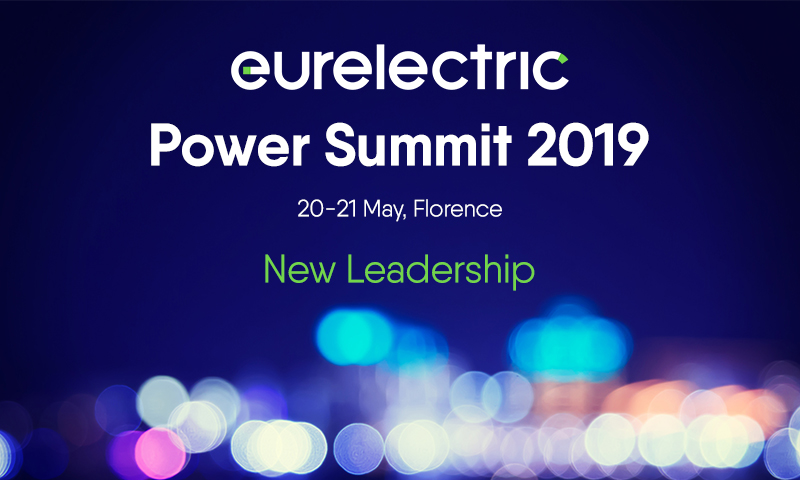
Eurelectric and The Florence School of Regulation are inviting academics, think-tanks, associations, start-ups and established businesses to submit their vision or analysis of innovative business models of the future electricity sector!
The recent release by the European Commission of the Clean Planet for all Roadmap, which aims at reaching a net-zero emission society by 2050, calls for increased levels of electrification to reach the commitments made in Paris. Covering more than 53% of our final energy demand with clean electricity calls for new technologies to enable innovative business opportunities, and raises vital questions for energy companies, consumers, policy-makers, energy regulators and academics.
- Which technology will play a leading role to deepen electrification?
- Which type of entrepreneur and enterprise will thrive in the electricity business of the future?
- Which business models will be required to connect end-use sectors with electricity suppliers?
Eurelectric and the Florence School of Regulation are looking for breakthrough contributions that embrace the complexity and uncertainties surrounding the electricity business in the context of decarbonisation, decentralisation and digitalisation. Join us to deepen the debate and develop innovative visions and empirically grounded analyses on the new technologies, business models and enterprises that will lead the electric landscape of the future.
Submit by 15 February 2019
READ MORE ABOUT THE CALL
Read more about the Eurelectric Power Summit 2019

Don’t miss any update on our events
Sign up for free and access the latest events from our community.



Investment Finance for the Low Carbon Economy

The Executive Training Seminar will look closely at the role of Central Banks and of State Investment Banks in the transition to low carbon economy; possible ways of scaling up climate finance in developing and emerging countries; and the different national paths to contribute to the Paris Agreement. Finally, participants will learn about the European experience of the EU Emission Trading System.
Learning outcomes
Participants will:
- develop an enhanced understanding of the dynamics of investment finance for the low-carbon economy;
- expand participants’ abilities to explore key climate finance issues through case-based analysis and group work;
- interact with fellow participants and colleagues, through peer teaching and peer learning dynamics.
Methodology
This policy-oriented Executive Training Seminar will adopt an innovative perspective combining high-level academic insight with the analysis of experienced policy practitioners. This will provide participants with a practical overview of the current financial instruments to support projects aimed to achieve sustainability, while also developing an enhanced understanding of the link between the different financial instruments and how they can be better targeted at financing needs for a transition to a low-carbon economy in both developed and developing countries.
Course Directors
Simone Borghesi, Director, FSR Climate
Jos Delbeke, Part-time Professor, School of Transnational Governance, EUI and KU Leuven
Scientific Coordinator
Isabella Alloisio, Research Associate, FSR Climate
*************
Watch the interview with Nick Robins (Professor Grantham Research Institute at London School of Economics and Political Science)
Watch a brief introduction to the seminar by Simone Borghesi (FSR Climate Director):

Climate change is likely to modify significantly patterns of capital investments and constitutes both a risk and an opportunity for investors and financial institutions. The Paris Climate Agreement approved at the COP21 in December 2015 is a cornerstone in climate policy and finance worldwide. To achieve its objective of limiting the rise of global mean temperature to +2°C compared to the preindustrial period, a shift in the allocation of finance flows from carbon-intensive activities to investments compatible with a 2°C pathway will be necessary. A framework aligning the decisions of financial institutions with the long-term climate goals is taking shape, and carbon intensive projects and investments will likely face an increasing risk of being stranded. Thanks to the involvement of experts that will discuss the most relevant topics in the climate finance field, the Executive Training Seminar aims to demonstrate how changing finance is pivotal to finance change that is required by the Paris Agreement.
The seminar will target a specialised audience composed of mid-career senior officers and policy makers from climate and finance ministries, central banks, insurance companies, pension funds, international financial institutions, state investment banks and finance agents at different levels.
This Executive Training Seminar is jointly organised by the School of Transnational Governance and the FSR Climate of the European University Institute
Don’t miss any update on our events
Sign up for free and access the latest events from our community.
More on the topic








New business models in the electricity sector

The two-day workshop will investigate how the various players are adapting their business models to the new risks and opportunities posed by decarbonisation and digitalisation. It will also look at the new actors that are emerging within the electricity sector or are entering it from other industries.
Decarbonisation and digitalisation are deeply transforming the electricity sector, enabling its further decentralisation. All the segments of the supply chain, from generation to energy retail through transmission and distribution, are affected. The new technologies available and the policy choice to fight against climate change are also stimulating innovation at the traditional edges of the sector. Space behind and beyond the meter is becoming increasingly important and disruption to the classical industry organisation may soon come from there.
The workshop will enable participants from the industry, energy regulators and academics to brainstorm freely and share ideas on where and how value can be created in the electricity sector of the 21st century.
Participation by invitation only.
Don’t miss any update on our events
Sign up for free and access the latest events from our community.
Highlights from COP24

This seminar will address some of the highlights of COP24, including what is left for the next COPs, in consideration of the urgent need to increase ambition and strengthen countries’ commitments.
The Paris Agreement undoubtedly forms a milestone in the fight against climate change. It sets the framework for the long-term global common action against climate change by all nations. The coming period will tell whether its goals, structure and rules are sufficient to keep the global temperature rise well below 1,5C as required by the IPCC. COP24 in Katowice defined several details of the Paris Agreement operational rules, including on NDCs, transparency, global stocktake and compliance.
Download the presentation by Prof. Benito Müller and Leonardo Massai
Moderator: Simone Borghesi, Director, FSR Climate, European University Institute
Watch the video recording of the seminar:
Interviews with the speakers
Interview with Prof. Müller
Interview with Leonardo Massai
Speakers’ bios

Professor Müller is Managing Director of Oxford Climate Policy (a not-for-profit company aimed at capacity building for developing country climate change negotiators), and Director of the European Capacity Building Initiative (ecbi), an international initiative for sustained capacity building in support of international climate change negotiations. At the University of Oxford, he serves as Convener International Climate Policy Research at the Environmental Change Institute, Visiting Professor at the Social Sciences Division, member of the Philosophy Faculty, and Supernumerary Fellow of Wolfson College, Oxford. He was Director Energy & Climate Change at the Oxford Institute for Energy Studies (1996 – 2014). He has been serving as Adviser to the LDC Group Chair (2011-18) and the Africa Group Chair (2012-13). He participated in the deliberations of the Transitional Committee (TC) for the Green Climate Fund (GCF) as Adviser to the LDC TC members, who he has also been also advising on the GCF Board and the UNFCCC Standing Committee on Finance. Professor Müller received his doctorate (D.Phil.) in Philosophy from the University of Oxford and was formerly a Research Fellow at Wolfson College and a Lecturer in Logic at the Queen’s College, Oxford. He has a Diploma in Mathematics from the Eidgenössische Technische Hochschule (ETH) in Zürich, Switzerland.
COP24 – Key Outcomes (written by Anju Sharma, Christoph Schwarte, Pascale Bird, Axel Michaelowa, Benito Müller)
 Leonardo Massai
Leonardo Massai has 16 years of experience on international environmental law, climate change mitigation and adaptation, forestry, human rights, renewable energy and energy efficiency regulation. Leonardo is co-founder of Climalia, a consultancy providing specialized services on climate change policy and practice, including technical assistance to Least Developed Countries and Small Island Developing States on the UNFCCC, Paris Agreement, NDCs, transparency and adaptation. Leonardo is Legal and Policy Advisor for the Coalition for Rainforest Nations – CfRN where he provides direct counsel, assistance, advice and training to all rainforest nations on international environmental law, climate change governance, mitigation and adaptation, REDD+, climate compatible development plans and multilateral negotiations. Massai is also Assistant Professor in EU Law, International and EU Environmental Law, Climate Change Law, Human Rights and Environments, UN Multilateral Negotiations at the Catholic University of Lille in France. Since 2014, Massai is Alternate Member of the Enforcement Branch to the Compliance Committee of the Kyoto Protocol (elected as representative of the Asia-Pacific group), where he will serve until 31 December 2021.

Don’t miss any update on our events
Sign up for free and access the latest events from our community.
More on the topic
The European Energy Transition: A year ahead of the Twenties

The event “The European Energy Transition: A year ahead of the Twenties” will look at the most important issues related to energy for the next few years. The event will coincide with the launch of the book ‘The European Energy Transition: Actors, Factors, Sectors’ and an ENTSO-E – FSR online course on the same topic.
What are the energy topics that will mark the next decade? How are the targets of at least 40% cut in greenhouse gas emissions, of at least 32% of Renewables and of 32,5% increase in energy efficiency set to shape the next decade? What are the institutions that we need and how will Brexit impact the Energy Union? Will Horizon Europe take the innovation imperative from promise to practice? Will Europe continue to benefit from its high standard of security of supply? And will COP 25, taking place at the end of 2019, will see a credible clean energy-oriented Europe in the lead?
The event, co-organised by FSR, Bruegel and the Jacques Delors Foundation, will see high-level speakers present their views on these topics.

Don’t miss any update on our events
Sign up for free and access the latest events from our community.
An assessment of the EU Emissions Trading System

As part of the LIFE SIDE project, the FSR Climate of the European University Institute has conducted a literature-based assessment of the European Union Emissions Trading System (EU ETS) which focuses on the following topic areas:
1) free allocation, competitiveness effects and carbon leakage;
2) interactions with other policies;
3) low-carbon innovation and investment; and
4) the international dimension.
In this webinar, the literature itself and the conclusions of the EU Emissions Trading System assessment will be illustrated chapter by chapter. The audience will have the opportunity to interact with the speaker.
Speakers:
Simone Borghesi, Director, FSR Climate
Stefano Verde, Research Fellow, FSR Climate
Don’t miss any update on our events
Sign up for free and access the latest events from our community.
More on the topic