
Type of event: Online Event
Book launch ‘Renewable Energy in India: Economics and Market Dynamics’

The Florence School of Regulation is pleased to host the launch of the book Renewable Energy in India: Economics and Market Dynamics.
This event will discuss various policy and regulatory initiatives for renewable power generation technologies in India by comparing them with similar measures in some leading countries of the world.
The scope of renewable energy generation technologies has far exceeded that of a laboratory, as they now require large-scale commercial generation. With them relying heavily on policy support, contemporary debates in energy are grappling with how exactly renewable energy should be priced and integrated into market. This book, written from an economics perspective, critically examines the aspects of pricing, regulatory oversight and rules governing the market for electricity generation from intermittent renewable energy sources and associated green product. This book discusses various policy and regulatory initiatives for renewable power generation technologies in India by comparing them with similar measures in some leading countries of the world. It contextualizes the pricing of renewable energy and looks at market-determined renewable energy certificate (REC) mechanism. Finally, it seeks to advance scholarship on green energy and introspects on policy dilemma facing the renewable segment in India and explores the possibility of achieving a level playing field for renewable energy vis-à-vis traditional methods of power generation, through appropriate market mechanism.
Session Chair: Dr. Kirit Parikh, former Member, Planning Commission, India
Panelists:
- Jean-Michel Glachant, Director, Florence School of Regulation (FSR) Energy and President-elect International Association for Energy Economics
- Dr Nicholas Ryan, Assistant Professor, Department of Economics, Yale University
- Mr. Sanjeev S Ahluwalia, An expert in economic regulation, Advisor, Observer Research Foundation, former IAS and first Secretary of CERC
- Dr. Praveer Sinha, CEO and MD, Tata Power.
Don’t miss any update on our events
Sign up for free and access the latest events from our community.
More on the topic








IAEE-FSR webinar series on electricity markets

DAY 2: Monday 15 November
Innovation and disruption in the electricity sector
Innovation and disruption are not new in the electricity sector, as we have seen in the last 30 years with open wholesale markets and combined cycle gas turbine power plants, open retail markets and real-time consumption metering. However, today, or tomorrow, we could face many more innovations and disruptions.
On the supply side one can see how renewable intermittent generation, and its low marginal costs, is becoming mainstream; and how storage is increasingly considered as a new important resource for managing the energy system. On the demand side one can see active consumers (as prosumers or prosumagers), new kind of intermediaries (as aggregators or communities), and digital tools of interaction (as sensors, actuators, or platforms).
Technologies are also redrawing the boundaries of the electricity sector, with an increasing electrification of road mobility, homes and buildings’ heating & cooling.
All these novelties call for new business models, from “green majors” to “asset light suppliers”, from “peer-to-peer” to “interactive building managers.” Possibly, the use of a strong carbon tax as the main incentive to fuel the energy transition, instead of targeted technology push by public authorities, might again change the entire landscape.
In these many waves, how will markets adapt, transform or disappear? Will China or Africa define their own ways?
Panel One (10:00-11:00 am Eastern Time)
“Disruption… or New Normal in the Power Sector?”
Moderator: Jean-Michel Glachant
Panellists:
- Karsten Neuhoff
- Fereidoon Sioshansi
- Carolyn Fischer
- Christopher Knittel
- David Reiner
A discussion with audience follows
Panel Two (11:00 am – 12:00 pm Eastern Time)
“Any Future for Markets? Any Market Perfectly Fit for Disruptions?”
Moderator: Michael Pollitt
Panellists:
- Richard Green
- Michael Pollitt
- Ignacio Pèrez-Arriaga
- Vivien Foster
- Xu Yi-chong
Learn more on the topic: Electricity markets in times of (climate) change
This webinar series, jointly organized by the IAEE and the Florence School of Regulation, represents an opportunity to review all the fundamentals needed to have the electricity markets working.
Day 1: Monday 11 October
Electricity Markets Assessment
Open markets for electricity in Europe and the US are approaching the age of 30. Their diversity, be it at the wholesale or the retail level, has never reduced significantly and no common model ever emerged on both sides of the Atlantic Ocean. Nor it did anywhere else. Today, we are still confronted with several serious stars in the US, such as PJM and Texas, and in Europe, such as the UK and the Nordics. On the top, we should not forget Australia. Surprisingly, only the EU has made, since 2016, a very serious effort of harmonization of market and network rules.
This fascinating debate, always half rational and half self-interested, has restarted to boil since a few years due the spectacular growth of renewables, demand response, storage, and so on and so forth. As the new Handbook on Electricity Markets, recently edited by Jean-Michel Glachant, Paul Joskow and Michael Pollitt, explores in depth.
Panel One (10:00-11:00 am Eastern Time)
“Electricity Markets Assessment: Europe”
Moderator: Jean-Michel Glachant
Panellists:
- David Newbery
- Chloé Le Coq
- Fabien Roques
- Paul Simshauser
A discussion with audience follows
Panel two (11:00 am – 12:00 pm Eastern Time)
“Electricity Markets Assessment: the US”
Moderator: Catherine Wolfram
Panellists
- Richard Schmalensee
- Shmuel Oren
- Frank Wolak
A discussion with the audience will follow.
Don’t miss any update on our events
Sign up for free and access the latest events from our community.
More on the topic





Water and Sanitation Services Aggregation: from expectations to achievements in selected countries

The FSR Water and WAREG are holding a joint online event on Wednesday 15 September 2021 to discuss these topics and present concrete examples and outcomes of aggregation processes in selected countries.
Network industries are characterized by increasing yields, and, as such, water and sanitation (WS) utilities that produce larger outputs have on average lower unit costs than utilities that produce smaller outputs. This relationship appears to be present in the WS sector around the globe and is one of the main arguments in favor of utility aggregation, defined as “the process by which two or more service providers consolidate some or all their activities under a shared organizational structure, whether it implies physical infrastructure interconnection or not” (World Bank, 2017). The expectation of cost savings from aggregation is supported by a large number of economic studies since the late 1960s, underlining the potential for economies of scale and scope.
Following these prescriptions, and in an attempt to increase WS services efficiency, many countries in Europe, Africa and Latin America have recently embarked on a reform path to aggregate their WS utilities. Did those aggregation reforms and processes always achieve the expected outcomes? If not, why didn’t the awaited benefits materialize in practice? What are the actual achievements of these reforms? Furthermore, what could be the role of WS regulators in the design, implementation and monitoring of such reforms? These institutions routinely collect key data on utilities that can be of great relevance to inform the design of aggregation in terms of accurate scale and scope, taking into account the local context. Regulatory mechanisms can be used to incentivize aggregation processes implementation. Finally through the regular monitoring of performance indicators, regulators can also provide information on the recorded outcomes and benefits of aggregation. This regular monitoring is a crucial asset to facilitate accountability toward shareholders and customers as improvement can be steadily demonstrated over time.
Find the programme
Deadline for registration is on Monday September 13th, 5pm
Watch the recording
(Passcode: 3pfQYp3^)
Bibliography
World Bank (2017) Toolkit on the Aggregation of Water Supply and Sanitation Utilities
World Bank (2017) Joining Forces for Better Services?: When, Why, and How Water and Sanitation Utilities Can Benefit from Working Together
Klien, Michael (2017) Statistical Analysis: Global Study on the Aggregation of Water Supply and Sanitation Utilities. World Bank, Washington, DC
Aggregation case studies at utility level:
|
Country |
Utility |
Reference |
|
Brazil |
Dos Santos Rocha, Wilson; Salvetti, Maria (2017), World Bank |
|
|
Colombia |
Ortiz Moreno, Erica; Salvetti, Maria (2017), World Bank |
|
|
Hungary |
Kis, Andras Lajos; Salvetti, Maria (2017), World Bank |
|
|
Indonesia |
Anwar, Alizar; Salvetti, Maria (2017), World Bank |
|
|
Mozambique |
Juízo, Dinis; Salvetti, Maria (2017), World Bank |
|
|
Portugal |
Zenha, José Henrique; Salvetti, Maria (2017), World Bank |
|
|
Romania |
Popa, Teodor; Salvetti, Maria (2017), World Bank |
This event is in collaboration with:

Presentations
- Session 2 Aggregation France
- Session 3 Scottish Water
- Session 3 Alia Spa
- Session 3 Aggregation Romania
- Session WICS Aggregation
- Session 2 Bulgaria
- Session 2 Romania
- Session 1 Salvetti
- Session 1 Klien
- Conclusion WAREG
Don’t miss any update on our events
Sign up for free and access the latest events from our community.
More on the topic




Is the EU ready for new methane legislation?

This event is the first of a series of webinars jointly organised by the Florence School of Regulation and the Environmental Defense Fund
The upgraded EU 2030 climate goals require at least a 35-37% reduction in methane emissions in the next decade compared to 2005 levels. The upcoming EU legislation will step up and synchronise the actions in the EU in three key areas: Measurement, Reporting and Verification (MRV), Leak Detection and Repair Programmes (LDAR), and routine venting and flaring. The European Commission is also considering measures to reduce emissions from the imported natural gas.
However, the adoption of new legislation alone does not guarantee a qualitative shift and effective implementation. All actors involved should be well-prepared and motivated. However, a lot could be done even before the legislation comes into force, e.g. by committing to voluntary industry initiatives such as the OGMP2.0. The webinar will address all areas that will be and may be covered by the upcoming EU legislation: from MRV to treatment of the imported gas.
The purpose of the seminar is to identify the areas where further work by the EU, Member States, and the industry may be needed to successfully implement the forthcoming EU legislation, which the EU Commission will present by the end of 2021.
Questions:
- Which EU legal instruments could be the most efficient ones in delivering bold action on mitigation of methane emissions in the energy sector?
- Could we expect a swift agreement on the legislative measures on the European level?
- Are national energy regulators ready for actions on methane emissions?
- What the industry is already doing to reduce methane emissions, and what is it expecting from legislators?
Moderation: Andris Piebalgs, Florence School of Regulation
Welcome
Andris Piebalgs | Florence School of Regulation
Session 1: The perspective of the EU institutions
Kitti Nyitrai | European Commission
Nicolás González Casares | European Parliament
Urška Dolinšek | Slovenian Presidency of the Council of the EU
Session 2: Regulatory challenges
Marco La Cognata I ARERA/CEER
Klaus-Dieter Borchardt I Baker McKenzie
Karolina Cegir I Energy Community
Session 3: The perspective of the industry
Muhunthan Sathiamoorthy| BP
Francisco de la Flor | Enagás / Gas Infrastructure Europe
Eva Hennig | Thüga / Eurogas
Conclusion
Dagmar Droogsma | Environmental Defense Fund
Related links
Cover the Basics: Methane Emissions
The Upcoming EU Legislation on Methane Emissions (event recording)
Previous events with EDF:
Addressing Methane Emissions in the context of energy system integration
The Impact of EU Methane Strategy on the Natural Gas Market
The EU Methane Strategy – the case for multilateralism (event highlights)
Policy briefs:
Designing an EU Methane Performance Standard for Natural Gas
Presentations
Don’t miss any update on our events
Sign up for free and access the latest events from our community.
More on the topic







How green is state aid control?

The FSR Energy Union Law is pleased to invite you to a joint online event on State Aid Control, co-hosted with the Centre of European Law at King’s College London.
State aid control and environmental protection
In its 2019 Communication on The European Green Deal, the Commission identified the revision of State aid guidelines as a key factor in “supporting a cost-effective transition to climate neutrality by 2050”. The Energy and Environmental State aid guidelines (EEAG) were considered particularly important in this regard. After a comprehensive evaluation of all State aid rules was published in October 2020, the Commission has recently launched a public consultation on the proposed revision of the EEAG, which will now be known as Climate, Energy and Environmental State aid guidelines (CEEAG).
This timely event will convene a high-level line-up of scholars and practitioners to discuss these draft revisions and their implications.
Presentations and expert commentary will be followed by an audience Q&A.
This event will be live-streamed and recorded.
Chair:
Andrea Biondi | King’s College London
Speakers:
Nicola Pesaresi | Head of Unit, State aid I, Directorate for Energy and Environment, DG Competition, European Commission
Alejandro Donnay | Deputy Head of Unit, State aid I, Directorate for Energy and Environment, DG Competition, European Commission
Commentators:
Leigh Hancher | FSR
Nicole Robins | Oxera
Don’t miss any update on our events
Sign up for free and access the latest events from our community.

IRENA’s World Energy Transitions Outlook: 1.5°C Pathway

A conversation with Francesco La Camera, Director General of IRENA.
This online event aims to present the International Renewable Energy Agency’s report “World Energy Transitions Outlook: 1.5°C Pathway” through a conversation with the Director General of the International Renewable Energy Agency, Francesco La Camera.
The World Energy Transitions Outlook (WETO), which was released in June 2021, outlines a pathway for the world to achieve the Paris Agreement goals and halt the pace of climate change by transforming the global energy landscape. The report identifies options to limit global temperature rise to 1.5°C and bring CO2 emissions closer to net zero by 2050, offering high-level insights on technology choices, investment needs and the socio-economic contexts of achieving a sustainable, resilient and inclusive energy future.
After a presentation of the report by IRENA, the FSR Energy & Climate team will discuss the findings and insights from different perspectives.
Francesco La Camera is the Director General of the International Renewable Energy Agency (IRENA). He has more than 30 years of experience in climate, sustainability, and international cooperation. He formerly served as Director-General of Sustainable Development, Environmental Damage, EU and International Affairs at the Italian Ministry of Environment. La Camera is widely credited with having spearheaded international cooperation on issues related to climate and the environment. He played a key role in bringing together multilateral organisations to develop joint initiatives designed to implement the Paris Agreement and the SDGs. He has also coordinated a number of national strategies, including sustainable development, green finance, and fossil fuel subsidies.
The event will be chaired by Prof. Simone Borghesi.
After the WETO presentation by IRENA, Prof. Jean-Michel Glachant, Ilaria Conti and Swetha Baghwat will be invited to discuss the report’s findings with Francesco La Camera. This discussion will be followed by a brief Q&A.
Read the report:
World Energy Transitions Outlook: 1.5°C Pathway, IRENA, 2021
Learn more:
Achieving zero emissions under a cap-and-trade system, FSR Climate & ICAP, 2020
Cost-effective decarbonisation study, FSR. 2021
Don’t miss any update on our events
Sign up for free and access the latest events from our community.
More on the topic



An Overview of Recent Energy Case Law from the CJEU, June 2021

As the energy transition unfolds and the Green Deal initiatives take off, the role of the Court of Justice of the European Union is likely to become increasingly significant – whether by way of their involvement in direct appeals in institutional matters, as well as against Commission competition and state aid decisions – or by way of the ECJ’s rulings on requests for preliminary rulings from national courts.
The FSR European Union Law Area provides a regular platform to single out and examine major trends in the case law with a six-month update on new case law from both the General Court and the Court of Justice as well as to shine a spotlight on important pending cases.
For this event we are joined by Adrien de Hauteclocque from the FSR and the General Court, and Matthew Levitt, partner at Baker Botts LLP, Brussels. The FSR EU Law Area Director, Leigh Hancher will chair and contribute as a speaker to the event.
The cases we will address are:
T-300/19, Achema et Lifosa/Commission
Programme
14.00 – 14.05 Introduction
Leigh Hancher, Part-time Professor of Energy Law FSR
14.05 – 14.25 The GC’s rulings in T-300/19, Achema et Lifosa/Commission and in T-9/19, Client Earth/BEI
Leigh Hancher
14.25 – 14.40 The GC’s ruling in T-885/19, Aquind/ACER
Adrien de Hauteclocque, Head of Cabinet of the President of the General Court
14.40 – 15.00 C-165/19P Slovak Telekom and C-152/19P Deutsche Telekom
Matthew Levitt, Partner, Baker Botts LLP, Brussels
15.00 – 15.05 A snapshot of pending cases
Adrien de Hauteclocque
15.00 – 15.30 Questions and Discussion
More on ECJ Case Law
If you want to catch up on earlier CJEU developments in the year, you can watch the recordings of our sessions from November 2020 here and April 2020 here.
Energy Union Law & Policy
FSR Energy Union Law area provides a forum for critical discussion and independent analysis of the developments in EU energy law and policy. Our activities are aimed at professionals from national energy regulatory authorities, European and international institutions, energy-focused law firms, consultancies and energy utility companies.
Don’t miss any update on our events
Sign up for free and access the latest events from our community.
Speakers
Solidarity and Energy Law and Policy: a closer look at the AG ‘s Opinion on the OPAL case

The Vienna Forum on European Energy Law | Hors Série
The Vienna Forum on European Energy Law is an annual joint initiative of the FSR Energy Union Law Area and the Energy Community Secretariat which aims to bridge the gap in energy debate between the EU and Energy Community.
Solidarity in the European Union’s energy policy – not just a political guideline but a justiciable principle of EU primary law?
This is the position of the CJEU’s Advocate General who delivered his recent Opinion in Case C-848/19 P Germany v Poland concerning the OPAL natural gas pipeline. He advises the Court of Justice to uphold the General Court’s earlier ruling in Case T-883/16 Poland v Commission that energy solidarity is a principle of EU primary law which entails rights and obligations for EU institutions and for the Member States. Although the CJEU may not necessarily follow his advice, this Opinion already raises a number of interesting opportunities for discussion.
Draft Programme
Introduction Dirk Buschle │ Energy Community Secretariat; College of Europe
Moderator Leigh Hancher | FSR; Tilburg University; Baker Botts LLP
Setting the Scene
Kim Talus | Universities of Tulane, Eastern Finland and Helsinki
A Critical appraisal of the AG Opionion
Dr Pawel Pikus │ Director of Electricity & Gas Department in the Ministry of Climate and Environment of the Republic of Poland
Katja Yafimava│ OIES, Oxford
Q & A
Conclusion Leigh Hancher & Dirk Buschle
Read more
The Future of Energy Solidarity (FSR Energy Union Law | Opinion)
Don’t miss any update on our events
Sign up for free and access the latest events from our community.
More on the topic

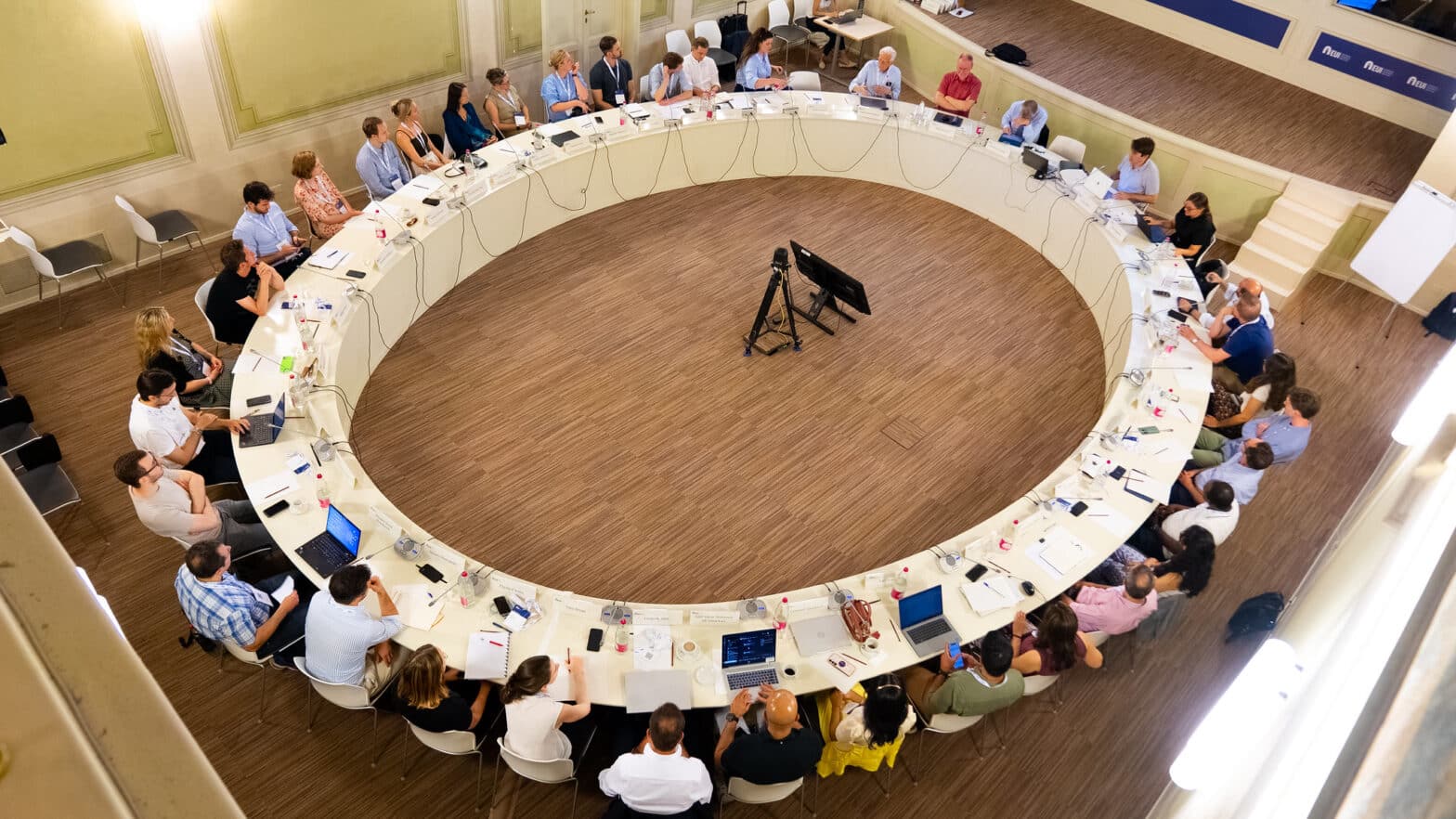
FSR Policy Advisory Council

The Policy Advisory Council discusses the most topical regulatory and policy issues and debates the relevance and robustness of the latest FSR research findings.
The meeting gathers renowned academics, experts from the FSR Energy Major Donors, the European Commission, the Agency for the Cooperation of Energy Regulators (ACER), and National Regulatory Authorities.
The event will take place in hybrid form.
Please note this is a closed event and participation is by invitation only.
Don’t miss any update on our events
Sign up for free and access the latest events from our community.
More on the topic


Innovation pathways, strategies and policies for the low-carbon transition in Europe

The INNOPATHS final conference “Innovation pathways, strategies and policies for the low-carbon transition in Europe” is scheduled on Monday 31st May (10:00-16:15 CEST) and Tuesday 1st June (10:15-16:15 CEST).
The transition to climate neutrality in Europe will require deep structural changes to the full range of energy, economic and societal systems. These changes, and their economic, social and environmental implications, must be examined and understood if policymakers are to take the best decisions possible to achieve this overarching objective.

For the last four years, the INNOPATHS project’s partners have been working with stakeholders from government, academia and civil society to understand issues ranging from the dynamics of low-carbon innovation, policy frameworks and finance, to the implications for labour markets and equity from the transition. Using this knowledge, new, state-of-the-art low-carbon pathways for the European Union have been created and modelled. This final conference will share key insights from the project with a wider audience, and discuss their meaning and implications for Europe and EU member states in the coming years.
The conference will be chaired by Paul Ekins – OBE (UCL Institute for Sustainable Resources & Project Coordinator) and by Simone Borghesi (Director of FSR Climate). The event will hold presentations and discussions on following topics:
- Technology development and innovation dynamics; their policy and other drivers, and co-benefits
- Decarbonisation and equity, with a focus on European labour markets and the broader social implications of the transition
- Financing the transition; including the role of public funds, low interest rates and the European Green Deal
- Key requirements and implications of our new pathways for a low-carbon Europe; and the differences implied depending on which pathway emerges from policy action and wider developments
- Policy priorities and knowledge gaps; including a panel session with a series of European policy experts and practitioners, to conclude the conference.
This event is part of the official All4Climate – Italy 2021 programme. 
The project INNOPATHS has received funding from the European Union’s Horizon 2020 research and innovation program under Grant Agreement No. 730403.
Don’t miss any update on our events
Sign up for free and access the latest events from our community.
Speakers
More on the topic












EU, China & US on their way to carbon neutrality: will their implementation strategies converge?

Watch the recording:
Modern societies face many global challenges. Climate change is certainly among the most urgent and important ones. Europe has decided to address the widely diffused concern of public opinion on the effects of climate change by committing to reaching climate neutrality by 2050, an ambitious target that remains a top priority for the Von der Leyen Commission despite the difficulties raised by the COVID-19 crisis. Similar climate neutrality targets have been recently set by other jurisdictions, most notably the USA and China (the latter by 2060). The European Union can (and actually intends to) play a key leading role as regulator, negotiator and actor in the global climate challenge. While a unilateral European action will not be sufficient per se to stop global warming (as European emissions are only a relatively small part of total greenhouse gas emissions), the EU can lead the world by example in adopting more stringent climate regulations and hence influencing the others’ climate policies.
However, alternative climate policies and regulatory models might emerge at the world level possibly challenging the European leadership in the fight against climate change. Consider, for instance, the case of the European Emission Trading System (EU ETS). As it is frequently argued, the EU ETS represented a prototype for most other ETSs that have been rapidly emerging in the world. But ETSs might progressively diverge over time rather than converge towards a unique model to account for the different institutional frameworks characterising different jurisdictions. The same applies to other European climate measures and policies that might or might not fit other institutional contexts.
This raises some of the questions that we would like to address in the session, namely:
- What are the lessons that other jurisdictions can take from the European climate policy experience? Can/should the European experience with climate regulation be replicated in non-European contexts? If so, how? If not, why?
- How can other economies improve upon the European experience and how can Europe learn from others?
- Will the climate neutrality implementation strategies converge or diverge across different countries?
- Which policies will lead EU, US and China -the three main players in the global climate arena- towards the net-zero emissions target?
- What will be the impact of the Biden administration on international cooperation and climate policy in the years to come?
- Can international cooperation among Emission Trading Systems contribute to promoting a global climate policy?
FSR Climate, together with the Policy Outreach Committee of EAERE (European Association of Environmental and Resource Economists), and in collaboration with the School of Transnational Governance of the EUI, organises this session to promote a more integrated dialogue between academia and policy world, providing advice and support to EU policy makers and institutions in designing policy interventions.
The event builds upon the successful experience of policy debates organized by FSR Climate at State of the Union since 2018 and intends to continue the policy dialogue carried out by FSR Climate under the ongoing LIFE DICET (Deepening International Cooperation on Emissions Trading) project. The project LIFE DICET focuses on the international carbon market cooperation between the EC and the regulators of other major ETSs, namely, California-Quebec, China, Switzerland and New Zealand and intends to support EU and Member State policymakers in deepening international cooperation for the development and possible integration of carbon markets at the world level.
The event chaired by Simone Borghesi and Jos Delbeke is intended to address an audience of high-level policy makers, stakeholders and scholars such as those attending the SoU.
The project LIFE DICET is co-financed by the EU LIFE Programme of the European Commission.
Don’t miss any update on our events
Sign up for free and access the latest events from our community.
Speakers
More on the topic
The Role of Modal Shift in Achieving Transport Decarbonisation Objectives
The European Green Deal strives to transform Europe into the world’s first carbon neutral continent by 2050: a commitment, which will necessitate significant transformations across all sectors of the economy. For the transport sector, which accounts for a quarter of the EU’s total greenhouse gas emissions, meeting this ambition will require a 90% reduction in CO2 emissions by mid-century. The recently published Sustainable and Smart Mobility Strategy stresses that ‘greening mobility must be the new license for the transport sector to grow’. While a number of measures will need to be considered, ranging from pricing, to regulation, and a rethinking of mobility needs, this panel will explore the role of modal shift in placing the sector on a firm path to sustainable and smart mobility.
The shift of passenger and goods traffic away from less environmentally sound modes, such as road in particular, but also aviation, towards the greenest modes, namely rail and inland waterways, constitutes a central pillar of the EU transport decarbonisation strategy. In fact, the EU’s modal shift strategy sets out that rail freight traffic should increase by 50% by 2030 and double by 2050, whereas transport by inland waterways and short sea shipping should increase by 25% by 2030 and by 50% by 2050. This, in turn, will require measures to manage better, and to increase the capacity of railways and inland waterways, which the Commission will propose by 2021. To advance the delivery of these objectives, the Commission has declared 2021 as the European Year of Rail.
In addition to supporting greening objectives, a shift to rail and inland waterway vessels can ease congestion on roads, lower the pressure on road infrastructure by taking over the heaviest loads and reducing the risks linked to transporting dangerous goods. Yet, the progress achieved to date in the Member States remains insufficient, and the share of rail freight stagnates around 18%. While the COVID-19 pandemic has brought about unprecedented challenges for the entire transport sector, it has also brought to light more prominently the higher safety and reliability of rail freight, where rail has offered efficient cross-border cargo connections carrying large volumes of essential goods and medical supplies using minimal human resources. The post-COVID-19 period, furthermore, offers a unique opportunity for railway undertakings to tap into the unused potential and develop more rail passenger services, especially in cross-border contexts. Night trains could increasingly compete with short haul flights and stimulate European tourism in the recovery phase.
This panel discussion, hosted by FSR-Transport under the framework of the European University Institute’s annual flagship conference The State of the Union (SOU), brings together EU policy makers and industry experts for a timely debate on the technical and regulatory barriers, as well as the possible solutions and legislative opportunities to turn the EU’s modal shift objectives into reality.
Context:
The State of the Union conference, organised by the European University Institute (EUI), is an annual event for high-level reflection on the European Union, renowned for fostering global connections and conversations, disseminating expert knowledge and providing excellent networking opportunities in the beautiful setting of Florence.
Celebrating its tenth anniversary, the 2021 edition of the conference will address the theme ‘Europe in a Changing World.’ The focus will be on the challenges and opportunities for Europe amidst rising concerns over global commons and the climate emergency, a shifting economic and geopolitical power balance, major challenges to multilateralism, and the ongoing global battle against COVID-19. Europe’s role on the global stage will be tackled across sessions on artificial intelligence, climate, geopolitics, the global economy, multilateralism, peace and human rights, public health, and strategic autonomy.
Don’t miss any update on our events
Sign up for free and access the latest events from our community.