


Type of event: Online Debate
Update on ECJ Case Law: Round Two

In this online debate, we will discuss the latest energy sector decisions from the European Courts of Justice and consider the wider repercussions of these developments. Several important issues have been raised via the Courts in recent months and several further important rulings are expected in the coming weeks, including on dispute settlement, the Hinkley Point nuclear power plant, and EU state aid rules. We will present the key aspects of these cases, weigh the reasoning of the courts, and reflect on the implications of these decisions.
The cases we will address are:
· Case C-238/18: GRDF SA v Eni Gas and Power France SA on dispute settlement and the extent of the powers of regulatory authorities
· Case C-594/18 P: Austria v European Commission – an update on the ECJ’s review of the Hinkley Point judgment on state aid
· Case T-479/11 – Case T-157/12 (appeal of Case C-438/16 P Commission v France and IFP Énergies Nouvelles) on state aid
‘Ones to Watch’:
· Case C-705/19: AXPO Trading v Gestore dei Servizi Energetici SpA – GSE
· Case T-300/19: Achema and Lifosa v Commission
We will be taking questions throughout the live session, but we also invite you to submit your questions in advance in the registration form.
More on ECJ Case Law
If you want to catch up on earlier CJEU developments in the year, you can watch a recording of our session from April 2020 here.
#FSRDebates
The focus of the debate series is on recent court cases, regulatory decisions, EU legislation, or public consultations to be discussed by a panel of experts. Learn more about the FSR series.
Presentations
Don’t miss any update on our events
Sign up for free and access the latest events from our community.
More on the topic



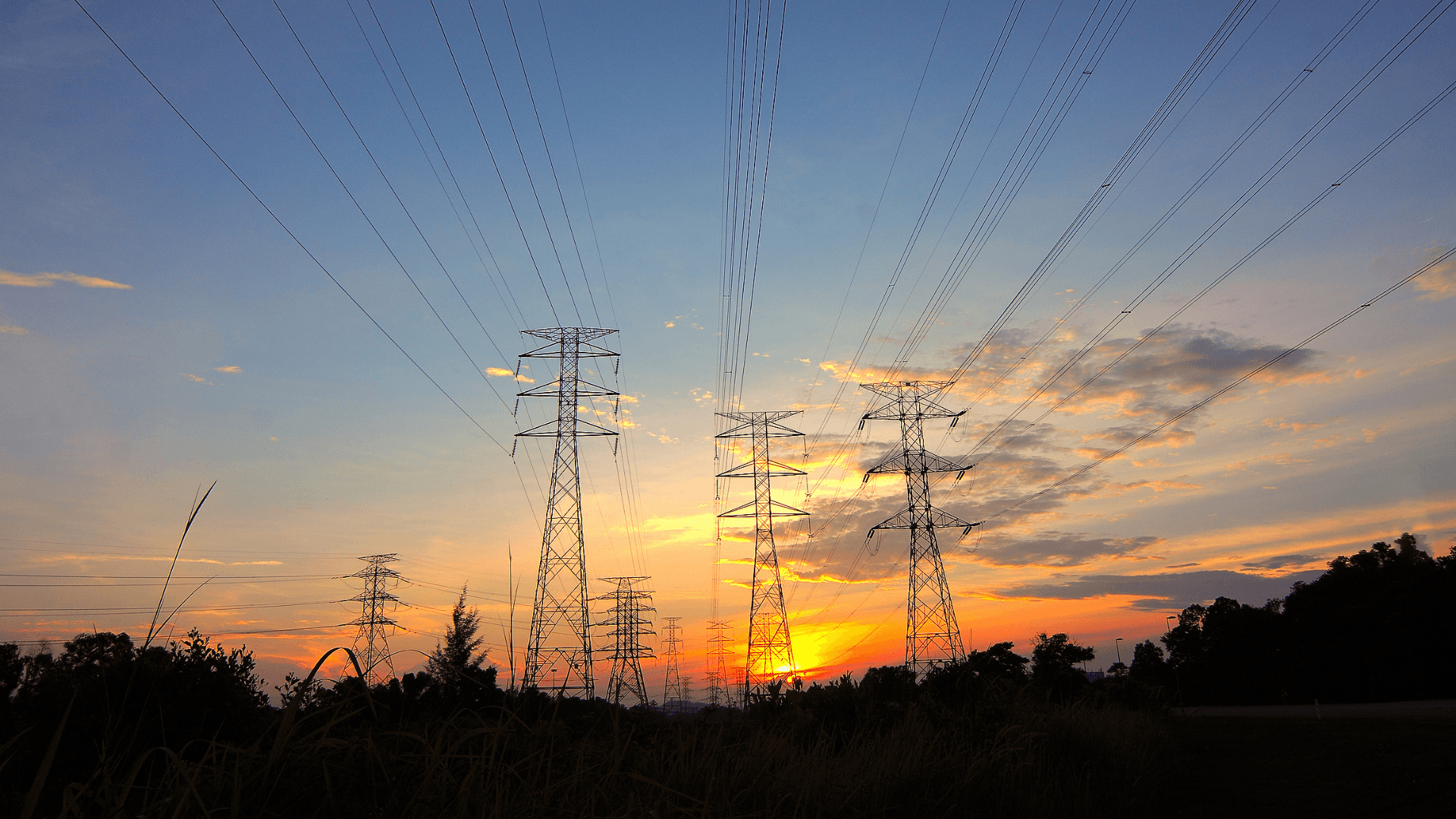

What is the optimal regulatory regime to connect offshore wind infrastructure to land?
In this Debate we focus on the most appropriate regulatory regime for the infrastructure connecting offshore wind parks to land. In particular, we will assess:
- Whether this infrastructure should be considered as a connection infrastructure for the wind farm or a network element subject to third party access obligations, or a direct line?
- Whether the regulatory treatment of this infrastructure depends on the distance of the wind park from shore or on the fact that the wind park is connected to more than one country and therefore its connection infrastructure could also be used as an interconnector between different countries;
- To what extent the exemption conditions set out in Article 63(1) of the Electricity Regulation (Regulation (EU) 2019/943) could apply to this infrastructure if were not to be considered aa new ‘interconnector’? What scope is there for national policy?
Watch the recording:
Programme
Introduction to the Debate | Leigh Hancher | Florence School of Regulation and Tilburg University
The offshore strategy | Joachim Balke | DG ENER
Regulatory Principles for a Meshed Offshore Grid | Pradyumna Bhagwat | Florence School of Regulation
Panel discussion moderated by Alberto Pototschnig | Florence School of Regulation
Introductory remarks
Carsten Smidt | DUR (Danish NRA)
Dirk Van Hertem |KU Leuven
Anders Skanlund | ENTSO-E
Ursula Prall | Becker Büttner Held, Hamburg
Polls for the audience and comments on the outcome
Joachim Balke | DG ENER, European Commission
Concluding remarks
Leigh Hancher | Florence School of Regulation and Tilburg University
Alberto Pototschnig | Florence School of Regulation
#FSRDebates
The focus of the debate series is on recent court cases, regulatory decisions, EU legislation, or public consultations to be discussed by a panel of experts. Learn more about the FSR series.
Don’t miss any update on our events
Sign up for free and access the latest events from our community.
More on the topic




The regulation of hydrogen infrastructure: new wine in old bottles?
EU Hydrogen Strategy
The regulation of hydrogen infrastructure
In the first debate of the series, we will aim to tackle the fundamental question of whether the future hydrogen infrastructure will inevitably exhibit similar features to the natural gas and electricity networks and should be regulated in a similar way.
Watch the recording:
In this context, we will try to address the following questions:
- Should regulation disincentivise parallel delivery networks, reserving a preference for existing TSOs to replace/upgrade existing networks or should regulation foster competing networks?
- Will the hydrogen network necessarily exhibit the same ‘essential facility’ features – i.e. that it not easily or economically duplicated and tends to be a natural monopoly – so that access conditions and tariffs need to be regulated?
- Should the regulation follow the same approach as for gas? Ex ante regulation as opposed to ex-post tariff control?
#FSRDebates
The event will be hosted by the FSR Energy Union Law Director, Leigh Hancher.
Programme:
14.00 – 14.05 Introduction to the Debate
Alberto Pototschnig | Florence School of Regulation
14.05 – 14.15 The EU Hydrogen Strategy
Tudor Constantinescu | DG ENER, European Commission
14.15 – 14.25 The Hydrogen Sector cost structure
Piero Dos Reis | Florence School of Regulation
Panel Discussion: Introductory Remarks, Polls, and Comments
Moderator: Leigh Hancher | Florence School of Regulation and Tilburg University
14.25 – 14.45 Introductory remarks
Christopher Jones| Florence School of Regulation
Jorgo Chatzimarkakis | Hydrogen Europe
Stephan Kamphues | ENTSOG
Anneke Francois | ACM (Dutch NRA)
14.45 – 15.20 Polls and Q&A from the audience
15.20 – 15.30 Concluding remarks
Tudor Constantinescu | DG ENER, European Commission
Leigh Hancher | Florence School of Regulation and Tilburg University
Alberto Pototschnig | Florence School of Regulation
More about the FSR series
Started in September 2020, the new FSR series cover a wide range of topics and formats to meet the changing needs of the energy sector and the interests of our audience, across cutting-edge research, regulatory debate, and policy dialogue.
The focus of the debate series is on recent court cases, regulatory decisions, EU legislation, or public consultations to be discussed by a panel of experts.
Hosts: Prof. Leigh Hancher and Prof. Alberto Pototschnig
Presentations
Don’t miss any update on our events
Sign up for free and access the latest events from our community.