



Economics of metals
Why is growing demand for metals putting supply and investment under pressure? This Cover the Basics article explains the economics of metals markets, from resources and reserves to investment, recycling and supply chains.
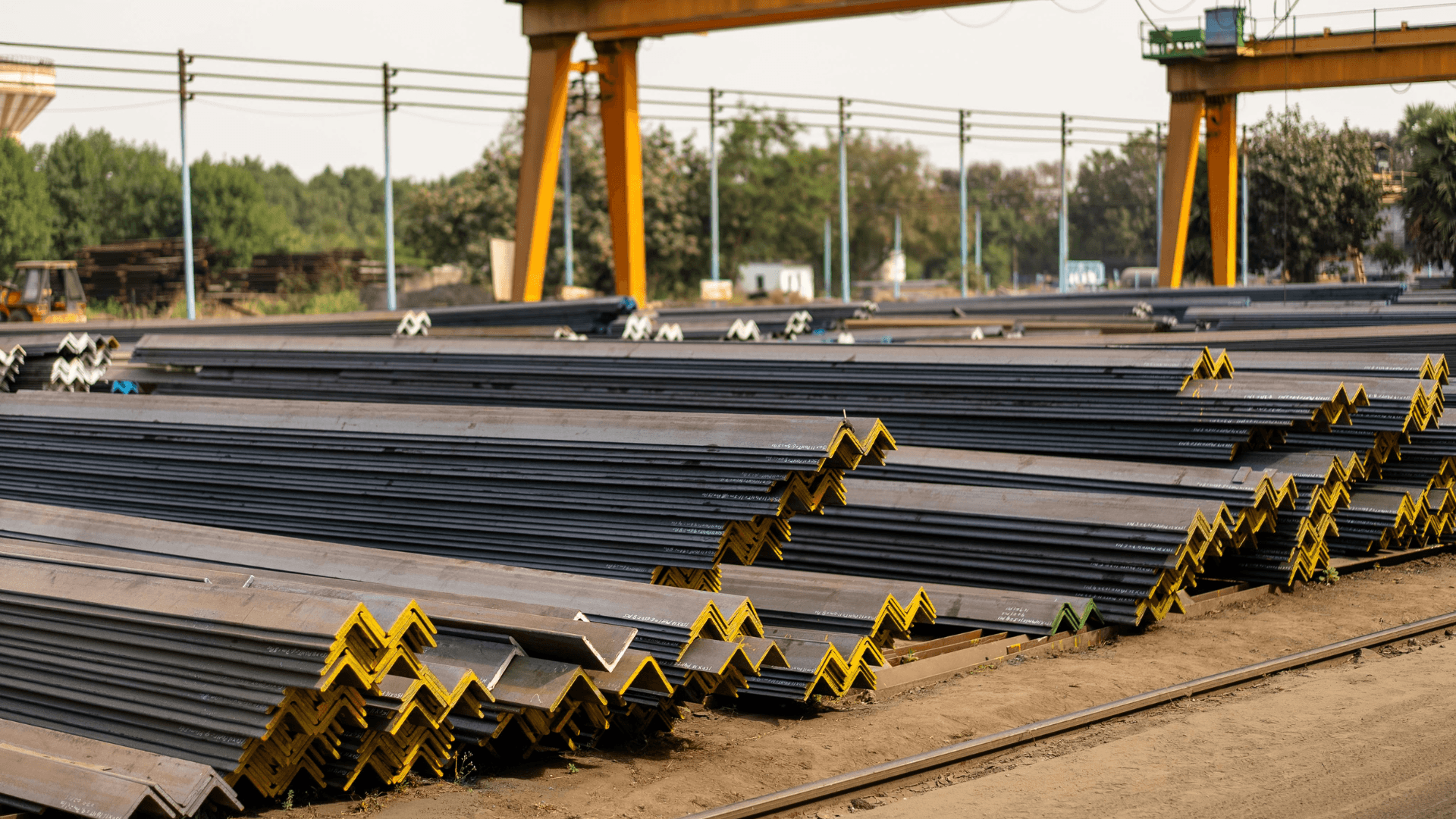
The economics of mineral resources has long examined a particular set of questions: how resources are discovered and developed, how investment decisions are made, how mineral markets determine prices and allocate supply, and how governments and firms respond to scarcity, market power and security-of-supply concerns.
Mineral economics emerged as an applied field because understanding these markets requires combining economics with knowledge of geology, technology, investment and the institutional conditions under which mineral resources are developed.
Its scope has broadened considerably over time. Traditional questions around price formation, demand forecasting, project evaluation and the long-term availability of non-renewable resources remain important. But they now sit alongside concerns about environmental impacts, relations between producing countries and mining companies, the concentration of supply and processing, the role of emerging economies, and the resilience of global value chains. Hence, mineral economics applies economic analysis to markets whose characteristics (i.e., geological constraints, high capital intensity, long investment cycles and uneven geographical distribution) create specific economic and policy challenges.
Metals economics can be understood as a focus within this broader field on metals and their value chains. This focus has become increasingly relevant as economic development, electrification, the energy transition and digitalisation raise both the volume and the variety of metals required by the economy. For metals, supply depends on resource availability, investment, production and processing capacity, costs and project lead times.
Our economies are using more metals — and a growing variety of them.
This trend is not driven by the energy transition alone. Population growth and economic development continue to increase demand for infrastructure, housing, transport and equipment. Electrification requires more power grids, and therefore more copper and aluminium. Low-carbon technologies rely on lithium, nickel, graphite and rare earth elements. And the rapid expansion of digital infrastructure and artificial intelligence is adding another source of demand. The change is therefore twofold: economies require larger volumes of metals, and also a wider variety of them. While earlier phases of industrialisation relied primarily on a relatively small number of materials produced at very large scale — such as steel, copper and aluminium — modern technologies draw on a much broader range of elements, some used only in small quantities but difficult to substitute.
The scale of these transformations is sizeable.
According to the International Energy Agency (IEA), under current and announced policies, global copper demand is expected to increase by around 7 million tonnes by 2040, while lithium demand could more than triple. Meanwhile, the electricity consumed by data centres worldwide is projected to more than double by 2030, reaching around 945 TWh — more than Japan’s total electricity consumption today. AI is the main driver of this growth, with electricity demand from AI-optimised data centres projected to more than quadruple by the end of the decade.
This raises a simple question: can we produce all these metals at the pace at which our economies will need them?
For economists, it is not enough to know whether these metals exist in the Earth’s crust. They must also be extracted, processed and made available at the right time, at the right scale and at an acceptable cost.
This is precisely what metals economics seeks to understand. Having resources does not mean being able to produce them – economically speaking. Metals are exhaustible resources: extracting a tonne today means, all else being equal, giving up the possibility of extracting that same tonne tomorrow. This intuition lies at the heart of the rule developed by Harold Hotelling in 1931. In its simplest form, a resource owner chooses between extracting a resource today and leaving it underground for future extraction. Scarcity therefore has an economic value, which enters the decision of whether to produce now or later. Real-world mineral markets are, however, considerably more complex. In particular, the amount of metal that is economically available is not fixed.
A crucial distinction is that between resources — known or estimated geological concentrations of a mineral — and reserves, the share of those resources that can be economically extracted under current conditions. Reserves evolve with discoveries, technology, costs and prices. A deposit that is too expensive to develop today may become economically viable tomorrow.
The main constraint is often time.
Demand for some metals can change rapidly. Mining supply cannot. Bringing a new deposit into production can take many years. Exploration, feasibility studies, financing and permitting must all take place before a mine and its associated infrastructure can be built. A metal can therefore be relatively abundant underground and still become scarce on the market. In principle, prices help the economy adjust. Persistently high prices encourage exploration and investment, make additional deposits economically viable, stimulate recycling and can encourage substitution. However, for some metals, supply may also respond only weakly to their own price because they are produced as by-products of other minerals. These adjustments also take time. More importantly, investing in a mine requires expectations about market conditions many years into the future. Future metals demand depends on economic, technological and policy developments that are themselves difficult to predict: the pace of electrification, climate policies, the growth of digital infrastructure, technological change and substitution between materials.
Recycling can alleviate some of these pressures.
Unlike fossil fuels, metals generally do not disappear when they are used and can be recovered and returned to the production system. But when demand is growing rapidly, the amount available for recycling is constrained by the volume of equipment actually reaching the end of its life. Primary production and recycling therefore remain largely complementary.
Having enough ore helps – but is not sufficient.
It must also be processed, refined and transported to the industries that use it. A constraint at any one of these stages can affect the entire supply chain. Supply security also depends on how production and processing capacity are distributed. A market may be adequately supplied in aggregate and still remain vulnerable if key stages of the value chain are concentrated in a small number of countries or producers. Diversification can improve resilience, but alternative supply is not necessarily available at the same cost or on the same timeframe. Its contribution depends on investment, available capacity and the economics of individual projects. This is why metals economics is becoming increasingly relevant across sectors. The energy transition, electrification, economic development and the digital transformation follow different technological trajectories, but they share the same material reality: they require substantial investment in supply chains that take time to adjust.
To conclude, a central question in metals economics today is how supply systems characterised by long investment and development cycles adjust to rapidly changing demand. Investment and market responses remain central to this adjustment, alongside recycling, supply diversification and the growing role of public policy.
Do you want to know more?
If you want to know more about this topic, you may contact the FSR Molecules and Materials team. Please, write your message to chiara.canestrini@eui.eu
This Cover-the-Basics benefited from the contribution of Mayottine Peyret, Frédéric Gonand and Marzia Sesini.
Don’t miss any update on this topic
Sign up for free and access the latest publications and insights
More on the topic