
Archives: Events
An Overview of Recent Energy Case Law from the CJEU, June 2021

As the energy transition unfolds and the Green Deal initiatives take off, the role of the Court of Justice of the European Union is likely to become increasingly significant – whether by way of their involvement in direct appeals in institutional matters, as well as against Commission competition and state aid decisions – or by way of the ECJ’s rulings on requests for preliminary rulings from national courts.
The FSR European Union Law Area provides a regular platform to single out and examine major trends in the case law with a six-month update on new case law from both the General Court and the Court of Justice as well as to shine a spotlight on important pending cases.
For this event we are joined by Adrien de Hauteclocque from the FSR and the General Court, and Matthew Levitt, partner at Baker Botts LLP, Brussels. The FSR EU Law Area Director, Leigh Hancher will chair and contribute as a speaker to the event.
The cases we will address are:
T-300/19, Achema et Lifosa/Commission
Programme
14.00 – 14.05 Introduction
Leigh Hancher, Part-time Professor of Energy Law FSR
14.05 – 14.25 The GC’s rulings in T-300/19, Achema et Lifosa/Commission and in T-9/19, Client Earth/BEI
Leigh Hancher
14.25 – 14.40 The GC’s ruling in T-885/19, Aquind/ACER
Adrien de Hauteclocque, Head of Cabinet of the President of the General Court
14.40 – 15.00 C-165/19P Slovak Telekom and C-152/19P Deutsche Telekom
Matthew Levitt, Partner, Baker Botts LLP, Brussels
15.00 – 15.05 A snapshot of pending cases
Adrien de Hauteclocque
15.00 – 15.30 Questions and Discussion
More on ECJ Case Law
If you want to catch up on earlier CJEU developments in the year, you can watch the recordings of our sessions from November 2020 here and April 2020 here.
Energy Union Law & Policy
FSR Energy Union Law area provides a forum for critical discussion and independent analysis of the developments in EU energy law and policy. Our activities are aimed at professionals from national energy regulatory authorities, European and international institutions, energy-focused law firms, consultancies and energy utility companies.
Don’t miss any update on our events
Sign up for free and access the latest events from our community.
Speakers


Interoperability related to smart metering, electro mobility and buildings under the Green Deal

The European Green Deal puts the EU on a path to climate neutrality by 2050, through the deep decarbonisation of all sectors of the economy, and higher greenhouse gas emissions reductions for 2030. The electricity, buildings and (electro) mobility sector will be essential in this transition. Energy flexible buildings and smart charging of electric vehicles can bring climate neutrality closer to citizens while providing flexibility to the electricity system. Integrating these sectors to deliver on the Green Deal goals will require seamless sharing of data and information and interoperability on various levels.
In this event, we will focus on the interoperability issues and solutions related to smart metering, electro mobility, and buildings, with a view to initiatives planned under the Green Deal.
With academics from the respective sectors, we will discuss questions such as:
- What are the interoperability issues that each sector is facing, and how can they be overcome?
- What solutions should be included in a common cross-sectoral governance framework?
Speakers:
· Doris Österreicher (University of Natural Resources and Life Sciences, Vienna)
· Mart van der Kam (Université de Genève)
· Antonello Monti (RWTH Aachen University)
FSR researcher:
· Valerie Reif
Host:
· Leonardo Meeus (FSR)
#FSRInsights
The series focuses on the insights from the FSR research. These online events will give the FSR researchers the chance to share our research findings and to collect feedback on ongoing research by engaging with the audience and invited experts.
Subscribe to our newsletter to get notified about our upcoming events.
Don’t miss any update on our events
Sign up for free and access the latest events from our community.
Speakers
More on the topic




Online Training – From input to output-based regulation in the water and sanitation sector

This Online Training focuses on the regulation in the water and sanitation sector.
Each day starts with keynote speakers (from DG Env, Wareg, EurEau, OECD) addressing upcoming challenges and regulatory trends in the water & sanitation sector. Mornings are then dedicated to lectures focusing on regulation purposes, customer engagement and protection, water and wastewater tariff regulation, and output-based regulation (with a focus on incentivising innovation). During afternoons, illustrative case studies are presented and discussed by water practitioners including regulators and operators.
Register by Friday 18 June 2021, 10 am CEST
Draft Programme of the 3 day Online Training
Day 1, Monday 21st June 2021 | Introduction To Regulation, And Customer Engagement And Protection
9 – 9.30 Ms. Veronica Manfredi, Director, Quality of Life, DG ENV
Introductory words (20’ + 10’ Q&A)
9.30 – 10 Pr Andrea Guerrini, Commissionner of ARERA, Member of WAREG
Keynote speech (20’ + 10’ Q&A) – Water Regulatory Trends to 2030
10 – 12.30 Heather Smith, University of Cranfield
Introduction to WSS Regulation (what, why and how)
- Regulatory frameworks
- Regulatory agencies characteristics and missions
Customer Engagement and Protection
- Customer consultation & engagement
- Definition of customer service standards and requirements
- Resolve disputes between customer and regulated firms
12.30 – 14 Lunch break
14 – 16 Fjola Beqiri, ERRU
Case Study: Albanian Water Regulatory Authority: public hearings and complaints monitoring
- Public hearing session to actively involve customers along the tariff approval process, and ensure service quality
- Internal customer complaints regulation, procedures etc
- Template for monitoring the utility’s performance and transparency toward customer complaints
Day 2, Friday 25th June 2021 | Water & Wastewater Tariff Regulation: Methodologies And Issues At Stake
9.30 – 10 Bertrand Vallet, Senior Policy Officer – Water Services, EurEau
Keynote speech (20’ + 10’ Q&A) – Water and the EU’s Circular Economy
10 – 12.30 Carlo Cambini, Politecnico di Torino
Tariff regulation: methodologies and issues at stake
- Cost-based regulation
- Incentive regulation
- Regulation and investments
- Yardstick competition
- Financial issue in price control
12.30 – 14 Lunch break
14 – 16 Alberto Asquer, University of London
Case Study: Routemap to delivering a Net Zero Water Sector in the UK
Day 3, Monday 28th June 2021 | Output-Based Regulation
9.30 – 10 Xavier Leflaive, Principal Administrator, OECD
Keynote speech (20’ + 10’ Q&A) – Financing Water Supply and Sanitation: Challenges in EU Member States and Policy Options
10 – 12.30 Carlo Cambini, Politecnico di Torino
Output-based Regulation
- Additional regulated outputs:
service quality, innovation, sustainability
Incentivising innovation
- Cross-sectoral experience sharing: example of RIIO1
12.30 – 14 Lunch break
14 – 16 Elena Gallo, Vice-Director, Water services Department, ARERA
Case Study: Italian tariff regulation schemes
- Economic components of the tariff
- Environmental and resource components of the tariff
- Decarbonisation: energy saving in the tariff
Read the speakers’ biographies
Audience
The course is designed for professionals interested in gaining in-depth knowledge over a short period of time including:
- Officials from Regulatory Authorities, and other public bodies
- Operators, Water Companies
- Policy And Decision-Makers
- Academics (Phd Students, Post-Doc)
Certificates
At the end of the course, participants will receive a certificate of attendance.
Course Fees
- EUR 500: General training fee
- EUR 250: Discounted fee for representatives of donors and academics
- 2 free admissions for “Major” donors of the FSR Water & Waste Area
- Group enrolment registration: 10% total discount on the general training fee for the registration of at least five people from the same organisation; please contact Maria.Salvetti@eui.eu
Cancellation Policy
Should you be unable to attend, a substitute delegate is welcome at no extra charge. Information on the substitute delegate should be communicated at least 4 days before the first online class.
No course fee will be applied if written cancellation requests are received at least 2 weeks before the first online class. Full course fees will be applied for cancellation requests received after this deadline.
Don’t miss any update on our events
Sign up for free and access the latest events from our community.
Taxonomy – what impact will it have

This Debate will aim at discussing the Commission’s initiatives on Sustainable Finance, Taxonomy, and their potential impact on the energy sector.
With the adoption of the Delegated Act specifying the detailed criteria for Taxonomy qualification, the EU’s Sustainable Finance Initiative is now live. ‘Green’ financial products will be limited to investing in Taxonomy compliant activities, and financial institutions and large EU companies will need to report the percentage of their activities that are taxonomy compliant. Institutional lenders will come under pressure to finance predominantly or exclusively Taxonomy compliant activities, as will investment funds.
Given that energy activities are a central pillar of the Taxonomy list, this will have a huge effect on the industry. Companies that focus on non-Taxonomy activities will find it more difficult to attract finance or need to pay more than their ‘green’ counterparts. Shareholders are likely to insist that management focus on compliant activities.
In addition, the Taxonomy list is likely to have wider importance than ‘just’ sustainable finance. It will become the EU (and possibly global) reference for what are ‘Paris compatible’ activities. This may become the starting point for other legal and regulatory actions; guarantees of origin for hydrogen, support schemes for renewable energy and hydrogen, and the revision of the Energy and Environment State aid guidelines, for example.
Most energy activities are already covered by the Taxonomy Delegated Act, they are in, or out. Understanding this is crucial. In relation to natural gas and nuclear energy, however, the issue remains open, and the Commission has committed to tabling draft measures on this issue in the near future.
This event seeks to examine these issues, considering the scope and application of the Delegated Act and adopted legislation, and discuss the question ‘what should be the position on natural gas and nuclear?’
Draft Programme:
Moderators: Christopher Jones and Andris Piebalgs | FSR
9.30 – 9.45 Introduction to the debate
Andrea Beltramello | European Commission
9.45 – 10.40 Panel debate
Fabio Marchetti | Generali Group
James Watson | Eurogas
Antoine Bizet | EDF
Kavita Ahluwalia | Uniper
10.40 – 10.55 Q&A
10.55 – 11.00 Concluding remarks
Ilaria Conti | FSR
Christopher Jones | FSR
Andris Piebalgs | FSR
#FSRDebates
The focus of this debate series is on policy issues to be discussed by a panel of experts. Learn more about the FSR series.
Don’t miss any update on our events
Sign up for free and access the latest events from our community.
More on the topic


Unproven or underestimated? Photocatalysis for hydrogen production

In this online talk, Trevor Best (Syzygy Plasmonics) and Ronnie Belmans (KU Leuven and EnergyVille) will join Ilaria Conti and Jean-Michel Glachant (FSR) to discuss photocatalysis, a nascent hydrogen production technology, as well as the wider subject of technology neutrality in hydrogen production.
Photocatalysis is a photoreaction (i.e., driven by light) accelerated by the presence of a catalyst. Photocatalysis of water under ultraviolet light in the 1970’s was one of the first examples of clean hydrogen production, however, in the decades that followed steam methane reforming (SMR) emerged as the dominant production source, with electrolysis widely supported as the most viable clean alternative. Nevertheless, in recent years there have been significant leaps forward made in the productive efficiency of photocatalysis, with potential for far lower electricity requirements and lower material resource requirements than electrolysis.
With the EU and other major economies pursuing the development of a clean hydrogen economy as a tool in the decarbonisation of the energy sector, there is a growing need for cost-effective and energy efficient production means. Hydrogen can be produced in several ways, both with fossil fuels, renewable energy, or a combination of the two. However, decarbonised hydrogen in its various forms is currently not cost-competitive with hydrogen derived from fossil fuels in the vast majority of circumstances (see Molecules : indispensable in the decarbonized energy chain). This raises questions about how best to bridge that gap for the decarbonisation of existing hydrogen demand, as well as for other potential applications.
Proponents of photocatalysis and other nascent technologies such as methane pyrolysis or thermochemical water splitting argue that the hydrogen landscape is far from settled and that there will be a requirement for a range of technological solutions.
Topics for discussion will include:
- What is photocatalysis and how does it work?
- The technology readiness level (TRL) of photocatalysis;
- The strengths and weaknesses of photocatalysis versus other clean production methods;
- The role of innovation in the hydrogen space;
Speakers:
Trevor Best | Syzygy Plasmonics
Discussants:
Ronnie Belmans | KU Leuven and EnergyVille
Jean-Michel Glachant and Ilaria Conti | FSR Energy and Climate
Participants are invited to intervene directly in our online Q&A.
Find out more about Syzygy Plasmonics
#FSRTalks
FSR talks is a series of live interviews with experts from the wider network of the school to showcase and discuss a recent work (a book just published, interesting study, innovative project) in a light and interactive way.
Don’t miss any update on our events
Sign up for free and access the latest events from our community.
More on the topic

Carbon Market Policy Dialogue – Session “Environmental integrity: use of offsets”

Session: “Environmental integrity: use of offsets”
The second meeting of the Carbon Market Policy Dialogue (CMPD) of the LIFE DICET project will bring together academia, stakeholders and senior policymakers from different carbon markets worldwide in a unique process for a fruitful exchange on carbon market integration.
The project LIFE DICET supports European Union and Member States policymakers in deepening international cooperation for the development and possible integration of carbon markets. At its core, the CMPD aims to facilitate enhanced international cooperation between Emissions Trading Systems regulators, namely the European Commission (DG Climate Action), California-Quebec, China, Switzerland and New Zealand within the framework of the LIFE DICET project.
Scheduled on Friday 9 July from 4.30 PM – 7.00 PM CET, the second session of the CMPD meeting will discuss “Environmental integrity: use of offsets”. Prior to the session, the background “ETSs with different offsets provisions: implications for linking” will be shared with the participants in order to help stir the discussions. The feedback received at this occasion will be used for the preparation of final version of the report after the meeting.
The discussion will be held under Chatham House Rules. Participation at this event is by invitation only, with representatives from the European Commission, other ETS regulators, academics, NGOs, industry, and identified international experts.
Chair
- Simone Borghesi, Florence School of Regulation – Climate
Speakers
- Derik Broekhoff, Stockholm Environment Institute (SEI)
- Axel Michaelowa, University of Zurich
- Suzi Kerr, Environmental Defense Fund (EDF)
- Jason Gray, California Air Resources Board (CARB)
LIFE DICET is a project co-financed by the EU LIFE Programme of the European Commission.
Don’t miss any update on our events
Sign up for free and access the latest events from our community.
More on the topic







Carbon Market Policy Dialogue – Session “Carbon leakage prevention”

Session: “Carbon leakage prevention: free allocation and other measures”
The second meeting of the Carbon Market Policy Dialogue (CMPD) of the LIFE DICET project will bring together academia, stakeholders and senior policymakers from different carbon markets worldwide in a unique process for a fruitful exchange on carbon market integration.
The project LIFE DICET supports European Union and Member States policymakers in deepening international cooperation for the development and possible integration of carbon markets. At its core, the CMPD aims to facilitate enhanced international cooperation between Emissions Trading Systems regulators, namely the European Commission (DG Climate Action), California-Quebec, China, Switzerland and New Zealand within the framework of the LIFE DICET project.
Scheduled on Wednesday 9 June from 09.30 AM – 12.00 AM CET, the first session of the CMPD meeting will discuss “Carbon leakage prevention: free allocation and other measures”. Prior to the session, the background report “ETSs with different measures for carbon leakage prevention: implications for linking” will be shared with the participants in order to help stir the discussions. The feedback received at this occasion will be used for the preparation of final version of the report after the meeting.
The discussion will be held under Chatham House Rules. Participation at this event is by invitation only, with representatives from the European Commission, other ETS regulators, academics, NGOs, industry, and identified international experts.
Chair
- Simone Borghesi, Florence School of Regulation – Climate
Speakers
- Antoine Dechezleprêtre Organisation for Economic Co-operation and Development (OECD)
- Susanne Dröge, German Institute for International and Security Affairs (SWP)
- Qian Guoqiang, SinoCarbon Innovation and Investment
- Heiko Kunst, DG Climate Action, European Commission
LIFE DICET is a project co-financed by the EU LIFE Programme of the European Commission.
Don’t miss any update on our events
Sign up for free and access the latest events from our community.
More on the topic
Solidarity and Energy Law and Policy: a closer look at the AG ‘s Opinion on the OPAL case

The Vienna Forum on European Energy Law | Hors Série
The Vienna Forum on European Energy Law is an annual joint initiative of the FSR Energy Union Law Area and the Energy Community Secretariat which aims to bridge the gap in energy debate between the EU and Energy Community.
Solidarity in the European Union’s energy policy – not just a political guideline but a justiciable principle of EU primary law?
This is the position of the CJEU’s Advocate General who delivered his recent Opinion in Case C-848/19 P Germany v Poland concerning the OPAL natural gas pipeline. He advises the Court of Justice to uphold the General Court’s earlier ruling in Case T-883/16 Poland v Commission that energy solidarity is a principle of EU primary law which entails rights and obligations for EU institutions and for the Member States. Although the CJEU may not necessarily follow his advice, this Opinion already raises a number of interesting opportunities for discussion.
Draft Programme
Introduction Dirk Buschle │ Energy Community Secretariat; College of Europe
Moderator Leigh Hancher | FSR; Tilburg University; Baker Botts LLP
Setting the Scene
Kim Talus | Universities of Tulane, Eastern Finland and Helsinki
A Critical appraisal of the AG Opionion
Dr Pawel Pikus │ Director of Electricity & Gas Department in the Ministry of Climate and Environment of the Republic of Poland
Katja Yafimava│ OIES, Oxford
Q & A
Conclusion Leigh Hancher & Dirk Buschle
Read more
The Future of Energy Solidarity (FSR Energy Union Law | Opinion)
Don’t miss any update on our events
Sign up for free and access the latest events from our community.
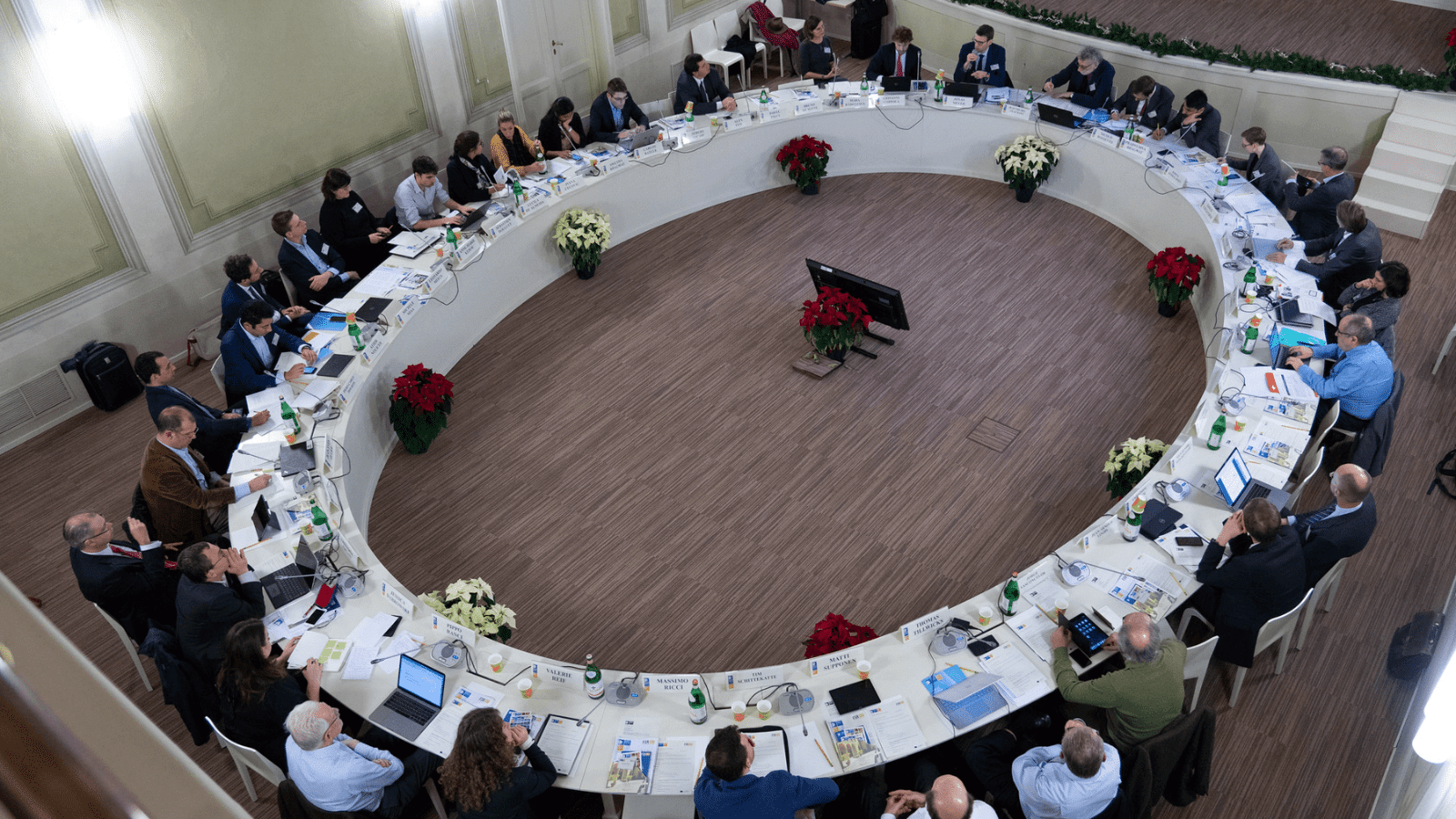

The different dimensions and challenges of energy systems integration
In this episode of the FSR Insights series, we will discuss the FSR research on Energy Systems Integration.
Watch the recording:
The coordinated planning and operation of the energy system “as a whole”, across multiple energy carriers, infrastructures, and consumption sectors – is the pathway to an effective, affordable and deep decarbonisation of our economies.
Together with the FSR researcher, Golnoush Soroush we will focus on this concept by defining different integration dimensions from technology to regulation, business models, and policy.
From this multidimensional perspective, we will move to identify different barriers to energy systems integration.
Academic discussants:
- Anne Houtman, SciencesPo, Paris
- Tooraj Jamasb, Copenhagen School of Energy Infrastructure (CSEI)
FSR researcher:
Golnoush Soroush
Host:
Leonardo Meeus (FSR)
This interactive session will include a Q&A and polls for the audience.
The event will be recorded and live-streamed on our social media channels.
#FSRinsights
The series focuses on the insights from the FSR research. These online events will give the FSR researchers the chance to share our research findings and to collect feedback on ongoing research by engaging with the audience and invited experts.
Don’t miss any update on our events
Sign up for free and access the latest events from our community.
FSR Policy Advisory Council

The Policy Advisory Council discusses the most topical regulatory and policy issues and debates the relevance and robustness of the latest FSR research findings.
The meeting gathers renowned academics, experts from the FSR Energy Major Donors, the European Commission, the Agency for the Cooperation of Energy Regulators (ACER), and National Regulatory Authorities.
The event will take place in hybrid form.
Please note this is a closed event and participation is by invitation only.
Don’t miss any update on our events
Sign up for free and access the latest events from our community.
Dynamic pricing in the electricity retail market
This Debate will aim at reviewing the experience with the implementation of dynamic price contracts and their ability to benefit both consumers and the system.
Dynamic electricity supply contracts are defined as electricity supply contracts between suppliers and final customers that reflect the price variation in the spot markets, including in the day-ahead and intraday markets, at intervals at least equal to the market settlement frequency [1].
The Clean Energy Package introduced provisions [2] entitling all final customers who have a smart meter installed to conclude a dynamic electricity price contract with at least one supplier in their market and with every supplier that has more than 200,000 final customers.
Dynamic prices benefit both the consumers and the electricity system. The former are able to reduce their electricity bills by managing and adjusting their consumption, in response to price signals. The latter will benefit from (implicit) demand response triggered by high prices, thus potentially reducing the need for additional investment in generation and networks.
At the beginning of 2019, dynamic pricing contracts were available in seven EU Member States [3], with other Member States expected to follow in introducing them to comply with the new requirements. In Spain, unique case in the EU, a regulated dynamic price contract is the default supply contract, in which only the margin charged on top of the wholesale prices is subject to regulation.
To support the implementation of dynamic prices, in March 2020 the Council of European Energy Regulators issued a set of recommendations.
In this context, the Debate will aim at discussing:
- To which extent consumers have taken up dynamic price contracts;
- The impact of dynamic price contracts on the consumption pattern of consumers;
- Which elements of the regulatory framework are key for supporting the penetration of dynamic price contracts.
[1] See article 2(15) of Directive (EU) 2019/944 of the European Parliament and of the Council of 5 June 2019 on common rules for the internal market for electricity and amending Directive 2012/27/EU (recast).
[2] Article 11 of Directive (EU) 2019/944.
[3] Commission Staff Working Document accompanying the document Report from the Commission to the European Parliament, the Council, the European Economic and Social Committee and the Committee of the Regions: Energy prices and costs in Europe {COM(2019) 1 final}, p. 262
Draft Programme
Introduction to the Debate and Opening Presentations
14.00 – 14.05 Introduction to the Debate
Alberto Pototschnig | Florence School of Regulation
14.05 – 14.15 Dynamic price contracts for the European Green Deal
Adela Tesarova | European Commission, DG Energy
14.15 – 14.25 The regulatory challenges to promote the take-up of dynamic electricity prices
Anne Vadasz Nilsson | CEER
Panel Discussion: Introductory Remarks, Polls, and Comments
Moderator: Alberto Pototschnig | Florence School of Regulation
14.25 – 14.45 Introductory remarks from the panellists
Gema Rico Rivas | CNMC
Jaume Loffredo | BEUC
Alain Taccoen | Eurelectric
Roberto Zangrandi | EDSO
14.45 – 14.50 Polls
14.50 – 15.20 Comments on the polls outcome and Q&A from the audience
Panellists
15.20 – 15.30 Concluding remarks
Alberto Pototschnig | Florence School of Regulation
Leigh Hancher | Florence School of Regulation and Tilburg University
#FSRDebates
The focus of the debate series is on recent court cases, regulatory decisions, EU legislation, or public consultations to be discussed by a panel of experts. Learn more about the FSR series.
Don’t miss any update on our events
Sign up for free and access the latest events from our community.








16th Florence Air Forum: Navigating towards the decarbonisation of European aviation

The European Green Deal sets the objective of transforming Europe into the world’s first climate neutral continent by 2050. In order to place Europe on a responsible path to meeting this target, EU member states have subsequently committed to collectively reduce greenhouse gas (GHG) emissions by at least 55% from 1990 levels by 2030. The achievement of these ambitious targets will largely depend on our ability to make the transport system as a whole more sustainable.
Prior to the COVID-19 pandemic, aviation was one of the fastest-growing sources of greenhouse gas emissions, directly accounting for about 3% of the EU’s total emissions and more than 2% of global emissions. The emissions from departing flights in Europe (EU 28 and EFTA) increased by 10% between 2014 and 2017, and before the onset of COVID-19, were projected to grow by a further 21% by 2040. Despite the fact that the pandemic has caused a visible drop in air traffic and aviation emissions, the upward growth in emissions will likely resume unless the aviation sector and governments take further measures to ensure the aviation sector’s growth is compatible with set climate objectives.
A number of legislative processes are already underway at the EU level to support the aviation sector’s decarbonisation. A key measure in the “Basket of Measures” is increasing the use of Sustainable Aviation Fuels (SAFs), such as advanced biofuels and electro-fuels, which hold significant potential to reduce aircraft emissions. To this end, the Commission’s recently launched ReFuelEU Aviation Initiative is currently assessing options to boost the production and uptake of SAFs in the EU, which today account only for 0.05% of total jet fuel consumption. Significant efforts will also be needed to develop disruptive technologies to bring zero-emission aircraft to the market.
For these low- and zero-emission fuels and technologies to be deployed in the aviation sector an enabling EU policy framework will need to be put into place, including through the enactment of adequate carbon pricing policies and research and innovation (R&I), in particular, through the partnerships under Horizon Europe (e.g., ‘Clean Aviation’ and ‘Clean Hydrogen’). The reduction of the EU Emissions Trading System (ETS) allowances allocated for free to airlines is another avenue the Commission will explore whilst closely coordinating with actions at the global level, notably with the International Civil Aviation Organisation (ICAO).
In October 2016, ICAO agreed on a Resolution for a global market-based measure, the so-called Carbon Offsetting and Reduction Scheme for International Aviation, or CORSIA, which is set to compensate the growth of CO2 emissions from international aviation beyond 2019/2020 levels, as of 2021. More specifically, airlines will be required to monitor emissions on all international routes as well as to offset emissions from routes included in the scheme by purchasing eligible emission units generated by projects that reduce emissions in other sectors (e.g., renewable energy). In view of this, the Commission has initiated a revision of the EU ETS Directive, including how it will put CORSIA implementation by the EU into effect in a way that is consistent with the EU’s 2030 climate objectives.
The implementation of ambitious standards for the design and operation of aircraft can further improve energy efficiency and reduce aircraft emissions. What is more, operational measures, such as the establishment of more sustainable and efficient flightpaths, could reduce up to 10% of air transport emissions, while avoiding the unnecessary waste of jet fuel and related costs. The Commission’s recent proposal for the upgrade of the Single European Sky regulatory framework seeks to achieve this as part of its overarching objective of modernising the management of the European airspace.
Against this backdrop, the 16th Florence Air Forum, jointly organised by the Transport Area of the Florence School of Regulation and the European Commission’s DG MOVE, will take the 2030 and 2050 perspectives on the progressive decarbonisation of civil aviation in the EU and globally. This, in particular, will involve the examination of the industry’s recently published Destination 2050 roadmap, the ongoing work in the ICAO on establishing a long-term aspirational CO2 goal and the actions planned under the Commission’s Sustainable and Smart Mobility Strategy in relation to the European Green Deal.
More specifically, the forum will bring together key aviation stakeholders representing EU and national policymakers, airlines, airports, technology manufacturers, air traffic control, and civil society, among others, for a timely discussion on the following three questions:
- How aligned are the EU Sustainable and Smart Mobility Strategy, the Aviation Roundtable Report, Destination 2050 Report and (upcoming revised) ACARE Flightpath 2050 in terms of aviation decarbonisation? Where are the interconnections and possible gaps?
- What EU policy framework support is needed for the two major avenues, i.e. Sustainable Aviation Fuels and “zero emission” aircraft?
- How to extend the EU framework and approach to the global level? How to drive ICAO towards decarbonisation?
SPEAKERS’ PRESENTATION SLIDES:
Matthias Finger – Florence School of Regulation Transport Area
Martina di Palma – European Regions Airline Association
Ron Van Manen – Clean Aviation
Don’t miss any update on our events
Sign up for free and access the latest events from our community.