The School carries out applied research with the purpose of developing economically, legally, and socially-sound regulation and policy, using a multidisciplinary approach.
Energy networks play an essential role in enabling competition, thus improving energy affordability, and in supporting decarbonisation of energy demand and security of supply....
Authors
ECSM
Article
Loss and damage of climate change : recognition, obligation and legal consequences
The Lights on Women initiative promotes, trains and advocates for women in energy, climate and sustainability, boosting their visibility, representation and careers.
Banking on Climate: a path to Responsible Banking and Sustainability
15 October 2019
The seminar “Banking on Climate: a path to Responsible Banking and Sustainability” aims to highlight the points of strength and weakness of the Principles for Responsible Banking, their alignment with the Paris Climate Agreement objectives, and to discuss their potential impact on the transition to a low-carbon economy.
Climate change is likely to modify significantly patterns of capital investments and constitutes both a risk and an opportunity for investors and financial institutions. A framework aligning the decisions of financial institutions with long-term climate goals is taking shape, and carbon-intensive investments will likely face an increased risk of being stranded.
Within this framework, banks must be transparent and clear about how their products and services create value for their customers, clients, investors, as well as the environment. The Principles for Responsible Banking help any bank to align its business strategy with society’s goals through ESG investments. The Principles provide the framework for a sustainable banking system and help the industry to demonstrate how it makes a positive contribution to society. They are accelerating the banking industry’s contribution to achieving society’s goals as expressed in the Sustainable Development Goals and the Paris Climate Agreement. The Principles for Responsible Banking will be publicly launched by the thirty Founding Banks on September 23 in the framework of the New York Climate Week during the United Nations General Assembly.
Scientific organisers:
Isabella Alloisio | FSR Climate, EUI Simone Siliani | Fondazione Finanza Etica Pierre Schlosser | Florence School of Banking and Finance, EUI
This event was organised in collaboration with Fondazione Finanza Etica.
Don’t miss any update on our events
Sign up for free and access the latest events from our community.
The 11th Annual Conference on the Economic Assessment of European Climate Policies was hosted at the European University Institute in Florence on Tues...
The 11th Annual Conference on the Economic Assessment of European Climate Policies was hosted at the European University Institute in Florence on Tues...
The 11th Annual Conference on the Economic Assessment of European Climate Policies was hosted at the European University Institute in Florence on Tues...
The 11th Annual Conference on the Economic Assessment of European Climate Policies was hosted at the European University Institute in Florence on Tues...
The chapter discusses transition risk for tourism, addressing its relation with the Environmental Kuznets Curve and overtourism. Transition risk emerg...
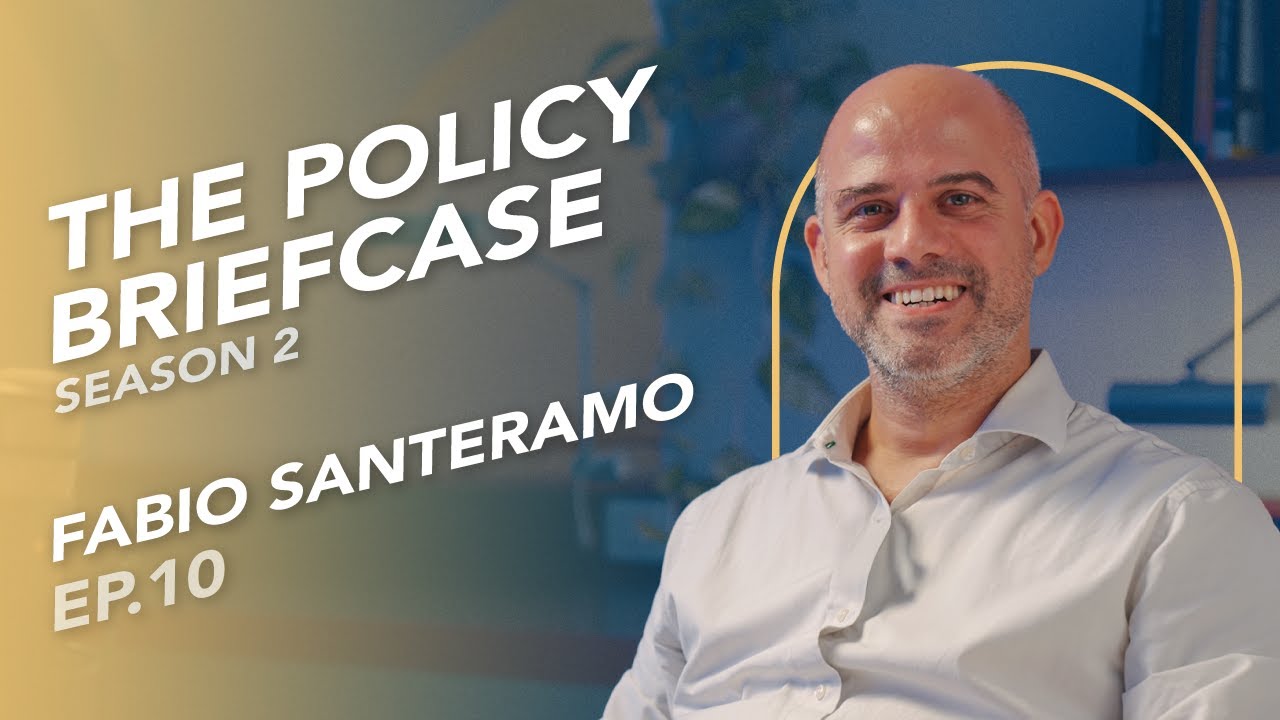
In this episode of the FSR Policy Briefcase (Season 2, Episode 10), hosts Leonardo Meeus and James Kneebone are joined by Fabio Santeramo, Part-time.....
Balancing Environmental, Energy Security and Climate Objectives in the Norwegian Electricity System
Professor Henrik Bjornebye, University of Oslo and visiting fellow of the Energy Union Law Area, Florence School of Regulation, will provide a brief overview of the Norwegian licensing system before considering the legal requirements for the revision of hydropower concessions: Which concession requirements are subject to revision, and to what extent? How does the legal framework balance the concessionaire and the public’s interest in ensuring a high level of electricity production on the one hand with the interest of protecting the local environment on the other hand? And to what extent is the Norwegian scheme affected by EU and EEA law?
Norway’s electricity production is based almost entirely on hydropower, accounting for 94.3 per cent of the domestic production capacity. Reservoir power plays a particularly important role in the electricity system given its ability to provide balancing services. At the same time, these facilities also raise local environmental challenges and are subject to a number of licensing requirements. Concessions for Norwegian reservoir hydropower are usually awarded on a time-unlimited basis and the license requirements are subject to revision every 30 years. The main purpose of these revisions is to update the environmental requirements to reflect today´s needs. The license requirements in more than 400 hydropower concessions may be subject to revision by 2022, making this an important topic in the Norwegian electricity sector over the coming years.
In 1991, Vanuatu presented a proposal to address climate change-related loss and damage, particularly sea-level rise, in response to widespread advers...
Building on technological development, changes in consumer preferences, and an evolving legal framework, old and new market players are providing cons...
As a low-carbon means of producing electricity, nuclear energy has been held up as a potentially influential solution in addressing the need for clean...
This prescient book examines the future-proofing of environmental law to allow legislation to anticipate and adapt to long-term challenges. Leading an...
This chapter serves as the introduction to this book, which brings together contributions from the 2023 International Union for the Conservation of Na...
This article analyses the friction between the right to property and the ever-accelerating transition to low-carbon energy systems in Europe and in Eu...
This article provides an overview of the most relevant cases decided by the Court of Justice of the European Union concerning contract law. The...
FE
MB
Seminar
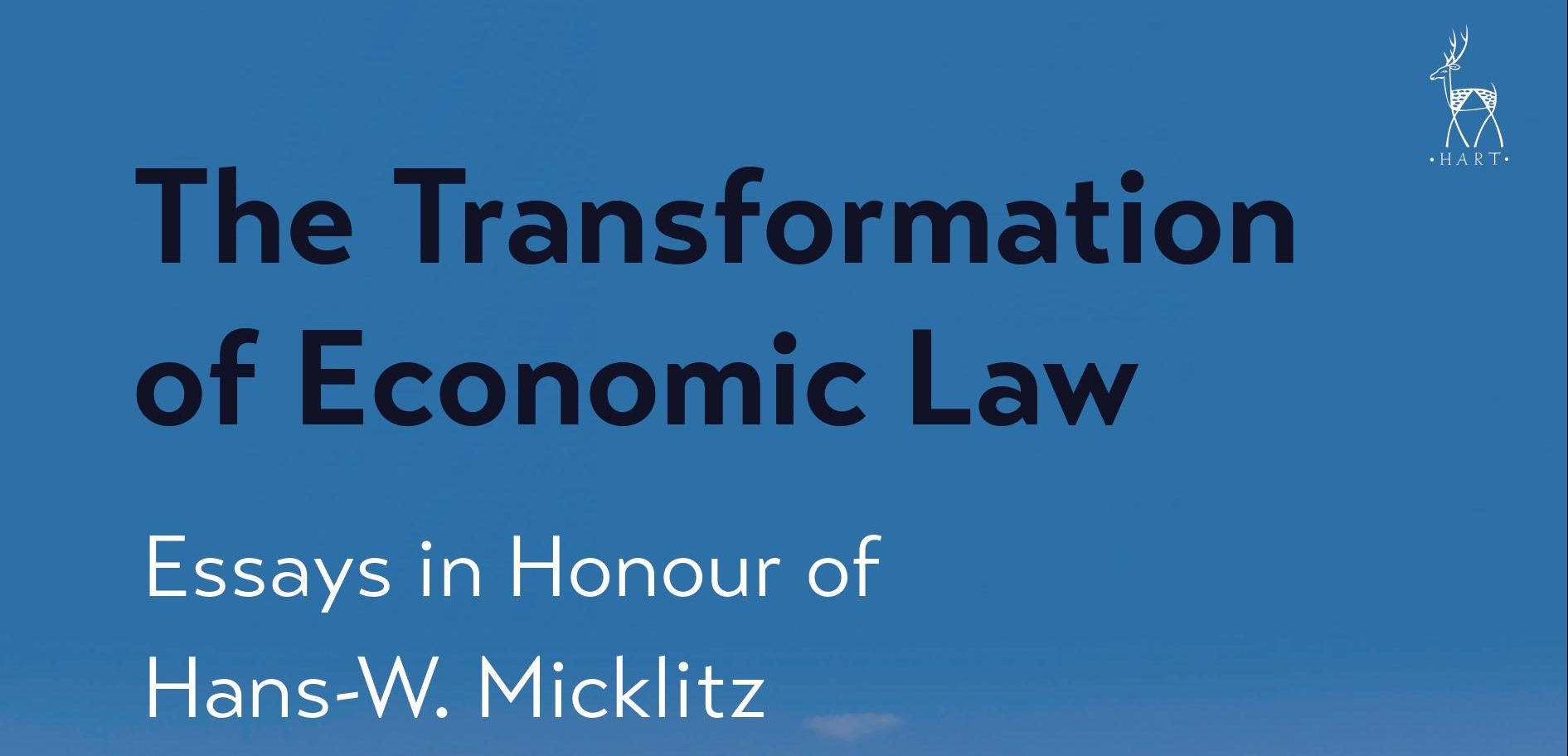
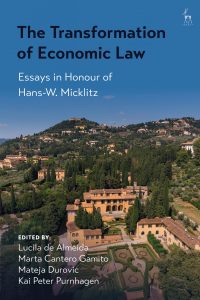
The Transformation of Economic Law
07 June 2019
“The Transformation of Economic Law” is dedicated to Hans-W. Micklitz who, throughout his fruitful career as a legal scholar, has gained international recognition for his studies in the diverse areas of law – in particular, Consumer Law in Europe in the energy, telecommunication and financial service sectors.
Dr Lucila de Almeida, Research Associate and Scientific Coordinator of the Online Executive Training on “Regulatory Delivery” at FSR, will be launching her new book on 7 June 2019, together with her co-authors, during a special event held in honour of Hans-W. Micklitz’s academic career.
As Hans-W. Micklitz’s term as a holder of the Chair for Economic Law at the Law Department of the European University Institute approaches its end, Dr Lucila de Almeida and FSR congratulate him for the outstanding contribution and pioneering advocacy aimed at putting consumers at the centre of the EU law and policies.
More information about the book “The Transformation of Economic Law – Essays in Honour of
In 1991, Vanuatu presented a proposal to address climate change-related loss and damage, particularly sea-level rise, in response to widespread advers...
Building on technological development, changes in consumer preferences, and an evolving legal framework, old and new market players are providing cons...
As a low-carbon means of producing electricity, nuclear energy has been held up as a potentially influential solution in addressing the need for clean...
This prescient book examines the future-proofing of environmental law to allow legislation to anticipate and adapt to long-term challenges. Leading an...
This chapter serves as the introduction to this book, which brings together contributions from the 2023 International Union for the Conservation of Na...
This article analyses the friction between the right to property and the ever-accelerating transition to low-carbon energy systems in Europe and in Eu...
This article provides an overview of the most relevant cases decided by the Court of Justice of the European Union concerning contract law. The...
FE
MB
Seminar
Executive Seminar on Code of Conduct for Computerised Reservation Systems
13 May 2019
Air Ticket Distribution and Regulation 80/2009 on a Code of Conduct for Computerised Reservation Systems (CRS)
The European Commission’s DG MOVE together with the Florence School of Regulation’s Transport Area are co-organising an executive seminar to exchange views on the evaluation of Regulation 80/2009 on a Code of Conduct for Computerised Reservation Systems (CRS) around five key issues including relevance, effectiveness, efficiency, coherence and EU added value. At the same time the seminar shall provide an opportunity for a first discussion on possible ways forward taking into account the broader context of the air ticket distribution market. The seminar will gather representatives from all interested stakeholder groups, such as airlines, technology companies and travel agencies.
This paper aims at defining future research priorities for artificial intelligence (AI) in transport systems. The point of the departure is the state ...
Shipping, ports, and related supply chains are cornerstones of the European economy and world trade, which are shaped by regulatory initiatives develo...
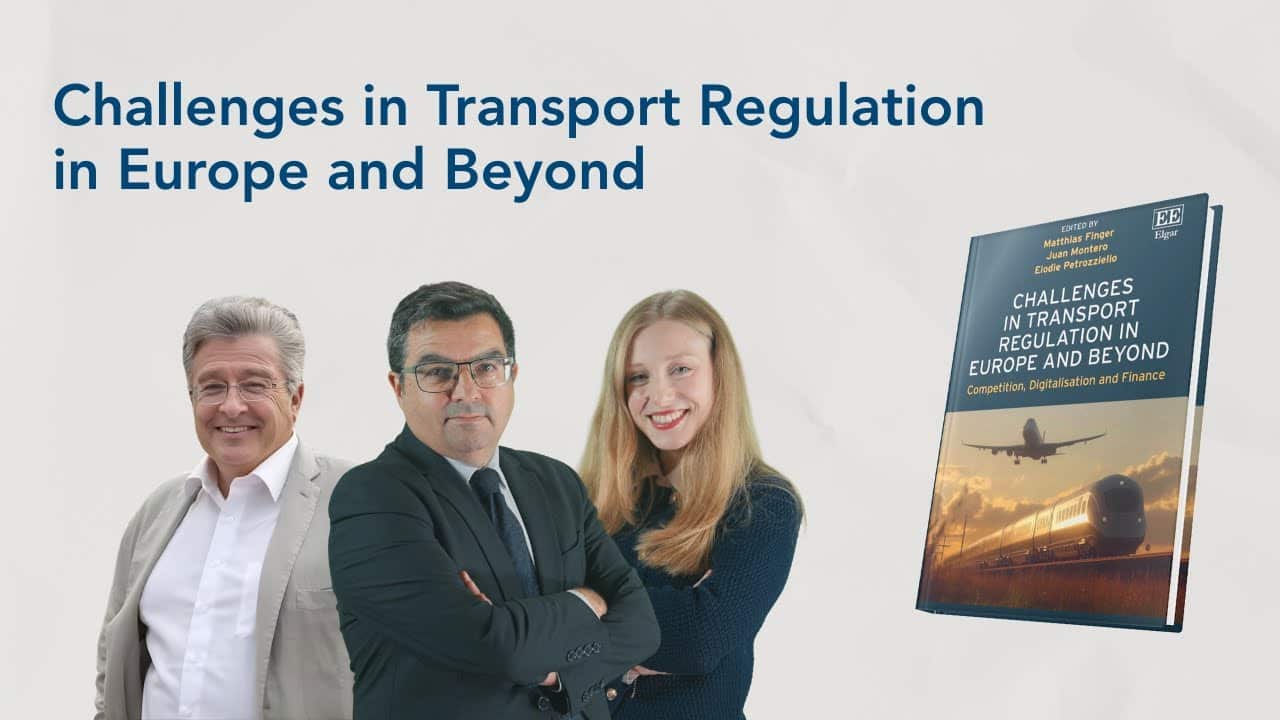
The conference brings together academics, selected industry representatives, and policymakers. The scope of each year’s conference is to find practi...
The 5th Florence Rail Regulation Conference aims to discuss advancements for accelerating the growth of the railways in the EU. This conference is a ...
The Forum, co-organised by the Transport Area of the Florence School of Regulation together with the UIC, will analyse financing models for High-Speed...
Urban rail transit (URT) is closely related to the sustainable development of the city. In addition to the traffic improvements, it also brings social...
European cities face urgent challenges in decarbonization, congestion, road safety, and managing growing passenger and tourist traffic. Stakeholders m...
These reflections open by acknowledging the victims and expressing solidarity with all those affected by the January 2026 rail accidents. Train crashe...
“Trust in the Single Market?” is a Side Event at the 2019 State of the Union – 21st Century Democracy in Europe, European University Institute, Florence, discussing the case of the EU Emissions Trading System
Chairing: Simone Borghesi, Director, FSR Climate, EUI; Jos Delbeke, former Director-General for Climate Action,, European Commission, Professor, School of Transnational Governance, EUI
Carbon pricing is widely regarded as a key instrument to achieve the emission reduction targets set by the Paris Agreement. Since the introduction of the European Emission Trading System (EU ETS) in 2005, carbon pricing has grown extensively around the world. The EU ETS is the result of a complex legislative process involving the governments of 31 participating countries, thus providing one of the most interesting examples of democratic participation of EU countries in the design of a EU crucial policy and in the creation of a single market in the EU.
Since its adoption, the EU ETS has faced a number of challenges, including a substantial price fall with allowance prices getting below 5€/ton of CO2 during the economic recession. This has urged European institutions to implement a series of revisions of the system. As a result, after years of low carbon prices, in which trust in the EU ETS was low, the price of the European allowances has risen remarkably following the announcement of the reform of the EU ETS for Phase IV (2021-2030), which was passed in 2018. This confirms the crucial role that expectations can play in anticipating the policy when this is perceived as sufficient stringent, credible and long-run.
The following questions will be addressed by the event:
What is the current level of trust by participants and the public opinion in the EU ETS?
What can be done to further support the credibility of the system and enhance trust in the single market in the context of climate policy?
How can transparency and MRV (Measurement, reporting and verification) contribute to build trust in climate policy measures in general, and in the EU ETS in particular?
How can we trigger mutual trust across countries and facilitate the ongoing negotiations on CORSIA and on Article 6 in the Paris Agreement?
How can scholars and research better bridge with Policy Makers to enhance trust in Climate Policy measures?
FSR Climate, together with the Policy Outreach Committee of EAERE and in collaboration with the School of Transnational Governance of the European University Institute, organises this session to promote a more integrated dialogue between academia and the policy world, providing advice and support to EU policy makers and institutions in designing policy interventions. The event intends to continue the policy dialogue carried out by FSR Climate under the LIFE SIDE project (co-funded by the LIFE Programme of the European Union) concluded at the end of 2018, which supported European policy makers with the design and implementation of the new EU ETS legislation.
Invited speakers
Carlo Carraro, Professor (University of Venice), President European Association of Environmental and Resource Economists and Vice-Chair of IPCC Working Group III
Ottmar Edenhofer, Director and Chief Economist, Potsdam Institute for Climate Impact Research, Director, Mercator Research Institute on Global Commons and Climate Change, Professor, Technische Universität Berlin
Hermann Vollebergh, Professor of Economics and Environmental Policy, Tilburg University, and Senior Research Fellow, PBL Netherlands Environmental Assessment Agency
Martin Weitzman, Professor of Economics, Harvard University Center for the Environment
Roundtable panelists
Dominique Bureau, General Delegate of the Economic council for sustainable development, Ministry of Ecology, Sustainable Development and Energy, France
Ben Groom, Grantham Research Institute on Climate Change and the Environment, London School of Economics, London, UK
Xavier Labandeira, Director of Economics for Energy, Spain, and Department of Applied Economics, University of Vigo, Spain
Aldo Ravazzi, Chair OECD-WPEP (Working Party on Environmental Performance Country Reviews), President Green Budget Europe, and Chief Economist, DG Sustainable Development, EU&Global Affairs – TA Sogesid, Italian Ministry of Environment
Speakers & panelists bios
Dominique Bureau is General Delegate of the Economic Council of the French Ministry of Ecology and he chairs its Green Tax Commission. He is also Chairman of the Public Statistics Authority and lecturer at École Polytechnique. He started his career with the Finance Ministry. Then he has been in charge of the Economic and International Affairs department for the Ministry of Transportation, after creating the Economic department at the Environment Ministry. He is member of the scientific committees of La Fabrique de la Cité, Grand Paris Express and National Institute for agronomic research. He is also member of the Board of the French Association for Resources and Environmental Economics.
Carlo Carraro is President Emeritus and Professor of Economics at Ca’ Foscari University of Venice. He holds a Ph.D. from Princeton University. He was President of the University of Venice from 2009 to 2014. He is President of the European Association of Environmental and Resource Economists (EAERE) and member of the Bureau of the Intergovernmental Panel on Climate Change (IPCC). He is also Strategic Advisor of the Euro Mediterranean Centre for Climate Change (CMCC), a Fellow of the Association of Environmental and Resource Economists (AERE) and Co-Chair of the Green Growth Knowledge Platform Advisory Committee. He is President of H-Farm Education and the HforHuman Foundation. He is also Scientific Director of the Fondazione Nord Est and a Research Fellow of CEPR, London, CESifo, Munich and CEPS, Brussels. His blog is www.carlocarraro.org.
Ottmar Edenhofer is Director of the Potsdam Institute for Climate Impact Research, Professor for the Economics of Climate Change at the Technical University Berlin as well as founding director of the Mercator Research Institute on Global Commons and Climate Change. He is a member of the German National Academy of Sciences Leopoldina and the National Academy of Science and Engineering acatech. Edenhofer has published numerous articles in leading journals and authored various books. From 2008 to 2015 he served as Co-Chair of Working Group III of the IPCC, shaping the Fifth Assessment Report on Climate Change Mitigation substantially, which has been considered a landmark report and provided the scientific basis for the Paris Agreement.
Ben Groom is Professor of Environment and Development Economics at the Department of Geography and Environment, London School of Economics and Political Science. He is also an associate of the Grantham Research Institute on Environment and Climate Change. His research has focused on the welfare analysis of public policies that have long-term welfare effects. In particular he has worked on the determinants of the social discount rate (SDR) and empirical measures of intergenerational and intra-generational fairness. At present he is working on several projects, looking at: the impact of different positions on intergenerational fairness on climate change policy; devising a new measure of economic performance that internalises inequality aversion; empirical measures of inequality aversion over environmental quality. Pr Groom’s work has fed into advice for international organisation such as the World Bank, the OECD, the Asian Development Bank and the WWF. He has also advised government in the UK, USA, Norway France, China and Pakistan on various aspects of environmental policy.
Xavier Labandeira is Professor of Public and Environmental Economics at the University of Vigo, Spain. In 2014-2017 he was the Director of the Florence School of Regulation Climate at the European University Institute, Italy, and in 2007-2009 he was in charge of the FEDEA Chair on Climate Change Economics. He is currently the director of Economics for Energy, a private research centre specialising in the analysis of energy issues. He is a member of the UN Intergovernmental Panel on Climate Change (IPCC) for the elaboration of its Fifth and Sixth Assessment Reports. Since 2018 he has been a member of the EAERE’s Policy Outreach Committee.
Aldo Ravazzi Douvan is Chief Economist, at DG Sustainable Development, EU & International Relations, Italian Ministry of Environment – Sogesid TA, President of the OECD Committee on Environmental Performance Country Reviews and Professor, Environment Global Governance, U. Tor Vergata Roma. He is also Technical Secretary for the Italian Observatory for Sustainable Finance, the Italian Natural Capital Committee and the Italian Catalogue of Environmentally Harmful and Friendly Subsidies. Ravazzi is President of Green Budget Europe (network of experts on Ecological Tax Reform and Greening Budgets) and Vice-President of Plan Bleu, one the Regional Activity Centres of the Mediterranean Action Plan of United Nations Environment Programme (UNEP), put in place by France in 1977. He was coordinator for the G20 Peer Review of Fossil Fuel Subsidies for Italy 2018 and was President of the OECD Committees on Environmental taxation and Biodiversity, Water & Ecosystems.
Herman Vollebergh is professor of Economics and Environmental Policy at Tilburg University (Department of Economics, Tilburg Sustainability Centre and CentER) and Senior Research Fellow at the PBL Netherlands Environmental Assessment Agency. His current research covers a broad range of topics including the design and effects of market based incentive mechanisms, like taxation, subsidies and tradeable permits in the energy or waste market, (environmental) cost-benefit analysis, long run relationship between emissions and income, and the effect of environmental policy on technological change. Finally, he is strongly involved in applying his academic work to the policy community including the OECD, European Union and the Dutch government.
Martin L. Weitzman is Professor of Economics at Harvard University. Previously he was on the faculties of MIT and Yale. He has been elected as a fellow of the Econometric Society and the American Academy of Arts and Sciences. He has published widely in many leading economic journals and written three books. Weitzman’s interests in economics are broad and he has served as consultant for several well-known organizations. His current research is focused on environmental economics, including climate change, the economics of catastrophes, cost-benefit analysis, long-run discounting, green accounting, biodiversity, and comparison of alternative instruments for controlling pollution.
Don’t miss any update on our events
Sign up for free and access the latest events from our community.
The chapter discusses transition risk for tourism, addressing its relation with the Environmental Kuznets Curve and overtourism. Transition risk emerg...
This report reviews evidence collected during the third year of the LIFE COASE project co-funded by the European Commission. It summarises two events ...
The final policy dialogue organised in the context of the Life COASE project brought together 50 carbon market experts and policymakers to address the...
As the world gathers in Belém, Brazil, for COP30, governments and stakeholders must accelerate the implementation of the Paris Agreement in this pivo...
Sustainability Performances, Evidence and Scenarios (SPES) The European Union stands at a decisive moment in its climate journey. After two decades of...
As the EU considers price-based mechanisms for its 2026 ETS reform, this online debate explored how such tools could enhance market stability and bett...
The aim of the policy dialogue is to facilitate international carbon market cooperation between the EU and partner jurisdictions on key topics around ...
The 11th Annual Conference on the Economic Assessment of European Climate Policies was hosted at the European University Institute in Florence on Tues...
This seminar presents the policy debates surrounding the development of multilateral electricity trade in Southeast Asia from the perspective of ASEAN policymakers, power sector stakeholders, and international consultants. It aims to explore the applicability of international experiences on this particular bloc of countries without fully built-out infrastructure and at varying stages of market liberalisation.
Four countries in Southeast Asia are currently piloting the first multilateral electricity trade initiative in the region. The Laos-Thailand-Malaysia-Singapore Power Integration Project (LTMS-PIP) has commenced phase one, with Malaysia recently signing an agreement to purchase electricity from Laos through existing transmission networks in Thailand. Singapore is expected to join at a later date.
The LMTS PIP is being put to trial in the context of a broader power integration initiative involving all ten-member countries in the Association of Southeast Asian Nations (ASEAN): the ASEAN Power Grid.[i] If successfully operationalised, the LTMS PIP would demonstrate the feasibility of trading and governing electricity trade across liberalised and regulated markets, and potentially encourage other countries in Southeast Asia to link up in the APG.
Presenter: Shelly Hsieh, Policy Leaders Fellow, School of Transnational Governance
The Seminar is organised by the Research Team of the Florence School of Regulation – Energy and open to all EUI members.
[i] The ten ASEAN member states are: Brunei Darussalam, Cambodia, Indonesia, Lao PDR, Malaysia, Myanmar, Philippines, Singapore, Thailand, and Vietnam.
Don’t miss any update on our events
Sign up for free and access the latest events from our community.
The ambitious greenhouse emissions reduction targets to which the European Union (EU) has committed require that all available decarbonisation options...
Electrification is advancing across Europe’s economy, with electric vehicles (EVs) as one of the main technologies at the forefront of this transiti...
This article provides a fresh, interdisciplinary perspective on the European Union’s electricity market design (EMD) reform. In policy as well as in...
Interconnectors with third countries are currently outside the scope of the Electricity Directive and of the Electricity Regulation. Therefore, the pr...
Energy networks play an essential role in enabling competition, thus improving energy affordability, and in supporting decarbonisation of energy deman...
The increasing penetration of intermittent renewable energy sources, together with the electrification of end uses like heating and transport, is resh...
On 10 March 2026, the European Commission issued the Citizens Energy Package, a major initiative designed to ensure that every European citizen—not ...
In Europe, capacity markets are currently designed and operated at the national level, which can give rise to non-cooperative behavior. Member States ...
On 10th March, the European Commission released its long-awaited proposal known as the Citizens Energy Package, a key step towards delivering affordab...
In cooperation with the European Union- funded BestRES project, this seminar will focus on the business models for renewable energy aggregation, providing an overview of the business models and legal framework available to aggregators acting in future markets.
Aggregators should be intermediaries to put “Consumers at the heart of the Energy Union”. Currently, aggregators are mostly acting for large scale and industrial consumers. Consumers, and prosumers, do not have means to trade directly in the energy markets and require the services of an aggregator. Aggregation service providers are therefore central players for the active participation in the energy markets.
In the short and medium term, aggregation appears to be more attractive in the field of large applications. The regulations in the “Clean Energy for all Europeans” Package envisage a situation in long term prospective where the consumers and prosumers are more integrated in the energy market.
This workshop will provide the participants with an overview on the real-life implementation of business models for aggregators acting in the future markets to support prosumers engagement and their clients of decentralised RES production units.
The workshop will also provide a set of national and European enabling conditions identified during the BestRES project for the uptake of business models for RES aggregation to support policy-makers in elaborating strategies and ease the transition towards cleaner sources of energy.
For further details on the content of the workshop, you can contact Anne-Marie Kehoe or read more information on the BesRES website.
Building on technological development, changes in consumer preferences, and an evolving legal framework, old and new market players are providing cons...
As a low-carbon means of producing electricity, nuclear energy has been held up as a potentially influential solution in addressing the need for clean...
This article analyses the friction between the right to property and the ever-accelerating transition to low-carbon energy systems in Europe and in Eu...
In 1991, Vanuatu presented a proposal to address climate change-related loss and damage, particularly sea-level rise, in response to widespread advers...
This prescient book examines the future-proofing of environmental law to allow legislation to anticipate and adapt to long-term challenges. Leading an...
This chapter serves as the introduction to this book, which brings together contributions from the 2023 International Union for the Conservation of Na...
This article provides an overview of the most relevant cases decided by the Court of Justice of the European Union concerning contract law. The...
FE
MB
Seminar
Investment Finance for the Low Carbon Economy
From 11 April 2019 to 12 April 2019
The Executive Training Seminar will look closely at the role of Central Banks and of State Investment Banks in the transition to low carbon economy; possible ways of scaling up climate finance in developing and emerging countries; and the different national paths to contribute to the Paris Agreement. Finally, participants will learn about the European experience of the EU Emission Trading System.
Learning outcomes
Participants will:
develop an enhanced understanding of the dynamics of investment finance for the low-carbon economy;
expand participants’ abilities to explore key climate finance issues through case-based analysis and group work;
interact with fellow participants and colleagues, through peer teaching and peer learning dynamics.
Methodology
This policy-oriented Executive Training Seminar will adopt an innovative perspective combining high-level academic insight with the analysis of experienced policy practitioners. This will provide participants with a practical overview of the current financial instruments to support projects aimed to achieve sustainability, while also developing an enhanced understanding of the link between the different financial instruments and how they can be better targeted at financing needs for a transition to a low-carbon economy in both developed and developing countries.
Course Directors
Simone Borghesi, Director, FSR Climate Jos Delbeke, Part-time Professor, School of Transnational Governance, EUI and KU Leuven
Scientific Coordinator
Isabella Alloisio, Research Associate, FSR Climate
*************
Watch the interview with Nick Robins (Professor Grantham Research Institute at London School of Economics and Political Science)
Watch a brief introduction to the seminar by Simone Borghesi (FSR Climate Director):
Climate change is likely to modify significantly patterns of capital investments and constitutes both a risk and an opportunity for investors and financial institutions. The Paris Climate Agreement approved at the COP21 in December 2015 is a cornerstone in climate policy and finance worldwide. To achieve its objective of limiting the rise of global mean temperature to +2°C compared to the preindustrial period, a shift in the allocation of finance flows from carbon-intensive activities to investments compatible with a 2°C pathway will be necessary. A framework aligning the decisions of financial institutions with the long-term climate goals is taking shape, and carbon intensive projects and investments will likely face an increasing risk of being stranded. Thanks to the involvement of experts that will discuss the most relevant topics in the climate finance field, the Executive Training Seminar aims to demonstrate how changing finance is pivotal to finance change that is required by the Paris Agreement.
The seminar will target a specialised audience composed of mid-career senior officers and policy makers from climate and finance ministries, central banks, insurance companies, pension funds, international financial institutions, state investment banks and finance agents at different levels.
The chapter discusses transition risk for tourism, addressing its relation with the Environmental Kuznets Curve and overtourism. Transition risk emerg...
This report reviews evidence collected during the third year of the LIFE COASE project co-funded by the European Commission. It summarises two events ...
The final policy dialogue organised in the context of the Life COASE project brought together 50 carbon market experts and policymakers to address the...
As the world gathers in Belém, Brazil, for COP30, governments and stakeholders must accelerate the implementation of the Paris Agreement in this pivo...
Sustainability Performances, Evidence and Scenarios (SPES) The European Union stands at a decisive moment in its climate journey. After two decades of...
The European Union Emissions Trading System (EU ETS) is the world’s largest carbon market and a cornerstone of the EU’s strategy to combat...
KL
NDH
JE
IHC
Seminar
Highlights from COP24
12 February 2019
This seminar will address some of the highlights of COP24, including what is left for the next COPs, in consideration of the urgent need to increase ambition and strengthen countries’ commitments.
The Paris Agreement undoubtedly forms a milestone in the fight against climate change. It sets the framework for the long-term global common action against climate change by all nations. The coming period will tell whether its goals, structure and rules are sufficient to keep the global temperature rise well below 1,5C as required by the IPCC. COP24 in Katowice defined several details of the Paris Agreement operational rules, including on NDCs, transparency, global stocktake and compliance.
Professor Müller is Managing Director of Oxford Climate Policy (a not-for-profit company aimed at capacity building for developing country climate change negotiators), and Director of the European Capacity Building Initiative (ecbi), an international initiative for sustained capacity building in support of international climate change negotiations. At the University of Oxford, he serves as Convener International Climate Policy Research at the Environmental Change Institute, Visiting Professor at the Social Sciences Division, member of the Philosophy Faculty, and Supernumerary Fellow of Wolfson College, Oxford. He was Director Energy & Climate Change at the Oxford Institute for Energy Studies (1996 – 2014). He has been serving as Adviser to the LDC Group Chair (2011-18) and the Africa Group Chair (2012-13). He participated in the deliberations of the Transitional Committee (TC) for the Green Climate Fund (GCF) as Adviser to the LDC TC members, who he has also been also advising on the GCF Board and the UNFCCC Standing Committee on Finance. Professor Müller received his doctorate (D.Phil.) in Philosophy from the University of Oxford and was formerly a Research Fellow at Wolfson College and a Lecturer in Logic at the Queen’s College, Oxford. He has a Diploma in Mathematics from the Eidgenössische Technische Hochschule (ETH) in Zürich, Switzerland.
COP24 – Key Outcomes (written by Anju Sharma, Christoph Schwarte, Pascale Bird, Axel Michaelowa, Benito Müller)
Leonardo Massai
Leonardo Massai has 16 years of experience on international environmental law, climate change mitigation and adaptation, forestry, human rights, renewable energy and energy efficiency regulation. Leonardo is co-founder of Climalia, a consultancy providing specialized services on climate change policy and practice, including technical assistance to Least Developed Countries and Small Island Developing States on the UNFCCC, Paris Agreement, NDCs, transparency and adaptation. Leonardo is Legal and Policy Advisor for the Coalition for Rainforest Nations – CfRN where he provides direct counsel, assistance, advice and training to all rainforest nations on international environmental law, climate change governance, mitigation and adaptation, REDD+, climate compatible development plans and multilateral negotiations. Massai is also Assistant Professor in EU Law, International and EUEnvironmental Law, Climate Change Law, Human Rights and Environments, UN Multilateral Negotiations at the Catholic University of Lille in France. Since 2014, Massai is Alternate Member of the Enforcement Branch to the Compliance Committee of the Kyoto Protocol (elected as representative of the Asia-Pacific group), where he will serve until 31 December 2021.
Don’t miss any update on our events
Sign up for free and access the latest events from our community.
Watch the recording: Effective food safety and plant health standards are central to protecting human health, the environment, and the sustainability ...
This event brings together experts to discuss the practical, analytical, and policy dimensions of evaluating the EU’s Common Agricultural Policy (CA...
Watch the recording: The Common Agricultural Policy (CAP) remains the cornerstone of the EU’s strategy for sustainable agriculture and rural develop...
Sustainability Performances, Evidence and Scenarios (SPES) The European Union stands at a decisive moment in its climate journey. After two decades of...
The 11th Annual Conference on the Economic Assessment of European Climate Policies was hosted at the European University Institute in Florence on Tues...
The 11th Annual Conference on the Economic Assessment of European Climate Policies was hosted at the European University Institute in Florence on Tues...
This Policy Session builds on the first Carbon Market Workshop that FSR Climate organised in September 2017 and which gathered stakeholders (from the academic, industry, NGOs) and senior policy makers from different carbon markets worldwide (California, China, EU, Canada, New Zealand), to discuss and exchange experiences on prospects for linking carbon markets internationally.
Speakers at this Policy Session will discuss both advantages and risks that a fully-linked market would involve and address potential economic benefits brought by linking existing ETSs. The feasibility of a partial, incremental, restricted linkage between two or multiple existing ETSs versus full linking will also be discussed.
As countries move to implement their Nationally Determined Contributions (NDCs) under the Paris Agreement, a growing number of them and of sub-national jurisdictions are considering using carbon markets to meet their mitigation commitments. There is an emerging need to share the experiences on implementation of emissions trading systems to date, and to further promote emissions trading as a cost-effective climate policy tool. According to mainstream literature, a global carbon market would be the most cost-efficient solution to achieve the overall objective of keeping global warming below two degrees celsius (Ranson and Stavins, 2012).
To date, there are eighteen distinct Emissions Trading Systems (ETSs) in operation around the world, with sixteen systems in preparation or under consideration. As the existing ETSs continue to evolve and a new generation of ETSs emerges, increasing attention has, in recent years, been devoted to the possibility of linking ETSs. Perhaps the California-Québec joint cap-and-trade program is the most prominent linking example. The first joint auction was held in November 2014 and Ontario has joined the California-Québec market as of 1 January, 2018. The EU ETS has expanded since its establishment. Norway, Iceland and Liechtenstein joined the EU ETS in 2007. In the meantime, the EU and Switzerland have also expressed the intention of linking their ETSs.
Simone Borghesiis Director of the Florence School of Regulation – Climate (FSR Climate), part-time professor at the EUI and Professor of Environmental Economics at the Department of Political and International Sciences, University of Siena, Italy. He is President of IAERE (Italian Association of Environmental and Resource Economists) and Co-director of the research group R4S (Regulation for Sustainability) at the University of Siena. He has been member and/or coordinator of several national and international projects and among the leading authors of the report “Pathways to deep decarbonization in Italy”, published in 2015 by SDSN (United Nations, New York) and IDDRI (Paris). He has published three books and more than 50 articles in edited books and peer-reviewed international journals. He has been Visiting Scholar at INRA, University of Cambridge and ETH, invited speaker at several international conferences and invited participant at the United Nations. He holds a PhD in Economics from the European University Institute, and a M.Sc. in Economics from University College London. In the past he worked at the International Monetary Fund and at the Fondazione ENI Enrico Mattei, Milan.
Speakers
Jos Delbeke, Senior Adviser for Relations with the European University Institute, European Political Strategy Centre, European Commission
Jos Delbeke (1954, Belgium) has been the Director-General of the European Commission’s DG Climate Action since its creation in 2010. As of 16 March 2018, he was appointed Senior Adviser for Relations with the European University Institute, European Political Strategy Centre. He joined the European Commission in 1986. He was very involved in setting the EU’s climate and energy targets for 2020 and 2030, and the adoption of the related legislation by the EU Council and Parliament. Mr Delbeke has been a key player in developing EU legislation on cars and fuels, the Emissions Trading System (ETS), air quality, emissions from big industrial installations and chemicals (REACH). As an economist, he always underlined the role of market-based instruments and of cost-benefit analysis in the field of the environment. For several years Mr Delbeke has been responsible for developing Europe’s International Climate Change strategy and he was for many years the European Commission’s chief negotiator at the UNFCCC Conference of the Parties. He holds a PhD in economics (Louvain, 1986) and worked in 1985 at the International Monetary Fund (Washington DC, USA). As of 2013 he is lecturing at the University of Louvain (Belgium) on European and international environmental policy.
Duan Maosheng, Director, China Carbon Market Center (CCMC), Tsinghua University, China
Duan Maosheng has been working on carbon markets since 2000 and has been a Member of the Chinese climate delegation since 2001, responsible for issues related to market-based mechanisms. He has been a Member of an alternate of the Kyoto Protocol’s Clean Development Mechanism Executive Board since 2010 and served as Chair of the board in 2012. Duan has been intensively involved in the design and operation of China’s domestic carbon market, including both the pilot and the national emissions
trading systems. His latest assignments include coordinating the drafting of rules for China’s national emissions trading system.
Luca Taschini, Associate Professorial Research Fellow, The Grantham Research Institute on Climate Change and the Environment, UK
Luca Taschini is an economist, working at the intersection of environmental economics, energy markets, and industrial organisation. His current research projects include work on market-based instruments and climate finance. Luca completed his formal training in economics in Italy. He holds a PhD in Economics from the University of Zurich. He is also an alumnus of the Joint Program on the Science and Policy of Global Change (MIT) and is a visiting scholar at the Research Center for Sustainability Science, Ritsumeikan University in Japan. His research interests are in the emission trading and carbon market linking.
Gernot Wagner, Associate, Harvard University Center for the Environment, Harvard University, USA
Gernot Wagner is a research associate at Harvard’s School of Engineering and Applied Sciences, a lecturer on Environmental Science and Public Policy and the executive director of Harvard’s Solar Geoengineering Research Programme. he is also an associate at the Science, Technology, and Public Policy Programme at Harvard Kennedy School’s Belfer Centre, and an associate at the Harvard University Centre for the Environment. He served as Lead Senior Economist at the Environmental Defence Fund (EDF) where he is a consultant today. He is co-author together with Prof. Martin Weitzman, of the book “Climate Shock (Princeton 2015)”. He is an expert on linking of carbon markets.
Martin L. Weitzman, Professor of Economics, Harvard University
Martin L. Weitzman is Professor of Economics at Harvard University. Previously he was on the faculties of MIT and Yale. He has been elected as a fellow of the Econometric Society and the American Academy of Arts and Sciences. He has published widely in many leading economic journals and written three books. Weitzman’s interests in economics are broad and he has served as consultant for several well-known organizations. His current research is focused on environmental economics, including climate change, the economics of catastrophes, cost-benefit analysis, long-run discounting, green accounting, biodiversity, and comparison of alternative instruments for controlling pollution.
Don’t miss any update on our events
Sign up for free and access the latest events from our community.
The chapter discusses transition risk for tourism, addressing its relation with the Environmental Kuznets Curve and overtourism. Transition risk emerg...
This report reviews evidence collected during the third year of the LIFE COASE project co-funded by the European Commission. It summarises two events ...
Sustainability Performances, Evidence and Scenarios (SPES) The European Union stands at a decisive moment in its climate journey. After two decades of...
As the EU considers price-based mechanisms for its 2026 ETS reform, this online debate explored how such tools could enhance market stability and bett...
Annual verified emissions and allowance transactions under the EU ETS are provided in the European Transaction Log (EUTL), which is the administrative...
The final policy dialogue organised in the context of the Life COASE project brought together 50 carbon market experts and policymakers to address the...
The European Union is entering two waves of change and innovation which will shape the world economies and societies in the 21st Century. They are the “Digital Age” and the “Energy Transition”.
An independent “Knowledge Hub” is needed to collect data and evidence, aggregate research questions and analyses, define metrics and options, and to formulate policy alternatives and regulatory tools for Europe.
Speakers:
Jean-Michel Glachant, Director, Florence School of Regulation, and Director of Loyola de Palacio Energy Policy Programme, EUI Thomas Pellerin-Carlin, Researcher on European Energy Policy at Notre Europe-Institut Jacques Delors
More information coming soon. This event is private and by invitation only.
Don’t miss any update on our events
Sign up for free and access the latest events from our community.
Energy networks play an essential role in promoting competition, decarbonisation of energy demand, and security of supply. While the current regulator...
Simplification is not a synonym for deregulation. A simplification agenda requires a reassessment of regulations that are excessive, outdated, and ine...
Adequately integrated energy networks are a prerequisite for making the internal energy market work, for enabling trade that helps keep prices in chec...
This Workshop will look at the opportunities for streamlining and simplifying the EU network regulatory framework, at the most effective approach to e...
The Florence School of Regulation is pleased to host the 37th edition of the Young Energy Economists and Engineers Seminar (YEEES), a long-standing ne...
The Internal Energy Market (IEM) ultimately aims at providing greater choice and better prices to energy consumers, through a sustainable energy syste...
This event will examine the lessons for international climate governance can to ensure equity and solidarity in the EU Emissions Trading System.
This Side Event is organised within the framework of the EUI State of the Union, as part of the policy dialogue carried out under the LIFE SIDE project.The project, started on 1 September 2016, supports European policy makers with the design and implementation of the new EU ETS legislation.
The 11th Annual Conference on the Economic Assessment of European Climate Policies was hosted at the European University Institute in Florence on Tues...
Watch the recording: Effective food safety and plant health standards are central to protecting human health, the environment, and the sustainability ...
The 11th Annual Conference on the Economic Assessment of European Climate Policies was hosted at the European University Institute in Florence on Tues...
The 11th Annual Conference on the Economic Assessment of European Climate Policies was hosted at the European University Institute in Florence on Tues...
The 11th Annual Conference on the Economic Assessment of European Climate Policies was hosted at the European University Institute in Florence on Tues...
Robust plant health measures are essential for food security and biodiversity, but sanitary and phytosanitary measures (SPS) may create costly trade b...
Effective plant health measures are essential to protect agriculture, biodiversity, and global food security while enabling safe international trade. ...
Watch the recording: Effective plant health measures are essential to protect agriculture, biodiversity, and global food security while enabling safe ...
The chapter discusses transition risk for tourism, addressing its relation with the Environmental Kuznets Curve and overtourism. Transition risk emerg...
We use cookies to help personalise content and provide a better experience. By clicking Accept all, you agree to this, as outlined in our Cookie Policy. To change preferences or withdraw consent, please update your Cookie Preferences.























 Dominique Bureau is General Delegate of the Economic Council of the French Ministry of Ecology and he chairs its Green Tax Commission. He is also Chairman of the Public Statistics Authority and lecturer at École Polytechnique. He started his career with the Finance Ministry. Then he has been in charge of the Economic and International Affairs department for the Ministry of Transportation, after creating the Economic department at the Environment Ministry. He is member of the scientific committees of La Fabrique de la Cité, Grand Paris Express and National Institute for agronomic research. He is also member of the Board of the French Association for Resources and Environmental Economics.
 Carlo Carraro is President Emeritus and Professor of Economics at Ca’ Foscari University of Venice. He holds a Ph.D. from Princeton University. He was President of the University of Venice from 2009 to 2014. He is President of the European Association of Environmental and Resource Economists (EAERE) and member of the Bureau of the Intergovernmental Panel on Climate Change (IPCC). He is also Strategic Advisor of the Euro Mediterranean Centre for Climate Change (CMCC), a Fellow of the Association of Environmental and Resource Economists (AERE) and Co-Chair of the Green Growth Knowledge Platform Advisory Committee. He is President of H-Farm Education and the HforHuman Foundation. He is also Scientific Director of the Fondazione Nord Est and a Research Fellow of CEPR, London, CESifo, Munich and CEPS, Brussels.
 Ben Groom is Professor of Environment and Development Economics at the Department of Geography and Environment, London School of Economics and Political Science. He is also an associate of the Grantham Research Institute on Environment and Climate Change. His research has focused on the welfare analysis of public policies that have long-term welfare effects. In particular he has worked on the determinants of the social discount rate (SDR) and empirical measures of intergenerational and intra-generational fairness. At present he is working on several projects, looking at: the impact of different positions on intergenerational fairness on climate change policy; devising a new measure of economic performance that internalises inequality aversion; empirical measures of inequality aversion over environmental quality. Pr Groom’s work has fed into advice for international organisation such as the World Bank, the OECD, the Asian Development Bank and the WWF. He has also advised government in the UK, USA, Norway France, China and Pakistan on various aspects of environmental policy.
 Xavier Labandeira is Professor of Public and Environmental Economics at the University of Vigo, Spain. In 2014-2017 he was the Director of the Florence School of Regulation Climate at the European University Institute, Italy, and in 2007-2009 he was in charge of the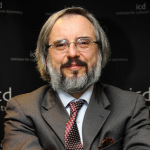

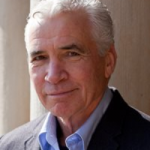 Martin L. Weitzman is Professor of Economics at Harvard University. Previously he was on the faculties of MIT and Yale. He has been elected as a fellow of the Econometric Society and the American Academy of Arts and Sciences. He has published widely in many leading economic journals and written three books. Weitzman’s interests in economics are broad and he has served as consultant for several well-known organizations. His current research is focused on environmental economics, including climate change, the economics of catastrophes, cost-benefit analysis, long-run discounting, green accounting, biodiversity, and comparison of alternative instruments for controlling pollution.
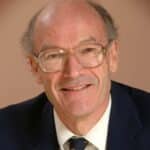





















 Leonardo Massai








 Luca Taschini, Associate Professorial Research Fellow, The Grantham Research Institute on Climate Change and the Environment, UK
 Gernot Wagner, Associate, Harvard University Center for the Environment, Harvard University, USA