
Type of event: Online Event
A fair governance for enhanced guarantees of origin

Second debate devoted to Guarantees of Origin
The EU Strategy for Energy System Integration, released in July this year, calls for a “more circular energy system, with energy efficiency at its core, in which the least energy-intensive choices are prioritised”. A holistic approach to deliver overall efficiency in achieving the renewables penetration target requires a “common currency” which provides a consistent (price) signal against which the cost of different technologies and renewable vectors can be assessed.
More generally, as the renewable penetration target could be achieved with different mixes of technologies and renewable energy vectors (renewable electricity, renewable gases, biomass,etc.), an approach is needed which promotes the achievement of the target at least cost. And the need for least-cost solutions will be greater the more ambitious the renewable target becomes.
In the first debate, which took place on October 6th, we looked at the extent to which Guarantees of Origin (GOs) could become, if “upgraded’, this ‘common currency’. As such, they would promote the achievement of the renewables energy penetration target at least costs via a mix of renewable-based vectors, through the equalization of the marginal costs of replacing the conventional form of each vector with its renewable equivalent.
The panel discussed the potential role that such enhanced GOs could play in the context of the energy transition and sector integration, guided by cost-effective and evidence-based policies. An enhanced role for GOs would imply a number of additional requirements in terms of standardisation/harmonisation of GOs, and better tradability and traceability.
While the FSR proposal received overwhelming support, in the course of the event, questions on the relationship between upgraded GOs, EmissionsTrading, and other support schemes were raised, which should trigger an assessment of the current governance of the GOs and its features in this new role.
The webinar will be moderated by llaria Conti (Florence School of Regulation) and Alberto Pototschnig (Florence School of Regulation and former ACER Director).
Watch the recording:
Invited speakers:
Jeppe Bjerg | Gas Infrastructure Europe
Katrien Verwimp | AIB
Roelf R. H. Titkak | ERGAR
Michele Governatori | former President EU Energy Retailers
Background
During her first State of the Union speech, President of the European Commission-Ursula von der Leyen-proposed to raise the EU 2030 greenhouse gas (GHG) reduction target to at least 55% as part of a broader European Green Deal framework aimed at reaching climate neutrality by mid-century. It means that the share of renewable energy in the final energy consumption is expected to increase to 38.5% by 2030 and achieving this target will require not only additional investment but also a sound internal market framework and cost-effective planning and development of renewable energy technologies. To this end, the European Commission is planning a major overhaul of the current RES framework. The legislative proposals are expected in June 2021 and one of the focus areas is the creation of a comprehensive terminology for all renewable and low-carbon fuels and the European system of certification of such fuels building upon full life cycle GHG savings and sustainability criteria and existing provisions, i.e. Renewable Energy Directive 2 provisions.
Don’t miss any update on our events
Sign up for free and access the latest events from our community.
More on the topic





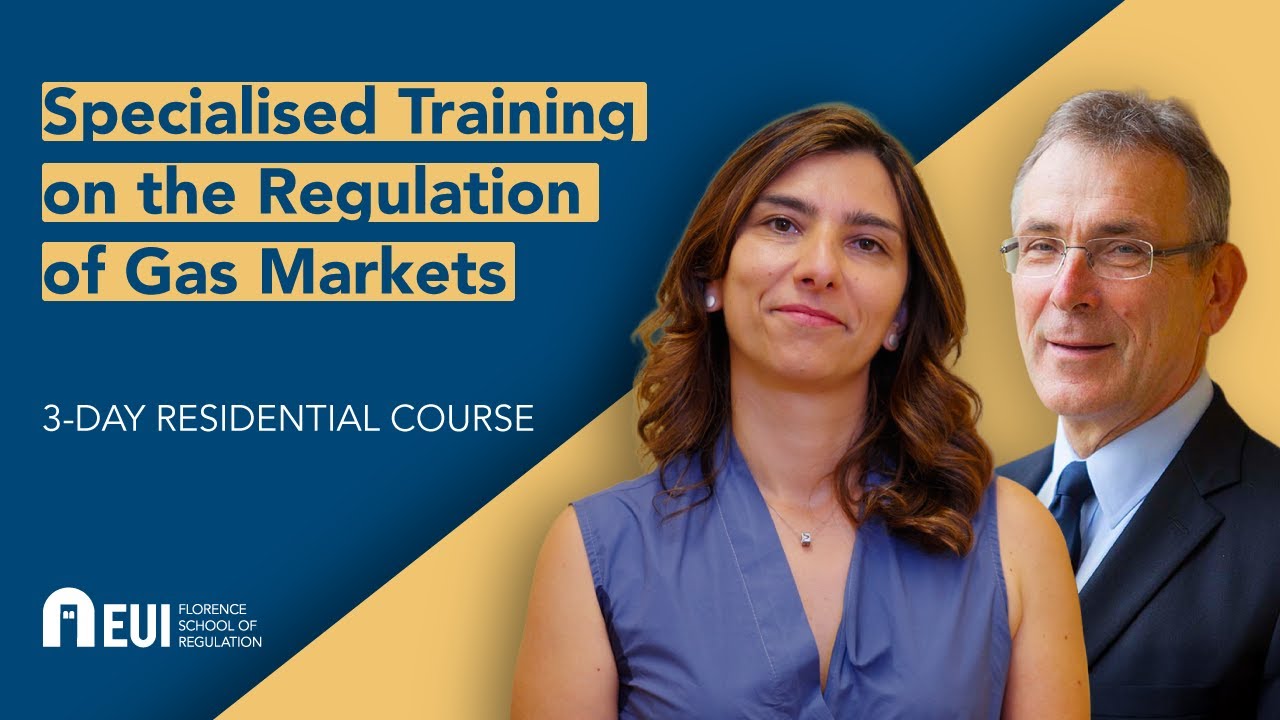


Addressing methane emissions in the context of energy system integration: what climate value for gas?

Addressing methane emissions in the context of energy system integration is a joint webinar organised by the Florence School of Regulation and the Environmental Defense Fund
Watch the recording:
Background
During her first State of the Union speech, President of the European Commission – Ursula von der Leyen – proposed to raise the EU 2030 greenhouse gas (GHG) reduction target to 55% as part of a broader European Green Deal framework aimed at reaching climate neutrality by mid-century. Reaching the 55% target requires not only substantial cuts of CO2 emissions, but also a 35-37% reduction of methane emissions by 2030 compared to 2005.
The EU Commission adopted the EU Strategy to reduce methane emissions on 14 October 2020. The strategy addresses all major sources of methane emissions in the EU – agriculture, waste, and energy, including the oil and gas sector. The discussions in the strategy will evolve in parallel to the reform of the EU Gas Market Design in line with two policy documents laying down the foundations of the future EU energy system – ‘An EU Strategy for Energy System Integration’ and ‘A hydrogen strategy for a climate-neutral Europe’ published by the EU Commissions earlier this year.
With the 2050 carbon neutrality objective in mind, those documents shed more light on how the EU energy systems will change in the next few years with the aim, among others, to reduce the gap between how the EU electricity and gas systems look like now, and how they should be organized in 2050.
According to the ‘EU Strategy for Energy System Integration’, “investments in energy infrastructure typically have an economic life of 20 to 60 years. The steps taken in the next five-to-ten years will be crucial for building an energy system that drives Europe towards climate neutrality in 2050”.
It is thus worth reflecting on how the next investments in the energy sector could embrace the need to address and reduce methane emissions
System integration implies a full re-thinking of the role of gas in the EU, which currently accounts for 25% of the EU energy mix. In the path towards 2050, we can expect decreasing natural gas demand[1] and the increasing supply of low-carbon and renewable gases, such as biogas, biomethane, and hydrogen.
The production of biogas and biomethane in particular could help to decrease methane emissions from agriculture and waste, on condition that methane emissions from the production and transport of low-carbon gases are minimized.
The EU Hydrogen Strategy includes the use of fossil-based hydrogen combined with carbon capture with a caveat that “the Commission will address upstream methane emissions occurring during the production and transport of natural gas and propose mitigating measures as part of the upcoming EU Strategy on Methane”.
Taking into account the increasing demand for natural gas in some EU Member States, such as Poland, and the gradual substitution of natural gas with low-carbon alternatives, the issue of the prevention and abatement of methane emissions is likely to persist.
What climate value for gas?
The event will address the following questions:
- How could the reduction of methane emissions contribute to the achievement of the European Green Deal and Paris Agreement objectives?
- How to provide clear information to the consumers on the methane-intensity of gas they consume, including from imports?
- Should methane emissions performance standards be used to give clear signals to investors both through the sustainable finance taxonomy and through mandatory disclosure under the Non-Financial Reporting Directive?
- How to ensure that the supply of low-carbon and renewable gases do not lead to the increase in the domestic EU methane emissions?
- Whether and how to incorporate the methane emission abatement actions into the revision of the TEN-E Regulation?
- How to create the right incentives for the EU network companies to reduce methane emissions in the distribution segment?
The webinar will be moderated by prof. Andris Piebalgs, Florence School of Regulation and former EU Commissioner for Energy. A Q&A session with the audience will follow.
Speakers:
Stefano Grassi | European Commission
Jutta Paulus | European Parliament (Greens/European Free Alliance)
Nicolás González Casares | European Parliament (Socialists & Democrats)
Mark Radka | UN Environment Programme
Poppy Kalesi | Environmental Defense Fund
Francisco de la Flor | Enagás / Gas Infrastructure Europe
Antoine Rostand | Kayrros
[1] Apart from the Central and Eastern Europe (CEE) region, where natural gas is expected to substitute coal in electricity production and district heating.
Don’t miss any update on our events
Sign up for free and access the latest events from our community.
More on the topic



Mobilising private investment for green, climate-resilient energy assets: The role of innovation in finance

Session 3 of the FSR Global Energy Innovation Week
Sustainable development goals imply aligning specific infrastructure investment needs with broader long-term development strategies. This requires a combination of policies (energy, climate and industrial policies), innovative financing solutions and support to technological development. Significant efforts associated with an investment in green, climate-resilient infrastructure are planned for the near future. Actually, as a part of the economic recovery action (associated with the potential contra-cycle measures post coronavirus crises), financial institutions may play an important role to guarantee efficient investments.
In the past decade, macroeconomic policies together with sector-specific factors have facilitated investor interest in green infrastructure. In fact, we have observed new profiles on the investment side, like pension funds, sovereign wealth funds and insurance companies. These companies have been increasing the value of creating an alternative asset class based on new infrastructure characteristics.
Public sector funding has been traditionally the main tool to include this kind of uncertain investment in market dynamics. However, for various reasons, public sector funding alone will be insufficient to meet the investment needed for the global transition to low-carbon economies, making significant private-sector involvement imperative.
In Session 3, we intend to address, among other topics:
- How to standardize the definition of “green investment”?
- What kind of policy we can design to facilitate the establishment of low-carbon infrastructure as an asset class?
- How to match expected returns with acceptable levels of risk?
FSR Global Energy Innovation Week
Energy Innovation Week will be comprised of 3 sessions, which intend to contribute the identification of common elements of the population of challenges that conform the current regulatory landscape, in order to define a framework that facilitates regulatory learning to realize financing of energy transitions.
Session 1: Digitalization and long-term investment in energy assets
Session 2: Public financing of green innovation: Matching offers and demand for financing
Session 3: Mobilising private investment for green, climate-resilient energy assets: The role of innovation in finance
Learn more about FSR Global’s Energy Innovation Week.
Don’t miss any update on our events
Sign up for free and access the latest events from our community.
Speakers
More on the topic


Public financing of green innovation: Matching offers and demand for financing

Session 2 of the FSR Global Energy Innovation Week
Relevant recent literature states that direct and pervasive public financing has been instrumental in the development of innovative technological trajectories. The reasoning builds on: (i) the presence of finance from public sources across the entire innovation chain; (ii) the concept of ‘mission-oriented’ policies that have created new technological and industrial landscapes; and (iii) the entrepreneurial and lead investor role of public actors, willing and able to take on extreme risks, independent of the business cycle.
On the other hand, public financing depends largely on the availability of funds. The available capital (human or otherwise) for different jurisdictions is different, which may motivate a case for heterogeneity of policies regarding innovation funding.
Moreover, the question becomes more complicated when the connection between public and private is not straightforward. The gap between infrastructure needs and available finance may be relevant and public policies may help in bridging that gap.
In Session 2, we intend to address, among other topics:
- Discuss the role of public finance in the development of green infrastructure
- The role of project structuring in de-risking of green infrastructure
- What level of risk is acceptable/desirable for public institutions?
FSR Global Energy Innovation Week
Energy Innovation Week will be comprised of 3 sessions, which intend to contribute the identification of common elements of the population of challenges that conform the current regulatory landscape, in order to define a framework that facilitates regulatory learning to realize financing of energy transitions.
Session 1: Digitalization and long-term investment in energy assets
Session 2: Public financing of green innovation: Matching offers and demand for financing
Session 3: Mobilising private investment for green, climate-resilient energy assets: The role of innovation in finance
Learn more about FSR Global’s Energy Innovation Week.
Don’t miss any update on our events
Sign up for free and access the latest events from our community.
Speakers
More on the topic






Digitalization and long-term investment in energy assets

Session 1 of the FSR Global Energy Innovation Week
Technological innovation may just increase the efficiency of industry, significantly transform it, or even disrupt entirely it. To transform or to disrupt, innovation needs to change the industry players and the way they interact. We focus on smart contracts and the link to the discussion on open energy markets. The rationale behind it is that the political discussion on digitalization and the technology discussion on Distributed Ledger Technologies and the Internet of Things comes together in the form/type of contracts in the future.
Clarifying the form/type of contracts will help to clarify what needs to be done in terms of market rules in the future. We may think the digitalization of energy industries as made up of three levels: i) challenges of data production and management; ii) the design of a digital energy marketplace; and iii) the consumer side of the new marketplaces, i.e. how these changes add value to consumers. In this debate, we deal with the changes in market design, and our proposal is to articulate the analysis on smart transactions, in the sense that they represent the bridge between the data side and the consumer side of the change associated with the digital transformation. We will discuss three aspects of regulatory learning:
- The needs of data that is not available, and also to disseminate what data is available but stakeholders do not know
- Potentially anti-competitive behaviours
- Standard clauses for automated long-term contracts, and the associated financial aspects
FSR Global Energy Innovation Week
Energy Innovation Week will be comprised of 3 sessions, which intend to contribute the identification of common elements of the population of challenges that conform the current regulatory landscape, in order to define a framework that facilitates regulatory learning to realize financing of energy transitions.
Session 1: Digitalization and long-term investment in energy assets
Session 2: Public financing of green innovation: Matching offers and demand for financing
Session 3: Mobilising private investment for green, climate-resilient energy assets: The role of innovation in finance
Learn more about FSR Global’s Energy Innovation Week.
Don’t miss any update on our events
Sign up for free and access the latest events from our community.
Speakers
More on the topic


The enhanced use of Guarantees of Origin to support decarbonised gases
In its role of EU Commission’s Knowledge Partner for the Madrid Forum, FSR organises two online Debates devoted to Guarantees of Origin.
This first Debate will look at the extent to which Guarantees of Origin could be used as the common basic instrument to support renewable gases.
Watch the recording:
The achievement of the European Union’s ambitious environmental targets requires a massive increase in the generation from renewable energy sources, both in the electricity and gas sectors. In particular, the gas sector will no longer play a role only as a back-up for renewable electricity generation, but also as a conveyor of “green” molecules.
More generally, as the renewable penetration target could be achieved with different mixes of technologies and renewable energy vectors (renewable electricity, renewable gases, biomass, etc.), an approach is needed which promotes the achievement of the target at least cost. And the need for least-cost solutions will be greater the more ambitious the renewable target becomes.
The EU Strategy for Energy System Integration, released in July this year, calls for a “more ‘circular’ energy system, with energy efficiency at its core, in which the least energy intensive choices are prioritised”. A holistic approach to deliver overall efficiency in achieving the renewables penetration target requires a “common currency” which provides a consistent (price) signal against which the cost of different technologies and renewable vectors can be assessed.
This online event is part of a study commissioned to the Florence School of Regulation (FSR) by the Directorate-General for Energy of the European Commission. The second debate of this series is taking place on November 6th.
Agenda
Introduction to the Debate
Alberto Pototschnig | Florence School of Regulation
Antonio Lopez-Nicolas | European Commission
The enhanced role of Guarantee of Origin for the support of decarbonised gases
Ilaria Conti | Florence School of Regulation
Introductory Remarks
Gerrit Volk| BNetzA
James Watson | Eurogas
Stephan Kamphues | ENTSOG
Els Brouwers | IFIEC
Doug Wood | EFET
Live polls with the audience
11.55 – 12.20 Comments on the polls outcome and Q&A from the audience
Concluding remarks
Antonio Lopez-Nicolas| European Commission
Alberto Pototschnig | Florence School of Regulation
Presentations
Don’t miss any update on our events
Sign up for free and access the latest events from our community.
Speakers
More on the topic



Impact of COVID on the Power Sectors in Emerging Economies and Actions for Recover
Join FSR Global and the IAEE to examine the impact of COVID on the power sectors in emerging economies and actions for recovery.
The impact of COVID-19 pandemic on the global economy as well as the society has been unprecedented. In these troubling times of ‘social distancing’ and ‘working from home’, the centrality of electricity in powering our current and future societies is more evident than ever before.
However, the power sector also is not immune to the adverse effects of the pandemic. The long-term impact of the current situation would only become apparent with time. While emerging economies continue to grapple with controlling the pandemic, policymakers have taken note of the fallout on the power sector and have started working on an action plan for a quick recovery.
This webinar brings together leading experts from different emerging economies to provide insights on the similarities and divergence in the impact of COVID-19 on their power sectors as well as debate possible learning and synergies on post-COVID-19 recovery actions.
Webinar in collaboration with FSR Global and the International Association for Energy Economics.
Seats are limited, sign up to ensure a spot! After registering, you will receive a confirmation email containing information about joining the webinar.
More on COVID:
Don’t miss any update on our events
Sign up for free and access the latest events from our community.
Speakers
More on the topic

Carbon Market Policy Dialogue

The first meeting of the Carbon Market Policy Dialogue (CMPD) of the LIFE DICET* project brings together academia, stakeholders and senior policymakers from different carbon markets worldwide, in a unique process for a fruitful exchange on carbon market integration.
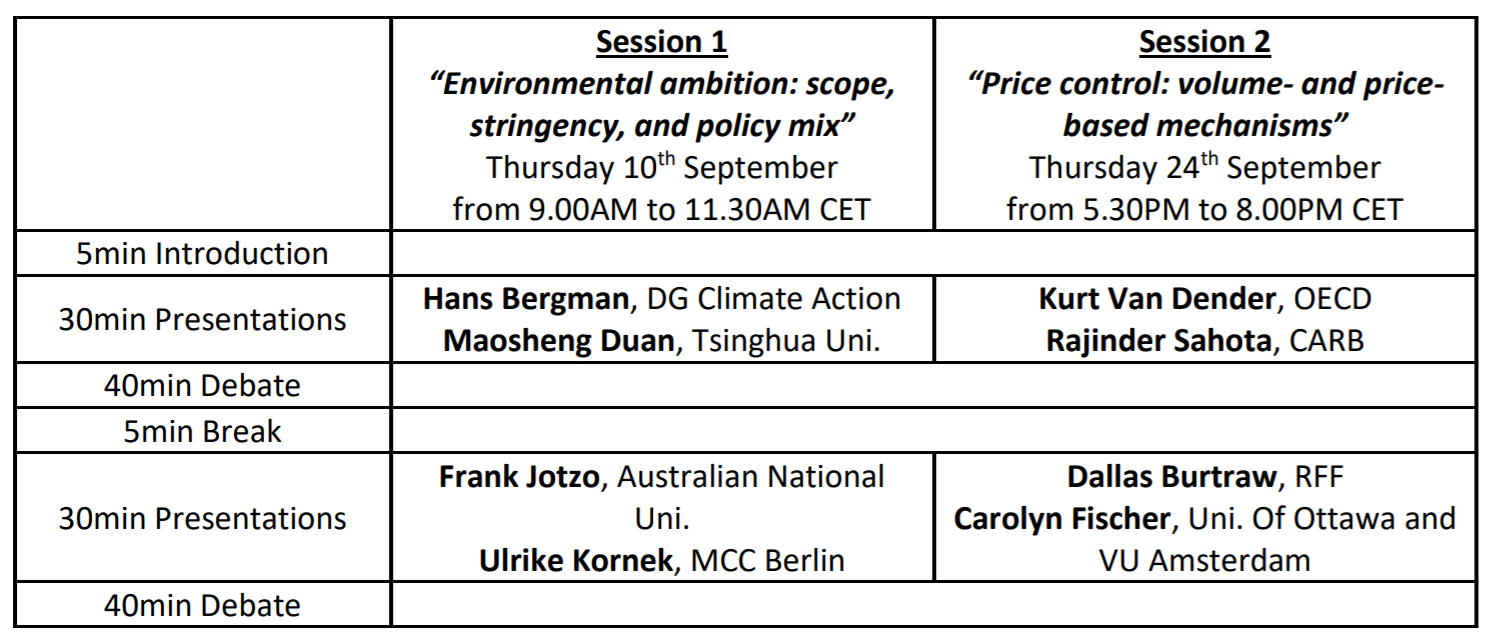
The meeting is split into two online sessions to cover different topics and to allow participation from different geographical areas (East Asia and Pacific, Europe, North America…):
- Thursday 10th September 2020 from 9.00 AM to 11.30 AM Central European Time to discuss “Environmental ambition: scope, stringency, and policy mix” (Topic 1),
- Thursday 24th September 2020 from 5.30 PM to 8.00 PM Central European Time to discuss “Price control: volume- and price-based mechanisms” (Topic 2).
The CMPD meetings aim to facilitate enhanced international cooperation between Emissions Trading Systems regulators, namely the European Commission (DG Climate Action), California-Quebec, China, Switzerland and New Zealand within the framework of the LIFE DICET project.
Ahead of the meetings, material meant to nourish the discussion will be shared. It will include a report presenting the different ETSs mentioned above, two background reports on Topic 1 and on Topic 2, as well as a few short video statements.
* The event is co-funded under the LIFE Programme, the project LIFE DICET – Deepening International Cooperation on Emissions Trading supports European Union and Member State policymakers in deepening international cooperation for the development and possible integration of carbon markets.
Don’t miss any update on our events
Sign up for free and access the latest events from our community.
More on the topic











Executive Seminar on Speed and Speed Management in Road Safety Policy
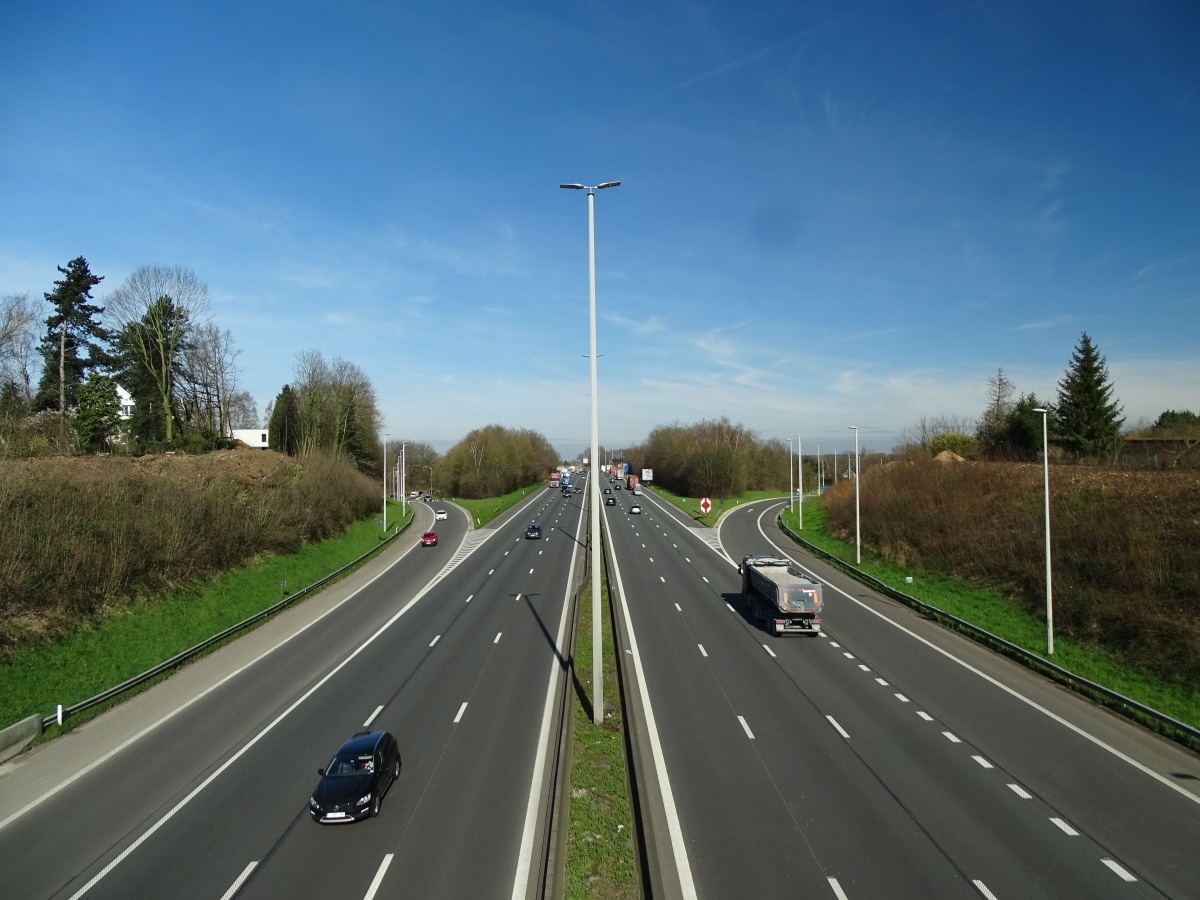
The European Commission and EU transport ministers have set themselves ambitious targets for road safety for the coming decade: to halve the number of fatalities and the number of serious injuries on European roads by 2030.
A crucial factor in the road safety equation is speed. About one third of crashes are at least partly caused by excessive or inappropriate speed. The risk to be involved in a crash when speeding well above the limit or driving too fast for the conditions is 12.8 times higher than for non-speeders. And higher speed crashes cause far more damage than lower speed ones.
Rules and regulations on speed differ between EU Member States. But as driver assistance technology like Intelligent Speed Assistance is becoming commonplace thanks to EU regulation and as many European cities are learning from their peers across the EU about lowering speed limits and accompanying infrastructure measures, it is time for a closer look at speed at European level.
This seminar will bring together academics and practitioners from across the EU to discuss all aspects of the “factor speed”: vehicles and technology, infrastructure design, speed limits and enforcement, as well as links with sustainable mobility (emissions, air quality, noise).
Please kindly note that this event is by invitation only.
Don’t miss any update on our events
Sign up for free and access the latest events from our community.
More on the topic


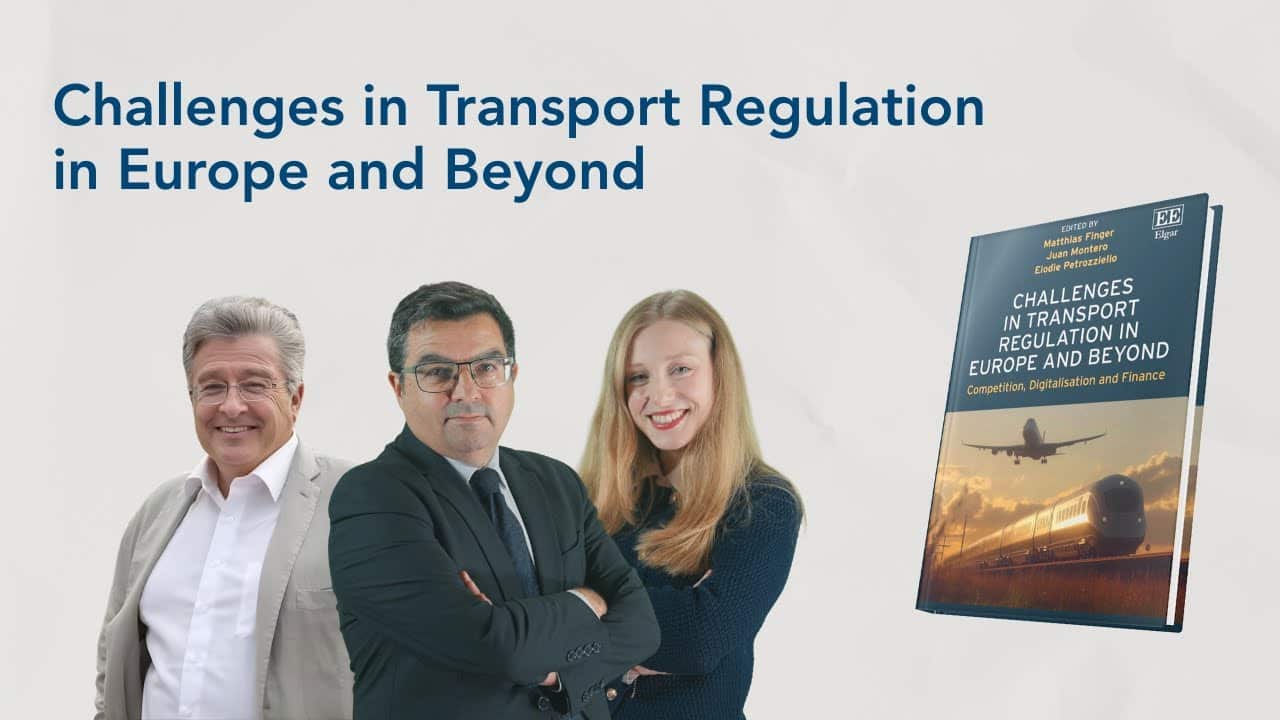

19th Florence Rail Forum. European Green Deal: What Implications for State Aid in the Rail Sector?

In its European Green Deal Communication published late last year, the European Commission reaffirms its vision of achieving net climate neutrality in Europe by 2050. For the transport sector, which accounts for a quarter of the EU’s total greenhouse gas emissions, a combination of measures will be needed to place the sector on a firm path to sustainable and smart mobility. Along these lines, the Commission has proposed to make 2021 the European Year of Rail, to support the delivery of the objectives of its European Green Deal in the transport area. The role of multimodal transport, in particular, is highlighted as key to increasing the efficiency of the transport system. The overarching goal is to drive a significant modal shift from less environmentally sound transport modes, such as road in particular, but also aviation, towards the greenest modes of transport, namely rail and inland waterways, without compromising the connectivity of goods and persons, which is at the heart of the single market. This in turn will require measures to manage better, and to increase the capacity of railways and inland waterways, which the Commission has pledged to propose by 2021. The COVID-19 pandemic has hit companies in the transport sector particularly hard. There is a broad consensus that the EU and national regulations should seize the opportunities afforded by the recovery plans to exit the crisis to promote the twin green and digital transformations.
The 19th Florence Rail Forum, co-organised by the Transport Area of the Florence School of Regulation together with the European Commission’s DG COMP and DG MOVE, will examine the role of State aid in meeting the challenges of the Green Deal, with two dedicated sessions focusing on rail freight transport as well as rail passenger transport.
Evaluations are currently underway of the relevant State aid guidelines including those pertaining to railways. The Commission considers that any revision will have to reflect the policy objectives of the European Green Deal, support a cost-effective transition to climate neutrality by mid-century, and ensure a level-playing field in the internal market. Investments will indeed be paramount to boosting intermodal freight transport, in particular in transhipment terminals but also more generally in rail infrastructure (to ensure interoperable/sufficient capacity), and, possibly, in rolling stock or technology (e.g. automation for train composition).
The 19th Florence Rail Forum will seek to discuss the situations that justify State aid in order to support investment (in rolling stock or intermodal terminals) as well as operations (start-up aid or longer term operating aid), and moreover, the conditions under which State aid should be declared compatible to make intermodal freight transport attractive. The possibility and conditions to set up public service obligations for (structurally non-viable) rail freight routes is also a key topic for discussion on the way to ensure sufficient capillarity and to address the issue of the unprofitable last mile service.
When it comes to rail passenger transport, the forum will seek to address the key questions surrounding the demonstration of the necessity of public service contracts by public authorities, i.e. how to determine the existence of a ‘genuine public service need’ in order for a public service contract to be awarded.
Please kindly note that this event is by invitation only.
SPEAKERS PRESENTATIONS:
Introduction to the Forum
Juan Montero – FSR Transport, EUI Presentation
Maurizio Castelletti – DG MOVE, European Commission Presentation
Session A: Rail Freight Transport Session I. State aid and investment.
Silvia De Rocchi – Captrain Italia Srl Presentation
Christoph Lerche – Deutsche Bahn AG Presentation
Paul Hegge – Lineas Presentation
Koen Cuypers – Port of Antwerpen Presentation
Session B: Rail Freight Transport Session II. Operating aid.
Ralf-Charley Schultze – International Union for Road-Rail Combined Transport (UIRR) Presentation
Hinne Groot – Ministry for Infrastructure and the Water Management (Netherlands) Presentation
Irmtraut Tonndorf – HUPAC Presentation
Zeno D’Agostino – Port Network Authority of the Eastern Adriatic Sea Presentation
Session C: Rail Passenger Transport Session I. Public service contract and open access rail services.
Cesare Paonessa – Agenzia per la Mobilità Piemontese Presentation
Erich Forster – WESTbahn Management GmbH Presentation
Carl Adam Holmberg – Snälltåget Sweden Presentation
Session D : Rail Passenger Transport Session II. Compensation parameters.
Nick Brooks – ALLRAIL Presentation
Germano Guglielmi – Ferrovie dello Stato Presentation
Don’t miss any update on our events
Sign up for free and access the latest events from our community.
More on the topic
Plenary Keynote at 25th EAERE Annual Conference – BERLIN ONLINE 2020
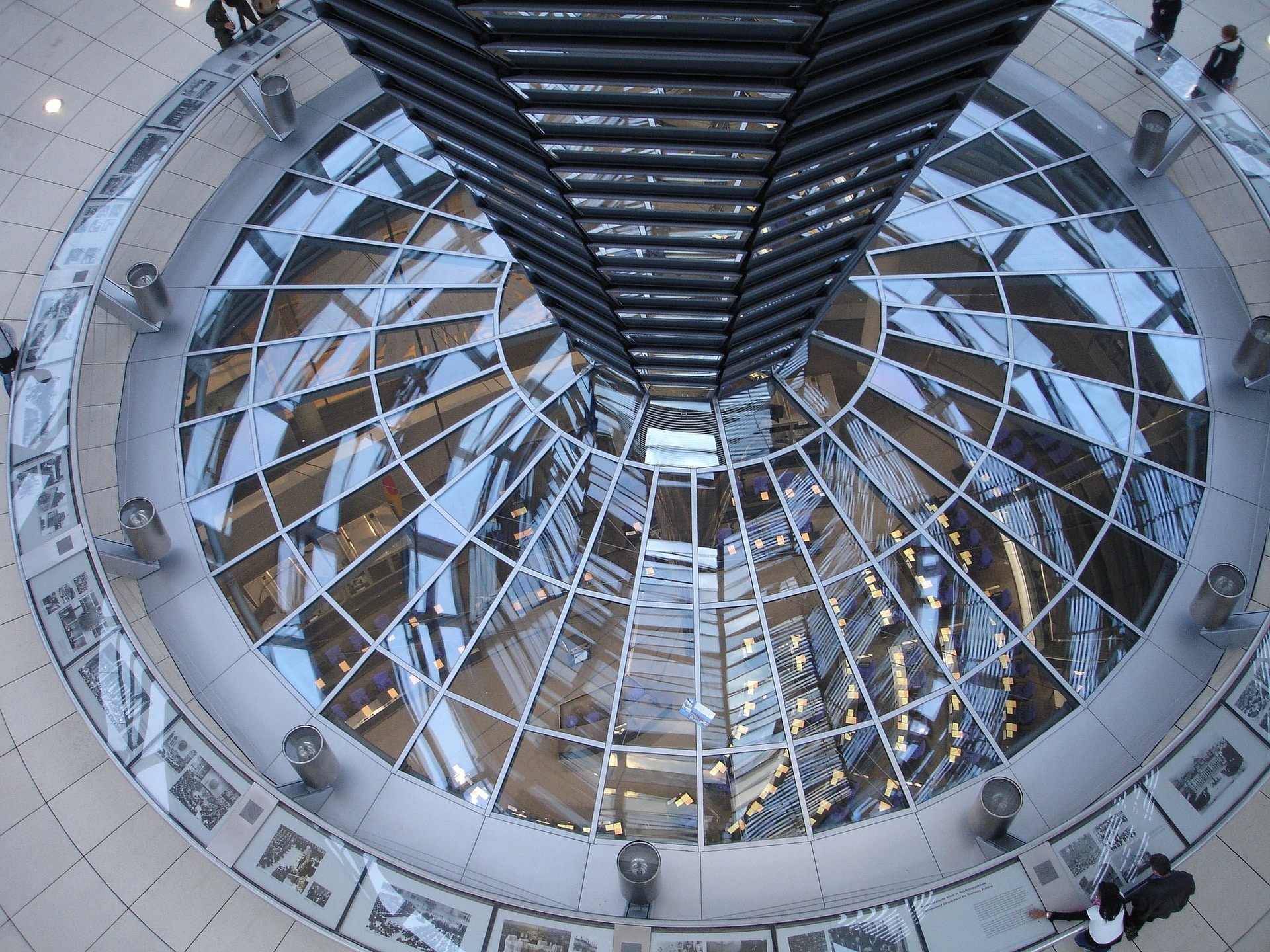
The 25th Annual Conference of the European Association of Environmental and Resource Economists will be held on Tuesday, June 23 – Friday, July 3, 2020, online! Due to the coronavirus outbreak, the city government of Berlin has decided that all physical events at universities have to be cancelled until the end of July. Therefore EAERE together with the PC and LOC decided to hold this year’s conference as a virtual event.
This year’s EAERE conference evolves around Friday, June 26, which incorporates all centrally organized sessions including opening and closing ceremonies, a plenary keynote on the European Green Deal and three invited sessions taking place in a semi-plenary format. In addition, almost 150 Policy, Thematic and Parallel Sessions are decentrally organized by volunteer presenters. The decentral sessions take place between June 23 and July 3 with a concentration between Wednesday, June 24 and Saturday, June 27. In total, about 570 papers will be presented, and an additional 70 papers will be uploaded to a conference database.
Plenary Policy session
Simone Borghesi will be chairing the Plenary Policy on Friday, June 26, at 10:45-12:15.
Simone Borghesi, Director of FSR Climate and Secretary General of the Policy Outreach Committee (POC) of the European Association of Environmental and Resource Economists (EAERE), will chair with Jos Delbeke the Plenary Policy Session at the 25th EAERE annual conference. The session entitled “The European Green Deal: prospects and challenges for the future” will take place on June 26, 2020, 10:45-12:15, immediately after the Opening Ceremony. After the introductory remarks by Simone Borghesi and Jos Delbeke, the session will host the interventions of two guest speakers (Alexander Stubb and Peter Vis) followed by short roundtable interventions from POC members.
See here for the official programme of the conference. All sessions can be attended free of charge.
Don’t miss any update on our events
Sign up for free and access the latest events from our community.
Speakers
More on the topic





Facilitating interoperability of energy services in Europe

Interoperability: (what) can we learn from the existing experiences?”
Reaching and maintaining the interoperability of energy services in Europe is a complex challenge. However, previous experiences with interoperability exist in the electricity and the healthcare sector that we could draw inspiration from.
In this online debate, we focus on existing experiences with interoperability: namely, the North American Green Button initiative for utility customer data; the ENTSO-E approach to support data exchange requirements related to European electricity market and system operation; and the long-standing experience with interoperability in the healthcare and eHealth sector. We will hear about the views of European DSOs and discuss the steps they are taking to reach interoperability.
Read the highlights
Watch the recording:
Background
The recast of the Electricity Directive (EU) 2019/944 in the Clean Energy Package entitles the European Commission in Article 24(2) to adopt implementing acts specifying interoperability requirements and non-discriminatory and transparent procedures for access to data. According to Article 23(1) of the same directive, “data” is understood to include metering and consumption data as well as data required for customer switching, demand response and other services. Ultimately, this shall serve to facilitate the full interoperability of energy services within the Union (Art. 24(1)).
At the latest European Electricity Regulatory Forum (“Florence Forum”) in June 2019, the European Commission presented interoperability as one of three legislative priorities based on the empowerments in the Clean Energy Package
In our FSR Policy Brief on the topic, we argue that the acts should be ambitious in addressing the multiple dimensions of interoperability for electricity and gas customer data, we refer to relevant experiences with interoperability, and we identify governance as a key issue to achieve interoperability of energy services.
About the online debate
The debate will depart from the question: (what) can we learn from these existing experiences to facilitate the interoperability of energy services in Europe? Together with our expert panelists, we will explore the relevant use cases per initiative, look at the methods, standards and tools that are used and assess whether these can be (partially) applied to the challenge that lies ahead of us.
Panelists:
- Luís Vale Cunha (EDPD)
- tbc (ENTSO-E)
- Jeremy J. Roberts (Green Button Alliance)
- Stefan Sauermann (University of Applied Sciences Technikum Vienna – Medical Engineering and eHealth)
- Valerie Reif (FSR) – also delivers the academic introduction
Moderator: Leonardo Meeus (FSR)
Give your input to the discussion!
Comment on the background paper. You can leave comments addressing specific paragraphs. For example, you believe some points need to be highlighted more, a point is not raised, or you have an opinion you want to voice. You can also make a general comment and point to other aspects of interoperability that you think should be addressed in this or future work on the topic.
- Your feedback and the inputs from the online debate will be the basis for our future work on the topic of interoperability. Your contribution will be acknowledged in the publications to come.
Learn more:
Interoperability of energy services in Europe – what’s behind it?
#Interoperability of energy services in Europe – what’s behind it? In this #researchbite we talk about the articles 23 and 24 of the recast of the Electricity Directive (EU) 2019/944 & the next steps of the European interoperability agenda in #energy 👇https://t.co/HYZ3tADKOJ pic.twitter.com/S4ktjf1fB3
— FSR Energy & Climate (@FSR_Energy) June 15, 2020
Dig in deeper
Interested in knowing more about our distinguished speakers, their projects and initiatives, or the topic of interoperability more generally? Check this out:
- North American Green Button – the standardized way to get your energy usage information
- Schittekatte, T., Reif, V., & Meeus, L. (2020). The EU electricity network codes. FSR Technical report. June 2020 (coming soon)
- “A new deal for energy consumers: consumer data management”, FSR Topic of the Month November 2019 by Valerie Reif
We acknowledge the financial support from the European Union’s Horizon 2020 project INTERRFACE (grant agreement No 824330).
Don’t miss any update on our events
Sign up for free and access the latest events from our community.
More on the topic