


Type of event: Conference
Call for papers for the 2026 FSR Climate Annual Conference
The Conference Scientific Committee warmly welcomes applicants to submit their economic and interdisciplinary research contributions for the annual FSR Climate Conference
The Climate Area of the Florence School of Regulation (FSR) is pleased to announce its 12th Annual Conference on the Economic Assessment of European Climate Policies to take place at the European University Institute in Florence from 30 November to 2 December 2026.
The event consists of a two-day academic conference followed by a half-day workshop dedicated to the LIFE NETS project. While the conference will showcase current research through paper presentations and guest lectures, the workshop will provide an interactive forum to discuss preliminary results from the project. This will include presentations and discussion on Financial Carbon Market Data and Trading Behaviours, EU ETS Data in Review, and Experimental Evidence on Communication Strategies to Increase Support for ETS2. All conference participants are invited to attend the workshop as an integral part of the event.
The Conference
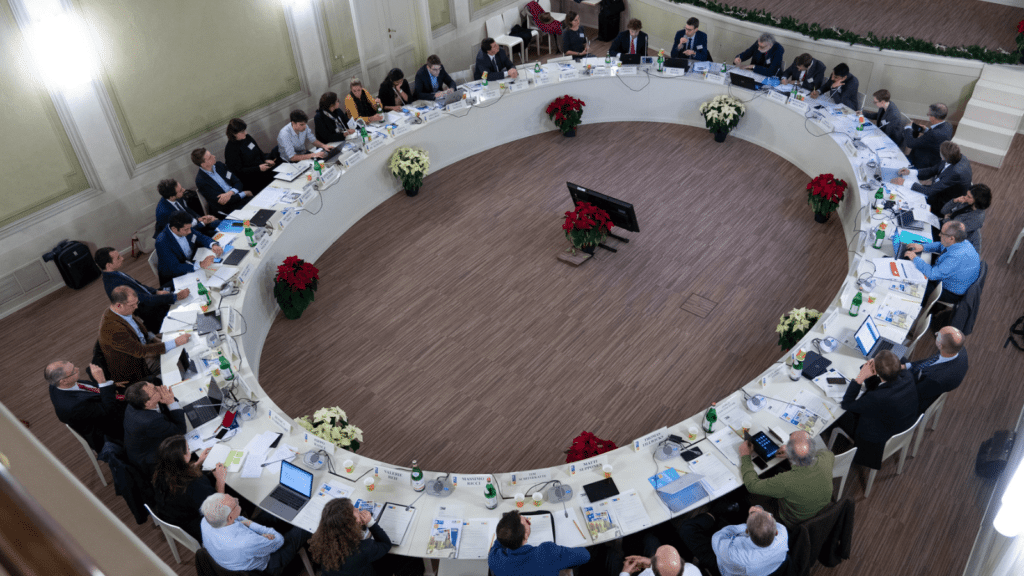
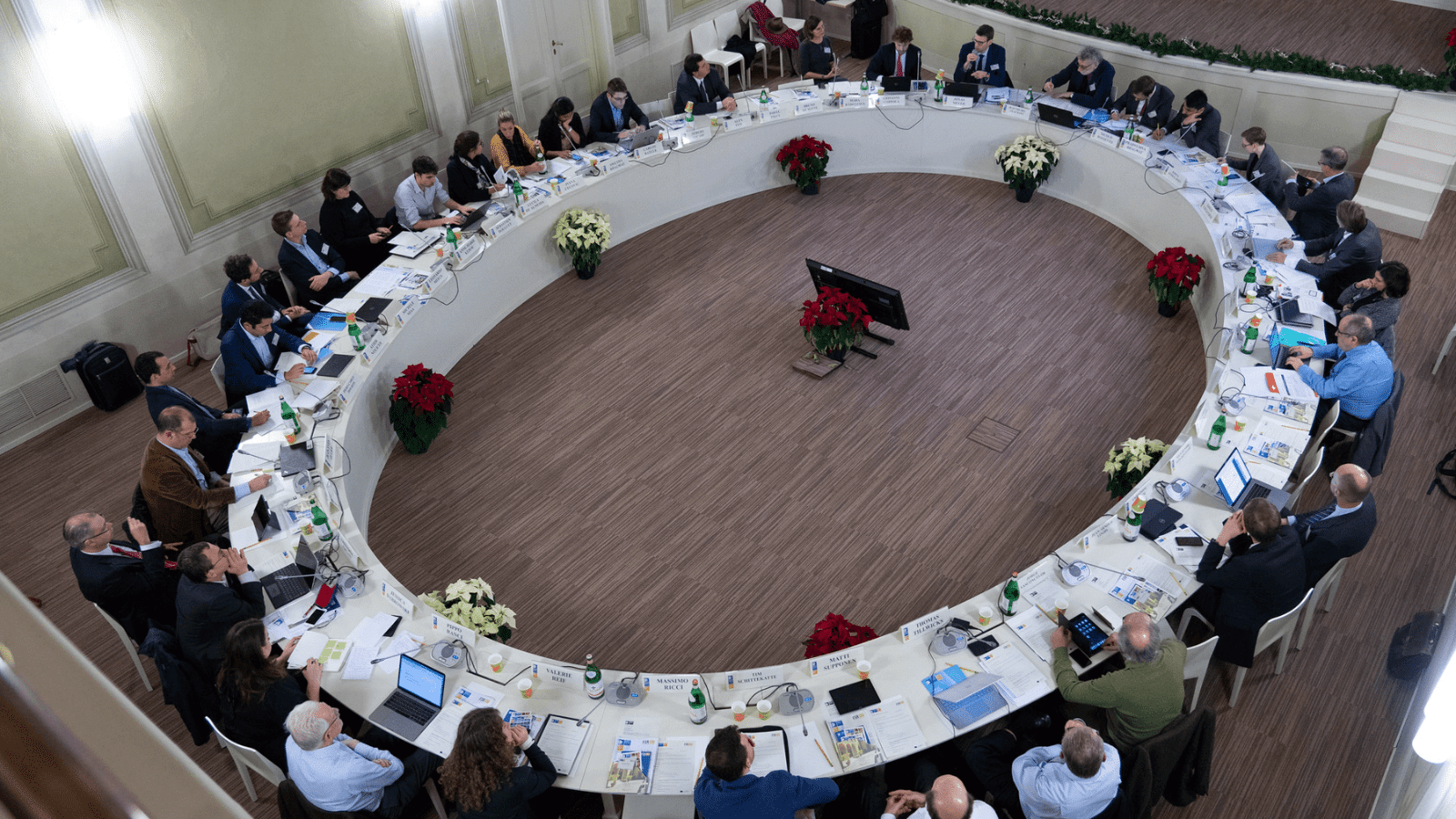
The programme of the academic conference will cover some of the main climate policies at the EU, national, and subnational levels. It will include five plenary speeches and academic sessions focusing on carbon pricing and energy transition.
Simone Borghesi, Director of the FSR Climate, Professor and Deputy Rector for International Relationships at the University of Siena, will chair the conference.
The guest speakers include:
· Estelle Cantillon (Université Libre de Bruxelles)
· Stefano Carattini (Georgia State University)
· Mireille Chiroleu-Assouline (Paris School of Economics, University of Paris 1 Panthéon-Sorbonne)
· Philippe Delacote (INRAE and the Climate Economics Chair)
· Andreas Lange (University of Hamburg)
Call for papers
The Conference Scientific Committee welcomes economic and interdisciplinary research contributions. Applicants are warmly invited to submit papers focusing on the following topics, among others:
· Carbon pricing, emissions trading, and environmental taxation;
· Energy transition, energy efficiency and renewable energy;
· Biodiversity and ecosystem services.
The presenting author should send the submissions, including the title, abstract and full text, in PDF format by Monday, 28th September 2026, midnight.
The Conference Scientific Committee will evaluate submitted papers, and FSR Climate will communicate the results by Friday, 11th October 2026.
File upload requirements:
– Maximum file size: 2MB and
– File format: PDF only
Participation fees
· Student (presenting a paper): 280 EUR
· Speaker (presenting a paper): 430 EUR
· Participant (not presenting): 520 EUR
The fee includes catering during the conference and a social event. Registration and logistics details will be available on this page closer to the date.
Organisers and funding
The Conference is organised by the Florence School of Regulation – Climate with the support of EAERE.
This year’s conference is co-financed by the EU-funded LIFE NETS project, which aims to strengthen knowledge, transparency, and cooperation around carbon pricing and emissions trading in Europe and beyond.
Important Dates
28 September 2026: Deadline for submissions
11 October 2026: Notification of acceptance
30 November – 2 December 2026: FSR Climate Annual Conference
Further information
For further information, please contact FSRClimate@eui.eu
Don’t miss any update on our events
Sign up for free and access the latest events from our community.
More on the topic










FSR – MIT CEEPR Annual Conference on energy and climate policy
The first edition of the conference will take place in Florence in October 2026, bringing together leading scholars, policymakers, regulators, and industry experts from both sides of the Atlantic.
The European University Institute (EUI)’s Florence School of Regulation (FSR) and the Massachusetts Institute of Technology (MIT)’s Center for Energy and Environmental Policy Research (CEEPR) team up on the organisation of a high-level academic conference, addressing the most pressing energy and climate issues.
As the first instalment of an annual joint event, the 2026 CEEPR-FSR Conference on the Future of Energy and Climate Policy will take place in Florence at EUI premises in October 2026 to engage with public and private decision makers as well as global thought leaders.
Building on the well-established network around the Florence School of Regulation, the CEEPR-FSR conference will include high-level policy makers and regulators from European and national institutions, senior representatives of companies supporting the work of CEEPR or donors at FSR, as well as leading scholars from the two academic institutions and intellectual partners around the world. The conference will focus on the latest developments in energy and climate policy.
As a lead-up to the first edition of the conference in 2026, over the next year, FSR and CEEPR will intensify the cooperation on a number of initiatives, including joint online debates, interviews, newsletters and blogs.
This initiative builds on both institutions’ longstanding commitment to thought leadership and policy impact in the energy and climate field.
Don’t miss any update on our events
Sign up for free and access the latest events from our community.
More on the topic






1st Florence Maritime Regulation Conference
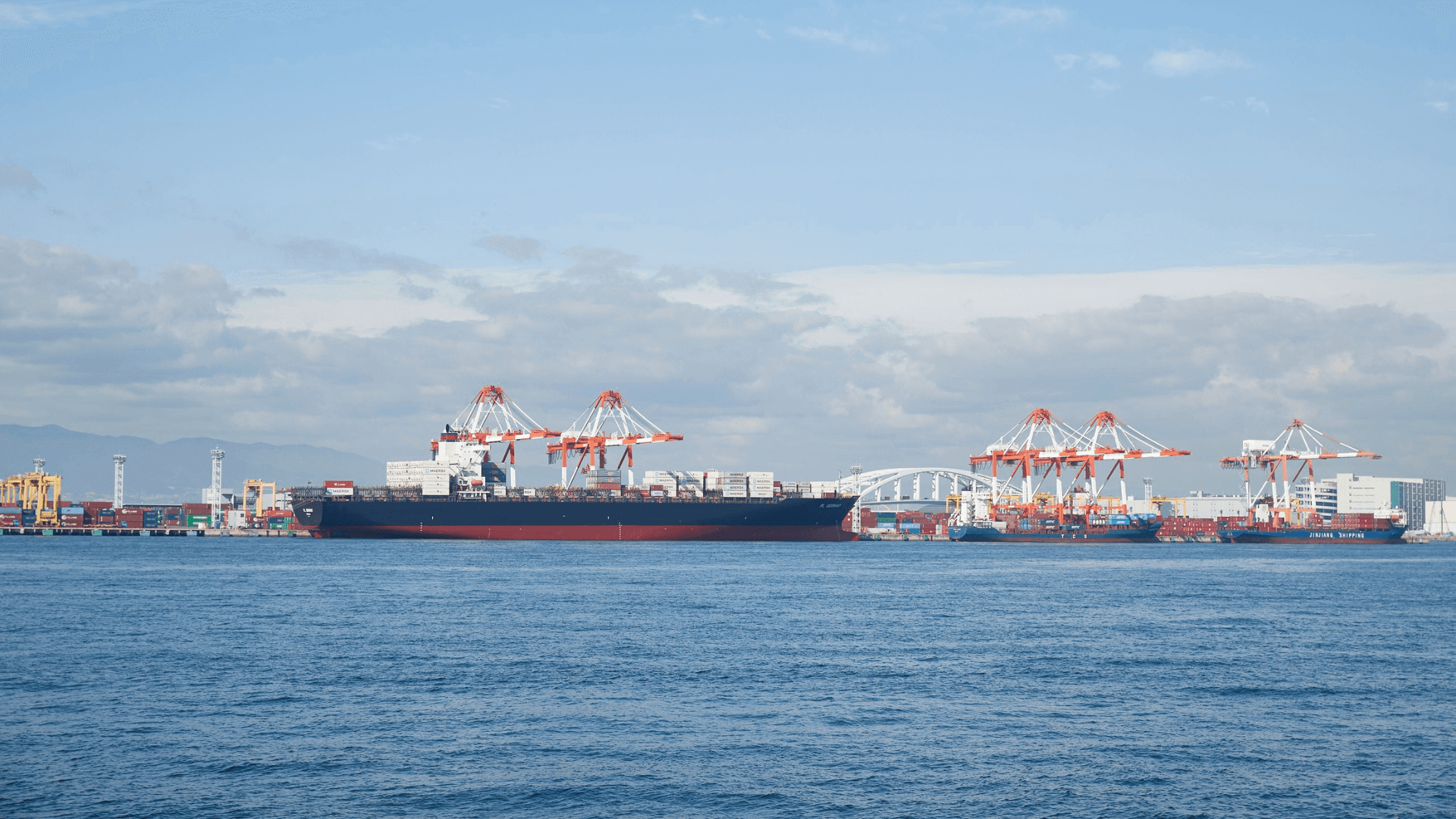
The 1st Florence Maritime Regulation Conference aims to discuss regulatory advancements that accelerate the competitiveness and sustainable development of shipping, ports, and related maritime supply chains in the EU and beyond.
Shipping, ports, and related supply chains are cornerstones of the European economy and world trade, which are shaped by regulatory initiatives developing at national, regional, or global scales. The European Union is currently developing a comprehensive strategy to support the long-term competitiveness of the maritime sector. Multiple recent calls for evidence, addressing either exclusively sectoral issues (i.e., Maritime Industrial Strategy, Ports Strategy, the Sustainable Transport Investment Plan, etc) or broader themes affecting maritime transport (i.e., state aid, foreign direct investment, energy security circularity, etc), aim to frame the current and future regulatory framework for European shipping, ports and the broader maritime cluster.
The 1st Florence Maritime Regulation Conference is a platform where academics, selected industry representatives, and policymakers can engage in an open debate on innovative approaches to maritime-related regulation. The scope of the Conference will be to find practical solutions through rigorous academic dialogue and constructive Debate.
This Conference is part of Transport Week, which includes three academic conferences focusing on maritime, Rail, and Aviation regulation, as well as the Summer School on Transport Regulation, a forum for discussion on transport regulation.
The Conference organisers are seeking original papers on topics ranging from regulatory challenges to sustainable transport. Contributions that employ multidisciplinary and interdisciplinary approaches to regulation, and that combine academic and practical perspectives, are highly encouraged. The Conference is intended for academics, academically minded practitioners and PhD researchers. The best papers will be eligible for publication in the book series Challenges in Transport Regulation in Europe and Beyond , published by Edward Elgar.
The Conference is organised by the Transport Area of the Florence School of Regulation of the European University Institute, in collaboration with the Jean Monnet Chair in European Port Policy, University of Piraeus, and will take place in Florence (Italy).
Conference Structure
The format of the Florence Maritime Regulation Conference will be the following:
- Presentation of Academic Papers (20´/Paper approx.)
- Feedback and Debate around the Papers (20´/Paper approx.)
This is a 1-day conference, aiming to discuss around 10 papers and engage a selected group of 30/40 individuals, including leading academics, high-level stakeholder representatives, and public officials, in a fruitful policy debate.
Timeline
Submission of the Abstract by 15th January 2026 using the form. For any issue regarding the submission, please contact Ms Elodie Petrozziello at fsr.transport@eui.eu
Notification of Acceptance by 15th February 2026;
Submission of the Full Paper by 15th of June 2026; participants who fail to submit a full paper by this deadline will be automatically removed from the programme.
Conference on 17th July2026 in Florence (Italy).
Guidelines for the abstract
- 600-1000 words (abstract);
- Title of the paper & keywords;
- Name of the author(s) and full address of the corresponding author;
- The aim and methodology of the paper, and
- Results obtained or expected
Organising committee
Juan Montero | Director of the Transport Area of the FSR, Professor of Administrative Law and Regulation in UNED University (Madrid)
Thanos Pallis | Senior Scientific Advisor, Transport Area of the FSR; and Professor (Jean Monnet Chair in European Port Policy), Department of Maritime Studies, University of Piraeus, Greece.
Elodie Petrozziello | Research Associate of the Transport Area of the FSR
Fee
Free Attendance, but registration is required.
At the EUI and the Robert Schuman Centre, we are dedicated to removing barriers and providing equal opportunities for everyone. Please indicate in the registration form your accessibility needs, if any. Alternatively, you can contact the logistics organiser of the event.
At FSR, we actively work to achieve gender-balanced representation at all our events. As a platform that connects diverse voices and perspectives in the sector, we strongly value inclusive and gender-balanced panel debates and training courses.
Don’t miss any update on our events
Sign up for free and access the latest events from our community.




5th Florence Rail Regulation Conference

The 5th Florence Rail Regulation Conference aims to discuss advancements for accelerating the growth of the railways in the EU.
The 5th Florence Rail Regulation Conference aims to discuss advancements for accelerating the growth of the railways in the EU. This conference is a space where academics, selected industry representatives, and policymakers can debate freely on fresh approaches to rail regulation. The scope of the conference will be to find practical solutions through rigorous academic dialogue and constructive debate.
This conference is part of Transport Week, which includes three academic conferences focusing on Rail, Aviation and Maritime regulation and a Summer School on Transport Regulation, a forum for discussion on transport regulation.
The Conference organizers are looking for original papers on topics including competition in and for the market, capacity regulation, performance regulation, financing of infrastructure, high-speed passenger services, freight services, etc. Contributions that employ multidisciplinary and interdisciplinary approaches to regulation and that combine academia and practice are highly encouraged. The conference is intended for academics, academically minded practitioners and PhD researchers. The best papers will be eligible for publication in the book series Challenges in Transport Regulation in Europe and Beyond , published by Edward Elgar.
The Conference is organized by the Transport Area of the Florence School of Regulation of the European University Institute and will take place in Florence (Italy).
Conference Structue
The format of the Florence Conference on the Regulation of Railways will be the following:
- Presentation of Academic Papers (20´/Paper aprox.)
- Feedback and Debate around the Papers (20´/Paper aprox.)
This is a 1-day conference, aiming to discuss 10/12 papers and engage a selected group of 30/40 individuals, including leading academics, high-level stakeholder representatives, and public officials, into a fruitful policy debate.
Timeline
Submission of the Abstract by 15th January 2026 using the form. For any issue regarding the submission, please contact Ms Elodie Petrozziello at fsr.transport@eui.eu
Notification of Acceptance by 15th February 2026;
Submission of the Full Paper by 15th of June 2026; participants who fail to submit a full paper by this deadline will be automatically removed from the programme;
Conference on 13th July2026 in Florence (Italy).
Guidelines for the abstract
600-1000 words (abstract);
Title of the paper & keywords;
Name of the author(s) and full address of the corresponding author;
The aim and methodology of the paper; and
Results obtained or expected
Organising committee
Juan Montero | Director of the Transport Area of the FSR, Professor of Administrative Law and Regulation in UNED University (Madrid)
Matthias Finger | Senior Scientific Advisor of the Transport Area of the FSR. EPFL, Professor Emeritus
Elodie Petrozziello | Research Associate of the Transport Area of the FSR
Fee
Free Attendance, but registration will be required
At the EUI and the Robert Schuman Centre, we are dedicated to removing barriers and providing equal opportunities for everyone. Please indicate in the registration form your accessibility needs, if any. Alternatively, you can contact the logistics organiser of the event.
At FSR, we actively work to achieve gender-balanced representation at all our events. As a platform that connects diverse voices and perspectives in the sector, we strongly value inclusive and gender-balanced panel debates and training courses.
Don’t miss any update on our events
Sign up for free and access the latest events from our community.
3rd Florence Aviation Regulation Conference

The 3rd Florence Aviation Regulation Conference aims to discuss current and future economic and regulatory policies relating to European air transport.
The conference brings together academics, selected industry representatives, and policymakers. The scope of each year’s conference is to find practical solutions through rigorous academic dialogue and constructive debate.
This conference is part of Transport Week, which includes three academic conferences focusing on Aviation, Rail, and maritime regulation, as well as a Summer School on transport regulation, a forum for discussion on transport regulation.
The Conference organisers are seeking original papers on topics that affect European air transport, including regulatory challenges, resilience and competitiveness, sustainable aviation, investments, digitalisation, and innovation in the aviation sector (such as ramping up the development of alternative fuels and U-Space). Contributions that employ multidisciplinary and interdisciplinary approaches to regulation, and that combine academic and practical perspectives, are highly encouraged. The conference is intended for academics, academically minded practitioners, and PhD researchers. The best papers will be eligible for publication in a book on Transport Regulation in Europe, to be published by a leading publisher biannually.
The Conference is co-organised by the Transport Area of the Florence School of Regulation of the European University Institute and the International Institute of Air and Space Law of Leiden University. The Conference will take place in Florence (Italy).
Conference Structure
The Florence Conference on the Regulation of Aviation has the following format:
- Presentation of Academic Papers (ca. 20 minutes/paper)
- Feedback and Debate around the Papers (ca. 20 minutes/paper)
This is a full-day conference, aiming to discuss 10-12 papers and engage a selected group of 30-40 individuals, including leading academics, high-level stakeholder representatives, and public officials in fruitful policy debate.
Timeline
Submission of the Abstract by 15th January 2026 using the relevant form. For any issue regarding the submission, please contact Ms Elodie Petrozziello at fsr.transport@eui.eu.
Notification of Acceptance by 15th February 2026;
Submission of the Full Paper by 15th of June 2026; participants who fail to submit a full paper by this deadline will be automatically removed from the programme;
Conference on 17th July2026 in Florence (Italy).
Guidelines for the abstract
- 600-1000 words (abstract);
- Title of the paper & keywords;
- Name of the author(s) and full address of the corresponding author;
- The aim and methodology of the paper; and
- Results obtained or expected
Organising committee
Juan Montero | Director of the Transport Area of the FSR, Professor of Administrative Law and Regulation in UNED University (Madrid)
Steven Truxal | Part-time Professor, Transport Area FSR, Florence School of Regulation. Full Professor of Air and Space Law, and Director of the Institute of Air and Space Law at Leiden University.
Elodie Petrozziello | Research Associate of the Transport Area of the FSR
At the EUI and the Robert Schuman Centre, we are dedicated to removing barriers and providing equal opportunities for everyone. Please indicate in the registration form your accessibility needs, if any. Alternatively, you can contact the logistics organiser of the event.
At FSR, we actively work to achieve gender-balanced representation at all our events. As a platform that connects diverse voices and perspectives in the sector, we strongly value inclusive and gender-balanced panel debates and training courses.
Don’t miss any update on our events
Sign up for free and access the latest events from our community.
Rail Service Facilities in the European Union
28th Florence Rail Forum
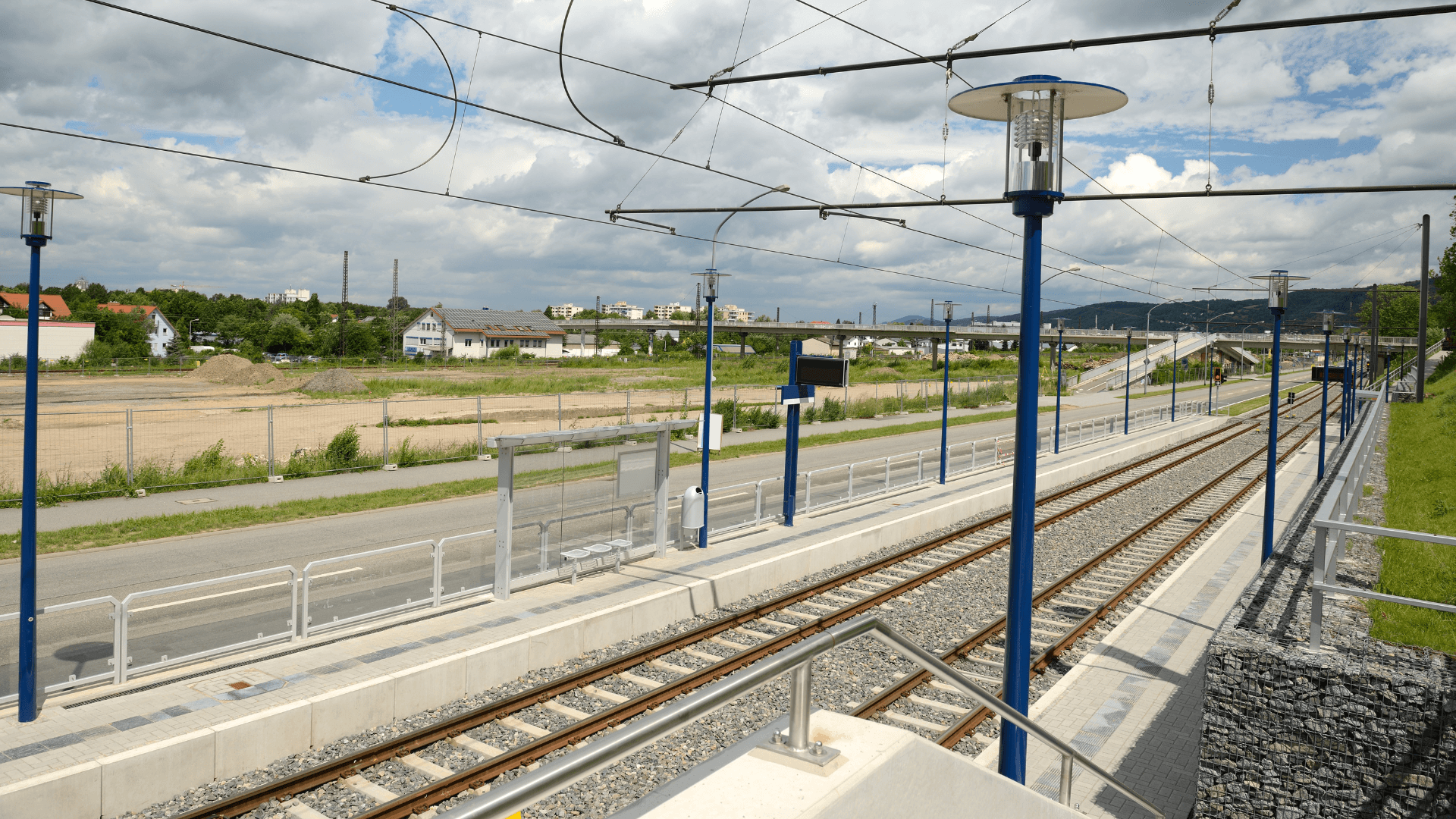
During this Forum, experts will discuss how to ensure fair, transparent, and efficient access to rail service facilities, addressing regulatory approaches, business models, and coordination challenges in the context of the Single European Railway Area and the High-Speed Plan.
Rail service facilities, ranging from maintenance depots to refuelling stations, marshalling yards, and freight terminals, are indispensable components of the European rail system. As EU rail markets evolve toward greater liberalisation and cross‑border integration, ensuring fair, transparent, and efficient access to such facilities has become a cornerstone of the Single European Railway Area.
In November 2025, the European Commission launched the High-Speed Plan, aiming to deliver a well-functioning, faster high-speed rail network by 2040. To enable this, one key action is removing entry barriers for new high-speed operators by ensuring better coordination of track capacity, fair track access charges, and non-discriminatory access to service facilities. For freight, and especially single‑wagonload operations, service facilities constitute an essential part of the business model. Users face issues related to charges, access conditions, neutrality, and revenue‑management practices that can disproportionately affect competitiveness. Another pressing question is whether operators can feasibly build their own facilities, or whether high investment costs mean only dominant players can, raising concerns about replicability, market foreclosure, and possible unbundling requirements. Some facilities remain natural monopolies with high sunk costs, while others operate in more contestable environments, making a one‑size‑fits‑all approach potentially burdensome or misaligned with market realities. Examples such as UK regulatory decisions on strategic assets, like the Channel Tunnel, illustrate the challenges of balancing investment incentives, fair access, and competitive neutrality. Hence, new rules on rail capacity and service facilities are under discussion at the European level, emphasising harmonisation, digitalisation, and cross-border coordination.
The Forum, co-organised by the Transport Area of the Florence School of Regulation together with the EC’s DG MOVE, will tackle the following topics:
· Asymmetrical regulatory approach to service facilities: Is a single EU‑wide horizontal regulation justified? Should regulatory obligations vary according to market power? What are the lessons from the UK Channel Tunnel regulatory decision? What digitalisation and coordination requirements are needed? How to ensure neutrality and transparency in facility operations?
· Business models and relevance to different services: What are the business models for different service facilities? Should there be a different approach for service facilities supporting passenger service vs freight services? Are there specific requirements for service facilities for single‑wagonload freight? What distinguishes a standard shunting hill from a neutral shunting hill in terms of ownership, governance, and operational approach?
· Coordination between service facilities’ operators and rail infrastructure managers: How to ensure an effective coordination of service facilities and infrastructure network in the framework of the new Capacity Management Regulation? What digitalisation and coordination requirements are needed? How to ensure neutrality and transparency in facility operations? How to interface railway services effectively in ports with the main network?
Kindly note that registration is upon invitation only.
At the EUI and the Robert Schuman Centre, we are dedicated to removing barriers and providing equal opportunities for everyone. Please indicate in the registration form your accessibility needs, if any. Alternatively, you can contact the logistics organiser of the event.
At FSR, we actively work to achieve gender-balanced representation at all our events. As a platform that connects diverse voices and perspectives in the sector, we strongly value inclusive and gender-balanced panel debates and training courses.
Don’t miss any update on our events
Sign up for free and access the latest events from our community.

Carbon Markets and Climate Targets: Aligning Domestic and International Approaches

Session as part of the EUI Climate Week 2026
Several jurisdictions like the European Union have decided to use international carbon credits as a complement to domestic mitigation efforts. Questions arise about their implications for cost-effectiveness, environmental integrity, climate justice and equity, and incentives for domestic emissions reductions. The policy dialogue is part of the EU-funded project LIFE NETS – Net-Zero Emissions Trading Schemes – which runs from 2026-2028.
This session as part of EUI Climate Week aims to address the question of how countries have combined domestic climate targets with the use of international carbon credits, and what regulatory and governance safeguards may be needed to ensure that such credits reinforce rather than weaken domestic climate action.
The event is organised by the Climate area at the Florence School of Regulation, in collaboration with the Florence School of Transnational Governance and the Policy Outreach Committee of EAERE (the European Association of Environmental and Resource Economists).
Opening remarks: Simone Borghesi, Florence School of Regulation, EUI
Presentation of Background Report: Marie Raude, Florence School of Regulation, EUI
Panelists:
- Toshi Arimura, Waseda University
- Carolyn Fischer, World Bank
- Dirk Forrister, IETA
- Injy Johnstone, Oxford Net Zero
- Sebastien Paquot, European Commission
Conclusion: Simone Borghesi, Florence School of Regulation, EUI
More information and the full programme of the EUI Climate Week 2026 can be found here.
Don’t miss any update on our events
Sign up for free and access the latest events from our community.
More on the topic


Electrifying EU: from Commission plans to real progress
This session is part of the EUI Climate Week 2026
Electrification is one of the EU’s most powerful levers for decarbonisation, enhancing energy security and boosting industrial competitiveness. By electrifying the economy based on zero-emission sources, the use of fossil fuels can be limited and the emissions can be significantly reduced. Currently electricity accounts for only 25% of the EU’s final energy consumption. In 2024, more than 47% of electricity generation came from renewable energy sources. The share of renewables in the electricity mix is growing rapidly, although it continues to face numerous barriers, from insufficient grid development to limited system flexibility and high costs.
This session as part of EUI Climate Week aims to address the question of what factors are slowing Europe’s electrification, which reforms are needed to accelerate it, and how affordable electricity prices for households and businesses can be ensured.
Chair: Joanna Pandera, European University Institute and Forum Energii
Speakers:
- Leonardo Meeus, European University Institute
- Marco Mensink, Cefic
- Monika Morawiecka, RAP
- Jan Rosenow, Oxford University
Conclusion: Joanna Pandera, European University Institute and Forum Energii
More information and the full programme of the EUI Climate Week 2026 can be found here.
Don’t miss any update on our events
Sign up for free and access the latest events from our community.
More on the topic


FSR Climate Annual Conference on the Economic Assessment of European Climate Policies
FSR Annual Climate Conference

Join this two-day academic conference, which will follow the high-level policy conference on the assessment and acceptability of net-zero climate policies.
The Climate Area of the FSR is pleased to announce its 11th Annual Conference on the Economic Assessment of European Climate Policies to take place at the European University Institute in Florence on Tuesday, 2 and Wednesday, 3 December 2025. The two-day academic conference will follow a high-level policy conference on the assessment and acceptability of net-zero climate policies on Monday, 1 December 2025.
The programme of the academic conference will cover some of the main climate policies at the EU and national and subnational levels. It will include a keynote speech, plenary speeches, as well as academic sessions focusing on carbon pricing and energy transition. To honour the memory of David W. Pearce on the 20th anniversary of his passing, a dedicated roundtable discussion on his legacy will be organised in collaboration with EAERE.
Simone Borghesi, Director of the FSR Climate, Professor and Deputy Rector for International Relationships at the University of Siena and President of the European Association of Environmental and Resource Economists (EAERE), will chair the conference.
FEES
- Student (presenting a paper): 280 EUR
- Speaker (presenting a paper): 430 EUR
- Participant (not presenting): 520 EUR
The fee includes two lunches, a cocktail dinner in the city centre of Florence, and four coffee breaks. Registration and logistics details will be available closer to the date on this page. Participants in the academic conference are warmly invited to attend the high-level conference on the assessment and acceptability of net-zero climate policies in Europe and beyond for free, scheduled on Monday, 1 December.
This event is organised with the support of EAERE.
At the EUI and the Robert Schuman Centre, we are dedicated to removing barriers and providing equal opportunities for everyone. Please indicate in the registration form your accessibility needs, if any. Alternatively, you can contact the logistics organiser of the event.
Don’t miss any update on our events
Sign up for free and access the latest events from our community.
More on the topic
Conference on evidence-based climate policy

Join the dialogue on future directions for climate policy in Europe.
On 1 December 2025, the EUI will host a hybrid conference on evidence-based climate policy, marking the conclusion of two major European research projects: LIFE COASE and CAPABLE. Following the event, the 11th Annual Conference on the Economic Assessment of European Climate Policies will take place from 2-3 December, allowing interested participants to join 3 days of dense discussion on the current state of climate policy.
LIFE COASE, co-funded by the EU LIFE Programme, has established an observatory dedicated to the assessment of the EU Emissions Trading System (EU ETS), providing a reference point for research and policy development in this area. CAPABLE, funded under the Horizon Europe programme, has examined the economic, social, and political dimensions of climate policy design, with a focus on improving policy acceptability and feasibility.
The conference will present key findings from both projects, covering topics such as the effectiveness and global impact of the EU ETS, the distributional effects of carbon pricing, and the conditions under which climate policies can gain broader societal acceptance. The event will bring together researchers, policymakers, and stakeholders to reflect on the outcomes of three years of work and to foster dialogue on future directions for climate policy in Europe.
At the EUI and the Robert Schuman Centre, we are dedicated to removing barriers and providing equal opportunities for everyone. Please indicate in the registration form your accessibility needs, if any. Alternatively, you can contact the logistics organiser of the event.
Don’t miss any update on our events
Sign up for free and access the latest events from our community.
More on the topic
Clean Industrial Transformation: Ukraine’s Strategic Role in the EU’s Agenda

On the eve of the Ukraine Recovery Conference, which will take place in Rome, Italy on 10-11 July, 2025, the Florence School of Regulation and DiXi Group will hold a half-day conference on Ukraine’s integration into the EU and in its role in the implementation of the EU Clean Industrial Deal.
The objective of the conference is to explore the sectors, technologies and particular steps which can help both Ukraine and the European Union to benefit from future Ukraine’s membership and how the reconstruction of Ukraine will help the EU in increasing its competitiveness and simultaneously preparing Ukraine to the accession and full integration in the EU single market.Agenda
Panel 1
Gas sector integration for better prices to consumers and strengthened energy security
Gas will continue to play a crucial role in the European Union’s journey towards decarbonization, serving as one of the three key pillars of the Action Plan for Affordable Energy under the Clean Industrial Deal. In this context, Ukraine’s gas resources and infrastructure offer strategic advantages that can significantly enhance the EU’s energy security and market stability.
Panel 2
Discovering Ukraine’s renewable energy and manufacturing potential for Europe’s energy transition
With the adoption of Directive 2018/2001 on the promotion of renewable energy, the European Union increased its overall renewable energy target from 32% to 42.5% of gross final energy consumption. Ukraine’s strategic position as a producer of renewable energy, particularly in biomass and biomethane, coupled with its potential in SAF development, can significantly contribute to the EU’s renewable energy targets and energy independence. Strengthening EU-Ukraine cooperation in renewable energy not only supports the EU’s decarbonization agenda but also enhances regional energy security and economic stability.
Panel 3
Nuclear energy for a strengthened Europe
As nuclear power continues to be a key component of the EU’s electricity generation mix, Ukraine is well-positioned to make a substantial contribution in this area. Ukraine’s advanced nuclear infrastructure, crisis management expertise, and strategic approach to nuclear fuel diversification uniquely position it as a valuable partner for the EU’s nuclear energy sector and can significantly contribute to enhancing the EU’s energy security.
The full programme will be available soon.
Don’t miss any update on our events
Sign up for free and access the latest events from our community.
Speakers
More on the topic










2nd Florence Aviation Regulation Conference

Introduction
The 2nd Florence Aviation Regulation Conference aims to discuss the current and future economic and regulatory policies relating to air transport. The conference brings together academics, selected industry representatives, and policymakers. The scope of the conference will be to find practical solutions through rigorous academic dialogue and constructive debate. This conference is part of Transport Week, which includes two academic conferences focusing on Aviation and Rail regulation, and a Summer School on Transport Regulation. Here, representatives from the European Commission, practitioners, and academics can discuss priorities for the next commission.
The Conference organisers are looking for original papers on topics that range from regulatory challenges, to sustainable aviation, to green financing and innovation in the aviation sector (ranging from alternative fuels to drones). Contributions that employ multidisciplinary and interdisciplinary approaches to regulation and that combine academia and practice are highly encouraged. The conference is intended for academics, academically minded practitioners and PhD researchers. The best papers will be eligible for publication in a book on Transport Regulation in Europe, to be published by a leading publisher biennially.
Conference Structure
The format of the Florence Conference on the Regulation of Aviation will be the following:
- Keynote Speech (40´aprox.)
- Presentation of Academic Papers (20´/Paper aprox.)
- Feedback and Debate around the Papers (20´/Paper aprox.)
This is a 1-day conference, aiming to discuss 10/12 papers and engage a selected group of 30/40 individuals, including leading academics, high-level stakeholder representatives, and public officials, into a fruitful policy debate.
Papers to be presented at the conference:
- Existing framework limits optimal environmental pricing through airport charges, Ernst-Jan Heuten
- Adaptive Airline Strategies under the Evolving EU ETS: A Path toward Sustainable Aviation, Fabio Simoni da Silva
- Regulation of Non-CO2 Effects in Aviation: Addressing Regulatory Gaps between Civil and State Aircraft in International Airspace, Martin Hock, Felix Schmermer, Soeren C. Schwuchow, Anita Demuth, Harry Lehmann
- The interdependence of aeronautical and commercial activities, Antonio Forcina, Michele Granatstein, Jamie Inglis, Leonardo Mautino
- Interaction of Certification and Standards for e-SAF production, Maryna Hritsyshyna
- Optimal Subsidy Design in Market Settings with Intertemporal Price Discrimination, Miguel Blanco Cocho
- Multimodal interoperability: Can high-speed trains become tomorrow’s feeder flights of major airport hubs?, Giacomo Potenza, Eva Valeri
- Regulatory Interactions between CORSIA and the EU ETS ‘Full Scope’ in Mitigating Aviation Emissions, Garry Gumelar Pratama
- Towards the Implementation of the AI Act in Aviation: Challenges and Strategies, Elisa Spiller, Marco Sanchi, Federico Galli, Paola Lanzi, Giuseppe Contissa
- Ensuring Social Sustainability in Europe While Transitioning to a Net-Zero Aviation Industry, Andrea Trimarchi
Timeline
- Submission of the Abstract by 7 February 2025 using the form. For any issue regarding the submission, please contact Ms Elodie Petrozziello at fsr.transport@eui.eu
- Notification of Acceptance by 21st of February 2025;
- Submission of the Full Paper by 16th of June 2025; participants who fail to submit a full paper by this deadline will be automatically removed from the programme;
- Conference on 11 July2025 in Florence (Italy).
Guidelines for the abstract
- 400-600 words (abstract);
- Title of the paper & keywords;
- Name of the author(s) and full address of the corresponding author;
- The aim and methodology of the paper; and
- Results obtained or expected
Organising committee
Juan Montero | Director of the Transport Area of the FSR, Professor of Administrative Law and Regulation at UNED University (Madrid)
Steven Truxal | Scientific Advisor FSR Transport, and Full Professor of Air and Space Law, and Director of Institute of Air and Space Law at Leiden University
Matthias Finger | Part-time professor and Deputy Director of the Transport Area of the FSR. EPFL, Professor Emeritus
Elodie Petrozziello | Research Associate of the Transport Area of the FSR
The Conference is co-organised by the Transport Area of the Florence School of Regulation of the European University Institute and the International Institute of Air and Space Law of Leiden University.
Please note that attendance at the conference is by invitation only.
Don’t miss any update on our events
Sign up for free and access the latest events from our community.