




Type of event: Conference
27th Florence Rail Forum: Financing High-Speed Rail

The 27th Florence Rail Forum brings together international experts, policymakers, and industry leaders to examine the evolving landscape of HSR financing.
The Forum, co-organised by the Transport Area of the Florence School of Regulation together with the UIC, will analyse financing models for High-Speed Rail, based on the Study prepared by FSR for the UIC, to be shared with the participants for comments during the forum, with the objective of drafting the final version.
This is a pivotal moment for the development of high-speed rail (HSR) networks at the European and international level. However, governments face increasing budgetary pressure, making the question of how to finance and deliver major rail projects more critical than ever. The European Commission’s Communication Connecting Europe through High-Speed Rail highlights HSR as a strategic driver of competitiveness, cohesion, job creation and climate action. Despite this potential, Europe is not progressing fast enough: high-speed traffic has grown only 17% since 2015, and major gaps remain, particularly in central and eastern Europe. Completing the TEN-T high-speed network by 2040 will require an estimated €345 billion. In 2026, the Commission aims to present the ‘High-Speed Rail Deal’ as a multilateral commitment to mobilise investment for Europe’s priority HSR projects. This initiative would provide long-term certainty to investors by clarifying EU and national commitments and paving the way for targeted regional dialogues to accelerate financing for strategic high-speed rail corridors. To meet these ambitions, HSR requires robust, sustainable, and innovative financing models. Drawing on global experience, it is possible to explore the strengths and limitations of public delivery models, the role of PublicPrivate Partnerships, and the emerging potential of Regulated Asset Base frameworks.
By providing a comparative, evidence-based view of financing tools and governance models, the event seeks to support informed decision-making and to contribute to a more sustainable, financially robust future for HSR worldwide.
The Forum will tackle the following questions:
• Improvements in Public Delivery (Rail funds, ETS, Corporate Finance): How can governments ensure predictable, long‑term funding cycles for HSR projects? What can be the role of transport/rail funds? What safeguards are needed to ensure ETS funds are devoted to high-speed rail? What role can corporate finance (e.g., green bonds) play in HSR?
• PPPs – Portugal, Czechia, and Tours–Bordeaux: In what scenarios is a PPP model preferable to traditional public procurement for HSR? How to derisk the projects? What are the defining features of the new HSRPPPs?
• RAB Models for High‑Speed Rail: What are the key advantages and challenges of applying a RAB model to HSR infrastructure? What lessons from other sectors are most relevant for rail RAB design? Is the institutional framework in rail ready to implement RAB?
Kindly note that this event is by invitation only.
At FSR, we actively work to achieve gender-balanced representation at all our events. As a platform that connects diverse voices and perspectives in the sector, we strongly value inclusive and gender-balanced panel debates and training courses.
Don’t miss any update on our events
Sign up for free and access the latest events from our community.
More on the topic





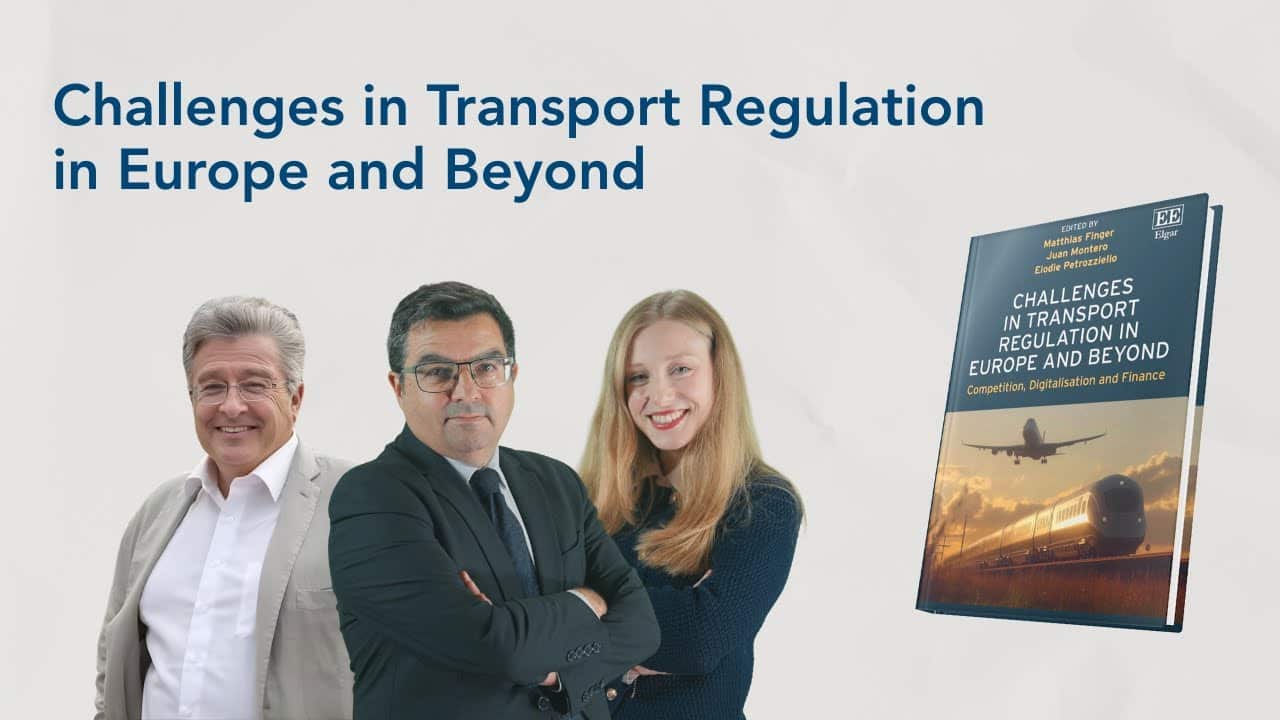

5th Florence Rail Regulation Conference
The 5th Florence Rail Regulation Conference aims to discuss advancements for accelerating the growth of the railways in the EU.
The 5th Florence Rail Regulation Conference aims to discuss advancements for accelerating the growth of the railways in the EU. This conference is a space where academics, selected industry representatives, and policymakers can debate freely on fresh approaches to rail regulation. The scope of the conference will be to find practical solutions through rigorous academic dialogue and constructive debate.
This conference is part of Transport Week, which includes three academic conferences focusing on Rail, Aviation and Maritime regulation and a Summer School on Transport Regulation, a forum for discussion on transport regulation.
The Conference organizers are looking for original papers on topics including competition in and for the market, capacity regulation, performance regulation, financing of infrastructure, high-speed passenger services, freight services, etc. Contributions that employ multidisciplinary and interdisciplinary approaches to regulation and that combine academia and practice are highly encouraged. The conference is intended for academics, academically minded practitioners and PhD researchers. The best papers will be eligible for publication in the book series Challenges in Transport Regulation in Europe and Beyond , published by Edward Elgar.
The Conference is organized by the Transport Area of the Florence School of Regulation of the European University Institute and will take place in Florence (Italy).
Conference Structue
The format of the Florence Conference on the Regulation of Railways will be the following:
- Presentation of Academic Papers (20´/Paper aprox.)
- Feedback and Debate around the Papers (20´/Paper aprox.)
This is a 1-day conference, aiming to discuss 10/12 papers and engage a selected group of 30/40 individuals, including leading academics, high-level stakeholder representatives, and public officials, into a fruitful policy debate.
Timeline
Submission of the Abstract by 15th January 2026 using the form. For any issue regarding the submission, please contact Ms Elodie Petrozziello at fsr.transport@eui.eu
Notification of Acceptance by 15th February 2026;
Submission of the Full Paper by 15th of June 2026; participants who fail to submit a full paper by this deadline will be automatically removed from the programme;
Conference on 13th July2026 in Florence (Italy).
Guidelines for the abstract
600-1000 words (abstract);
Title of the paper & keywords;
Name of the author(s) and full address of the corresponding author;
The aim and methodology of the paper; and
Results obtained or expected
Organising committee
Juan Montero | Director of the Transport Area of the FSR, Professor of Administrative Law and Regulation in UNED University (Madrid)
Matthias Finger | Senior Scientific Advisor of the Transport Area of the FSR. EPFL, Professor Emeritus
Elodie Petrozziello | Research Associate of the Transport Area of the FSR
Fee
Free Attendance, but registration will be required
Don’t miss any update on our events
Sign up for free and access the latest events from our community.
More on the topic

3rd Florence Aviation Regulation Conference
The 3rd Florence Aviation Regulation Conference aims to discuss current and future economic and regulatory policies relating to European air transport.
The conference brings together academics, selected industry representatives, and policymakers. The scope of each year’s conference is to find practical solutions through rigorous academic dialogue and constructive debate.
This conference is part of Transport Week, which includes three academic conferences focusing on Aviation, Rail, and maritime regulation, as well as a Summer School on transport regulation, a forum for discussion on transport regulation.
The Conference organisers are seeking original papers on topics that affect European air transport, including regulatory challenges, resilience and competitiveness, sustainable aviation, investments, digitalisation, and innovation in the aviation sector (such as ramping up the development of alternative fuels and U-Space). Contributions that employ multidisciplinary and interdisciplinary approaches to regulation, and that combine academic and practical perspectives, are highly encouraged. The conference is intended for academics, academically minded practitioners, and PhD researchers. The best papers will be eligible for publication in a book on Transport Regulation in Europe, to be published by a leading publisher biannually.
The Conference is co-organised by the Transport Area of the Florence School of Regulation of the European University Institute and the International Institute of Air and Space Law of Leiden University. The Conference will take place in Florence (Italy).
Conference Structure
The Florence Conference on the Regulation of Aviation has the following format:
- Presentation of Academic Papers (ca. 20 minutes/paper)
- Feedback and Debate around the Papers (ca. 20 minutes/paper)
This is a full-day conference, aiming to discuss 10-12 papers and engage a selected group of 30-40 individuals, including leading academics, high-level stakeholder representatives, and public officials in fruitful policy debate.
Timeline
Submission of the Abstract by 15th January 2026 using the relevant form. For any issue regarding the submission, please contact Ms Elodie Petrozziello at fsr.transport@eui.eu.
Notification of Acceptance by 15th February 2026;
Submission of the Full Paper by 15th of June 2026; participants who fail to submit a full paper by this deadline will be automatically removed from the programme;
Conference on 17th July2026 in Florence (Italy).
Guidelines for the abstract
- 600-1000 words (abstract);
- Title of the paper & keywords;
- Name of the author(s) and full address of the corresponding author;
- The aim and methodology of the paper; and
- Results obtained or expected
Organising committee
Juan Montero | Director of the Transport Area of the FSR, Professor of Administrative Law and Regulation in UNED University (Madrid)
Steven Truxal | Part-time Professor, Transport Area FSR, Florence School of Regulation. Full Professor of Air and Space Law, and Director of the Institute of Air and Space Law at Leiden University.
Elodie Petrozziello | Research Associate of the Transport Area of the FSR
Don’t miss any update on our events
Sign up for free and access the latest events from our community.
More on the topic

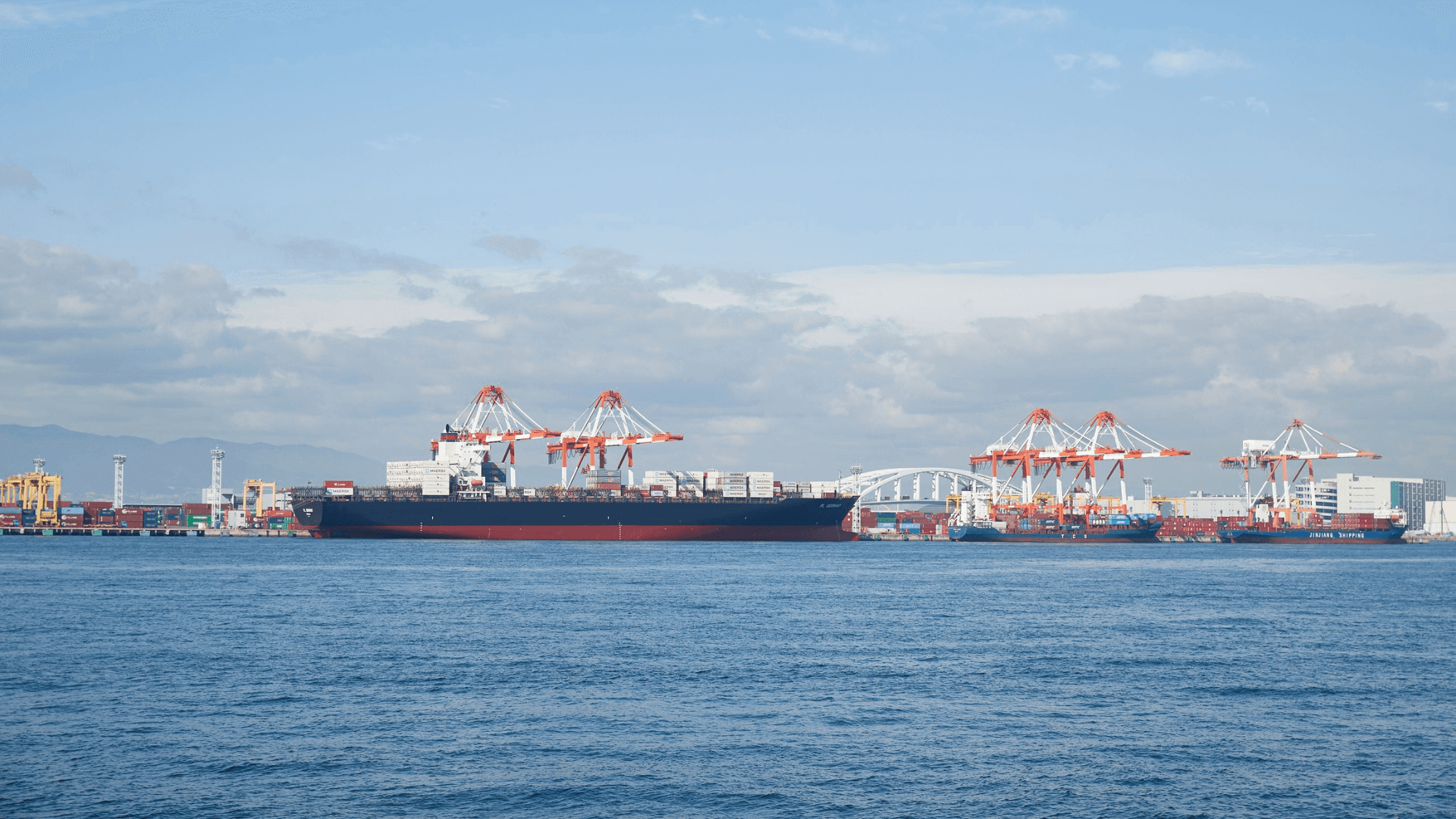
1st Florence Maritime Regulation Conference
The 1st Florence Maritime Regulation Conference aims to discuss regulatory advancements that accelerate the competitiveness and sustainable development of shipping, ports, and related maritime supply chains in the EU and beyond.
Shipping, ports, and related supply chains are cornerstones of the European economy and world trade, which are shaped by regulatory initiatives developing at national, regional, or global scales. The European Union is currently developing a comprehensive strategy to support the long-term competitiveness of the maritime sector. Multiple recent calls for evidence, addressing either exclusively sectoral issues (i.e., Maritime Industrial Strategy, Ports Strategy, the Sustainable Transport Investment Plan, etc) or broader themes affecting maritime transport (i.e., state aid, foreign direct investment, energy security circularity, etc), aim to frame the current and future regulatory framework for European shipping, ports and the broader maritime cluster.
The 1st Florence Maritime Regulation Conference is a platform where academics, selected industry representatives, and policymakers can engage in an open debate on innovative approaches to maritime-related regulation. The scope of the Conference will be to find practical solutions through rigorous academic dialogue and constructive Debate.
This Conference is part of Transport Week, which includes three academic conferences focusing on maritime, Rail, and Aviation regulation, as well as the Summer School on Transport Regulation, a forum for discussion on transport regulation.
The Conference organisers are seeking original papers on topics ranging from regulatory challenges to sustainable transport. Contributions that employ multidisciplinary and interdisciplinary approaches to regulation, and that combine academic and practical perspectives, are highly encouraged. The Conference is intended for academics, academically minded practitioners and PhD researchers. The best papers will be eligible for publication in the book series Challenges in Transport Regulation in Europe and Beyond , published by Edward Elgar.
The Conference is organised by the Transport Area of the Florence School of Regulation of the European University Institute, in collaboration with the Jean Monnet Chair in European Port Policy, University of Piraeus, and will take place in Florence (Italy).
Conference Structure
The format of the Florence Maritime Regulation Conference will be the following:
- Presentation of Academic Papers (20´/Paper approx.)
- Feedback and Debate around the Papers (20´/Paper approx.)
This is a 1-day conference, aiming to discuss around 10 papers and engage a selected group of 30/40 individuals, including leading academics, high-level stakeholder representatives, and public officials, in a fruitful policy debate.
Timeline
Submission of the Abstract by 15th January 2026 using the form. For any issue regarding the submission, please contact Ms Elodie Petrozziello at fsr.transport@eui.eu
Notification of Acceptance by 15th February 2026;
Submission of the Full Paper by 15th of June 2026; participants who fail to submit a full paper by this deadline will be automatically removed from the programme.
Conference on 17th July2026 in Florence (Italy).
Guidelines for the abstract
- 600-1000 words (abstract);
- Title of the paper & keywords;
- Name of the author(s) and full address of the corresponding author;
- The aim and methodology of the paper, and
- Results obtained or expected
Organising committee
Juan Montero | Director of the Transport Area of the FSR, Professor of Administrative Law and Regulation in UNED University (Madrid)
Thanos Pallis | Senior Scientific Advisor, Transport Area of the FSR; and Professor (Jean Monnet Chair in European Port Policy), Department of Maritime Studies, University of Piraeus, Greece.
Elodie Petrozziello | Research Associate of the Transport Area of the FSR
Fee
Free Attendance, but registration is required.
Don’t miss any update on our events
Sign up for free and access the latest events from our community.
More on the topic
FSR Climate Annual Conference on the Economic Assessment of European Climate Policies
FSR Annual Climate Conference

Join this two-day academic conference, which will follow the high-level policy conference on the assessment and acceptability of net-zero climate policies.
The Climate Area of the FSR is pleased to announce its 11th Annual Conference on the Economic Assessment of European Climate Policies to take place at the European University Institute in Florence on Tuesday, 2 and Wednesday, 3 December 2025. The two-day academic conference will follow a high-level policy conference on the assessment and acceptability of net-zero climate policies on Monday, 1 December 2025.
The programme of the academic conference will cover some of the main climate policies at the EU and national and subnational levels. It will include a keynote speech, plenary speeches, as well as academic sessions focusing on carbon pricing and energy transition. To honour the memory of David W. Pearce on the 20th anniversary of his passing, a dedicated roundtable discussion on his legacy will be organised in collaboration with EAERE.
Simone Borghesi, Director of the FSR Climate, Professor and Deputy Rector for International Relationships at the University of Siena and President of the European Association of Environmental and Resource Economists (EAERE), will chair the conference.
FEES
- Student (presenting a paper): 280 EUR
- Speaker (presenting a paper): 430 EUR
- Participant (not presenting): 520 EUR
The fee includes two lunches, a cocktail dinner in the city centre of Florence, and four coffee breaks. Registration and logistics details will be available closer to the date on this page. Participants in the academic conference are warmly invited to attend the high-level conference on the assessment and acceptability of net-zero climate policies in Europe and beyond for free, scheduled on Monday, 1 December.
This event is organised with the support of EAERE.
At the EUI and the Robert Schuman Centre, we are dedicated to removing barriers and providing equal opportunities for everyone. Please indicate in the registration form your accessibility needs, if any. Alternatively, you can contact the logistics organiser of the event.
Don’t miss any update on our events
Sign up for free and access the latest events from our community.
More on the topic





Conference on evidence-based climate policy
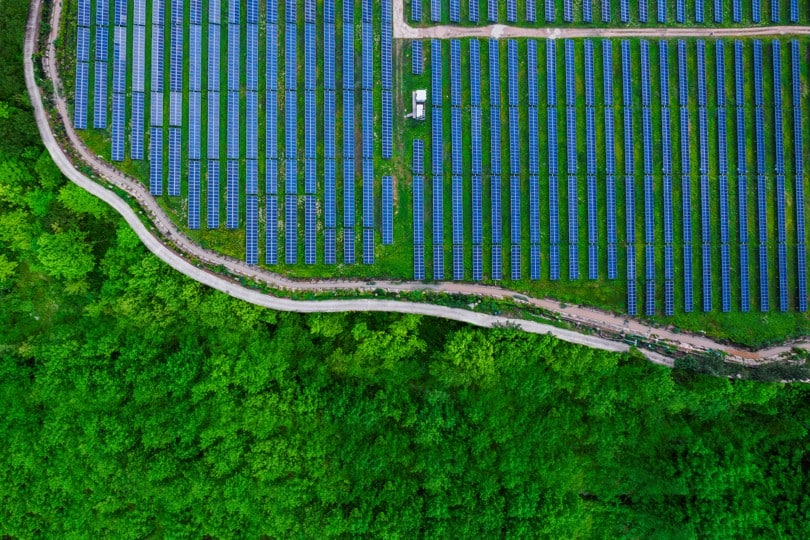
Join the dialogue on future directions for climate policy in Europe.
On 1 December 2025, the EUI will host a hybrid conference on evidence-based climate policy, marking the conclusion of two major European research projects: LIFE COASE and CAPABLE. Following the event, the 11th Annual Conference on the Economic Assessment of European Climate Policies will take place from 2-3 December, allowing interested participants to join 3 days of dense discussion on the current state of climate policy.
LIFE COASE, co-funded by the EU LIFE Programme, has established an observatory dedicated to the assessment of the EU Emissions Trading System (EU ETS), providing a reference point for research and policy development in this area. CAPABLE, funded under the Horizon Europe programme, has examined the economic, social, and political dimensions of climate policy design, with a focus on improving policy acceptability and feasibility.
The conference will present key findings from both projects, covering topics such as the effectiveness and global impact of the EU ETS, the distributional effects of carbon pricing, and the conditions under which climate policies can gain broader societal acceptance. The event will bring together researchers, policymakers, and stakeholders to reflect on the outcomes of three years of work and to foster dialogue on future directions for climate policy in Europe.
At the EUI and the Robert Schuman Centre, we are dedicated to removing barriers and providing equal opportunities for everyone. Please indicate in the registration form your accessibility needs, if any. Alternatively, you can contact the logistics organiser of the event.
Don’t miss any update on our events
Sign up for free and access the latest events from our community.
More on the topic







Clean Industrial Transformation: Ukraine’s Strategic Role in the EU’s Agenda
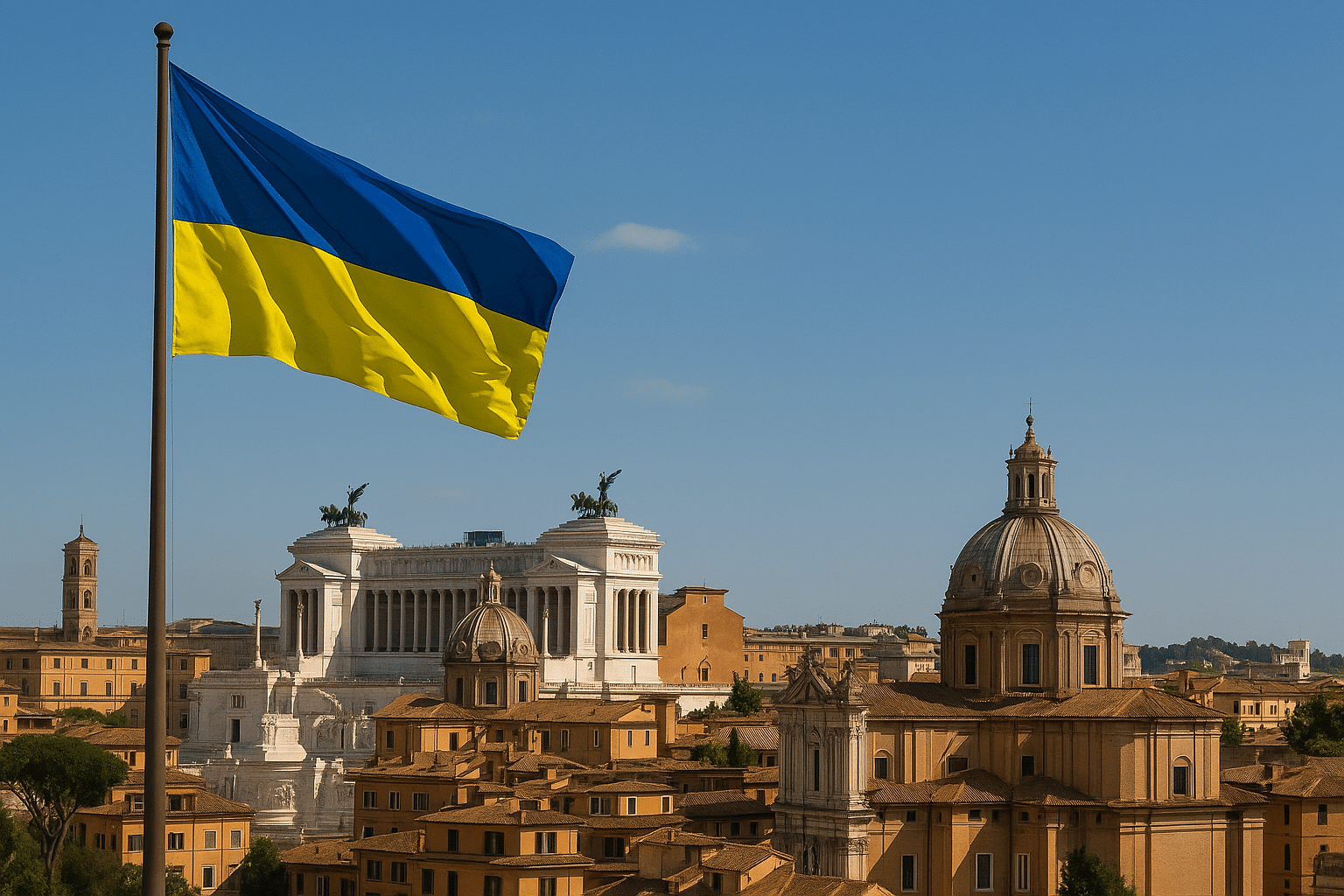
On the eve of the Ukraine Recovery Conference, which will take place in Rome, Italy on 10-11 July, 2025, the Florence School of Regulation and DiXi Group will hold a half-day conference on Ukraine’s integration into the EU and in its role in the implementation of the EU Clean Industrial Deal.
The objective of the conference is to explore the sectors, technologies and particular steps which can help both Ukraine and the European Union to benefit from future Ukraine’s membership and how the reconstruction of Ukraine will help the EU in increasing its competitiveness and simultaneously preparing Ukraine to the accession and full integration in the EU single market.Agenda
Panel 1
Gas sector integration for better prices to consumers and strengthened energy security
Gas will continue to play a crucial role in the European Union’s journey towards decarbonization, serving as one of the three key pillars of the Action Plan for Affordable Energy under the Clean Industrial Deal. In this context, Ukraine’s gas resources and infrastructure offer strategic advantages that can significantly enhance the EU’s energy security and market stability.
Panel 2
Discovering Ukraine’s renewable energy and manufacturing potential for Europe’s energy transition
With the adoption of Directive 2018/2001 on the promotion of renewable energy, the European Union increased its overall renewable energy target from 32% to 42.5% of gross final energy consumption. Ukraine’s strategic position as a producer of renewable energy, particularly in biomass and biomethane, coupled with its potential in SAF development, can significantly contribute to the EU’s renewable energy targets and energy independence. Strengthening EU-Ukraine cooperation in renewable energy not only supports the EU’s decarbonization agenda but also enhances regional energy security and economic stability.
Panel 3
Nuclear energy for a strengthened Europe
As nuclear power continues to be a key component of the EU’s electricity generation mix, Ukraine is well-positioned to make a substantial contribution in this area. Ukraine’s advanced nuclear infrastructure, crisis management expertise, and strategic approach to nuclear fuel diversification uniquely position it as a valuable partner for the EU’s nuclear energy sector and can significantly contribute to enhancing the EU’s energy security.
The full programme will be available soon.
Don’t miss any update on our events
Sign up for free and access the latest events from our community.
Speakers
More on the topic












2nd Florence Aviation Regulation Conference

Introduction
The 2nd Florence Aviation Regulation Conference aims to discuss the current and future economic and regulatory policies relating to air transport. The conference brings together academics, selected industry representatives, and policymakers. The scope of the conference will be to find practical solutions through rigorous academic dialogue and constructive debate. This conference is part of Transport Week, which includes two academic conferences focusing on Aviation and Rail regulation, and a Summer School on Transport Regulation. Here, representatives from the European Commission, practitioners, and academics can discuss priorities for the next commission.
The Conference organisers are looking for original papers on topics that range from regulatory challenges, to sustainable aviation, to green financing and innovation in the aviation sector (ranging from alternative fuels to drones). Contributions that employ multidisciplinary and interdisciplinary approaches to regulation and that combine academia and practice are highly encouraged. The conference is intended for academics, academically minded practitioners and PhD researchers. The best papers will be eligible for publication in a book on Transport Regulation in Europe, to be published by a leading publisher biennially.
Conference Structure
The format of the Florence Conference on the Regulation of Aviation will be the following:
- Keynote Speech (40´aprox.)
- Presentation of Academic Papers (20´/Paper aprox.)
- Feedback and Debate around the Papers (20´/Paper aprox.)
This is a 1-day conference, aiming to discuss 10/12 papers and engage a selected group of 30/40 individuals, including leading academics, high-level stakeholder representatives, and public officials, into a fruitful policy debate.
Papers to be presented at the conference:
- Existing framework limits optimal environmental pricing through airport charges, Ernst-Jan Heuten
- Adaptive Airline Strategies under the Evolving EU ETS: A Path toward Sustainable Aviation, Fabio Simoni da Silva
- Regulation of Non-CO2 Effects in Aviation: Addressing Regulatory Gaps between Civil and State Aircraft in International Airspace, Martin Hock, Felix Schmermer, Soeren C. Schwuchow, Anita Demuth, Harry Lehmann
- The interdependence of aeronautical and commercial activities, Antonio Forcina, Michele Granatstein, Jamie Inglis, Leonardo Mautino
- Interaction of Certification and Standards for e-SAF production, Maryna Hritsyshyna
- Optimal Subsidy Design in Market Settings with Intertemporal Price Discrimination, Miguel Blanco Cocho
- Multimodal interoperability: Can high-speed trains become tomorrow’s feeder flights of major airport hubs?, Giacomo Potenza, Eva Valeri
- Regulatory Interactions between CORSIA and the EU ETS ‘Full Scope’ in Mitigating Aviation Emissions, Garry Gumelar Pratama
- Towards the Implementation of the AI Act in Aviation: Challenges and Strategies, Elisa Spiller, Marco Sanchi, Federico Galli, Paola Lanzi, Giuseppe Contissa
- Ensuring Social Sustainability in Europe While Transitioning to a Net-Zero Aviation Industry, Andrea Trimarchi
Timeline
- Submission of the Abstract by 7 February 2025 using the form. For any issue regarding the submission, please contact Ms Elodie Petrozziello at fsr.transport@eui.eu
- Notification of Acceptance by 21st of February 2025;
- Submission of the Full Paper by 16th of June 2025; participants who fail to submit a full paper by this deadline will be automatically removed from the programme;
- Conference on 11 July2025 in Florence (Italy).
Guidelines for the abstract
- 400-600 words (abstract);
- Title of the paper & keywords;
- Name of the author(s) and full address of the corresponding author;
- The aim and methodology of the paper; and
- Results obtained or expected
Organising committee
Juan Montero | Director of the Transport Area of the FSR, Professor of Administrative Law and Regulation at UNED University (Madrid)
Steven Truxal | Scientific Advisor FSR Transport, and Full Professor of Air and Space Law, and Director of Institute of Air and Space Law at Leiden University
Matthias Finger | Part-time professor and Deputy Director of the Transport Area of the FSR. EPFL, Professor Emeritus
Elodie Petrozziello | Research Associate of the Transport Area of the FSR
The Conference is co-organised by the Transport Area of the Florence School of Regulation of the European University Institute and the International Institute of Air and Space Law of Leiden University.
Please note that attendance at the conference is by invitation only.
Don’t miss any update on our events
Sign up for free and access the latest events from our community.
4th Florence Rail Regulation Conference

The 4th Florence Rail Regulation Conference aims to discuss advancements for accelerating the growth of the railways in the EU. This conference is a space where academics, selected industry representatives, and policymakers can debate freely on fresh approaches to rail regulation. The scope of the conference will be to find practical solutions through rigorous academic dialogue and constructive debate. This conference is part of Transport Week, which includes two academic conferences focusing on Rail and Aviation regulation and a Summer School on Transport Regulation. Here, representatives from the European Commission, practitioners, and academics can discuss priorities for the next commission.
The Conference organizers are looking for original papers on topics that range from regulatory challenges to sustainable railways. Contributions that employ multidisciplinary and interdisciplinary approaches to regulation and that combine academia and practice are highly encouraged. The conference is intended for academics, academically minded practitioners and PhD researchers. The best papers will be eligible for publication in a book on Transport Regulation in Europe, to be published by a leading publisher biennially.
The Conference is organized by the Transport Area of the Florence School of Regulation of the European University Institute and will take place in Florence (Italy).
Conference Structure
The format of the Florence Conference on the Regulation of Railways will be the following:
- Presentation of Academic Papers (20´/Paper aprox.)
- Feedback and Debate around the Papers (20´/Paper aprox.)
This is a 1-day conference, aiming to discuss 10/12 papers and engage a selected group of 30/40 individuals, including leading academics, high-level stakeholder representatives, and public officials, into a fruitful policy debate.
Papers to be presented at the conference:
- Rolling Stock Management and Railway Efficiency: Evidence from a Line-Level Analysis of Regional Rail Services in France, Nicolas Fabre, Florent Laroche, Louafi Bouzouina
- Developing models for Africa’s freight railway system regulation, Bernard Aritua, Jan H. Havenga, Andrea Giuricin, Zane P. Simpson, Stefaan Swarts, Henk Neethling
- Night trains in Europe – sustainable alternative or niche market?, Zdeněk Tomeš, Vilém Pařil
- Railway performance: lessons from efficiency analyses, Torben Holvad, Eva Valeri
- Including the evaluation of social impacts in the appraisal of transportation investments, Mario, Tartaglia, Ilaria, Lopresti, Martina, Farsi
- Open for Access? A comparative assessment of frameworks used to evaluate open access passenger rail services, Wiktor Woszczek, Enrico Russo
- Regulating the fair access to rolling stock: current situation in the Single European Railway Area (SERA), Guillem Ochoa i Pérez, Iñigo Aguas Ardaiz
- Determinants of rail price variability in Europe under competition, Beria Paolo, Battilocchi Tommaso, Mattioli Lorenzo, Fitzová Hana, Pařil Vilém
- Two roads diverged -Two alternate strategies for protecting captive freight shippers in the “Americas” model of freight rail restructuring, Russell Pittman
- Regulating Small Underloaded Rail Networks—Challenges and Policy Priorities, Justina Hudenko
- Cooperation, competition, coopetition in cross-border rail services: which model will prevail?, Laurent Guihéry, Lorenzo Freire–Stella
Timeline
- Submission of the Abstract by 7 February 2025 using the form. Please send the completed form to Ms Elodie Petrozziello at fsr.transport@eui.eu
- Notification of Acceptance by 21st of February 2025;
- Submission of the Full Paper by 16th of June 2025; participants who fail to submit a full paper by this deadline will be automatically removed from the programme;
- Conference on 7 July 2025 in Florence (Italy).
Guidelines for the abstract
- 400-600 words (abstract);
- Title of the paper & keywords;
- Name of the author(s) and full address of the corresponding author;
- The aim and methodology of the paper; and
- Results obtained or expected
Organising committee
Juan Montero | Director of the Transport Area of the FSR, Professor of Administrative Law and Regulation in UNED University (Madrid)
Matthias Finger | Part-time professor and Deputy Director of the Transport Area of the FSR. EPFL, Professor Emeritus
Elodie Petrozziello | Research Associate of the Transport Area of the FSR
Please note that attendance at the conference is by invitation only.
Don’t miss any update on our events
Sign up for free and access the latest events from our community.
More on the topic
Enhancing NDCs 3.0: the role of carbon markets

The COP29 panel “Enhancing NDCs 3.0: The Role of Carbon Markets in Emission Reductions and Removals”, scheduled on Friday 15 November 2024 from 11:30 to 13:00 AZT, will explore different pathways to enhance NDCs through carbon markets.
Nationally determined contributions (NDCs) are at the heart of the Paris Agreement as they reflect domestic efforts to reduce emissions and adapt to climate change. Progressively more ambitious NDCs are submitted every 5 years to the United Nations Framework on Climate Change Convention (UNFCCC) Secretariat with the next submission coming up in February 2025. To update their NDCs, Parties need to consider further emissions reductions and removals. Carbon markets have the potential to drive mitigation actions through domestic policies and international cooperation and could, therefore, play an increasingly important role in the NDCs.
The Official Side-Event will be hosted by the UNFCCC in Room 6 during the 29th Conference of Parties in Baku, Azerbaijan. It is organised by FSR, ICAP, Seoul International Law Academy and Tsinghua University.
Chair: Simone Borghesi, EUI, Siena University & EAERE
Introductory remarks:
- Li Gao, Environment and Resources Protection Committee of the National People’s Congress, China
Scene-setting presentations:
- Simone Borghesi, EUI, University of Siena & EAERE [slides]
- Stefano De Clara, ICAP [slides]
- Xiliang Zhang, Tsinghua University [slides]
Panel:
- Suh-Yong Chung, Korea Uni & SILA
- Teng Fei, Tsinghua University
- Xiaolu Zhao, EDF
- Leticia Guimarães, UNDP
Conclusions:
- Jan Dusik, European Commission
The event is organised by the EUI, ICAP, Tsinghua University and SILA and is held in the framework of the project LIFE COASE.
Don’t miss any update on our events
Sign up for free and access the latest events from our community.
More on the topic
Can emissions trading promote carbon removals?

Removing greenhouse gas emissions from the atmosphere is essential to maintaining the temperature increase below 2 degrees above the pre-industrial levels. However, a policy gap exists in incentivising investment in carbon removal technologies. Since emissions trading systems are considered a cost-effective solution to drive technological change, can emissions trading promote carbon removals?? How can carbon removals fit into a climate policy mix that targets net zero emissions?
These and other questions will be addressed during the panel discussion “Can emission trading systems be employed to promote carbon removals?” on Tuesday 12 November from 09:30 to 11:00 AZT at the Italian Pavilion of the 29th Conference of the Parties (COP29) in Baku, Azerbaijan.
Chair and Introduction:
- Simone Borghesi, FSR Climate, EAERE & University of Siena
Panel Discussion:
- Robert Jeszke, KOBIZE
- Luca Taschini, University of Edinburgh
- Stephanie La Hoz Theuer, ICAP
- Lorna Ritchie, ICVCM
Concluding Remarks:
- Ottmar Edenhofer, PIK & MCC
The event is organised by the EUI with the support of ICAP and is held in the framework of the project LIFE COASE.
Dive deeper into the topic:
- Read the event highlights from the latest LIFE COASE policy dialogue.
- ICAP report “Emissions Trading Systems and Net Zero: Trading Removals“, May 2021
Don’t miss any update on our events
Sign up for free and access the latest events from our community.
More on the topic
FSR Climate Annual Conference 2024

FSR Climate Annual Conference – 10th edition
The Climate Area of the FSR is pleased to announce its 10th Annual Conference on the Economic Assessment of European Climate Policies to take place at the European University Institute in Florence on Thursday 28 and Friday 29 November 2024.
The programme conference accessible here covers some of the main climate policies at the EU and national and subnational levels. It includes a keynote speech, a policy session, parallel sessions, and plenary speeches focusing on carbon pricing and energy transition.
Simone Borghesi, Director of the FSR Climate, Deputy Rector for International Relationships at the University of Siena and President of the European Association of Environmental and Resource Economists (EAERE), will chair the conference.
- Keynote Lecture: Maria Loureiro (University of Santiago de Compostela, Spain)
- Guest speakers: Xavier Labandeira (University of Vigo, Spain) and Michael Pahle (PIK Potsdam, Germany)
- Policy session:
- Frank Siebern-Thomas (DG Employment, European Commission)
- Francesca Lotti (Bank of Italy)
- Aldo Ravazzi (Ministry of the Environment & LUISS, Italy)
Conference Scientific Committee
Valentina Bosetti (Bocconi University, FEEM, Italy), Marco Casari (University of Bologna, Italy), Antoine Dechezleprêtre (OECD), Massimo Filippini (Università della Svizzera Italiana and ETH Zurich, Switzerland), Matthieu Glachant (Ecole des mines de Paris, France), Ulrich Wagner (University of Mannheim, Germany).
Fees
- Student (presenting a paper): 280 euro
- Speaker (presenting a paper): 430 euro
- Participant (not presenting): 520 euro
The fee includes two lunches, a social dinner, and coffee breaks.
Presentations
Keynote: Climate Change and Extreme Events: A Tale of Social Amplification of Risks
- Maria Loureiro | University of Santiago de Compostela
Guest lecture: Towards a Just Transition: The Role of Fiscal Policies
- Xavier Labandeira | University of Vigo and ECOBAS [Presentation]
Guest lecture: Is the EU ETS cap (still) credible, and what will determine credibility going forward?
- Michael Pahle | Potsdam Institute for Climate Impact Research [Presentation]
Session 1a – Energy efficiency
- Moderation: Alessia Casamassima | EUI
- Energy Efficiency and Consumption Patterns: Insights from EPCs and Smartmeters in the French residential sector, Edouard Civel | Square Research Center and Climate Economics Chair, Paris Dauphine-PSL University
- The Effect of Energy Efficiency relabelling on Purchase Decisions: Quasi-experimental evidence from the EU, Justus Böning | KU Leuven [Presentation]
- The Effect of Energy Efficiency Obligations on Residential Energy Use: Empirical Evidence from France, Matthieu Glachant | CERNA, Mines Paris – PSL [Presentation]
Session 1b – Welfare and distributional impacts
- Moderation: Mira Manini Tiwari | University of Siena & EUI
- Lost in Aggregation: The Local Environmental and Welfare Effects of Large Industrial Shutdowns, Philipp Bothe | Paris School of Economics & World Inequality Lab [Presentation]
- Distributive justice concerns when combating air pollution: the joint modelling of attitudes and preferences, Anna Bartczak | University of Warsaw [Presentation]
- Bridging the Gap: A Novel M2/LIHC Hybrid Indicator Unveils Energy Poverty Dynamics – case study of the Czech Republic, Matej Opatrný | Charles University Environment Centre [Presentation]
Session 2a – Carbon pricing and policy interactions
- Moderation: Marie Raude | EUI, Paris Nanterre University & Climate Economics Chair
- How effective is emissions pricing? The role of firm-product-level adjustment, Karin Mayr-Dorn | Johannes Kepler University Linz [Presentation]
- Emission Trading and Overlapping Environmental Support: Installation-level Evidence from the EU ETS, Leonard Stimpfle | University of Gent [Presentation]
- Environmental Policy Stringency, Policy interaction and Greenhouse gas emissions: an approach by sector, Coline Metta-Versmessen | LEDa Paris Dauphine University, Chaire Economie du Climat & EDF [Presentation]
Session 2b –Agriculture and ecosystems
- Moderation: Lisa Frollichi | University of Urbino
- Agricultural policies to mitigate GHG emissions: a comparative study, Irene Maccarone | University of Foggia [Presentation]
- Payments for Ecosystem Services Programs and Climate Change Adaptation in Agriculture, Young Kim | University of Oxford
- Mitigating Farmland Biodiversity Loss – A Bio-Economic Model of Land Consolidation and Pesticide Use, Elia Moretti | Institut Polytechnique de Paris [Presentation]
Session 3a – Energy prices and demand
- Moderation: Albert Ferrari | EUI
- Derisking Electricity Prices For Decarbonisation: A novel perspective on market incompleteness through irreversibility, Jules Welgryn | Climate Economics Chair, Universite Paris Nanterre, ADEME
- Temperature Sensitivity of Residential Electricity Demand on the Global Scale: A Bayesian Partial Pooling Model, Peer Lasse Hinrichsen | University of Kiel
- Who saved energy why? Analyzing heterogeneous energy demand responses in the energy price crisis, Sophie M. Behr | DIW Berlin
Session 3b – Sustainable development and public perceptions
- Moderation: Alessia Casamassima | EUI
- Is tax aversion contagious? A survey experiment on combining energy taxes and subsidies, Sofie Waage Skieflo | CICERO Center for International Climate Research [Presentation]
- Net-Zero Target and Public Finances: A Projection Framework for Switzerland, Benjamin Lerch | Swiss Federal Department of Finance [Presentation]
- More Than Just Carbon: The Socioeconomic Co-Benefits of Large-Scale Tree Planting, Lorenzo Sileci | LSE [Presentation]
Session 4a – Emissions trading systems
- Moderation: Marie Raude | EUI, Paris Nanterre University & Climate Economics Chair
- Mind the emission gap for firms in the EU ETS program, Luca Taschini | University of Edinburgh Business School [Presentation]
- Emissions trading with supply adjustment mechanism and market power, Tom Brinker | University of Cologne
- Being a New Entrant or an Incumbent Matters – Emissions Abatement and the EU ETS, Antonia Pacelli | Toulouse School of Economics, INRAE [Presentation]
Session 4b – International dimensions of climate policy
- Moderation: Fabio Santeramo | EUI & University of Foggia
- Energy Intensity and Structural Changes: Does Offshoring Matter?, Francesco Jacopo Pintus | Foscari University of Venice and Interuniversity Research Centre on Public Economics (CRIEP) [Presentation]
- Trade effects of environmental technical measures: Evidence from OECD and major non-OECD economies, Emilia Lamonaca | University of Foggia [Presentation]
- Fair burden-sharing for climate change mitigation: an axiomatic approach, Emma Jagu Schippers | Université Paris-Saclay
Session 5a – Carbon pricing and climate risks
- Moderation: Ilaria Dibattista | EUI & University of Siena
- Net Zero: Distributional Effects and the Role of Fiscal Policy in the Green Transition, Alessandro Sardone | Halle Institute for Economic Research (IWH) [Presentation]
- Climate disclosure and risk premium in the European bond market, Matteo Mazzarano | Università di Siena, CMCC [Presentation]
- The performance evaluation of green budgeting in European Union member states. Public climate policy implications, Kamilla Marchewka-Bartkowiak | Poznań University of Economics and Business
Session 5b – Innovation and investment
- Moderation: Lea Heinrich | EUI
- Environmentally Responsible Demand: Irresponsible Lobbying, Sonja Dobkowitz | DIW Berlin [Presentation]
- The More the Merrier? The Role of Green Research and Development Subsidies under Different Environmental Policies, Leonie Meissner | Kiel Institute for the World Economy [Presentation]
- The Impact of Sustainable Finance Literacy on Investment Decisions, Tobias Wekhof | ETH Zürich and University of Zürich [Presentation]
The event is organised by the EUI with the support of EAERE.
Past editions of the FSR Annual Climate Conference
- FSR Climate Annual Conference 2023
- FSR Climate Annual Conference 2022
- FSR Climate Annual Conference 2021
- FSR Climate Annual Conference 2020
- FSR Climate Annual Conference 2019
- FSR Climate Annual Conference 2018
- FSR Climate Annual Conference 2017
- FSR Climate Annual Conference 2016
- FSR Climate Annual Conference 2015
Don’t miss any update on our events
Sign up for free and access the latest events from our community.
More on the topic