




Archives: Events
ENTSO-E Annual Conference 2016: The Energy Union for You
The Florence School of Regulation is partnering with ENTSO-E in organizing the 2016 Annual Conference, on 8th December in Brussels.
The event aims to investigate the next steps of the Energy Union, comparing the visions and the real implementation of market design, the future of smart cities, the infrastructure implementation challenge and regional cooperation. It also raises the question: what’s in it for the customer?
Despite the political uncertainty experienced in the current post-Brexit scenario, European citizens still want to see the Energy Union delivered. It is the citizen, and the customer, who is on the move in Europe’s energy landscape. But what does this change look like? What should be expected? How can the sustainability be delivered while maintaining the market in power?
Don’t miss any update on our events
Sign up for free and access the latest events from our community.
More on the topic
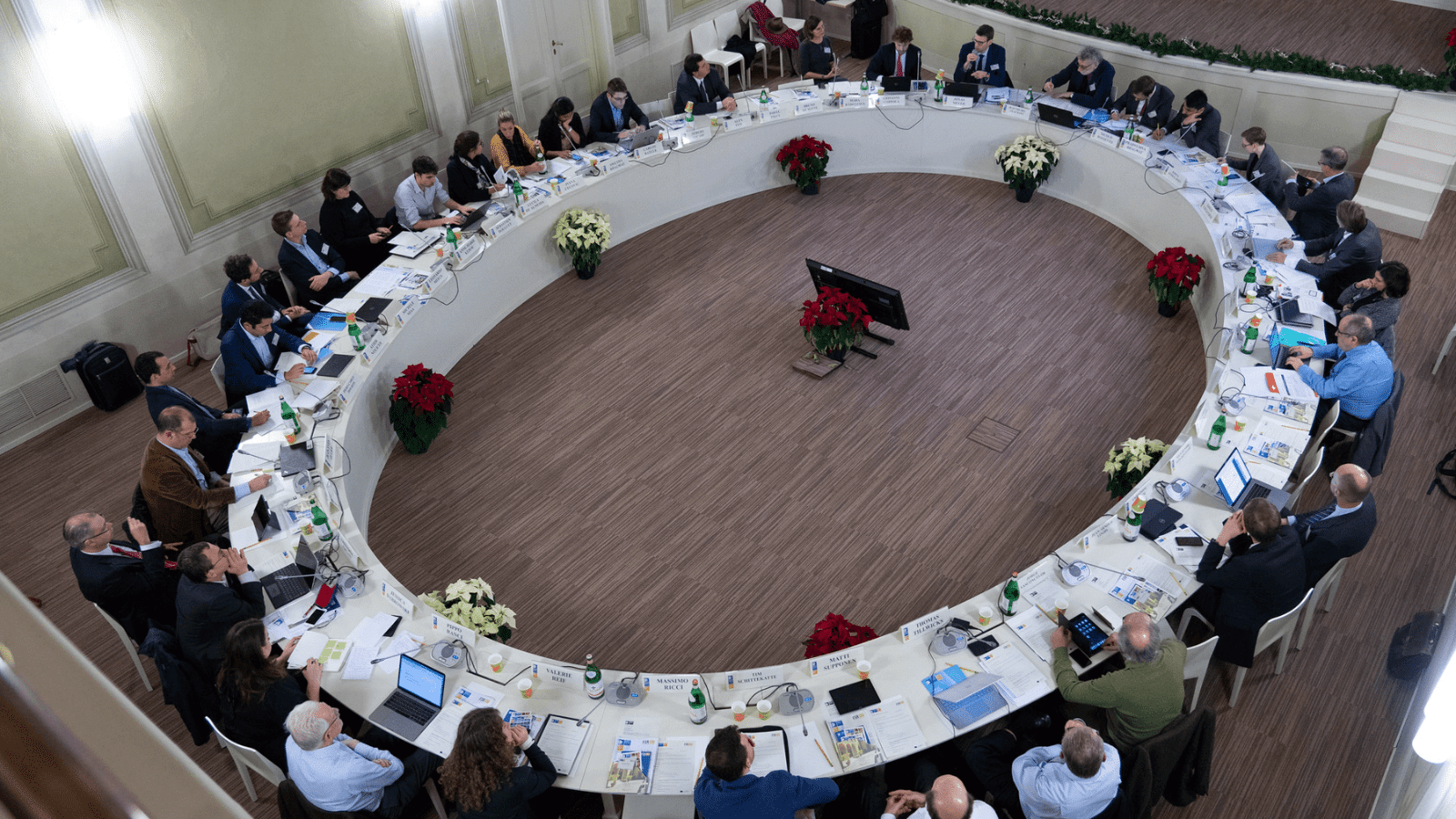





6th Conference on the Regulation of Infrastructures: Challenges for smart cities

The Conference on the Regulation of Infrastructures is the annual event that brings together all the Areas of the Florence School of Regulation. This 6th edition aimed at taking stock of the major challenges infrastructure regulation is currently facing in the context of smart cities.
Continue reading “6th Conference on the Regulation of Infrastructures: Challenges for smart cities”
Don’t miss any update on our events
Sign up for free and access the latest events from our community.
More on the topic



Energy Law Lecture: William Scherman on TSOs in the US
At the conclusion of our training on State aid in the Energy Sector, there will be a special open lecture from William Scherman, partner at the Washington D.C offices of Gibson Dunn LLP, in which he will examine the role of transmission system operators (TSOs) in the US, what lessons can be learned from these experiences and how these can be applied in the EU.”
Don’t miss any update on our events
Sign up for free and access the latest events from our community.
More on the topic

Policy Advisory Council – FSR Energy
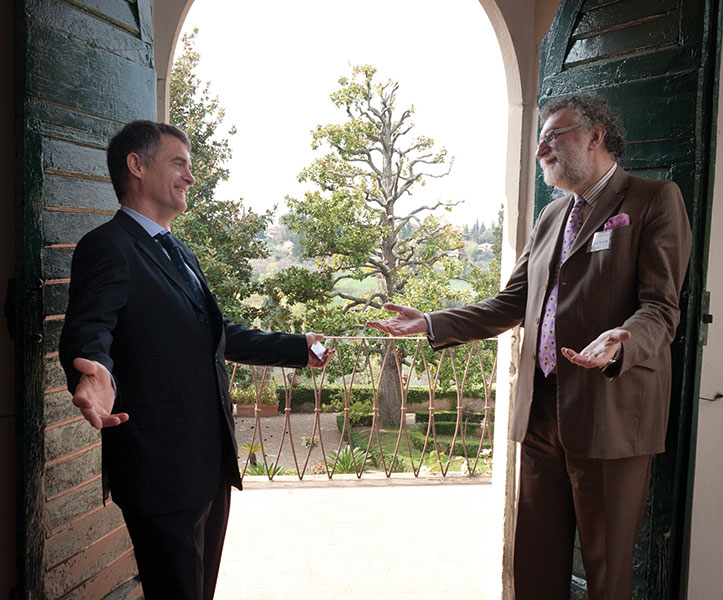
The Policy Advisory Council gather renowned academics, experts from leading energy companies (being also FSR-Energy Major Donors) as well as representatives from the European Commission, the Agency for the Cooperation of Energy Regulators (ACER) and National Regulatory Authorities to discuss and test the relevance and robustness of FSR research.
This year the Florence School is experimenting a new interactive format to enable and facilitate the debate and the brainstorming among participants and the FSR discussants. The resulting outcomes will consequently shape the direction of the School’s forthcoming research.
The event will be divided in two sessions, as follows:
- Session I: The Regulation of Storage
- Session II: Integrating EU Power System?
Julian Barquin Gil | Gas in the EU, a golden age or no future?
Download the programme
Please note that this is a closed event and participation is by invitation only.
Don’t miss any update on our events
Sign up for free and access the latest events from our community.
More on the topic
Integrating South East Europe into the Internal Energy Market

SEE Regional Conference 2016
The Florence School of Regulation is partnering ENTSO-E in the organisation of the South Eastern Europe Regional Conference, taking place in Thessaloniki (Greece), on Thursday 3rd November 2016.
The third and last appointment of the ‘Regional Tour’ will engage relevant stakeholders from the policy, industrial and academic sectors to address the main challenges of South East Europe (SEE)’s electricity field with the aim of fostering their cooperation within and across the region. Reinforcing regional cooperation in markets, planning and operations is in fact essential to achieve the Internal Energy Market (IEM) and deliver the benefits of the Energy Union to its citizens.
The Conference will thus investigate how to overcome the current market fragmentation in favour of more liquid cross-border markets in the region; and consequently analyse which regional infrastructures are needed, how to attract sufficient investments for their development and how to optimise their usage. A special focus in the debate will also be given to the potential for TSO-DSO cooperation, smart grids and data management in the SEE region.
Don’t miss any update on our events
Sign up for free and access the latest events from our community.
More on the topic
Assessing the Efficiency-Fairness Trade-Offs from a Revenue-Neutral Carbon Tax

Speaker: Lawrence H. Goulder, Professor in Environmental and Resource Economics, Stanford University /Director of the Stanford Environmental and Energy Policy Analysis Center
Discussant: Xavier Labandeira, Director, FSR Climate
In this seminar Professor Goulder presents recent research that evaluates quantitatively the trade-offs between cost-effectiveness and fairness (as measured by the evenness of distributional impacts) from a revenue-neutral US carbon tax. Applying a numerical general equilibrium model of environment-energy-economy interactions in the USA, Professor Goulder (1) suggests how the costs of the carbon tax are likely to be distributed across industries and household income groups, (2) shows how these costs differ, depending on the nature of revenue-recycling and various compensation schemes, and (3) evaluates the efficiency costs of reducing inequality in the distribution of policy impacts across industries and household income groups. The research applies a new method for addressing the distributional impacts across households and reveals that these impacts change dramatically over time.
 Lawrence H. Goulder is the Shuzo Nishihara Professor in Environmental and Resource Economics at the Stanford University and Director of the Stanford Environmental and Energy Policy Analysis Center. He is also a University Fellow at Resources for the Future and a Research Associate at the National Bureau of Economic Research. His research examines the environmental and economic impacts of U.S. and international environmental policies, including policies to deal with climate change and pollution from power plants and automobiles. His work also explores the “sustainability” of consumption patterns in various countries. At Stanford Goulder teaches undergraduate and graduate courses in environmental economics and policy, and co-organizes a weekly seminar in public and environmental economics. He graduated from Harvard College with an A.B. in philosophy and received his Ph.D. in Economics from Stanford.
Don’t miss any update on our events
Sign up for free and access the latest events from our community.







The Challenge of Climate Policy: No Time for Wishful Thinking

Speaker: William Kenneth Jaeger, Professor, Department of Applied Economics, Oregon State University
Discussant: Xavier Labandeira, Director, FSR Climate
Download the presentation in pdf
How can society overcome the daunting obstacles to collective action and move decisively to slow climate change? The problem of climate change poses unprecedented challenges at the national and international levels. There has been much research on various policy approaches (carbon taxes and cap-and-trade), and there is a literature on the ways that international mechanisms could be implemented. At the same time, however, there is well-established empirical and theoretical research from both economics and political science strongly suggesting that the characteristics of the global climate commons create overwhelming barriers for effective collective action, barriers that may be insurmountable using conventional policy approaches. Indeed, empirical evidence and the very slow progress toward effective abatement policies over the past 25 years suggests that it could take more than 50 years to implement an effective policy to stabilizing greenhouse gas concentrations. The irreversibility of a changed climate, combined with uncertainty and potentially catastrophic damages, suggests that this is no time for wishful thinking. There are no “do-overs.” With this sobering assessment in mind: What kinds of alternative, unconventional, “outside-the-box” actions may hold promise for improving the chances of stabilizing the world’s climate? Three potential options are described that would change these incentives, and that individually, or in combination, could increase the odds of reducing global emissions and slowing climate change.
William Jaeger is a professor in the Department of Applied Economic at Oregon State University. His research includes environmental and resource economics, taxation and public economics, agricultural economics and development economics. In particular his work addresses water, climate change, land and energy policy issues, as well as issues related to economic growth and the environment. Before coming to Oregon State in 2001, he was on the economics faculty at Williams College (1989-2001). He has also been a Fulbright Scholar at the University of Venice Ca’ Foscari, Italy, and has taught at the University of Washington and the University of Oregon. His prior experience includes five years as a research economist at the World Bank where he worked on development policy in Africa. He also spent four years living in West Africa. Jaeger is the author of Environmental Economics for Tree Huggers and Other Skeptics, Island Press in 2005.
Don’t miss any update on our events
Sign up for free and access the latest events from our community.
Congestion Management in the Internal Energy Market
FSR Regulatory Policy Workshop Series 2016-2017
The establishment of a fully integrated European energy market is one of the five mutually-reinforcing and closely interrelated dimensions of the EU Energy Union strategy aimed at bringing greater energy security, sustainability and competitiveness to the EU’s economy. In this regard, the integration of national markets has been one of the primary objectives of EU energy policy since the 1990s and has been pursued throughout three legislative packages and detailed provisions defined in Network Codes and Guidelines.
The achievement of a fully integrated and well-functioning EU energy market requires both an optimal level of physical interconnection between national systems and the efficient use of such interconnection. Since the former does not necessarily imply a sufficient level of physical interconnection capacity to meet the demand for transport services at all times, the latter has to ensure that the available capacity is allocated in the most efficient way and is fully utilised when congestion occurs. Consequently, capacity allocation and congestion management procedures have been introduced both in the electricity and gas sectors; in some cases long before the entry into force of the formal provisions.
This Workshop aims at reviewing the experience with the implementation of capacity allocation and congestion management procedures in the electricity and gas sectors, considering both the early voluntary and the mandatory implementation phases. The discussion is also expected to inquire into the way cross-border capacity can be valued in the intra-day timeframe and the best indicators to signal congestion at gas interconnection points. While recognising the different characteristics of the two sectors, the Workshop will also consider whether there are lessons learned from one sector which can be relevant for the other.
The introductory session of the Workshop will broadly analyse the experience with capacity allocation and congestion management in the electricity and gas sectors. The following two Sessions will focus on the respective and specific experiences in the electricity and gas, identifying the most topical and yet – open issues.
This workshop is exclusively open to national regulators, representatives from public bodies and FSR donors.
Special registration requests must be submitted to the coordinator of this workshop, Ilaria Bellacci.
Download the programme
Don’t miss any update on our events
Sign up for free and access the latest events from our community.
More on the topic
FSR Climate Annual Conference 2016

Programme
Papers and presentations
Videos
The FSR Climate Annual Conference focused on the economic assessment of European climate policies.
The conference covered the main climate-related existing policies, at EU, national and subnational levels and included four sessions, each of them with an invited speaker:
• EU ETS: Simone Borghesi (University of Siena)
• Carbon/energy taxation: Thomas Sterner (University of Gothenburg)
• Energy efficiency policies: Joachim Schleich (Grenoble Ecole de Management and Fraunhofer ISI)
• Renewable policies: Karsten Neuhoff (DIW Berlin and Technical University Berlin)
Roger Guesnerie (Collège de France), gave the keynote speech.
Jos Delbeke, Director General for Climate Action, European Commission, attended the conference and gave a keynote speech during the social dinner of the event.
Videos
Interview with Jos Delbeke, Director General for Climate Action, European Commission
Keynote speech:
Roger Guesnerie, Collège de France
Plenary Presentations
Karsten Neuhoff, DIW Berlin
Heterogeneity in household preferences – implications for energy efficiency modeling and policy
Joachim Schleich, Grenoble Ecole de Management
Carbon tax: an option in designing climate policies
Thomas Sterner, University of Gothenburg
The EU ETS and its followers: connecting the dots
Simone Borghesi, University of Siena
Papers/Presentations
1 DECEMBER
Plenary presentation
How can renewables support Europe Karsten Neuhoff, DIW Berlin
Session 1: Energy and carbon taxation
Cars, carbon taxes and CO2 emissions (PAPER) Julius Andersson, LSE
Is the gasoline tax regressive in the twenty-first century? Taking wealth into account (EUI WORKING PAPER) Jordi J. Teixidó, Stefano F. Verde, FSR Climate, EUI
Tax incidence in the fuel market: evidence from station-level data (PAPER) Jarkko Harju, Tuomas Kosoneny, Marita Laukkanen, VATT
Efficiency and distributional impacs of Swiss energy policies Mirjam Kosch, ETH Zurich, Florian Landis, Sebastian Rausch
Session 2: Renewable energy
Carbon mitigation in the electric power sector under cap-and-trade and renewables policies (PAPER) Eric Delarue, KU Leuven, Kenneth Van den Bergh
The impact of carbon pricing on renewables’ profitability (PAPER) Alexander Verhagen, Kris Poncelet, Eric Delarue, KU Leuven
Renewables vs. conventional power: peak-load pricing with different types of dispatchability (PAPER) Klaus Eisenack, Mathias Mier, University of Oldenburg
The French nuclear bet (PAPER) Quentin Perrier, CIRED
How critical is the CO2 price for the recovery of electricity prices in CWE? Johan Albrecht, Gent University, Lennert Thomas, Sam Hamels
Keynote speech:
Economic debates on the design of climate policies : selected insights
Roger Guesnerie, Collège de France
Plenary presentation
Heterogeneity in household preferences – implications for energy efficiency modeling and policy
Joachim Schleich, Grenoble Ecole de Management
Session 3: Climate and energy policy issues
The role of moderate carbon prices in electricity sector decarbonisation (see chapter 3) Jesse Scott, IEA
Hitting the mark on missing money: how to ensure reliability at least cost to consumers (PAPER) Michael Hogan, Regulatory Assistance Project
EU Reference Scenario 2016 Energy, transport and GHG emissions (REPORT) Joan Canton, DG Energy, European Commission
Translating the collective climate goal into a common climate commitment (POLICY BRIEF) – presentation Peter Cramton, University of Maryland and EUI, Axel Ockenfels, Jean Tirole
Session 4: Households and climate policies
Preferences for energy efficiency vs. renewables: how much does a ton of CO2 emissions cost? (download the paper here) Anna Alberini, Andrea Bigano, Milan Ščasný, Charles University, Iva
Zvěřinová
Which climate change policies do Czech, British, and Polish citizens prefer? (PAPER, see also the presentation) Milan Ščasný, Iva Zvěřinová, Charles University, Mikolaj Czajkowski, Eva Kyselá, Katarzyna Zagórska
Welfare and redistribution in energy markets with solar power Fabian Feger | University of Bern, Nicola Pavanini, Doina Radulescu
Carbon is forever: a climate change experiment on cooperation Giacomo Calzolari, Marco Casari, University of Bologna, Riccardo Ghidoni
Plenary presentation
Carbon tax: an option in designing climate policies
Thomas Sterner, University of Gothenburg
Session 5: International dimension of climate policy
The effect of carbon taxes on emissions and carbon leakage: evidence from the European Union Maria Alsina Pujols, University of Zurich
Carbon-motivated border tax adjustment: a proposal for the EU Paola Rocchi, University of Barcelona, Iñaki Arto Jordi Roca Mònica Serrano
Foreign direct investment and the pollution haven hypothesis – evidence from listed firms Grégoire Garsous, OECD, Tomasz Koźluk
Global warming as an asymmetric public bad (PAPER) Louis-Gaëtan Giraudet, CIRED, Céline Guivarch
Session 6: Multiple instruments in climate policy
Second-best analysis of European energy policy: is one bird in the hand worth two in the bush? Carolyn Fischer, Michael Hübler, Oliver Schenker, Frankfurt School of Finance and Management
Equity vs efficiency in energy regulation Carolyn Fischer, Resources for the Future, William Pizer
Paradox of overlapping climate policy Instruments Roland Magnusson, University of Helsinki
Compliance technology and self-enforcing agreements (PAPER) Alessia Russo, University of Oslo, Francesco Lancia, Bard Harstad
2 DECEMBER
Session 7: Investment and innovation
Laggard sectors and green growth policies Claudio Baccianti, ZEW
Investment, technological progress and energy efficiency (PAPER) Antonia Diaz, Luis A. Puch, Universidad Complutense de Madrid
The political economy of energy innovation (PAPER) Shouro Dasgupta, FEEM, Enrica De Cian, Elena Verdolini
Session 8: EU ETS
EU ETS, free allocations, and activity level thresholds: the devil lies in the details Frédéric Branger, Jean-Pierre Ponssard, Oliver Sartor, Misato Sato, LSE
Emission benchmark setting in the materials sector: an analytical framework Vera Zipperer, Misato Sato, Karsten Neuhoff, DIW Berlin
Differentiating permits allocation across areas Jean-Philippe Nicolai, ETH Zurich, Jorge Zamorano
Facts and figures for finalising an effective reform of the EU Emissions Trading System (PAPER – see also presentation) Stefan P. Schleicher, University of Graz, Angela Köppl, Alexander Zeitlberger
Plenary presentation
The EU ETS and its followers: connecting the dots
Simone Borghesi, University of Siena
Other conference’s editions:
FSR Climate Annual Conference 2017
FSR Climate Annual Conference 2015
Bios of keynote and invited speakers
 Simone Borghesi
Simone Borghesi (M.Sc. University College London, Ph.D. European University Institute) is Associate Professor at the University of Siena. He worked at the International Monetary Fund, the Fondazione ENI Enrico Mattei and the University of Pescara. He is currently President-elect of the Italian Association of Environmental and Resource Economists (IAERE) and Co-director of the research group R4S (Regulation for Sustainability). He has been member/Unit coordinator of several Italian and European research projects and invited to the UN 2012 High-Level Meeting on Happiness and Wellbeing: Defining A New Economic Paradigm. He published over 50 articles in edited volumes and peer-reviewed international journals and three books. His main research areas are globalisation and sustainable development, the environmental Kuznets curve, emission trading, evolutionary game models.
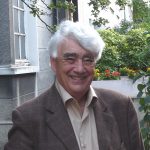 Roger Guesnerie
Roger Guesnerie has been Professor at Collège de France and Chairman of the Board of the Paris School of Economics until 2015. He has taught in France and abroad, (LSE and top American Universities) and served as coeditor of Econometrica (1984–1989). He has published more than a hundred academic articles and a dozen of books. His fields of interest include general equilibrium, public economics, incentives and mechanism design, and more recently the assessment of expectations formation and climate policies. He was elected President of several scholarly societies, notably the Econometric Society (1996), and the European Economic Association (1994). He is a Foreign Member of the American Academy of Arts and Science.

Karsten Neuhoff
Karsten Neuhoff is head of the Department Climate Policy at the German Institute for Economic Research and Professor for Energy and Climate Policy at the Technical University Berlin. He has published 42 journal articles and 4 books on the topic of Power Market design, Technology Policy in the context of materials sector and renewables technologies, Emission Trading and International Climate Policy. He is leading research and advice projects for the EU Commission and governments for several EU member states. He holds a Diploma in Physics from the University of Heidelberg, an MSc in Economics from the London School of Economics, and a PhD in Economics from the University of Cambridge.
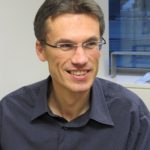 Joachim Schleich
Joachim Schleich received economics degrees from University of Mannheim (Diploma), University of Florida (MSc) and Virginia Tech (PhD). He is Professor of Energy Economics at Grenoble Ecole de Management (France), where he leads the Energy Management Team. He is also employed at the Fraunhofer Institute for Systems and Innovation Research (Germany), and an Adjunct Professor at Virginia Tech (USA). Schleich has consulted for the European Commission and several national governments on energy efficiency policy, the EU ETS, and international climate policy. He has published more than forty articles in peer-reviewed journals. His current research focuses on conceptual and empirical analyses of factors driving company and household adoption of energy-efficient technologies, the evaluation of energy efficiency policies, and on corporate response to the EU ETS.
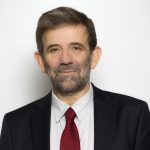 Thomas Sterner
Thomas Sterner, is Professor of Environmental Economics at the University of Gothenburg. His research focuses on the design of policy instruments to deal with resource and environmental problems. Sterner has published more than a dozen books and a hundred articles in refereed journals, mainly on environmental policy instruments with applications to energy, climate, industry, transport economics and resource management in developing countries. With Gunnar Köhlin, he has founded the Environment for Development Initiative. Sterner is the recipient of the Myrdal Prize and has been President of the European Association of Environmental and Resource Economists. In 2012-2013 he served as Visiting Chief Economist of the Environmental Defense Fund in New York and in 2015-2016 he was guest professor at the Collège de France.
Don’t miss any update on our events
Sign up for free and access the latest events from our community.
Completing the European Power Market Integration
A Central East European Perspective
The Florence School of Regulation is joining ENTSO-E in the organisation of the Central East European Regional Conference, taking place in Bratislava on 23rd September 2016.
The second ENTSO-E regional conference will engage relevant stakeholders from the policy, industrial and academic sectors to discuss the main challenges of Central East Europe (CEE)’s electricity field and to foster their cooperation both at the regional and European level.
The Conference will assess the current level of power market integration in the CEE region, 27 years after the East-West divide. It will also investigate which regional infrastructures are needed and how to attract sufficient investments for their realisation. Furthermore, a crucial focus will be dedicated to sustainability’s and security of supply’s reinforcement, as well as to the digital evolution of the power sector and its consequential role in TSOs-DSOs relations.
Don’t miss any update on our events
Sign up for free and access the latest events from our community.
More on the topic
FSR Transport Policy Advisory Council

To conclude its 2016 activities, FSR Transport is hosting its Policy Advisory Council. It gathers representatives of all donors, and it provides suggestions to the Area Director concerning the Area’s working programme and financial plan. The agenda of the day includes the following topics:
- Presentation of the report on the activities of FSR Transport in 2016
- Presentation of the planned activities for the year 2017
- Assessment of the 2016-2018 plan and discussion on the FSR Transport priorities for the next 2 years
- Discussion on the project “Infrastructure funding challenges in the sharing economy“
By invitation only.
Don’t miss any update on our events
Sign up for free and access the latest events from our community.
More on the topic



Executive Symposium – EU Road Transport: Driving change for business and people
Organised jointly by the Cabinet of Commissioner Violeta Bulc, the European Commission Directorate General for Mobility and Transport (DG MOVE) and the Transport Area of the Florence School of Regulation at the European University Insitute (FSR Transport), this executive symposium explores the challenges for EU road transport in the current regulatory context with the purpose to prepare for a series of EU Road Transport Initiatives, which are already under discussion.
A selected group of participants, including representatives of Academia, Ministries, Local Authorities, Regulators, Toll Service Providers, Car Manufacturers, System Providers, Workers and Associations will join this Executive Symposium.
Continue reading “Executive Symposium – EU Road Transport: Driving change for business and people”
Don’t miss any update on our events
Sign up for free and access the latest events from our community.
More on the topic