


Archives: Events
Clean Energy: The New Legal Challenges

Energy Law & Policy Workshop
This workshop is designed to assess the current legal issues surrounding the enforcement of EU antitrust rules and the changing role of governance in the energy sector in light of the Clean Energy Package.
The workshop will open with a keynote address from Vice-President of the European Commission and head of the Energy Union, Maroš Šefčovič, on the Commission’s new market design proposals and the impact of the Energy Union at EU and Member State level.
Focus will then turn to the role of competition in the energy transition, examining the impending challenges of big data and price comparison websites, retail price controls, and reviewing recent case law at the CJEU. This will be followed by a study of governance in the energy sector, assessing the Commission’s new governance proposals, centralised and decentralised competition enforcement and, in particular, the role of Regional Operational Centres and its implications from an economic, legal, and regulatory perspective.
Click here to download the presentations
Download the programme
Register by 10 April 2017
Don’t miss any update on our events
Sign up for free and access the latest events from our community.
More on the topic



Cybersecurity in the Energy Sector
FSR Regulatory Policy Workshop Series 2016-2017
Since the 1980s, an increasing level of automation has been introduced to support a reliable and secure energy system, as well as to guarantee a certain level of efficiency. This tendency has recently increased and digital technologies have been used to support greater efficiency, to provide more choice to consumers, to empower them in the liberalised market, and to better support other developments – such as the penetration of renewable-based generation and e-mobility. At the same time, in the Digital Age, energy has become essential to enable a secure and safe transition of activities to the digital world and, in the EU, to implement the Digital Agenda and promote a well-functioning Digital Single Market. The energy infrastructures are therefore not only essential to support energy transmission and supply, but also to support digital technologies.
As energy, information and communication technologies are essential to each other; a more careful protection of critical energy infrastructures has become a key objective. The energy system includes different segments – generation/production, transportation and delivery – as well as a set of processes and the interconnected communication devices that monitor and control such procedures. All components exchange information which is needed to run daily operations. They also include control systems that operate and monitor the energy infrastructure – such as the Supervisory Control and Data Acquisition (SCADA) system. Some energy systems designed in the past have to be protected from the security threats and risks posed by the integration of advances in computers and communication, as off-the-shelf software and operating systems, public telecommunication networks, and the Internet.
Cybersecurity was approached at the European level in 2016, as a reaction of the first significant cyber-attack on civil infrastructure occurred in Ukraine in December 2015. In July 2016 the Directive on security of network and information systems (the NIS Directive) was adopted, providing legal measures to increase the overall level of cybersecurity in the EU and enhancing the reliability of the energy systems. On 30 November 2016, the European Commission unveiled a package of measures – “Clean Energy for all Europeans” – to keep the European Union competitive as the clean energy transition is changing global energy markets. The proposed legislation envisages also the development of a Cybersecurity Network Code.
The Workshop aims at reviewing the current state of thinking on cybersecurity in the context of the energy sector and its critical and non-critical infrastructure. It will Identify the main emerging and critical risks and how they may be addressed, taking into consideration market constraints as well as the recent NIS Directive and the European Commission’s legislative proposals “Clean Energy for all Europeans”.
Download the programme
THIS WORKSHOP IS EXCLUSIVELY OPEN TO NATIONAL REGULATORS, REPRESENTATIVES FROM PUBLIC BODIES AND FSR DONORS.
Special registration requests must be submitted to the coordinator of the workshop, Ilaria Bellacci.
Don’t miss any update on our events
Sign up for free and access the latest events from our community.
More on the topic



Interactive online debate: TSO-DSO coordination

TSO-DSO coordination for electricity system balancing and congestion management
Interactive online webinar in collaboration with the SmartNet Project. Moderated by Leonardo Meeus (Vlerick Business School, FSR).
Academic panel:
- Tomas Gomez (Comillas University)
- Gianluigi Migliavacca (Smartnet Project coordinator)
- Marco Rossi (Smartnet Project)
The moderator will give an introduction on the topic and will address some polls to the online audience. The speakers will then give their view, also reacting to the opinion expressed by the attendees. An open Q&A session will follow.
Download the slides
About the SmartNet Project
The European Commission founded SmartNet Project aims to provide optimised instruments and modalities to improve the coordination between the grid operators at national and local level (respectively the TSOs and DSOs) and the exchange of information for monitoring and for the acquisition of ancillary services (reserve and balancing, voltage balancing control, congestion management) from subjects located in the distribution segment (flexible load and distributed generation).
Don’t miss any update on our events
Sign up for free and access the latest events from our community.
More on the topic
FSR Young Researcher Seminar

FSR is pleased to contribute to the development of the next generation of researchers in Europe by launching a 2-day Young Researcher Seminar hosted in Florence, covering the following two topics:
- Electricity Market Design (Day 1);
- Electricity Grid Regulation (Day 2).
The mornings will be dedicated to a panel debate and in the afternoons the selected researchers will have the chance to present their papers and receive feedback from the Scientific Committee:
Scientific Committee Members:
- Jean-Michel Glachant | Florence School of Regulation
- Leonardo Meeus | Vlerick Business School and Florence School of Regulation
Panel Debate Members:
- Christophe Gence-Creux | Agency for the Cooperation of Energy Regulators (ACER)
- Konrad Purchala | Polish Transmission System Operator (PSE S.A.)
- Fabien Roques | FTI Consulting & University Paris-Dauphine
- Luca lo Schiavo | Autorità per l’Energia Elettrica il Gas e il Sistema Idrico (AEEGSI)
- Joe Perkins | Chief Economist Ofgem
Call for Papers
For the first time the Florence School of Regulation is calling for papers on Electricity Market Design and Electricity Grids Regulation written by young researchers.
Download the Draft Programme
Don’t miss any update on our events
Sign up for free and access the latest events from our community.
More on the topic
Challenges for EU Regulators in the Age of Decarbonisation and Digitalization

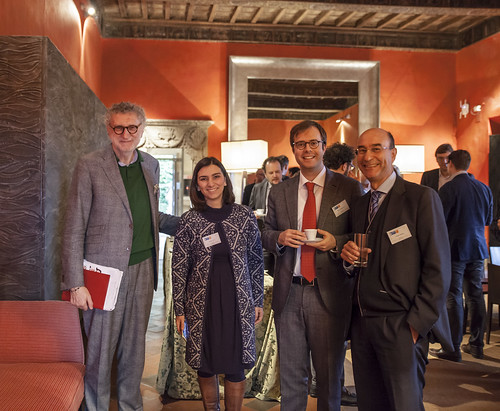
The Florence School of Regulation, together with Bruegel and Fondazione ENI Enrico Mattei, is jointly organising the exclusive Workshop: ‘Challenges for EU Regulators in the Age of Decarbonisation and Digitalization’ taking place in Florence on Thursday 2 February 2017.
The ongoing decarbonisation of the energy system has not only led to an energy mix that is increasingly integrating renewable energy sources; but it has also initiated a decentralisation process that brought the individual customer at the centre of this transition and enabled his or her participation in the business’s digitalization.
The event will therefore explore the latest challenges faced by regulatory authorities at the national and EU level, as well as by the transmission and distribution system operators.
These different perspectives are analysed in the three Sessions of the workshop:
- Session I: The EU Regulators Perspective
Cross-sectoral and cross-authority cooperation in the digital world. How important is it, and how will it work in the case of issues around smart meters in energy, the internet of things, data privacy, and data protection?
- Session II: The DSOs Perspective
What is a digital DSO for you? What does it imply in terms of organizational change, business model innovation, and data governance? What about collaboration with TSOs?
- Session III: The TSOs Perspective
What is a digital TSO for you? What does it imply in terms of organizational change, business model innovation, and data governance? What about collaboration with DSOs?
Read the Workshop Highlights (PDF)
Don’t miss any update on our events
Sign up for free and access the latest events from our community.
More on the topic
Allocation of free allowances in EU ETS to address the risk of carbon leakage

This workshop was organised in collaboration with DG Climate Action of the European Commission and within the framework of the LIFE SIDE project. The project, started on 1 September and funded under the LIFE Programme, aims to support policymakers on the implementation of the EU ETS.
Go to the workshop web page.

The LIFE SIDE project is co-financed by the LIFE Programme of the European Commission
Don’t miss any update on our events
Sign up for free and access the latest events from our community.
More on the topic









Preview of the MIT Energy Initiative’s Utility of the Future Study

Important changes are now affecting the distribution side of power systems. Emerging distributed technologies—including flexible demand, distributed generation, energy storage, power electronics and control devices—are creating new options for the provision and consumption of electricity services. At the same time, information and communications technologies are becoming ubiquitous, enabling more flexible and efficient consumption of electricity, improved visibility of network use, and enhanced control of power systems.
The Utility of the Future study presents a framework for proactive regulatory, policy, and market reforms designed to enable the efficient evolution of power systems over the next decade and beyond.
The goal is to facilitate the integration of all resources, be they distributed or centralised, that contribute to the efficient provision of electricity services and other public objectives. This framework includes a comprehensive and efficient system of market-determined prices and regulated charges for electricity services that reflect, as accurately as possible, the marginal or incremental cost of providing these services; improved incentives for distribution utilities that reward cost savings, performance improvements, and long-term innovation; reevaluation of the power sector’s structure to minimise conflicts of interest; and recommendations for the improvement of wholesale electricity markets. This study also offers a set of insights about the roles and values of distributed energy resources, and the factors most likely to determine the portfolio of cost-effective resources, both centralised and distributed, in diverse contexts and regulatory regimes, but focus mainly on United States and Europe.
The study team from MIT and IIT-Comillas combines a range of skills in quantitative economic and engineering modeling, with a deep understanding of the complex interactions in the electric power industry.
The team includes faculty with decades of experience in advising governments, corporations, and institutions on regulation and market design. The consortium partners — industrial and other market participants — bring valuable real-world expertise and experience to the study.
Meeting Agenda
- 8:30 – 9:00 am Registration and Continental breakfast
- 9:00 – 9:10 am Welcome and introduction
- 9:10 – 10:00 am Overview of the study
- 10:00 – 10:30 am Panel discussion and Q&A Session
Register here
Please note that this event is closed to members of the media




Don’t miss any update on our events
Sign up for free and access the latest events from our community.
More on the topic
Florence Road Forum: towards a well-functioning and fair EU road transport market

From patchwork to a well-functioning and socially fair EU road transport market.
The EU single market for road transport has established harmonised rules in several areas such as access to the profession and market, working and driving time, and rest periods. Also, it has led to more efficient and customer-oriented transport services and safer operations.
However, the sector is suffering from some major imperfections. Some hauliers make use of “letterbox” companies to circumvent labour laws of the country they are actually primarily operating in. Often drivers are paid under the labour laws of a given country, despite spending the majority of their time in other countries. The definition and application of the condition of “posted worker” are rarely recognised and even less enforced. Protection of workers is essential. However, uncoordinated national initiatives to protect national workers (e.g. minimum wage laws, prohibition for drivers to have their regular weekly rest in the cabin of the vehicle) fragment the international road transport market.
International transport operations have been fully liberalised in the EU, yet the market is not operating efficiently because restrictions remain on cabotage operations. Member States interpret these restrictions differently and sometimes try to limit operations by foreign hauliers. Above all, EU rules can only be effective if their enforcement is guaranteed in all Member States – which is not the case at present.
How can these imperfections on the market side as well as on the social side be overcome?
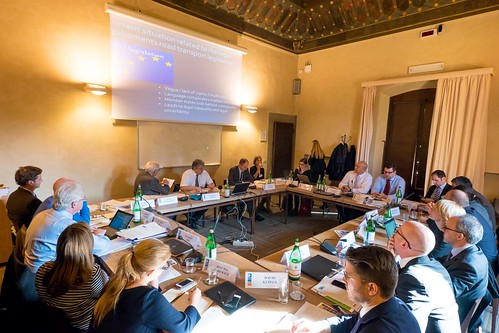
The Florence Road Forum will take stock of existing initiatives and look at new approaches to solve some of the most pressing issues in the European road transport market. Following the usual format of the Florence Transport Forums, in each session speakers and participants will have the chance to contribute to the discussion moderated by Prof Matthias Finger (École polytechnique fédérale de Lausanne and European University Institute). Representatives of the European Commission, of major stakeholders as well as leading academics will engage in the discussion. Discussions will address four central questions:
- How can the problem of “letterbox firms” in the road sector be tackled effectively?
- How to ensure proper enforcement of EU labour rules in the road sector?
- How can cabotage rules be made clearer and easier to enforce, so that the same rules apply across the EU?
- How to balance the free market and the protection of social rights of workers in the sector?
DOWNLOAD
European Transport Regulation Observer
RELATED PRESENTATIONS
Introduction to the Road Transport Forum MATTHIAS FINGER, Part-time Professor & Director of the Transport Area, Florence School of Regulation/EUI; and Professor, Ecole Polytechnique Fédérale de Lausanne
How can the problem of “letterbox firms” in the road sector be tackled effectively? MYRIAM JANS, Manager European Affairs Dutch Association Transport and Logistics (TLN)
How can the problem of “letterbox firms” in the road sector be tackled effectively? JAN NEMEC, General Delegate ad interim IRU Permanent Delegation to the EU
How to ensure proper enforcement of EU labour rules in the road sector? GERARD SCHIPPER, ECR general delegate
New cabotage rules A real need for an international transport sector? JOANNA JASIEWICZ, Transport and Logistics Poland / Gide law firm
Clear and Effective Cabotage – the UK approach ELIZABETH SHOVELTON, Head of Operator Licensing and Roadworthiness, Department for Transport (UK)
How to balance the free market and the protection of social rights of workers in the sector? DIRK SAILE, Head Brussels Office, German Road Haulage Association
Don’t miss any update on our events
Sign up for free and access the latest events from our community.
More on the topic





Call for papers! New Governance Structures in the EU Energy Sector
The impending new energy market design is expected to recalibrate the current power structures of the energy sector, both in the responsibilities assigned to the various governing bodies, and how these structures interact with each other at national, regional and European level.
With myriad developments and challenges on the horizon, this inter-disciplinary conference aims to address the mechanisms of EU energy governance from a theoretical and practical perspective, examining the role of these regulatory frameworks, how they are established, and their impact on the sector.
Scientific and Organising Committee:
Liana Cozigou (CREG), Adrien de Hauteclocque (ECJ/FSR, EUI), Gaspard Demur (European Commission), Marie-Pierre Fauconnier (CREG), Hélène Gassin (CEER/CRE), Annegret Groebel (ACER/BNetzA), Frederik Vandendriessche (UGent), Arnaud Van Waeyenberge (HEC Paris/ULB), Koen Verhoest (UA)
The following is a non-exhaustive list of potential subjects:
- Legitimacy of European Agencies to act as a market regulator (i.e. which tasks can be given to ACER without infringing the subsidiarity principle and which safeguards must be put in place?);
- Independence of ACER vis-à-vis the European Commission (and how to guarantee it);
- Governance standards that should be applied;
- Legal mechanisms to ensure the transparency of decision-making processes;
- Control processes that could be implemented in such a new framework;
- Decision-making of ACER and the democratic framework;
- Adequate regulation and the protection of consumers;
- Decentralisation of generation and the role of local authorities;
- The Energy Union project and the existing multi-level energy governance framework (including inter-governmental agreements);
- Governance devices for cooperation at sub-Union level: new trends in regionalisation;
- Formal and de facto interactions between ACER and the national regulatory agencies;
- Cooperation and co-decision of EU national regulators;
- Energy legislation, network codes and comitology;
- Litigating energy regulation at national and EU level;
- Governing the new energy/ finance interface: enforcing REMIT;
- The new role of Power Exchanges;
Read the Call for Papers
All those interested in participating in this conference are invited to send an abstract (max. 500 words) to Liana Cozigou (Liana.Cozigou@creg.be) by 10th December 2016. All contributors will be promptly informed of the selection decision. Selected authors will be invited to submit their paper (max 8000 words) by the end of February 2016.
Selected papers will be published.
For additional information, please contact Liana Cozigou.
Don’t miss any update on our events
Sign up for free and access the latest events from our community.
More on the topic
Shaking the Brick and Mortar: Moving Higher Education Online

The world around us is moving online: whether leisure activities, news and information, whether communication with friends, contributions to public debates or the purchase of goods: most of our life takes place online. The question is whether this trend also concerns academic practice.
- What are the benefits and opportunities for Higher Education Institutions to (also) move online? At best, many academics still consider online tools a well-intentioned toy; but even if a move online is considered to be an opportunity for research and teaching, individual efforts often remain isolated or fragmented.
- What is the rational for Higher Education Institutions to incorporate a comprehensive digital agenda into their core strategy, and – perhaps even more importantly – how can we concretely achieve a large-scale ‘online move’ within our institutions?
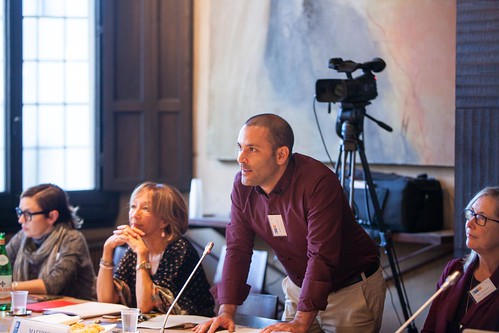
To begin, this workshop will explore how different online tools (social media tools and online learning) have already entered academic practice. Secondly, we will explore the benefits these online tools and environments offer researchers and institutions to create and share knowledge, especially given their interactive, instantaneous, accessible and open characteristics. Finally, we will present several case studies, focusing on how the process of moving larger projects online can be practically achieved within traditional academic institutions.
Watch the Event Recording
Don’t miss any update on our events
Sign up for free and access the latest events from our community.
More on the topic
Workshop: Competition and Regulatory Aspects of Electric Vehicles Charging
Aspects of Electric Vehicles Charging | Perspectives from the FSR Policy Workshop
FSR Regulatory Policy Workshop Series 2016-2017
In recent years, the EU has strengthen its commitment to reduce greenhouse gas (GHG) emissions, aiming to a 40% GHG decrease by 2030 (with respect to 1990 levels) and a 90-95% cut by 2050.
Despite past technological improvements, the transport sector is still responsible for around one-quarter of Europe’s GHG emissions. Furthermore, the EU Road transport is accountable for more than 70% of all GHG emissions from transport – and also contributes to the increased concentration of air pollutants (such as NOX and PM) in several European cities. In 2011, the European Commission had already outlined a roadmap to reduced GHG emissions in the transport sector (as part of the Transport White Paper) and, in 2016, adopted a new low-emission mobility strategy, to ensure Europe stays competitive and able to respond to the changing mobility needs.
Electric vehicles are an important contributor towards a more sustainable EU transport system.
Electric cars, and their batteries, may also represent a valuable source of flexibility to support the growing decarbonisation of Europe’s electricity sector. Although electric vehicle ownership is expanding (as is the need for widely distributed and publicly accessible charging stations), current practices can potentially create barriers and delay electric vehicle penetration. Fast plug-in charging requires specialised infrastructure and electric vehicles manufacturers have not yet converged onto a standard charging technology. The consequent lack of a common standard may result in (inefficient) parallel charging networks and in barriers to new entrants, unless they are able to use the network of the incumbent manufacturer(s).
Furthermore, competition concerns related to the supply of electricity for charging electric vehicles might arise. It is not yet clear whether electric vehicle charging stations should be considered as part of the (distribution) grid to which they are connected (and therefore subject to third-party access requirements), or if they should be considered as consumer sites.
The workshop, jointly organised by the Energy and Transport Areas of the FSR, will therefore attempt to define the extent to which charging technology would need to be standardised in order to promote electric vehicle penetration as well as which regulatory access regime and optimal business model should be applied to charging stations.
This workshop is exclusively open to national regulators, representatives from public bodies and FSR donors.
Don’t miss any update on our events
Sign up for free and access the latest events from our community.
More on the topic
Design the electricity market(s) of the future

What market design for a decarbonised electricity market?
How will the European electricity market develop and function in the future? This is a key question for all stakeholders of the European energy system: energy companies, consumers, policy makers, academics and energy regulators.
The European energy system is facing profound changes whilst it transitions to a decarbonised power system and it leaves behind its heritage of large-scale fossil-fuelled generation units and passive consumers.
Nowadays stakeholders are confronted with the deployment of decentralised renewable generation which progressively reduces the sector’s carbon footprint, and the empowering of the energy customer through demand response and storage solutions.
The structure of the electricity market will not only have to adapt to these changes but try to anticipate them and be prepared to conceive and adopt innovative business models.
The Florence School of Regulation in partnership with EURELECTRIC is seeking to open the debate and gather innovative visions for the functioning of a decarbonised electricity market.
Following our call for contributions, we invite you to save in your agenda the date of 7 June 2017. After a plenary session, the best contributors will be invited to present their work in interactive workshops organised by theme. The main points of the discussions will then be summed up after lunch by experts of the industry and the institutions.
Download the programme
Read more and register here
Don’t miss any update on our events
Sign up for free and access the latest events from our community.
More on the topic