


Archives: Events
Carbon Market Workshop

This workshop is organised in collaboration with DG CLIMA of the European Commission, within the framework of the LIFE SIDE project. The project, started on 1 September 2016, aims to support policymakers with the implementation of the EU ETS.

The LIFE SIDE project is co-funded by the LIFE Programme of the European Commission.
Don’t miss any update on our events
Sign up for free and access the latest events from our community.
More on the topic










10th Florence Air Forum

Save the date for the next 10th Florence Air Forum!
Following the usual format of the Florence School of Regulation, the 10th Florence Air Forum aims at offering a platform for senior stakeholders from regulators, railway undertakings, infrastructure managers, rail suppliers, authorities, associations and academics to take stock of topics relevant to mobility regulation and policies.
To learn more about our activities in the field of air regulation, please visit our dedicated webpage.
For more information or early registration, please contact FSR.Transport@eui.eu
Don’t miss any update on our events
Sign up for free and access the latest events from our community.


Global Carbon Pricing – The Path to Climate Cooperation

BOOK PRESENTATION
 Speaker: Peter Cramton
Professor, University of Maryland
Part-time Professor Joint Chair RSCAS/Economics Department
Discussant: Xavier Labandeira, Director, FSR Climate
Book edited by Peter Cramton, David JC MacKay, Axel Ockenfels and Steven Stoft
Download the book in pdf from here
This event was live streamed. Watch the recording:
Overview
After twenty-five years of failure, climate negotiations continue to use a “pledge and review” approach: countries pledge (almost anything), subject to (unenforced) review. This approach ignores everything we know about human cooperation. In this book, leading economists describe an alternate model for climate agreements, drawing on the work of the late Nobel laureate Elinor Ostrom and others. They show that a ”common commitment” scheme is more effective than an ”individual commitment” scheme; the latter depends on altruism while the former involves reciprocity (”we will if you will”).
The contributors propose that global carbon pricing is the best candidate for a reciprocal common commitment in climate negotiations. Each country would commit to placing charges on carbon emissions sufficient to match an agreed global price formula. The contributors show that carbon pricing would facilitate negotiations and enforcement, improve efficiency and flexibility, and make other climate policies more effective. Additionally, they analyze the failings of the 2015 Paris climate conference.
Contributors
Richard N. Cooper, Peter Cramton, Ottmar Edenhofer, Christian Gollier, Éloi Laurent, David JC MacKay, William Nordhaus, Axel Ockenfels, Joseph E. Stiglitz, Steven Stoft, Jean Tirole, Martin L. Weitzman
About the Editors
- Peter Cramton is Professor of Economics at the University of Maryland.
- The late Sir David JC MacKay was Regius Professor of Engineering at the University of Cambridge and Chief Scientific Advisor to the United Kingdom’s Department of Energy and Climate Change.
- Axel Ockenfels is Professor of Economics at the University of Cologne.
- Steven Stoft is an economic consultant and author of Carbonomics.
Endorsements
”The threat of climate change can be managed only by global cooperation. Here a distinguished panel of experts applies fundamental principles of economics to show how such global efforts can be sustained. This is a great and important book.”
– Roger Myerson, Glen A. Lloyd Distinguished Service Professor of Economics, University of Chicago; 2007 Nobel laureate, Economics.
Don’t miss any update on our events
Sign up for free and access the latest events from our community.
More on the topic
9th FSR & BNetzA Forum on the Legal Issues of Energy Regulation

This year marks the ninth year of the collaboration between the FSR Energy Law and Policy Area and Bundesnetzagentur, the German regulatory office. The forum is designed to provide a platform for debate and exchange on the most relevant issues currently facing national regulatory authorities in the energy sector.
The ambitious legislative proposals of the Clean Energy Package, released in late 2016, signalled an overhaul of several of the current systems at both market and governance level, with considerable implications for national regulatory authorities (NRAs). Over the past several months, NRAs in the Council of European Energy Regulators (CEER) have released a series of white papers, partly in conjunction with the Agency for the Cooperation of Energy Regulators (ACER), in response to these proposals. The aim of this forum is to interrogate the issues discussed in these white papers with the key stakeholders from a regulatory, legal, and economic perspective, to evaluate the challenges of the proposals and consider the next steps towards implementation.
The programme for the forum will be divided into three sessions, the first of which will concentrate on the implications of the Package on the energy market. The session will consider the unfolding new market rules, with a particular focus on the changing role of the distribution system operator (DSO), the unbundling of DSOs, and how to effectively unlock the demand side of the market and promote greater flexibility. For the second session, the discussion will then turn to the electricity market, examining the system operation, congestion management and the future role of capacity mechanisms. The session will also examine the shift toward regionalisation and the new governance structures and coordination necessary to implement this. The final session of the forum will turn to gas issues and evaluate the new security of supply package in terms of gas quality and infrastructure.
Read all of the white papers released by CEER and ACER, which will form a central part of the discussions at the forum.
Download the programme
SESSION I:
Ruud Berndsen | EDSO for Smart Grids
Yannick Perez | Université Paris-Sud
SESSION II:
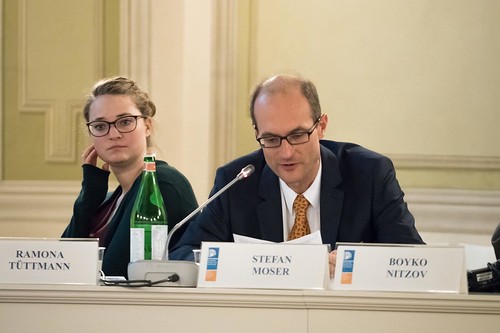
Stefan Moser | European Commission
SESSION III:
Nico Keyaerts | Florence School of Regulation/RSCAS/EUI
Antonio Gómez Bruque | ENTSO-G
Don’t miss any update on our events
Sign up for free and access the latest events from our community.

Seminar: Current and Future Challenges in the EU Gas Market

The purpose of this seminar is to focus on the current and forthcoming challenges facing the gas sector from both a legal and economic perspective.
The opening session will evaluate the new security of supply package – what’s in it and what it might involve – and assess the impact of the recent decision on intergovernmental agreements, before turning the debate to the markets.
In the second session, the gas regulatory framework will be examined and evaluated alongside the possible market failures of the gas market design, before looking at the future role (if there is one) of long-term gas contracts.
The final session will consider the role of antitrust, discussing the issue of flexibility and the role of the third party access (TPA) exemption regarding the use of the OPAL pipeline, and the possible wider repercussions of this in the ongoing debate surrounding transnational pipelines.
SESSION I: THE SECURITY OF SUPPLY PACKAGE
Alexia Trokoudi | Hellenic Petroleum SA
Jacek Liegmann | DG ENERGY, European Commission
SESSION II: FUTURE CHALLENGES IN THE EU GAS MARKET
Dan Roberts | Frontier Economics
Emmanuel Grand | Compass Lexecon, FTI Consulting
Thomas Starlinger | Starlinger Mayer Attorneys at Law
SESSION III: THE ANTITRUST DIMENSION
Luciana Bellia | Cleary Gottlieb Steen & Hamilton LLP
Download the programme
Don’t miss any update on our events
Sign up for free and access the latest events from our community.


Athens Conference on European Energy Law

The Athens Conference on European Energy Law is a joint initiative between the Energy Law and Policy Area of the Florence School of Regulation and the Hellenic Energy Regulation Institute, which aims to address the key issues facing Greece and the surrounding region. The conference will bring together academics, institutional representatives, and key market players to discuss;
- The East Mediterranean region: the geopolitical implications and prospects of regional cooperation in the exploitation of hydrocarbons.
- Transnational pipelines: how to play by EU rules?
- The EU hydrocarbon market and the EU’s developing gas market design.
- The EU’s electricity market design and the challenges of competition law and energy supply.
Download the Conference’s Summary (PDF)
Session I – East Mediterranean Region: Geopolitical Implications and the Prospects for Regional Cooperation in the Exploitation of Hydrocarbons
Session II – Transnational Pipelines: How to Play by EU Rules?
Session III – The EU Hydrocarbon Market and the EU’s Developing Gas Market Design
Session IV – The EU’s Electricity Market Design and the Challenges of Competition Law and Energy Supply
- Augustijn Van Haasteren
- Alberto Pototschnig
- Christof Schoser
- Marios Andrikopoulos & Alexia Trokoudi
- Ulrich Laumanns
Download the Draft Programme
For logistical information, please contact FSR.Conferences@EUI.eu
New Publication!
EU Energy Studies Volume XII: EU Energy Law and Policy, a South European Perspective – Meeting the Challenges of a Low Carbon Economy
Special offer for all participants in the Athens conference | Offer ends 15 October 2017
20% off the listed price of € 85,- and no shipping costs! You pay just € 68,- instead of € 100,-!*
* Discount code: Athens2017
Order online or via info@claeys-casteels.com
The Athens Conference on European Energy Law is kindly supported by:



Don’t miss any update on our events
Sign up for free and access the latest events from our community.

Executive Seminar: Competition in Passenger Railways in Europe
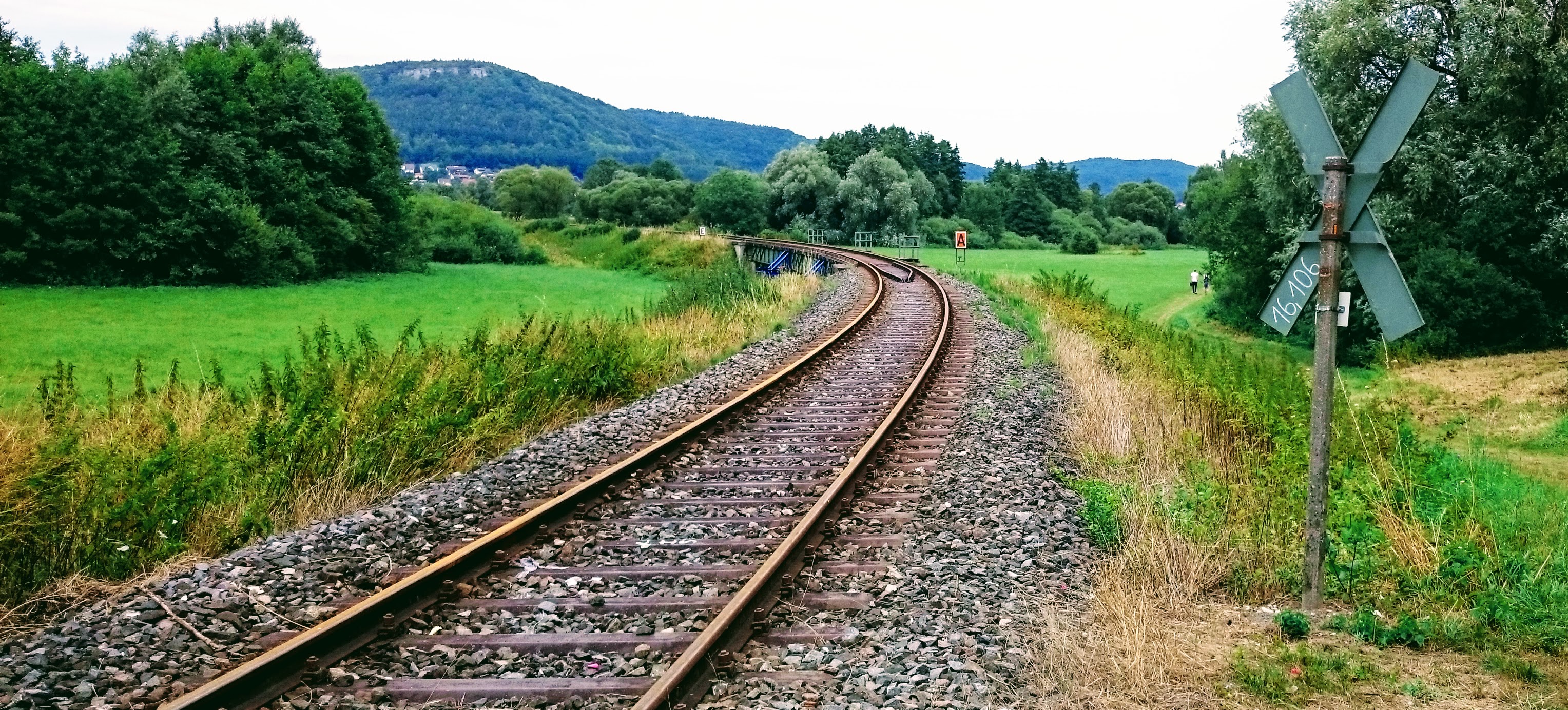
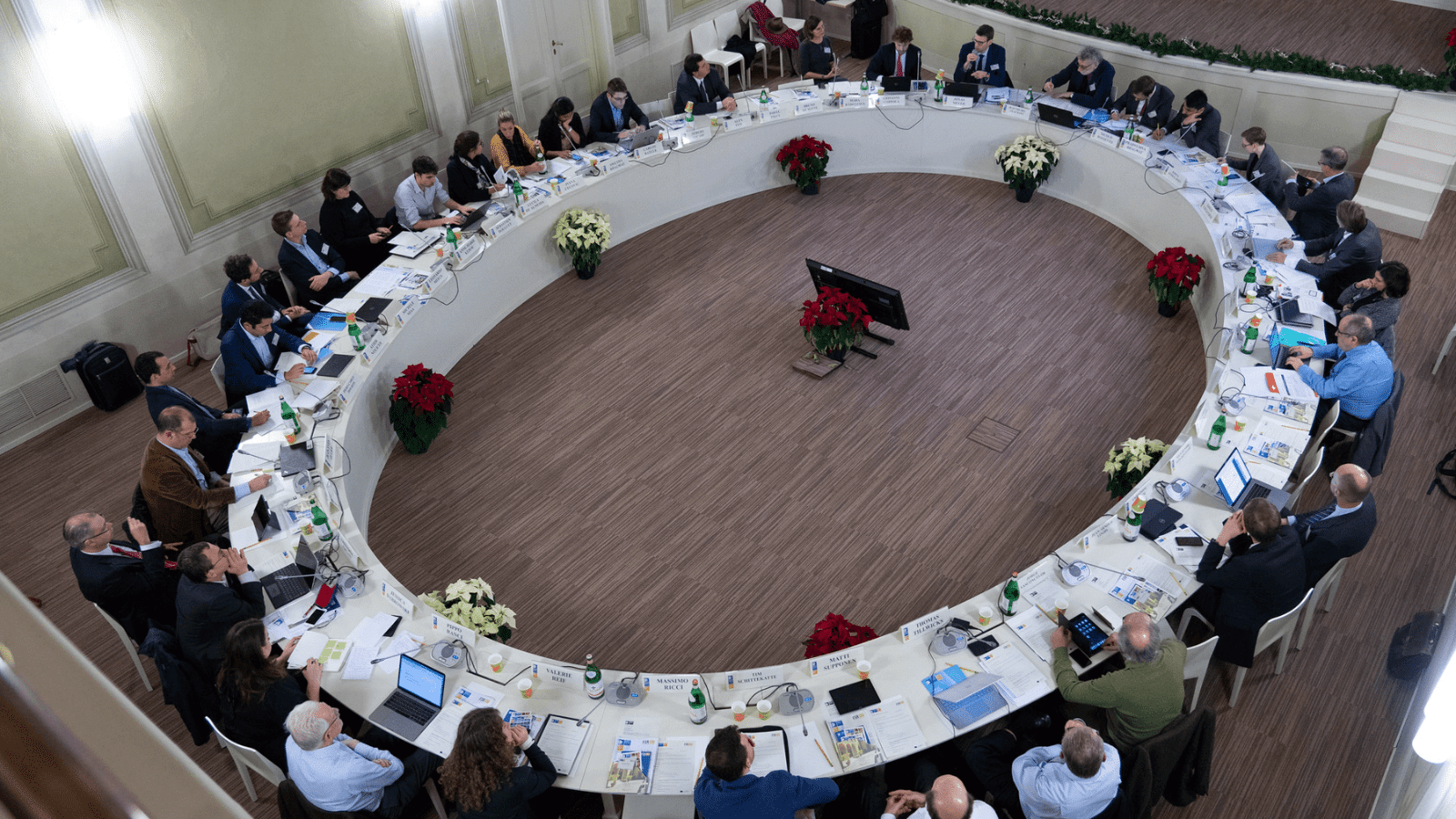
Jointly organized by FSR Transport and the Florence Competition Programme in Law and Economics
Following the usual approach of the Florence School of Regulation, this Executive Seminar will bring together stakeholders and academics to discuss competition in the passenger railway market in Europe.
With the adoption of the 4th Railway Package Europe is moving closer to a more competitive railway system.
The European Commission has been driving the change towards a Single European Railway Area in which European railway companies should be able to compete on largely interoperable infrastructure. But liberalization and market opening are means to an end: the competitive pressure should make the system more efficient and thereby improve the railway business and modal share overall. However, the merits of competition can only play out in the sector if undesired effects are prevented by competent regulatory authorities. In the railway sector, more competitive pressure can improve efficiency, but there is also need for cooperation and coordination in areas such as investment, research, innovation and capacity planning. After all, in spite of underdeveloped competition within the railway sector, significant competition for the railways comes from other transport modes, namely road.
Tendering subsidised lines will become mandatory by 2024. Open access operators will be able to offer competing commercial services on domestic long-distance routes throughout the EU beginning December 2020. Both railway companies and competent authorities need to prepare for this. Open access competition is currently limited to a few lines and a small set of competitors. Competitive tendering for Public Service Obligation (PSO) lines has brought down costs for some lines but the necessary institutions are not yet in place everywhere. There is currently a patchwork of different national approaches and past experiences. Yet, given the national character of the railway system, regulation needs to account for different national situations avoiding the downsides of a one-size-fits-all approach. Against this background, the European Commission is determined to set a level playing field and to improve enforcement of antitrust, State aid and regulatory rules in the sector.
This Executive Seminar will bring together sector representatives, railway regulators, competition regulators, and academics to discuss the state of play and future of competition in the passenger railway market.
Discussions will be structured along three questions and a concluding session:
- Challenges ahead in a competitive market – how to ensure the necessary coordination?
- Which way forward for open access competition and competitive PSO tendering? How to implement the new EU legal framework?
- How can competition policy (antitrust, State aid) contribute to a better functioning of railway markets?
- Concluding Session: Which way forward for competition in Passenger Railways in Europe?
DOWNLOAD
European Transport Regulation Observer
RELATED PRESENTATIONS
Introduction to Competition in Passenger Railways in Europe – MATTHIAS FINGER, Part-time Professor & Director of the Transport Area, Florence School of Regulation/EUI; and Professor, Ecole Polytechnique Fédérale de Lausanne
Introduction to Competition in Passenger Railways in Europe – HENRIK MØRCH, DG COMP, European Commission
Challenges Ahead in a Competitive Market: How to Ensure Necessary Coordination – ERIC STAEBE, Deutsche Bahn AG
The Success Factors for Market Opening of Rail Services in France – PATRICIA PERENNES, FATMA RAHIL, SNCF
More Competition, More Coordination? – AIMÉE VERHULSDONCK, Ministry of Infrastructure and the Environment Netherlands
UK Rail Passenger Services: Creating a Framework for Greater Competition – JOE QUILL, Office of Rail and Road UK
Competition in Passenger Railways in Europe – ALBERTO MAZZOLA, Ferrovie dello Stato
Introducing Competition in the Passenger Railway Sector: Open Access and Competitive PSO Tendering – CHRISTIAN JAAG, Swiss Economics
Competition in Passenger Railways in Europe – BARBORA MIČKOVÁ, LEO Express
Which Way Forward for Open Access Competition and Competitive PSO Tendering? – OLIVIER SALESSE, Rail and Road Regulatory Authority France
Good Theory and Practical Implementation – FRANCESCO LO PASSO, Brattle Group
Challenges in Opening Spanish Passenger Railways to Competition – PEDRO HINOJO, National Commission on Markets and Competition Spain
Competition Law in Railway Markets? A Swiss Perspective – MICHAEL SCHMIDT, SBB
Which way forward for competition in Passenger Railways in Europe? – GUNNAR ALEXANDERSSON, Stockholm School of Economics
Open Access Passenger Rail Competition in the Czech Republic – TOMÁŠ PALETA, Masaryk University
A big thank you to everyone discussing Railway Competition with us!@EU_Competition @Transport_EU #railways https://t.co/gQ1ummHmgz pic.twitter.com/5w3Z7y2Vso
— FSR Transport (@FSR_Transport) 19 giugno 2017
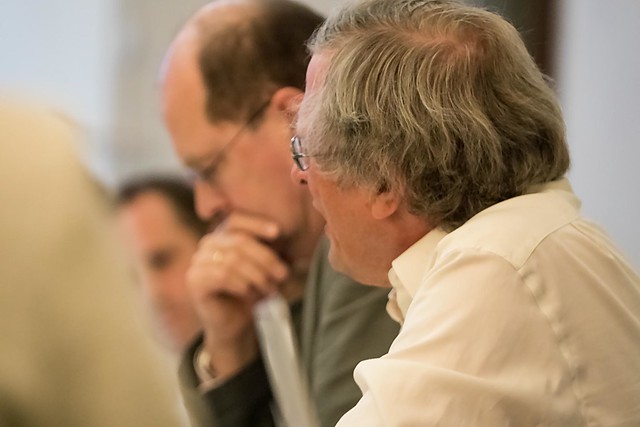
PICTURES OF THE DAY
Don’t miss any update on our events
Sign up for free and access the latest events from our community.
FSR Climate Annual Conference 2017

Chaired by: Simone Borghesi, Director FSR Climate
Download the programme.
Papers and presentations
Videos
The 2017 Annual Conference on the Economic Assessment of European Climate Policies took place at the European University institute in Florence on 30 November- 1 December 2017.
The conference covered the main climate-related existing policies, at EU, national and subnational levels and included four plenary sessions on Energy efficiency, Renewable policies, Environmental taxation and EU ETS.
Each session featured an invited speaker:
Energy efficiency: Andreas Löschel (University of Münster)
Renewable policies: Carolyn Fisher (Resources for the Future, USA)
Environmental taxation: Cameron Hepburn (University of Oxford and London School of Economics, UK)
EU ETS: Antoine Dechezleprêtre (London School of Economics, UK).
The conference keynote speech was delivered by Lucas Bretschger (ETH Zürich, Switzerland).
Videos
Keynote and plenary speakers highlights
Basic climate model: theory and policy, Lucas Bretschger (Keynote speech)
The impact of the EU ETS on carbon emissions and economic performance, Antoine Dechezleprêtre
Energy efficiency and energy demand flexibility, Andreas Löschel
Papers/Presentations
30 NOVEMBER
Plenary presentation: EU ETS
The impact of the European Union emissions trading system on carbon emissions and economic performance
Antoine Dechezleprêtre, OECD and London School of Economics
Session 1: Emissions trading
Trust, compliance and International regulation
Ara Jo, London School of Economics
A theory of gains from trade in multilaterally linked ETSs (PAPER)
Baran Doda, London School of Economics, Simon Quemin, Luca Taschini
Impacts of the UK carbon price floor: a machine learning approach
Jan Abrell, Mirjam Kosch, ETH Zürich
Session 2: Renewables
Putting renewable energy auctions into action – An agent-based model of onshore wind power auctions in Germany
Vasilios Anatolitis, Fraunhofer ISI, Marijke Welisch
Can the US keep the PACE? A natural experiment in accelerating the growth of solar electricity (PAPER)
Nadia Ameli, University College London, Mauro Pisu, Daniel M. Kammen
Does the stick make the carrot more attractive? State mandates and uptake of renewable heating technologies
Martin Achtnicht, Robert Germeshausen, Kathrine von Graevenitz, Centre for European Economic Research
Keynote speech
Basic climate model: theory and policy
Lucas Bretschger, ETH Zürich
Plenary presentation: Environmental taxation
Making carbon pricing work
Cameron Hepburn, University of Oxford and London School of Economics
Session 3: Energy and carbon taxation
Compensating households from carbon tax regressivity and fuel poverty: a microsimulation study (PAPER)
Audrey Berry, Centre International de la Recherche sur l’Environnement et le Développement
Time-consistent carbon pricing
Olga Chiappinelli, DIW Berlin, Karsten Neuhoff
North-South transfers of climate-mitigation technologies: the crowding-out effect on relocation
Julie Ing, Jean-Philippe Nicolaï,| ETH Zürich
Session 4: Energy efficiency
Relations between preferences over risk, time, and losses and household adoption of energy efficient technologies in Europe (PAPER)
Joachim Schleich, Grenoble École de management, Xavier Gassmann, Thomas Meissner, Corinne Faure
Efficiency gap and optimal energy conservation incentives
Franz Wirl, University of Vienna
Heterogeneous treatment effects in energy efficiency upgrades: an econometric analysis of UK policies
Daire McCoy, London School of Economics, Francois Cohen, Antoine Dechezleprêtre, Raphaela Kotsch
Plenary presentation: Renewable policies
The case for a reserve price in the EU ETS
Carolyn Fischer, Resources for the Future
Session 5: Multiple instruments in climate policy
On the dynamic efficiency of trade-related climate policy instruments – competitive pressure and emission-reducing innovation
Claudio Baccianti, Oliver Schenker, Frankfurt School of Finance & Management
Carbon contracts: a way to finance innovative low carbon investments
Jörn C. Richstein, DIW Berlin
As bad as it gets: how climate damage functions affect growth and the social cost of carbon (PAPER)
Lucas Bretschger, Aimilia Pattakou, ETH Zürich
Session 6: Climate and energy policy issues
Let’s talk about the weather: the impact of climate change on central banks (PAPER)
Sandra Batten, Bank of England, Rhiannon Sowerbutts and Misa Tanaka
EU climate change policies from an EP perspective
Georgios Amanatidis, European Parliament
Environmentally counterproductive support measures in Austria – empirical analysis for energy and transport (PAPER)
Daniela Kletzan-Slamanig, Austrian Institute of Economic Research, Angela Köppl
Why renewable policy must fully account for renewable gas
Tim Cayford, Eurogas, Eva Hennig, Thüga AG
Paper (by Tim Cayford)
1 DECEMBER
Session 7: Emissions trading
Flexibility in the market for International carbon credits and price dynamics difference with European allowances (PAPER)
Claire Gavard, Centre for European Economic Research, Djamel Kirat
Carbon pricing, coastal proximity and plant survival: evidence from the European cement sector
Tobias Udsholt, OECD, Misato Sato
Strategic delegation and centralised climate policy (PAPER)
Maria Arvaniti, Umeå University, Wolfgang Habla
Session 8: Renewables
Local labor impact of wind energy investment: an analysis of Portuguese municipalities
Hélia Costa, Toulouse School of Economics, Linda Veiga
The economics of renewable energy support and implications for policy design
Jan Abrell, ETH Zürich, Clemens Streitberger, Sebastian Rausch
The effect of intermittency on the integration of wind, natural gas and coal
Aryestis Vlahakis, ETH Zürich
Plenary presentation: Energy efficiency
Energy efficiency and energy demand flexibility
Andreas Löschel, University of Münster
Session 9: Energy and carbon taxation
Waste is money: behavioral changes in waste generation behavior when households pay-as-they throw
Marica Valente, Humboldt University Berlin and DIW Berlin
The impacts of energy prices on industrial foreign investment location: evidence from global firm level data
Aurélien Saussay, OFCE, SciencesPo, Misato Sato
The impact of energy prices on employment and environmental performance: evidence from French manufacturing establishments
Francesco Vona, OFCE, SciencePo
Session 10: Renewables
On the economics of recycling and small open circular economies
Juan F. García, KU Leuven, Sandra Rousseau, Johan Eyckmans
Energy transition, technology spillovers and policies (PAPER)
Chiara Colesanti Senni, ETH Zürich, Adriana Marcucci
How much does policy stability matter for policy effectiveness? An econometric study of feed-in tariff policies and solar PV deployment in 15 countries from 2000-2012
Mook Bangalore, London School of Economics
*******
Speakers bios

Lucas Bretschger is Full Professor of Economics/Resource Economics at ETH Zurich and President of the European Association of Environmental and Resource Economists (EAERE). His main research interests are the theory and policy of natural resources and the environment as well as growth, trade, climate, and public economics. He is a Research Associate at the University of Oxford and holds the title of Professor at the University of Zurich. He has been a consultant to the Swiss government on climate issues, a member of the Swiss delegation at international climate negotiations, and the founder of the SURED Conference on Monte Verità, which brings together leading experts on sustainable resource use and economic dynamics.
 Antoine Dechezleprêtre is a Senior Economist at the OECD where he heads the joint Green Growth work stream of the Economics Department and the Environment Directorate. He is currently on leave from the London School of Economics, where he is an Associate Professorial Research Fellow at the Grantham Research Institute on Climate Change and the Environment. His work deals principally with the impact of environmental policies on businesses, in particular on the development and adoption of cleaner technologies. His research has been published in international scientific journals in the field of applied microeconomics, environmental economics and energy economics. He holds a PhD in economics from Ecole des Mines de Paris (France).
 Carolyn Fischer is a Senior Fellow at Resources for the Future and the Marks Visiting Professor of Gothenburg University for 2017-2018. She is a Fellow of the CESifo Research Network, a recent Marie Skłodowska–Curie Fellow of the European Commission, and now a Council Member for the European Association of Environmental and Resource Economists. She is co-editor of Environmental and Resource Economics and serves on the editorial board of the Review of Environmental Economics and Policy and the International Review of Environmental and Resource Economics. She earned her Ph.D. in Economics from the University of Michigan—Ann Arbor in 1997.
Her research focuses on policy instrument design applied to a variety of environmental and resource management issues, including climate and renewable energy policies, carbon leakage, technological innovation, eco-certification, and wildlife conservation.
Cameron Hepburn is the Director of the Economics of Sustainability Programme, based at the Institute for New Economic Thinking at the Oxford Martin School. He is also Professor of Environmental Economics at the Smith School of Enterprise and the Environment, a Fellow at New College, Oxford, and a Professorial Research Fellow at the Grantham Research Institute at the LSE. He has published widely on energy, resources and environmental challenges across disciplines including engineering, biology, philosophy, economics, public policy and law, drawing on degrees in law, engineering and doctorate in economics. He provides advice on energy and climate policy to government ministers (e.g. China, India, UK and Australia) and international institutions (e.g. OECD, UN) around the world.
 Professor Andreas Löschel holds a chair for Energy and Resource Economics at the University of Münster and is Director of the Centre of Applied Economic Research Münster (CAWM) since 2014. He chairs the Energy Expert Commission of the German Government to monitor the energy transformation and was a Lead Author in the Working Group III contribution to the IPCC Fifth Assessment Report. The Handelsblatt ranking of German economists lists him among the Top-100 in 2017. In the Ranking of Economists of the Frankfurter Allgemeine Zeitung (F.A.Z.), he was several times among the 50 most influential economists in Germany. He is a member of the German National Academy of Science and Technology (acatech).
Past annual conferences
Don’t miss any update on our events
Sign up for free and access the latest events from our community.
More on the topic
FSR Transport Policy Advisory Council

To conclude its 2017 activities, FSR Transport is hosting its Policy Advisory Council. The Advisory Council gathers representatives of all donors, and provides suggestions to the Area Director concerning the Area’s working programme and financial plan. Continue reading “FSR Transport Policy Advisory Council”
Don’t miss any update on our events
Sign up for free and access the latest events from our community.
15th Florence Rail Forum: Private Financing of Railway Infrastructures
DOWNLOAD
Final programme
The Observer: Private Financing of Railway Infrastructure
Following the usual format of the Florence School of Regulation, the 15th Florence Rail Forum aims at offering a platform for senior stakeholders from regulators, railway undertakings, infrastructure managers, rail suppliers, authorities, associations and academics to take stock of topics relevant to mobility regulation and policies. Discussing with us on this occasion will be, among others, Mr Karel Vinck, European ERTMS Coordinator and Mr Keir Fitch Head of Unit at DG MOVE, European Commission.
Continue reading “15th Florence Rail Forum: Private Financing of Railway Infrastructures”
Don’t miss any update on our events
Sign up for free and access the latest events from our community.
Ancillary services from distribution: how to manage the revolution?


FSR online debate in collaboration with the SmartNet Project
Ancillary services from distribution: how to manage the revolution?
Moderated by:
- Nicolo Rossetto (FSR)
Speakers:
- Marco Rossi (SmartNet, RSE)
- Daan Six (SmartNet Project, Vito/Energy Ville)
- Carlos Madina (SmartNet Project, Tecnalia)
An open Q&A will follow.
In the very near future, distribution and transmission systems will have to cope with an increasing amount of intermittent renewable generation.
Who should manage the ancillary services distributed energy resources (DERs) are potentially able to provide?
The deployment of DG, ICT and more active consumers are changing the way distribution grids are planned and operated. It is a revolution that represents both a challenge and an opportunity. New technological and regulatory solutions must be developed. We will discuss and compare the different possibilities with the team of the SmartNet Project.
SmartNet is a 3-years research project funded by the Horizon 2020 programme dedicated to the analysis of the TSO-DSO interaction to enable ancillary services provision from distributed energy resources.
FSR & SmartNet join #EUSEW2017!
This online event has been conceived as an Energy Day event and organised in the context of the Sustainable Energy Week.
Learn more about the Energy Days.
Don’t miss any update on our events
Sign up for free and access the latest events from our community.
Webinar: The Baltic Sea Pipelines and EU Law

FSR Webinar:
‘The Baltic Sea Pipelines and EU Law’ │ 23 May 10.30 – 11.30 (CEST)
Join Professor Kim Talus (University of Eastern Finland and University of Helsinki) for an Open Access Online Lecture and Open Discussion on the Baltic Sea pipelines and EU law organised by the FSR Energy Law & Policy Area
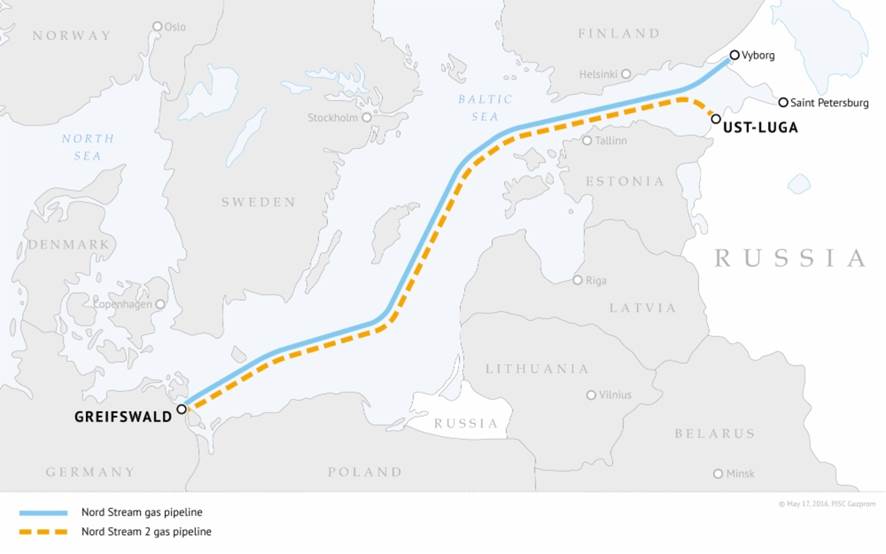
At present, Russia accounts for one third of the EU’s gas imports, a persistently troubling dependency for the EU. Since the announcement in 2015 of the Russian state-controlled energy group Gazprom’s $11 billion Nord Stream 2 project, intended to pipe natural gas from Russia across the Baltic Sea into Germany, it has been a contentious and deeply divisive issue among Member States.
Watch the Webinar Recording
Download the Presentation (PDF)
The EU has struggled to reach a consensus on the economic merits of the development versus the risks of strengthening Russia’s dominance in the European gas market and, in turn, being held captive to geopolitical manoeuvres. Multiple vying perspectives have drawn on EU law and EU internal energy market rules in arguments and counter arguments over the development of the pipeline.
- With both Russia and Germany having eschewed an intergovernmental agreement, what lies ahead for Nord Stream 2?
- Is Nord Stream 2 compatible with the principles of the Energy Union? With diversification and security of supply arguments against the project having already been rejected, to what extent, if at all, can EU law be applied to the project?
Don’t miss any update on our events
Sign up for free and access the latest events from our community.
More on the topic