




Archives: Events
Online event: EU electricity network codes, looking back and forward

EU electricity network codes, looking back and forward:
The development and amendment process.
FSR Online debate | 21 June 11am-12noon CEST
The third liberalization package introduced network codes to be developed by the European Commission, ACER, the ENTSOs, and stakeholders in order to implement the EU target model for the internal electricity market.
In this interactive live event, we will look
- back at the development process of the network codes ‘Made in Europe’
- forward to the winter package proposals to change the development process for new codes, and the amendment process for the existing codes ‘New Deal or Bad Deal for stakeholders?’
Moderator:
- Leonardo Meeus, FSR
Speakers:
- Marta Mendoza-Villamayor, Entso-e
- Martin Povh, ACER
- Hélène Robaye, Eurelectric
- Maria-Eugenia Leoz-Martin-Casallo, European Commission
Download the slides
Interested in this topic?
Learn more on our Online Course on EU Electricity Network Codes: 10 October – 30 November 2017, with Leonardo Meeus and Experts from ENTSO-E, ACER & European Commission
Don’t miss any update on our events
Sign up for free and access the latest events from our community.







1st Florence Maritime Forum. Ports: How to Regulate Logistics Interfaces?
Ports play an important role in maritime, road and rail transportation. The regulation of port activities, therefore, affects all the transport modes. This Forum aims at exploring the current challenges in ports’ regulation and their implications for transport in general and on intermodal transport in particular.
Ports were historically thought of as locations where vessels could load and discharge cargo; they were not considered as a transportation provider but as an interface. Today’s port is no longer an isolated node but instead is an integral part of the global logistics system or, as it is more commonly known, the global supply chain. The global supply chain is actually a network of individual supply chains that follow specific trade routes. Each component of the supply chain, including the ocean carriers, ports, terminals, and intermodal service providers, are equally responsible for the success of the transportation product being delivered. That transportation product must please the shipper or they will shift their business to another logistics system, i.e., route, and thus another port.
Ports have always been competitive with one another but now it is supply chains that compete for cargo and the economic development that accompanies port enterprises. Today’s competitive pressures come from not only business interests but also from shifting world trading patterns, maritime security threats, environmental regulations, and public and community demands and concerns including health and congestion. This requires the efficient, secure, and cost-effective transport of the goods from the seller to the buyer. With all these issues and the risk of disruptions to supply chain flows from natural and human-related incidents, how are governments to help promote maritime practices at these logistic interfaces and maintain the competitive-driven efficiencies that private businesses bring to the transportation enterprise?
The Forum will give the opportunity to senior stakeholders to address these issues by discussing, inter alia, the following questions:
- Who are currently the important actors in port regulation? And who should it be ideally?
- How do port regulations affect maritime and intermodal transport?
- How does the regulation of connecting transport modes (e.g. rail, road) affect the port activities?
- What actions can regulators take to ease the connectivity between maritime and land transport? How should governments help to promote maritime practices?
- Which are the challenges laying ahead?
For more information or early registration, please contact FSR.Transport@eui.eu
DOWNLOAD
Don’t miss any update on our events
Sign up for free and access the latest events from our community.


InnoGrid2020+ 2017: The Network of Networks
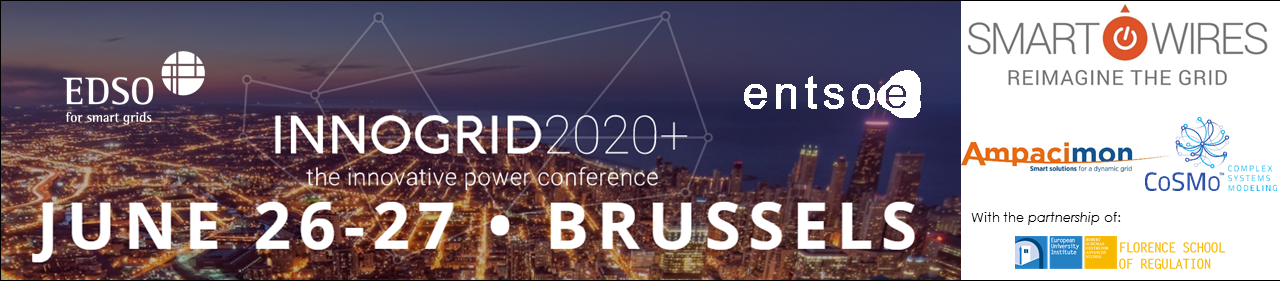
The Florence School of Regulation is partnering with ENTSO-E and EDSO for Smart Grids in the organisation of the InnoGrid2020+ Conference, that will be held on 26-27 June in Brussels.
- Which hard and soft technologies can enable a smart and sustainable energy system?
- Which regulation is needed? Will the active customer paradigm and active system management become a reality?
- What would that mean for networks integration and the TSOs-DSOs interface?
- What is the role of data hubs and what are the European rules related to cybersecurity and privacy?
The Conference will focus its sixth edition on the arising Network of Networks, where power grids and transport, telecom and IT, digital and physical link up in an unprecedented manner. Special attention will be dedicated to the rapidly evolving transmission-distribution interface.
Maroš Šefčovič (Vice President for the Energy Union at the European Commission), Kaja Kallas (MEP), Kamila Kloc (Digital Single Market Deputy Head of Cabinet at the European Commission) and Alberto Pototschnig (Director of ACER) are only a few among the distinguished speakers that will contribute to the discussion.
Venue: The Square, Glass Entrance, Mont des Arts, 1000 Brussels
For further info visit InnoGrid 2020+’s page
Don’t miss any update on our events
Sign up for free and access the latest events from our community.

FSR Executive Seminar: EU Power System Operation and Solidarity: the Issues and the Practice

The Florence School of Regulation is hosting the 7th edition of its Executive Seminar on Thursday 22nd June 2017.
This exclusive event brings together high level representatives from TSOs, NRAs and the European Commission, as well as academics and industry experts in order to debate some of the most critical issues in the operation of the EU power system and the management of solidarity during power emergencies.
The Seminar is divided into two sessions as follows:
Session 1 – Regional Operation of EU Power System: Issues and Practice
What has to be operated at the regional level and why? What is already done at the regional level and how? What has to be done in terms of system safety and adequacy? What are the main regulatory obstacles to coordination? What is necessary beyond the implementation of network codes?
Session 2 – Solidarity in Power Emergency Management: Issues and Practice
The week 15-21 January 2017 has been tough for the EU power system. What did happen to the system? What was the portfolio of coordination and solidarity tools existing at the beginning of the week? What has been done during that week by the involved TSOs? What are the lessons to be learned for the next emergency event?
Please note that this is a closed-door event and participation is by invitation only.
Don’t miss any update on our events
Sign up for free and access the latest events from our community.
Presentation in Brussels: FSR report of the EU frame for Power Transmission System Regulation

Presentation of the FSR Report | 11 May 2017, 11.00-12.30
CEER Secretariat (Cours Saint-Michel, 30a – Brussels)
FSR check-up of the existing EU frame for Power Transmission System Regulation: missing pillars and roadblocks
Speakers:
- Jean-Michel Glachant(Director, FSR)
- Jorge Vasconcelos(Chairman, Newes)
- Ben Voorhorst(Chief Operating Officer, TenneT)
- Florian Ermacora (Head of Unit, DG ENER)
- Nicolò Rossetto (Researcher, FSR)
During the event, FSR will present its last research report “Moving the electricity transmission system towards a decarbonised and integrated Europe: missing pillars and roadblocks” and discuss the findings with relevant stakeholders.
For a preview of the Research Report, a Policy Brief is now available!
Draft agenda:
- 11.00 – 11.10: Welcome by J.M. Glachant
- 11.10 – 11.40: Presentation of the research report by J.M. Glachant and J. Vasconcelos
- 11.40 – 12.30: Panel debate on the identified missing pillars and blocking stones: are the most relevant ones? what is the position of the stakeholders? what are the ways forward?
- 12.30 – 13.30: Light lunch
Download the draft programme
Don’t miss any update on our events
Sign up for free and access the latest events from our community.


Drawing lessons from the unwieldy reforms of EU-ETS: Combining price and quantity management

SEMINAR
Speaker: Christian de Perthuis, Professor of Economics, Paris-Dauphine University; Head of the Climate Economics Chair
Discussant: Xavier Labandeira, Director, FSR Climate
Video recording of the seminar
Abstract by the author
At a conference on the EU-ETS in Florence in September 2012, I recommended rebuilding the market governance, with the creation of an independent market authority in order to provide flexibility and CO2 price predictability. Five years later, the process of reforming the EU-ETS has led to more complexity, lower CO2 prices and increasing difficulties to coordinate the joint management of the EU-ETS with other climate-energy policy instruments. In particular, the market stability reserve design, due to enter into force in two years, already appears to be unsuited to correct these imbalances. Drawing lessons from this experience, my new recommendations would be to introduce a hybrid scheme with a price corridor, transforming the EU-ETS in a “quasi tax” scheme for several years. This would make the functioning of the EU-ETS more similar to operating schemes in North-America and would give new perspectives to extend carbon pricing to others sectors (e.g. road transportation and building management). The main lesson from the EU-ETS experience seems that it is quite impossible, in the current context, to coordinate a European carbon market with other policy instruments.
Christian De Perthuis is Professor of Economics at Paris-Dauphine University and Head of the Climate Economics Chair. He started his career in the agricultural sector, went on to work in leading French research and forecasting institutes and headed the ”Mission Climat” of Caisse des Dépots between 2004 and 2008. He created the Climate Economics Chair of Paris Dauphine University in 2010. His research focuses on the economics of climate change and ecological transition. Author of several articles and books, he is co-author of Green Capital (Odile Jacob, 2013, Columbia University Press, 2015) and of Le Climat, à quel prix? La négociation climatique (Odile Jacob, 2015) He chaired the «Green Tax Commission », which helped the French Government to set up a domestic carbon tax in 2014.
Don’t miss any update on our events
Sign up for free and access the latest events from our community.
More on the topic









Online debate: FSR check-up of the EU frame for Power Transmission System Regulation
FSR Online debate on 3 May 2017, 11am CEST
FSR check-up of the EU frame for Power Transmission System Regulation: missing pillars and roadblocks
An interactive online event to present and discuss the missing pillars and the roadblocks identified by the Florence School in the context of the Europeanisation of the power transmission system.
The online debate will anticipate the release of the new FSR Research Report “Moving the electricity transmission system towards a decarbonised and integrated Europe: missing pillars and roadblocks”.
Moderator:
- Glachant Jean-Michel (Director, FSR)
Speakers:
- Dobbeni Daniel (Former President, ENTSO-E)
- Schmitt Laurent (General Secretary, ENTSO-E)
- Vasconcelos Jorge (Chairman of NEWES)
- Nicolò Rossetto (Researcher, FSR)
Watch the Recording
For a preview of the Research Report, a Policy Brief is now available!
Don’t miss any update on our events
Sign up for free and access the latest events from our community.
The end of the long-term contracts era: which consequences for the EU Gas Market?
Long-term contracts (LTCs) were the most commonly used supply agreements in the gas sector and also generally considered necessary to guarantee the security of supply. EU gas infrastructures were often developed taking into account the existing LTCs in place.
In the past 10 years, the EU gas market has gone through profound structural changes: the elimination of national barriers and the greater liquidity enhanced by market opening and liberalisation gradually started de-linking the gas price formation from oil indexation and turning towards European hubs’ price reference. Furthermore, gas demand has become more variable – and its fluctuation depends on a number of additional and external dynamics – in primis the subsidisation of renewable energy.
While on one side the shift towards short-term contracting in the gas market was a successful outcome of the EU energy market reform, it might also become soon a concern to TSOs, as the phase-out of long-term contracts might create more uncertainty regarding their future revenue streams. According to a recent analysis performed by the European Commission, the existing long-term commodity contracts are expected to terminate in the course of the next 20 years.
- Will this trend have a fundamental impact on the future of the EU gas market?
- To what extent will it affect TSOs revenues and, consequently, transportation tariffs?
- How important is the actual flow of gas (rather than the contracted capacity) and the forecast of gas demand?
- Are long-term commodity contracts the only way of guaranteeing the security of supply?
- Can well-diversified sources and liquid hubs provide an equivalent guarantee?
The Workshop will try to answer these questions investigating the impact of the reduction in transportation capacity contracted long-term on the revenues of TSOs and the level of network charges; as well as exploring the way more liquid hubs and greater market integration can replace long-term commodity contracts in providing security of gas supply.
This workshop is exclusively open to national regulators, representatives from public bodies and associate & major donors of the FSR Energy area.
Download the programme
Don’t miss any update on our events
Sign up for free and access the latest events from our community.
Executive Symposium: European Regulation of Airport Charges

Organised jointly by the Cabinet of Commissioner Violeta Bulc, the European Commission Directorate General for Mobility and Transport (DG MOVE) and the Transport Area of the Florence School of Regulation at the European University Institute (FSR Transport), this executive symposium explores the challenges for the regulation of airport charges in the EU.
This event is by invite only.
Stakeholder symposium on future of #EU airport charges common solutions for stronger aviation sector benefiting pax pic.twitter.com/ZnBIYefiT2
— Violeta Bulc (@Bulc_EU) 17 giugno 2017
ORGANIZED WITH:

Don’t miss any update on our events
Sign up for free and access the latest events from our community.
Executive Symposium: Shaping the future of the EU Maritime Transport Cluster
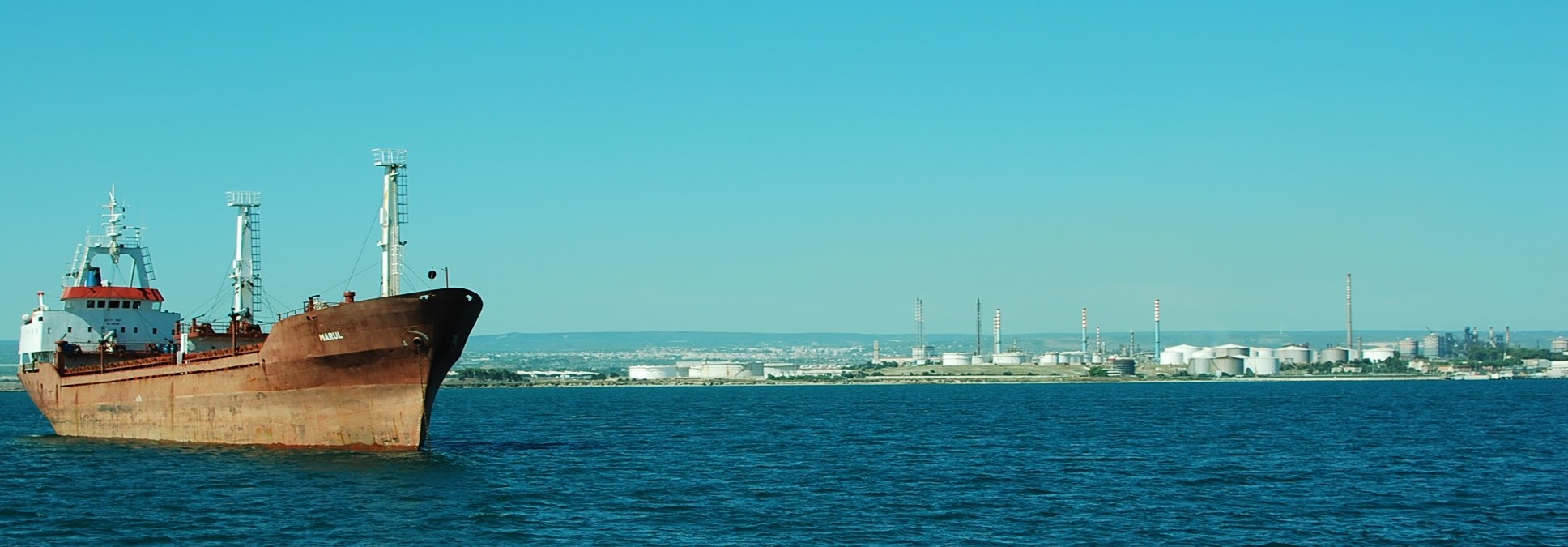
Organised jointly by the Cabinet of Commissioner Violeta Bulc, the European Commission Directorate-General for Mobility and Transport (DG MOVE) and the Transport Area of the Florence School of Regulation at the European University Institute (FSR Transport), this executive symposium explores the challenges for EU maritime transport in the current regulatory context.
This event is by invite only.
Everybody on board to sustain EU Maritime global leadership #EUmaritimeYear ⚓️ pic.twitter.com/pSPzavOvSA
— Violeta Bulc (@Bulc_EU) 5 maggio 2017
DOWNLOAD
ORGANIZED WITH:
Don’t miss any update on our events
Sign up for free and access the latest events from our community.
9th Florence Air Forum. The Single European Sky Performance Scheme

Following the usual approach of the Florence School of Regulation, stakeholders and academics will join the 9th Florence Air Forum and actively debate the most important topics in the field of air transport. On this occasion, the discussion will revolve around performance regulation and the Single European Sky performance scheme in particular.
Continue reading “9th Florence Air Forum. The Single European Sky Performance Scheme”
Don’t miss any update on our events
Sign up for free and access the latest events from our community.
14th Florence Rail Forum: railway undertakings in the mobility of the future

Digitalization is producing a dramatic change in the transportation sector, across and within existing modes of mobility. On the one hand, the Information and Communication Technologies (ICTs) have enabled the development of new mobility solutions, often embraced by citizens and customers, disrupting the long-lasting reign of traditional mobility modes, such as rail. On the other hand, the ICTs are also transforming traditional mobility modes, by making them potentially safer, more user-friendly and more reliable.
Continue reading “14th Florence Rail Forum: railway undertakings in the mobility of the future”
Don’t miss any update on our events
Sign up for free and access the latest events from our community.