




Archives: Events
From energy saving to rationing: getting it right
FSR Regulatory Policy Workshop Series 2022-2023
This Workshop intends to review the state of the art with respect to measures aimed at promoting or mandating energy savings and with the approach to energy demand rationing.
For this purpose, the Workshop, after an opening part, will be divided into two Sessions:
- Session I, in the morning, will focus on measure to promote or mandate energy savings, with particular focus on the extent to which these measures have been designed to achieve the highest level of savings at the lowest social costs;
- Session II, in the afternoon, will aim to review how planning for rationing has been approached in the different jurisdictions.
For more info, download the full programme
Event under Chatham House rules. Please do not tweet speakers’ names
Don’t miss any update on our events
Sign up for free and access the latest events from our community.
Speakers


A new future for voluntary carbon markets through improved integrity and transparency?

Many countries look at carbon pricing as part of their climate policy mix. A key development is the emergence of the voluntary carbon market (VCM); a debate is raging about how to improve its environmental credibility. The VCM should facilitate credible investments in carbon removals and the transfer of clean technologies across the globe. Will this lead to a significant increase in market volume? Could voluntary and regulated carbon markets converge? Is a future global carbon price possible?

Date: Tuesday 15 November
Time: 9:30 – 10:30 EET
Location: EU Pavilion
Speakers are:
- Jos Delbeke, EUI
- Jan Cornillie, EUI
- Mashael AlShalan, AEON
- David Rademacher, E.ON
- Andrea Abrahams, IETA
- Richard Newell, Resources for the Future
Register here to attend the event.
The event presented here is organised by members of the Delegation of the European University Institute to COP27, not FSR directly.
Don’t miss any update on our events
Sign up for free and access the latest events from our community.
More on the topic










Financing carbon neutrality in developed and developing countries: carbon pricing and beyond

To meet the ambitious goals of the Paris Agreement, developed and developing economies will need to decarbonize at a fast pace. The ability to channel finance to mitigation activities will be essential in this process. Facilitated by financial institutions, countries need to establish frameworks governed by clear rules to ensure emissions get effectively reduced. Among other mechanisms, pricing carbon is key in achieving an ambitious and just transition in both developed and developing countries. It can also generate income to address equity issues.
This COP27 event will take place on Friday 11 November 2022, at 16:45-18:15 EET in the Room Amon of the UNFCCC Pavilion, and will be live-streamed on Youtube.
The official side event is co-organised by PIK Potsdam, EUI, ICAP and MCC Berlin.
Watch the streaming here:
Chair, introduction and conclusions
- Johan Rockström, PIK
Moderator of the discussion
- Jos Delbeke, EUI
Discussants:
Part 1: Carbon pricing, state of play globally
- Simone Borghesi, EUI and University of Siena
- Stefano De Clara, ICAP
- Martin Hession, European Commission
Part 2: Carbon pricing, climate finance perspectives in developing countries
- Silvie Kreibiehl, IPCC AR6 WG3 Finance Chapter CLA
- Dora Benedek, IMF
- Bernice van Bronkhorst, World Bank (tbc)
Part 3: Discussion with the presenters and Q&A with the audience
Check out the presentations:
- Stefano De Clara, ICAP – Emission trading worldwide
- Simone Borghesi, EUI – Carbon pricing and the social acceptability of climate policies
Don’t miss any update on our events
Sign up for free and access the latest events from our community.
An Overview of Recent Energy Case Law from the CJEU, December 2022

The FSR Energy Union Law Area is pleased to announce the next edition of its biannual update on recent and pending energy case law at the Court of Justice of the European Union (CJEU). This event will offer a comprehensive overview of the most significant energy cases since the last case law update, which took place in June 2022.
In this briefing, Dr Adrien de Hauteclocque, Head of Cabinet of the President of the General Court and Professor Leigh Hancher, Director of the FSR Energy Union Law Area, will discuss highlights from the latest case law.
The cases that will be discussed include:
- C-46/21 P – ACER v Aquind (Opinion of Advocate General Campos Sánchez-Bordona)
- T-631/19 – BnetzA v ACER
- C-721/20 – DB Station & Service
- C-348/20 – Nord Stream 2 v Parliament and Council
- T-793/19 – Tirreno Power v Commission,
- T-794/19 – Set v Commission
- C-578/21 P – Irish Wind Farmers’ Association and Others v Commission
- T-469/20 – Netherlands v Commission
- T-101/18 – Austria v Commission
- Joined Cases C-702/20 and C-17/21 (Opinion of Advocate General Rantos)
- C-470/20 – Veejaam and Espo (Opinion of Advocate General Rantos)
The event will also include a discussion of energy law cases currently pending before the Court.
More on ECJ Case Law
If you want to catch up on earlier CJEU developments, you can watch the recordings of our sessions from June 2021 here, December 2021 here, and June 2022 here.
Energy Union Law & Policy
FSR Energy Union Law area provides a forum for critical discussion and independent analysis of the developments in EU energy law and policy. Our activities are aimed at professionals from national energy regulatory authorities, European and international institutions, energy-focused law firms, consultancies and energy utility companies.
Don’t miss any update on our events
Sign up for free and access the latest events from our community.

Meeting Africa’s Energy and Climate Goals

Faced with rapid urbanisation, growing population and increased electricity demand, African countries must radically transform their energy systems to address challenges faced by utilities. Power utilities in Africa are in a vicious cycle of financial deficit and exhibit poor technical performance, with the consequence of an insufficient investment in electricity supply infrastructure, poor system reliability and low access rates.
What are the priority areas for Africa in preparation to meet the climate and development goals? How can mini-grids and regional power pools help address Africa’s energy access needs and what is the role of natural gas in Africa’s energy mix?
FSR faculty members Jean-Michel Glachant, Christine Juta and Elias Zigah will discuss these issues with Ignacio Pérez Arriaga.
Host
Jean-Michel Glachant
Guest Speaker
Ignacio Pérez Arriaga| Interim Director African School of Regulation
Discussants
Christine Juta| FSR
Elias Zigah| African School of Regulation
Agenda
Opening remarks and introduction
Speaker: Ignacio Pérez Arriaga
Discussion with Christine Juta and Elias Zigah
Q&A with the audience
Don’t miss any update on our events
Sign up for free and access the latest events from our community.
Speakers
22nd Florence Rail Forum: Electricity and Infrastructure Managers – Is there a Need for Regulation?

Electricity is used for railway traction. With the 4th Railway Package, traction current became excluded from the Minimum Access Package to be provided by the Infrastructure Managers (IMs) and was declared an additional service that could be acquired from third parties or even directly generated by the Railway Undertakings (RUs) themselves. It is, however, still common in many Member States to have the IMs as the only providers (the so-called “intermediaries”) of electricity for traction, be it for legal or for technical reasons. The question of traction current has recently gained attention because of the decarbonisation imperative on the one hand and the rise in electricity prices on the other. Overall, there seems to be a need for clearer regulation.
In the context of their corporatisation, railway operators were unbundled and their electricity generation, if they had any, was often sold to electricity generating companies. Most IMs now buy electricity on the market, even though some of the IMs still generate their own electricity or a portion thereof. With increasing electricity prices IMs are forced to manage their electricity portfolio more proactively (futures, hedging, etc.). Some of the IMs are even considering going back into the generation business be it in order to reduce price risks or in order to take advantage of renewables generation along their infrastructures. There might even be opportunities for IMs to sell electricity, for example for charging electric vehicles at railway stations. This raises the question as to how far IMs can go in terms of energy management and generation, thus the need for regulatory certainty. In particular, there is a need to clarify the interface between railway and energy regulation.
Against this backdrop, the 22nd Florence Rail Forum will bring together European and national policymakers, regulatory bodies, railway undertakings, infrastructure managers, and academics, among others, with a view to examining the following three critical questions:
- What are the current practices in the different Member States in matters of electricity for traction? What are the foreseen practices in some Member States?
- What are the technical and legal issues that complexify the matter?
- Is there a need for clarification, also with energy regulation, and what would be the way forward?
Please note that participation at this event is by invitation only.
Speakers’ presentation slides
Introduction
Matthias Finger – FSR-Transport
Alberto Oeo Pizarro – IRG-Rail
Alberto Pototschnig – FSR-Energy
Session A
Christian Wolf – German Federal Network Agency
Florian Baentsch – DB Energie GmbH
Session B
Don’t miss any update on our events
Sign up for free and access the latest events from our community.




EU foreign subsidies regulation: what impact will it have on the energy sector

The European Union Foreign Subsidies Regulation will enter into force at the end of 2022. From September 2023 onwards, companies carrying out concentrations (mergers and acquisitions and JVs where one of the parties has a global turnover exceeding €500 million), or involved in procurement procedures above €250 million, will have to inform the European Commission about ‘financial contributions’ such as subsidies, the tax break that they received from non-EU governments, which exceed relative low thresholds.
More widely, the Commission can open an investigation into such subsidies under its own initiative. Where the financial contribution/subsidy has a distortive effect on the EU internal market, the Commission can prohibit the transaction/tender award, or otherwise intervene to impose remedies.
This important new piece of legislation is intended to ‘level the playing field for EU companies, competing with undertakings from third companies. It will pose major substantive and procedural challenges for all energy companies, whether EU or from abroad.
During this policy debate, Christof Schoser, the Head of Task Force Third- County Subsidies at the European Commission’s Directorate-General for Competition will present the regulation on foreign subsidies and explain how it is intended to work in practice – notably how companies should prepare to comply with the notification obligation.
Mr Schoser will also highlight how the Commission might interpret the notion of a distortive effect on the EU internal market.
Energy companies already need to start preparing for this Regulation now, and this is a unique opportunity to hear first-hand how they should do so.
Programme:
Introduction and moderation
Christopher Jones | Florence School of Regulation (FSR)
Keynote presentation
Christof Schoser | European Commission
Discussant:
Ilaria Conti | FSR
Marzia Sesini | FSR
Presentations
-
Foreign Subsidies Regulation
Christof Schoser
Don’t miss any update on our events
Sign up for free and access the latest events from our community.
Speakers

FSR Climate Annual Conference 2022
FSR Climate is pleased to announce its 8th Annual Conference on the Economic Assessment of European Climate Policies to take place online on Thursday 1 and Friday 2 December 2022.
The conference will cover the main climate-related existing policies at the EU, national, international and sub-national levels. It will include three sessions on Environmental taxation, Emissions trading, and Energy Transition. In addition, the conference will comprise a keynote speech from Mar REGUANT (Northwestern University), and a policy session focused on the key outcomes of COP27.
The FSR Climate Annual Conference will be held online through Zoom Webinar.
Chair: Simone BORGHESI (FSR Climate/EUI & University of Siena)
Thursday 1 December
10:00-12:15 | Session – Environmental taxation
- Till REQUATE (Kiel University) – Commitment Timing to Environmental Policy and the Adoption of Low-Pollution Technologies: An Experiment [abstract] [slides]
- Adrien FABRE (CIRED & ETH Zurich) – Fighting Climate Change: International Attitudes Toward Climate Policies [abstract] [slides]
- Santiago RUBIO (University of Valencia) – Climate Clubs, Border Carbon Adjustment, and Trade Wars [abstract] [slides]
- Lucy NAGA (Durham University) – Kantian Preferences and Dirty Goods within the Ramsey Model of Optimal Taxation [abstract]
14:15-15:45 | Policy Session on the outcomes of COP27
- Jos DELBEKE (STG/EUI & KU Leuven)
- Karen PITTEL (ifo Institute & University of Munich)
- Jacob WERKSMAN (DG Climate Action)
- Angela CHURIE KALLHAUGE (Environmental Defense Fund)
More info here.
16:00-17:00 | Keynote Speech
- Mar REGUANT (Northwestern University) – Successes in the renewable expansion: learning from Spain and Chile [abstract] [slides]
Friday 2 December
10:00-12:15 | Session – Emissions trading
- Misato SATO (London School of Economics) – Carbon Leakage, Consumption, and Trade [abstract] [slides]
- Marie RAUDE (EconomiX) – Firms in the EU ETS: a categorisation based on transaction behaviour [abstract] [slides]
- Johanna CLUDIUS (Öko-Institut) – An ETS-2 for buildings and road transport: Impacts, vulnerabilities and the role of the Social Climate Fund [abstract] [slides]
- Michael PAHLE (PIK – Potsdam Institute for Climate Impact Research) – Fit for climate neutrality? The EU carbon market in 2030 and beyond [abstract] [slides]
14:00-16:15 | Session – Energy transition
- Pedro LINARES (Comillas Pontifical University) – How much storage do we need for the energy transition? [abstract] [slides]
- Thomas DULAK (Université Libre de Bruxelles) – The dog that didn’t bark: the reaction of financial markets to the court ruling in Milieudefensie v. Royal Dutch Shell plc. [abstract]
- Elena VERDOLINI (EIEE & University of Brescia) – Policy choice, timing and stringency and the direction of innovation [abstract] [slides]
- David RAPSON (UC Davis & Federal Reserve Bank of Dallas) – The Electric Ceiling: Limits & Costs of Full Electrification [abstract] [slides]
16:15-16:30 | Conclusions
The event is organised by EUI with the support of EAERE.

Past editions of the FSR Climate Annual Conference:
FSR Climate Annual Conference 2021
FSR Climate Annual Conference 2020
FSR Climate Annual Conference 2019
FSR Climate Annual Conference 2018
FSR Climate Annual Conference 2017
Don’t miss any update on our events
Sign up for free and access the latest events from our community.
Capacity Mechanisms in the EU Energy Market: The Launch of the Second Edition Book

This FSR Insights event will host the editors of the forthcoming second edition of the “Capacity Mechanisms in the EU Energy Markets” book to discuss how and why the book is intended to serve as a point of reference for regulators and policy-makers on how to design optimal capacity mechanisms in Europe.
Since the first edition of the edited book “Capacity Mechanisms in the EU Energy Markets” (Oxford University Press, 2015), these mechanisms have become a fact of life in member states’ energy markets and one of the hottest topics in the broader European regulatory debate. Concerned about the security of electricity supply, national governments are implementing subsidy schemes to encourage investment in conventional power generation capacity alongside already heavily subsidized renewable energy sources.
With the increasingly connected European electricity markets, the introduction of a capacity mechanism in one country not only tends to distort its national market but also may have unforeseeable consequences for neighbouring electricity markets. As these mechanisms are adopted by member states with limited supra-national coordination, as well as consideration for the cross-border impact, they tend to cause severe market distortions and put the future of the European internal electricity market at risk.
The “Capacity Mechanisms in the EU Energy Markets” book will take stock of the experience so far about how capacity mechanisms work and what consequences they have for the European internal electricity market. In particular, it will:
- provide a cross-disciplinary view on capacity mechanisms, combining legal, economic and policy perspectives;
- include a detailed overview of national capacity mechanisms and their implications for the EU internal market;
- take a European approach, recognizing the need to understand the nature of market failures which are likely to occur in the European electricity markets;
- offers an outsider’s view on the current developments in Europe, including contributions of recognized extra-EU energy experts.
Before the event, watch the video pills
Host and moderator
Lucila de Almeida | Florence School of Regulation (FSR) and NOVA School of Law
Speakers and book editors
Leigh Hancher | FSR and Tilburg University
Adrien de Hauteclocque | FSR and Court of Justice of European Union
Kaisa Huhta | University of Eastern Finland and Centre for Climate Change, Energy and Environmental Law
Małgorzata Sadowska | ACER (TBC)
Discussants
Paolo Mastropietro | Comillas Pontifical University
Charles Verhaeghe | Compass Lexecon
Related material
Don’t miss any update on our events
Sign up for free and access the latest events from our community.
Speakers
Options for Dealing with the Energy Crisis: A Wholesale Gas Price Cap for the EU?
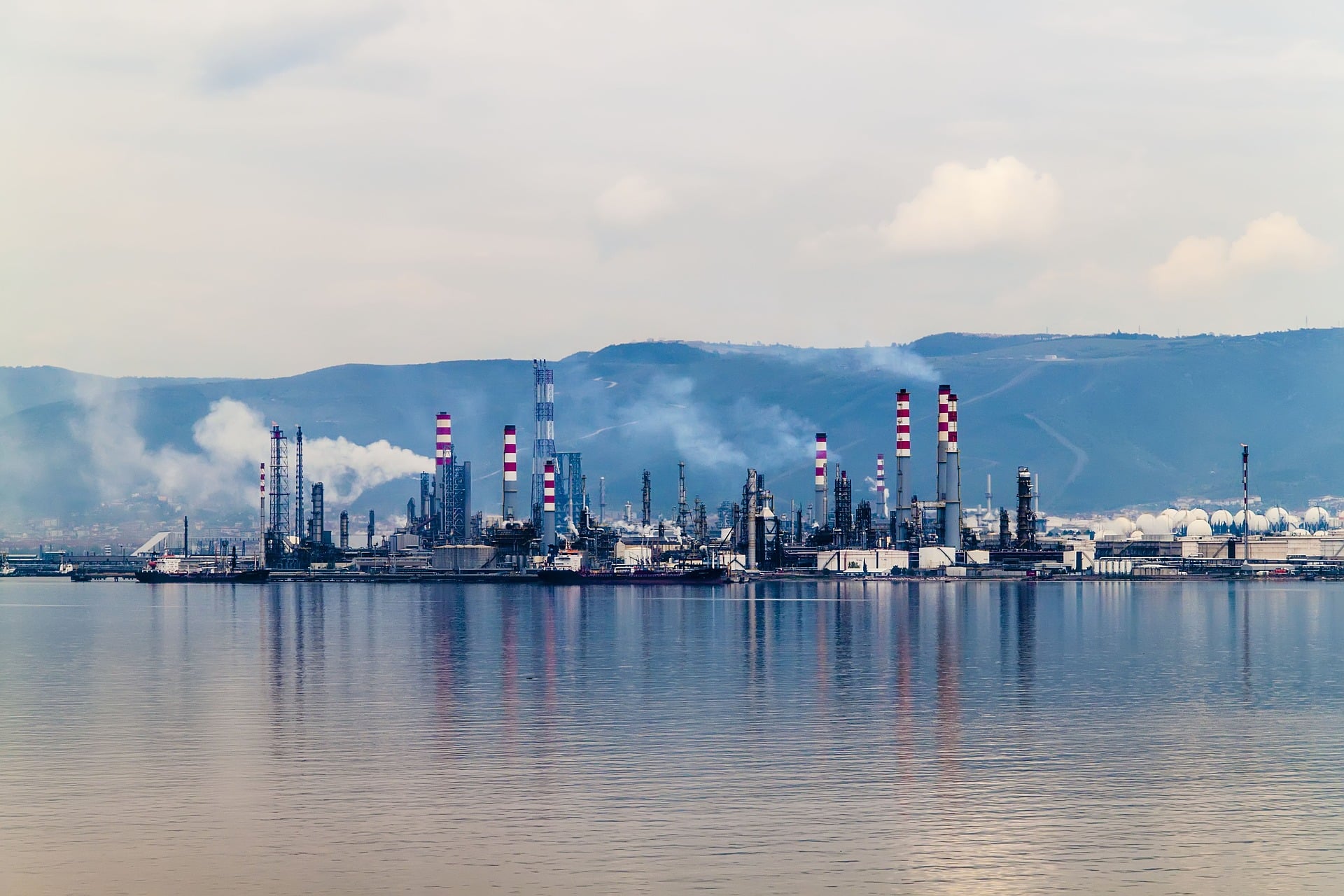
This webinar will discuss the options for designing a possible mechanism for a wholesale gas price cap. Oliver Koch from the European Commission will give an overview of questions which are being discussed among the European Union (EU) Member States – the state of play, followed by opinions from leading academics and think tanks.
The question of whether and how the EU should install a price cap for natural gas markets is at the top of the EU’s political agenda. Recent prices, around 1000% of the price of gas in 2020, with its knock-on effects on electricity markets, is causing hardship for citizens and business, with energy-intensive industry curtailing production, which threatens supply chains, and employment and is stoking inflation.
The situation is serious. On 30 September 2022, the EU adopted a regulation on an emergency intervention to address high electricity prices requiring Member States to adopt a cap on market revenues of infra-marginal generators and a profit clawback on oil and gas companies.
However, these measures partially treat the symptoms of high gas prices and are not the cause. They will only raise a fraction of the revenues that the Member States would need to properly subsidise citizens and industry over the coming two to three years, and they do not affect the underlying cause of high gas prices.
There is little surprise that many EU Member States are asking the European Commission for a proposal on a gas price cap. Little wonder, however, that other countries, previously reliant on Russian gas, are cautious. Once a price cap is installed, and thus no price competition exists between EU customers, how to ensure that available gas goes to the citizens and industries that need it most?
Programme:
Introduction and moderation
Christopher Jones | Florence School of Regulation (FSR)
Keynote presentation
Oliver Koch I European Commission
Discussant:
Alberto Pototschnig | FSR
Ilaria Conti | FSR
Bernd Weber | EPICO
Oscar Arnedillo | NERA Economic Consulting
Conclusions
Andris Piebalgs | FSR
Don’t miss any update on our events
Sign up for free and access the latest events from our community.
Speakers

System Operation and Data Management – Getting the Bigger Picture Into Focus?
The digitalization of Europe’s energy markets raises numerous questions in different regulatory contexts. This debate will examine novel regulatory issues raised by the drive towards system interoperability. What should be the overarching principles governing a European energy data space? What government interventions or data standards (if any) are required to make specific data use cases successful for achieving green transition goals? What types of regulatory instruments are best suited to achieve these goals?
On 1 June 2022, the European Union Agency for the Cooperation of Energy Regulators (ACER) was asked by the European Commission to submit non-binding framework guidelines setting out clear objective principles for the development of a network code on demand response, including load, storage and distributed generation. The new rules will aim at enabling market access for demand response, as well as facilitating the market-based procurement of services by distribution and transmission system operators.
The proposed new EU rules on Data governance will aim at enabling market access for demand response, as well as facilitating the market-based procurement of services by distribution and transmission system operators. In the meantime, the European Commission will also publish its Digitalisation of Energy Action Plan to develop a competitive market for digital energy services and digital energy infrastructure that are cyber-secure, efficient and sustainable and ensure interoperability of energy data, platforms and services.
What should be the overarching principles governing a European energy data space? What government interventions or data standards (if any) are required to make specific data use cases successful for achieving green transition goals? What types of regulatory instruments are best suited to achieve these goals?
Background
The proposed network code applies to all resource providers, all transmission and distribution system operators, and all wholesale markets and covers balancing and congestion management. A number of its draft articles (see the ACER framework guideline of June 2020) will apply to system operation and data management (articles 51 -74) and to congestion management (articles 84-104). These articles envisage, inter alia, new EU rules on Data governance including data quality, responsibilities, data privacy and confidentiality and interoperability.
Albeit highly technical, these provisions raise important ‘high-level’ questions about data management and transparency. For example, it may be argued that even if transparency towards market parties is important to support the development of liquid and efficient markets, the publication of detailed grid and market data can also be problematic in some cases as the ability to predict congestions could cause gaming and market power abuse opportunities.
On 23 February 2022, the European Commission published a proposal for a Regulation on harmonized rules on fair access to and use of data (hereafter referred to as the “Data Act”), to complement previous initiatives, including the EC communication entitled ‘A European strategy for data’ of 19 February 2020, and its Regulation 2022/868, commonly referred as the ‘Data Governance Act’. The proposed ‘Data Act’ will be legally binding and directly applicable in all member states. Its applicability to those active in the electricity markets at all levels is potentially very broad. The Commission is also expected to publish its roadmap on the Digitalisation of Energy Action Plan – to develop a competitive market for digital energy services and digital energy infrastructure that are cyber-secure, efficient and sustainable and ensure interoperability of energy data, platforms and services.
How will these more general initiatives interact with the specific issues to be covered in the proposed network code – if at all? The EU DSO Entity has for example already questioned a provision in the FG that TSOs shall receive all the data exchanged between the grid users and the SOs. It is argued that data exchange between system operators should be bi-directional and limited to necessary data, and further that it might be better to highlight that the new rules must be in line with higher-level data regulation (including the new Data Act).
This FSR debate seeks to explore several broad themes arising out of these new regulatory developments with experts on the regulation of the European Union’s electricity market.
Agenda:
Introduction & opening presentations
Leigh Hancher | Florence School of Regulation (FSR) and Tilburg University
Astrid Brunt | Statnett
Sonya Twohig | ENTSO-E
Panel discussion
Paul de Wit | EU DSO Entity
Marco Pasquadibisceglie | ARERA
Georg Harnter | Geode
Savannah Altvater | Eurelectric
Concluding remarks
Leigh Hancher | FSR and Tilburg University
Alberto Pototschnig | FSR
Don’t miss any update on our events
Sign up for free and access the latest events from our community.
Speakers






REPowerEU Plan from Blueprint to Action
This debate will host Matthew Baldwin, Deputy Director-General in the Directorate-General for Energy (DG ENER), at the European Commission to discuss the implementation status of the REPowerEU Plan.
The European Union (EU) REPowerEU Plan is the response to the hardships and energy market disruption caused by Russia’s invasion of Ukraine. The plan has four primary areas of action: energy supply diversification, energy savings, clean energy transition acceleration, investment and reform.
As Russia escalates the war, implementing the plan is necessary to provide households and industries with affordable energy. The plan requires strong coordination between the EU Member States and efficient implementation of agreed measures at the national level. The EU can find the best response to the energy crisis by acting together.
Short bio of Matthew Baldwin:
Mr Baldwin has been the Deputy Director-General of DG ENER since 1 June 2022. He oversees the work of the ‘Energy Platform Task Force’. Previously, he was Deputy Director-General in the Directorate-General for Mobility and Transport (DG MOVE), where he ran the Commission’s Horizon Europe Mission for 100 Climate Neutral and Smart Cities by 2030 and was the coordinator for road safety and sustainable urban mobility. He has an extensive experience in EU policy issues. He served in the Cabinets of the European Commission’s President Barroso, Commissioner Lamy and Commissioner Hill.
Don’t miss any update on our events
Sign up for free and access the latest events from our community.