




Archives: Events
Performance Review Commission: In Search of Flagships for Air Traffic Management Transformation

The Performance Review Commission (PRC) is an independent body supported by EUROCONTROL with a remit to review and report on European Air Traffic Management (ATM) performance. While performance has improved over time this has not always been consistent and the PRC believes that future improvements will require transformation change rather than just evolution.
With an objective to identify, review and champion successful transformation projects based on the ATM Masterplan and the European Green Deal the PRC has created a Transformation Support Strategy. It shall enable the analysis of the contribution of new technologies and concepts on the future performance of the ATM-system. Through this process the PRC aims to identify flagship projects, monitor their performance delivery over time, help stakeholders understand the challenges and benefits of implementing these innovative transformational projects and thereby stimulate and encourage ATM improvements.
To engage key executive stakeholders in this process the PRC is hosting a workshop entitled “in search of flagships for ATM transformation” which will take place in Brussels on 22nd February 2023. The focus will be on understanding the business level benefits of delivering transformation and overcoming the challenges, rather than on operational and technical details.
Programme
| 08:30 – 09:00 | Welcome Coffee |
| 09:00 – 09:30 | Introduction
|
| 09:30 – 09:45
|
PRC Transformation Support Strategy (TSS)
|
| 09:45 – 10:45 | Examples of flagships
Virtual Centres: Challenges for scaling up and delivery
Optimum trajectory: an idea for transformation
Open discussion about TSS and flagships |
| 10:45-11:00 | Coffee break |
| 11:00 – 12:00
|
Systemic view and potential flagships
Open discussion followed by summary |
| 12:00 – 13:00 | Transversal view and potential flagships
Open discussion followed by summary |
| 13:00 – 14:00 | Sandwich lunch |
| 14:00 – 15:30
|
Operational/entrepreneurial view and potential flagships
Open discussion followed by summary |
| 15:30 – 15:45 | Coffee break |
| 15:45 – 16:30
|
Final Summary and Closing Remarks
|
Please note that participation in this workshop is by invitation only.
To request more information you may contact FSR.Transport@eui.eu
Don’t miss any update on our events
Sign up for free and access the latest events from our community.




A deep dive on renewable hydrogen and industrial policy going into 2023: The US, EU, & beyond

In an effort to bring some clarity to the evolving landscape of industrial policy going into 2023, we dedicate this instalment of FSR Debates to what is happening in the US and EU.
There has been much consternation in Europe about the US Inflation Reduction Act (IRA) and the impact it could have on the competitiveness of European industry. The European Commission is responding with its own measures, including revised State Aid Guidance to allow Member States to match the subsidies of third countries. These exchanges come in the midst of an energy crisis which has hit energy-intensive industries in energy import-dependent regions especially hard, Europe has seen a major reduction in industrial output over the past year as a result.
As emissions targets squeeze and technological cycles close, industry are taking their next investment decisions, looking at where the strongest case is to establish the next generation of industrial value chains. Clean energy vectors such as renewable hydrogen will be amongst the key components for the buildout of these economies, and as such, their cost-effectiveness and availability will contribute to the decision-making of industrial players.
“We are not exaggerating when we say that European industry — starting with the energy-intensive industries on the frontline — is facing an existential crisis.” (Luc Triangle, IndustriALL)
To open the session, Laima Eicke will cover the factors for success in different segments of industrial value chains based on her recent paper published with Nicola de Blasio. She will detail different classifications of countries based on their assets and limitations, as well as providing some case study examples – including Germany, the US, and Thailand. In the second part of the debate, the floor will be opened for debate amongst our panelists, covering expertise from around the world, with a focus on Europe and the US. The last minutes will be left for Q&A from the audience.
Programme
Introduction and moderation
Ilaria Conti | FSR
Keynote presentation
Laima Eicke | IASS, Harvard
Discussants
Michael Mehling | MIT, University of Strathclyde Law School
Matthew Bravante | BNEF
Laima Eicke | IASS, Harvard
Ruud Kempener | European Commission
Andris Piebalgs | FSR
Conclusions
Christopher Jones | FSR
Don’t miss any update on our events
Sign up for free and access the latest events from our community.
Speakers
More on the topic



Are contracts-for-differences here to stay?

The European energy crisis is dragging on, and voices to reform electricity markets are getting louder. Market reforms are going to be discussed (and potentially already implemented) within the first months of 2023. Reforms may involve changes in pricing rules to eliminate so-called windfall profits and give consumers access to cheap renewables. Leading academics are advocating for hybrid markets that encompass spot markets with marginal pricing as well as mandated long-term fixed-price contracts. The systematic integration of mandated long-term contracts into electricity markets would be the largest change in electricity markets since they were established some twenty years ago. Such long-term contracts can take the form of Contracts-for-Difference, allocated via competitive procurement.
Contracts-for-Differences have been used by governments in the procurement of renewable energy for many years now. But, what are these Contracts-for-Differences precisely? In which form and function do they come on different European markets?
In this FSR Insights event, Lena Kitzing will give an overview of Contracts-for-Differences used for renewable energy procurement, and their role as risk management tool to facilitate financing. Lena will also reflect on how Contracts-for-Difference have never seemed to be intended to stay here for good – the ultimate goal of supporting renewable energies was getting them ‘market-ready’ after all. This raises the question of how the design of Contracts-for-Difference must be rethought so that they can become a permanent part of electricity market design?
Hosts
- Leonardo Meeus | Florence School of Regulation (FSR)
- Lucila de Almeida | FSR & Nova School of Law
Keynote Speaker
- Lena Kitzing | DTU Department of Wind and Energy Systems
Discussants
- Pablo Rodillas | Comillas Pontifical University
- Anne Held | Fraunhofer Institute for Systems and Innovation Research ISI
Want to know more about the topic? Check out our course on Regulation and Integration of Renewable Energy, directed by Lena Kitzing and Mario Ragwitz.
Lena Kitzing is Associate Professor in Energy Economics and Policy, and Head of Section ‘Society, Market and Policy’ at the Technical University of Denmark, DTU Wind and Energy Systems. Her research spans across the energy-economy-society nexus and especially concerns the effective governance of energy systems through policy instruments, with particular focus on deployment and financing of renewables and their integration into the energy system. Lena is a leading expert in the economics and policy for offshore wind energy with a number of highly published articles in the area. She has participated in and coordinated many international research projects, often gives scientific advice to public and private organisations, is regularly invited to key note speeches and conference panels, and appears in the Danish national media on energy related issues. Lena is a registered expert for the European Commission, has been board member of the Joint Programme for wind energy of the European Energy Research Alliance, and serves on the board on several energy initiatives in Denmark. Lena is member of the European Scientific Advisory Board on Climate Change, which advises policymakers and stakeholders on climate and energy related decisions.
Don’t miss any update on our events
Sign up for free and access the latest events from our community.

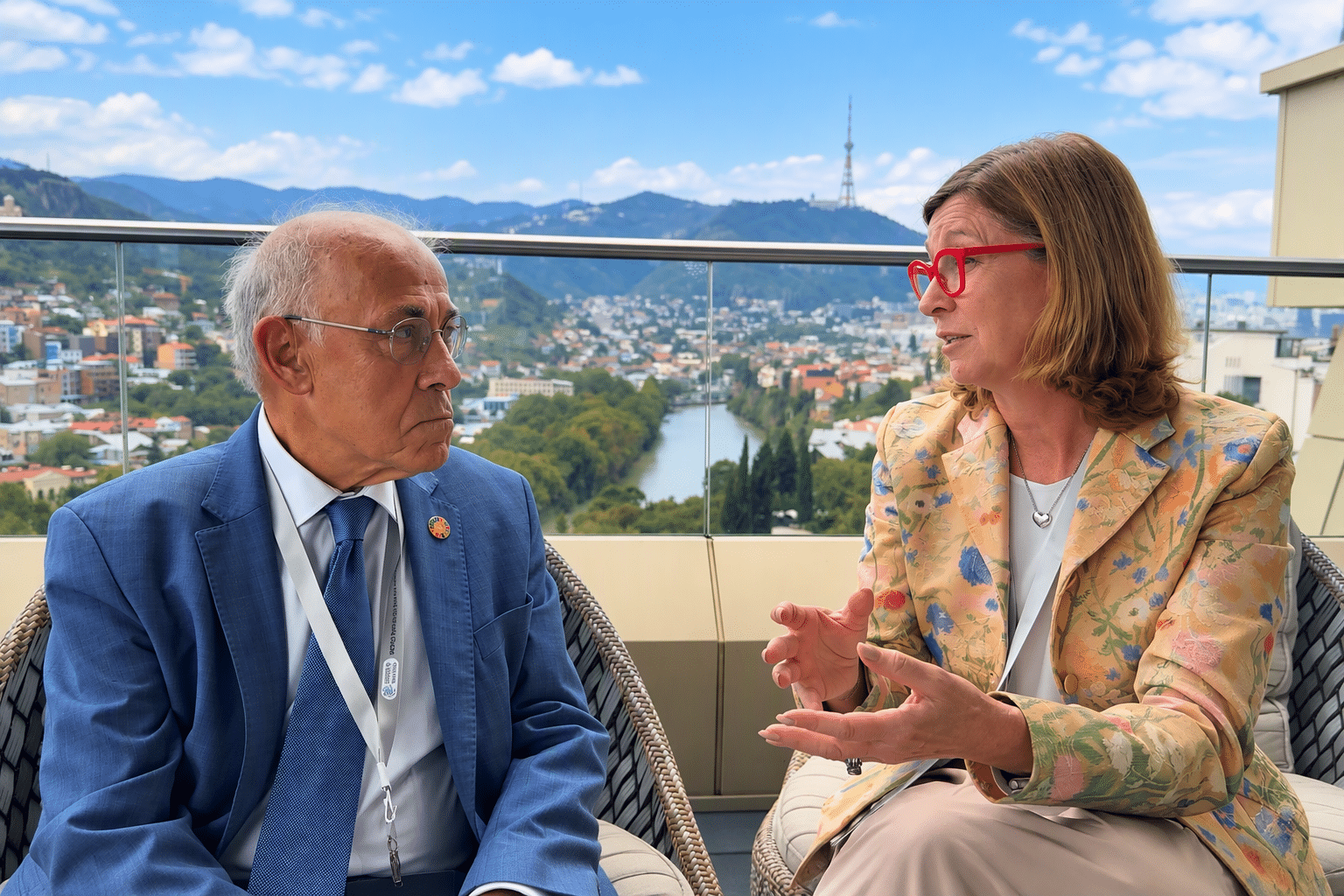


Electricity self-consumption for the energy transition
This debate will explore the state of the art in the development of prosumption and will aim at identifying any remaining barriers and the ways to overcome them.
The energy transition, to achieve the ambitious energy and climate goals to which the European Union has committed, requires a significant increase in the share of renewables in final energy consumption over the next years. As has been the case so far, the electricity sector is expected to contribute more than proportionally to the overall target, with renewables expected to cover 70% or more of final electricity consumption by 2030.
The greater penetration of renewables in the electricity generation mix will be achieved partly with large-scale installations – for example, large offshore wind parks –, but a substantial contribution is also expected to come from distributed, small-scale installations. These will include installations at end-consumers’ premises. In such cases, consumers turn into ‘prosumers’, i.e. consumers which produce part or all of the electricity they consume, and possibly sell the excess electricity.
The current EU legal framework provides specific rights and obligations for prosumers, as active consumers, in particular in Article 15 of the Electricity Directive.
There are different forms of prosumption, ranging from individual households to collective prosumers in one building, from small and medium enterprises and public institutions to energy communities and cooperatives. The number of prosumers is increasing rapidly, at least in some countries. Moreover, there seem to be enormous potentials for electricity production from prosumers, mostly based on renewable energies. Estimates quoted by the European Environment Agency suggest that the share of total electricity demand in the EU, which could be covered by electricity production by prosumers could technically exceed 60% by 2050, with shares for individual Member States ranging from 26% in Malta to 77% in Cyprus.
Prosumption is expected to deliver benefits in different dimensions, but its development appears to be hampered by barriers. The European Environment Agency has identified barriers of five types: (i) regulatory barriers; (ii) financial barriers; (iii) technical barriers; (iv) social barriers; and (v) lack of knowledge and expertise.
Programme
Introduction to the Debate and Opening Presentations
14.00 – 14.05 Introduction to the Debate
Alberto Pototschnig | Florence School of Regulation (FSR)
14.05 – 14.15 The policy perspective
Adela Tesarova | Head of Unit, Consumers, Local Initiatives, Just Transition, DG ENER, European Commission
14.15 – 14.25 Energy prosumers in Europe
Javier Esparrago | Energy and Environment, European Environment Agency
Panel Discussion: Introductory Remarks, Polls and Comments
Moderator: Ilaria Conti | FSR
14.25 – 14.50 Introductory remarks from the panellists
Alessandro De Cristofaro | EnelX
Edwin Edelenbos| Netbeheer Nederland
Natalie McCoy | Customers and Retail Markets Working Group Co-Chair, CEER
14.50 – 14.55 Polls
14.55 – 15.20 Comments on the outcome of the polls and Q&A from the audience
Panellists
15.20 – 15.30 Concluding remarks
Ilaria Conti | FSR
Alberto Pototschnig | FSR
Don’t miss any update on our events
Sign up for free and access the latest events from our community.
Speakers







Fit for 55 in approval phase: the new shape of the EU energy policy
The Fit for 55 package is a set of proposals for European Union (EU) legislation to put the EU on the path to becoming climate neutral by 2050. The European Commission tabled the proposals in July and December 2021.
In May 2022, the REPowerEU communication proposed amendments in response to the energy crisis provoked by Russia’s aggression in Ukraine. The EU legislators have concluded a number of legislative files at the end of 2022, and others are under negotiation. Several additional proposals, such as electricity market reform, are expected to be tabled by the EU Commission in the first quarter of 2023. Even with some elements missing, the new shape of the EU’s energy policy is emerging.
This FSR Debate will feature an overview of what can be expected in 2023, the key challenges facing the co-legislators in reaching an agreement, and the main options.
The debate panellists will be asked what they think the legislators should do: What are the key elements of this new design? What impact will it make on stakeholders? Where do the legislators still need to pick the best choice?
Keynote presentation
Christopher Jones | FSR
Discussants
Ilaria Conti | FSR
Lisa Fischer | E3G
Jesse Scott | Hertie School
Andris Piebalgs | FSR
Ronnie Belmans | FSR
Don’t miss any update on our events
Sign up for free and access the latest events from our community.
Speakers
11th Florence Intermodal Forum: Aviation and Multimodal Digital Mobility Services in the EU

Multimodal digital mobility services (MDMS) are instrumental to fostering multimodality as they promote comparability, transparency, and the selling of products across operators and modes. MDMS stand to directly benefit passengers by helping them to navigate, access and compare an increasingly complex and diverse range of transport offerings. Services that support multimodal transport can also render transport more efficient and sustainable by improving the consumer access to broader variety of transport options.
As part of its Sustainable and Smart Mobility Strategy (SSMS), published in 2020, the European Commission committed itself to assessing the need for regulatory action on rights and duties of multimodal digital service providers and to issuing a recommendation to ensure public service contracts do not hamper data sharing and support the development of multimodal ticketing services, together with an initiative on ticketing (Action 37).
In view of this, a public stakeholder consultation for the implementation of MDMS was carried out, and a legislative proposal to advance MDMS is planned for 2023. This Commission initiative will seek to implement Action 37 of the SSMS and address existing challenges for MDMS services. The latter will focus on ticketing, booking and payment services by addressing a number of market-related problems, namely potential resistance by some transport service providers to provide access to all their data to other actors (much more present in rail) and potential discriminatory practices by online intermediaries in access to their services. Remedies in the form of access regulation can be considered, but what kind of access obligations? What lessons might be learnt from horizontal regulation (particularly the Digital Markets Act and the Data Regulations): asymmetric regulation, FRAND access conditions? Whether the liberalisation and competition of the EU Aviation Market necessitates a lighter form of regulation?
Against this backdrop, the 11th Florence Intermodal Forum will bring together stakeholders representing aviation policymakers, airlines, travel intermediaries, meta-search companies, consumer organisations, and academics, among others, for an aviation-focused discussion on the following three critical issues:
- Is it necessary to regulate data sharing on airlines to better integrate them in MDMS? What kind of obligation? On which airlines?
- What potential obligations should be considered for online intermediaries selling or relinking to air mobility products? Which intermediaries should be regulated?
- FRAND conditions: What are the necessary and proportionate FRAND conditions in the aviation sector? Who decides what is FRAND?
Please kindly note that participation at this Forum is by invitation only.
PRESENTATION SLIDES
Juan Montero – FSR Transport – Introduction
Don’t miss any update on our events
Sign up for free and access the latest events from our community.
The EU reviews its Electricity Market Design: What changes for what purposes?

The Florence School of Regulation (FSR) will organise a high-level, closed-door discussion in Brussels, Belgium, about the upcoming European electricity market design review.
The European Union (EU) is facing an unprecedented and multifaceted energy crisis. While some features of this crisis are common to the ones faced by the rest of the world, there are also very distinctive European features.
Following the mandate from the European Council, the European Commission will present proposals to reform the electricity market design in 2023. The EU electricity market has been built over several decades. It is now at the heart of the EU’s internal energy market, and a crucial tool for the energy transition: the planned review of the electricity market design should be carefully crafted to help the EU navigate the energy turmoil and reach its 2030 climate targets.
Reviewing the EU electricity market design is a complex exercise. This is why a debate is needed to understand what should change and for what purposes.
The discussion will explore the short and long-term objectives for the electricity market design reform, identify the options currently on the table, areas of convergence and divergence among European stakeholders and the open issues.
The event is by invitation only and is organised around three sessions gathering high-level panellists with active participation from a select audience of around 40 experts from academia, civil society and industry.
Don’t miss any update on our events
Sign up for free and access the latest events from our community.
Speakers
The long-term component of a future-proof electricity market design
FSR Regulatory Policy Workshop Series 2022 – 2023
The European Union Electricity Target Model (ETM) underpinning the design of the EU Internal Electricity Market, which was developed in the mid-2000s and enshrined in the Third Energy Legislative Package, comprised five pillars: capacity calculation, the forward market, the day-ahead market, the intraday market and the balancing mechanism. For the day-ahead market, the ETM envisaged a single pan-EU price-based market coupling in which a two-sided auction-based market would be established in each market zone, and the emerging prices would be used to couple the zonal markets in the most efficient way. In the intra-day timeframe, continuous trading was envisaged, with the possibility of regular auctions; regulation now provides for three auctions for each day.
In the forward timeframe, the focus was more on the instruments to allocate the available interconnection capacity. It was considered that short-term markets provide the necessary price signals to promote the investment in the resources required to guarantee adequacy.
Therefore, according to the current electricity market legislation, Capacity Remuneration Mechanisms (CRMs) are considered only as a last resort temporary instrument to eliminate residual resource adequacy concerns while implementing measures to eliminate any identified regulatory distortions or market failures.
Other long-term instruments have been neglected by EU legislation. No provisions have been introduced to support the liquidity of long-term electricity (forward or futures) markets, with the results that liquidity of the markets for these instruments is limited to horizons of up to one year and only in a few jurisdictions, and it has been decreasing over the last year . Contracts for Difference (CfDs) have been used in some countries to support the development of renewable-based generation, but again there was no effort to harmonise their use.
However, the increasing penetration of variable renewable energy (VRE) sources in the electricity system is leading to more volatile prices, with the likely prospect of more frequent instances of low prices accompanied by infrequent price spikes. This price pattern creates more risk for investors in the electricity sector and for market participants alike. Therefore, the role of long-term instruments to support resource adequacy is being re-evaluated.
To take stock of the new reality of electricity markets, the European Commission will soon launch a consultation on elements for a future-proof market design.
Against this context, this Workshop will assess whether and how the different instruments currently being discussed – e.g. CRMs, electricity forward and futures contracts and CfDs – can play a role in promoting adequacy beyond the signals provided by short-term market prices.
—
Don’t miss any update on our events
Sign up for free and access the latest events from our community.




FSR Policy Advisory Council 2022

The Policy Advisory Council discusses the most topical regulatory and policy issues and debates the relevance and robustness of the latest FSR research findings.
The meeting gathers renowned academics, experts from the FSR Energy Major Donors, the European Commission, the Agency for the Cooperation of Energy Regulators (ACER), and National Regulatory Authorities.
The event will take place in hybrid form.
Please note this is a closed event and participation is by invitation only.
Don’t miss any update on our events
Sign up for free and access the latest events from our community.
Women in the energy transition: grievances and solutions
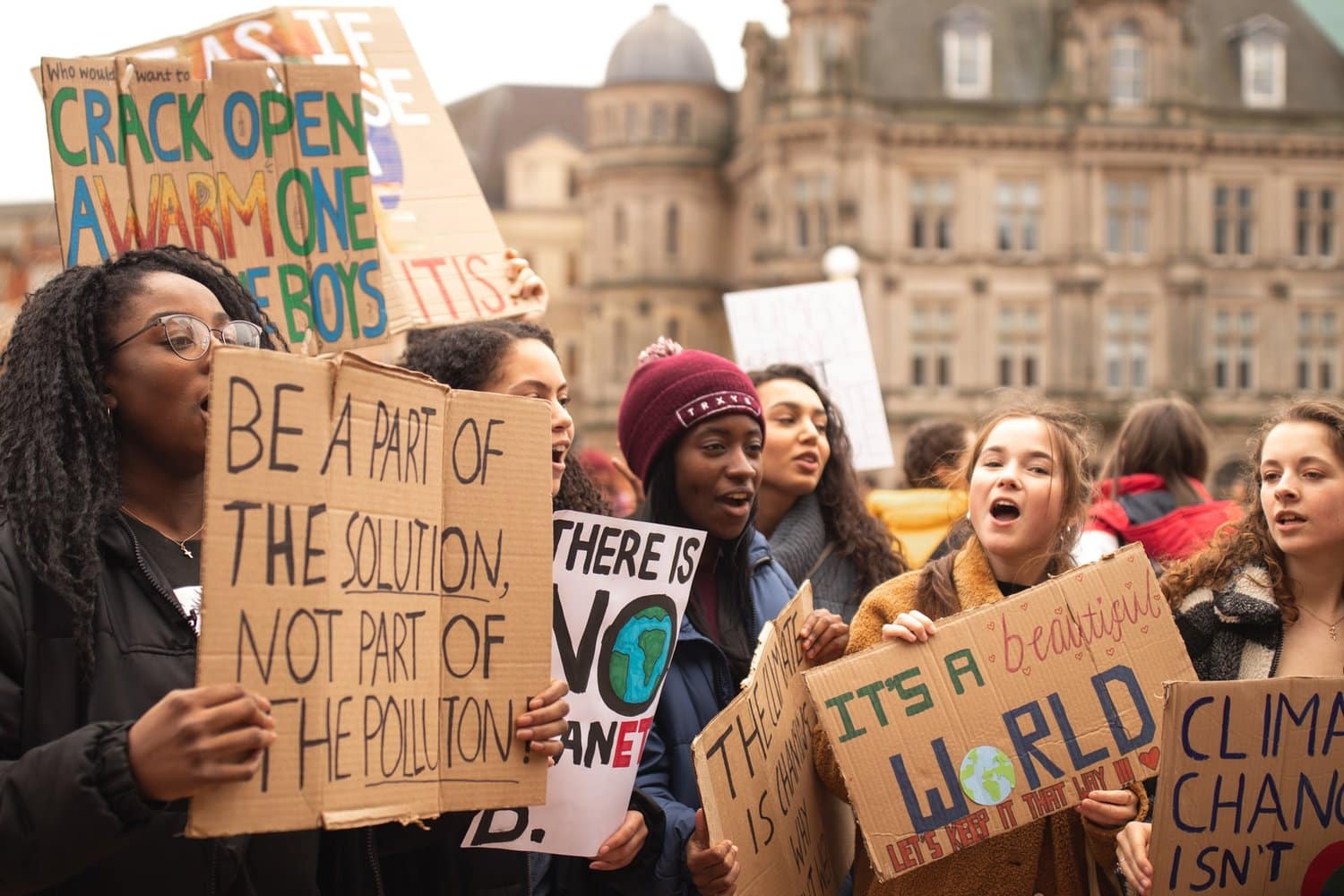
Women are increasingly acting as the catalysers of change in many aspects of the energy transition. Specifically, they take on essential roles as policy-makers, professionals, and energy consumers. Yet they are still far from having equal access to job opportunities and leadership roles, equal representation in positions of authority, and even decision-making powers regarding household energy consumption.
The ongoing global energy transition opens up new, more sustainable career pathways able to reshape all energy production and distribution aspects. For women, in particular, this policy shift offers an unprecedented chance to claim their role in the energy sector, while harnessing the advancement opportunities offered by clean energy technologies.
In this hybrid event, we will look at the challenges women face in the energy and climate sectors as consumers, professionals and policymakers and solutions to their grievances that can be delivered in the energy transition framework.
This event will happen in the context of FSR’s annual Policy Advisory Council event – and will comprise a panel about gender equality in the energy sector and the official opening of registrations for the newly-released Lights on Women database, the Energybase. In-person attendance is on-invitation only.
Watch the recording:
Programme
Introductory remarks:
- European Commission DG Energy (video)
- Erik Jones, Director (RSC/EUI)
Panel:
Moderator: Ilaria Conti, Head of Gas (FSR)
Setting the scene: Ashley Acker, Gender in Energy Data Analyst (IEA) will present the report: A critical issue in energy sector employment and energy access
- Blandine Mollard, Researcher (EIGE)
- Colette D. Honorable, Former Commissioner at the Federal Energy Regulatory Commission (FERC) Partner (Reed Smith)
Presentation of the Energybase:
- Good practices from the industry with partners of the Lights on Women intiative (Landwärme GmbH, Edison)
- The official launch of the Lights on Women’s platform and the Energybase: Claudia Carella, Lights on Women coordinator (FSR), and Jessica Dabrowski, Lights on Women co-founder, Deptuty Director of Communications (Atlantic Council, Arsht-Rock Resilience Center)
Conclusions and final remarks:
Leonardo Meeus, Director (FSR)
Don’t miss any update on our events
Sign up for free and access the latest events from our community.
Speakers

Outcomes of COP 27: takeaways and way forward

Following Glasgow COP26’s ambitious net-zero corporate claims (the Glasgow Climate Pact), its enhanced call for action over non-CO2 greenhouse gases (such as methane), and the significant advances on Article 6 market and non-market mitigation scenarios, COP27 has a vivid legacy for which to be accountable. This year’s COP is moreover embedded into a sense of global distress led by the War in Ukraine and other relevant geopolitical scenarios (e.g., tensions over China-US relations, Brazilian elections), which could shape the future of multilateralism in climate negotiations.
In parallel, environmental reports continue calling for urgent action to redirect the stability of our Planet below levels of dangerous interference for future generations. UNEP’s “Emissions Gap Report”, WMO’s “Provisional State of the Global Climate 2022” and WWF’s “Living Planet Report” bring evidence of the Planet’s poor performance and raise awareness on the need for higher ambition in Nationally Determined Contributions (NDCs) and countries’ action both on mitigation and natural capital conservation (e.g. enhanced pressure on Loss and Damage funding).
In the 2022 edition of the FSR Climate Conference, this policy roundtable will reflect on the achievements, shortcomings and take-home messages from COP27 in Sharm El Sheikh, Egypt. The discussion will touch upon challenges and opportunities of decarbonisation pathways within the current context of geopolitical tensions over resources, trade, and socially just transitions.
Watch the recording:
Host:
- Simone BORGHESI (EUI & University of Siena)
Chair:
- Jos DELBEKE (EUI & KU Leuven)
Speakers
- Karen PITTEL (ifo Institute & University of Munich)
- Jacob WERKSMAN (DG Climate Action)
- Angela CHURIE KALLHAUGE (Environmental Defense Fund)
Check out the programme of the conference
Register here
Don’t miss any update on our events
Sign up for free and access the latest events from our community.
More on the topic








Does Europe Need a Hydrogen Network?
We are often told that a hydrogen grid is essential if Europe wants to reach its climate targets. Such claims are often based on modelling with strong fixed assumptions.
In this FSR Insights event, Tom Brown, TU Berlin, examines results from a highly-detailed energy system model that endogenises as many choices about energy supply and infrastructure as possible. The presentation explores trade-offs between electricity grid expansion and hydrogen networks, as well as between e-fuel imports and domestic production.
While energy trade is always cost-optimal, there are many near-optimal solutions with attractive properties of resilience, lower land usage and less infrastructure lock-in. The FSR Insights rounds off with a discussion of the benefits of open energy modelling for infrastructure decision-making.
Hosts
Leonardo Meeus | Florence School of Regulation (FSR)
Lucila de Almeida | FSR & Nova School of Law
Keynote Speaker
Tom Brown |TU Berlin
Discussants
Christine Brandstätt | Copenhagen School of Energy Infrastructure
Tim Schittekatte|FSR and MIT
Read these recent publications ahead of the event:
Presentations
-
Does Europe Need a Hydrogen Network?
Tom Brown
Don’t miss any update on our events
Sign up for free and access the latest events from our community.