


Type of event: Workshop
Variable generation, flexible demand
The workshop on variable generation, flexible demand is organised by the Florence School of Regulation in partnership with Menlo Energy Economics.
For decades, utilities have been predicting electricity demand and dispatching generation units to meet it.
The current energy transition and the growing role of intermittent renewable energy sources make such a traditional way of operating the electricity system no more the most efficient nor reliable.
In the future, we will increasingly be predicting variable renewable generation and schedule demand to match it. A more sophisticated involvement of the demand side in system operation will be required.
In liberalised electricity systems, it is the task of firms and markets to identify new ways to elicit the provision of flexibility by network users and end consumers.
Building on the success of its previous edition in February 2019, this workshop will investigate new business models that are emerging in the electricity sector.
Participants from the industry, academics and representatives of public institutions will be able to brainstorm freely and share ideas on where, and how, value can be created in the electricity sector of the 21st century.
Scientific organisers:
- Jean-Michel Glachant (FSR)
- Nicolò Rossetto (FSR)
- Fereidoon Sioshansi (Menlo Energy Economics)
 Join the discussion online using the hashtag #FlexDemand
Don’t miss any update on our events
Sign up for free and access the latest events from our community.
More on the topic









Water Regulation: Paving the Road for 2020

FSR workshop on Water Regulation: Paving the Road for 2020
In this seminar hosted in Florence, we will work on water investment needs in Europe as well as on water tariff regulation, discussing the 2019 European Water Regulators’ report (WAREG).
We will discuss in-depth the variety of water tariff regulations in Europe and the way to foster water investments where it is needed. We will also address the question of regulation, investments, and social objectives.
The seminar will bring together academics, representatives from EU institutions, representatives from regulatory authorities, lawyers and economic consultants, and members of the industry for the debate.
Welcome address and road map by Stéphane Saussier, FSR and Sorbonne Business School.
Invited speakers include:
- Andrea Guerrini, ARERA & WAREG
- Antonella Bancalari, London School of Economics
- Ivaylo Kastchiev, Energy and Water Regulatory Commission (EWRC)
- Stéphane Straub, Toulouse School of Economics
- Paola Valbonesi, University of Padova
- Kathleen Dominique, Organisation for Economic Co-operation and Development (OECD)
- Laura Brien, Commission for Regulation of Utilities in Ireland (CRU)
- Giordano Coralullo, Utilitalia
Participation in this workshop is open subject to availability. Priority will be given to FSR Donors and invited guests.
Join the discussion online using the hashtag #FSRWater.
in cooperation with WAREG 
Don’t miss any update on our events
Sign up for free and access the latest events from our community.
Speakers
More on the topic








Market Abusive Practices

FSR Regulatory Policy Workshop Series 2019-2020
Artificial Prices, Excessive Prices and Manipulative Practices in the Internal Energy Market
The Workshop will explore and compare the different approaches to deal with “high” prices in auction-based energy markets under REMIT and competition law and it will be structured in two sessions:
- Session 1 will spell out and compare the concepts related to “high” prices under REMIT and competition law;
- Session 2 will look at how these concepts apply to auction-based energy trading and the available experience from recent cases.
This workshop is exclusively open to national regulators, representatives from public bodies and associate & major donors of the FSR Energy area.
Background
The integration of the Internal Energy Market, both in the electricity and gas sectors, heavily relies on market prices to provide the signals for the efficient use of and investment in energy infrastructure. Moreover, as electricity cannot be efficiently stored in large quantities, market prices also provide a signal for the generation of electricity. In this respect, correct price signals are essential for generation efficiency (i.e. that the least cost generation is used to serve demand, subject to network constraints).
The importance of correct (and reliable) price signals for the efficient integration of the Internal Energy Market has led to the adoption of Regulation (EU) No 1227/2011 on wholesale energy market integrity and transparency (REMIT). The aim of REMIT is to detect and deter market abuse – in the form of market manipulation, attempted market manipulation and insider trading – in EU wholesale energy markets.
Article 2(2) of REMIT defines market manipulation, inter alia, as “entering into any transaction or issuing any order to trade in wholesale energy products which […] secures or attempts to secure, by a person, or persons acting in collaboration, the price of one or several wholesale energy products at an artificial level, unless the person who entered into the transaction or issued the order to trade establishes that his reasons for doing so are legitimate and that that transaction or order to trade conforms to accepted market practices on the wholesale energy market concerned”. Recital (13) of REMIT explains that “manipulation on wholesale energy markets involves actions undertaken by persons that artificially cause prices to be at a level not justified by market forces of supply and demand, including actual availability of production, storage or transportation capacity, and demand”. Therefore, an artificial price is one which is “not justified by market forces of supply and demand”.
It is worth noting that, under REMIT, artificial prices could be higher or lower than those justified by market forces of demand and supply and that the main aim of REMIT is not as much to protect consumers from high prices, but rather more widely to:
– “ensure that consumers and other market participants can have confidence […] that prices set on wholesale energy markets reflect a fair and competitive interplay between supply and demand, and that no profits can be drawn from market abuse” (Recital (1) of REMIT);
– “foster open and fair competition in wholesale energy markets for the benefit of final consumers of energy“ (Recital (2) of REMIT).
In this last respect, although the objectives of REMIT come close to the objectives of EU competition law (i.e. to prevent exclusionary or exploitative practices by dominant undertakings), there are some important differences. Article 102 of the Treaty on the functioning of the European Union (TFEU) can and has been applied, for instance, to deal with capacity withholding by dominant firms, but under certain well-defined conditions. This is in contrast to the application of REMIT as the relevant provisions also apply to all market participants – i.e., non-dominant undertakings. Whereas REMIT’s focus is on ‘integrity and transparency’, Art 102 TFEU has a narrower economic focus on harm to the competitive process. In fact, the narrower scope of competition law and therefore the need to complement it to ensure integrity and transparency in energy trading was recognised by the EU legislator adopting REMIT: “Behaviour which undermines the integrity of the energy market is currently not clearly prohibited on some of the most important energy markets. In order to protect final consumers and guarantee affordable energy prices for European citizens, it is essential to prohibit such behaviour” (Recital (2) of REMIT).
Indeed the theory of harm that informs REMIT appears to be of a different order than that which underpins EU competition law, albeit this is not fully articulated or developed in academic literature.
Therefore, in this Workshop, we aim at comparing how REMIT and competition law looks at “high” prices, in particular in the context of auction-based energy markets (such as the electricity day-ahead market, but also capacity markets). Under the assumption of perfect competition, the optimal strategy for market participants is to offer into the market at marginal/opportunity costs. Following this strategy, fixed costs would be recovered through the so-called “infra-marginal rent”, i.e. the difference between the market equilibrium price (defined by the offered price/marginal cost of the last accepted offer) and the marginal cost as reflected in the offered price. In reality, the conditions for perfect competition are rarely met, and market participants might be tempted, in certain situations (e.g. when the margin between demand and available capacity tightens up, possibly due to network congestion), to offer above their marginal/opportunity costs to increase their revenues (towards covering fixed costs or increasing profits). The question, therefore, arises of whether the recovery of fixed costs can be considered as part of the “fair and competitive interplay between supply and demand”.
Recovery of fixed costs probably sets a more stringent threshold than the concept of excessive prices in competition law, where the threshold for intervention has been set relatively high, and it has often been typical of the cases that the costs used as a point of comparison or benchmark for the alleged pricing practices at issue have been open to interpretation. Competition authorities are generally reluctant to take on the role of price regulators, and the case law/decision-making practice on ‘excessive prices’ is not well developed.
The recent joint guidance published by the German competition authority (BKartA) and network regulator (BNetzA) in September 2019 considers that the non-use of actually available generation which could have been sold at a price above the respective short-term marginal cost could be an indication of capacity withholding. This approach is not without controversy. Furthermore the experience from the Danish Elsam cases indicates that competition and regulatory authorities have struggled to devise a satisfactory cost benchmark that will withstand judicial scrutiny.
Don’t miss any update on our events
Sign up for free and access the latest events from our community.
More on the topic






LNG and the EU Green Deal: teaming up for a decarbonised 2050
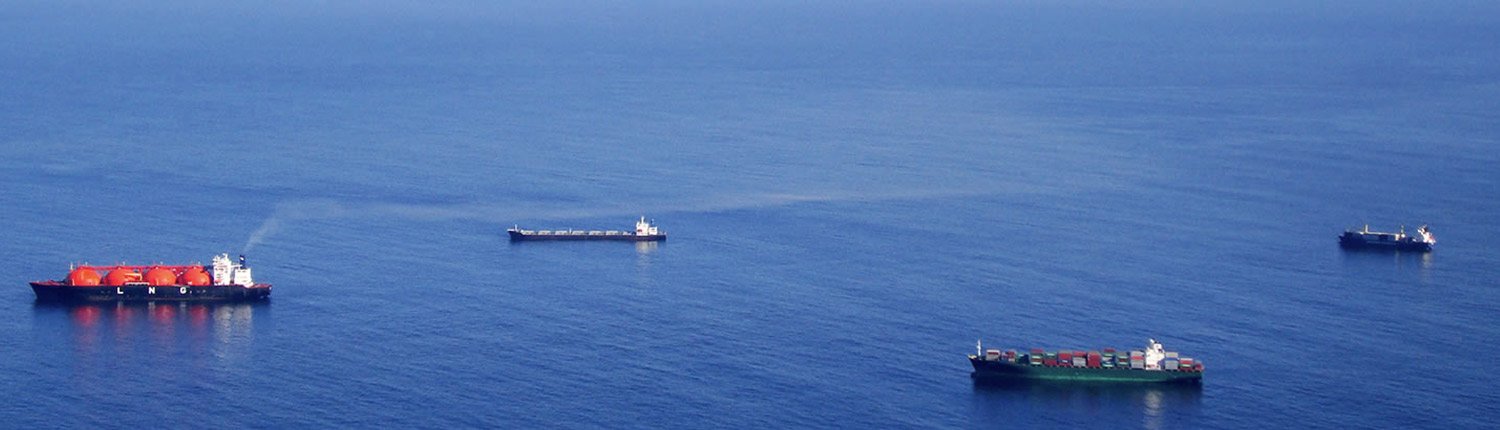
This event will answer to the question ‘Why LNG is the fuel of choice for a sustainable energy system?’. It will also mark the presentation of an inclusive and global LNG industry report. The debate will convey around the report lines and focus on the role of LNG in the energy transition, the use of LNG in shipping and heavy-duty transportation.
One of the many challenges of the 21st century is to provide access to all citizens to reliable and affordable energy and, at the same time, to reduce the impact on climate change and improve air quality. Over 900 million people currently are living today without access to secure electricity and 2.7 billion lack access to clean cooking, according to the International Energy Agency (IEA).
The industries are now looking for sustainable, cost-efficient and environmentally friendly solutions. Various international voices such as G20 and the European Commission President-elected Ursula von der Leyen endorsed the role of natural gas, in both gaseous and liquified form. The IEA expects natural gas to represent around 40% of total energy demand growth over the next two decades with a crucial role in powering electricity generation and in sectors more difficult to electrify.
Today’s global energy consumption is responsible for two thirds of greenhouse gas (GHG) emissions and significantly impacts air quality, especially in densely populated areas. Natural gas can contribute to a sustainable energy future by helping to reduce air pollution across all sectors: power generation, industry, domestic heating and use and transportation. LNG is a fundamental asset that helps meeting EU’s long-term decarbonisation targets and Paris commitment.
An LNG Protocol event supported by FSR
Don’t miss any update on our events
Sign up for free and access the latest events from our community.
More on the topic








How many gas markets?
“How many gas markets?” – FSR Regulatory Policy Workshop Series 2018-2019
The Workshop “How many gas markets?” will explore the future technological and market landscape for gases, used as energy media and as feedstock for industrial processes. Starting from a future-proof taxonomy, it will assess to which extent different gases will be able to share the same infrastructure, and under which conditions (e.g. retrofitting). It will then go on to identify the implications for market design.
To address these and other related issues, the Workshop will be structured in two sessions:
- Session 1 will investigate the technological and system operation dimension of the future gas sector, in its widest notion (i.e. including all types of gases and their uses as energy media and feedstock). In particular, it will explore to what extent different gases could share the same infrastructure and under which conditions, and where, instead, different networks are needed to transport different types of gases. It will also aim at recognising the technical links between these networks and the transformation processes linking them.
- Session 2 will look at the market implications of the results of Session 1, and in particular how many markets will be required to cover the whole spectrum of gases in the future and the opportunities for coupling them, and for coupling these with the electricity market in its different timeframes.
Read the workshop highlights and watch the interview on a GreenDeal for Europe with Ilaria Conti (Head of FSR Gas Area) and Klaus Dieter-Borchardt, (Deputy Director-General at European Commission’s DG Energy) here.
Background
The EU decarbonisation strategy is based, inter alia, on a massive penetration of renewable energies. In the electricity sector, this requires the system to become more flexible, to accommodate the greater variability of renewable-based generation. Technological development is enabling new sources of flexibility – such as, for example, demand response and electricity storage; additionally, it seems clear that the gas sector could also contribute to the decarbonisation process in this respect. Therefore, while natural gas, as fossil fuel and at least in its non-decarbonised form, is bound to play a shrinking role in the energy mix in the long run, in the short and medium run gas-based generation could represent an important source of the necessary flexibility for the electricity system.
Moreover, gas is easier to store and cheaper to transport over long distances. Therefore, gas and gas infrastructure can also play a role in providing an alternative to electricity storage and transmission. (Electricity and gas) Sector coupling is meant to promote the synergies between the two sectors. Such synergies might, for instance, be achieved through power-to-gas transformation and the storage of the resulting gas. Power to gas through electrolysis results in hydrogen which can be stored, used as such – in industry, transport or, in the future, in power generation – or further transformed into methane. Hydrogen can also be blended, up to a certain extent, with natural gas and thus used in the existing gas infrastructure. Technological development is likely to change the landscape here as well, with greater percentages of hydrogen blending being permissible in gas infrastructure and many gas uses, including electricity generation in existing power plants.
Renewable and decarbonised gases will also have to play a greater role in the future. Biogas, for instance, is still produced in very limited volumes in the EU (covering less than 5% of total EU demand for gas), but can easily be upgraded into “biomethane”, whose use and physics do not differ much from natural gas’. Hydrogen is also another promising resource and can be produced by curtailed renewable electricity via electrolysis (green hydrogen); it can also be produced from natural gas (grey and blue hydrogen) with release or capture/sequestration of CO2.
All these developments depict a future in which different types of gases will co-exist, to a greater extent than today. From a system operation perspective, one of the main questions is to what extent these different gases will be able to use the same (existing) infrastructure or whether they would need to be segregated in different networks. For instance, each EU country has set its own limitations and regulatory provisions for the injection of hydrogen – which can differ significantly even between neighbouring countries. From a market perspective, the main question is how many different markets will be needed in order to promote the efficient use of the different gas types and the optimal resource allocation. It is clear that trading in the same market requires a degree of homogeneity of the products, and this is likely to imply the fact that the products could use the same infrastructure.
Therefore, the operational and market dimensions are linked, and they both need to refer to a taxonomy of the different types of gases that has to recognise the different chemical compositions, but also the potential for transformation. Following the Madrid Forum in June 2019, the Florence School of Regulation has been working on developing such a taxonomy, bringing together the work and contribution of stakeholders.
Once this taxonomy is established, the future market structure for “gases” could be addressed. In this respect, it is important to note that, even if the conclusion of this assessment were, as it is likely to be the case, that different markets are needed to cover the full spectrum of gases in the future, some of these markets would be linked through the transformation potential between the corresponding gases. These transformations, and the arbitrage opportunities that they create, will determine the extent to which prices in the “linked” markets will be able to diverge and which forces will operate towards price convergence.
The ‘How many gas markets?” workshop is exclusively open to national regulators, representatives from public bodies and associate & major donors of the FSR Energy area.
Previous Sector Coupling workshops:
- Coupling the Sectors: the definition of ‘sector coupling’ and ‘sector integration’ and the key challenges to their practical implementation
- Sector Coupling 2.0: Power-to-Gas in the EU decarbonisation strategy: the technological and regulatory aspects related to Power-to-Gas (PtG).
Don’t miss any update on our events
Sign up for free and access the latest events from our community.
More on the topic








Regulating the Renewable Power Sector

This workshop will bring together policy-makers and experts in the field to address recent developments in regulating the renewable power sector with a particular emphasis on the Norwegian versus EU approach to the issue.
The topics we will discuss will include the new renewable energy directive, the implementation of the recent EU governance regulation on climate and energy action, the services directive and the sustainable financing of renewables. The workshop will primarily focus on these measures from a legal and economic perspective.
The audience for the workshop will mostly be composed of representatives from EU institutions, regulatory and competition authorities, academics, members of industry, economic consultants and lawyers.
If you would also like to attend the workshop of the 10th, please see details here. The registration forms for both are linked.
Don’t miss any update on our events
Sign up for free and access the latest events from our community.
Digital Energy Marketplaces

FSR Workshop organised by the FSR Energy Innovation Area, in cooperation with the European Commission and The Alliance for Internet of Things Innovation (AIOTI)
Digital Energy Marketplacesmig
The role of smart contracts in the definition and coordination of investments, architectures and governance
#DigitalEnergyMarket
Technological innovation may just increase the efficiency of an industry, significantly transform it, or even disrupt entirely it. To transform or to disrupt, innovation needs to change the industry players and the way they interact. For example, industry change may be driven by consumers pushing the path from smart technologies – which any utility may implement itself to manage its own assets – to smart transactions, where smart technologies create new coordination tools within the industry.
By gathering practitioners from the industry, academics and representatives of the institutions, this workshop develops further the debate started at the Open Marketplaces & Enabling Technologies workshop that took place last March in Brussels. The various sessions of the workshop will explore how distributed ledger technologies like the blockchain can effectively transform the energy industry and enable new forms of interaction among the actors of the supply chain. The possible emergence and the organisation of new platforms and contractual arrangements will be investigated. Finally, the workshop will address the governance and regulatory issues that the adoption of these new technologies raises.
Participation in the event is upon invitation only.
Don’t miss any update on our events
Sign up for free and access the latest events from our community.
More on the topic



The new role(s) of consumers
The Workshop “The new role(s) of consumers” will explore how the latest policy and regulatory developments promoting “consumers’ empowerment”, as defined by the “New Deal” and the Clean Energy Package, will assign new roles to consumers and provide new opportunities to consumers. The Workshop will also assess any risk of exclusions for vulnerable consumers and the impact of empowered consumers on the market and the implications for market and system operations.
The “Clean Energy for All Europeans” Package places consumers at the centre of the energy transition, providing them with a higher degree of protection, empowerment and enhanced market choices. Thanks to price comparison tools, dynamic price contracts, smart metres and the formation of citizens’ energy communities, customers will be able effectively to play a more active role in the market. Furthermore, switching supplier will not imply any fees and, by 2026, such transition will have to take place within 24 hours.
However, consumers have shown a degree of inertia. Until now, consumers’ empowerment was mostly provided by their ability to switch supplier, but annual switching rates have remained low in most countries (the European average is 6-8% for both electricity and gas). While switching rates are not necessarily the ultimate indicator of the benefits of liberalisation for consumers, a more detailed analysis performed by the Agency for the Cooperation of Energy Regulators shows that switching rates are low even in some Member States where the potential gains from switching are substantial.
The Workshop will be structured in two sessions:
- Session 1 will investigate how consumers can effectively be empowered and engaged, ensuring that “no one is left behind” and delivering a just and inclusive transition. Practical applications of the new role of consumers will also be presented.
- Session 2 will look at the regulatory and market design implications of consumers’ active role, focusing on the key requirements needed to deliver and enable effective wholesale and retail markets for the benefits of consumers.
This workshop is exclusively open to national regulators, representatives from public bodies and associate & major donors of the FSR Energy area.
Don’t miss any update on our events
Sign up for free and access the latest events from our community.
More on the topic
Energy storage for a flexible multi-energy system

This FSR Policy Workshop on energy storage for a flexible multi-energy system
Storing energy is becoming key to create a more flexible and reliable energy system. Cost-effective and efficient storage is the next obstacle that needs to be overcome in the move to a higher and rapid deployment of renewable energy sources within the EU energy mix.
More complementary storage technologies are needed to support EU’s transition to a low-carbon economy and to meet different flexibility needs of a multi-energy system. Where RES penetration will displace an increasing share of dispatchable energy sources from the system, the need for seasonal storage becomes obvious to overcome risk of curtailment in the event of surplus and risk of disruption in the event of deficit. Already existing gas storage infrastructure close to demand centers can offer short, mid and long-term / seasonal flexibility and storage solutions at terawatt-hour scale. In addition, storage also enables a closer integration of the gas and electricity sectors through “sector coupling”.
What is the appropriate regulatory and market design to support the integration of higher shares of renewable energy with minimum curtailment and at optimised system cost? How to assess externalities related to the system and insurance values in a cross-sectoral flexibility market to unlock the full potential of large-scale storage?
To address these and other related issues, the Workshop organised jointly with Gas Infrastructure Europe (GIE) will be structured in three sessions:
- Session 1 will review innovative services developed by gas storage operators to facilitate the future role of gas system to meet climate change targets. These innovative solutions include, amongst others, power-to-gas, hydrogen storage and decentralised storage.
- Session 2 will expand the discussion to tackle a broader issue of what is needed to cope with both decarbonisation and competition goals.
- Session 3 will be devoted to the regulatory framework for a sustainable storage market. An adequate market design that could enable sector coupling and deliver benefits, thus making the best use of a greater penetration of renewables to meet the EU decarbonisation objectives.
The event will conclude by issuing policy recommendations.
Among the confirmed speakers:
- Cécile Prévieu | Storengy
- Axel Wietfeld | Uniper Energy Storage
- Stefan Moser | European Commission
- Gergely Molnar | International Energy Agency
- Frits van der Velde | EnergyStock
- Michael Schmöltzer | Gas Infrastructure Europe

Don’t miss any update on our events
Sign up for free and access the latest events from our community.
More on the topic
Competition Policy for the Energy Transition
An annual FSR Energy Union Law workshop on Competition Policy for the Energy Transition, in collaboration with Cleary Gottlieb Steen & Hamilton, will bring together key players in the field to analyse and debate the role of competition law according to the newest developments across the EU energy sector.
In this edition, we will open by considering a wish list for the new Commission before turning to three key themes surrounding competition law policy and the energy transition;
Competition and the Energy Transition I: New Wine in Old Bottles or Old Wine in New Bottles?
In this session, among other topics, we will look at the new market design challenges, market abuse issues especially focusing on the inquiry into the German electricity wholesale market, and marginal cost-pricing particularly comparing the German and Spanish approach.
Competition Policy for the Energy Transition II: A New Era of Hypercompetitiveness
For this session, we will explore the notion of hypercompetitiveness in the EU energy transition stemming from a recent report, taking in perspectives from industry, the legal and economic field, as well as an EU institutional approach. We will then take a look at this from a global angle, examining the LNG inquiry.
Competition Policy for the Energy Transition III: Are the State Aid Rules Fit for Purpose?
In this final session, we will turn to State Aid and consider its role in the energy transition. We will particularly focus on the ECJ ruling in Germany v Commission of March 2019
Download the programme
Don’t miss any update on our events
Sign up for free and access the latest events from our community.
Carbon Market Integration

This workshop brought together academia, stakeholders and senior policy makers from different carbon markets worldwide, in a unique process for a fruitful exchange on carbon market integration. The workshop, jointly organised with DG Climate Action of the European Commission, is part of the so called ‘Florence process’ aimed to stimulate the on-going debate on carbon markets amongst international policymakers and experts. The event was a follow-up of the LIFE SIDE project. Co-funded under the LIFE Programme, the project which was completed in December 2018, has been supporting policymakers with the implementation of the EU ETS.
Workshop by invitation only and held under the Chatham House Rule.
Previous workshops of the Florence Process:
First Carbon Market Workshop, 25 September 2017
Second Carbon Market Workshop, 14 May 2018
Don’t miss any update on our events
Sign up for free and access the latest events from our community.
More on the topic






Sector Coupling 2.0
The “Sector Coupling 2.0” workshop of the 2018-2019 FSR Regulatory Policy Workshop Series will address Power to Gas in the EU Decarbonisation Strategy.
In October 2018, the Florence School of Regulation organised its first Workshop on “Coupling the Sectors”, as part of this Regulatory Policy Workshop Series. The discussion not only covered the coupling of the electricity and gas sectors and markets but also highlighted that power-to-gas could be a game changer in allowing sector coupling. However, the regulatory and market design implications of power-to-gas technologies at network scale were not explored.
This Workshop will continue the debate focusing on the implications of the deployment of power-to-gas technologies for sector coupling and the appropriate regulatory and market design responses.
The event will reflect on whether power-to-gas facilities should be considered as part of the gas or electricity networks (and therefore their ownership and operation reserved to transmission owners or transmission system operators), or if instead they can be considered as performing an activity open to competition or, thirdly, a combination of the two regimes.
It will consider to what extent the development of power-to-gas facilities might be promoted by the coordination of spot and forward markets in electricity and gas, so that such facilities (together with the gas networks and the gas-fired power stations) could be used for swaps (virtual electricity storage) and arbitrage (spark spread and “reversed” spark spread).
Power-to-gas technologies could also produce hydrogen and synthetic methane that can be used as energy for those processes which are not suitable for electrification or as chemical feedstock. If the electricity fed into the power-to-gas transformation is renewable-based, this process will also contribute to the decarbonisation of the gas sector.
The Workshop will be structured in two sessions:
- Session 1 will review the power-to-gas technological landscape, identifying the potentials for the different technologies and their future economic viability.
- Session 2 will discuss how power-to-gas could enable sector coupling, and deliver benefits in terms of greater temporal and geographical flexibility of the energy system. The regulatory and market design implications of such developments will also be explored.
This workshop is exclusively open to national regulators, representatives from public bodies and associate & major donors of the FSR Energy area.
Don’t miss any update on our events
Sign up for free and access the latest events from our community.
More on the topic