
Type of event: Online Event
EU Climate Action Priorities in the Coming Five Years

In this online debate, we discuss EU Climate Action Priorities in the Coming Five Years.
Online debate with:
Baroness Bryony Worthington
(former Labour Party spokesperson on Energy and Climate Change; Visiting Research Fellow at University of Cambridge)
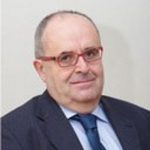
Jos Delbeke
(former Director-General for Climate Action at the European Commission, Professor EUI)
Moderated by:
Simone Borghesi
(Director, Florence School of Regulation-Climate, EUI)
What should the top priorities for EU Climate Action be within the changing political landscape (European Parliament elections, renewal of both the European Commission’s President and the European Council’s full-time President, Brexit…)? What are the issues to be tackled next by the incoming EU leaders, and how might the UK retain its leadership role for climate action from outside the European Union?
In this online debate Baroness Worthington and Professor Delbeke, two senior policy-makers and academics with many years of experience in designing climate policies will share their “wish list” of the three top priorities for EU Climate action for the next 5 years.
How this online discussion works:
Connect from your office or home with any device (smartphone, tablet, computer) and watch the live discussion. You will have the possibility to submit written questions to our speakers that will be addressed during the discussion. You can also share comments and links in the discussion forum. Participation is free of charge, but registration is required.

Don’t miss any update on our events
Sign up for free and access the latest events from our community.
More on the topic





Convergence between digitalisation and decentralisation
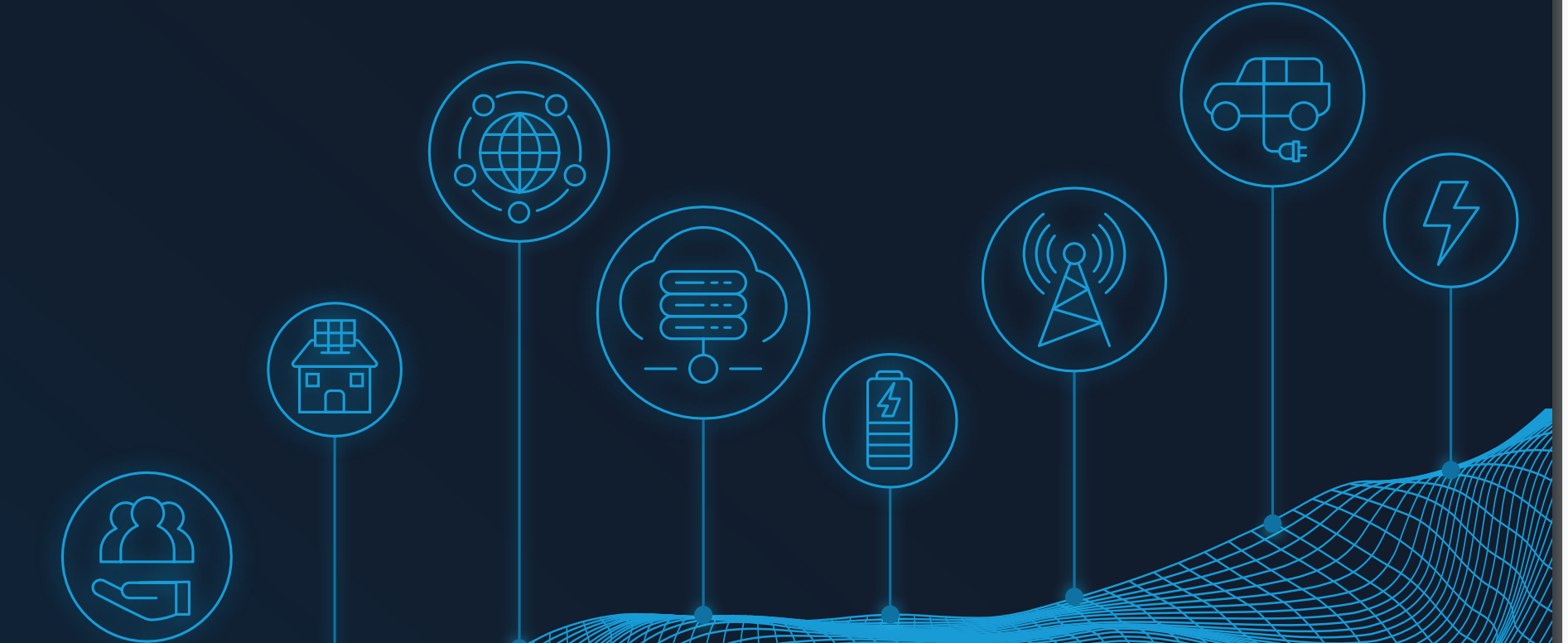
The modernization of the electricity grid may change deeply the economic properties of electricity systems. Part of these changes have been discussed in recent years within the context of Smart Grids: a potential end-state of the evolution of the system is a platform where all resources (distributed or not) could be connected and be part of a multi-layered optimization. An additional step in the evolution of electric networks is to consider the convergence with ICT networks, which also involves creating a unique network (sharing resources and a common architecture), with the aim of making possible new transactions. For instance, the TLC industry has experienced this kind of process: the convergence of voice, data and video has created value and facilitated innovation.
From that point of view, three possible stages in the evolution of electric networks can be considered:
- the ‘current-path’ system, where unidirectional use of the distribution system is assumed and advanced technologies are used to improve reliability, resiliency, safety and efficiency;
- an intermediary-based system where a platform enables exchange (e.g. Amazon);
- a network where profit is based on the collective value of an ecosystem (e.g. Cisco’s Internet of Everything).
Benefitting from IRENA’s new report on innovation: “Innovation Landscape for a Renewable-Powered Future: Solutions to integrate variable renewables”, we will engage in a collaborative conversation, where the focus will be put on the role of distributed ledger technologies in achieving network convergence. Each speaker will have 5-10 min to present her/his view, followed by an open Q&A.
Speakers
Elena Ocenic (IRENA)
Enrique Merono (Iberdrola)
Rolf Riemenschneider (DG CONNECT)
Moderator
Miguel Vazquez (FSR Energy Innovation)
Don’t miss any update on our events
Sign up for free and access the latest events from our community.
More on the topic






Decrypting Sustainable Finance
Finance is widely seen as an obstacle to a better world. In this online seminar, Prof. Dirk Schoenmaker (Erasmus University Rotterdam) will explain how the financial sector can be mobilised to counter this inevitability. As is documented in Prof. Schoenmaker’s recent book (D. Schoenmaker and W. Schramade, Principles of Sustainable Finance, Oxford University Press, 2019), using finance as a means to achieve social goals one can divert the planet and its economy from its current path to a world that is sustainable for all.
After describing the sustainability challenges, the seminar will show how investors and bankers can steer funding to sustainable companies and projects without sacrificing return and thus speed up the transition to a sustainable economy. Further, the seminar will analyse the Sustainable Development Goals as a strategy for a better world and will provide evidence that environmental, social, and governance factors matter, describing in detail how to incorporate these factors in the corporate and financial sectors.
Speakers:
Dirk Schoenmaker | Professor of Banking and Finance at the Rotterdam School of Management, Erasmus University
Kinanya Pijl | Researcher, European University Institute
Moderator:
Jean-Michel Glachant | Director, Florence School of Regulation
An open discussion will follow.
Don’t miss any update on our events
Sign up for free and access the latest events from our community.
More on the topic





Sustainable Consumption in the World Energy Transition
Join us on the third online event leading up to the FSR Global Forum discussing Sustainable Consumption in the World Energy Transition.
The accomplishment of the world energy transition for a low-carbon economy imposes challenges on public authorities, but also civil society and consumers. Besides the universal access to clean and affordable energy, consumers and industrial customers are means to the energy transition when they respond and engage in consumption patterns to consume less and better energy, self-generate, or become prosumers. These goals are at the core of the United Nation SDG #12, which trickle the issue of Sustainable Consumption.
A wide range of techniques have been developed to bring consumption to more sustainable levels: information disclosure policy though smart-meters, energy label and eco-design; energy efficiency of residential and non-residential buildings; tax and regulatory incentives for the use of electric vehicles among others. Until now, these techniques remained scattered across different areas of law, with the resulting challenge for anyone interested in their forms and operation. The online debate aims to touch open the issue of sustainable consumption.
This online debate will discuss the following issues:
- What does the UN Sustainable Development Goal #12 on Sustainable Consumption mean and how does it interact with SDG #7 on affordable and clean energy?
- What are the main legal barriers that preclude consumers to engage in more sustainable patterns such as demand-response?
- What are the legal techniques that have been developed to bring consumption to more sustainable levels in energy markets and other sectors?
An open discussion will follow.
Speakers:
Alberto do Amaral Júnior | Professor at the University of São Paulo (Brazil).
Tiago de Barros Correia | Former-Director of ANEEL (Brazilian Electricity Regulatory Authority)
Miguel Vazquez | Part-time Professor and Head of Florence School of Regulation Energy Innovation
Moderator:
Lucila de Almeida | Florence School of Regulation
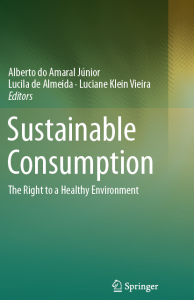
The online debate aims to pre-launch the Springer book entitled ‘Sustainable Consumption: the right to a healthy environment’ of our Research Associate, Lucila de Almeida, together with Alberto do Amaral Junior (University of São Paulo) and Luciane Klein Vieira (University of Buenos Aires and UNISINOS). Tiago de Barros Correia is one among the more than 30 contributors and writes on the auction design to procure energy efficiency measures.
About the FSR Global Forum
The FSR Global Forum is a 4-day event fostering practice-oriented solutions on key aspects of the world energy transition. It provides a platform for multi-stakeholder engagement to facilitate transnational knowledge exchange.
It brings together 100 representatives (by invitation only) from government agencies, regulatory bodies, energy companies, energy utilities, development organisations and academics from across the world.
The Forum develops around 12 knowledge spaces to facilitate interactive discussions and digitally maps the key insights of each session. The topical issues addressed have a special focus on Latin America, Africa and Asia.
Don’t miss any update on our events
Sign up for free and access the latest events from our community.
More on the topic



Energy Access and the Road Ahead
Universal access to clean and modern energy is one of the top energy challenges of our time.
Significant progress to provide such energy access has been achieved in the past years. However, based on the current trajectory, the IEA estimates that around 674 million inhabitants will continue to lack access to electricity in 2030. It is therefore imperative to ‘think big’, involve all the relevant stakeholders and remove barriers to massive electrification business models.
The 2nd online debate leading up to the FSR Global Forum discusses the following issues
- What are the main barriers to massive electrification business models? How to remove them to increase energy access?
- Is a “utility-like” business model the most adequate long-term approach for electricity supply to the population that lacks acceptable electricity access?
Speakers:
Laura Cozzi |Deputy Head – Office of the Chief Economist of the IEA
Salvatore Vinci | Deputy Director, Country Support and Partnerships Division – IRENA
Praveer Sinha | CEO & Managing Director – Tata Power
Moderator:
Ignacio Perez Arriaga | Professor – FSR, MIT and UPComillas
An open discussion will follow.
Watch the debate recording:
About the FSR Global Forum
The FSR Global Forum is a 4-day event fostering practice-oriented solutions on key aspects of the world energy transition. It provides a platform for multi-stakeholder engagement to facilitate transnational knowledge exchange.
Don’t miss any update on our events
Sign up for free and access the latest events from our community.
More on the topic


The GB Capacity Market Standstill

In the “The GB Capacity Market Standstill” webinar, we will debate the reasoning of the GC, assess the repercussions of the judgment and current state of the market, and consider the next steps for the EC and the GB power market.
60 minutes of free-flowing debate among panellists and 30 minutes of Q&A between panellists and live online audience. Opening 5’ will give a brief summary of the situation
Investigating the Impact of the Tempus State Aid Judgment
Speakers:
- Leigh Hancher | Florence School of Regulation (RSCAS; EUI); Tilburg University – Moderator
- Jacques Derenne | Sheppard Mullin, Professor of State aid law at the Liège University and the Brussels School of Competition – The specific State aid issues (Jacques Derenne is acting on behalf of Tempus before the EU courts) (confirmed)
- Dan Roberts | Frontier Economics – An economist’s perspective and an overview of the impact on the UK market (confirmed)
Abstract
On 15 November 2018, the General Court of the European Union issued a judgment on Case 793/14 Tempus Energy Ltd and Tempus Energy Technology V Commission, annulling the Commission’s original State aid decision to approve a capacity mechanisms scheme for Great Britain. The General Court ruled that the Commission should have initiated the formal investigation procedure before adopting a decision. This judgment renders aid granted through the scheme unlawful (i.e. granted without the approval of the Commission, which should be regarded as never been decided since its annulment). As a result, the UK Government decided to suspend the capacity market, meaning that it will not grant new associated subsidies until it is newly decided if they are compliant with EU law. However, in December 2018, the UK Government confirmed that it will operate the capacity market as normal, but without payments being made to agreement holders. The UK Government also confirmed that it intended to hold a replacement T-1 auction for the delivery year 2019/2020, which would be held by rearranging the postponed T-1 auction that had been scheduled for January 2019.
In the meantime, the Commission lodged an appeal against the General Court’s judgment before the Court of Justice on 25 January 2019. It also initiated the formal investigation on 21 February 2019 in order to adopt a new decision.
Why did the General Court annul the decision? What has been the effect on the industry and how will the market operate in this limbo period? What impact might it have on the UK energy policy? How will past unlawful payments be treated? Will they be recovered? Will a deal or no-deal scenario for Brexit play a role in the next steps?
Background
The capacity market in Great Britain[1] was established following the European Commission’s decision of 23 July 2014 to approve the aid scheme for the market, with the Commission having concluded that it was compliant with EU State aid rules. The purpose of capacity market is to ensure electricity supply in periods of peak demand by offering subsidies to capacity providers that successfully bid for capacity agreements in auctions. In December 2014, Tempus Energy, a UK-based demand side response (DSR) operator, contested the Commission’s decision.
The Tempus Argument & the GC’s Judgment
Tempus contended that the GB capacity market scheme privileges generation (largely fossil fuel operators) over demand-side response (DSR) in a discriminatory and disproportionate manner that goes beyond what is necessary to achieve its objectives and fulfil State aid requirements.
Tempus’s main argument was that the Commission approved the capacity market following the preliminary examination of its notification but without initiating the formal investigation, which is required when there are doubts about the compatibility of an aid. Tempus submitted that the Commission heavily relied on the UK government’s submissions on the market. The GC agreed that the Commission had not followed the necessary procedure and should have addressed doubts about the scheme. In order to show the existence of objective doubts, Tempus successfully argued that the scheme unfairly discriminates between capacity providers in the length of contracts awarded through the auction system, with DSR limited to one-year contracts as opposed to the fifteen-year contracts available to generators. Despite DSR offering an equivalent solution and having similar circumstances with respect to upfront investment and benefitting from long-term support, it is not offered the same opportunities as generators.
The Next Steps
Following the judgment, the UK government department for business, energy and industrial strategy (BEIS) did not re-notify the scheme. The effect of the GC’s judgment was to put the Commission in the situation it was when the UK notification was submitted in 2014. Until newly approved, the capacity market remains suspended. In the meantime, BEIS and National Grid, as the EMR delivery body, have issued guidelines for existing capacity providers during the standstill. On 25 January, the Commission lodged an appeal against the Court’s ruling. On 21 February, the Commission announced it had launched an in-depth investigation on the compatibility of the scheme with the EU State aid rules, inviting all interested parties to submit comments. On 5 March, Tempus initiated judicial review against the UK Government before the English High Court. Tempus is asking orders (i) preventing the replacement T-1 auction, (ii) preventing the administration and enforcement of existing capacity agreements, (iii) preventing collection of the supplier charge financing the capacity market and (iv) requiring to recover any unlawful aid.
In the meantime, what does this uncertainty mean for the market? Is the security of supply at risk? What opportunities does the judgment present? How might the capacity market rules be reformed? Will it force the adoption of more innovative technologies? Will flexibility play a greater role in a future mechanism?
[1] The capacity market does not include Northern Ireland.
Don’t miss any update on our events
Sign up for free and access the latest events from our community.

Energy Regulation in Times of Disruptive Innovation
The first online debate leading up to the FSR Global Forum discusses the topic of energy regulation in times of disruptive innovation.
Innovation is not only affecting the choice of technology but also the economics of the electricity industry, the business models and potentially the whole organization of the sector.
Higher (pro-active) participation of consumers and decreasing scale economies (in generation or/and storage) will change the role of network and traditional organization of the sector (centralized with flows from generation to consumers). To benefit from the opportunities of the transformation it is imperative to adapt regulations and policy accordingly.
Speakers:
Laurent Schmitt | ENTSO-E
Michelle Hallack | FSR
Massimo Ricci | ARERA
Moderator:
Jean- Michel Glachant | Florence School of Regulation
An open discussion will follow.
Watch the debate recording:
About the FSR Global Forum
The FSR Global Forum is a 4-day event fostering practice-oriented solutions on key aspects of the world energy transition. It provides a platform for multi-stakeholder engagement to facilitate transnational knowledge exchange.
Don’t miss any update on our events
Sign up for free and access the latest events from our community.
More on the topic
EU Common Rules for Gas Import Pipelines
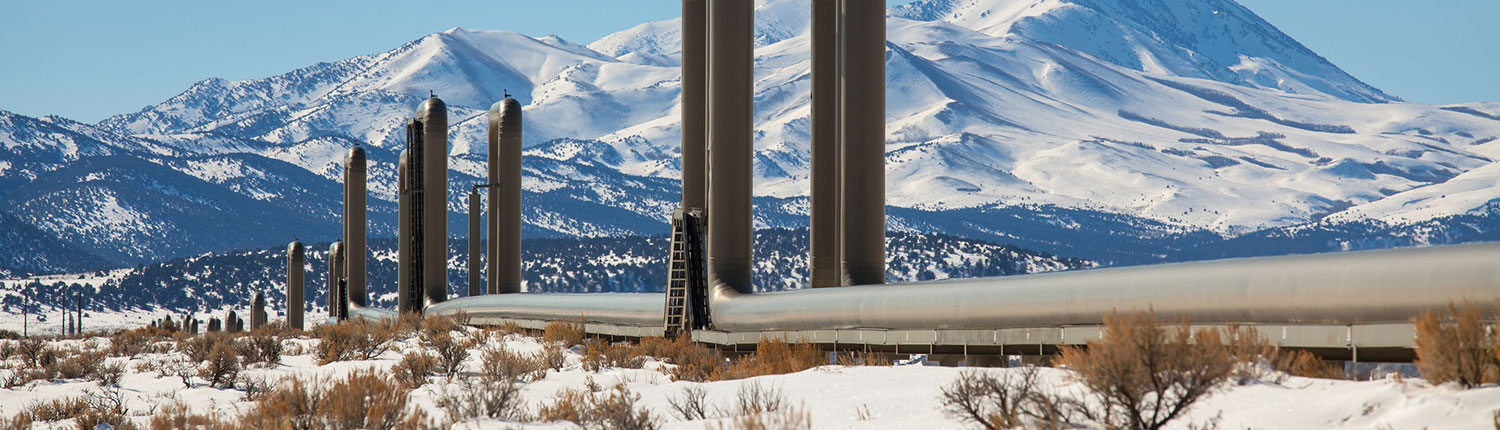
This Webinar by the FSR Energy Union Law will review the EU Common Rules for Gas Import Pipelines and the Latest Developments on the Amendment to the Gas Directive
Join Professor Kim Talus (Tulane Law School; University of Eastern Finland; and University of Helsinki) for a free webinar and open discussion on The Latest Developments on the Amendment to the EU Gas Directive, organised by the FSR Energy Union Law Area.
Topics
In this webinar, Professor Kim Talus will review the latest developments on the Commission’s proposed amendment to the 2009 Gas Directive, which extends the Third Energy Package to include gas import pipelines, following the agreement of 12 February 2019 reached at the conclusion of the trilogues.
We will address:
- The background to the Amendment: Why do we need it or do we?
- Details of the Amendment: What is changing and who is impacted?
- Details of the Amendment: How does it impact the energy competences of Member States?
- The relationship between Nord Stream 2 and the Amendment
Speaker
Professor Kim Talus is the James McCulloch Chair in Energy Law and founding Director of the Tulane Center for Energy Law (Tulane Law School). He is also a Professor of European Energy Law at UEF Law School (University of Eastern Finland) and a Professor of Energy Law at Helsinki University.
Disclaimer: While the webinar is an academic debate, please note that Professor Kim Talus has previously been attached to the Nord Stream 2 project. The Energy Union Law Area is not associated with the project. Professor Talus is an invited guest for the series.
Background
See Prof. K. Talus’ recent publication, in response to the agreement, EU Gas Market Amendment – Despite of Compromise, Problems Remain (OGEL, February 2019), available here.
And Professor Leigh Hancher’s recent paper on the proposal, A common EU framework regulating import pipelines for gas? Exploring the Commission’s proposal to amend the 2009 Gas Directive,available here.
Don’t miss any update on our events
Sign up for free and access the latest events from our community.
An assessment of the EU Emissions Trading System

As part of the LIFE SIDE project, the FSR Climate of the European University Institute has conducted a literature-based assessment of the European Union Emissions Trading System (EU ETS) which focuses on the following topic areas:
1) free allocation, competitiveness effects and carbon leakage;
2) interactions with other policies;
3) low-carbon innovation and investment; and
4) the international dimension.
In this webinar, the literature itself and the conclusions of the EU Emissions Trading System assessment will be illustrated chapter by chapter. The audience will have the opportunity to interact with the speaker.
Speakers:
Simone Borghesi, Director, FSR Climate
Stefano Verde, Research Fellow, FSR Climate
Don’t miss any update on our events
Sign up for free and access the latest events from our community.



EU ETS: empirical evidence and lessons learnt

In this online debate, the FSR climate team will dive deep into their key takeaways from their research on the EU ETS, looking at the empirical evidence and lessons learnt after thirteen years.
As part of the LIFE SIDE project, the FSR Climate team of the European University Institute has conducted a literature-based assessment of the EU ETS which focuses on the following topic areas:
- free allocation, competitiveness effects and carbon leakage;
- interactions with other policies;
- low-carbon innovation and investment;
- the international dimension. In this online debate, some of the conclusions of the assessment are discussed with two EU ETS experts.
The audience will have the opportunity to pose questions to the speakers.
Moderator:
Simone Borghesi, Director, FSR Climate
Speakers:
- Jos Delbeke, Senior Adviser for Relations with the European University Institute, European Political Strategy Centre, European Commission
- Frank Venmans | University of Mons and Grantham Research Institute
Jos Delbeke (1954, Belgium) has been the Director-General of the European Commission’s DG Climate Action since its creation in 2010. As of 16 March 2018, he was appointed Senior Adviser for Relations with the European University Institute, European Political Strategy Centre. He joined the European Commission in 1986. He was very involved in setting the EU’s climate and energy targets for 2020 and 2030, and the adoption of the related legislation by the EU Council and Parliament. Mr Delbeke has been a key player in developing EU legislation on cars and fuels, the Emissions Trading System (ETS), air quality, emissions from big industrial installations and chemicals (REACH). As an economist, he always underlined the role of market-based instruments and of cost-benefit analysis in the field of the environment. For several years Mr Delbeke has been responsible for developing Europe’s International Climate Change strategy and he was for many years the European Commission’s chief negotiator at the UNFCCC Conference of the Parties. He holds a PhD in Economics (Louvain, 1986) and worked in 1985 at the International Monetary Fund (Washington DC, USA). As of 2013 he is lecturing at the University of Louvain (Belgium) on European and international environmental policy.
Frank Venmans is Assistant Professor at the Microeconomics Department of the University of Mons and President of the Expert Committee on Climate Change for the Government of Wallonia (Belgium).He has a Master in Bio-engineering from the University of Ghent and an MSc in Economics and Management from the University of Mons (Belgium). He was a Visiting Research Student at the LSE in 2013-2014. Conducting a multi-criteria analysis of the EU Emission Trading Scheme, he finished his PhD in 2013.
Don’t miss any update on our events
Sign up for free and access the latest events from our community.





The role of LNG in the energy transition

This online debate looks beyond the only renewable gas and explores the role of LNG in the energy transition. What will be the role of LNG globally and what impact will it have on the EU gas market in the next 20 years?
The current debate in the EU is more and more focusing on biogas, biomethane and other “green gases” as enablers of the energy transition for the EU gas sector towards full decarbonisation.
On the other hand, the intermittent nature of renewable electricity production and the current immaturity of the technology which is expected to support this energy transition, oblige to a reflection on the role of “conventional” gas at this stage and for the next 20-25 years.
Furthermore, gas, shale gas and even coal still constitute a great share of the global energy mix and very much steer global energy policy dynamics. In several non-EU countries indeed, consumption of conventional gas is expected to increase in the next years (See recent IEA World Energy Outlook)
- To what extent can we neglect the role of conventional gas in this context?
- What are the possible options at stake as to ensure a real smooth energy transition?
- Is the cost of keeping conventional gas in the energy mix a sustainable cost?
Speakers:
- Christopher Jones, FSR Part-time Professor
- Peter Fraser (IEA)
- Jacques Rottenberg, Elengy/GLE
- Bernard Vanheule, IOGP
Moderator:
- Ilaria Conti, Head of FSR Gas
Don’t miss any update on our events
Sign up for free and access the latest events from our community.
More on the topic



Bioenergy research and innovation

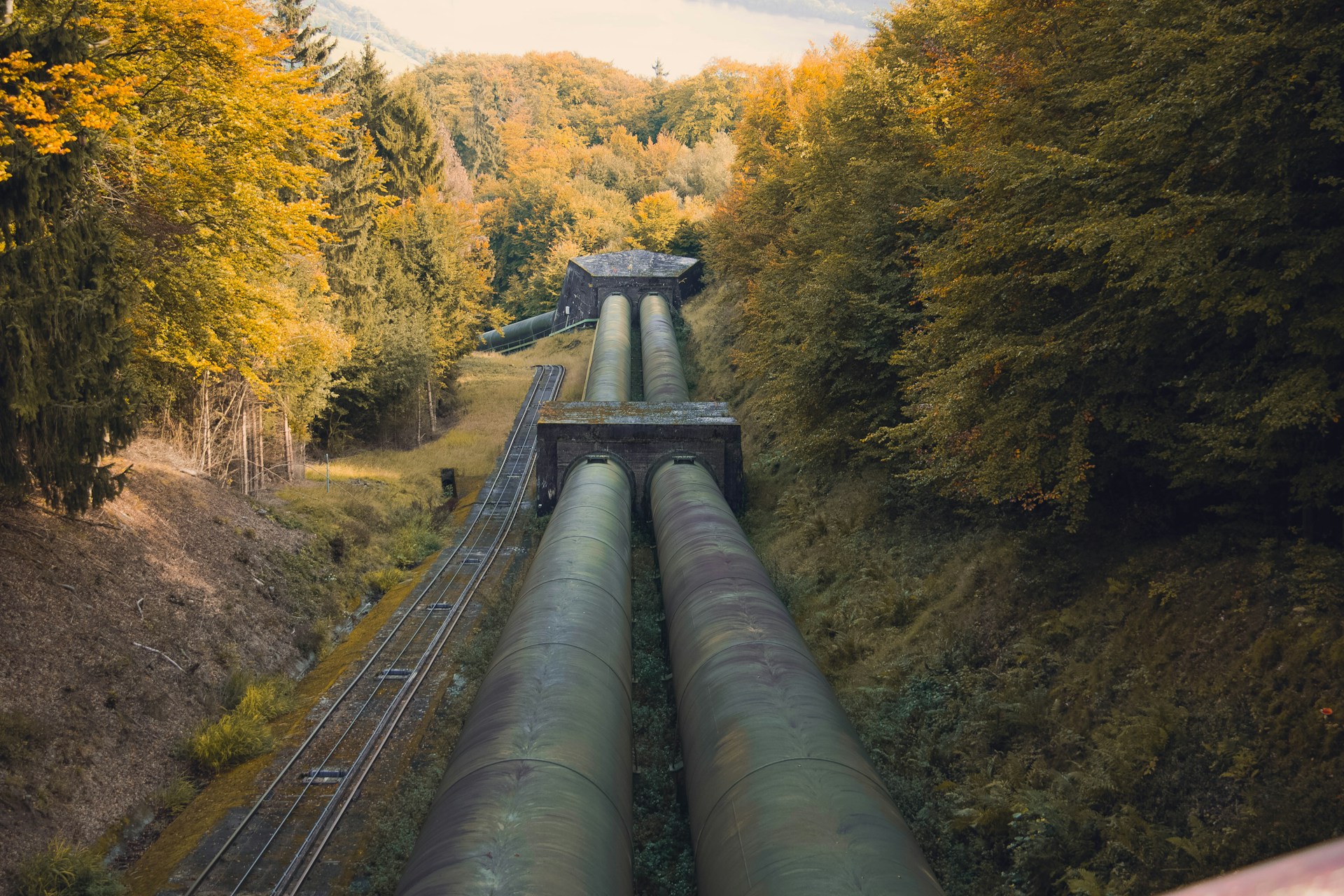
This webinar by the FSR Energy Innovation Area will explore whether bioenergy still an emerging area in research and innovation.
Watch the recording:
There is much evidence that bioenergy research and its learning pathways are closely linked to the scientific achievements in molecular biology and related fields. In fact, scientific collaboration among countries is still increasing, combining traditional knowledge areas, like anaerobic fermentation with emerging research fields like synthetic biology, algae and the current use of molecular biology to develop microorganisms.
However, innovation demands the articulation of many layers, including decisions related to environmental concerns and logistics, and the most relevant of all, the competition from other energy areas.
Speakers:
- Jose Maria Silveira (Unicamp)
- Miguel Vazquez (FSR Energy Innovation Area)
Questions to discuss:
Why does it seem that the technological advances in bioenergy are not enough to spur innovation? Lack of scientific knowledge, the emergence of new challenges in scaling up, the efficiency of engines to use advanced fuels or the lack of willingness to pay for reducing environmental impacts?
What is the role of new emerging alternative energy sources?
What is the role of national policies and how new networks be generated between stakeholders aiming to reduce environmental impacts and simultaneously improve wellbeing?
Finally, what is the role of country specificity to bring together all the different aspects of the bioenergy evolution? Should Brazil keep investing in bioenergy research? Can scientific cooperation provide complementary knowledge to “isolated countries” or does the interest of technology developers play a key role in those processes?
About the speakers:
José Maria F. J. da Silveira
Agronomist, Phd in Economics (Unicamp), Full professor in microeconomics and economic of innovation at State University of Campinas, Researcher of the National Council of Scientific Development- CNPQ and member of the board of International Consortium of Applied Bieconomy Research- ICABR. Major interest areas: innovation in agriculture and agribusiness, agribusiness chain value, bioenergy, social networks and agent-based modeling. Articles published in Research Policy, Scientometrics, Economics Bulletin, International Journal of Entrepreneurship and Small Business, among other indexed journals.
Miguel Vazquez
Miguel Vazquez is the Head of the FSR Energy Innovation Area. Visit his profile here.
Don’t miss any update on our events
Sign up for free and access the latest events from our community.