




Archives: Events
Electric Transmission and the Energy Transition: Perspectives from Africa, Europe, and North America

In this joint FSR-NYU episode of #FSRDebates, we explore the challenges, strategies, and evolving dynamics associated with electric transmission infrastructure in the context of the global energy transition. We analyze three distinct regions, shedding light on the varied approaches each takes to address imperatives such as sustainability, reliability, resilience, accessibility, and affordability within their energy systems.
Historically, electric grids have been co-planned with generation. However, the ongoing energy transition and ambitious decarbonization goals necessitate streamlining existing transmission infrastructure. In various parts of the U.S. and Europe, transmission bottlenecks are already severe and may impede the progress of the energy transition. Our discussion will encompass both regions’ strategies for elevating transmission as a priority on the political agenda.
The power grid in Africa is less integrated compared to Europe and the U.S. Nevertheless, the continent is rich in renewable resources for electricity generation. We will explore the region’s plans to unlock these resources, enhance energy access, and promote socio-economic development.
Additionally, we will examine alternatives to traditional transmission methods and elaborate on the role of modern grid technologies. We will scrutinize the advantages of planning a future energy system from scratch as opposed to remodeling existing suboptimal infrastructure. A significant portion of our discourse will focus on how climate change, extreme weather phenomena, a more weather-dependent generation resource mix, and potential demand growth due to electrification trends impact the necessity for transmission.
By presenting a tri-continental perspective, the debate will provide a nuanced understanding of regional intricacies, offering valuable insights for policymakers, industry leaders, and researchers alike.
Program
Moderators: 16.00 – 16.05
- Marzia Sesini, FSR
- Christoph Graf, NYU
Keynote Presentations 16.05-16.50
- Maria Robinson – Director, US Department of Energy Grid Deployment Office
- Raphael Sauter – DG Energy, European Commission
- Amine Idriss Adoum – (Director Infrastructure, Industrialisation and Trade Directorate) AUDA NEPAD
Debate 16.50 – 17.20
- Rob Gramlich – President, Grid Strategies LLC
- Federico Pontoni – Technologies for Energy Transition Director, FEEM
- Jan Kostevc – Team leader Energy Infrastructure, ACER
Conclusions 17.20-17.30
- Andris Piebalgs, FSR
- Christopher Jones, FSR
Don’t miss any update on our events
Sign up for free and access the latest events from our community.


Navigating the Path Towards EU Climate Neutrality
The upcoming edition of #FSRDebates will discuss the recently released report ‘Towards EU climate neutrality: progress, policy gaps and opportunities’ delivered by the European Scientific Advisory Board on Climate Change (ESABCC). Lena Kitzing, FSR Part-Time Professor and ESABCC Member, a co-author of the report, will join us to present its findings. – Watch the recorded session
The ESABCC was established by the European Climate Law of 2021 to provide the EU with scientific knowledge relating to climate change. In this report the Advisory Board takes stock of the progress towards climate targets and the consistency of climate action. It also presents scientific advice on policy actions supporting the achievement of climate neutrality by 2050 at the latest.
This debate will provide space to discuss key recommendations for a more effective implementation and design of the EU climate framework. The recommendations range from stepping up Member States’ efforts, adopting pending legislation, incentivising energy demand reduction, and phasing out fossil fuel subsidies, to streamlining policies, strengthening the governance framework, and adapting the EU Emissions Trading System (EU ETS).
Among other things, the debate will focus on which policy measures are best fit to reach the EU climate targets.
Programme
Introduction to the Debate and Opening Presentations
14.00 – 14.05 Introduction to the Debate
Ilaria Conti | Florence School of Regulation
14.05 – 14.20 The ESABCC Report: main findings
Lena Kitzing | Florence School of Regulation
14.20 – 14.30 Progress achieved and the remaining gaps: the policy perspective
Alban Kitous | DG CLIMA
Stefano Santacroce | DG CLIMA
Panel Discussion: Introductory Remarks, Polls and Comments
Moderator: Alberto Pototschnig | Florence School of Regulation
14.30 – 14.50 Introductory remarks from the panellists
Albert Ferrari | FSR Climate
Sven Harmeling | CAN Europe
Paul Wilczek | Eurelectric
14.50 – 14.55 Polls
14.55 – 15.20 Comments on the polls outcome and Q&A from the audience
15.20 – 15.30 Concluding remarks
Ilaria Conti | Florence School of Regulation
Alberto Pototschnig | Florence School of Regulation
Don’t miss any update on our events
Sign up for free and access the latest events from our community.

FSR 20th Anniversary

Celebrating two decades of impact in policy and regulation
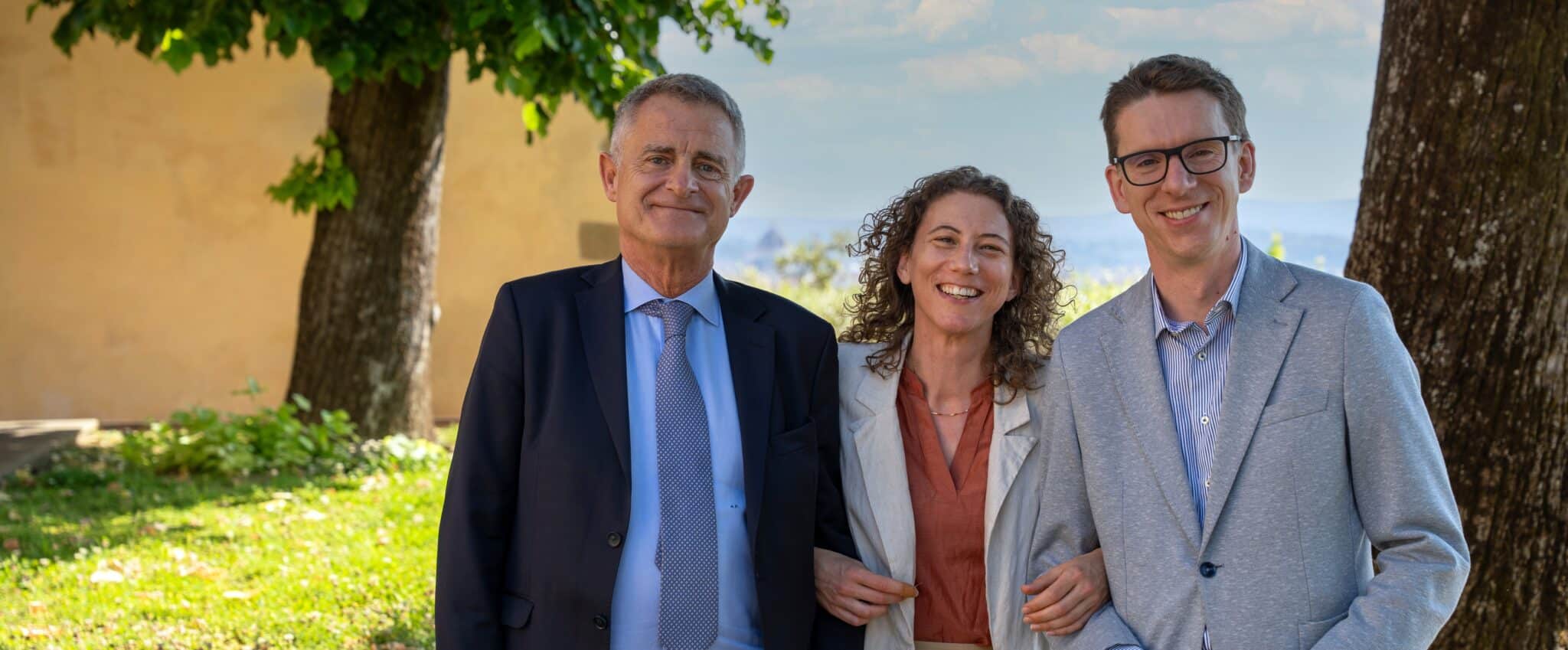
This year, the Florence School of Regulation celebrates its 20th Anniversary.
#FSR20more
Twenty years of advancing knowledge have paved the way for what lies ahead. As we reflect on our milestones, we renew our commitment to enhancing research, training and policy dialogue to support regulators, policymakers, and industries in addressing climate change and shaping a sustainable future for all.
Exciting research topics, events, courses and many more novelties await us in the coming years.
Cheers!
A special event will take place in Florence on 3 July 2024, to celebrate these 20 years and to look forward.
Programme
Welcome address
Patrizia Nanz | President, European University Institute
A journey through the FSR: history, prospects, and shaping tomorrow
Leonardo Meeus | Director, Florence School of Regulation
Roundtable on “Europe at a cross-road: affordability, sustainability, autonomy”
Moderator: Erik Jones | Director, Robert Schuman Centre for Advanced Studies
Panellists:
Catharina Sikow-Magny | Director Green Transition and Energy System Integration, DG for Energy, European Commission
Nathalie Berger | Director, Support to Member State Reforms, DG Reform, European Commission
Clara Poletti | Board of Regulators Chair, ACER, and Commissioner, ARERA
Don’t miss any update on our events
Sign up for free and access the latest events from our community.

Developing incentives for innovation by network companies: insights from Germany

FSR Insights continues to look at “Innovation in Energy”
In this FSR Insights, prof. Gert Brunekreeft will present his recent perspectives on incentive regulation for network companies, exploring in particular how specific innovation’s external or internal effects may call for different regulatory tools. Brunekreeft will also focus on regulatory tools promoting experiments and discuss the recent German experience (see his contributions here and here).- Watch the recorded session
Innovation in energy networks is a non-negotiable ingredient for the energy transition. The shift to an energy mix dominated by renewable energy sources and the gradual electrification of final uses already challenge the traditional approach to grid planning and operation today. Network companies, either at the transmission or distribution level, must innovate to ensure cost containment, security of supply, and timely service delivery to their users.
However, network companies are heavily regulated businesses that react to the incentives and constraints introduced by regulators and policy-makers. Ensuring a regulatory framework conducive to innovation has been a long-standing focus of discussion. Countries in Europe and elsewhere have adopted different approaches to regulatory experimentation in energy, and a growing amount of evidence is now available on their efficacy (see, among others, Schittekatte et al., 2021).
Innovation is not a monolith; on the contrary, different types of innovation exist and are characterised by different features. Understanding these distinctions is crucial when selecting and designing regulatory tools to drive innovation in network companies. Brunekreeft will elaborate on this, discussing a market facilitation incentive mechanism, a digitalisation budget that applies sharing factors, and three alternative ways to enable risk-taking by network companies.
Filippo Bovera from Politecnico di Milano and Ellen Beckstedde from FSR will talk about prof. Brunekreeft’s contribution before opening the floor to questions from the audience.
Keynote speaker
Prof. Gert Brunekreeft | Constructor University Bremen
Discussants
Filippo Bovera | Politecnico di Milano
Ellen Beckstedde | FSR
FSR Insights is an online series hosted by Marzia Sesini and Nicolò Rossetto (FSR).
Presentations
Don’t miss any update on our events
Sign up for free and access the latest events from our community.
More on the topic



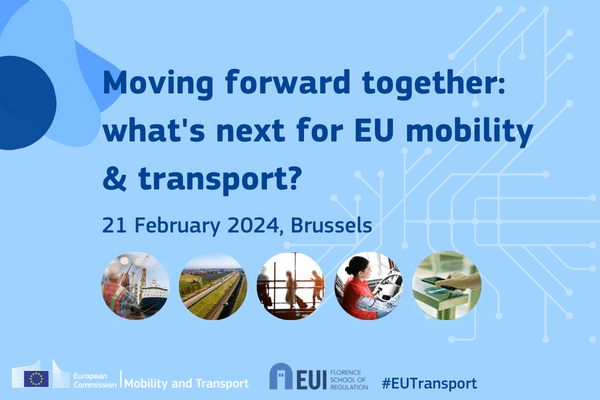
Moving forward together: what’s next for EU mobility & transport?
The Florence School of Regulation, in cooperation with the European Commission (DG MOVE), organises an all-day academic conference on the state of play on EU transport policy and the challenges and priorities for the future of EU transport and mobility.
The conference will provide input to the next Commission’s priorities in the transport and mobility field.
The Commissioner, Adina Vălean, and the Director-General, Magda Kopczyńska, will lead the opening session and give their concluding remarks.
The programme will focus on three thematic sessions moderated by Juan Monteiro, Director of the FSR Transport area:
- Session 1: Filling the gaps: delivering a deeper, more competitive and better connected Union
- Session 2: An inclusive twin transition in the field of transport: mission possible
- Session 3: Towards a wider Europe: revisiting our transport agenda in a changed geopolitical context
Alberto Pototschnig, FSR will contribute to Session 2.
Read more | Browse the programme
Don’t miss any update on our events
Sign up for free and access the latest events from our community.



Loss and Damage Fund and UNEP’s Adaptation Gap Report

The theme of the session will be to understand UNEP’s work on the Loss and Damage Fund and the historic decision at the most recent COP, as well as the publication by UNEP on the Adaptation Gap Report, 2023 – Watch the recorded session
The FSR Talks series monthly invites policy-makers and academics to talk about relevant topics related to energy and climate regulation addressed to a global audience. It is co-hosted by Part-time Professor Lucila de Almeida representing the European University Institute/Robert Schuman Center for Advanced Studies/Florence School of Regulation ((EUI/RSCAS/FSR), Carol Awuor from the African School of Regulation (ASR), and Swetha Ravi Kumar from FSR Global based in India.
Speaker
Dr. Alvin CHANDRA, Global Coordinator for Adaption Policy and Partnerships, oversees the Global Adaptation Network, United Nations Environmental Programme (UNEP).
Invited discussant
Prof. Ginevra Le Moli, Part-time Professor EUI/RSCAS/FSR
Host
Carol Awuor, Research Associate, ASR
Prof. Lucila de Almeida, Part-time Professor EUI/RSCAS/FSR
Don’t miss any update on our events
Sign up for free and access the latest events from our community.
More on the topic

The Green Deal: five years on

FSR Regulatory Policy Workshop Series 2023-2024
This workshop is by invitation only. Please note that the day before, the FSR is organising an Open Evening for prospective donors, and those participating will be exceptionally invited to join this workshop. For more information on the FSR Open Evening, please visit this page.
Sustainability assessment
The FSR assesses the sustainability and carbon footprint of all its Workshops of the Regulatory Policy Workshop Series. This Workshop is run mainly ‘in presence’, with some exceptions for participation through internet-based remote connection. It is expected that most participants will join the Workshop in Florence to take advantage of the opportunity for more effective interaction and discussion. Those participants joining the event in Florence will be encouraged to offset any carbon emissions related to their air travel. It is considered that, in this way, a suitable balance is achieved between the effectiveness of the policy dialogue and the net carbon footprint of the event.
Don’t miss any update on our events
Sign up for free and access the latest events from our community.





FSR Policy Advisory Council 2024

The Policy Advisory Council discusses the most topical regulatory and policy issues and debates and the relevance and robustness of the latest FSR research findings. The meeting gathers experts from the European Commission, the EU Agency for the Cooperation of Energy Regulators (ACER), the FSR Energy Star and Major Donors and invited renowned academics.
Don’t miss any update on our events
Sign up for free and access the latest events from our community.

Future Landscape of Green Hydrogen and Its Transformative Impact on Global Industries
Our upcoming quarterly theme in FSR Insights revolves around “Innovation in Energy”.
Innovation is key in supporting the decarbonisation of the energy sector and providing an adequate response to the dramatic changes in international markets and the broader geopolitical landscape we have witnessed in the last few years.
The inaugural episode of the series, titled “Future Landscape of Green Hydrogen and Its Transformative Impact on Global Industries,” will explore the profound effects of technological development on existing energy value chains and the entire production-to-consumption lifecycle, reshaping interactions among stakeholders.
Our Keynote Speaker will present one of her latest articles, “Green hydrogen value chains in the industrial sector—Geopolitical and market implications”. The discussion, grounded in resource endowment, existing industrial production, and economic relatedness, will help us reflect on potential frontrunners in the future green hydrogen market and the geopolitical and market dynamics resulting from the transition in existing value chains.
Discussants will share their critiques and nuanced perspectives. The session will benefit from their balanced viewpoints, drawing on competencies in engineering, economics, and policy. The audience will be also encouraged to engage by posing questions and participating in the final discussion.
Keynote speaker
Laima Eicke | Research Institute for Sustainability and the University of Erfurt
Discussants
Franziska Holz | DIW Berlin
James Kneebone | FSR
FSR Insights is an online series hosted by Marzia Sesini and Nicolò Rossetto (FSR).
Presentations
Don’t miss any update on our events
Sign up for free and access the latest events from our community.
More on the topic


Interview with Christian Zinglersen, Director of ACER
This special edition of FSR Debates will welcome Christian Zinglersen, Director of ACER, for an interview that will explore the new roles and responsibilities of ACER coming from the reform of the electricity market design, of REMIT and of the Gas/Hydrogen Package.
Christian Zinglersen is the second Director of the European Union Agency for the Cooperation of Energy Regulators (ACER). He was appointed in September 2019 and took office on 1 January 2020.
Before joining ACER, Mr Zinglersen was the first Head of the global Clean Energy Ministerial Secretariat hosted at the International Energy Agency in Paris (IEA). He previously served as Deputy Permanent Secretary at the Danish Ministry of Energy, Utilities, and Climate, where he was a member of the Ministry’s Executive Board responsible inter alia for the energy policy portfolio. He served as the Danish government’s representative and Vice-Chair of the IEA’s Governing Board and was the Danish participant in the Director-General meetings on energy policy within the European Union. Prior to that, he served as the Danish government’s head of the global climate negotiations, culminating in Denmark’s Presidency of the Council of the EU in 20121.
Don’t miss any update on our events
Sign up for free and access the latest events from our community.
Details matter: a consultation on implementation aspects of a regulatory scheme for efficiency and innovation

The Florence School of Regulation (FSR) launches a public consultation, on behalf of ACER, on the main implementation aspects of a possible scheme for incentive-based regulation of networks to promote efficiency and innovation in addressing electricity system needs.
Background
In Spring 2023, FSR was tasked by ACER with the development of a regulatory scheme for the promotion of efficiency and innovation in addressing electricity system needs. FSR presented a proposal at June 2023 Copenhagen Forum , which was later detailed in a report for ACER.
In Fall 2023, FSR continued its work on the topic and consulted national regulatory authorities (NRAs), transmission system operators (TSOs) and the wider community of stakeholders on the general aspects of the proposed regulatory scheme.
Details matter
Encouraged by the generally positive reactions to the first consultation, FSR is exploring the implementation aspects of the proposed regulatory scheme and is consulting again NRAs, TSOs and the wider community of stakeholders to get feedback on the various implementation aspects, the possible options available and how to deal with the trade-offs that emerge when any regulatory scheme is detailed.
During this consultation webinar, the FSR team will illustrate the proposed scheme with reference to a concrete implantation case. After this presentation, stakeholders will have the opportunity to raise questions, addressing any possible doubts regarding the consultation.
More details about the consultation can be found here.
Send your input!
Those interested in answering the consultation are invited to fill out the form available here.
The consultation closes at 11.59 a.m. CET on 8 March 2024.
In case you have any further comments or questions regarding this consultation, please, contact Nicolò Rossetto.
Don’t miss any update on our events
Sign up for free and access the latest events from our community.


OECD on ‘Better regulation for the green transition’
In this episode of FSR Talks, Daniel Trnka joins us to discuss the recent OECD Public Governance Policy Paper entitled ‘Better regulation for the green transition’.
This policy paper discusses how governments can use better regulation instruments (good regulatory practices, risk-based and agile approaches, regulatory delivery, international regulatory cooperation, economic regulators, and behavioural insights) to design, implement and evaluate efficient and effective regulations for the environment.
Together with its authors, we will explore the challenges governments face and present good practices for environmental and other regulations to ensure that all policy instruments coherently pursue environmental goals.
The new edition of the FSR Talks series aims to monthly invite policy-makers and academics to talk about relevant topics addressed to a global audience related to energy and climate regulation.
Host
Lucila de Almeida, FSR
Carol Awuor, African School of Regulation
Swetha Ravi Kumar, FSR Global based in India
Speaker
Daniel Trnka, Deputy Head of Division of the Regulatory Policy Division, Organisation for Economic Co-operation and Development (OECD).
Invited discussant
Jorge Vasconcelos, FSR
Don’t miss any update on our events
Sign up for free and access the latest events from our community.