


Type of event: Insights
Experience with emergency gas measures: price cap, storage and saving regulations

In May 2022, in response to the energy crisis that has afflicted Europe caused by Russia’s invasion of Ukraine, the European Commission came forward with its REPowerEU Plan to wean the EU away from imports of Russian fossil fuels.
The plan is centered on accelerating the rollout of renewable energy, frontloading investment in energy efficiency, and diversifying our energy sources and suppliers.
In its continuous struggle to find alternative energy suppliers and secure additional deliveries, the Commission has introduced a set of new emergency toolboxes regarding gas price caps, gas savings, and storage.
This week’s FSR Insights will discuss these new emergency toolboxes and their shortcoming, the need for new measures, their strengths, and potential weak points.
We will answer these questions with academics and review the latest related publications. With the takeaways from our reflection, we will analyse our lessons learned about this crisis and how we can do better if faced with a similar situation next winter.
Speakers:
Don’t miss any update on our events
Sign up for free and access the latest events from our community.
More on the topic





Courts, Regulators, and the Scrutiny of Economic Evidence
In this episode of FSR Insights, we will discuss the key findings of Despoina Mantzari’s recently published book Courts, Regulators, and the Scrutiny of Economic Evidence.
The book presents the first systematic examination of economic regulation and the crucial role of economic evidence in regulatory authorities and courts.
This work brings together strands of scholarship from law, economics, and political science to explore two key themes: the influence of economic evidence on the discretionary assessments of economic regulators, and the limits of judicial review of economic evidence, supplemented with comparative examination of both UK and US systems.
Host
- Lucila de Almeida | Florence School of Regulation & Nova School of Law
Keynote Speaker
- Despoina Mantzari | UCL
Discussants
- Adrien De Hauteclocque | Court of Justice of the European Union
- Selçukhan Ünekbas | European University Institute, Law Department
Dr Despoina Mantzari is Associate Professor in Competition Law and Policy at University College London (UCL), Faculty of Laws.
Don’t miss any update on our events
Sign up for free and access the latest events from our community.
Speakers
More on the topic








Does Europe Need a Hydrogen Network?
We are often told that a hydrogen grid is essential if Europe wants to reach its climate targets. Such claims are often based on modelling with strong fixed assumptions.
In this FSR Insights event, Tom Brown, TU Berlin, examines results from a highly-detailed energy system model that endogenises as many choices about energy supply and infrastructure as possible. The presentation explores trade-offs between electricity grid expansion and hydrogen networks, as well as between e-fuel imports and domestic production.
While energy trade is always cost-optimal, there are many near-optimal solutions with attractive properties of resilience, lower land usage and less infrastructure lock-in. The FSR Insights rounds off with a discussion of the benefits of open energy modelling for infrastructure decision-making.
Hosts
Leonardo Meeus | Florence School of Regulation (FSR)
Lucila de Almeida | FSR & Nova School of Law
Keynote Speaker
Tom Brown |TU Berlin
Discussants
Christine Brandstätt | Copenhagen School of Energy Infrastructure
Tim Schittekatte|FSR and MIT
Read these recent publications ahead of the event:
Presentations
-
Does Europe Need a Hydrogen Network?
Tom Brown
Don’t miss any update on our events
Sign up for free and access the latest events from our community.
Speakers
More on the topic






Capacity Mechanisms in the EU Energy Market: The Launch of the Second Edition Book
This FSR Insights event will host the editors of the forthcoming second edition of the “Capacity Mechanisms in the EU Energy Markets” book to discuss how and why the book is intended to serve as a point of reference for regulators and policy-makers on how to design optimal capacity mechanisms in Europe.
Since the first edition of the edited book “Capacity Mechanisms in the EU Energy Markets” (Oxford University Press, 2015), these mechanisms have become a fact of life in member states’ energy markets and one of the hottest topics in the broader European regulatory debate. Concerned about the security of electricity supply, national governments are implementing subsidy schemes to encourage investment in conventional power generation capacity alongside already heavily subsidized renewable energy sources.
With the increasingly connected European electricity markets, the introduction of a capacity mechanism in one country not only tends to distort its national market but also may have unforeseeable consequences for neighbouring electricity markets. As these mechanisms are adopted by member states with limited supra-national coordination, as well as consideration for the cross-border impact, they tend to cause severe market distortions and put the future of the European internal electricity market at risk.
The “Capacity Mechanisms in the EU Energy Markets” book will take stock of the experience so far about how capacity mechanisms work and what consequences they have for the European internal electricity market. In particular, it will:
- provide a cross-disciplinary view on capacity mechanisms, combining legal, economic and policy perspectives;
- include a detailed overview of national capacity mechanisms and their implications for the EU internal market;
- take a European approach, recognizing the need to understand the nature of market failures which are likely to occur in the European electricity markets;
- offers an outsider’s view on the current developments in Europe, including contributions of recognized extra-EU energy experts.
Before the event, watch the video pills
Host and moderator
Lucila de Almeida | Florence School of Regulation (FSR) and NOVA School of Law
Speakers and book editors
Leigh Hancher | FSR and Tilburg University
Adrien de Hauteclocque | FSR and Court of Justice of European Union
Kaisa Huhta | University of Eastern Finland and Centre for Climate Change, Energy and Environmental Law
Małgorzata Sadowska | ACER (TBC)
Discussants
Paolo Mastropietro | Comillas Pontifical University
Charles Verhaeghe | Compass Lexecon
Related material
Don’t miss any update on our events
Sign up for free and access the latest events from our community.
Speakers
More on the topic

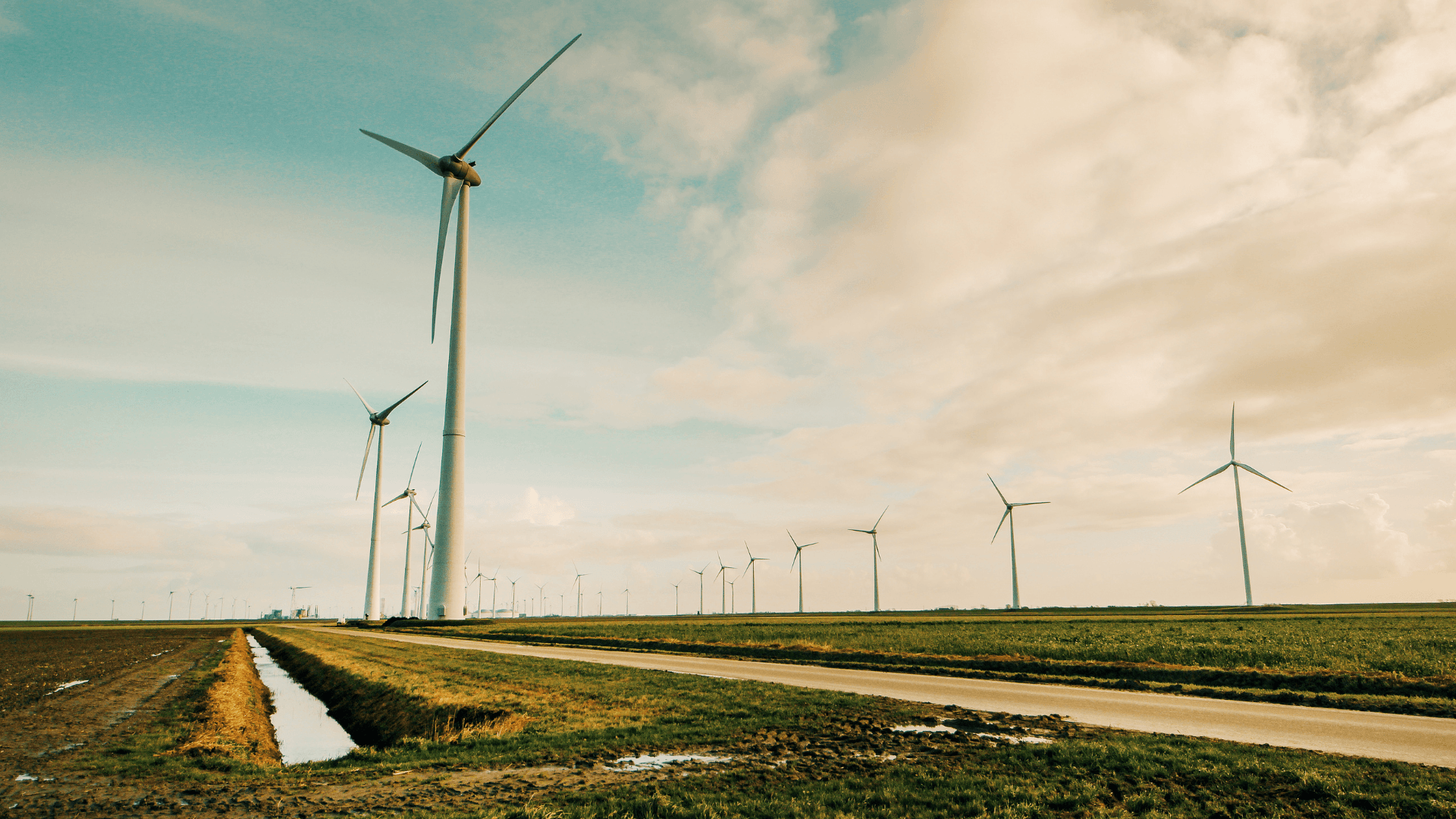



Electricity Market Evolution or Revolution?
Are electricity markets broken, and do we have to fix them? Or are the electricity markets doing what they are supposed to do, and do we have to complement them with other measures? What are the main measures we need to survive the crisis in the coming months? What are the main lessons learned that could help reform the electricity market?
Watch the video
Moderator:
Lucila de Almeida | FSR and Wageningen University & Research
Speakers:
Tim Schittekatte | FSR and MiT
Catherine Waddams | Norwich Business School of the University of East Anglia
Leigh Hancher | FSR
Leonardo Meeus | FSR
Presentations
-
Power market design and the EU energy crisis
Tim Schittekatte (FSR and MIT)
Don’t miss any update on our events
Sign up for free and access the latest events from our community.
Speakers
More on the topic


Revisiting policy concerns in decarbonized energy systems: price volatility, seasonal storage, and shocks
Policy concerns about price volatility, seasonal storage, and shocks go hand in hand when considering the transformation to a decarbonized energy system. Will price volatility in decarbonized energy systems be greater than today due to Variable Renewable Energy (VRE)? Even if battery storage is cheap, will we still need other types of energy storage to meet climate-neutrality objectives? If we do not have perfect foresight, which situation is preferred to deal with shocks in times of VRE drought: being underprepared or overprepared? We revisit these policy concerns in the academic literature and advance a stylized model to reveal additional interesting insights.
In this online event hosted by Leonardo Meeus we will discuss these policy concerns and the potential implications for policymakers.
Host:
- Leonardo Meeus (FSR)
Speakers:
- Martin Roach (Vlerick Business School and KU Leuven)
- Anna Creti (Université Paris Dauphine – PSL)
- Marten Ovaere (Ghent University)
Watch the event’s recording
Martin Roach on revisiting policy concerns in decarbonized energy systems
Presentations
Don’t miss any update on our events
Sign up for free and access the latest events from our community.
Speakers
More on the topic

Electricity sector reforms in China
The new episode of the FSR Insights series will focus on electricity sector reforms in China.
The electricity sector in China has passed through several reforms in the last half-century. In the mid-1980s, the first major reform introduced new ways of purchasing electricity as means of lowering entry barriers and expanding the industry. The second major reform in the late 1990s aimed at the corporatization of state-owned companies to act as market players and respond to market signals. The third major reform in 2003 imposed the unbundling of a single giant vertically-integrated company into pieces composed of independent generators, transmission, distribution, and retail companies.
Nowadays, the electricity sector in China is facing the need for a fourth major reform, which should conciliate the continued need for expansion of generation to respond to the still-growing demand with the pressure to accomplish the policy targets of carbon neutrality in 2060.
The FSR Insight will host Professor Furong Li, University of Bath, and Professor Xu Yi-chong, University of Griffith, to revisit the past reforms in the Chinese electricity sector and unwrapped the key challenges for the future. What are the main policy drivers for the electricity sector reforms in China? What has already been achieved, and what are the latest policy developments? What are the main technologies that are being deployed in this growing electricity system? Who are the main actors in the value chain? What are the ambitions to cooperate with other countries? What can we learn from this experience?
Hosts:
Leonardo Meeus, FSR
Lucila de Almeida, FSR
Speakers:
Furong Li, University of Bath
Xu Yi-chong , University of Griffith
Discussants:
Daniele Stampatori, FSR
Sofia Nicolai, FSR
Before joining the events, watch our pills!
Prof. Xu Yi-Chong on Electricity in China:
Prof. Furong Li on China’s power sector reforms:
#FSRInsights
The new season of the FSR Insights will feature world-class academics from the energy field, as well as the FSR research team members in the role of discussants, to investigate timely energy topics and future scenarios.
Don’t miss any update on our events
Sign up for free and access the latest events from our community.
Speakers
More on the topic
Lessons from Energy Policy Failures: ensuring energy justice and the good governance by indicators
In the FSR Insights of 16 of February, the editors Raphael J. Heffron and Maciej M. Sokołowski will join Lucila de Almeida, one of our hosts and contributor of the special issue, to discuss some of the papers that will be published in the Energy Policy. Especially, they will discuss academic articles covering two aspects: the failure of policymakers to ensure energy justice, and the pitfalls of indicators based on the case study of the EU’s Retail Electricity Market Barrier Index.
Watch:
#FSRInsights pills:
M. Sokolowski on Energy Policy Failures
Lucila de Almeida on Governance by Indicators
Raphael Heffron on Energy Justice
Energy policies always have an impact on society, the climate, the economy, and international relations. Nevertheless, they are not immune to failures and, when they do, policymakers and regulators can learn from these experiences. How will we identify failure in energy policy? What makes their failure? Could they be saved? What did not work? How to correct them? Above all, what are the lessons we can take from them?
These are just some of the matters which Guest Editors – Raphael J. Heffron and Maciej M. Sokołowski – raise in the Special Issue of the Energy Policy: “When Energy Policy Fails: Impacts, Recovery & Managing Risk”. The Special Issue offers insightful analyses on collapsed incentives, lost projects, mistakes, wrong paths, bad decisions, and lessons from the past based on policy failures in energy policymaking. In this context, it offers a global view of energy policy failure with contributions from across the world.
Speakers
Raphael J. Heffron (Faculty of Law, University of the West Indies, St. Augustine, Trinidad and Tobago)
Maciej M. Sokołowski (Faculty of Law and Administration, University of Warsaw, Poland Institute of Comparative Law, Meiji University, Tokyo, Japan)
Lucila de Almeida (FSR, Wageningen University & Research, Netherlands)
Hosts
Leonardo Meeus (FSR and Vlerick Business School, Belgium)
Lucila de Almeida (FSR & Wageningen University and Research, Netherlands)
Discussant
Maria Dolores Sanchez Galera (Universidad Carlos III de Madrid)
Links
Energy Policy Special issue: When Energy Policy Fails: Impacts, Recovery & Managing Risk
Maciej M. Sokołowski & Raphael J. Heffron, Defining and conceptualising energy policy failure: The when, where, why, and how
Lucila de Almeida, Fabrizio Esposito, and Josephine van Zeben, When Indicators Fail Energy Policies: Pitfalls of the EU’s Retail Electricity Market Barrier Index (to be added soon in the link above)
Raphael J. Heffron (2022). Applying Energy Justice into the Energy Transition. Renewable and Sustainable Energy Reviews.
Don’t miss any update on our events
Sign up for free and access the latest events from our community.
More on the topic
Climate Change Litigation in Numbers
Climate change litigation has gained an unprecedented growth in importance in the last five years, which high visibility reached by recent judgments such as Milieudefensie v. Shell case. Globally, the cumulative number of climate change-related cases has more than doubled since 2015. Just over 800 cases were filed between 1986 and 2014, while over 1,000 cases have been brought in the last six years. Who are the key players bringing these disputes into court? Who are the other parties who have figured as defendants – e.g., governments, energy companies? How different are the strategic litigation of these cases? And how courts around have decided them so far?
The FSR Insights of October has the honour of hosting the two leading legal scholars to speak about their solid research on climate change litigation from a quantitative perspective: Prof. dr. Michael Gerrard, Andrew Sabin Professor and Director of the Sabin Center for Climate Change Law at Columbia University, and Dr. Joana Setzer, Assistant Professorial Research Fellow at the Grantham Research Institute on Climate Change and the Environment, London School of Economics. Their research centers have gained a worldwide knowing reputation for monitoring all the climate change litigations in numbers and, by doing so, identifying the strengths and weaknesses of the judicialization of the most pressing issue of current times – climate change.
Before joining the event, watch our pills:
Do you have any questions for our speakers?
You can now submit them in advance!
Hosts
Leonardo Meeus, FSR
Lucila de Almeida, FSR
Keynote speakers
Prof. Michael Gerrard, Andrew Sabin Professor and Director of the Sabin Center for Climate Change Law at Columbia University
Joana Setzer, Assistant Professorial Research Fellow at the Grantham Research Institute on Climate Change and the Environment, London School of Economics
Discussants
Mario Pagano, EUI
Lucila de Almeida, FSR
Watch the event recording:
References
Don’t miss any update on our events
Sign up for free and access the latest events from our community.
Speakers
More on the topic
Electricity markets in times of (climate) change
The new season of FSR Insights starts with a conversation with the editors of the recently published Handbook of Electricity Markets: Prof. Jean-Michel Glachant (FSR Director), Prof. Paul L. Joskow, (MIT), and Prof. Michael G. Pollitt (Judge Business School, University of Cambridge).
With twenty-two chapters written by leading international experts, the handbook represents the most detailed and comprehensive overview on electricity markets ever published, covering wholesale and retail; renewable electricity sources; the electrification of mobility, heating, and cooling; and recent innovations such as distributed generation, electrical energy storage, demand response and digital platforms that are disrupting the industry.
Before joining the events, watch our pills!
Paul Joskow on US electricity markets:
Jean-Michel Glachant on the review of EU electricity markets:
Michael Pollit on adapting to new technologies and new policy priorities:
Jean-Michel Glachant on the review of innovation waves:
Do you have any questions for our speakers?
You can now submit them in advance!
Hosts:
Leonardo Meeus, FSR
Lucila de Almeida, FSR
Speakers:
Jean-Michel Glachant, Director, Florence School of Regulation, European University Institute
Paul L. Joskow, Elizabeth and James Killiam Professor of Economics and Management, Massachusetts Institute of Technology
Michael G. Pollitt, Professor of Business Economics, Judge Business School, University of Cambridge
Discussants:
Valerie Reif, Florence School of Regulation
Swetha Baghwat, Florence School of Regulation
#FSRInsights
The new season of the FSR Insights will feature world-class academics from the energy field, as well as the FSR research team members in the role of discussants, to investigate timely energy topics and future scenarios.
More about the handbook on electricity markets
The Handbook edited by covers all dimensions of electricity markets.
Find more
Contributors include: Kenneth Anderson, Ross Baldick, Kathryne Cleary, Bentley C. Clinton, Gabrielle Dyson, Anton Eberhard, Mathilde Fajardy, Carolyn Fischer, Vivien Foster, Jean-Michel Glachant, Richard Green, William W. Hogan, Grégoire Jacquot, Paul L. Joskow, Christopher R. Knittel, Thomas-Olivier Léautier, Chloé Le Coq, Stephen Littlechild, Nils May, Kostantinos Metaxoglou, Divyam Nagpal, Karsten Neuhoff, David Newbery, Shmuel S. Oren, Karen Palmer, Ignacio J. Pérez-Arriaga, Michael Pollitt, David M. Reiner, Fabien Roques, Richard Schmalensee, Eric Schubert, Sebastian Schwenen, Paul Simshauser, Fereidoon Sioshansi, Robert Stoner, Frank A. Wolak, Xu Yi-chong.
Don’t miss any update on our events
Sign up for free and access the latest events from our community.
Speakers
More on the topic
Interoperability related to smart metering, electro mobility and buildings under the Green Deal
The European Green Deal puts the EU on a path to climate neutrality by 2050, through the deep decarbonisation of all sectors of the economy, and higher greenhouse gas emissions reductions for 2030. The electricity, buildings and (electro) mobility sector will be essential in this transition. Energy flexible buildings and smart charging of electric vehicles can bring climate neutrality closer to citizens while providing flexibility to the electricity system. Integrating these sectors to deliver on the Green Deal goals will require seamless sharing of data and information and interoperability on various levels.
In this event, we will focus on the interoperability issues and solutions related to smart metering, electro mobility, and buildings, with a view to initiatives planned under the Green Deal.
With academics from the respective sectors, we will discuss questions such as:
- What are the interoperability issues that each sector is facing, and how can they be overcome?
- What solutions should be included in a common cross-sectoral governance framework?
Speakers:
· Doris Österreicher (University of Natural Resources and Life Sciences, Vienna)
· Mart van der Kam (Université de Genève)
· Antonello Monti (RWTH Aachen University)
FSR researcher:
· Valerie Reif
Host:
· Leonardo Meeus (FSR)
#FSRInsights
The series focuses on the insights from the FSR research. These online events will give the FSR researchers the chance to share our research findings and to collect feedback on ongoing research by engaging with the audience and invited experts.
Subscribe to our newsletter to get notified about our upcoming events.
Don’t miss any update on our events
Sign up for free and access the latest events from our community.
Speakers
More on the topic

The different dimensions and challenges of energy systems integration
In this episode of the FSR Insights series, we will discuss the FSR research on Energy Systems Integration.
Watch the recording:
The coordinated planning and operation of the energy system “as a whole”, across multiple energy carriers, infrastructures, and consumption sectors – is the pathway to an effective, affordable and deep decarbonisation of our economies.
Together with the FSR researcher, Golnoush Soroush we will focus on this concept by defining different integration dimensions from technology to regulation, business models, and policy.
From this multidimensional perspective, we will move to identify different barriers to energy systems integration.
Academic discussants:
- Anne Houtman, SciencesPo, Paris
- Tooraj Jamasb, Copenhagen School of Energy Infrastructure (CSEI)
FSR researcher:
Golnoush Soroush
Host:
Leonardo Meeus (FSR)
This interactive session will include a Q&A and polls for the audience.
The event will be recorded and live-streamed on our social media channels.
#FSRinsights
The series focuses on the insights from the FSR research. These online events will give the FSR researchers the chance to share our research findings and to collect feedback on ongoing research by engaging with the audience and invited experts.
Don’t miss any update on our events
Sign up for free and access the latest events from our community.