


Archives: Events
3rd Florence Intermodal Forum: Mobility-as-a-Service: from the Helsinki experiment to a European model?
Mobility-as-a-Service is gaining prominence as a possible solution to the long-standing challenge of seamless mobility, overcoming the boundaries between the different transport modes and achieving an integrated transport system for both people and goods.
Don’t miss any update on our events
Sign up for free and access the latest events from our community.
More on the topic








4th Florence Intermodal Forum. What role for digitalization in order to achieve an intermodal level playing field?

The 4th Florence Intermodal Forum aims at tackling this urgent need to define the intermodal level playing field, striking a balance between the dynamics of innovation on the one hand and regulation on the other. We will focus on the role of new technologies and the ICTs in particular, because of the inevitable changes that digitalization is bringing to the transportation sector.
Don’t miss any update on our events
Sign up for free and access the latest events from our community.
More on the topic



European Environmental Evaluators Network – 2015 Forum
Interviews
Artur Runge-Metzger, Director ‘International & Climate Strategy’, DG Climate Action
Hans Bruyninckx, Executive Director, European Environment Agency
Juha I. Uitto, Global Environment Facility, Independent Evaluation Office
Video recording of morning sessions
KEYNOTE SPEECHES: Gerben-Jan Gerbrandy, Member of the European Parliament
Artur Runge-Metzger, Director ‘International & Climate Strategy’, Directorate General for Climate Action of the European Commission
ROUND TABLE: chaired by Xavier Labandeira, Director, FSR Climate Presentations/Papers
Evaluation for modern climate policies – the challenges ahead (Keynote speech)
Artur Runge-Metzger || Director ‘International & Climate Strategy’, DG Climate Action, European Commission
Breakout sessions (speakers listed in alphabethical order)
Is the energy union example of better regulation? Ana-Maria Boromisa || Institution for Development and International Relations
The importance of political-interactive and institutional approaches for evaluating transformative change towards sustainability. Lessons learnt from an institutional evaluation of flood risk governance in six European countriesAnn Crabbé || University of Antwerp
The triple bottom line for policy evaluation: a qualitative approach to climate change and sustainabilityBianca Cavicchi || Norwegian Institute for Bioeconomy Research
Providing evidence syntheses for policy and practice decision makers: experiences gained from the UK Department for Environment, Food and Rural AffairsAlexandra Collins || UK Department for Environment, Food and Rural Affairs and Imperial College London
Investigating urban sustainable energy policies in Europe: experiences from the Covenant of Mayors (paper) Edoardo Croci || Bocconi University
Ex-post evaluation reporting under the EU Monitoring Mechanism the EUFrançois Dejean || European Environment Agency
On the road towards a post-carbon industry: European Union environmental policy and its side-effectsDaniel Gabaldon-Estevan || University of Valencia
Why it is possible to design an innovative environmental policy- a case for Germany´s environmental governance (paper) Azhan Hasan || Environmental Policy Research Centre (FFU)
Environmental evaluation of the French Urban Mobility Plans (paper) Odile Heddebaut || IFSTTAR – The French Institute of Science and Technology for Transport, Development and Networks
Design principles for monitoring and evaluating adaptive managementLeon Hermans || Delft University of Technology
Evaluation as learning ‘in and for’ climate-related policy and water management in the Netherlands Anne Loeber || University of Amsterdam
Linking actor level and system level? Methodical challenges in attributing long-term system effects to sustainability transition programsAnne Loeber || University of Amsterdam
Results of a decomposition analysis of the changes in GHG emissions in the EU and Member StatesAlistair Ritchie || ICF International
Evaluating climate policy experimentation: key lessons from polycentric governanceJonas Schoenefeld || Tyndall Centre for Climate Change Research, School of Environmental Sciences, University of East Anglia
The effect of the EU and the UNFCCC on the EU-15 emission trajectories during Kyoto (paper) I Detlef Sprinz || Potsdam Institute for Climate Impact Research
You cannot manage what you do not measure: an evaluation tool for transition processesLize Van Dyck and Kris Bachus || HIVA-KU Leuven
A framework for monitoring and evaluation of a national adaptation strategyJelle van Minnen || PBL Netherlands Environmental Assessment Agency, Department of Climate, Air and Energy
ORGANIZED WITH

Don’t miss any update on our events
Sign up for free and access the latest events from our community.
More on the topic




Understanding Stated Preferences for Durable Goods: the Case of Hybrid Cars

Speaker: Maria Loureiro, Department of Economic Theory, University of Santiago de Compostela, Spain
Introduction
Understanding the motives behind individuals’ preferences for hybrid cars seems quite relevant in order to implement appropriate and effective strategies to promote this clean driving technology. We contribute to the existing literature by assessing the impact of loss aversion and regret avoidance on green car choices.
Methods
To understand drivers’ preferences for cars (hybrid versus conventional cars) we conducted a discrete choice experiment in a representative sample of the Spanish population.
Results
Results from a nested logit model show that in our sample, the participants’ mean willingness to pay a premium in order to change from a conventional to a hybrid car (ceteris paribus) is well below the current mark up for hybrid cars. Thus, current economic subsidies applied to promote these cars in isolation may have a very limited effect in extending their use. In addition, we find that older drivers, individuals who experience loss aversion, and those who avoid suffering regret or deception caused by theri market choices, show evidence of the status quo bias. These results may be related to the fact that choices of durable goods are more reflective than those of non-durable goods. (Djamel Rahmani and Maria L. Loureiro)
Don’t miss any update on our events
Sign up for free and access the latest events from our community.
More on the topic
Specialized Training on the Regulation of Energy Markets and Infrastructure | JRC-Petten, European Commission
The Florence School of Regulation has been appointed by the Joint Research Centre (JRC), Directorate General for Energy, European Commission (Petten, The Netherlands) to provide an intensive, in-house week-long training course to staff from the JRC and the European Commission.
This high-level course covers all aspects of the recent experience and lessons, the present and the future of the European regulation for energy markets and infrastructure. The main topics are:
- Theory and principles of markets and regulation
- Regulatory models: The electricity industry
- Regulatory models: The gas industry
- Fundamentals of electricity networks and markets
- Wholesale electricity markets
- Output-based regulation for electricity
- Fundamentals of gas networks and markets
- European regulation for infrastructure development
- Retail electricity markets
- Demand response and demand-side management
- European legal framework for energy policy and regulation
- EU strategy for the development of renewable energy
- EU Energy regulation towards 2020/30 (market design, capacity mechanisms, smart regulation for smart grids and others).
The faculty includes the FSR Director Jean-Michel Glachant, top experts from the European Commission, energy companies and academics from worldwide renowned institutions. This is a closed training course. For any information, please contact the FSR Training Coordinator, Hugo Gil.
Don’t miss any update on our events
Sign up for free and access the latest events from our community.
More on the topic




Specialised Training on the Regulation of Gas Markets 2016
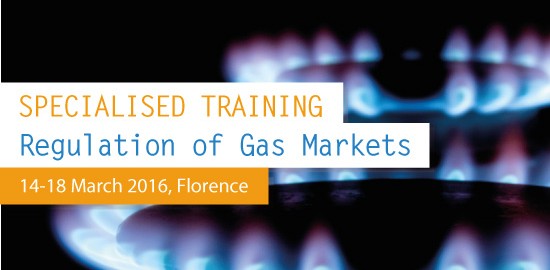
The FSR Specialised Training on the Regulation of Gas Markets covers the basic principles of gas regulation in the gas sector, as well as the most relevant and topical issues in Europe and worldwide. After a general assessment of the gas market context, the course gives an overview on the various and diverse applications of gas regulation in different geographical contexts (ex. EU, USA, South America etc.). By comparing different regional gas market models, the course analyses the best ways to implement the existing EU network codes, namely the Balancing and Tariffs Network Codes. Moreover, the course offers a deep insight on the basic concepts of gas regulation such as transmission tariffs, TPA and pipeline competition, incentives to new infrastructure, and price caps – with a practical perspective supported by concrete examples and case studies. Participants will have an opportunity to practice their market and regulatory skills by working in small groups and develop the best solutions applicable to real – life problems.
Course Directors: Sergio Ascari and Ilaria Conti
Registation Deadline: 7 March 2016
Find more details on the course page
For additional information please contact the Coordinator of this training, Marta Łuczak (marta.luczak@eui.eu) or phone (+39 055 468 5752)
Don’t miss any update on our events
Sign up for free and access the latest events from our community.
More on the topic
The Future Power Grid Managers Programme
The programme wants to tackle the management challenges and opportunities specific to the Transmission System Operators (TSOs) and Distribution System Operators (DSOs) in the power and gas industries in Europe.
Want to know more?
Don’t miss any update on our events
Sign up for free and access the latest events from our community.
More on the topic
The Completion of the Internal Energy Market
2014: Completion of the Internal Electricity and Gas Markets
In the conclusion of its meeting on 4 February 2011, the Council of the European Union set 2014 as the target date for the completion of the Internal Electricity and Gas Markets. This goal was reaffirmed in the conclusions of the meeting on 22 May 2013.
Progress so far
Significant progress has been achieved towards meeting this objective, both in terms of the development of the required market and network operation rules and on the ground. In fact, in terms of rule-making, two network codes have already been adopted, a third one should be adopted soon and ten more have already been recommended for adoption to the European Commission and they could soon enter into the Comitology process. Moreover, a number of the main provisions in these network codes have already been implemented in practice, through the voluntary cooperation of national regulatory authorities (NRAs), transmission system operators (TSOs) and other stakeholders. This early implementation approach has been supported by the Agency for Cooperation of Energy Regulators (ACER), which has coordinated the definition of a number of Roadmaps for the rapid and effective integration of the electricity and gas markets, to deliver tangible benefits to EU energy consumers as soon as possible. In the electricity day-ahead time-frame, a single market-coupling platform operates, since May 2014, to determine prices and cross-border flows on a large part of the EU, from the Straits of Gibraltar to the Barents Sea. Similarly, a single platform is already used for allocating capacity on the majority of internal EU gas interconnection points.
Much still remains to be done
The first coordinated auction for long-term electricity cross-border transmission rights is expected to take place in the second half of 2015, on the basis of harmonised auction rules currently being developed. In the intra-day time-frame of the internal electricity market, the development of a single continuous-trading, market-coupling platform has been repeatedly delayed and the go-live is now expected by the end of 2015 at the earliest, more than two years later than originally planned. Liquidity of many gas hubs still needs to be enhanced so that they could provide robust price signals to determine the efficient flow of gas across the EU. A well-functioning internal energy market is also increasingly recognised as an important contributor to the security of energy supply of the EU, as well as a pre-requisite for any additional measure to promote such security.
This Workshop aims at reviewing progress in the creation of a single market in electricity and gas across the EU and at identifying what is still missing so that EU consumers can reap the full benefits.
The Workshop will be structured in three sessions. Session I will be devoted to assess energy consumers’ expectations from the internal energy market and the benefits already accrued to them. Sessions II and III will aim at reviewing progress towards the creation of a single market in electricity and natural gas, respectively. Registration is free of charge (restrictions apply). Please submit your request by filling out the registration form.
Watch the Workshop Highlights
Audio Recording Only
Don’t miss any update on our events
Sign up for free and access the latest events from our community.
More on the topic
7th FSR & BNetzA Forum on Legal Issues of Energy Regulation
The FSR & BNetzA Forum is a joint initiative of the FSR Energy Law & Policy Area and the German energy regulator Bundesnetzagentur. The Forum is designed to foster discussion on issues of particular importance for national regulatory authorities and to facilitate the sharing of experience and best practice.
Sessions
This year’s Forum is hosted by our donor, Linklaters LLP, at the Berlin office, and is divided into 3 sessions.
- The first session on TSO certification includes comments on the Commission’s ITO study and the recent certification cases.
- In the second session, representatives from the Commission, national regulators and industry discuss the new role for DSOs.
- The third and last session centers around interconnectors and PCIs, where cooperation between national regulators is particularly challenging.
The sessions are complemented by a keynote speech on the European energy policy set by the new Commission.
Eligibility
Please note that this seminar is only open to donors of the Florence School of Regulation, EU public officials, and National Regulatory Authorities.
Don’t miss any update on our events
Sign up for free and access the latest events from our community.
More on the topic
Vienna Forum on European Energy Law – 2016
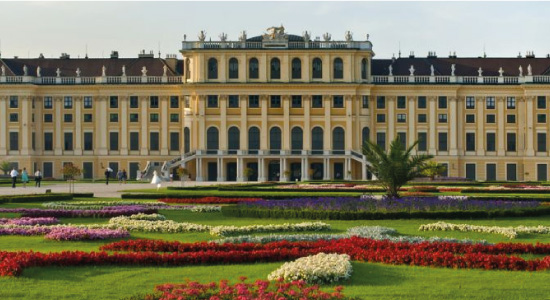
The Vienna Forum on European Energy Law is a joint initiative between the Florence School of Regulation and the Energy Community Secretariat. The annual event is designed to provide a platform for engagement and debate on the most relevant issues facing the EU and the Energy Community, and to promote knowledge and practice sharing.
Workshop on Legal Challenges in Eastern & South-Eastern Europe
This year, the forum included a closed workshop for regulators on markets and regulation, which explored the current legal challenges in Eastern and South Eastern Europe. This included sessions on network unbundling and certification, in addition to examining the markets in transformation.
You can find links to the presentations given here below.
Session 1: Network Unbundling
- Transmission Unbundling by Marie-Therese Richter (Energy Community Secretariat)
- Distribution Unbundling by Christopher Bremme (Linklaters LLP)
- Designing Network Codes by Adrian Palmer (Baringa Partners)
Session 2: Markets in Transformation
- Legal Challenges in Establishing Organised Electricity Markets and Market Coupling by Dörte Fouquet (Backer Büttner Held)
- State Aid Enforcement in the Energy Sector in South Eastern Europe by Miloš Vučković (Karanovic & Nikolic)
- The Experience with Market Liberalisation in the CEE Region by Jiri Horak (CEZ)
Evening Debate on the Challenges and Opportunities of Integrating with the Energy Union
The workshop was followed by an open evening debate on the challenges and opportunities of integration with the Energy Union from the perspective of Energy Ministers from the Energy Community, including the Minister of Energy of Ukraine, H.E. Volodymyr Demchyshyn and the Minister of Energy of Albania, H.E. Damian Gjiknuri.
4th Vienna Forum on European Energy Law
The second day of the forum will be opened by a keynote speech from Dominique Ristori, Director-General, DG Energy on the Energy Union followed by three sessions and a round-table discussion.
Session 1: The Emerging Governance of the Energy Union
The first session will consider the emerging governance of the Energy Union, looking at the possibility of an electricity market design and the role of ACER.
- An Electricity Market Design at Last? by Christopher Riechmann (Frontier Economics)
- A New Role for the Agency by Dennis Hesseling (ACER)
- The Emerging Governance of the Energy Union by Dietmar Prienstorfer (E-Control)
Session 2: Security of Gas Supply
The second session will examine the security of gas supply, particularly the move toward a pan-European security of supply regime, pipelines, and designing LNG contracts.
- Towards a Pan-European Security of Supply Regime by Oliver Koch (DG Energy)
- Pipelines: Between Economics, Law and Diplomacy by Reinhard Mitschek (OMV)
- How to Design LNG Contracts by Andrius Simkus (Energy Community Secretariat)
Session 3: Designing and Obtaining Support for RES and Energy Efficiency
The third session will focus on designing and obtaining support for RES and energy efficiency.
- Renewable Energy Policy: What Comes After Feed-in-Tariffs? by Mario Ragwitz (Fraunhofer)
- Energy Efficiency: How Efficient is the Current Regulatory Framework? by Kristóf Ferenczi (Kinstellar)
Session 4: Energy Dispute Resolution
The final round-table debate will focus on energy dispute resolution, especially as it relates to arbitration, the Russia/Ukraine energy disputes and EU law and arbitration.
- Current Arbitration Cases Under the Energy Charter Treaty by Dörte Fouquet (Becker Büttner Held)
- Energy Dispute Resolution: Is Arbitration Outdated? Karl Pörnbacher (Hogan Lovells)
- Russia Ukraine Energy Disputes by Vitaliy Radchenko (CMS Cameron McKenna)
For further information on the Forum, please see the website
Watch the highlights from the Vienna Forum 2016:
Opening and Keynote Address:
Session I: The Emerging Governance of the Energy Union
Session II: Security of Gas Supply
Session III: Law Enforcement in the Energy Community
Session IV: Energy Dispute Resolution
Don’t miss any update on our events
Sign up for free and access the latest events from our community.
More on the topic
FSR Energy’s 4th Policy Advisory Council
The Florence School of Regulation is hosting its 4th Policy Advisory Council. The Policy Advisory Council gather renowned academics, experts from leading energy companies as well as representatives from the European Commission , the Agency for the Cooperation of Energy Regulators ( ACER ) and National Regulatory Authorities ( NRAs ) to discuss the output of the FSR research.
Each Policy Advisory Council tests the relevance and robustness of the FSR research findings. After the Council the Florence School redrafts its research output accordingly. The topics of this fourth Council are: *Gas grid adequacy: preparing for which future? **A conceptual framework for the evolution of regulation of electricity transmission system operation towards a decarbonised and increasingly integrated electricity system in the EU This is a closed event.
Don’t miss any update on our events
Sign up for free and access the latest events from our community.
More on the topic
4th Conference on the Regulation of Infrastructures: Regulating network industries in emerging countries
The 4th Conference on the Regulation of Infrastructures brings together all research areas of the Florence School of Regulation to discuss current challenges in the regulation of the Infrastructure Industries.
Don’t miss any update on our events
Sign up for free and access the latest events from our community.
More on the topic