



Archives: Events
The Impact of the EU ETS on Pollution Emissions and Economic Performance
Don’t miss any update on our events
Sign up for free and access the latest events from our community.
More on the topic








Energy Union: Content or Packaging?
Watch the Recording of the Livestream
Programme
11:00 – 11.10 Welcome Jean-Michel Glachant | FSR 11:10 – 11.30 Introducing the paper European Energy Union Tadhg O’Briain | European Commission 11.30 – 13.30 Debating the European Energy Union Moderated by: Christian Oliver | FT Panellists: Sami Andoura | Jacques Delors Institute – College of Europe Jean-Michel Glachant | FSR Tadhg O’Briain | European Commission Georg Zachmann | Bruegel Jean-Arnold Vinois | Jacques Delors Institute 13.30 – 14:00 Lunch
DOWNLOAD THE FULL PROGRAMME
Don’t miss any update on our events
Sign up for free and access the latest events from our community.
More on the topic

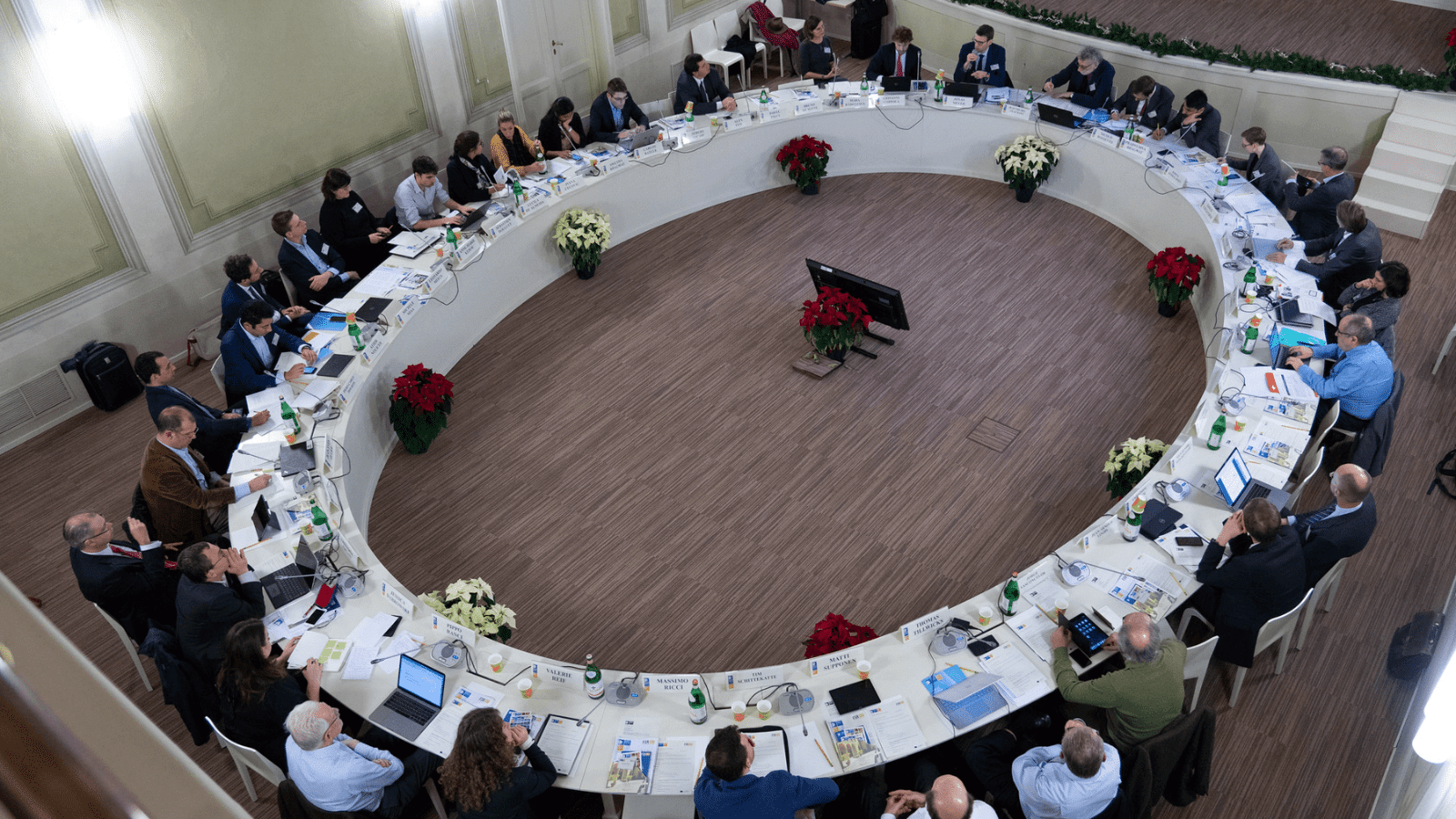
FSR Energy Law Training “EU State Aid and the EEAG – One Year On”
Context
Energy market players are currently facing the complex and ever-evolving regulation of state support for environmental and energy projects. The new Environmental and Energy Aid Guidelines (EEAG 2014-2020) have further complicated regulatory compliance and, a year later, remain out of line with the EU energy policy and a significant challenge for energy practitioners.
The FSR Energy Law Training on EU State Aid and the EEAG – One Year On is a one-day intensive course, tailor-made to the needs of energy lawyers, regulators and industry professionals to stay abreast of the recent regulatory changes, and to develop expertise to comply with the new state aid regime.
The Florence School of Regulation (FSR) is at the forefront in providing state-of-the-art training on EU regulatory topics. It brings together high-level experts from all spheres of network industries. Leading academics address the theoretical issues at stake, while national and European regulatory and industry representatives translate this into practice. This creates a unique opportunity for an in-depth understanding of complex regulatory issues and their impact on the market.
Course focus and methodology
The course will begin with a comprehensive overview of the current state aid control system in the energy sector, followed by a detailed analysis of selected issues of topical and urgent importance. This will take place over the course of four sessions conducted by renowned experts from academia and EU institutions, as well as leading law firms and consultancies. During the programme, course attendees will critically assess the new EEAG as applied in practice, and learn how to design state aid-compatible support measures. They will also be guided on state aid rules regarding reductions in energy taxation and electricity charges, as well as compensation for public service obligations.
The course is designed to encourage the active involvement of all participants in the training. Each session will combine presentations with case studies, problem-solving exercises and discussions on the practical issues and challenges faced by participants in their daily work. The limited number of places ensures personal tuition and encourages networking opportunities. The course is supported by an online platform providing the background material and relevant documents on all topics, drawing on advanced research carried out at the Florence School of Regulation. Course attendants will be invited to send their questions in advance to ensure that they are addressed during the training.
| Eligibility | FSR donors \ regulatory authorities \ other organisations \ academics \ PhD students Preference will be given to participants from FSR donors. |
| Fees |
FSR donors, regulatory authorities – 700 EUR \ |
| Contact |
For practical questions and logistics, please contact FSR Conferences. |
To safeguard the interactive nature of the course, including group discussions and case studies, a maximum of 20 participants will be accepted. Early registration is therefore recommended.
Register here by 20 July
Course director: Prof Leigh Hancher
Course coordinator: Dr Malgorzata Sadowska
ORGANISED WITH

Don’t miss any update on our events
Sign up for free and access the latest events from our community.
More on the topic
A Target Model for Electricity Capacity Remuneration Schemes – FSR Policy Workshop Series 2014-15
“many Member States currently have inadequate security of electricity supply frameworks in place and they use outdated and inconsistent approaches to assessing security of electricity supply. […] Capacity mechanisms
should only be developed to address security of supply if a regional system adequacy assessment points to such a need, taking into account the potential for energy efficiency and demand-side response”.
However, many Member States have already introduced or are introducing capacity remuneration mechanisms (CRMs typically in an uncoordinated way, to address generation capacity adequacy concerns, as noted by the Commission in 2013:
”concerns about the adequacy of generation capacity have led some Member States to consider new public intervention, such as support schemes for investments in new electricity generation capacity or for remunerating existing plants to remain operational”.
In this context the Commission considered that: “those measures should not result in inefficient plants being artificially kept in operation through public support, or in unnecessary new generation capacity being built” and, in the context of the increasingly integrated EU energy markets, that:
“where markets are linked, public intervention affects prices not only nationally but also in neighbouring markets. The resulting distortions of the internal electricity market can be both short-term (affecting system stability, spot market prices and electricity production), and long-term (crowding out investments in new capacity or diverting them to sub-optimal projects)”.
To reduce the potential of any adverse effects on the internal electricity market, in 2014 the Commission, in its Guidelines on State aid for environmental protection and energy 2014-2020,while recognising that:
“measures for generation adequacy can be designed in a variety of ways, in the form of investment and operating aid (in principle only rewarding the commitment to be available to deliver electricity), and can pursue different objectives”
provided a set of criteria which Member States should follow in deciding on CRMs and for their design:
- the precise objective, at which the measure is aimed, should be clearly defined, including when and where the generation adequacy problem is expected to arise. The identification of a generation adequacy problem should be consistent with the generation adequacy analysis carried out regularly by the European Network of Transmission Operators for electricity in accordance with the internal energy market legislation;
- the Member States should clearly demonstrate the reasons why the market cannot be expected to deliver adequate capacity in the absence of intervention, by taking account of on-going market and technology developments.
- any aid involved in CRMs should remunerate solely the service of pure availability provided by the generator, that is to say, the commitment of being available to deliver electricity and the corresponding compensation for it, for example, in terms of remuneration per MW of capacity being made available. The aid should not include any remuneration for the sale of electricity, that is to say, remuneration per MWh sold;
- the measure should be open and provide adequate incentives to both existing and future generators and to operators using substitutable technologies, such as demand-side response or storage solutions. The aid should therefore be delivered through a mechanism which allows for potentially different lead times, corresponding to the time needed to realise new investments by new generators using different technologies. The measure should also take into account to what extent interconnection capacity could remedy any possible problem of generation adequacy.
- The measure should be designed in a way so as to make it possible for any capacity which can effectively contribute to addressing the generation adequacy problem to participate in the measure, in particular, taking into account the following factors:
- The participation of generators using different technologies and of operators offering measures with equivalent technical performance, for example, demand side management, interconnectors and storage;
- The participation of operators from other Member States where such participation is physically possible in particular in the regional context, that is to say, where the capacity can be physically provided to the Member State implementing the measure and the obligations set out in the measure can be enforced ;
- Participation of a sufficient number of generators to establish a competitive price for the capacity;
- Avoidance of negative effects on the internal market, for example due to export restrictions, wholesale price caps, bidding restrictions or other measures undermining the operation of market coupling, including intra-day and balancing markets.
- The measure should:
- not reduce incentives to invest in interconnection capacity;
- not undermine market coupling, including balancing markets;
- not undermine investment decisions on generation which preceded the measure or decisions by operators regarding the balancing or ancillary services market;
- not unduly strengthen market dominance;
- give preference to low-carbon generators in case of equivalent technical and economic parameters.
In this latter respect, the Commission also noted that
“aid for generation adequacy may contradict the objective of phasing out environmentally harmful subsidies including for fossil fuels. Member States should therefore primarily consider alternative ways of achieving generation adequacy which do not have a negative impact on the objective of phasing out environmentally or economically harmful subsidies, such as facilitating demand side management and increasing interconnection capacity”.
Finally, in its Energy Union Strategy, the Commission indicated that it intends to
“propose a new European electricity market design in 2015”.
While this new design is expected to confirm most elements on the Electricity Target Model which is being implemented through the Network Codes and their voluntary early implementation (e.g. the significant progress achieved already in day-ahead market coupling), it will likely contain a blueprint for CRMs. Ahead of such proposal from the Commission, this Workshop aims at:
- Reviewing and comparing the existing or planned CRMs;
- Assessing the extent to which they comply with the design criteria already defined by the Commission;
- Identifying a set of detailed specification for a “CRM Target Model”. Key questions in this respect are the degree of harmonisation required for national CRMs and the conditions under which cross-border participation in national CRMs can be implemented.
Accordingly, the Workshop will be structured in two sessions.
- Session I will review existing or planned CRMs and assess them vis-à-vis the criteria set by the Commission.
- Session II will address the challenge of developing a CRM Target Model.
An updated version of the programme can be downloaded below.
This workshop is exclusive for representatives from National Regulatory Authorities and donors of the Florence School of Regulation. Special registration requests must be submitted to the FSR Training and Events Coordinator, Hugo Gil, by e-mail or phone (+39 055 468 5875).Don’t miss any update on our events
Sign up for free and access the latest events from our community.
More on the topic
EU ETS: Past Performances and Future Perspectives | Claudio Marcantonini
The European Union Emissions Trading System (EU ETS) is the largest cap and trade system in the world and this year marks its 10th anniversary. Since its beginning, it has been the subject of a vigorous debate. The EU ETS has created a functioning market for emission allowances with a clear price for carbon emissions. However, the carbon price has sharply declined in these last years and many observers think the instrument is too weak to support the transition to a low carbon society. Yet recently the European Council has taken important decisions to reform the EU ETS. This Webinar provides an introduction to the EU ETS and an assessment of its performance. It also presents the current debate and the changing proposals to the EU ETS.
Continue reading “EU ETS: Past Performances and Future Perspectives | Claudio Marcantonini”
Don’t miss any update on our events
Sign up for free and access the latest events from our community.
More on the topic







CEER-FSR Joint Training on the Introduction to Fundamentals of Energy Regulation

Overview
The Council of European Energy Regulators (CEER) and the Florence School of Regulation (FSR) are delighted to announce a unique joint course called “Introduction to Fundamentals of Energy Regulation”, to be held in the CEER’s office in Brussels in April 2016. This CEER-FSR course is focused on explaining the fundamentals of EU energy policy and regulation, building on similar successful courses held in 2014 and 2015. The course is ideally suited for newer staff members within National Regulatory Authorities (NRAs).
The CEER-FSR course will comprehensively explain the key aspects of EU electricity and gas regulation, both theory and practice, across the energy cost chain from wholesale markets through to networks and retail issues. Attendees will be provided with a clear understanding of the economic and legal frameworks that have developed in European energy regulation, including an explanation of the main institutions and participants involved.
The course brings together the FSR’s rigorous academic understanding of regulatory principles along with senior regulatory practical knowledge and expertise. By combining academic groundings and practical on-the-job regulatory experience, the course seeks to build the operational understanding, capacity and tools for newer NRA staff members, which they can then apply in their work.
The course is co-directed by Koen Locquet, CEER Training Group Chair, CREG Director of Administrative Affairs, and Jean-Michel Glachant, FSR Director.
Content
The course comprises of two standalone – but related – modules, as follows:
Module 1: EU Energy Regulatory Framework and Policy
- EU energy regulation and energy policy: the landscape
- EU energy regulation and energy policy: the institutions, actors and forms of cooperation
- Introduction to the European legal framework for energy: logic and dynamics
- Retail markets and customer protection
Visit to a TSO regional operational coordination centre in Brussels (20 April.)
Both participants of Module 1 and Module 2 can participate in this field trip. Participants will have a chance to learn of the need for pan-European TSO operational coordination and infrastructure (including IT systems) in place to perform operational coordination activities.
Module 2: European Electricity and Gas Market Regulation
- Electricity Markets
- Gas markets
- Electricity grids and gas grids
Don’t miss any update on our events
Sign up for free and access the latest events from our community.
More on the topic
Energy Efficiency and Climate Change Mitigation: Are We Doing Enough?
Energy efficiency has become a hot topic in energy and climate domains.
- Yet, is energy efficiency a real key issue for climate change mitigation?
- How can it be promoted?
- Mostly through energy pricing?
- Is the rebound effect a relevant issue?
These and other key questions were debated by Tyler Bryant, Energy Policy Analyst, International Energy Agency, and Matthew Kotchen, Professor, Yale University, during an on-line debate on Wednesday, 14 January, at 15.30. The debate was chaired by Xavier Labandeira, Director of FSR Climate.
Don’t miss any update on our events
Sign up for free and access the latest events from our community.
More on the topic
Outward Foreign Direct Investments Patterns of Italian Firms in the EU-ETS
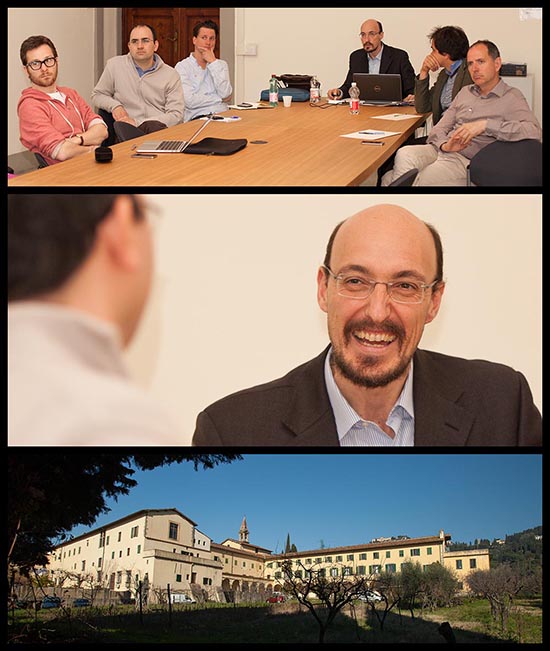
Speaker: Simone Borghesi, Assistant Professor of Environmental Economics, Codirector R4S – Regulation for Sustainability, University of Siena, Italy
Abstract The European Emission Trading System (EU-ETS) has attracted increasing attention among scholars in the last few years both as the cornerstone of the European environmental policy and as a benchmark for the other countries’ Emission Trading Schemes. The seminar presents the author’s current policy, theoretical and empirical research lines on the EU ETS. Particular attention will be devoted to the role played by the EU-ETS as a possible driver of outward Foreign Direct Investments (FDI henceforth). For this purpose, we aim at assessing whether EU-ETS has any effect on the intensive and extensive margins of outward FDI patterns of Italian firms. Using a novel panel dataset of about 50,000 firms covering the first two phases of the EU-ETS (pilot phase and first commitment period) and the pre-EU-ETS period, we are able to observe the patterns of FDI by destination country of firms, distinguishing between those with plants covered by the EU-ETS and other firms. Results show that firms in the EU-ETS tend to increase their presence in countries not covered by the EU-ETS as well as in countries within the EU-ETS. Moreover, FDI patterns in sectors exempted by the auctioning in the current second commitment period of the EU-ETS, are generally greater than the ones observed for EU-ETS firms in other sectors.
Don’t miss any update on our events
Sign up for free and access the latest events from our community.
More on the topic
From Enron with Love: Market Power in Power Markets with Thomas-Olivier Léautier from Jean Tirole’s Toulouse School of Economics
From Enron with love: imperfect competition and the boom bust cycle
Webinar organised in the context of the online course The Regulation of the Power Sector and in cooperation with Jean Tirole’s Toulouse School of Economics.
Don’t miss any update on our events
Sign up for free and access the latest events from our community.
More on the topic
7th Florence Air Forum. Regulating Drones: Creating European Regulation that is smart and proportionate
The proliferation of civil drones poses a new challenge for the regulation of aviation. The 7th Florence Air Forum will discuss this challenge by bringing together relevant stakeholders from the aviation and ATM industry, manufacturers, regulators, international institutions as well as operators and users of drones from different sectors.
Don’t miss any update on our events
Sign up for free and access the latest events from our community.
More on the topic





EU Energy & Law Policy Workshop
The workshop is divided into four sessions:
- Energy market design;
- Stranding of assets due to changes in energy systems;
- Antitrust damages in the energy sector;
- Recent developments in EU state aid control
The sessions are complemented by a keynote speech on the Commission’s Energy Union.
Eligibility
Please note that the workshop is only open to donors of the Florence School of Regulation, National Regulatory Authorities and EU institutions. For practical queries, please contact FSR Conferences. Photo Sweltering by Spinster Cardigan used under CC BY 2.0 (adapted).
Don’t miss any update on our events
Sign up for free and access the latest events from our community.
More on the topic
European Low Carbon Policy: What Main Questions Does it Raise for the TSOs? FSR Executive Seminar
The 5th edition of the FSR Executive Seminar aims to bring together high level participants including TSOs, regulators, European Commission representatives, academics and industry experts in order to discuss the European low carbon policy and what main questions it raises for TSOs?
Don’t miss any update on our events
Sign up for free and access the latest events from our community.
More on the topic