


Archives: Events
Webinar | Role of DSOs: many shades of grey

The role of Distribution System Operators in the energy value chain used to be clear. Energy was produced centrally, transported over large distances via the transmission network, and then distributed via the distribution network to end-consumers. DSOs were in charge of the distribution networks. Today there are however many new activities in the energy value chain, and it is not always clear to whom these activities belong. These grey areas are an interesting and exciting domain for regulatory practice and research.
Read more on FSR topic of the month
Watch the Recording of the Webinar!
The emerging regulatory practice for new businesses related to distribution grids
New FSR policy brief
by: HADUSH Samson, MEEUS Leonardo
Activities related to new businesses, such as market facilitation (e.g. data hub operation), electrical storage, and electric vehicle- charging infrastructure are grey areas in regulation; In these grey areas, there is potential for a market approach, but there are also conditions which can prompt the involvement of DSOs; By taking stock of the emerging regulatory practice, we have identified the main elements that regulators need to consider when moving into these grey areas; If the approach is market based, the regulator needs to design the market; and check whether there is a need to correct market failures. To involve the DSOs is one way, but not the only way, to correct the market failures for new businesses; If the approach is to engage with the DSOs, the role of the regulator is to define the scope of the DSO involvement; to consider dedicated quality of service regulations for each of the new businesses that the DSO is involved in; and to make sure that the DSOs have sufficient incentives to innovate when investing in new businesses; The role of the DSOs in the energy value chain is diverging in Europe, which might be an issue for the ongoing market integration.
Don’t miss any update on our events
Sign up for free and access the latest events from our community.
More on the topic




International Economic Governance and Market Regulation
The FSR is pleased to host and co-organise a high-level initiative conceived in cooperation with the Chair Governance & Regulation of the University Paris-Dauphine.
This event is designed to bring high-level academics together, to analyse and debate on the dynamic of global, international, economic governance and regulation of markets. This “organized discussion” between scholars of various horizons acknowledges the open, contested character of the broad questions raised by the dynamics of international and global institutions.
A Handbook by Oxford University Press
The ultimate aim of the workshops will consist in the composition of a “Handbook on International Economic Governance and Market Regulation”, which will be published by Oxford University Press and will cover all the important political debates and analytical stakes raised by the transnationalization of regulatory capacities of specific sectors – such as communication and media, energy, transportation, finance and insurance, as well as transversal regulatory issues (environment, public health, labour, etc.).
The workshop and the eventual volume will be developed around four main topics:
- The Production and Emergence of Systems of Norms
- The Challenge of Compliance
- Accountability, Sovereignty and Reforms of the Current Global Economic Governance Framework
- Toward Systemic Transformation
The overall approach will be cross-disciplinary and will focus, under different standpoints and domains, on the spread of the transnational private and public regulatory regimes which we have witnessed over the last thirty years.
Rather than embracing a macroeconomic or macro-institutional approach to analyse how the global economy works, the workshops will promote a micro, bottom-up perspective that would start from the analysis of individual agents, whether market participants or regulators, and analyse how they adopt rules, bend them and act upon them.
Please note that this is a closed event and participation is by invitation only.
Don’t miss any update on our events
Sign up for free and access the latest events from our community.
More on the topic
FSR & HERI Conference on European Energy Law

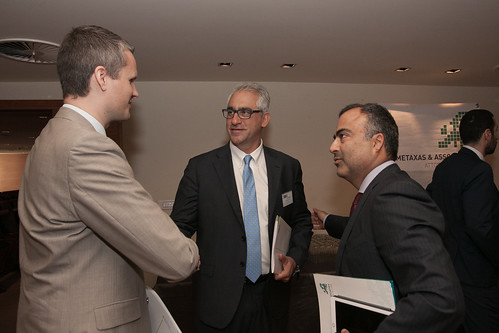
The Athens conference on European Energy Law is the first joint initiative between the Hellenic Energy Regulation Institute and the Energy Law & Policy Area of the Florence School of Regulation.
The conference will be opened with a keynote speech on the future of the EU Energy Market and the major challenges ahead. This will be followed by four sessions in which academics, institutional representatives, and key market players will consider the pressing questions which have arisen from recent developments in the energy sector.
Watch the recording of the live stream
I. The future of coal and lignite in the EU after the Paris Agreement
This session will address the implications of the commitments made under the Paris Agreement to phase out CO2 emissions, which will include divesting from projects involved in fossil fuel-related activities, adopting binding carbon budgets for all fossil-fired power plants, and banning new opencast lignite mines. As the EU will have to further intensify its efforts towards decarbonisation, how can it mitigate the impact of decarbonisation on energy security and supply?
II. The Liberalisation of the Gas and Electricity Markets
The liberalisation of the European gas and electricity markets is a long-standing process which continues to face obstacles and trade barriers. Initiated in 1996 and developed through three energy packages with continuously renewed targets reaching to 2050 and beyond, the process of liberalisation aims to ensure a functioning market and fair market access, a high level of consumer protection as well as adequate levels of interconnection and generation capacity within an internal energy market. The accomplishment of a harmonised approach towards a secure, sustainable and competitive energy for Europe requires high level target setting, such as the Target Model, the rules of which, defined by Framework Guidelines and Network Codes, allow for a coordinated approach and thus efficient results. What have been the achievements so far and how have they been realised? What challenges lie ahead?
III. Energy Security and transnational pipelines: can we export EU law to third countries?
Following the lively debate over the Nord Stream 2 pipeline and the question of the applicability of EU energy law to the importation of gas from third countries, this session will examine several crucial issues which have emerged from the case. For example, what do the divergent opinions of the Directorate General and the Commission’s legal service reveal about the complexities of transnational pipelines? How should energy security be considered in this context? What are the implications of the Commission’s new Energy Security Package?
IV. Renewable Energy: what could, and should, happen after 2020?
This session will consider the new renewable energy directive and updated EU bio-energy sustainability policy, which the European Commission plans to introduce for the period 2020- 2030, following the Energy Union Framework Strategy. This includes ambitious plans for a common renewable energy target, which will require multiple measures. How should this new framework be devised? How is the Paris Agreement expected to influence the development and implementation of the new renewable energy directive?
V. The future role of the DSO and its regulation
In 2014, the Council of European Energy Regulators (CEER) launched a consultation on the future role of Distribution System Operators (DSOs). In its Conclusions Paper of 13 July 2015, the CEER stated that there cannot be a single model for the role of the DSOs, given their various and often country-specific features across Europe. In light of this, the CEER provided guiding principles to which the DSOs should comply. But, with these instructions come several questions. What does the DSOs’ role as neutral market facilitators entail? What regulatory provisions need to be made with regard to data management? And, what should be the relationship between the DSOs and the TSOs?
Download the programme
The Athens conference is kindly supported by:



Don’t miss any update on our events
Sign up for free and access the latest events from our community.
More on the topic





The Real Value of the Paris Agreement

Speaker: Leonardo Massai, Senior Lecturer, Catholic University of Lille, co-founder of Climalia.
Discussant: Xavier Labandeira, Director, FSR Climate
The Paris Agreement undoubtedly forms a milestone in the fight against climate change. It sets the framework for the first long-term global common action against greenhouse gas emissions, by both developed and developing countries. The coming period up to 2020 will tell whether the structure and rules of the new treaty form a workable framework to tackle climate change and keep the global temperature rise well below 2C above pre-industrial levels. One of the first challenges in this respect will be to strenghten the commitments of the parties, as the combined effect of their current contributions would bring up the temperature far more than 2°C.
Watch the recording of the live streaming here:
Listen to the audio recording:
Download the Power Point presentation by Leonardo Massai.
———————-
Leonardo Massai is Senior Lecturer of EU Law, International and EU Environmental Law, Climate Change Law, Human Rights and Environment at the Catholic University of Lille in France. He is also Legal Advisor to the Coalition for Rainforest Nations where he provides direct counsel, assistance, advice and training to rainforest nations on international environmental law, climate change governance, climate compatible development plans and multilateral negotiations. Since 2014, he is Alternate Member of the Enforcement Branch to the Compliance Committee of the Kyoto Protocol, where he will serve until 31 December 2017. In 2015 he co-founded the start-up Climalia, specialist consulting, communications and digital application company providing high level expertise in climate change adaptation, mitigation and risk management.
Don’t miss any update on our events
Sign up for free and access the latest events from our community.
More on the topic







The changing role of DSOs in the Energy Union
FSR Regulatory Policy Workshop Series 2015-2016
In recent years, wind- and solar-based generation contributed with the greatest volumes to the penetration of renewable energy into the pre-existing electricity market. The electricity output from these technologies is intrinsically less predictable and programmable than generation from conventional or traditional technologies. Consequently, generation outputs will become more variable and a higher degree of flexibility will be required.
This flexibility can be provided, at least in part, by existing resources; but the scale of the challenge is such that additional resources, such as demand response, will have to be harnessed.
As most of the new renewable-based generation capacity will be connected to the distribution grid and some of these resources will also be provided at distribution level; the variability/flexibility challenge might have to be managed both by Distribution System Operators (DSOs) and Transmission System Operators (TSOs).
While TSOs have traditionally been responsible for keeping the electricity system in balance, DSOs have, until now, mainly focused on developing, maintaining and operating the distribution grid. The expected developments in the electricity sector may therefore lead DSOs to assume new roles and responsibilities, somewhat more similar to those traditionally performed by TSOs. One of the main consequences might be that more timely and detailed data on consumption patterns and electricity prices will have to become available to final consumers, or to other actors (e.g. aggregators) operating on their behalf. This clearly raises data and consumer protection concerns, especially on how to ensure consumers’ provision of flexibility in an affordable and consumer-friendly way.
This Workshop aims at defining the new roles and responsibilities that DSOs will have to assume in connection with this greater need for system flexibility. This issue involves a number of different aspects and it is nowadays widely addressed. The Workshop instead will focus specifically on the following questions:
- To what extent the variability/flexibility challenge will have to be managed at distribution system level?
- If DSOs have to be engaged, what is expected from DSOs is similar to what TSOs have been performing for many years?
- What level and form of cooperation and interface between the DSOs’ and TSOs’ system operation functions is required?
- What changes in the organisation, business model and, possibly, culture is required from DSOs to perform any new function relate to the variability/flexibility challenge?
To address these questions, the Workshop will be structured in two sessions. Session I will focus on the operational and coordination aspects. Session II will examine the organisational implications for DSOs.
This workshop is open exclusively to National Regulators, representatives from public bodies and FSR donors. Special registration requests must be submitted to the Coordinator of this workshop, Ilaria Conti.
Registration deadline: 27 April 2016
Don’t miss any update on our events
Sign up for free and access the latest events from our community.
More on the topic

Ownership Links for EU Transaction Log Accounts
The Ownership Links and Enhanced EUTL Dataset Project, coordinated at the Climate Policy Research Unit, provides a public reference database linking accounts in the EU Transaction Log (EUTL) of the EU’s Emissions Trading System (EU ETS) with the ultimate owners of these accounts.
Objectives of the webinar:
- To explain the background and relevance of the database project.
- To outline potential uses of the database for empirical research on the EU ETS.
Aleksandar Zaklan is a Jean Monnet Fellow at the European University Institute, and collaborates with FSR Climate. He coordinates the database project.
15 April 2014
11:00-11:30 am CET
Presented by: Aleksandar Zaklan
Moderator: Riccardo Galletta
Don’t miss any update on our events
Sign up for free and access the latest events from our community.
More on the topic
The Implicit Carbon Price of Renewable Energy Incentives
Presented by: Claudio Marcantonini
Moderator: Magdalena Moś
Don’t miss any update on our events
Sign up for free and access the latest events from our community.
More on the topic


The Distributional Implications of Support for Renewable Electricity
Presented by: Stefano Verde
Moderator: Magdalena Moś
Don’t miss any update on our events
Sign up for free and access the latest events from our community.
More on the topic
A spatial modeling approach to high dimensional statistical paleoclimate reconstructions
The study of climate over the earth’s history is a topic of current interest whose relevance has increased rapidly with the growing concern over climate change. Reconstructing climates of the past (sometimes referred to as the “hockey stick” problem) has been used to understand whether the current climate is anomalous in a millennial context. To this end, various statistical climate field reconstructions (CFR) methods have been proposed to infer past temperature from (paleoclimate) multiproxy networks.
We propose a novel statistical climate field reconstruction method that aims to use recent advances in statistics, and in particular, high dimensional sparse covariance estimation to tackle this problem. The new CFR method provides a flexible framework for modeling the inherent spatial heterogeneities of high-dimensional spatial fields and at the same time provide the parameter reduction necessary for obtaining precise and well-conditioned estimates of the covariance structure of the field, even when the sample size is much smaller than the number of variables. Our results show that the new method can yield significant improvements over existing methods, with gains uniformly over space. We also show that the new methodology is useful for regional paleoclimate reconstructions, and can yield better uncertainty quantification. We demonstrate that the increase in performance is directly related to recovering the underlying structure in the covariance of the spatial field. We also provide compelling evidence that the new methodology performs well even at spatial locations with few proxies. (Joint work with D.Guillot and J. Emile-Geay).
Seminar
Speaker: Bala Rajaratnam, Stanford University
Don’t miss any update on our events
Sign up for free and access the latest events from our community.
More on the topic



Strategic Subsidies for Green Goods
WTO agreements discipline the use of subsidies, particularly for upstream manufacturing or exports. Unlike tariff rules, the Subsidies Code lacks exceptions for transboundary externalities like human health or resource conservation, including those related to combatting global climate change.
Support for Green Goods?
Support policies for green goods (like renewable energy) are much more popular internationally than imposing a cost on bads (like carbon taxes).
These support policies may encourage downstream consumption (renewable energy deployment) or upstream development and manufacturing of those technologies. The strategic trade literature has devoted little attention to the range of market failures related to green goods.
The market for a new environmental good
We consider the market for a new environmental good (e.g., an alternative renewable energy technology) that when consumed downstream may provide external benefits (like reduced emissions). The technology is traded internationally, but provided by a limited set of upstream suppliers that may operate in imperfect markets, such as with market power or external scale economies.
National incentives and global rationales
We examine the national incentives and global rationales for offering production and consumption subsidies in producer countries, allowing that some of the downstream market may lie in non-regulating third-party countries. While producer countries can benefit from restraints on upstream subsidies, global welfare is higher without them, and market failures imply that optimal subsidies are even higher.
Optimal subsidies?
We supplement the analysis with numerical simulations of the case of renewable energy, exploring optimal subsidies for the major renewable energy producing and consuming regions.
Speaker: Carolyn Fischer, Senior Fellow, Resources for the Future / Senior Researcher FEEM
Don’t miss any update on our events
Sign up for free and access the latest events from our community.
More on the topic
5th Florence Urban Transport Forum. Energy efficiency in urban public transport
“Public transport, and its image, could be vastly improved with fleets of ultra-clean and silent buses. Clean, silent service and delivery vehicles could transform the quality of urban life” Siim Kallas, 18/09/2014,The future of electromobility in Europe.
Security of energy supply as well as reduction of greenhouse gas (GHG) emission is currently high on the European policy agenda. Therefore, in any sector great support is given to strategies aimed at relieving the pressure on the supply side, namely through reduction of energy consumption, increase of energy efficiency, and diversification of the energy mix towards renewables.
The aim of the 5th Florence Urban Transport Forum is to look at energy efficiency in urban public transport, and see what are the obstacles and incentives to gradually phase out of conventionally fuelled vehicles from the urban environment. Following the usual format of the Florence School of Regulation, we aim at offering a platform to senior stakeholders from regulators, politics, operators, municipalities, authorities, associations to discuss with prominent academics and to take stock of topics relevant to urban transport regulation and policies. Four panels will focus on how the resource efficiency goal applies to urban public transport, the impact of technology, the influence of the private operators and their interaction with the public sector that is managing the tendering procedures, and the role of local governance and citizens. Isabelle Maes (DG MOVE, Clean Transport and Sustainable Urban Mobility) will discuss the topic with relevant stakeholders representing associations ( UITP ), city administrations (Stockholm , Copenhagen , Munich ), operators ( EJRC and Car Postal ) as well as renowkned researchers, such as Claus Seibt (Programme Director Sustainable Transport and Mobility Services at the Wuppertal Institute for Climate, Environment and Energy) and Raimondo Orsini (Director of the Sustainable Development Foundation).
For more information, please contact FSR.Transport@eui.eu
Don’t miss any update on our events
Sign up for free and access the latest events from our community.
More on the topic

4th Florence Urban Transport Forum. Sustainable Urban Mobility: A Case for Regulation?
Sustainability plays an increasingly important role in organising urban mobility, and many cities are taking own approaches in promoting more sustainable travel patterns. At the European level ‘indirect’ tools, such as Sustainable Urban Mobility Plans (SUMP) or directives on fuel quality and air quality, try to steer the development. In addition, the European Union recognises the importance of sustainable mobility in its planned Urban Mobility Package.
Advocates of a more sustainable lifestyle attribute urban public transport a pivotal role when it comes to lowering pollution and congestions. But are the challenges and aspirations of sustainable urban transport in any way different from the earlier challenges for urban public transport? Or is it simply a new opportunity to gain more support for the traditional goal of increasing the modal share in favour of public transport?
Stakeholders from operators, authorities, the European Commission, associations and academics will identify and discuss the main challenges of sustainable urban mobility. Further, they will determine if and how public transport authorities should become active, and debate mechanisms to reach clean transport patterns. Participants will address, among others, following guiding questions:
- Sustainable Urban Mobility: New challenges or a new label for old problems?
- Are legal requirements about fuels, air quality and pollutants simplifying or complicating the organisation of public transport?
- Are ‘access restriction schemes’ a suitable tool to promote green transport? Are there best practices, which should be harmonised and followed across Europe?
- How can urban public transport contribute to the Sustainable Urban Mobility Plans (SUMP)? And can the SUMP contribute to increase the modal share of urban public transport?
DOWNLOAD
Don’t miss any update on our events
Sign up for free and access the latest events from our community.
More on the topic