




Archives: Events
Energy Poverty in Europe
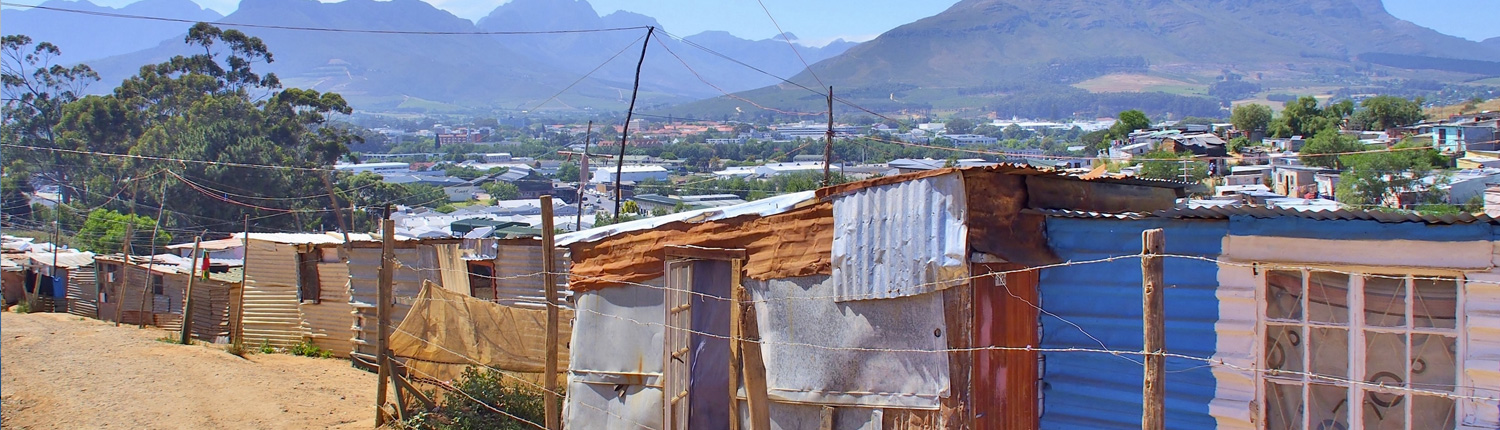
In this workshop, co-hosted by the CEER and FSR, we aim to highlight the role of the regulators in addressing energy poverty in Europe.
Through three panel sessions we will explore:
- the drivers of energy poverty in Europe and what is government’s role in addressing it,
- the Clean Energy Package and the solutions it offers to end energy poverty in Europe,
- what energy poverty has in common with energy poverty in other parts of the world and examining how to share best practice.
Background information
Energy poverty is a widespread and even growing reality across Europe. The EU Survey on Income and Living Conditions (EU SILC) measured in 2013 shows that 10.7% of the population (approximately 54 million people) are unable to afford basic levels of energy for essential needs.
Energy poverty falls between several major policy fields (social, health, education, environment, financial, productivity) and involves many stakeholders from all of these fields. Energy Poverty should, therefore, be addressed in an integrated manner to optimise multiple benefits, including less money spent by governments on health, reduced air pollution, better comfort and wellbeing, improved household budgets, and increased economic activity.
Member States have so far been responsible for addressing energy poverty and have done so by boosting household income through social tariffs, social welfare subsidies and regulated energy prices. This has been an effective short-term solution but is increasingly criticised for not addressing the root of the cause, and for distorting the increasingly liberalised market.
Until now, energy poverty has barely featured in EU policy or linked debates. At the forefront has been the continued deepening of the internal market, through liberalisation and privatisation, and the clean energy transition. Will the Clean Energy Package together with the mandate provided to the newly launched EU Energy Poverty Observatory be able to change this situation and address energy poverty in a coordinated manner in Europe?
Don’t miss any update on our events
Sign up for free and access the latest events from our community.



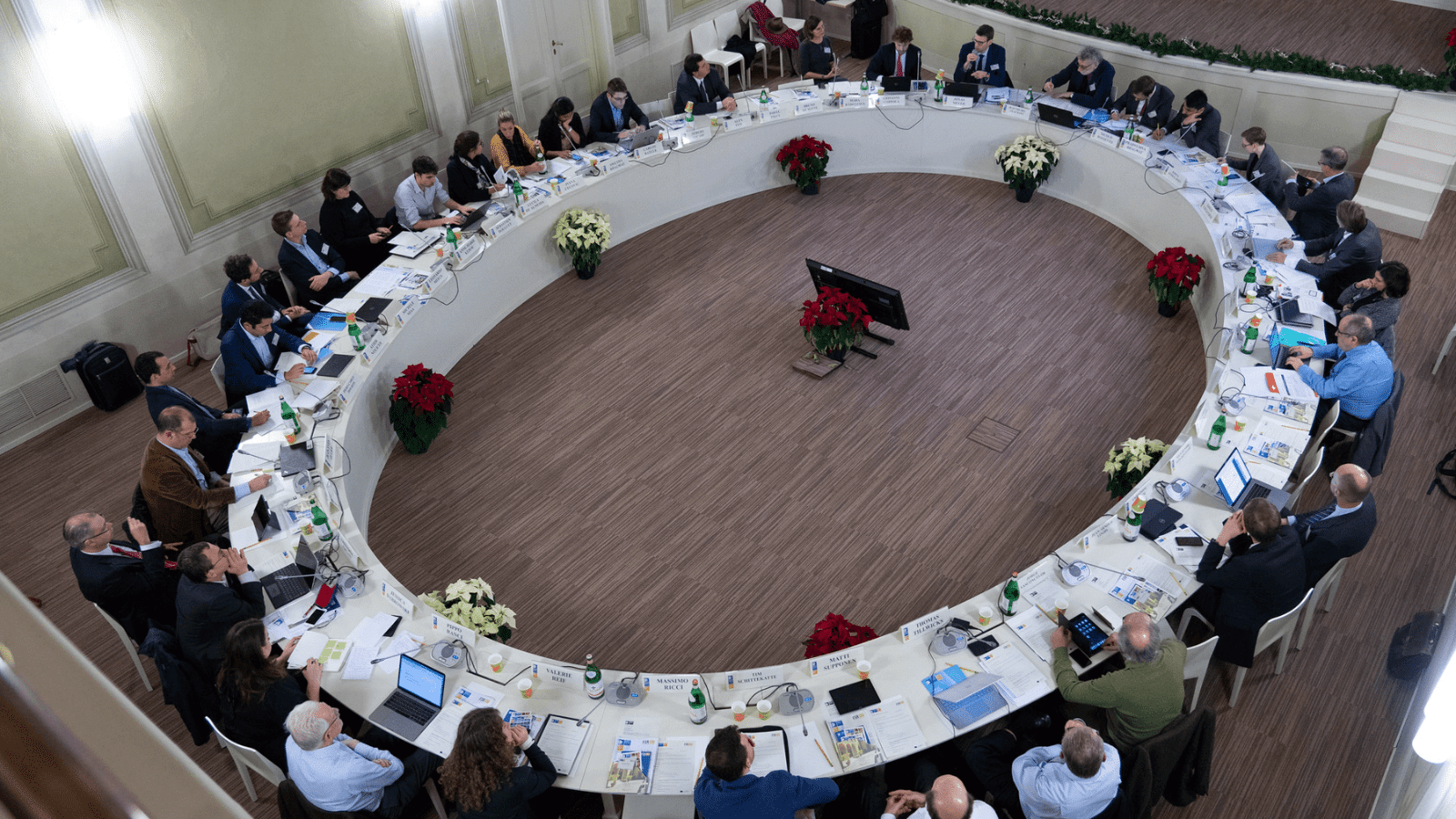
#PowerCoordinationEurope in Brussels
The #PowerCoordinationEurope is a regional electricity summit organised by ENTSOE and Coreso, in partnership with FSR.
Think globally, coordinate regionally, act locally
To streamline their coordination, European transmission system operators (TSOs) started in the early 2000s to establish regional security coordinators (RSCs). These provide TSOs with coordinated services in operations, market and planning. The European Network Codes registered RSCs in European law. Coordination of TSOs notably through RSCs is part of the ongoing discussions on a new set of European directives & regulations – The Clean Energy For All Europeans’ Package. It will most probably continue to be a focus for European institutions even after 2019.
Every year, one of the five regional security coordinators (RSCs) and ENTSO-E are organising a regional electricity summit in Europe. The #PowerCoordinationEurope (formerly called ElSec) conference series was successfully launched in Munich with TSCNET. This year’s event is set up with Coreso in Brussels. The focus areas include:
- advancement of regional power coordination,
- network code implementation, interoperability of RSCs and solutions for tomorrow;
- state of play of the Clean Energy Package and the changes it will bring across; electricity security and contemporary challenges, like cybersecurity.
ELSEC2018 gathers high-level policy makers, experts, academia, thought leaders and the TSO community on a European, regional and national level, keen to learn and to deliver best services to European citizens. Plenary and breakout sessions will explore the concept of regional coordination and discuss the way-ahead towards the next decade.
The partners for the event include The Florence School of Regulation and The Energy Post.
Detailed information here
Don’t miss any update on our events
Sign up for free and access the latest events from our community.
More on the topic



Coupling the Sectors
The workshop “Coupling the Sectors” explore the extent and in which form(s) the electricity and gas markets and systems could be usefully coupled to meet the challenges facing the energy sector in the future. It will also consider which other sectors and activities could be “coupled”, although in a different form.
The European Commission has recently proposed the “sector coupling” concept, reflecting the requirement for greater integration between electricity and gas, and possibly other sectors and activities as well (i.e. electro-mobility, heating and cooling).
The Workshop will explore the extent and in which form(s) the electricity and gas markets and systems could be usefully coupled to meet the challenges facing the energy sector in the future. It will also consider which other sectors and activities could be “coupled”, although in a different form.
- Session 1 will focus on how the electricity and gas markets and systems could be coupled beyond the level of modelling integration currently envisaged;
- Session 2 will consider which other sectors/activities could be usefully coupled to the electricity and gas sectors, and, if so, with which solutions.
This workshop is a part of the FSR Regulatory Policy Workshop Series 2018-2019 and is exclusively open to national regulators, representatives from public bodies and associate & major donors of the FSR Energy area.
Background information
Current legislation already envisages cross-sectoral market and system modelling, through the development by the European Networks of Transmission System Operators (ENTSOs) of a “consistent and interlinked electricity and gas market and network model including both electricity and gas transmission infrastructure as well as storage and LNG facilities”. However, more integrated modelling could also assist other areas in the future.
The opportunity and the benefits of ensuring greater coordination between different markets were at the basis of the development of cross-border market coupling in the energy sector. With electricity market coupling, market participants do not have to trade energy and cross-border capacity separately, avoiding the risk of inefficient outcomes. It is now widely accepted that a similar form of cross-border coupling is not required in the gas sector.
However, a different form of coupling between the short-term gas and electricity markets may well assist in increasing the efficiency of the overall energy sector. Such “sector coupling” may also take advantage of the fact that, alongside the traditional gas-to-power transformation available through gas-fired generation, power-to-gas technologies are developing. The gas-to-power and power-to-gas capabilities, combined with conditional bids, would allow some form of “arbitrage” between the electricity and gas markets, making sure that prices on these market develop in a consistent way and, potentially, allowing the smoothing of price volatility.
Cross-sector market coupling will also call on greater integration not only of network development (which is already envisaged), but also of system operation, as the constraints in the two markets might require coordinated management.
Other sectors or activities – such as electro-mobility or heating and cooling – might also benefit from closer integration with the electricity (and possibly gas) sector(s), even though such integration will likely take a looser, or at least different, form.
Don’t miss any update on our events
Sign up for free and access the latest events from our community.


Economic Assessment of European Climate Policies

The FSR Climate Annual Conference on the Economic Assessment of European Climate Policies took place at the European University institute in Florence on 26-27 November 2018.
The conference covered the main climate-related existing policies, at EU, national and subnational levels and included plenary sessions on Energy efficiency, Renewable policies, Environmental taxation, and Emissions Trading.
Conference chaired by: Simone Borghesi, Director, FSR Climate
- Energy efficiency: Corrado Di Maria (University of East Anglia)
- Renewable policies: Charles Mason (University of Wyoming)
- EU ETS: Ulrich Wagner (University of Mannheim)
- Environmental taxation: Anastasios Xepapadeas (Athens University of Economics and University of Bologna)
Organised with the support of EAERE

Speakers highlights video
The spatial dimension in the economics of climate change, Anastasios Xepapadeas
Carbon-reducing innovation as the essential policy frontier – towards finding the ways that work for Europe, Frank Convery (Keynote speech)
The transition to sustainable energy, Charles Mason
Climate policy, innovation and energy efficiency, Corrado Di Maria
Papers/Presentations
Monday, 26 November
Plenary presentation: Environmental taxation
The spatial dimension in the economics of climate change
Anastasios Xepapadeas (Athens University of Economics and Business and University of Bologna)
Session 1: Environmental taxation
How climate-related policy affects the economics of generation-capacity investment (Slides)
Yixian Liua, Ramteen Sioshansi (The Ohio State University), Antonio J. Conejo
Short-term health benefits from carbon taxation: can climate policy support preventive health care ambitions? (SLIDES)
Johan Albrecht (Ghent university), Désirée Vandenberghe
Session 2: Renewables
Clean energy investment and credit rationing (Paper)
Christian Haas, Karol Kempa (Frankfurt School of Finance and Management)
Emissions impacts of overlapping regulation: interactions of renewable energy promotion and carbon pricing (PAPER)
Jan Abrell, Mirjam Kosch (Zurich University of Applied Sciences)
Evolution of EROIs until 2050: estimation using the input-output model THEMIS (Paper)
Adrien Fabre (Paris School of Economics, Université Paris 1)
Keynote speech
Carbon-reducing innovation as the essential policy frontier – towards finding the ways that work for Europe
Frank Convery University College Dublin and EnvEcon
Plenary presentation: Renewables
The transition to sustainable energy
Charles Mason University of Wyoming
Session 3: Renewables
On international renewable cooperation mechanisms: the impact of national RES-E support schemes
Jelle Meus (KU Leuven), Kenneth Van den Bergh, Erik Delarue, Stef Proost
Energy transition with variable and intermittent renewable electricity generation (Slides)
Aude Pommeret, Katheline Schubert (Paris School of Economics, University Paris 1)
Resource management, present bias and regime shifts
Maria Arvaniti (ETH Zürich and Umeå University), Chandra K. Krishnamurthy, Anne-Sophie Crépin
Session 4: Emissions trading
Competitive permit banking and market design: an application to the EU-ETS reform (Slides)
Simon Quemin London School of Economics, Raphaël Trotignon
Genealogy of the corporate internal carbon pricing performations network: framework and case studies (SLIDES)
Raphael Olivier (Climate Economics Chair,Paris-Dauphine University)
Benchmarks for emissions trading – general principles for emissions scope (Slides)
Vera Zipperer (DIW Berlin), Misato Sato, Karsten Neuhoff
Plenary presentation: Energy efficiency
Induced innovation and energy efficiency
Corrado Di Maria (University of East Anglia)
Session 5 Energy efficiency
Energy efficiency networks – do they work? Evidence from German firm-level data (Slides)
Jan Stede (DIW Berlin)
Green, yellow or red lemons? Artefactual field experiment on houses energy labels perception (Slides)
Edouard Civel, Nathaly Cruz (Paris-Nanterre University)
Long-term efficiency and distributional impacts of energy saving policies in the French residential sector (Paper)
Louis-Gaëtan Giraudet | CIRED and École des Ponts ParisTech, Cyril Bourgeois, Philippe Quirion
Conveyance, envy, and home-owners adoption of energy-efficient appliances (Slides)
Joachim Schleich (Grenoble École de Management), Corinne Faure, Marie-Charlotte Guetlein, Gengyang Tu
Session 6: Issues in climate policy 1
Dynamic heterogeneity: rational habits and the heterogeneity of household responses to gasoline prices (Slides)
Aurélien Saussay (OFCE, Sciences Po)
True or not true: carbon-free electricity generation is possible (Paper)
Simen Gaure, Rolf Golombek (Frisch Centre)
Fossil commodity futures and the Trump election (Slides)
Samson Mukanjari (University of Gothenburg)
Tuesday, 27 November
Plenary presentation: Emissions trading
Emissions trading and firm behaviour: evidence from European firms
Ulrich Wagner (University of Mannheim)
Session 7: Emissions trading
A first analysis of the Market Stability Reserve in the European emission trading system (Slides)
See also: The Long-Term Impact of the Market Stability Reserve on the EU Emission Trading System
Kenneth Bruninx (KU Leuven), Marten Ovaere, Erik Delarue
Barriers to trading in the EU-ETS: a theoretical and empirical appraisal (Slides)
Marc Baudry, Anouk Faure (Climate Economics Chair and Paris-Nanterre University), Simon Quemin
Using emissions trading schemes to reduce heterogeneous distortionary taxes: the case of recycling carbon auction revenues to support renewable energy (Slides)
Claire Gavard (Centre for European Economic Research), Sebastian Voigt, Aurélien Genty
Session 8: Environmental taxation
The Environmental effectiveness of carbon taxes: a comparative case study of the Nordic experience (Slides)
Sachintha Fernando (Verité Research and Uppsala University)
Are emission performance standards effective in pollution control? Evidence from the EU’s large combustion plant directive (Slides)
Puja Singhal (DIW Berlin)
Is pricing municipal waste effective? Evidence for heterogeneous effects in Italy (Slides)
Marica Valente (Humboldt University of Berlin and DIW Berlin)
Session 9: Issues in climate policy 2
Innovation in climate change mitigation technologies and environmental regulation (Slides)
Igor Bagayev, Dieter Kogler, Julie Lochard (University Paris East Créteil)
Trust and CO2 emissions: cooperation on a global scale (Paper)
Ara Jo (ETH Zürich), Stefano Carattini
The circular economy, international trade, and the sectoral composition of economies (Slides)
Juan F. García-Barragán (KU Leuven), Balazs Zelity
The low-carbon transition: first evidence from US counties (Paper)
Jeremy Proville, Thomas Stoerk (DG for Climate Action, European Commission)
Session 10: Environmental taxation
Social welfare, public policy and clean technology: is it worth incentivising firms’ adoption of green technology? (Slides)
Ana Espinola-Arredondo, Kinga Barbara Tchorzewska (University of Barcelona)
Deep reforms in electricity pricing: evidence from a quasi-experiment (Slides)
Xavier Labandeira, Jose M. Labeaga, Jordi J. Teixidó (University of Barcelona)
Redistribution through income taxation and public utility pricing in the presence of energy efficiency considerations (Slides)
Fabian Feger, Doina Radulescu (University of Bern)
How effective was the UK carbon tax? Using machine learning and economic theory for policy evaluation (Slides)
Jan Abrell (ETH Zürich), Mirjam Kosch, Sebastian Rausch
*******
Speakers bios

Frank Convery is Adjunct Professor for Environmental Policy, University College, Dublin; He has recently stepped down as Chief Economist, Environmental Defense Fund (New York)
He is a member of Ireland’s Climate Change Advisory Council. His career is devoted to finding ways that work to correct for the failure of markets untrammelled to protect the environment. He led the research network that informed the shaping of what became the European Union Emissions Trading Scheme (EU ETS), which put a price on emissions emerging from the power sector and heavy industry in Europe. He served as a member of the Irish Commission on Taxation which in 2009 recommended the introduction of a carbon tax. The government acted on this recommendation and introduced the tax in 2010.
 Corrado Di Maria is a Reader in Economics at the University of East Anglia in Norwich (UK). He has broad research interests spanning the economics of growth, environmental and natural resource, energy economics and the economics of innovation. The key feature of his work is an emphasis on both theoretical and empirical aspects, as well as its policy relevance. He earned his PhD degree from Tilburg University in the Netherlands, having previously studied in Rome, Milan and Vienna. His recent research focuses on the interaction between environmental policy and natural resource use, the taxation of exhaustible resources, emissions trading schemes and energy efficiency, and environmental policy under directed technological change.
 Charles Mason is the H. A. “Dave” True, Jr. Chair in Petroleum and Natural Gas Economics in the Department of Economics and Associate Dean for Research in the College of Business at the University of Wyoming. He is an internationally known scholar with over 80 publications in peer-reviewed journals and book chapters. He served as the managing editor of the Journal of Environmental Economics and Management (the top international journal in the field of Environmental and Resource Economics), from 2006 to 2011. He earned a double B.A. in Economics and Mathematics in 1977 and a Ph.D. in Economics in 1983, all at the University of California at Berkeley.
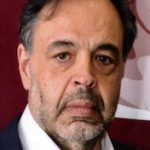
Anastasios Xepapadeas is currently Professor of Economics at the Department of International and European Economic Studies of Athens University of Economics and Business, and the Department of Economics of the University of Bologna. In May 2018 he was elected a foreign associate of the US National Academy of Sciences. He is past president of the European Association of Environmental and Resource Economics and past Chair of the Board of Directors of the Beijer Institute of the Royal Swedish Academy of Sciences. He has published over 130 papers in leading journals and collective volumes. Current research interests include the Economics of Climate Change; Spatiotemporal Analysis in Economics; Uncertainty, and Robust Control.
 Ulrich Wagner is a Professor of Economics at the University of Mannheim and a research associate at ZEW. His research interests are in environmental economics, industrial organization and public economics. Ulrich Wagner is a co-editor of the Journal of the Association of Environmental and Resource Economists and an editorial board member of the Journal of Environmental Economics and Management. In 2015 he was awarded the Erik Kempe Award in Environmental and Resource Economics.
Before joining the University of Mannheim, Ulrich held appointments at Universidad Carlos IIIin Madrid and at the Earth Institute at Columbia University. He obtained his Ph.D. in Economics from Yale University.
Past editions of the FSR Climate Annual Conference
FSR Climate Annual Conference 2017
Don’t miss any update on our events
Sign up for free and access the latest events from our community.
More on the topic








17th Florence Rail Forum: Green Finance and Sustainability, Which Role for Railways?

Following the usual approach of the Florence School of Regulation, stakeholders and academics will join the 17th Florence Rail Forum to discuss the most pressing rail regulatory issues. On this occasion, the discussion will revolve around the topic of “Green Finance and Sustainability – Which Role for Railways?”. We will assess how railways can become a more effective tool in the fight against climate change, in particular by looking at green financing and by exploring the various green financing mechanisms as potentially applicable to railways.
DOWNLOAD
European Transport Regulation Observer
BACKGROUND
Transport represents almost a quarter of Europe’s greenhouse gas emissions and is the main cause of air pollution in cities. The EU’s ambitious climate reduction targets, in line with the Paris Agreement and the UN 2030 Agenda for Sustainable Development, will be impossible to reach without systematically addressing emissions from transport. Indeed, the sector has not seen the same gradual decline in emissions as other sectors, as emissions only started to decrease as of 2007 and still remain significantly higher than in 1990.
Rail only accounts for 1.7% of total energy consumption in transport although it carries 17.4% of inland freight and 7.6% of passengers in the EU. Due to their low CO2 emissions, railways have the potential to play a significant role in accelerating transport emission reductions.
In order to achieve the EU’s climate and energy targets as agreed in Paris, including a 40% cut in greenhouse gas emissions, around €180 billion of additional investments a year will be needed, €80 billion of which being needed for transport alone.
The Connecting Europe Facility (CEF), the European Fund for Strategic Investment (EFSI) and the European Structural and Investment Funds (ESIF) support infrastructure projects connecting the EU and its regions. In particular, 60% of the CEF budget will contribute to climate objectives in line with the EU’s commitments under the Paris Agreement. For the period 2021-2027 a total budget of €30.6 billion from CEF will finance transport projects, aimed i.a. to decarbonise transport and to stimulate the EU transition towards connected, sustainable, inclusive, safe and secure mobility. Additional substantial resources will be made available from the ESIF and InvestEU post 2020.
Nevertheless, to achieve these ambitious goals of sustainable development, the involvement of the private sector will be required, which in turn calls for new financing instruments, or even a general change to the EU’s financial eco-system altogether.
At a global level, transport is the sector with biggest potential in the universe of climate –aligned bonds. According to Climate Bonds Standards, in 2017 bonds for a value of USD 895 billion were issued and 61% of those were in the transport sector. However often issuers still have trouble to demonstrate the climate benefits of investments in the rail sector. A clearer taxonomy and standards about green bonds (or broader sustainable development bonds) would help to bring additional finance to the rail sector.
In order to mobilize more private capital for green and sustainable projects, the European Commission presented in March 2018 the Action Plan on Sustainable Finance and adopted in May a package of legislative proposals. Concretely, the plan aims at establishing a common language for sustainable finance, i.e., an EU sustainability taxonomy providing a unified classification system of climate, environmentally and socially-sustainable activities, green bonds standards, metrics for climate-related disclosures, etc. The taxonomy will define what is sustainable and identify areas where investment can make the biggest impact. A proposal for a regulation (COM(2018) 353 final) sets out the characteristics of the screening criteria to be developed.
This means that the rail sector will need to provide definitive quantitative evidence on its green credentials. An increasing number of rail infrastructure operators already develop such methodologies; yet the current rail related analysis is not strong enough and further study of the green financing in the railway sector is needed.
The 17th Florence Rail Forum will assess how railways can become a more effective tool in the fight against climate change and promote sustainability and decarbonisation. In particular, we will do so by looking at green financing and by exploring the various green financing mechanisms as potentially applicable to railways. More specifically, we will address the following four questions:
- Sustainability objectives and green rail projects: how can rail deliver?
- What is the role of taxonomy and which rail projects could be covered by sustainable financing mechanisms? What are the success stories?
- How to assess economic and financial impact of green investments in rail? What are the primary (projects) and secondary (network) impacts, and what are the interests for investors?
- What are the right technical screening criteria for green investments? How the certifying, monitoring and reporting activities have to be organized?
RELATED PRESENTATIONS
Introduction to the 17th Florence Rail Forum – MATTHIAS FINGER, Florence School of Regulation/Ecole Polytechnique Fédérale de Lausanne
EU sustainable finance agenda and rail policy perspective – ANNIKA KROON and ANTONGIULIO MARIN, DG Move, European Commission
Sustainability objectives and green rail projects: how can rail deliver? – RAIMONDO ORSINI, Sustainable Development Foundation
Sustainability objectives and green rail projects: how can rail deliver? – STEFAN REMMERT, Deutsche Bahn AG
Sustainability objectives and green rail projects: how can rail deliver? – ARTURS ALKSNIS, UNIFE, European Rail Industry Association
What is the role of taxonomy and which rail projects could be covered by sustainable financing mechanisms? – MANUEL FRESNO, Spanish Railway Infrastructure Administrator
Ticket to a greener mobility: sustainable financing of railway sector – ETHEM PEKIN, Community of European Railway and Infrastructure Companies
Development of a methodology to assess the ‘green’ impacts of investment in the rail sector and projects – OLE KVEIBORG, COWI
Eco Scoring – MATTHIEU WOJCICKI, International Union of Railways
Impact of green investments in rail – PAUL MAZATAUD, PRIME Financing Subgroup
FS First Green Bond – EMTN bond issuance Series 7 – VITTORIA IEZZI, Ferrovie dello Stato Italiane
Green finance: how to assess the impact of rail impact? The experience of EIB – FELIX ARDIACA, European Investment Bank
Don’t miss any update on our events
Sign up for free and access the latest events from our community.


Competitiveness and carbon leakage in carbon markets
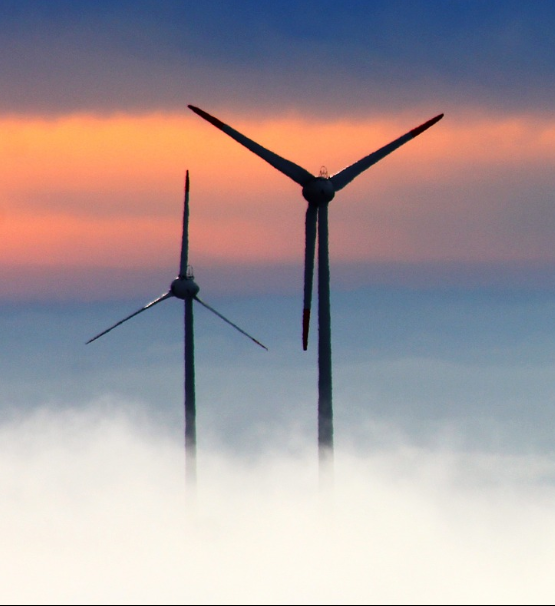
FSR Climate online debate will look at the perspectives and challenges of competitiveness and carbon leakage in carbon markets.
Moderator:
Simone Borghesi, Director, FSR Climate (European University Institute)
Speakers:
- Christian Egenhofer, Head of the Energy and Climate programme; Director of Energy Climate House, CEPS
- Milan Elkerbout, Research Fellow, Energy and Climate Change, CEPS
- Matti Liski, Professor, Department of Economic, Aalto University, Helsinki
In December 2015, the Paris Agreement was agreed by 195 nations as a historic agreement to combat climate change and unleash actions and investment towards a low carbon, resilient and sustainable future. It is for the first time to bring all nations into a common cause based on their past, current and future responsibilities. There is little doubt that market instruments will play a crucial role in achieving the long-term goal of keeping global warming below 2 degrees Celsius. Implemented correctly, they can help nations to achieve their nationally determined contributions (NDC) in a cost-effective way, increase flexibility and spur mitigation ambitions.
Article 6 of the Paris Agreement builds up a foundation for international cooperation through market mechanisms and inspires countries to assess options according to their own capacities. An important next step in advancing the Paris Agreement is to materialize the content of Article 6 through, for example, formulating rules and regulations for the international cooperation of carbon markets. To identify opportunities for and challenges to building up the cooperation architecture, we organise this one-hour live debate bringing together three high-level experts to discuss the perspectives and challenges of international cooperation on carbon markets.
This debate is carried out under the LIFE SIDE project aiming at supporting European policy makers with the design and implementation of the new EU ETS legislation.
Speaker’s bios
Christian Egenhofer has more than 20 years’ experience working with EU institutions on numerous policy areas. Over the last decade he has been specialising in EU energy and climate change policy, with a particular focus on the EU energy, climate and transport policies. He is currently Senior Fellow and Head of the Energy, Climate and Environment Programme at the Centre for European Policy Studies (CEPS), a Brussels-based think tank. Christian is also Visiting Professor at the College of Europe in Bruges (Belgium) and Natolin (Poland), SciencesPo (Paris/France) and LUISS University in Rome/Italy. From 1997 to 2010 he was Senior Research Fellow and Jean-Monnet Lecturer at the Centre for Energy, Petroleum and Mineral Law and Policy at the University of Dundee in Scotland/UK (part-time). Christian Egenhofer holds a Master’s degree in Administration from the University of Konstanz as well as a Public Law degree.
Milan Elkerbout is a Research Fellow at CEPS Energy Climate House. His research focuses on EU climate policy, in particular the EU Emissions Trading System. He has been closely involved in analysing the EU ETS Phase 4 revision processes, with specific focus on environmental ambition, carbon leakage and free allocation, competitiveness, and market functioning. He frequently participates in events on these topics, together with policy makers and civil society stakeholders, both at CEPS as well as at EU institutions and other EU member states.
Other topics of interest include industrial transformation and decarbonisation, mobility, state aid control, Energy Union governance, and the impacts of Brexit. His academic background is in Political Economy and European Studies. Before starting at CEPS in 2014, Milan Elkerbout studied at the London School of Economics, SciencesPo Paris, and Maastricht University.
Matti Liski is a Professor of Economics at Aalto University School of Business. His also an affiliate at MIT-CEEPR, University of Cambridge EPRG, CESifo Munich, and has been a visiting professor at Toulouse School of Economics. Liski is an award-winning teacher, with experience ranging from principles of economics and executive education to advanced international doctoral courses and summer schools on specialized topics. His research focus is both theoretical and empirical microeconomics with applications in industrial organization, public policy, energy markets, and climate change.
Liski has given several keynote lectures in scientific conferences, served as a board member in foundations and scientific associations, and has held several editorial duties in journals, such as the Scandinavian Journal of Economics. His research has appeared in journals such as Journal of European Economic Association, Economic Journal, Journal of Economic Theory, Journal of Public Economics, and Journal of Environmental Economics and Management.”
Don’t miss any update on our events
Sign up for free and access the latest events from our community.
More on the topic
The Achmea case and the EU Law of Unintended Consequences

This EU Energy Law and Investment Arbitration Conference will dive in deeper into the Achmea case to explore the judgment’s impact on investment and dispute settlement in the EU energy sector.
Achmea made Impossible All Forms of Intra-EU Arbitration with Member State Involvement?
In collaboration with the Dechert LLP and the HEC, the Energy Union Law Area of the FSR is organising a conference which will consider the major issues surrounding the recent ruling by the Court of Justice of the EU (CJEU) in the Achmea case. The ruling of Case C-284/16, Slovak republic v. Achmea BV, delivered on 6 March, determined that investor-state arbitration clauses in Bilateral Investment Treaties (BITs) concluded between EU Member States are incompatible with EU law, creating far-reaching consequences.
In the conference, we will explore the impact of the case across three issues:
- The implications of Achmea for investor-state dispute settlements under BITs concluded by EU Member States.
- The implications of Achmea for investor-state dispute settlements under other types of international agreements, such as the Energy Charter Treaty and intergovernmental and host government agreements often entered into by EU Member States with respect to large energy infrastructure projects (gas pipelines, LNG terminals, etc.)
- The forms of legal recourse available to EU investors in the future, in light of the Achmea ruling and the CJEU’s future CETA Opinion.
Who will attend?
The audience will be composed of senior officials of the European Commission, the Council Legal Service and the CJEU, current and acceding EU Member State representatives, General Counsel of energy and other companies engaged in foreign direct investment, international investment arbitration practitioners, Academics.
Please note that there are limited places available. There is no charge for participation in the workshop.
Don’t miss any update on our events
Sign up for free and access the latest events from our community.
More on the topic

Energy Sector Competition Law

This annual workshop, organised by the FSR Energy Union Law Area in collaboration with the Brussels offices of Cleary Gottlieb Steen & Hamilton LLP, will look at the latest developments in the energy sector in terms of competition law.
This year, we will focus on three core issues. Firstly, we will look at the digitalisation of the energy sector and examine the use of data in energy markets with a particular focus on the abuse of dominance and the essential facilities doctrine. Secondly, we will consider recent developments in antitrust. Finally, we will turn to state aid and the energy sector with a particular focus on the notion of selectivity in state aid control.
Please note that there are limited places available. There is no charge for participation in the workshop.
Don’t miss any update on our events
Sign up for free and access the latest events from our community.
10th FSR – BNetzA Forum on the Legal Issues of Energy Regulation

This year will mark the 10th year of the collaboration between the FSR Energy Union Law Area and Bundesnetzagentur, the Germany regulatory authority. The forum brings together academics, institutional and NRA representatives, policy-makers and market players to discuss the latest energy issues facing national regulatory authorities, from both a legal and economic perspective.
This year, the programme will provide an update on the Clean Energy Package and consider the positions of stakeholders on the implementation of the provisions before looking at the issues surrounding interconnections, focusing on amendments to the gas directive, the TPA exemptions, and cross-border participation in capacity remuneration mechanisms.
The debate will then turn to energy and digitalisation for a session in which we will examine the myriad issues posed by the rapid developments and innovations in the field. We will consider the changing role of distribution system operators (DSOs) and transmission system operators (TSOs), data management in smart grids, the role of aggregators, e-mobility, and the new issues surrounding the energy customer – data protection and energy regulation in terms of smart meters, the development of local energy communities, and the position of the energy consumer in this new digitalised energy world.
Download the presentations
Download the programme
Please note that there are limited places available. There is no charge for participation in the workshop.
Don’t miss any update on our events
Sign up for free and access the latest events from our community.
3rd Athens Conference on European Energy Law

This year, the conference Athens Conference on European Energy Law will largely focus on the myriad issues surrounding the financing of the clean energy transition. This will include objectively assessing the allocation of financing and the role of the European financial and investment institutions, the privatisation of energy infrastructures and networks, and the funding of gas and electricity interconnections, among other topics.
The Athens Conference on European Energy Law is a joint initiative of the Energy Union Law Area of the Florence School of Regulation and the Hellenic Energy Regulation Institute, which is designed to address the latest topics in energy regulation that are significant for Greece and the surrounding region, from both a legal and economic perspective. The conference, which will be the third year of the initiative, will bring together academics, institutional and NRA representatives and key market players.
In media partnership with:
Don’t miss any update on our events
Sign up for free and access the latest events from our community.
Clean Energy Package’s Consumer-Centric Provisions

Clean Energy for all? The Legal Challenges of Implementing the Clean Energy Package’s Consumer-Centric Energy Provisions
The Clean Energy Package (CEP) proposals launched in November 2016 has been branded as a consumer-centric package that promises a “new deal” for consumers and clean energy for all Europeans. However, to be effective, several of the consumer-centric provisions require cooperation between market actors, regulators and possibly new entities. Thus, the challenge of the CEP consumer-centric provisions lay in the implementation phase, which will likely require new legal structures as well as new business models. Among the issues to be explored, in this respect, are the new supply relationships in the clean energy transition; how to be a successful aggregator and comply with competition law; and to consider the protections available, exploring the future for energy-intensive and residential customers.
Download the presentations here
Download the programme
Please note that there are limited places available. There is no charge for participation in the workshop.
New supply relationships in the clean energy transition
Several rules encourage the evolution towards prosumer status. This evolution needs a contractual framework that, for example, enables customers to purchase electricity from RES producers, while being protected from the risks inherent with this source. What will be the key clauses in the clean energy contracts? Will trading platforms play a role in facilitating these new relationships? Will new energy products emerge to hedge the risks of volatile RES supply?
How to be a successful aggregator and comply with competition law
Incumbents have a head start in becoming aggregators as they already have the critical mass to successfully perform this role. Yet, dynamic new entrants are also emerging in this space. What are the dos and don’ts for aggregators from a competition law perspective? Are there competition law risks from cooperation between potential competitors in this field? Are local communities an alternative to aggregators?
“Who is going to protect me?” The future for energy-intensive and residential customers
The CEP puts an end to regulated tariffs. This affects energy-intensive as well as residential customers. Moreover, with the review of the State aid Guidelines for the energy sector already in sight, it is not clear that energy-intensive customers can continue to rely on discounts from the levies to support RES. Is the market mature enough to take care of the needs of energy-intensive and residential customers? What can national regulators still do? Is State aid the answer?
If you are interested in this topic, you may also be interested in taking a look at this recent paper from BestRE
Don’t miss any update on our events
Sign up for free and access the latest events from our community.

The GDPR and the Energy Sector

In this webinar, Hielke Hijmans from the Centre for Information Policy Leadership and Brussels Privacy Hub will analyse the potential impact of GDPR on the energy sector.
The new European Data Protection Regulation (GDPR), applicable as of 25 May 2018 in all Member States, has heralded a major reform of the EU data protection framework. Designed to harmonise data privacy laws throughout Europe, to protect and empower EU citizens’ data privacy and to reshape the way organisations across the region – both public and private – approach data privacy, the new set of rules have posed considerable challenges of compliance across the sector. So, what does the regulation introduce, and what are the implications for the energy sector?
Seven years in the making, the new regulation replaces the Data Protection Directive 95/46/EC which, up to this point, had set the minimum standards for processing data in the EU. With the GDPR, several rights have been considerably strengthened – individuals will have greater power to demand companies to reveal or delete personal data being held; regulators will be able to work in concert across the EU for the first time on this issue as opposed to having to launch separate actions in each jurisdiction, and with far more punitive consequences. Given that energy companies are increasingly becoming data companies, harnessing energy data and personal data as a tool for energy efficiency mechanisms, the impact on the energy sector will be wide-ranging.
Don’t miss any update on our events
Sign up for free and access the latest events from our community.